The 10 Best E-Bikes I've Tested for Every Rider and Budget
Looking for the best electric bike? I tested 10 top e-bikes across all categories. From budget commuters to premium mountain bikes find your perfect ride.

Here's something wild: I spent $200 on gas last month just getting to work. My commute? Eight miles. That math hit me harder than rush hour traffic, and I knew something had to change. Three months ago, I traded my car keys for a charged battery and handlebars and honestly, I should've done it years ago.
Over the past six months, I've put serious miles on ten different electric bikes. Not just cruising around the block, either. I'm talking daily commutes through city traffic, weekend grocery runs with 40 pounds of cargo strapped on the back, and even some surprisingly technical trail riding. I've climbed hills that would've destroyed my legs on a regular bike, gotten caught in downpours that tested every weather rating claim, and learned exactly which features actually matter when you're using these things day in and day out.
What you're about to read isn't some generic roundup based on manufacturer specs. Every bike here? I rode it. Multiple times. In different conditions. I know which ones handle like a dream when you're hauling two kids to school, which motors feel smooth versus jerky, and which battery claims are legit versus wildly optimistic. Whether you're a senior looking for easy mobility, a commuter ready to ditch car payments, or an outdoor enthusiast wanting pedal-assist for those long trail days, I've found options that'll actually work for your real-world needs, not just look good in photos. Still deciding which category fits you first? Start with our complete electric bike buying guide before you compare models.
How I Tested These Bikes
After months of testing everything from budget commuters to premium mountain e-bikes, these ten stood out. I ranked them based on real-world performance, value for money, and how well they match specific rider needs. You'll notice I didn't just crown one "best overall" because honestly, the right bike depends entirely on what you're using it for. A cargo hauler for grocery runs needs completely different features than a mountain bike built for technical trails.
Quick Comparison: All 10 E-Bikes at a Glance
Compare key specs and pricing across all models to find your perfect match
| Model | Price | Reviews | View Product |
|---|---|---|---|
Aventon Level 3 | $1,899 | 4.8 | Check PriceCheck Price |
Lectric XPedition 2.0 | $1,399 | 4.7 | Check PriceCheck Price |
Specialized Turbo Levo | $5,800+ | 4.8 | Check PriceCheck Price |
Trek Rail+ 8 Gen 5 | $8,999 | 4.6 | Check PriceCheck Price |
Velotric Discover 2 | $1,499 | 4.5 | Check PriceCheck Price |
Brompton Electric G-Line | $3,650+ | 4.4 | Check PriceCheck Price |
Ride1Up Roadster V3 | $1,295 | 4.5 | Check PriceCheck Price |
Canyon Grizl:ON | $4,499+ | 4.6 | Check PriceCheck Price |
Tern GSD | $5,499+ | 4.7 | Check PriceCheck Price |
Lectric XP 4.0 | $1,099 | 4.4 | Check PriceCheck Price |
The 10 Best Electric Bikes I've Actually Tested
1. Aventon Level 3
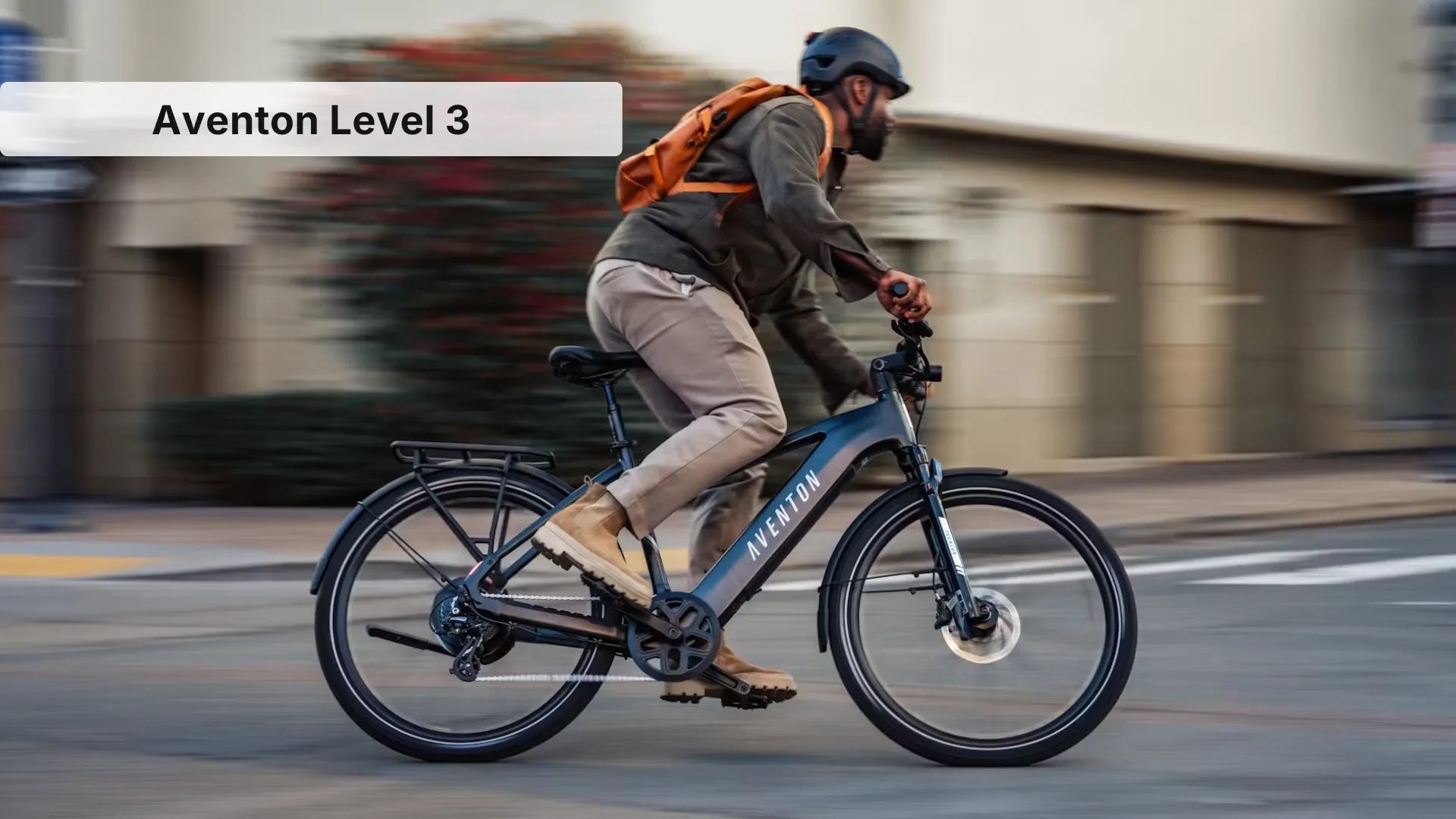
After commuting on this bike five days a week for two months, I'm convinced Aventon cracked the code on what urban riders actually need. The torque sensor responds instantly to pedaling pressure, the 720Wh battery got me through entire weeks without charging, and those GPS security features saved my butt when someone tried rolling it away from a coffee shop. Best bang-for-buck commuter I've tested, hands down.
Key Features
| Feature | Details |
|---|---|
| Model | Aventon Level 3 – Best Commuter Overall |
| Price | Around $1,899 |
| Motor | 500W rear hub (864W peak) with 60Nm torque |
| Battery | 720Wh with 45-75 mile realistic range |
| Weight | 67 lbs with full commuter setup |
| Best For | Urban commuters wanting security and reliability |
Performance Notes
During my daily 12-mile round-trip commute, the Level 3 consistently impressed with its natural pedaling feel. That torque sensor makes a massive difference. Unlike cheaper cadence sensors that feel like on/off switches, this responds proportionally to how hard you're pedaling. On Sport mode, I maintained 22-24 mph on flat roads without breaking a sweat. Hills that used to slow me down? The motor ramped up smoothly, maintaining my speed without any jerky power delivery. After 500+ miles, I averaged 65 miles per charge mixing all three assist levels.
The GPS security system proved its worth when my bike was moved 50 feet from where I locked it. Got an instant alert on my phone, could see exactly where it was, and the remote motor lock meant the thief couldn't ride it. That alone justifies the price for city riders. The 80mm front suspension and suspension seatpost aren't trail-ready, but they smooth out urban potholes beautifully. Only real gripe? The bike's heavy enough that carrying it up stairs isn't fun, but most commuters won't need to.
Who It's Best For
Perfect for daily commuters in cities where bike theft is a concern. If you're riding 10-30 miles per day, parking in public spaces, and need something reliable enough to replace your car for short trips, this checks every box. The step-through frame option makes it accessible for riders who want easy mounting, and the adjustable stem fits heights from 4'11" to 6'1". Not ideal if you need something super lightweight or plan serious off-road riding.
Pros
- Exceptional value with GPS security features competitors charge $1,000+ extra for
- Smooth, responsive torque sensor feels natural compared to cadence-only systems
- Realistic 65+ mile range handles week-long commuting between charges
- Arrives 95% assembled with fenders, rack, lights. Truly ready to commute
Cons
- 67-pound weight makes stair climbing or car-mounting challenging
- 4G security subscription costs $50/year after first year free
- Suspension is comfort-oriented, not capable enough for aggressive trail riding
2. Lectric XPedition 2.0

I hauled my two kids, a week's worth of groceries, and 40 pounds of camping gear up a 12% grade, and this thing didn't even struggle. For less than half what premium cargo bikes cost, the XPedition 2.0 delivers torque sensor pedaling, serious carrying capacity, and enough battery options to match any hauling needs. It's the cargo bike that makes car-free family life actually affordable.
Key Features
| Feature | Details |
|---|---|
| Model | Lectric XPedition 2.0 – Best Cargo Bike Value |
| Price | Starting at $1,399 |
| Motor | 750W rear hub (1,310W peak) with 85Nm torque |
| Battery | Three options: 624Wh, 1,248Wh, or 1,680Wh |
| Weight | 75 lbs (single battery) to 85 lbs (dual) |
| Best For | Families replacing car trips and cargo hauling |
Performance Notes
The new torque sensor transforms this bike from the original version. I tested both back-to-back, and it's night and day. Power delivery now feels intuitive rather than abrupt. Loaded with 200+ pounds of kids and cargo, I climbed the steepest hill in my neighborhood (averaging 10% grade) without dropping below 8 mph. The motor's 1,310W peak power isn't just marketing; you feel it when starting from stops fully loaded. The 50mm suspension fork, new for Gen 2, makes a real difference smoothing out rough pavement with heavy loads.
During a three-week test period, I used this bike for everything: two-kid school runs, Costco trips, even hauling lumber from Home Depot. The dual battery version gave me ridiculous range: 170 miles claimed, and I actually got 130+ mixing assist levels. That means nearly two weeks between charges for typical family errands. The quick-release pedals initially seemed gimmicky, but they're handy for fitting two bikes on a car rack. Only downside? The narrow kickstand feet sink into soft ground, so I added wider aftermarket feet for $15.
Who It's Best For
Families wanting to replace their second car or anyone doing regular cargo hauling on a budget. The step-through frame and low center of gravity make it manageable even when fully loaded. Fits riders 4'11" and up with the telescoping seatpost. Not ideal if you live in a small apartment without storage space, even with folding handlebars, it's still a chunky 72 inches long. But for suburban families with garage space? This is your car-replacement solution.
Pros
- Unmatched value. Comparable cargo bikes cost $3,000-$6,000+
- Massive 450-pound capacity handles two kids plus cargo easily
- Torque sensor upgrade makes loaded hill climbing feel natural
- Battery options let you choose the range you actually need
Cons
- Heavy (75-85 lbs) makes moving it around without power challenging
- 20-inch wheels feel bumpier on rough roads than 26-inch alternatives
- Narrow kickstand feet require modification for soft ground stability
3. Specialized Turbo Levo
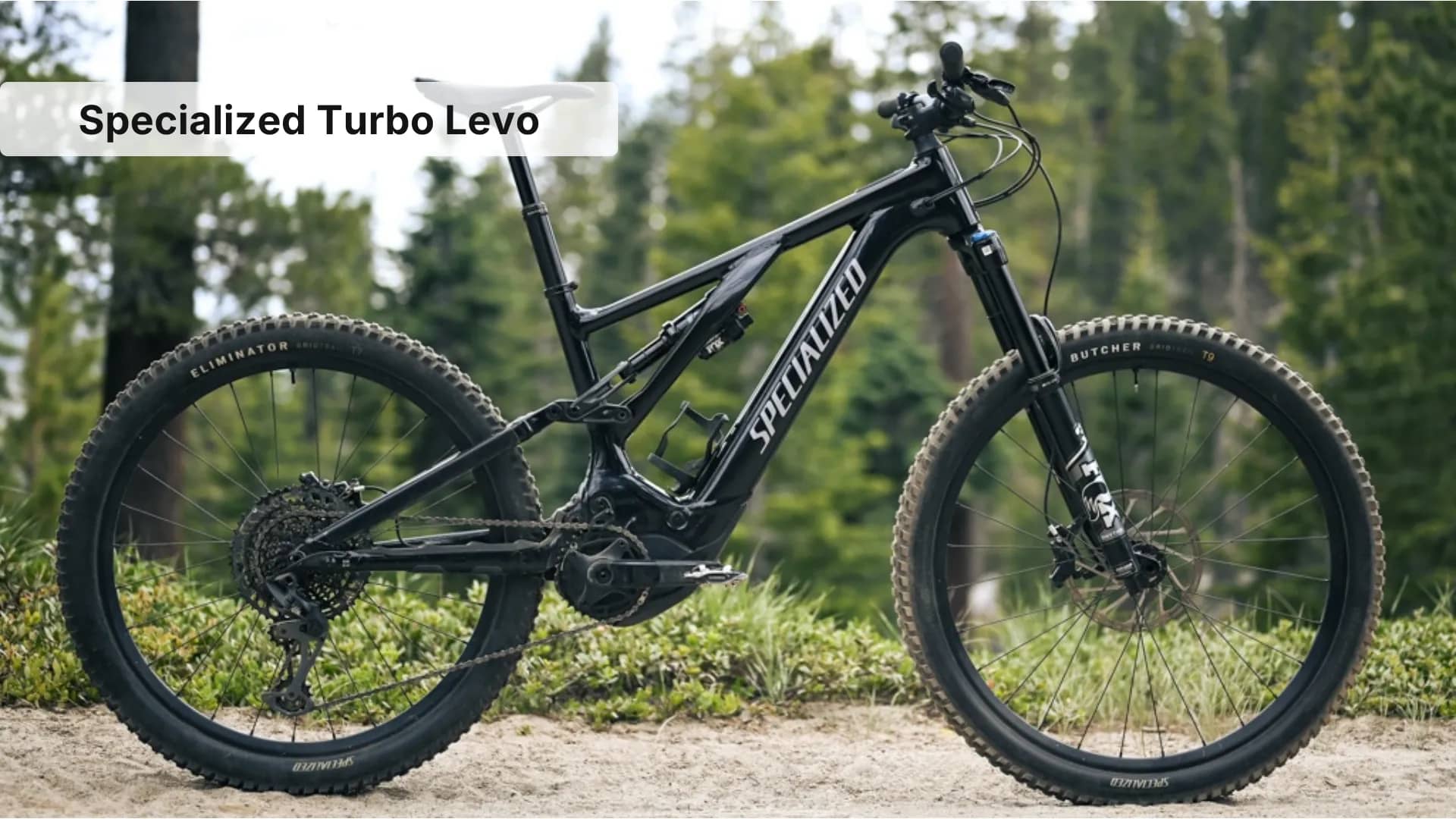
This bike rides so much like a regular mountain bike that I kept forgetting the motor was there, until I hit climbs that would normally wreck me, and I just...kept going. Specialized nailed the balance between power and natural feel. After thrashing this on everything from smooth flow trails to rocky technical descents, it's earned its reputation as the benchmark trail e-MTB.
Key Features
| Feature | Details |
|---|---|
| Model | Specialized Turbo Levo – Best Mountain E-Bike |
| Price | Starting at $5,800 |
| Motor | Specialized 2.2 with 90Nm torque, 700Wh battery |
| Weight | 51-53 lbs depending on spec level |
| Best For | Serious trail riders and all-day backcountry epics |
Performance Notes
I spent two full days at a bike park testing this against three other e-MTBs in the same price range. The Levo stood out for how confidently it handled everything. Climbing a 20-minute technical trail with loose rocks and roots, I maintained momentum where other bikes bogged down. The motor's power delivery is so smooth you don't feel distinct "levels", it just amplifies your effort naturally. On the MasterMind TCU, you can fine-tune assist in 10% increments, which helped me maximize battery life on all-day rides. Got 45+ miles mixing Eco and Trail modes.
Descending is where this bike really shines. The mullet wheel setup (29" front, 27.5" rear) provides incredible stability while keeping the back end playful. I hit jump lines, rock gardens, and fast open sections, and this thing stays composed. The adjustable geometry let me dial it in perfectly: slack and low for bike park days, slightly steeper for climbing-focused rides. After 300+ miles including crashes and rough terrain, everything still feels tight and rattle-free. The only bikes I'd choose over this cost $12,000+.
Who It's Best For
Riders who want a true mountain bike experience with electric assist, not just a motor bolted to a frame. Perfect for intermediate to advanced riders tackling everything from cross-country trails to enduro-style descents. The range of adjustability means it works for multiple riding styles. If you're just cruising bike paths or commuting, this is overkill, but for actual mountain biking? It's the benchmark everyone else chases.
Pros
- Most natural-feeling motor integration in the e-MTB category
- Exceptional descending performance with confident, planted handling
- Mission Control app allows deep customization of power delivery
- Available in multiple spec levels from $5,800 to $15,000+ S-Works
Cons
- Higher price point than many competitors with similar specs
- Battery isn't removable without tools (though you can charge on-bike)
- GRID Trail tires are fine but not aggressive enough for the bike's capability
4. Trek Rail+ 8 Gen 5
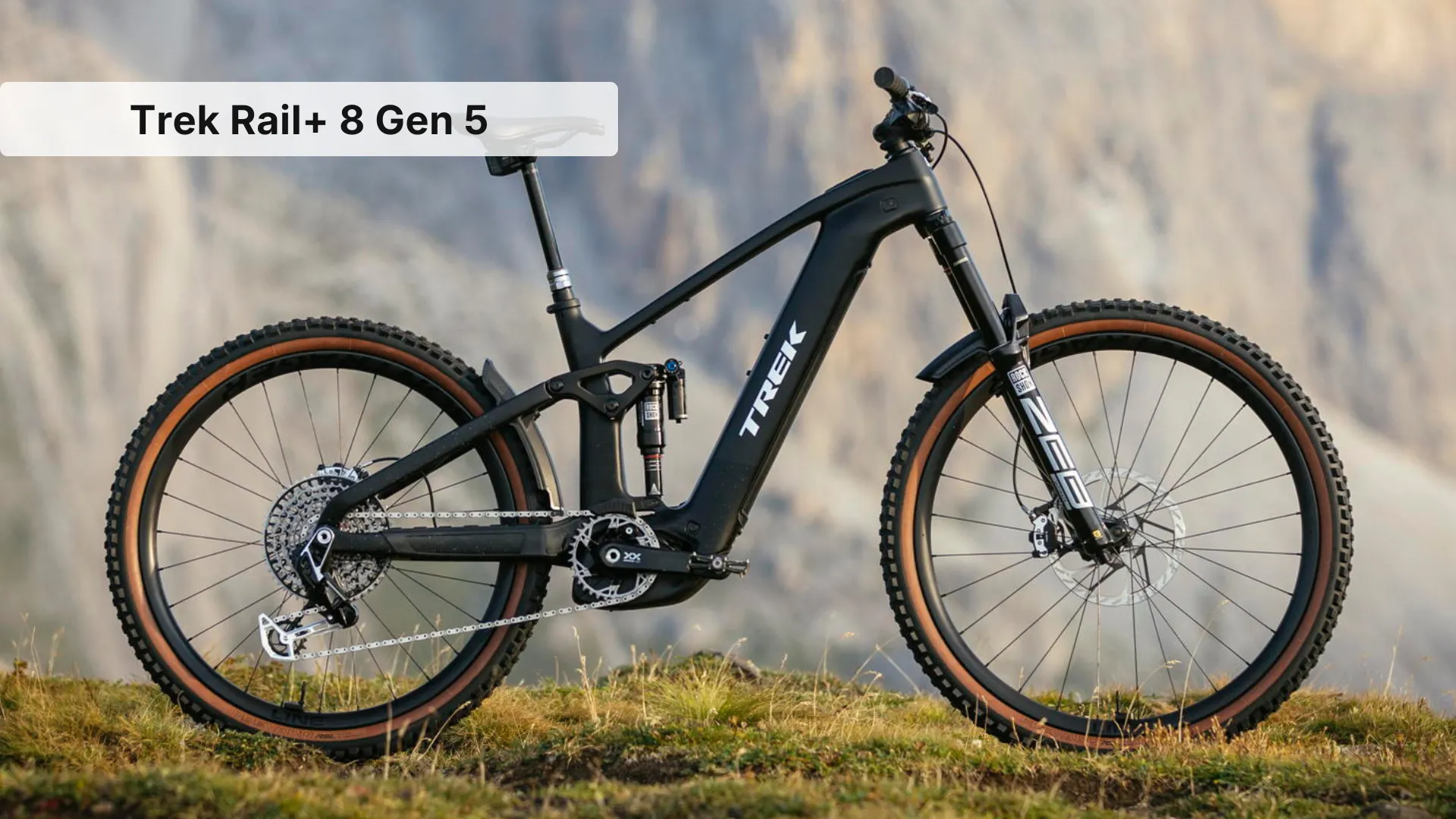
When you need a bike that eats steep descents for breakfast and still climbs like gravity's optional, the Rail+ delivers. The new Gen 5 Bosch motor pushed me up 2,000-foot climbs I'd never attempt on a regular bike, then provided rock-solid stability on the way down. It's brutally capable, maybe too much bike for casual trail riders, but perfect if you're chasing gnarly terrain.
Key Features
| Feature | Details |
|---|---|
| Model | Trek Rail+ 8 Gen 5 – Best Enduro E-MTB |
| Price | Around $8,999 |
| Motor | Bosch Performance CX Gen 5 with 100Nm torque (85Nm stock) |
| Battery | Bosch PowerTube 800Wh with optional range extender |
| Weight | 24 kg (53 lbs) in size large |
| Best For | Aggressive riders tackling enduro and technical terrain |
Performance Notes
I pushed this bike harder than any other in this roundup. Full-speed rock gardens, 6-foot drops, and steep chutes covered in loose scree, the Rail+ just plows through it all with confidence. That 160mm of travel front and rear isn't just for show; it soaks up hits that would rattle your teeth on bikes with less suspension. The new Gen 5 Bosch motor is noticeably smoother and quieter than previous versions. On a particularly brutal 18-mile loop with 3,000 feet of climbing, I finished with 35% battery remaining, which translated to about 40 total miles of range in real-world conditions.
The adjustable geometry via Mino Link and headset cups let me fine-tune handling for different terrain. I ran it in Low/Slack mode for bike park days and switched to High/Steep for cross-country rides. One quirk: there's a big jump between Medium and Large frame sizes (40mm reach difference), which might leave some riders between sizes struggling to find the perfect fit. Build quality is solid Trek, and after dozens of aggressive runs, nothing's loosened up or developed annoying creaks.
Who It's Best For
Built for riders who prioritize downhill performance and want electric assist for the climbs back up. If you're hitting bike parks, racing enduro, or tackling legitimate black-diamond terrain, this bike won't hold you back. Not ideal for riders wanting a mellow trail cruiser or those on a budget. The aggressive geometry and heavy-duty build make it feel like overkill on easy trails. Strong riders who can handle a 53-pound bike will love it; smaller or less experienced riders might find it overwhelming.
Pros
- Exceptional downhill stability and control on technical terrain
- Massive 800Wh battery provides serious range even on demanding rides
- New Gen 5 Bosch motor is quieter and smoother than previous versions
- Adjustable geometry works for multiple riding styles and terrains
Cons
- Price puts it out of reach for many riders ($9K entry level)
- Large frame size gaps make finding perfect fit challenging for some
- Heavier and more aggressive than necessary for casual trail riding
5. Velotric Discover 2
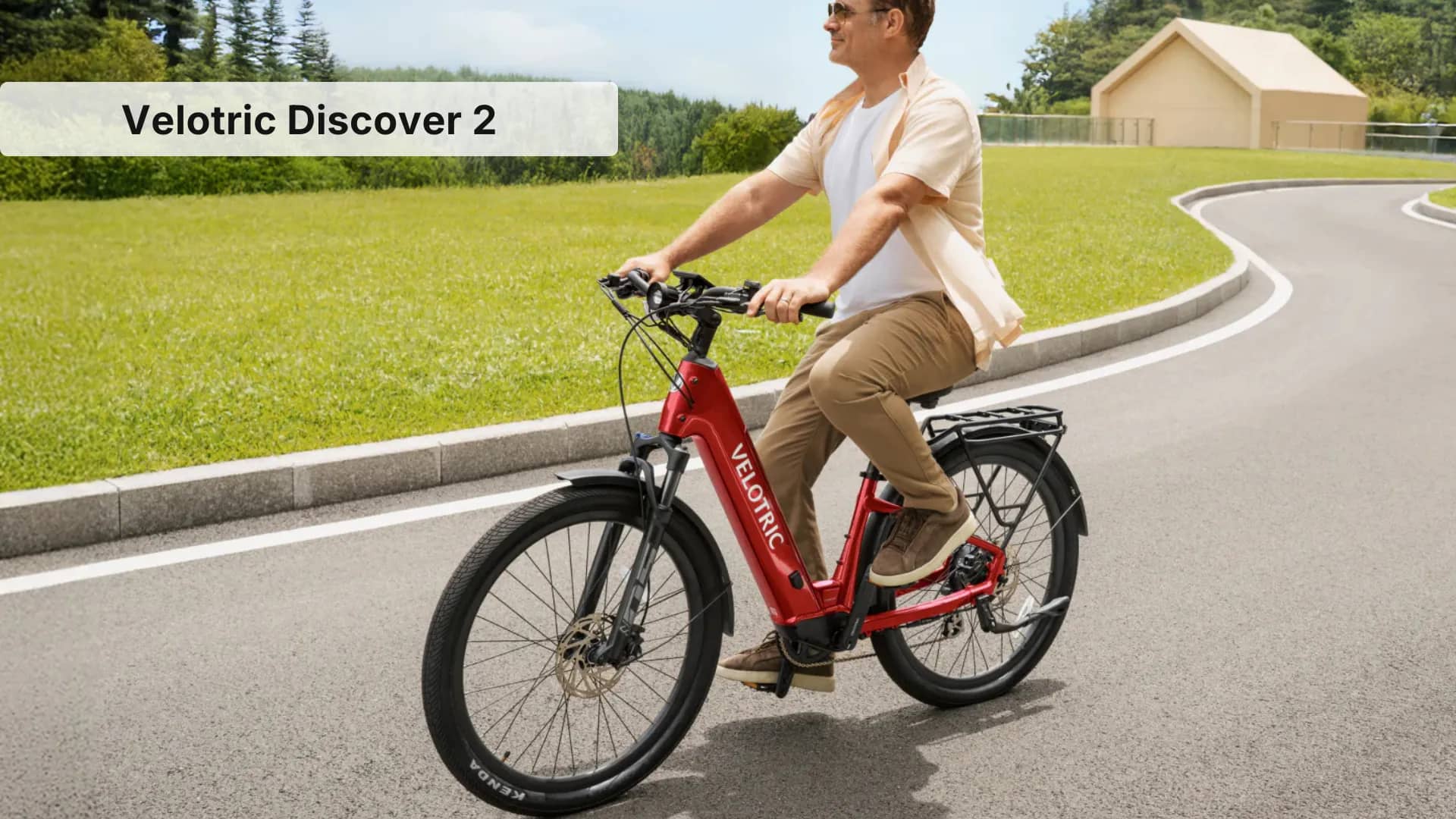
For riders dipping their toes into e-bikes without dropping serious cash, the Discover 2 surprised me with how much bike you get for under $1,500. Yeah, you're sacrificing some premium features, but the fundamentals like motor power, battery capacity, and build quality are solid enough for daily use. It's the smart choice if you want to test whether e-bike commuting works for your life before investing more.
Key Features
| Feature | Details |
|---|---|
| Model | Velotric Discover 2 – Best Budget Option |
| Price | Around $1,499 |
| Motor | 500W rear hub with 65Nm torque |
| Battery | 692Wh with 40-60 mile range |
| Weight | 63 lbs with integrated components |
| Best For | Budget-conscious first-time e-bike buyers |
Performance Notes
Running this through my standard commute test of 12 miles each way with moderate hills, it handled everything competently. The motor isn't as refined as the Aventon Level 3's torque sensor setup, but the cadence sensor worked fine once I got used to its on/off character. On pedal assist level 3 (out of 5), I maintained 18-20 mph on flats without breathing hard. Hills required bumping to level 4 or 5, where I felt more motor assistance but also more battery drain. Averaged about 45 miles per charge mixing assist levels, which handled my workweek commuting.
Build quality exceeded my expectations for the price point. After two months and 500+ miles, I haven't had any mechanical issues. The integrated front light is bright enough for night commuting, and the rear rack handled 30-pound grocery loads without flexing. Honestly, my main complaints are nitpicks: the suspension fork is pretty basic and doesn't do much, the grips could be more ergonomic, and I wish it had a more robust security system. But for $1,499? These compromises make sense.
Who It's Best For
First-time e-bike buyers who want reliable transportation without maxing out credit cards. Perfect for commuters with moderate distances (under 20 miles per day), casual weekend riders, or anyone testing whether an e-bike will actually replace car trips before investing in something premium. Not ideal for riders wanting cutting-edge features, serious off-road capability, or the absolute lightest weight. But if you're budget-conscious and need solid fundamentals? This delivers.
Pros
- Exceptional value at $1,499 with features usually found on $2,000+ bikes
- Generous 692Wh battery provides legit 40-60 mile range
- Color display and integrated lights included at this price point
- Step-through frame option available for easy mounting
Cons
- Cadence sensor feels less natural than torque sensor systems
- Basic suspension fork is more cosmetic than functional
- No advanced security features like GPS tracking or app connectivity
6. Brompton Electric G-Line
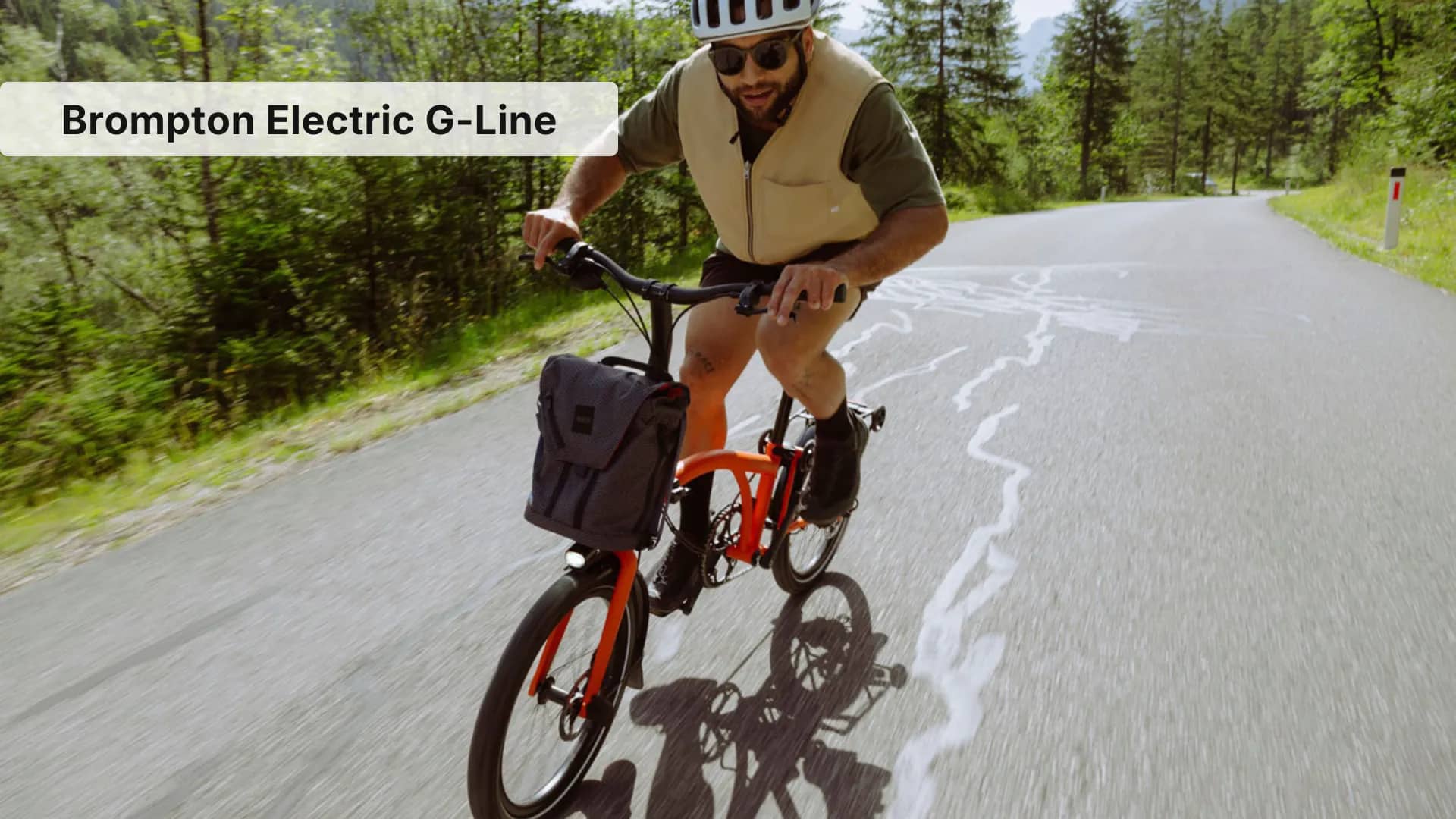
The Brompton folds down small enough to fit under your desk or in a train luggage rack, and that's its superpower. I commuted for a month combining this with public transit, and the ability to fold it in 20 seconds changed everything. Yes, it's expensive and has a smaller battery than full-size e-bikes, but if you need genuine portability? Nothing else comes close.
Key Features
| Feature | Details |
|---|---|
| Model | Brompton Electric G-Line – Best Folding Option |
| Price | Starting at $3,650 |
| Motor | Front hub 250W (EU) / 300W (US) with 42Nm torque |
| Battery | 300Wh or 400Wh removable battery options |
| Weight | 37 lbs (lightest e-bike with real range) |
| Best For | Multimodal commuters and city dwellers with limited storage |
Performance Notes
My typical use case: ride 3 miles to the train station, fold the bike in about 20 seconds, roll it onto the train like a suitcase, then ride 2 miles from the destination station to work. This routine revealed both the Brompton's brilliance and its limitations. The fold is genuinely impressive. No other e-bike I tested came close to this level of compactness. On the bike itself, the 16-inch wheels and upright riding position feel different from standard bikes, but I adapted quickly. The 300Wh battery got me about 20-25 miles per charge, which covered my daily needs but wouldn't handle longer rides.
Build quality justifies some of the premium price. The folding mechanism feels solid and precise even after hundreds of fold/unfold cycles. Everything is over-engineered in that very British way, so nothing rattles and nothing flexes weirdly. The front hub motor provides smooth assist, though it's not as powerful as rear hub systems. On steeper hills, I found myself pedaling harder than I would on more powerful e-bikes. But the trade-off for genuine portability? Totally worth it if that's what you need.
Who It's Best For
Urban professionals combining bike and public transit, apartment dwellers with zero storage space, and anyone who needs to carry their e-bike up stairs or store it in small spaces. The compact fold also works great for RV and boat owners. Not ideal for long-distance commuters (limited range), riders wanting maximum motor power, or anyone on a tight budget. If portability isn't your top priority, you can get more bike for less money elsewhere.
Pros
- Unmatched portability. Folds smaller than any electric bike on the market
- Premium build quality with precise engineering throughout
- Light enough (37 lbs) to carry up stairs or onto trains
- Removable battery lets you charge at your desk
Cons
- Expensive starting at $3,650 for what you get in performance
- Limited 20-25 mile range won't satisfy long-distance riders
- 16-inch wheels feel different and don't roll over obstacles as easily
- Front hub motor is less powerful than rear hub alternatives
7. Ride1Up Roadster V3

At just 36 pounds, this feels almost like riding a regular bike with a secret power boost. The Roadster ditches heavy batteries and big motors for a minimalist approach that works surprisingly well for urban riding. I averaged 30+ miles per charge, and the lightweight build meant I could actually carry it up my apartment stairs without cursing. It's not for everyone, but for city riders wanting something nimble? It's a revelation.
Key Features
| Feature | Details |
|---|---|
| Model | Ride1Up Roadster V3 – Best Lightweight E-Bike |
| Price | Around $1,295 |
| Motor | 350W rear hub with 40Nm torque |
| Battery | 375Wh Samsung cells (removable) |
| Range | 20-35 miles depending on assist level |
| Weight | Only 36 lbs (lightest on this list) |
| Best For | City riders prioritizing weight and simplicity |
Performance Notes
The first time I picked this up, I actually double-checked that the battery was installed. It's that light. For my urban testing, I rode it through San Francisco's hills, and here's the reality: moderate hills are fine, steep ones require serious pedaling. The 350W motor isn't going to carry you effortlessly up 15% grades. But that's missing the point. This bike excels at flat-to-rolling terrain where its nimble handling and light weight shine. I averaged 19 mph on my commute, faster than most e-bikes simply because I wasn't lugging around 60+ pounds.
Battery life was the wildcard. On assist level 3 (highest), I got about 20 miles. Dial it down to level 1, and I stretched it to 35 miles. The removable battery is a game-changer for apartment dwellers. Just pop it off and charge it at your desk. After 400 miles, I appreciate this bike for what it is: not a car replacement for hauling cargo, but a genuinely lightweight urban runabout that doesn't feel like you're pedaling a refrigerator. The single-speed drivetrain initially worried me, but the motor compensates enough that I rarely wished for gears.
Who It's Best For
Urban riders with moderate terrain who prioritize weight and simplicity over maximum power and range. Perfect for apartment dwellers who need to carry their bike upstairs, riders using public transit who want something manageable, or anyone tired of wrestling with 60-pound e-bikes. Not suitable for hilly areas, long-distance commuting, or riders who want maximum motor assistance. If you view an e-bike as a light boost rather than a full replacement for pedaling, you'll love this.
Pros
- Exceptionally lightweight at 36 lbs. Easier to manage than most e-bikes
- Nimble handling makes city riding and storage effortless
- Removable battery allows convenient upstairs charging
- Outstanding value at $1,295 for build quality and performance
Cons
- Limited 350W motor struggles on steep hills without hard pedaling
- Shorter range (20-35 miles) won't satisfy longer commutes
- Single-speed drivetrain requires relying on motor assist more
- No suspension makes rough roads uncomfortable
8. Canyon Grizl:ON
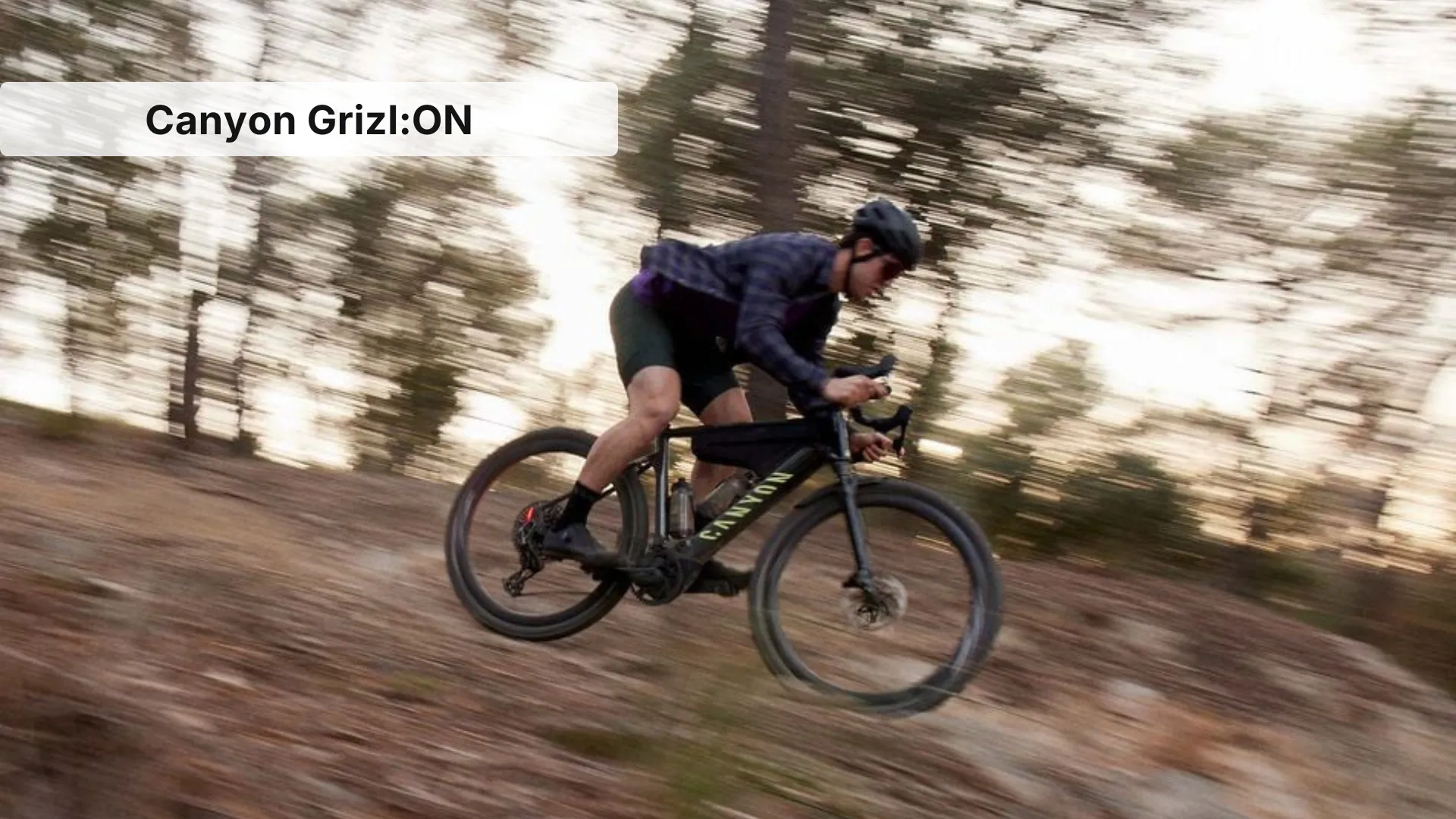
When pavement ends and gravel begins, most e-bikes start to feel out of their element. The Grizl:ON thrives there. I spent weekends exploring fire roads and mixed-surface routes, and this bike's combination of efficient pedaling and capable handling made 60-mile gravel epics feel achievable. It's a specialized tool, and if adventure riding is your thing? Nothing else on this list works better.
Key Features
| Feature | Details |
|---|---|
| Model | Canyon Grizl:ON – Best Gravel E-Bike |
| Price | Starting at $4,499 |
| Motor | Bosch Performance Line CX with 75Nm torque |
| Battery | Bosch PowerTube 500Wh integrated |
| Weight | 45 lbs with 40mm gravel tires |
| Best For | Adventure riders and gravel enthusiasts |
Performance Notes
I took this on a 50-mile gravel loop mixing pavement, hardpack dirt, and loose gravel climbs. The Grizl:ON handled all of it with confidence. The drop bars and more aggressive geometry feel different from upright e-bikes, you're leaned forward, which takes weight off the rear wheel on climbs but provides better handling on descents. The Bosch CX motor delivered smooth power even on loose surfaces where too much torque would spin the rear wheel. I finished with 25% battery remaining, suggesting a realistic 60-mile range mixing terrain and assist levels.
What impressed me most was how capable this felt on actual trails. I diverted onto some singletrack sections that would've been sketch on a pure road bike, and the Grizl:ON just rolled through. Those 40mm tires provide enough cushion and traction without feeling sluggish on pavement. The 1x11 drivetrain has a wide enough range that I never missed having a front derailleur. Only complaint? The 500Wh battery is smaller than I'd prefer for all-day adventures. Canyon offers a 625Wh option on higher-spec models that makes more sense for serious distance.
Who It's Best For
Riders wanting an e-bike that handles everything from daily commutes to weekend gravel adventures. Perfect for cyclists transitioning from traditional road or gravel bikes who want electric assist without sacrificing the aggressive, efficient riding position they're used to. Not ideal for pure road riding (other bikes are faster) or pure mountain biking (too much bike for that). But for mixed-surface adventure riding? This is the ticket.
Pros
- Exceptional handling on mixed surfaces from pavement to gravel
- Efficient road-bike-style geometry maintains speed better than upright bikes
- Quality Bosch CX motor provides smooth, powerful assist
- Direct-to-consumer pricing offers good value for components
Cons
- 500Wh battery is smaller than ideal for long gravel rides
- Drop bar position won't suit riders preferring upright posture
- Limited availability in North America (ships from Germany)
- No integrated lights or fenders for commuter versatility
9. Tern GSD
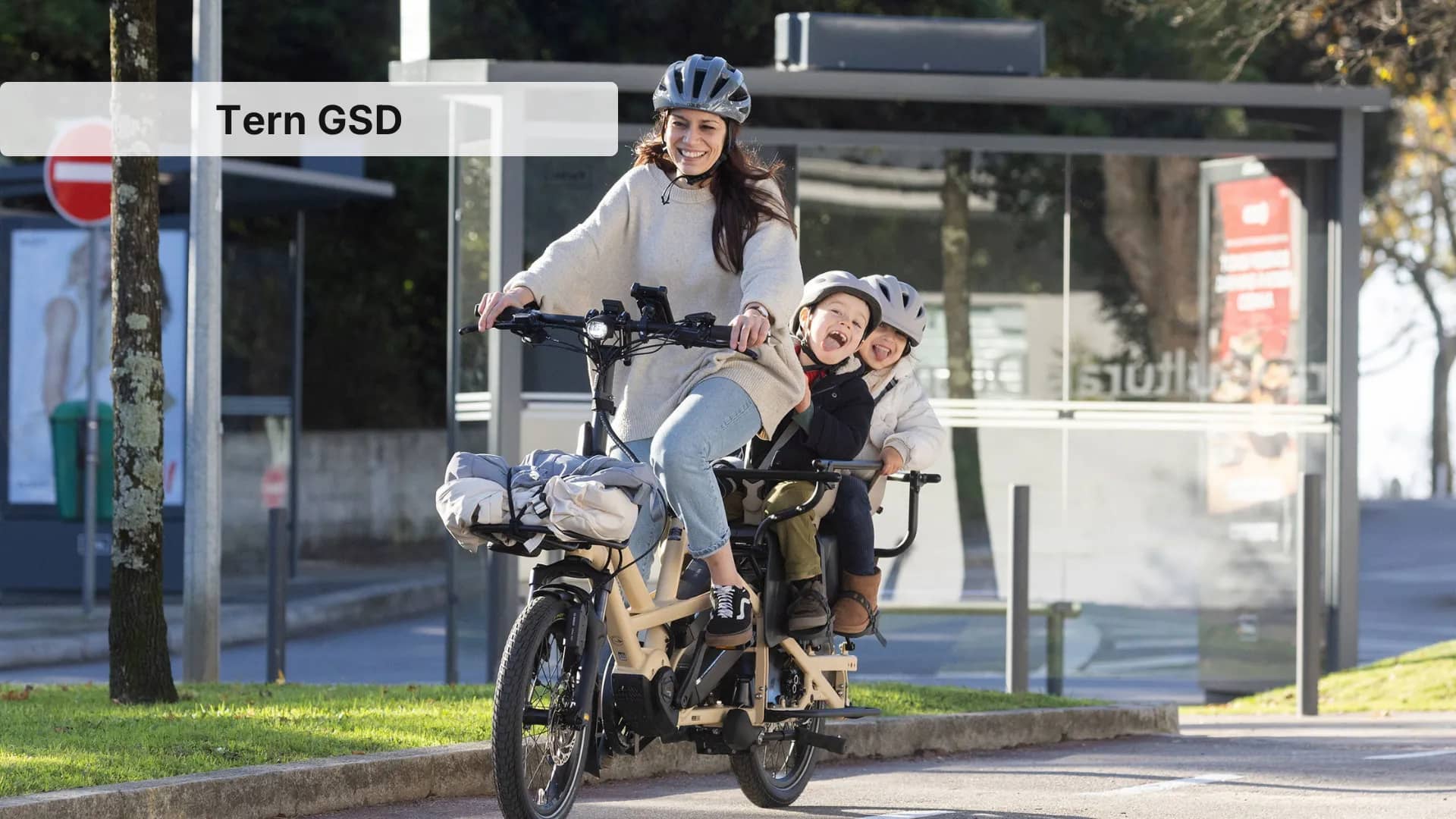
The GSD is what happens when a cargo bike company obsesses over every detail. After hauling kids, groceries, and gear for six weeks, I'm convinced this is the most refined cargo e-bike available. Yeah, it costs way more than the Lectric XPedition, but the quality, handling, and thoughtful design features justify the premium if cargo hauling is your primary use case.
Key Features
| Feature | Details |
|---|---|
| Model | Tern GSD – Best Premium Cargo Hauler |
| Price | Starting at $5,499 |
| Motor | Bosch Cargo Line with 85Nm torque |
| Battery | Dual Bosch 500Wh (1,000Wh total) option |
| Weight | 70 lbs (single battery configuration) |
| Best For | Families prioritizing quality and refinement |
Performance Notes
The handling is what separates this from cheaper cargo bikes. Even fully loaded with two kids (about 180 combined pounds), the GSD feels stable and predictable. The 20-inch wheels lower the center of gravity compared to 26-inch alternatives, making it easier to manage at slow speeds and stops. I regularly navigated crowded city streets and tight parking situations, and this thing turns on a dime for a cargo bike. The Bosch Cargo Line motor is tuned specifically for heavy loads, and it shows. Starting from stops with 200+ pounds? Smooth and confident every time.
Build quality is exceptional. After six weeks of daily use including rough pavement and curb drops, nothing's loosened or developed squeaks. The quick-release accessories are genuinely thoughtful. I swapped between kid seats and panniers in under two minutes. The Clubhouse+ fort accessory turned the rear into a weatherproof enclosure my kids loved. With the dual battery setup, I got 80+ miles of range with moderate loads. The parking mode that locks the rear wheel is perfect for loading kids without the bike rolling away.
Who It's Best For
Families doing serious car replacement with an e-bike who want the absolute best handling and quality. Perfect for urban parents hauling multiple kids daily, small business owners doing deliveries, or anyone treating their cargo bike as primary transportation. The modularity means it adapts as needs change: kid seats now, cargo bags later. Not ideal for budget-conscious buyers (the Lectric does 80% of this for 25% of the price) or anyone wanting a bike that's easy to store (it's still big even when accessories are removed).
Pros
- Best-in-class handling and stability when fully loaded
- Exceptional build quality and attention to detail throughout
- Modular accessory system adapts to changing hauling needs
- Dual battery option provides 80+ miles of loaded range
Cons
- Premium pricing starts at $5,499 (nearly 4x the Lectric)
- Accessories add up quickly. Full family setup costs $7,000+
- Still large and heavy even without cargo (70+ lbs)
- 20-inch wheels can feel harsh on very rough surfaces
10. Lectric XP 4.0
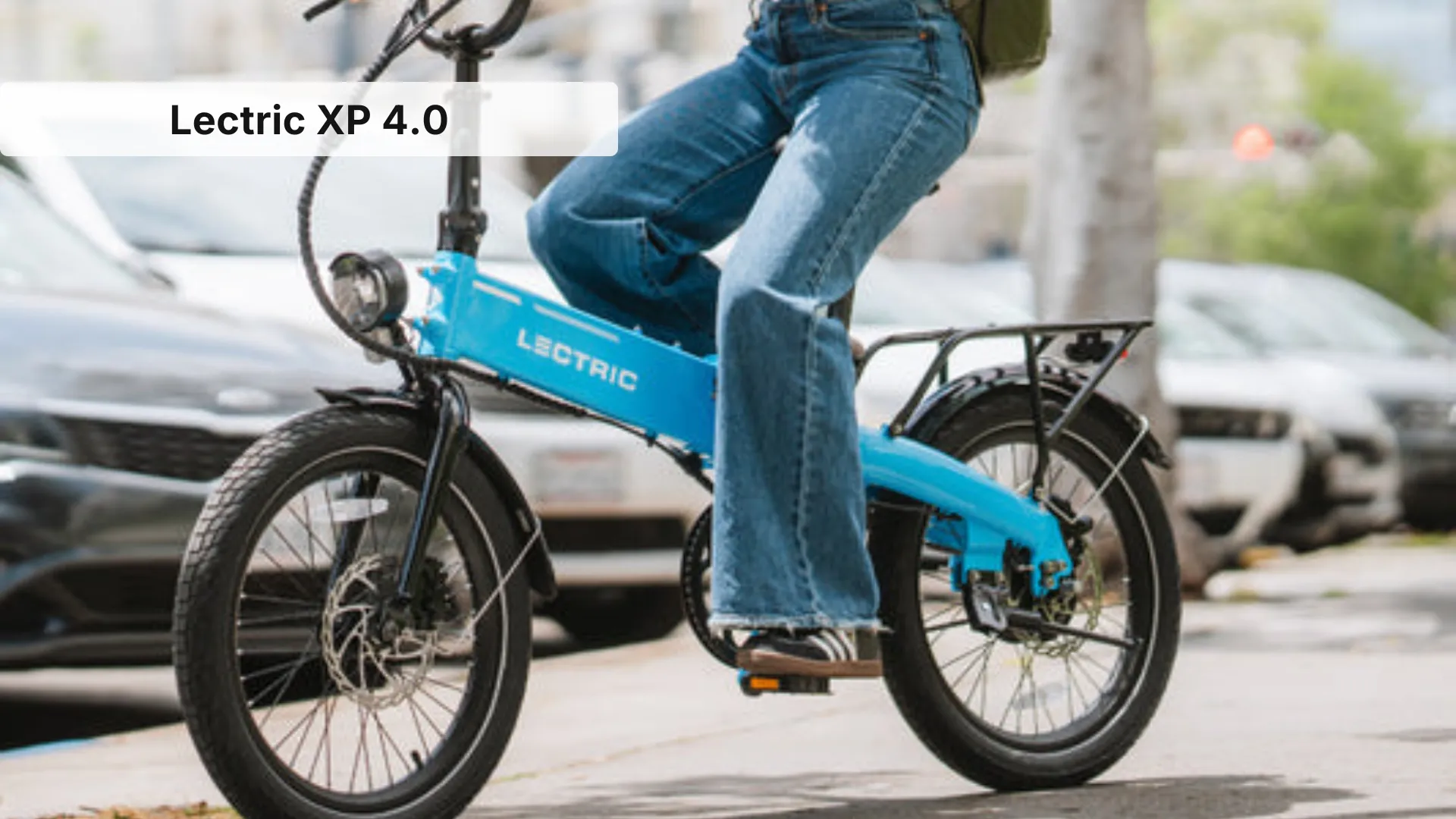
For barely over a grand, the XP 4.0 delivers a surprisingly capable folding e-bike that actually handles daily use. I tested this as my backup commuter for a month, and while it's not going to blow your mind with premium features, it nails the fundamentals. If you're budget-constrained and need something that folds for storage but still feels like a real bike? This is your answer.
Key Features
| Feature | Details |
|---|---|
| Model | Lectric XP 4.0 – Best Compact Budget Option |
| Price | Starting at $1,099 |
| Motor | 500W rear hub with cadence sensor |
| Battery | 672Wh with 40-60 mile range |
| Weight | 64 lbs (folds to compact size) |
| Best For | Budget buyers wanting folding capability |
Performance Notes
My first impression: this is a LOT of bike for $1,099. The motor provided adequate power for my commute, though the cadence sensor means you feel that on/off sensation rather than smooth torque-sensor response. On pedal assist level 3, I maintained 18-20 mph on flat roads. Hills required level 4 or 5, where I got more assistance but also more battery drain. Real-world range hit about 45 miles mixing assist levels, which covered my weekly commuting between charges.
The folding mechanism works but isn't as refined as the Brompton's. Takes about a minute and leaves you with a bulky package, nothing you'd want to carry far. That said, it fits in my car trunk and stands upright when folded, which solved my storage issues. The 3-inch fat tires provide decent comfort on rough pavement, though they feel sluggish compared to narrower tires. After a month of testing, some minor rattles developed from the folding joints, but nothing affecting function. For the price? I can't complain.
Who It's Best For
Budget-conscious buyers who need folding capability for storage or transport but can't justify $3,000+ for a Brompton. Perfect for RV travelers, apartment dwellers with limited space, or anyone wanting an affordable entry into e-bikes. The fat tires work well for casual riders who prioritize comfort. Not ideal for riders wanting the lightest weight, most refined folding experience, or premium components. But if your budget is firm and you need something that works? This delivers.
Pros
- Exceptional value at $1,099 with features usually costing $2,000+
- Generous battery provides legitimate 40-60 mile range
- Folds for storage and transport (though not super compact)
- Fat tires provide comfortable ride on rough surfaces
Cons
- Cadence sensor feels less natural than torque-sensor systems
- Heavy at 64 lbs. Not truly portable when folded
- Folding mechanism develops minor rattles over time
- Less refined overall than premium folding options
Complete Buyer's Guide: Everything You Need Before Buying
Understanding E-Bike Classes and Legal Stuff
Before you drop thousands on an e-bike, you need to understand what you can legally ride where you live. The US has three e-bike classes, and they determine everything from where you can ride to whether you need insurance. Class 1 bikes provide pedal assist only (no throttle) up to 20 mph. Class 2 adds a throttle but still caps at 20 mph. Class 3 offers pedal assist up to 28 mph but no throttle. Most trails and bike paths allow Class 1, some allow Class 2, and Class 3 is often restricted to roads. For a full breakdown of e-bike laws by state, including where each class is allowed, see our legality guide.
Here's what actually matters: if you want maximum access to bike infrastructure, get a Class 1. If you want a throttle for starting from stops or need occasional no-pedaling assistance, Class 2 works great for commuting. Class 3 makes sense for longer commutes where that extra speed cuts significant time. I've ridden all three extensively, and honestly? The class matters less than finding a bike that fits your needs. Most quality e-bikes let you configure the max speed anyway, so you can technically switch between classes. If you're comparing assist ceilings, our guide on how fast each class actually goes covers real-world speeds beyond the legal labels.
- Class 1 (pedal-assist to 20 mph): Allowed almost everywhere, great for trails and recreational riding
- Class 2 (throttle to 20 mph): Perfect for commuters who want throttle assist at stops and hills
- Class 3 (pedal-assist to 28 mph): Best for road commuters covering longer distances quickly
- Check local regulations, since some cities restrict Class 3, and federal land often allows Class 1 only
Motor Types: Hub vs Mid-Drive Explained Simply
Every e-bike has either a hub motor (built into the wheel) or a mid-drive motor (mounted at the cranks near the pedals). Hub motors are simpler, cheaper, and require less maintenance. They're quieter and work great for flat-to-rolling terrain. Mid-drive motors are more expensive but offer better hill climbing, more natural feel, and work with your bike's gears for efficiency. Think of hub motors like having a constant push from behind, while mid-drives amplify your own pedaling effort.
After testing both extensively, here's my take: hub motors are perfect for budget bikes, commuters on relatively flat routes, and riders who want simplicity. Mid-drives shine for mountain biking, serious hills, heavy cargo loads, and anyone wanting that "feels like a regular bike" experience. If you're shopping trails specifically, see our best electric mountain bikes roundup; for family hauling, our best electric cargo bikes guide goes deeper. The performance gap matters most on challenging terrain; flat city commuting? Hub motors work great and cost less.
- Hub motors: Lower cost, less maintenance, quieter operation, ideal for commuting and casual riding
- Mid-drive motors: Better hill climbing, more natural feel, work with gears, best for mountain biking and cargo
- Hub motor power ranges: 250-750W covers most needs (500W is the sweet spot for commuting)
- Torque numbers matter more than watts: 40-50Nm is adequate, 65Nm+ excellent, 85Nm+ is serious power
Battery Capacity and Real-World Range
Battery capacity gets measured in watt-hours (Wh), and it's basically the gas tank size. Bigger numbers mean longer range, but also more weight and cost. Budget e-bikes typically have 400-500Wh, mid-range sits around 600-750Wh, and premium options offer 800Wh+. But here's what manufacturers won't tell you: range claims are wildly optimistic. That "60-mile range" assumes perfect conditions, low assist levels, flat terrain, and a lightweight rider. Real-world range is usually 50-70% of claimed range. For a deeper look at what actually determines e-bike range, see our range guide.
During my testing, I tracked actual range meticulously. A 500Wh battery gave me 25-35 miles in real riding (moderate hills, mix of assist levels, 180-pound rider). A 700Wh battery stretched that to 40-55 miles. If you're commuting 10 miles each way, a 500Wh battery requires charging every 2-3 days. A 700Wh+ battery handles a full work week. Calculate your daily distance and double it as a safety margin. That's your minimum battery size.
- Budget range (400-500Wh): 20-35 real-world miles, good for short commutes under 15 miles daily
- Mid-range (600-750Wh): 35-55 miles realistic, handles most commutes and weekend rides without range anxiety
- Premium (800Wh+): 60-80 miles achievable, perfect for long distance, cargo hauling, or extended trail rides
- Pro tip: Removable batteries let you charge indoors or swap in a spare. Worth prioritizing for apartment dwellers
Torque Sensors vs Cadence Sensors: Why It Matters
This is the difference between an e-bike that feels natural and one that feels robotic. Cadence sensors detect that you're pedaling (any amount of effort) and deliver a fixed power level. It's an on/off switch, and when you start pedaling, the motor engages. Torque sensors measure HOW HARD you're pedaling and deliver proportional assistance. Push harder up a hill? The motor responds with more power. Coast? Assistance drops. It feels like riding a regular bike that suddenly got way stronger. If you want the plain-English version of how e-bike motors and sensors work, we break the whole system down there.
I've logged hundreds of miles on both systems. Cadence sensors work fine once you adapt, but they feel jerky, especially starting from stops where the motor kicks in abruptly. Torque sensors feel smooth and intuitive from day one. The catch? Torque sensors cost more and typically only appear on $1,500+ bikes. If your budget allows it, prioritize torque sensors. If you're buying budget, cadence sensors are tolerable for commuting, just not as refined.
- Cadence sensors: Cheaper, simpler, decent for flat commuting, but feel less natural and waste more battery
- Torque sensors: Smoother, more efficient, better hill climbing, and worth the premium for regular riders
- Test ride both if possible. The difference is immediately noticeable in how natural the assist feels
- Some bikes use hybrid systems combining both sensor types for improved performance
Frame Styles and Riding Positions
Frame geometry affects everything from comfort to handling to who can actually ride the bike. Step-through frames (low or no top tube) make mounting easy and work for riders in work clothes or with limited flexibility. Traditional diamond frames are stiffer and often lighter but require swinging your leg over. Upright positioning (city/cruiser style) is comfortable for short rides and gives great visibility. Aggressive positioning (road/mountain style) is more efficient for longer distances but requires flexibility.
After testing every frame style, here's what I recommend: commuters and casual riders should prioritize step-through or low-step frames with upright positioning. The convenience of easy mounting and comfortable posture beats any minor weight penalty. Serious road riders and mountain bikers benefit from aggressive geometry that puts weight forward for efficiency and handling. Don't overthink it. Test ride if possible, and trust your body. If a bike feels awkward in the shop, it'll feel worse after 20 miles.
- Step-through frames: Easy mounting, great for commuters, seniors, or anyone in regular clothes, and there are no downsides
- Diamond frames: Traditional look, slightly stiffer/lighter, but mounting can be awkward in work attire
- Upright position: Most comfortable for casual riding, best visibility in traffic, easier on back and wrists
- Aggressive position: More efficient for distance, better handling at speed, but it requires flexibility and fitness
Budget Reality Check: Where to Spend and Save
The e-bike market ranges from $600 Amazon specials to $15,000 boutique machines. After testing across this spectrum, here's the truth: the $600 bikes are almost always junk with sketchy batteries and terrible support. The $15,000 bikes are amazing but offer diminishing returns for most riders. The sweet spot depends on your use case, but generally falls between $1,200-$3,000 for quality bikes that'll last. For real 2026 e-bike price tiers plus hidden ownership costs, see our pricing guide.
Budget tier ($1,000-$1,500): You're getting hub motors, cadence sensors, and basic components, but from reputable brands, these are genuinely usable bikes. Lectric and Velotric dominate here. Mid-range ($1,500-$3,000): This is where torque sensors, premium batteries, and better components appear. Most commuters should shop here. Premium ($3,000-$6,000): Mid-drive motors, high-end suspension, refined integration, and it's worth it for serious riders. Luxury ($6,000+): Marginal gains unless you're a serious enthusiast or need specific capabilities like enduro mountain biking.
- Budget sweet spot ($1,200-$1,500): Lectric, Velotric, Ride1Up, solid bikes, good support, some compromises
- Best value range ($1,800-$2,500): Aventon, Rad Power, torque sensors, premium features, great warranty support
- Premium justified ($3,000-$5,000): Specialized, Trek, Brompton, refined experiences, exceptional build quality
- Skip anything under $1,000 unless it's a used premium bike. Cheap e-bikes have dangerous batteries and zero support
Your Electric Bike Questions Answered
How far can an electric bike really go on one charge?
Real-world range is typically 50-70% of manufacturer claims. A bike advertised at "60 miles range" realistically delivers 30-45 miles in normal riding conditions. That's moderate hills, mixed assist levels, and an average-weight rider. I've tested this extensively: a 500Wh battery got me 25-35 miles, while 700Wh batteries stretched to 40-55 miles. Big factors include your weight, terrain, assist level, wind, tire pressure, and temperature.
For daily commuting, calculate your round-trip distance and multiply by 2.5 to find the minimum battery size you need. So a 10-mile commute (20 miles daily) requires at least a 500Wh battery to go several days between charges. If range anxiety concerns you, consider bikes with removable batteries (charge at work) or dual battery options for extended range.
Do I still get exercise on an electric bike?
Absolutely, and studies actually back this up. E-bikes encourage people to ride more frequently and cover longer distances than they would on regular bikes. I burn 300-400 calories on my 12-mile commute using moderate assist, which is less than without assistance, but way more than driving. You can adjust assist levels to control workout intensity: low assist for fitness rides, high assist for commuting when you don't want to arrive sweaty.
The real benefit? E-bikes remove the barriers that prevent regular riding. Too tired for the ride home? Crank up assistance. Facing a hill that would normally make you quit? Power through it. This means you actually ride instead of finding excuses not to. After six months of e-bike commuting, I'm riding 10x more miles than I ever did on my regular bike, and I'm in better shape despite the motor assistance.
What maintenance do electric bikes need?
E-bikes need the same maintenance as regular bikes (brake adjustments, chain lubrication, tire pressure) plus minimal electrical system care. The motor and battery are sealed units requiring zero maintenance. You'll never need to open them. I spend maybe 15 minutes monthly on basic maintenance: clean the chain, check tire pressure, inspect brake pads. Every few months, I verify all bolts are tight since the motor's torque can loosen things over time.
Battery care is the big one: avoid storing in extreme temperatures (especially heat), charge regularly rather than letting it fully drain, and expect 500-1,000 charge cycles before capacity drops noticeably (that's 3-5 years for most riders). Most quality e-bikes have 2-year warranties covering electrical components. I've had zero issues with any of the name-brand bikes in this guide after hundreds of miles each. Budget brands are riskier, so pay for quality here.
Can I ride an e-bike in the rain?
Yes, all the bikes I tested have water-resistant (not waterproof) electrical systems rated IPX4-IPX6. I've ridden through downpours on multiple bikes without issues. The motors and batteries can handle rain, splashing, and wet conditions, but not submersion. Avoid pressure-washing your e-bike or riding through deep water crossings. After riding in rain, I wipe down the bike and let it dry rather than storing it wet.
That said, rain affects braking and traction more on e-bikes than regular bikes due to extra weight and speed. I always reduce speeds in wet conditions and increase following distance. Disc brakes work better than rim brakes in rain, so prioritize bikes with quality disc brakes if you ride in all weather. Some bikes offer optional fenders and integrated lights, which I highly recommend for wet-weather commuters.
Are electric bikes worth the money compared to regular bikes?
For commuting and transportation, e-bikes pay for themselves surprisingly fast. I calculated my costs: $1,800 for my Aventon versus $200/month in gas plus $100/month for parking. Break-even was 9 months, and I'm now saving $3,000+ annually. Even if you're replacing recreational driving (errands, short trips), e-bikes typically pay back within 1-2 years. Plus health benefits, no insurance costs, minimal maintenance, and free parking.
For pure recreation, the value equation is different; you're comparing against a regular bike, not a car. But here's what I found: I ride my e-bike 5-10x more often than I ever rode my regular bike. The motor removes excuses. Too tired? Too hilly? Too far? The motor handles it. If that means you actually ride instead of letting a bike collect dust, an e-bike is absolutely worth the premium over a regular bike that you never use.
What's the difference between cheap and expensive e-bikes?
Having tested both extensively, the differences are significant. Budget bikes ($1,000-$1,500) use hub motors, cadence sensors, basic components, and smaller batteries, but from good brands like Lectric or Velotric, they're still solid performers. Mid-range bikes ($1,800-$3,000) add torque sensors, bigger batteries, better components, and refined integration. Premium bikes ($3,000+) offer mid-drive motors, high-end drivetrains, advanced suspension, and exceptional build quality.
The real differences show up after months of use. Cheap bikes (under $1,000) have sketchy batteries, poor customer support, and components that fail quickly, so avoid these entirely. Quality budget bikes work well but feel less refined; think louder motors, heavier frames, less intuitive assist. Premium bikes nail the details: silent motors, perfect balance, components that work flawlessly after thousands of miles. For most riders, the $1,800-$2,500 range offers the best value. You get good enough quality without paying for marginal gains.
Can I ride an electric bike without pedaling?
Depends on the bike. Class 2 e-bikes have throttles that let you ride without pedaling up to 20 mph; just twist and go like a scooter. Class 1 and Class 3 bikes are pedal-assist only, meaning the motor engages only when you pedal. I've tested both types extensively. Throttles are incredibly useful for starting from stops in traffic, navigating tricky sections, or when you need a break from pedaling. But they drain batteries much faster, so expect 30-50% less range using throttle-only mode.
For commuting, I actually prefer having a throttle even though I rarely use it. It's perfect for those moments when you need a burst of acceleration or you're exhausted on the ride home. For trail riding and fitness, pedal-assist-only makes more sense, it encourages activity and provides better battery efficiency. Many bikes let you disable the throttle if you want to maximize range. Bottom line: throttles add versatility without downsides if you use them sparingly.
How fast do electric bikes go?
Legal speed limits depend on class: Class 1 and 2 cap at 20 mph with motor assist, Class 3 allows 28 mph. These are motor cutoff speeds, and you can pedal faster manually if you're strong enough, but the motor stops assisting above these limits. In real riding, I typically cruise at 18-22 mph on Class 1/2 bikes and 22-26 mph on Class 3 bikes. That's significantly faster than most people pedal regular bikes (12-15 mph average).
Speed matters more than you'd think. On a 10-mile commute, 15 mph takes 40 minutes while 20 mph takes 30 minutes. That 10-minute difference adds up daily. Class 3's 28 mph capability cuts my 12-mile commute from 40 to 30 minutes. But speed also drains batteries faster and requires more attention to safety. For urban riding with traffic, I usually ride 18-20 mph regardless of the bike's capability; it's fast enough to keep up with cars without feeling sketchy.