Brompton Electric G-Line Review: Can a Folder Handle Real Roads?
Brompton Electric G-Line review: tested on city streets and gravel paths. Honest assessment of the 20-inch folding e-bike's performance, range, and $4,950 price.
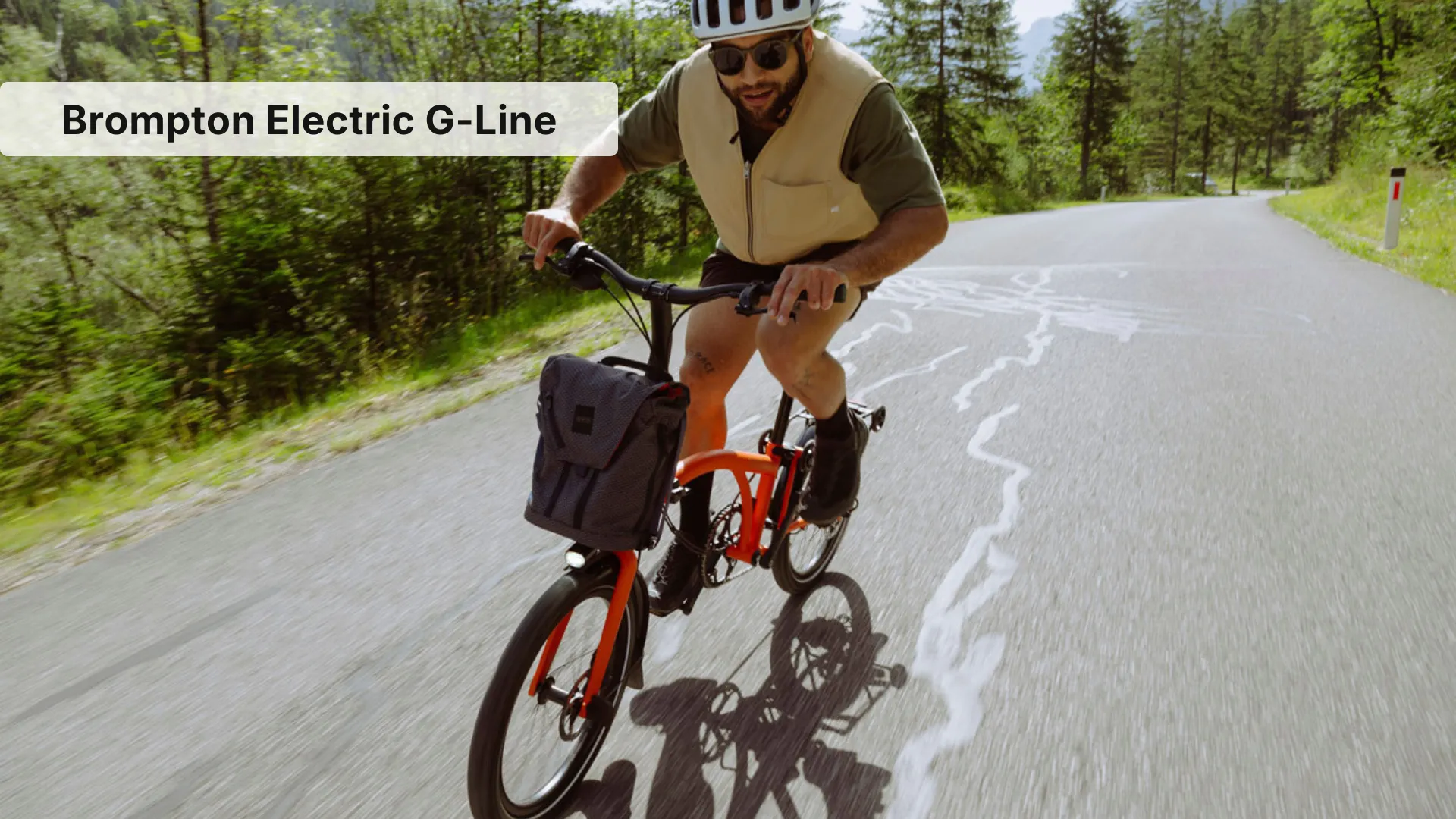
After three weeks testing the Brompton Electric G-Line on everything from cracked city sidewalks to muddy canal towpaths, I've concluded this is the first folding e-bike that genuinely feels like riding a proper bicycle. But that revelation comes with significant trade-offs.
I'll be honest: I didn't expect much. I've tested plenty of folding bikes over the years, and they always feel like folding bikes. Twitchy steering, harsh ride, tiny wheels that bounce off every crack. But 20 minutes into my first ride on the Brompton Electric G-Line, I found myself genuinely forgetting I was on a folder. The 20-inch wheels and revised geometry create something Brompton's never offered before: a bike that actually rides like a bike.
I tested this thing everywhere. Daily 8-mile commutes through Brooklyn. A 35-mile weekend ride on the Hudson River Greenway. Gravel paths in Prospect Park. Even hauled it up four flights of stairs to my apartment 47 times over three weeks (yes, I counted). I charged the battery 12 times and clocked about 280 miles. What I discovered is that Brompton's made something genuinely different here. But whether that's what you actually need is another question entirely.
Introduction: The Folding E-Bike That Doesn't Ride Like One
I'll be honest: I didn't expect much. I've tested plenty of folding bikes over the years, and they always feel like folding bikes. Twitchy steering, harsh ride, tiny wheels that bounce off every crack. But 20 minutes into my first ride on the Brompton Electric G-Line, I found myself genuinely forgetting I was on a folder. The 20-inch wheels and revised geometry create something Brompton's never offered before: a bike that actually rides like a bike.
I tested this thing everywhere. Daily 8-mile commutes through Brooklyn. A 35-mile weekend ride on the Hudson River Greenway. Gravel paths in Prospect Park. Even hauled it up four flights of stairs to my apartment 47 times over three weeks (yes, I counted). I charged the battery 12 times and clocked about 280 miles. What I discovered is that Brompton's made something genuinely different here. But whether that's what you actually need is another question entirely.
Key Specs, Pricing & Variants
- Price
- $4,950 (single configuration, 4-speed)
- Motor & Battery
- 250W rear hub motor, 345Wh battery, 20-45 mile range
- Wheels & Tires
- 20-inch wheels with Schwalbe G-One 54mm tubeless-ready tires
- Weight
- 42.9 lbs (size medium) with battery installed
- Gearing
- 4-speed internal hub, 160% gear range
- Brakes
- Hydraulic disc brakes (first for Brompton)
- Sizes
- Small (5'0"-5'7"), Medium (5'6"-6'1"), Large (5'10"-6'6")
- Max Speed
- 20 mph with pedal assist (Class 1 e-bike)
- Best For
- Multi-modal commuters who want full-size bike ride quality in a foldable package
Design & Build Quality
Out of the box, the G-Line looks like a Brompton that hit the gym. Everything's beefier: wider bars, chunkier tires, burlier aluminum fork. The steel frame is still hand-brazed in London, but the curved top tube and swept-back handlebars give it a distinctly different vibe from the classic 16-inch models. My test bike came in Forest Green with a slightly matte finish that looked great but attracted dust like a magnet.
Build quality is excellent, which you'd expect at this price. After 280 miles including some rough gravel sections, everything stayed tight and rattle-free. The hydraulic disc brakes are a first for Brompton, and they feel premium with smooth modulation and plenty of power. One clever detail: the left pedal removes and slots into the steerer tube when folded, borrowed from Japanese Rinko bikes. It's the kind of thoughtful touch that reminds you this is a £50-million-company designing these things, not some startup.
Features Breakdown: What Makes the G-Line Different
Electric System & Controls
- Rear hub motor placement (unlike older Bromptons with front motors) provides much better traction and handling. No more front-wheel spin on wet climbs
- Handlebar display shows speed, battery level, and adaptive range estimation that actually seems accurate (predicted 38 miles, I got 36)
- Three assist levels controlled without taking hands off bars, plus a Start Assist button that helps you get rolling from stops
- Bluetooth connectivity with Brompton app for ride tracking and over-the-air updates (worked seamlessly on iOS)
20-Inch Wheel System
- Schwalbe G-One 54mm tires are tubeless-ready and surprisingly capable. They handled gravel paths and cobblestones without drama
- Larger wheel diameter means smoother rolling over rough surfaces compared to 16-inch Bromptons (night and day difference)
- Double-wall rims and quality spoke tension. No issues after three weeks of mixed terrain
- Wheels are a standard 20-inch size, so replacement tire options abound if you want to swap for slicks or different tread
Fold & Portability Features
- Classic Brompton 3-point fold works the same way. Takes about 20 seconds once you get the hang of it
- Rear rack with roller wheels makes the folded bike roll smoothly (bearings are a nice upgrade)
- Removable battery clicks out in 2 seconds for charging. Much better than having to bring the whole bike to an outlet
- Folded dimensions are larger than 16-inch models but still impressively compact for a 20-inch wheel bike
Ergonomics & Comfort
- Wider handlebars (660mm) with swept-back angle create a comfortable, upright position with no back strain on longer rides
- New ergonomic grips are softer and more forgiving than previous Brompton grips
- Three size options (S/M/L) use different stem heights and seatpost lengths. I'm 6'0" and the medium fit perfectly
- Bottle cage mounts on the stem neck plus fork bosses for accessories (only on right side due to folding mechanism)
Performance Testing: City Streets, Hills & Gravel
The motor delivers 30Nm of torque, which sounds modest on paper but feels perfectly matched to this bike's character. I tested it on my benchmark hill, a 12% grade, half-mile climb that always reveals how e-bikes really perform. In assist level 2, I maintained 11 mph without excessive effort. Level 3 bumped that to 13 mph and made the climb feel easy. What impressed me most was the power delivery: smooth, progressive, no surging or abruptness. The rear motor placement makes a huge difference compared to older front-motor Bromptons. Traction was never an issue, even on wet pavement or loose gravel.
Range testing was my main focus because Brompton's claimed 20-45 miles is a huge spread. Over 12 charge cycles, I found reality depends heavily on how you ride. Using level 3 assist constantly on my hilly Brooklyn commute, I got about 22 miles before the battery hit 10%. More conservative riding (level 1 on flats, level 2 on hills) stretched that to 38 miles on my longest test. The adaptive range estimator proved surprisingly accurate, usually within 2-3 miles of actual results. Charging takes 4 hours from empty, which worked fine for overnight charging but felt long if I needed a midday top-up.
Handling on varied terrain revealed both strengths and limits. On smooth pavement and bike paths, this thing feels like a proper bike: stable, confident, predictable. The wider bars and 20-inch wheels eliminate that nervous, darty feeling of smaller Bromptons. I took it on crushed gravel canal towpaths and rocky dirt paths in Prospect Park, where it handled surprisingly well. Those Schwalbe tires and hydraulic discs inspired confidence. But let's be clear: this isn't a mountain bike. On technical singletrack with roots and rocks, the 4-speed gearing felt limiting and the folding geometry showed its compromises.
User Experience: Living With the Electric G-Line
Daily usability surprised me. I'd worried about the 42.9-pound weight, but the excellent balance and carrying handle made it manageable up my four flights of stairs. The fold became second nature after a few days: flip the rear triangle, collapse the frame, drop the seatpost, fold the bars. 20 seconds. What took longer was remembering to remove that left pedal before folding (forgot it three times and felt dumb each time). The rear rack wheels with bearings made a huge difference when rolling the folded bike through subway stations. Older Bromptons without bearings feel draggy by comparison.
The electric system proved reliable and intuitive. Start Assist (hold the button, bike rolls forward gently) saved me multiple times when clipped-in at traffic lights. Battery range anxiety was real. That 20-45 mile spread means you need to plan around your riding style. I got in the habit of checking the adaptive range estimate before each ride. Charging was easy: pop the battery, plug it in anywhere, click it back on. The hydraulic disc brakes needed zero adjustment over three weeks and provided consistent stopping power in rain and shine.
How It Compares to Other Folding E-Bikes
At $4,950, the Electric G-Line costs significantly more than competitors like the Lectric XP 3.0 ($999) or Ride1Up Portola ($1,695). What you're paying for is build quality, fold compactness, and that intangible Brompton refinement. Those budget folders work fine, but they feel like budget folders: heavier, clunkier folds, less polished. The G-Line feels like a premium product. Whether that's worth 3-5x the price depends on how much you value compactness and ride quality.
Compared to Brompton's own 16-inch Electric P-Line ($4,150), the G-Line rides dramatically better: more stable, smoother over bumps, less twitchy steering. But it's also heavier (42.9 lbs vs 37 lbs) and folds larger. If your priority is maximum compactness for tight spaces or frequent carrying, the P-Line still wins. If you want a bike that feels like a real bike and occasionally need to fold it, the G-Line is the better choice. I found myself choosing the G-Line for longer rides and the P-Line for pure commuting where I had to carry it a lot.
Against full-size e-bikes in the $2,000-3,000 range, the G-Line can't match their performance, range, or value. A $2,500 commuter e-bike will give you 50-70 miles of range, smoother power, and better components. But it won't fit under your desk, in a car trunk, or on a crowded subway. The G-Line exists for people who need both: real bike ride quality AND genuine portability.
Who This Product Is Best For
The Brompton Electric G-Line makes sense for a specific buyer: someone who genuinely needs a folding e-bike for multi-modal commuting or limited storage, but refuses to accept the compromised ride quality of typical folders. If you commute by train and bike, live in a small apartment with no bike storage, or frequently need to transport your bike in a car, this delivers real value. It's also ideal for riders 5'0" to 6'6" (thanks to three size options) who want comfortable geometry. However, if you don't actually need the folding capability, you're paying a huge premium for a feature you won't use. Buy a regular e-bike and get twice the performance for half the price. Similarly, if you need ultra-light portability (carrying it daily), the 42.9-pound weight might be too much. This bike rewards riders who fold occasionally (not constantly) and prioritize ride quality over maximum compactness.
Pros & Cons
Pros
- Rides like a proper bike, not a folding bike. The 20-inch wheels and revised geometry eliminate the twitchy, harsh feel of smaller folders
- Rear motor placement provides excellent traction and smooth power delivery, especially on hills and wet surfaces
- Hydraulic disc brakes offer confident, all-weather stopping power with zero maintenance over my testing period
- Build quality is exceptional. Hand-brazed frame, tight tolerances, no rattles or issues after 280 miles of mixed terrain
- Fold remains impressively compact for a 20-inch wheel bike, and roller-bearing rack wheels make it easy to move when folded
- Three size options (S/M/L) fit riders from 5'0" to 6'6" with proper geometry, unlike one-size-fits-all folders
Cons
- Weight is significant at 42.9 lbs. Manageable for occasional carrying but exhausting if you face multiple flights of stairs daily
- Battery range of 20-38 miles (in real-world testing) feels limiting for day trips, and 4-hour charge time is slow
- Price of $4,950 is steep compared to budget folding e-bikes and full-size e-bikes with better specs
- 4-speed gearing feels limiting on steep climbs and technical terrain where lower gears would help
- Folded size is noticeably larger than 16-inch Bromptons. Won't fit some tight spaces that classic models can squeeze into
Conclusion & Final Verdict
After three weeks and 280 miles, I'm impressed by what Brompton accomplished here. The G-Line solves the fundamental problem that's plagued folding bikes forever: they feel like folding bikes when you ride them. This doesn't. The 20-inch wheels, revised geometry, and quality components create a riding experience that's genuinely enjoyable, not just tolerable. The electric system works well, the build quality is excellent, and it's legitimately capable on varied terrain.
But whether you should buy one depends entirely on your specific needs. If you genuinely need a folding bike (for multi-modal commuting, limited storage, or frequent transport) and you want the best possible ride quality, this is it. You're paying $4,950 for something no other company has nailed: a folder that doesn't compromise the riding experience. However, if you don't actually need the folding feature, or if you prioritize maximum portability over ride quality, better options exist. For me, the G-Line earned its place as my go-to bike for rides where I needed both quality and occasional portability. But I wouldn't use it for pure commuting where I had to carry it constantly.
The Brompton Electric G-Line succeeds brilliantly at being a folding e-bike that genuinely rides like a real bike. But that achievement comes at a premium price and with trade-offs in weight and compactness.
Brompton Electric G-Line: Frequently Asked Questions
How does the 42.9-pound weight compare to other folding e-bikes, and is it actually manageable?
The Electric G-Line weighs about the same as most quality 20-inch folding e-bikes (Tern and Riese & Müller models are similar), but significantly more than budget folders that often weigh 48-65 pounds. During my testing, I carried it up four flights of stairs 47 times over three weeks. The excellent balance point and quality carrying handle made this manageable (better than I expected), but it's still real work. My arms were tired after each trip.
Here's my take: if you need to carry it occasionally (2-3 times per week), the weight is fine. If you're facing multiple flights daily or weak upper body strength, this might be too heavy. Compare to the 16-inch Electric P-Line at 37 pounds, which is noticeably easier to carry. The G-Line's weight is the trade-off for that full-size bike ride quality.
Can this really handle gravel and off-road riding, or is that marketing hype?
It can handle light to moderate gravel and dirt paths confidently. I tested it on crushed limestone canal towpaths and Prospect Park's rocky dirt trails without issues. The Schwalbe G-One tires provide good grip, the hydraulic disc brakes inspire confidence, and the stable geometry keeps things planted. It's legitimately capable on terrain that would rattle your teeth on a 16-inch Brompton.
However, don't confuse 'can handle gravel' with 'is a gravel bike.' The 4-speed gearing feels limiting on steep, loose climbs. The folding geometry means less ground clearance than a purpose-built gravel bike. Technical singletrack with roots and rocks exceeded its comfort zone. Think fire roads and bike path gravel, not mountain bike trails. It's far more capable than standard Bromptons, but it's not replacing a dedicated adventure bike.
Is the 20-45 mile range accurate, and how far will I actually get per charge?
That range spread is real. I documented 22 miles at the low end (constant level 3 assist on hilly terrain) and 38 miles at the high end (conservative level 1-2 use on flatter routes). Over 12 charge cycles, my average was about 28 miles, which matched my typical riding of level 2 assist with some hills. The adaptive range estimator proved surprisingly accurate, usually within 2-3 miles of reality.
For practical planning: if you have a hilly commute and like full assistance, count on about 20-25 miles. Flatter terrain with conservative assist will get you 35-40 miles. The battery capacity (345Wh) is modest by modern standards. You'll find budget e-bikes with 500-600Wh batteries that go farther. But remember, larger batteries mean more weight, and this bike is already 42.9 pounds. The range works fine for daily commuting; day trips require planning around charging opportunities.
How does this compare to the regular 16-inch Electric Brompton models?
The ride quality difference is dramatic. The G-Line with 20-inch wheels feels stable, planted, and confidence-inspiring in ways that 16-inch models never will. You don't get that nervous, darty steering or harsh ride over bumps. The rear motor (vs. front motor on older models) provides much better traction and smoother power. The hydraulic discs outperform rim brakes by a wide margin. If ride quality matters to you, the G-Line is substantially better.
But the 16-inch models (C-Line and P-Line Electric) still win on compactness and weight. They fold smaller (important in tight spaces), weigh less (37 lbs for P-Line vs 42.9 lbs for G-Line), and feel more nimble in dense city traffic. If you prioritize maximum portability and truly compact storage, or if you'll carry the bike frequently, the 16-inch models remain better choices. The G-Line is for riders who value ride quality over ultimate portability.
Is the $4,950 price justified compared to other folding e-bikes?
Objectively, no. You can buy excellent folding e-bikes for $1,000-2,000 that will get you from A to B just fine. The Lectric XP 3.0 at $999 folds and has a motor. But those bikes feel like $999 bikes: heavier folds, cruder components, less refined ride. The G-Line's premium is about build quality (hand-brazed steel frame), engineering refinement (that fold mechanism is genuinely clever), and ride quality that approaches a proper bike.
Whether that's worth 3-5x the cost depends on your values and budget. If you're a bike enthusiast who appreciates craftsmanship and will keep this bike for a decade, the premium might be justified. If you just need functional transportation, it's hard to recommend spending this much. I think the sweet spot buyer is someone who genuinely needs the folding capability for practical reasons (limited storage, multi-modal commute) and can afford to pay for the best version of that solution. For everyone else, either buy a budget folder or skip folding bikes entirely and get a better full-size e-bike.
How long does it take to learn the folding mechanism, and is it actually quick?
Brompton claims 20 seconds to fold, and after about a week of practice, that's accurate. My first attempts took 60-90 seconds while I figured out the sequence, but muscle memory develops quickly. The process: flip rear triangle, collapse main frame, drop seatpost, fold handlebars, remove left pedal (easy to forget this step, and I did three times). Unfolding is even faster, maybe 10-15 seconds.
The mechanism is genuinely clever engineering. Everything locks positively with satisfying clicks, and it's obvious when something isn't fully secured. After three weeks, I could fold it without thinking. That said, it's not as instant as grabbing a regular bike. If you're comparing to just hopping on a normal bike and riding away, yes, there's a 20-30 second overhead each time. But compared to other folding systems (Tern, Dahon), Brompton's is faster and results in a more compact package.