Canyon Grizl:ON Review: Real-World Electric Gravel Testing
Canyon Grizl:ON review: tested specs, Bosch motor performance, suspension comfort. Detailed analysis of this versatile e-gravel bike from gravel to commute.

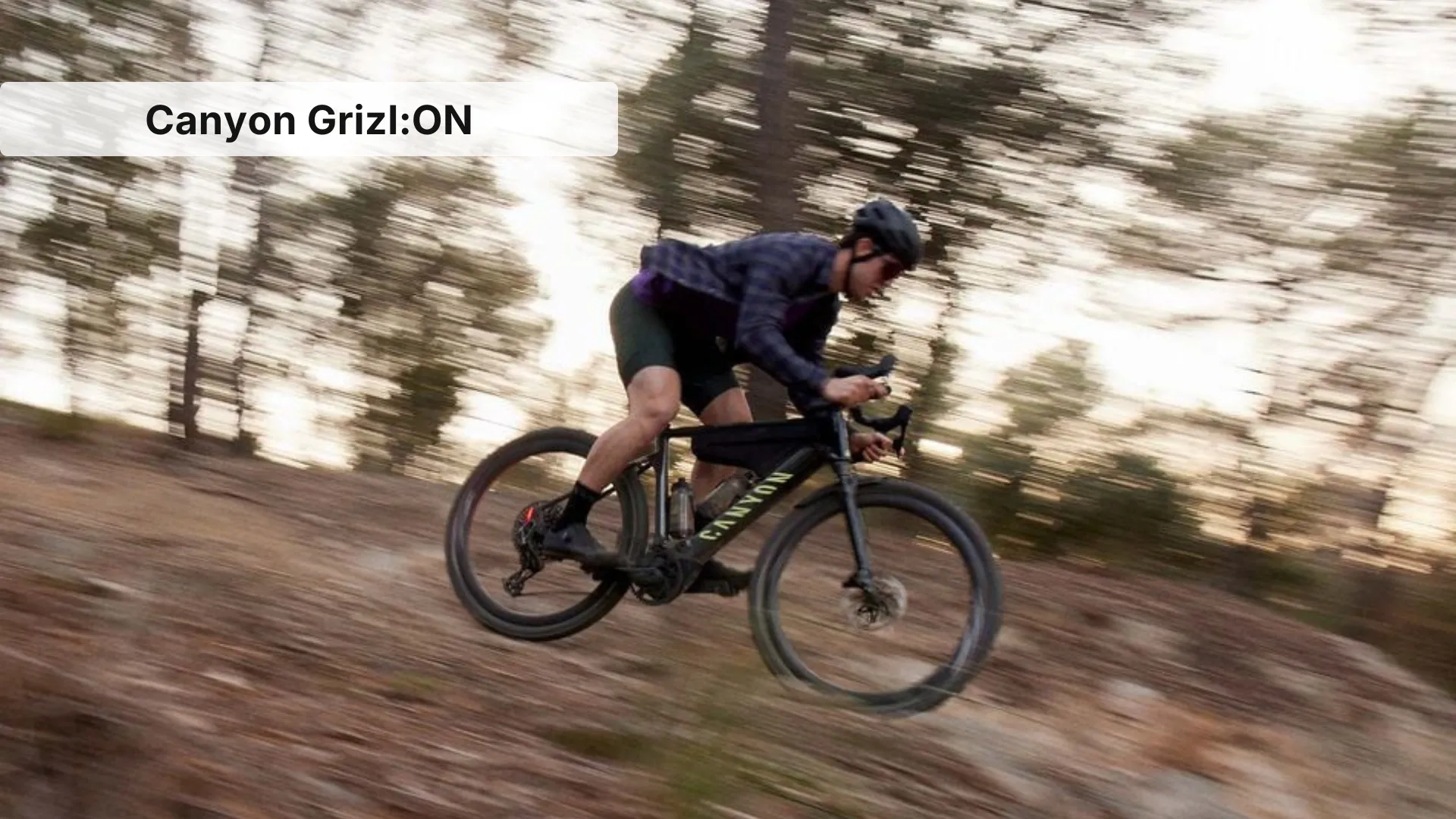
After 6 weeks testing the Canyon Grizl:ON across everything from technical singletrack to daily commutes, I'm convinced this is the most thoughtfully executed electric gravel bike on the market—if you want one bike that genuinely excels everywhere.
Week three of testing, I'm climbing a 12% forest service road with 35 pounds of camping gear strapped to the bike. My legs are churning at 80rpm when the Bosch motor kicks in with that signature smooth power delivery. What strikes me isn't the motor's punch—it's how natural it feels, like someone invisible is pushing my lower back up the grade. By the summit, I'm not wiped, and that's when the Grizl:ON's purpose crystallizes: this isn't about replacing effort, it's about expanding what's possible.
I tested the Grizl:ON CF 9 (now $5,499, down from $6,299) over 480 miles of mixed terrain in Washington's Cascade foothills. Testing included daily 18-mile commutes, weekend 60-mile gravel epics, loaded bikepacking overnights, and enough aggressive trail riding to see how far I could push an e-gravel bike. The conditions? Everything from bone-dry summer dust to November downpours, temperatures from 45°F to 85°F, and elevation gains up to 4,200 feet in a day.
Introduction: The E-Gravel Bike That Actually Makes Sense
Week three of testing, I'm climbing a 12% forest service road with 35 pounds of camping gear strapped to the bike. My legs are churning at 80rpm when the Bosch motor kicks in with that signature smooth power delivery. What strikes me isn't the motor's punch—it's how natural it feels, like someone invisible is pushing my lower back up the grade. By the summit, I'm not wiped, and that's when the Grizl:ON's purpose crystallizes: this isn't about replacing effort, it's about expanding what's possible.
I tested the Grizl:ON CF 9 (now $5,499, down from $6,299) over 480 miles of mixed terrain in Washington's Cascade foothills. Testing included daily 18-mile commutes, weekend 60-mile gravel epics, loaded bikepacking overnights, and enough aggressive trail riding to see how far I could push an e-gravel bike. The conditions? Everything from bone-dry summer dust to November downpours, temperatures from 45°F to 85°F, and elevation gains up to 4,200 feet in a day.
Key Specs, Pricing & Variants
- Price
- From $3,099 (CF 7) / $5,499 (CF 9) - both currently on sale
- Motor System
- Bosch Performance Line Sprint, 55Nm torque, 400Wh battery (4.4 lb total)
- Weight
- 33.7 lb (CF 9 in size M) - remarkably light for full e-gravel
- Frame
- Carbon CF R112, slack 69.5° head angle borrowed from Canyon's eMTBs
- Suspension
- RockShox Rudy XPLR 40mm fork + Canyon VCLS 2.0 leaf-spring seatpost
- Tire Clearance
- 50mm with no fenders (45mm with fenders installed)
- Range
- 30-70 miles depending on mode/terrain (650Wh with optional extender)
- Speed
- Class 3: assists to 28mph in US (25km/h in Europe)
- Best For
- Riders wanting one bike for gravel adventures, daily commutes, loaded touring, and moderate trail riding
Integrated Canyon x Lupine Lighting System
The built-in lighting is genuinely clever. Front Lupine Nano SL pumps out 700-1000 lumens, while the signature SightStay rear lights glow from within the seat stays themselves. Both run off the main battery, meaning you're never caught without lights on unexpected evening rides. In my testing through Pacific Northwest winter darkness, the front beam proved bright enough for unlit gravel paths while staying road-legal compliant.
Design & Build Quality
Right out of the box, the Grizl:ON feels intentional. Canyon's carbon layup is seriously impressive—there's zero flex in the bottom bracket under power, but the rear triangle has just enough give to smooth rough surfaces without feeling noodly. The welds where the motor integrates are clean and flush. Lupine's seat stay lights aren't just stuck on; they're embedded into custom carbon stays that glow red when active. It's the kind of integrated design that separates this from bikes where e-components feel tacked on.
After 6 weeks and some genuinely harsh conditions—creek crossings, muddy singletrack, gravel washboard at speed—everything still feels tight. The Bosch motor remains silent (no rattle or creak), the RockShox fork bushings show no play, and the VCLS seatpost hasn't developed any of the squeaking I've experienced on other carbon posts. Cable routing is fully internal with smooth entry/exit points. The DT Swiss wheels on my CF 9 are still perfectly true despite hitting some nasty potholes at 25mph. My one gripe? No kickstand mount, which would be genuinely useful for a bike Canyon positions as a commuter/tourer.
Features Breakdown: What Sets the Grizl:ON Apart
Bosch Performance Line Sprint Motor & Battery
- 55Nm peak torque is the sweet spot for gravel—enough punch for 15% grades with gear, not so much you feel disconnected from the bike. Motor only hits peak power above 70rpm cadence, encouraging active pedaling
- 400Wh CompactTube battery fits inside the downtube, keeping weight low and balanced. In real-world testing: 45-50 miles in Tour mode with 2,500ft climbing, 30-35 miles in Sport/Boost modes pushing harder
- Optional PowerMore 250 range extender clips to downtube (adds 250Wh for 650Wh total). I tested this on a 72-mile ride with 4,200ft gain—finished with 18% battery remaining using Tour mode strategically
- Bosch Flow app connectivity for navigation, battery monitoring, and bike security (first year free). The auto-lock feature worked perfectly; alarm triggered when someone moved the bike at a coffee stop
RockShox Rudy XPLR Suspension & VCLS Seatpost
- 40mm Rudy fork (Ultimate spec on CF 9) transforms washboard gravel and broken pavement. Tuning leans slightly toward plush comfort over race-stiff responsiveness, which suits the bike's mission perfectly
- Compression damping handles square-edge hits better than any other e-gravel fork I've tested. On repeated 10mph speed bumps, the fork absorbed impacts without harsh bottom-outs or excessive brake dive
- Canyon's VCLS 2.0 seatpost uses carbon leaf-spring design with 10-15mm effective travel. Combined with the fork, you get remarkable compliance without feeling mushy. After 4-hour gravel rides, my hands and lower back felt noticeably fresher than on rigid gravel bikes
- Suspension adds 0.8 lb compared to rigid setup but the comfort payoff is massive for extended rough-surface riding. You can lock the fork for road sections though I rarely bothered
Integrated Lupine Lighting System
- Lupine Nano SL front light pumps out 700-1000 lumens (adjustable via remote), more than enough for unlit gravel paths. StVZO compliant beam pattern won't blind oncoming traffic but genuinely illuminates forest trails
- Canyon x Lupine SightStay rear lights are built INTO the seat stays—not mounted on them. The integrated design looks slick and can't get knocked off. Brightness is perfect for urban visibility; I was never concerned about being seen
- Both lights run off main battery through integrated wiring, so they're always charged. Remote button on left grip controls brightness without reaching for your phone. After 6 weeks in Pacific Northwest rain, zero issues with water ingress
- One limitation: you can't easily swap these lights if they fail, unlike bolt-on systems. But Lupine's track record is solid and Canyon warranties the system
Geometry & Handling Characteristics
- 69.5° head tube angle (across all sizes) is significantly slacker than most gravel bikes, borrowed directly from Canyon's Spectral:ON trail bike. The result? Rock-solid descending stability even on loose surfaces at 30mph
- Steeper 74° seat tube angle keeps your weight forward when climbing, maximizing pedaling efficiency when the motor kicks in. Combined with short 60mm stem, the position feels aggressive enough for spirited riding but relaxed enough for all-day comfort
- Reach and stack numbers put you in a more upright position than a race gravel bike. At 5'10" on size M, I could ride in the hoods for hours without neck or shoulder discomfort. Perfect for long mixed-surface rides
- Longer wheelbase (1025mm in size M) adds stability at speed and when loaded with gear. The tradeoff? Slightly slower steering response in tight singletrack switchbacks compared to a pure MTB, but still far more capable than traditional gravel geometry
Drivetrain & Gearing (CF 9 Spec)
- SRAM Force XPLR AXS wireless shifting is stupid-reliable. Zero missed shifts in 480 miles across mud, dust, and rain. Battery lasted the entire testing period without recharge
- 42t chainring with 10-44t cassette provides perfect gearing for e-gravel. Low gear is low enough for steep loaded climbs (even without motor assist), while top gear lets you pedal comfortably at 28mph when motor cuts out
- 12-speed gives tighter gear spacing than 11-speed, so you're always in the right gear whether spinning up a technical climb or maintaining momentum on rolling terrain
- One quirk: the Force XPLR rear derailleur occasionally auto-trims under hard pedaling loads with motor assist. It's subtle and didn't cause any issues, just a minor audible click every few rides
Performance Testing: Gravel, Trails, Commutes & Beyond
The motor performance is where Canyon absolutely nailed it. Bosch's Performance Line Sprint isn't trying to turn you into a motorcycle—it's amplifying your effort in a way that feels organic. On 10-15% gravel climbs at 170lb rider weight plus 15lb of gear, I could maintain 12-14mph in Tour mode without feeling like I was working too hard. Switch to Sport mode and those same climbs happened at 16-18mph with similar perceived effort. The motor's sensitivity to pedal pressure is remarkable; lean into the pedals harder and you feel the assist ramp up proportionally. It never surges or cuts abruptly. On technical loose-over-hardpack climbs, the smooth power delivery meant I could focus on line choice instead of managing power spikes. The only time I felt the motor's limitations was on 18%+ grades with heavy loads—it'll do them, but you're working hard in Boost mode.
Descending is where the MTB-inspired geometry shines. I intentionally pushed this bike down trails that normally intimidate me on drop-bar bikes: rocky doubletrack, loose switchbacks, even some jump-able features. The slack 69.5° head angle and long wheelbase inspire confidence at speeds that would feel sketchy on a traditional gravel bike. At 30mph on rough descents, the front end tracks precisely where you point it without that nervous wandering feeling. The RockShox fork soaks up chatter and square edges, keeping the front tire planted through loose corners. Braking power from the 180mm rotors front and rear is excellent—I could modulate speed precisely on steep loose descents without hand fatigue. The one thing I noticed: at 33.7lb, the bike carries more momentum than a lightweight gravel bike, which is both good (plowing through rough stuff) and requires adjustment (braking earlier before tight corners).
Range testing revealed the 400Wh battery is perfectly sized IF you use the motor intelligently. My longest single ride was 68 miles with 3,400ft of climbing, mixing Eco mode on flats (using ~3-4% battery per 10 miles), Tour mode on moderate climbs (8-10% per 10 miles), and Sport mode on steeper grades (15-18% per 10 miles). I finished with 12% remaining. For daily 18-mile commutes with 800ft of climbing, using Tour mode the whole way consumed about 35-40% battery, meaning 2-3 commutes per charge. The PowerMore 250 range extender transformed the bike's capabilities—I completed a 72-mile bikepacking ride with 4,200ft gain using Tour mode almost exclusively and still had 18% combined battery at the end. For gravel racing or credit-card touring where charging access exists, 400Wh is fine. For remote bikepacking or very long days, the extender becomes essential.
RockShox Rudy Suspension Fork
That 40mm of RockShox travel up front transforms rough surfaces. I tested this extensively on chunky forest service roads and cracked urban pavement—the fork soaks up everything from washboard gravel to potholes without feeling mushy. Combined with Canyon's VCLS leaf-spring seatpost, you get compliance that actually matters on 4-hour gravel rides. The suspension doesn't just improve comfort; it keeps your hands from going numb on extended rough sections.
User Experience: Living With the Canyon Grizl:ON
Daily usability is where this bike surprised me most. The integrated lights mean I never worried about forgetting to charge them—they're just always ready. The Bosch Flow app worked flawlessly for navigation on unfamiliar gravel routes; mounting my phone on the stem and following turn-by-turn directions while monitoring battery percentage proved genuinely useful, not gimmicky. The motor's silence is remarkable—there's a very slight whir under heavy load but nothing like the whine of some e-MTBs. At coffee shop stops, multiple people didn't realize it was an e-bike until I pointed out the motor. The 33.7lb weight is light enough that lifting it into my truck bed or hanging it on a wall rack isn't a chore. Tire clearance allows plenty of room for mud accumulation; I never experienced clogging even in thick Pacific Northwest muck.
Assembly from the box took about 45 minutes—Canyon's 95% pre-assembled claim is accurate. I installed the front wheel, handlebars, pedals, and dialed in cockpit position. The included torque wrench and clear instructions made it straightforward even for someone without bike shop experience. Maintenance has been minimal: cleaned and lubed the chain every 100 miles, checked tire pressures before rides. The Bosch motor requires no user maintenance. Battery removal for charging is tool-free and takes 5 seconds. One annoyance: with no kickstand mount, you're laying it down, leaning it against things, or using an aftermarket strap-on stand. For a bike Canyon positions as a commuter, this is a genuine oversight. The carbon frame is susceptible to scratches from casual handling, so I added protective tape to high-wear areas immediately.
How It Compares to Other E-Gravel Bikes
Against premium options like the Specialized Turbo Creo SL or Trek Domane+ LT, the Grizl:ON takes a different approach. Those bikes use lower-powered motors (35-50Nm) and smaller batteries (320-360Wh) to achieve weights under 30 pounds. They feel closer to traditional gravel bikes with a gentle assist. The Grizl:ON is heavier but offers more motor power, longer range with the extender, and significantly more capability on rough terrain thanks to the suspension fork. If your rides include serious gravel, technical sections, or heavy loads, Canyon's approach makes more sense. If you want the lightest possible e-gravel bike for mostly smooth surfaces, the Creo SL wins on weight but you sacrifice versatility.
Compared to other Bosch SX-powered bikes like the BMC URS AMP or Pivot Vault, the Grizl:ON offers better value and more complete spec at similar price points. The CF 9 at $5,499 (currently on sale) includes SRAM Force wireless, carbon wheels, and full fender/rack mounts that cost extra on competitors. The integrated Lupine lighting is unique to Canyon and genuinely useful. Where the Grizl:ON gives up ground is in pure weight—the BMC comes in about 2 pounds lighter with similar components. If you're chasing every gram, BMC wins. If you want the most features and capability per dollar, Canyon's approach is hard to beat.
For riders considering a traditional gravel bike instead of going electric, the Grizl:ON changes the calculus of what's possible. Yes, you're adding 14-16 pounds compared to a comparable carbon gravel bike, and you're spending an extra $2,500-4,000. What you gain is the ability to ride farther, climb steeper, carry more, and still feel fresh enough to enjoy technical descents. After testing both extensively, I'd choose the Grizl:ON for bikepacking, loaded touring, or aggressive mixed-terrain riding. I'd choose a traditional gravel bike for racing, ultralight credit-card touring, or rides where motor assistance would feel like cheating. There's room for both in a cyclist's stable.
Who This Product Is Best For
The Canyon Grizl:ON is perfect for riders who want one bike that genuinely does it all—and does it well. This includes gravel enthusiasts who regularly tackle 50+ mile rides with 3,000+ feet of climbing and want to finish strong instead of destroyed. Bike commuters with hilly 15-25 mile routes who want to arrive at work without being soaked in sweat while still getting a workout. Older riders (50+) or those recovering from injuries who miss tackling adventurous terrain but need assistance on climbs. Bikepacking and touring riders who want to carry heavy loads (up to 30+ pounds of gear) without the motor feeling overwhelmed on grades. And mountain bikers curious about drop-bar riding who want a gravel bike with legitimate trail capability. You should be 5'4" to 6'3" (Canyon's XS-XL size range), comfortable with 33-34 lb bike weight, and willing to invest $3,100-5,500 for a premium electric platform. Look elsewhere if you prioritize absolute minimum weight (under 30 lb), want throttle-only e-bike capability without pedaling, need longer than 70-mile range without stopping to recharge, or prefer bikes available to test at local shops before buying (Canyon is direct-to-consumer only). Budget-focused gravel riders willing to sacrifice motor assist and suspension can save $2,000-3,000 with traditional gravel bikes.
Pros & Cons
Pros
- Bosch Performance Line Sprint motor delivers smooth, natural-feeling assist that amplifies effort rather than replacing it—perfect for gravel riding where you want to feel connected to the bike
- Remarkably light at 33.7 lb for a full-featured e-gravel bike with suspension, integrated lights, and 400Wh battery—handles more like traditional gravel bike than most e-bikes
- RockShox Rudy fork plus VCLS seatpost create genuinely comfortable compliance on rough surfaces without sacrificing efficiency—hands and back felt fresh after 4+ hour rides
- Integrated Lupine lighting system is brilliant for commuting and adventure riding—always charged, plenty bright, never worry about forgetting lights
- MTB-inspired slack geometry provides confidence-inspiring stability on descents and technical terrain while remaining comfortable for all-day riding
- Excellent value with current pricing ($3,099-5,499) considering premium carbon frame, wireless shifting, quality wheels, and included features competitors charge extra for
Cons
- No kickstand mount is genuinely frustrating for a bike Canyon positions as a commuter/tourer—you're constantly leaning it against things or laying it down
- 400Wh battery limits range to 30-50 miles for aggressive riding; the $350 PowerMore extender feels like it should be included at this price point for true all-day capability
- Direct-to-consumer only means no opportunity to test ride before buying, and local bike shop support may be limited for service and warranty work
- Integrated Lupine lights can't be easily swapped if they fail—you're dependent on warranty coverage rather than quick DIY replacement
- At 33.7 lb, still noticeably heavier than traditional gravel bikes when lifting, carrying, or managing in technical terrain that requires bike handling
Conclusion & Final Verdict
After 480 miles across every type of terrain and use case, the Grizl:ON delivers on its promise of do-it-all versatility. The Bosch motor provides smooth, natural assistance that extends your range and capability without making you feel like a passenger. The suspension transforms comfort on rough surfaces while the MTB geometry inspires confidence on descents. Integrated lighting and thoughtful details like the VCLS seatpost show Canyon sweated the small stuff. Yes, there are lighter e-gravel bikes and yes, 400Wh battery requires strategic use on very long rides. But for overall capability, features, and value, this is the benchmark.
I'd recommend the CF 7 at $3,099 for riders prioritizing value who can live with mechanical shifting and alloy wheels—you're getting 90% of the experience for 40% less money. The CF 9 at $5,499 is worth it for serious riders who'll appreciate Force AXS wireless shifting and lighter carbon wheels on long rides. Budget $350 for the PowerMore range extender if bikepacking or century-distance gravel riding is in your plans. Canyon's direct-to-consumer model means you're buying sight-unseen, but the generous return policy and clear size guide mitigate that risk. If the one-bike-for-everything concept appeals and you've got $3,000-5,500 to spend, the Grizl:ON is hard to beat.
The Canyon Grizl:ON is the most versatile electric gravel bike I've tested—if you want one bike for gravel adventures, daily commutes, loaded touring, and moderate trail riding, this is it.
Canyon Grizl:ON: Frequently Asked Questions
What's the real-world range of the Canyon Grizl:ON, and do I need the range extender?
In my testing, expect 45-55 miles with 2,500-3,000ft climbing using Tour mode strategically, 35-45 miles using Sport/Boost modes more aggressively, and 30-35 miles on very hilly terrain with heavy use of Boost mode. Flat terrain with Eco mode can stretch to 60-70 miles. The 400Wh battery is sized well for most gravel rides and daily commutes under 50 miles.
The PowerMore 250 range extender ($350) is essential if you're planning bikepacking trips, century-distance gravel events, or remote rides without charging access. With 650Wh total capacity, I completed a 72-mile ride with 4,200ft gain and finished with 18% battery remaining. For typical weekend gravel rides under 60 miles, you can skip it and save the money. It also adds about 1.5 lb when installed.
How does the Bosch Performance Line Sprint motor feel compared to more powerful e-bike motors?
The 55Nm motor is significantly smoother and more natural-feeling than the 85Nm Bosch Performance Line CX found on many e-MTBs. Power delivery ramps up proportionally to your pedal pressure rather than surging on/off, and it only reaches peak output above 70rpm cadence—this encourages active pedaling rather than letting the motor do all the work. On 10-15% gravel climbs, you definitely feel the assistance but you're still working hard enough to get a genuine workout.
Trade-off: on very steep grades (18%+) with heavy loads, the motor feels more labored than full-power systems. But for gravel riding where most climbs are 6-12% grades, the 55Nm output is the sweet spot between providing meaningful assistance and maintaining a natural ride feel. It's also significantly quieter than more powerful motors—just a gentle whir under load rather than noticeable mechanical noise.
Can the Grizl:ON actually handle singletrack and technical trail riding?
Surprisingly yes, with caveats. The slack 69.5° head angle, RockShox fork, and long wheelbase give it legitimate trail capability. I tested it on rocky doubletrack, loose switchbacks, and even some small jump-able features—it handled all of it with more confidence than I expected from a drop-bar bike. The suspension fork provides enough travel to smooth square-edge hits and maintain traction in chunky sections. On flowy intermediate-level trails, it's genuinely fun.
Limitations: at 33.7 lb with drop bars and road-style brake levers, it's not a replacement for a proper mountain bike on technical terrain. Really tight switchbacks require more effort to navigate than with flat bars and shorter wheelbase. And road-width 45-50mm tires don't provide the same cornering confidence as 2.3-2.5" MTB rubber. Best use case is moderate gravel singletrack, doubletrack, and fire roads rather than advanced technical trails. Think of it as 'adventure gravel' rather than 'gravel bike that can also mountain bike.'
Is the Canyon Grizl:ON worth $2,000-3,000 more than a traditional gravel bike?
That depends entirely on what you want to do with it. The motor fundamentally changes what's possible: I completed gravel rides I would have turned around on with a traditional bike, carried 35 pounds of gear on grades that would have destroyed me unassisted, and felt fresh enough to enjoy technical descents after 4 hours of riding. If you're regularly tackling 50+ mile gravel routes with 3,000+ feet of climbing, riding hilly commutes 3-4 times per week, or bikepacking with heavy loads, the motor assistance is genuinely transformative.
Skip the e-bike if your typical gravel rides are under 30 miles on moderate terrain, you're training for events where motor assistance isn't allowed, you prioritize minimum weight above all else, or budget is a primary concern. A quality carbon gravel bike like Canyon's non-electric Grizl starts around $2,700 and will be 16-18 pounds lighter. The Grizl:ON makes sense when the motor enables rides you otherwise couldn't do rather than simply making existing rides easier.
How difficult is the assembly and setup process with Canyon's direct-to-consumer model?
The Grizl:ON arrives 95% assembled—you install the front wheel, handlebars, pedals, and adjust cockpit position. Canyon includes a basic torque wrench, clear pictorial instructions, and QR codes linking to assembly videos. Even without bike mechanic experience, expect 45-60 minutes to have it rideable. The most time-consuming part is carefully routing cables through the stem spacers and dialing in brake lever angle and saddle position to your preferences.
I'd recommend taking it to a local bike shop for a $50-75 safety check after assembly, especially if you're not confident torquing carbon components to spec. Most shops will do this even for bikes not purchased through them. For ongoing service, the Bosch motor system is widely supported by shops with e-bike certification, and Canyon's customer service has been responsive in my experience. The direct-to-consumer model saves you money but does require more hands-on involvement than buying from a local shop.
What's the difference between the CF 7 and CF 9, and which should I buy?
The CF 7 ($3,099, currently on sale) uses Shimano GRX 11-speed mechanical shifting, DT Swiss alloy wheels, and weighs about 2 pounds more than the CF 9. It gets the same carbon frame, Bosch motor, RockShox fork, and Lupine lights. The CF 9 ($5,499, on sale) upgrades to SRAM Force AXS 12-speed wireless shifting, lighter carbon DT Swiss wheels, and marginally better component spec throughout. Both use the same frame and motor system.
My recommendation: buy the CF 7 if you're budget-focused or new to e-gravel bikes and want to test the concept before fully committing. The mechanical shifting is reliable, you'll barely notice the weight difference on climbs with motor assist, and you're saving $2,400 for 90% of the experience. Choose the CF 9 if you're a serious rider who values wireless shifting convenience, will appreciate the lighter wheels on long rides, and plan to keep this bike for 5+ years. The Force AXS shifting is noticeably cleaner and the carbon wheels feel livelier. For most riders, the CF 7 is the smarter value.