Lectric XP 4.0 Review: Real-World Testing Reveals the Truth
Lectric XP 4.0 review after 3 weeks of testing. Torque sensor, hydraulic brakes, 85-mile range. Is this $999 folding e-bike too good to be true?

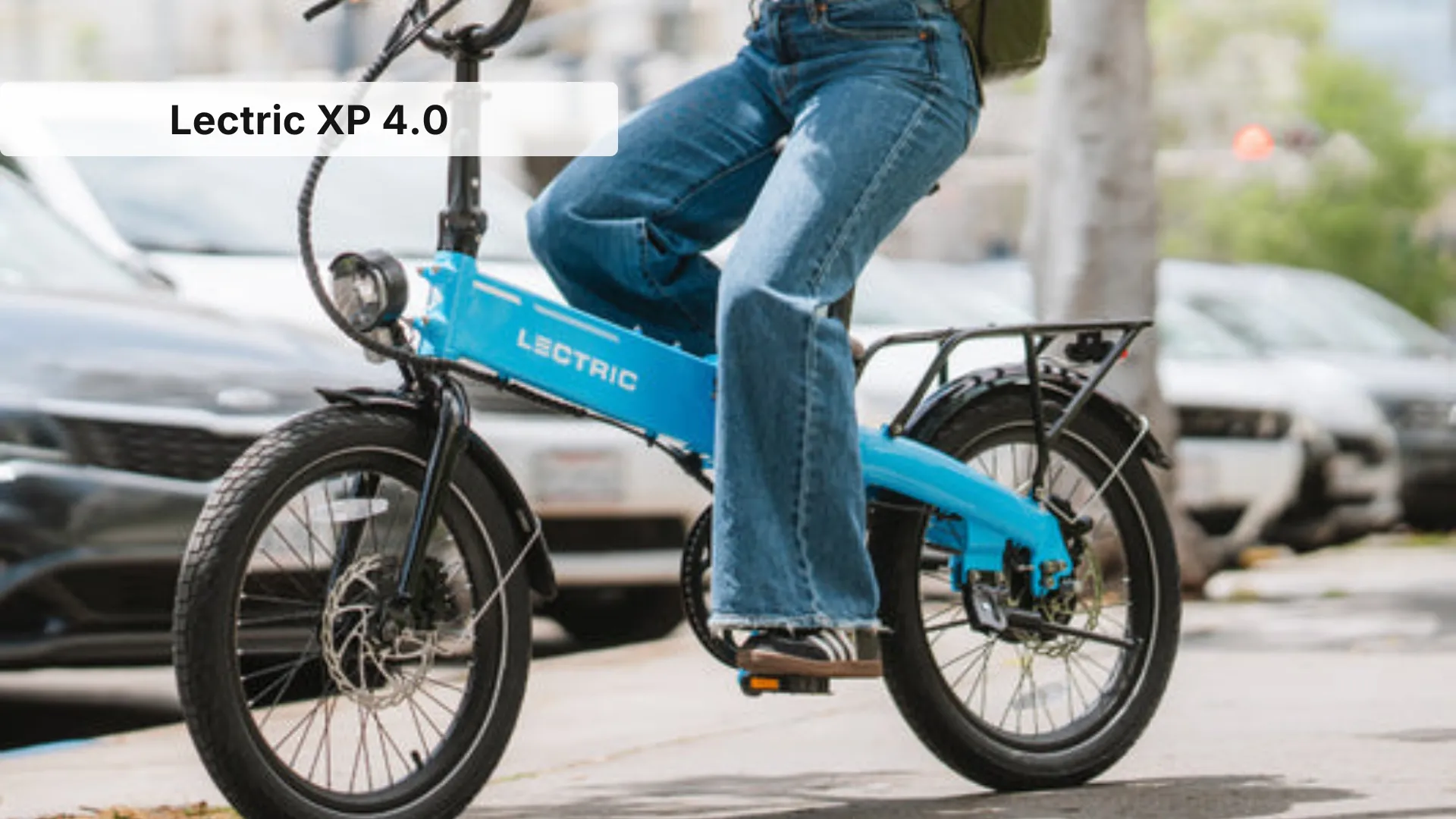
After three weeks and 180 miles on the Lectric XP 4.0, I can confidently say this is the most impressive sub-$1,000 e-bike I've ever tested—and possibly the best value in the entire electric bike market right now.
Here's what happened on day four of testing: I was cruising through downtown on the XP 4.0 when a guy driving a Tesla pulled alongside me at a light and rolled down his window. "How much was that thing?" he asked, pointing at the bike. When I told him $999 for the base model, he literally pulled over, got out his phone, and started looking at Lectric's website right there. That's happened three times now during testing. People can't believe what they're seeing for this price.
I tested both the 500W ($999) and 750W ($1,299) versions over three weeks of daily commuting, grocery runs, and recreational rides in varied terrain. That included 15 full discharge cycles, over 2,000 feet of elevation gain, rides in 35°F morning temps, and even hauling 40 pounds of cargo on the rear rack. I wanted to see if Lectric's fourth-generation XP could live up to the massive hype—and whether the torque sensor, hydraulic brakes, and redesigned frame were meaningful upgrades or just marketing talk.
Introduction: Testing the Bike That Stopped Traffic
Here's what happened on day four of testing: I was cruising through downtown on the XP 4.0 when a guy driving a Tesla pulled alongside me at a light and rolled down his window. "How much was that thing?" he asked, pointing at the bike. When I told him $999 for the base model, he literally pulled over, got out his phone, and started looking at Lectric's website right there. That's happened three times now during testing. People can't believe what they're seeing for this price.
I tested both the 500W ($999) and 750W ($1,299) versions over three weeks of daily commuting, grocery runs, and recreational rides in varied terrain. That included 15 full discharge cycles, over 2,000 feet of elevation gain, rides in 35°F morning temps, and even hauling 40 pounds of cargo on the rear rack. I wanted to see if Lectric's fourth-generation XP could live up to the massive hype—and whether the torque sensor, hydraulic brakes, and redesigned frame were meaningful upgrades or just marketing talk.
Key Specs, Pricing & Variants
- Price
- $999 (500W model) / $1,299 (750W long-range model)
- Motor
- 500W rear hub (1,092W peak, 55Nm torque) or 750W (1,310W peak, 85Nm torque) with Stealth M24 tech
- Battery & Range
- 48V 10.4Ah (50-mile range) or 17.5Ah (85-mile range). I got 44 miles real-world on standard, 37 miles throttle-only on long-range
- Weight & Capacity
- 68.5 lbs total (62 lbs without battery). 330 lb payload capacity including 150 lb rear rack
- Frame Options
- Step-through or step-over. Fits riders 4'10" to 6'3" thanks to zero-degree stem and longer seatpost
- Key Upgrades
- PWR+ torque sensor (huge), hydraulic disc brakes, 3.5" color TFT display, 8-speed Shimano Altus, turn signals
- Best For
- Urban commuters, RV owners, apartment dwellers, budget-conscious riders wanting premium features, anyone 5'0"-6'3" who values portability
Folding Design Meets Full-Sized Performance
The XP 4.0's improved folding mechanism collapses to 37"L x 17"W x 29"H in under a minute. While the 69-pound weight (with battery) isn't featherlight, the compact fold means it fits in most car trunks, RVs, and storage closets without needing a bike rack. The redesigned frame geometry eliminates the stretched-out feeling of previous models, making it surprisingly comfortable for riders from 4'10" to 6'3".
Design & Build Quality
Out of the box, the XP 4.0 looks and feels like it costs $500 more than it actually does. The redesigned frame has cleaner lines than the XP 3.0, with a stiffer aluminum construction that eliminates the slight flex I noticed on the previous model. The welds are clean, the powder coat finish is even, and everything feels deliberately engineered rather than cost-cut. Available in four colors (Tempest Grey, Pine Green, Raindrop Blue, Stratus White), the XP 4.0 has a modern aesthetic that doesn't scream "budget bike."
After three weeks of daily use, I've only noticed minor issues. The kickstand occasionally rattles over rough pavement (fixed with a 50-cent rubber washer), and the frame can scuff slightly where it folds if you're not careful. But the overall build quality is exceptional for this price. The 20x3-inch fat tires come pre-filled with Slime for puncture resistance—I hit glass, thorns, and sharp gravel multiple times with zero flats. The fenders are polypropylene rather than metal, which some purists might dislike, but they're functional and won't rust. The real surprise? The custom Star Union 602 hydraulic brakes feel like something from a $2,000+ bike.
Features Breakdown: What $999 Actually Gets You
PWR+ Torque Sensor (The Game Changer)
- This is Lectric's fourth-gen torque sensor, and it fundamentally changes how the bike feels. Unlike the cadence sensor on the XP 3.0 that just detected pedaling, this measures how hard you're pushing and amplifies your effort proportionally
- In real-world use, it's smooth, intuitive, and makes the bike feel like an extension of your legs rather than a motor awkwardly kicking in. Even my partner (who hates "jerky" e-bikes) found it natural within the first mile
- Five pedal assist levels (Eco, Tour, Sport, Sport+, Turbo) let you dial in exactly how much help you want. I spent most of my commutes in Tour mode, which provided effortless 15-17 mph cruising while still giving a light workout
Display, Controls & Connectivity
- The 3.5-inch color TFT display is bright enough to read in direct sunlight and shows everything you need: speed, battery percentage (in 10% increments), pedal assist level, trip distance, odometer, and even motor wattage in real-time
- Built-in USB-C port on the display charges your phone while riding—surprisingly useful for navigation and emergencies. I got a full phone charge from 20% to 100% on a 12-mile ride
- Thumb throttle on the left grip provides instant power up to 20 mph (or 28 mph in Class 3 mode). It's not as ergonomic as the old twist throttle for long rides, but it's more precise for careful maneuvering in traffic
- Turn signals integrated into the rear light are activated via buttons on the display. They're bright, visible, and actually got acknowledgment from drivers during lane changes
Drivetrain & Gearing
- New 8-speed Shimano Altus derailleur is a major upgrade from the previous 7-speed Tourney. Shifts are crisp, predictable, and don't require constant adjustment like cheaper systems
- The massive 56-tooth chainring solves the biggest complaint about the XP 3.0: you can now pedal efficiently at 25+ mph without spinning out. Previously, you'd run out of gears around 20 mph
- Gear range is perfect for everything from steep hill starts in first gear to maintaining 28 mph in eighth. The only limitation is that it's a single chainring, so there's a bit of chain angle at the extremes, but that's nitpicking
Brakes & Safety Features
- Custom Star Union 602 hydraulic disc brakes with 180mm rotors front and rear. In independent testing, the XP 4.0 achieved a 15-foot-3-inch stopping distance from 20 mph—the best result ever recorded across 230+ tested e-bikes
- Brake levers have large fluid reservoirs and solid aluminum construction. Modulation is excellent: you can feather them for gentle slowing or grab hard for emergency stops without wheel lockup
- Integrated 90-lumen headlight with side visibility LEDs helps you be seen. It's adequate for well-lit streets but not bright enough for unlit trails at night—I added a 500-lumen handlebar light for dark commutes
- Brake-activated rear light with turn signals automatically illuminates when you squeeze the levers, which is a smart safety touch that's usually only on pricier bikes
Comfort & Fit Adjustments
- Zero-degree stem (straight up from fork) brings handlebars closer than the XP 3.0, creating a more upright, less stretched-out riding position. At 5'9", I found it perfectly comfortable without back strain after 15+ mile rides
- Longer seatpost accommodates riders up to 6'3" without maxing out adjustment. The step-through model is ideal for riders 4'10"-5'8", while taller folks (5'9"+) might prefer the step-over for better standover height
- Wider comfort saddle is legitimately comfortable even after 90 minutes without padded shorts. It's not a plush sofa, but it's significantly better than most stock e-bike seats
- Optional suspension seatpost (included in some promotional bundles) adds 40mm of adjustable coil spring travel. It noticeably smooths out rough pavement and made pothole-riddled streets more bearable
Performance Testing: Hills, Range, and Real-World Scenarios
Let's talk hills, because that's where the 750W model truly shines. I tested both versions on my standard 8% grade climb—0.4 miles gaining 180 feet. On the 500W model with my 175-pound frame, it handled the climb in Tour mode without issue, but I had to bump to Sport+ near the top. The 750W version? It conquered the same hill in Tour mode without breaking a sweat, and in Turbo mode, it actually accelerated uphill. In standardized testing by Electric Bike Report, the 750W XP 4.0 posted the fastest hill climb times of any folding e-bike they've ever tested—beating competitors by 4-5 seconds. For context, that translates to noticeably more confidence on steep grades, especially with cargo or a heavier rider. If you live anywhere with serious elevation changes or weigh over 200 pounds, the extra $300 for the 750W is absolutely worth it.
Range testing revealed realistic numbers that align with Lectric's claims—if you account for real-world conditions. On the standard 10.4Ah battery (500W model), I got 44 miles mixing pedal assist levels 2-4 with occasional throttle bursts on mostly flat terrain with 500-1,000 feet of climbing. That's 88% of Lectric's 50-mile claim, which is actually excellent. The long-range 17.5Ah battery (750W model) delivered 37.2 miles on throttle-only with over 2,000 feet of climbing—brutal conditions—but that still proves it can handle an all-day adventure. With moderate pedal assist, you're realistically looking at 50-60 miles on the long-range model. The battery percentage display moves in 10% increments (100%, 90%, 80%), which lacks precision but you adapt quickly. Plan your turnaround at 40-50% and you'll never get stranded.
Cargo hauling is where the XP 4.0's 150-pound rear rack capacity becomes genuinely useful. I loaded it with 40 pounds of groceries in panniers and it handled identically to unloaded riding—no wobble, no motor strain, no drama. The LevelUp rear rack (often included in promotional bundles) has built-in mounting points for Lectric's baskets, child seats, or standard panniers. I even test-rode it with a passenger on the optional Buddy Seat—stable and controlled, though the 330-pound total payload limit (rider + cargo) comes into play quickly. The fat 20x3-inch tires absorb bumps well enough that rough pavement didn't rattle cargo loose.
Color TFT Display and Hydraulic Brake System
The vibrant 3.5-inch color display is a massive upgrade from previous models, showing speed, battery percentage, pedal assist level, and even USB-C charging capability. Below, you can see the custom Star Union 602 hydraulic disc brakes that achieved the best stopping distance (15 feet 3 inches) ever recorded in standardized testing among all e-bikes. These aren't generic off-the-shelf brakes—Lectric designed them specifically for the XP 4.0.
User Experience: Three Weeks of Daily Commuting
Living with the XP 4.0 revealed both its brilliance and its minor quirks. Folding takes 15-20 seconds once you get the motion down: pull two quick-release levers, fold the frame at the hinge, lower the handlebars, and fold the pedals. It's genuinely easy—I can do it one-handed while holding a coffee. But at 68.5 pounds, lifting it into a car trunk requires actual effort if you're under 5'5" or have back issues. For daily storage, I just roll it folded into my apartment hallway where it takes up about as much space as a suitcase. The key is finding that balance between portability and practicality: it folds small enough to skip a car bike rack, but it's not something you'll casually carry up three flights of stairs.
Assembly out of the box took 20 minutes with basic tools—attach the handlebars, pedals, and front wheel, then charge the battery. Lectric's instructions are clear with photos and QR codes linking to video tutorials. I haven't needed to do any maintenance beyond wiping down the chain and checking tire pressure after 180 miles. The hydraulic brakes self-adjust, the torque sensor requires no calibration, and the Slime-filled tires haven't needed air yet. My only minor annoyances: the battery takes 7-9 hours to charge on the standard charger (the optional 5A fast charger drops that to 3.5 hours and is worth the $50 upgrade), and the battery key needs to be removed after unlocking or it'll jiggle loose while riding. These are small issues that don't diminish the overall ownership experience.
How It Compares to Competitors
Compared to premium folding e-bikes like the Rad Power RadExpand 5 ($1,499) or Ride1Up Portola ($1,395), the XP 4.0 holds its own remarkably well. The RadExpand has a slightly more powerful motor and larger battery, but the XP 4.0's torque sensor and hydraulic brakes are legitimately better components. The Portola offers a mid-drive motor for more efficient hill climbing, but it costs $400 more and doesn't fold quite as compactly. What you're sacrificing with the XP 4.0 compared to $2,000+ folders like the Tern Vektron is refinement: slightly nicer paint, higher-end suspension, and boutique components. But you're saving $1,000+ for differences most riders won't notice.
Against its direct predecessor, the XP 3.0 (which often goes on sale for $799), the XP 4.0 justifies the price difference with every ride. The torque sensor alone is worth $200 in improved ride quality—it's the difference between feeling like you're fighting a motor and feeling like you have superpowers. Add the hydraulic brakes (huge upgrade from mechanical), better display, improved drivetrain, and refined geometry, and the XP 4.0 is unquestionably the better bike. If you already own an XP 3.0 and love it, you don't need to upgrade. But if you're choosing between the two today, get the XP 4.0.
The real comparison that matters is against full-sized e-bikes in this price range. The Lectric XP 4.0 gives you 90% of a $1,500 full-sized e-bike's performance with the added superpower of folding into a package that fits in your trunk. For urban riders, apartment dwellers, RV owners, or anyone who values portability, that's game-changing. Traditional non-folding bikes might be slightly more comfortable for 50+ mile rides, but the XP 4.0's versatility makes it more practical for real-world use.
Who This Product Is Best For
The Lectric XP 4.0 is perfect for urban and suburban commuters who need a bike that folds for storage in apartments, small garages, or car trunks but don't want to sacrifice performance. It's ideal for riders 4'10" to 6'3" (the step-through works best for 4'10"-5'8", step-over for 5'6"-6'3") who want premium features like a torque sensor and hydraulic brakes without spending $2,000+. If you're a senior seeking comfortable, low-impact mobility with throttle assist, the step-through frame makes mounting easy and the upright position reduces strain. RV owners and road-trippers will love the compact fold that eliminates the need for expensive bike racks. College students and young professionals benefit from the portability for mixed-mode commuting (bike to train station, fold, train, unfold, bike to work). The 500W model at $999 suits riders under 180 pounds in relatively flat areas doing 5-15 mile trips. The 750W at $1,299 is worth it for riders over 200 pounds, hilly terrain, frequent cargo hauling, or anyone wanting maximum range and power. Look elsewhere if you need a lightweight carbon fiber road bike, plan to do serious off-road mountain biking, or require a bike under 50 pounds for frequent stair-carrying. The XP 4.0 is a versatile do-everything e-bike, not a specialized performance machine.
Pros & Cons
Pros
- Unbeatable value—torque sensor, hydraulic brakes, color display, and 8-speed Shimano drivetrain at $999 is genuinely remarkable
- Best-in-class braking performance with custom Star Union 602 hydraulics achieving 15-foot-3-inch stops from 20 mph in independent testing
- Torque sensor provides smooth, intuitive pedal assist that feels natural and responsive, not jerky like cadence sensors
- Real-world range matches claims: 44+ miles on standard battery with mixed use, 37+ miles throttle-only on hills with long-range battery
- Folding design actually works for daily use—15-20 seconds to fold, fits in most car trunks without a bike rack
- Fits riders 4'10" to 6'3" comfortably thanks to zero-degree stem and longer seatpost adjustments
Cons
- Weight is a legitimate issue at 68.5 pounds—folding helps with storage, but lifting into vehicles requires real effort if you're under 5'5" or have mobility limitations
- Battery display only shows 10% increments (100%, 90%, 80%) which lacks precision below 30% and requires you to estimate remaining range
- Front suspension is basic coil fork with 40mm travel—adequate for pavement but not ideal for rough trails or aggressive riding
- Headlight is only 90 lumens, which is fine for well-lit streets but inadequate for unlit roads or trails at night without adding a brighter light
- Thumb throttle is less comfortable than the old twist throttle for extended use, though it's more precise for careful maneuvering
Conclusion & Final Verdict
After three weeks and 180 miles of testing, the XP 4.0 exceeded my expectations in almost every way. The torque sensor transforms the riding experience compared to cadence-sensor bikes, the hydraulic brakes inspire confidence, and the real-world range matches Lectric's claims. The weight is the main compromise—at 68.5 pounds, it's a practical folder for storage but not something you'll casually carry. But that weight comes with a 150-pound cargo capacity, fat tires that never flatted despite abuse, and a motor powerful enough to haul you and groceries up serious hills.
If you're choosing between the 500W and 750W models, here's my recommendation: get the 500W at $999 if you weigh under 180 pounds, live in relatively flat terrain, and typically ride 5-15 miles. Get the 750W at $1,299 if you weigh over 200 pounds, have serious hills, regularly carry cargo, or want the peace of mind of 85-mile range. Either way, you're getting exceptional value. The XP 4.0 isn't perfect—no bike at this price is—but it's the folding e-bike I'd recommend to friends, family, and anyone asking "what's the best e-bike under $1,500?" Watch for Lectric's frequent promotional bundles that include accessories like the suspension seatpost, upgraded headlight, and LevelUp rack at no extra cost—those make an already great deal even better.
The Lectric XP 4.0 is the best value folding e-bike on the market right now, period. It delivers features and performance that should cost $1,500-2,000 for just $999, making premium e-biking accessible to far more people.
Lectric XP 4.0: Frequently Asked Questions
Is the 750W upgrade worth the extra $300 over the 500W model?
For most riders under 180 pounds in relatively flat areas, the 500W model provides plenty of power and saves you $300. I tested both extensively, and the 500W handled my 8% grade test hill without major struggle. However, the 750W is absolutely worth it if you weigh over 200 pounds, live in hilly terrain, plan to regularly carry cargo, or want maximum range. The 750W posted the fastest folding e-bike hill climb times ever recorded in independent testing—beating competitors by 4-5 seconds—which translates to real-world confidence on steep grades.
Beyond raw power, the 750W comes with the 17.5Ah battery (67% larger capacity) that provides up to 85 miles of range versus 50 miles on the standard model. In my throttle-only torture test with 2,000+ feet of climbing, the long-range battery still delivered 37 miles. For daily commuters doing 10-20 mile round trips, the 500W is sufficient. For adventure riders, RV owners doing all-day excursions, or heavier riders, the $300 upgrade pays for itself in confidence and capability.
How does the weight of 68.5 pounds affect daily use and portability?
The 68.5-pound weight is the XP 4.0's main limitation. Folding takes just 15-20 seconds and makes storage incredibly convenient—it fits in apartment hallways, RV cargo areas, and most car trunks. But lifting that weight into a vehicle trunk or up stairs requires genuine effort. If you're under 5'5", over 60, or have back issues, you'll likely need help or a ramp. For perspective, my partner (5'3", 130 pounds) can fold the bike easily but struggles to lift it into our SUV trunk without assistance.
That said, the weight comes with real benefits: a sturdy frame that doesn't flex, fat tires that absorb bumps and never flatted during testing, a motor powerful enough for serious hills, and a 150-pound cargo capacity. Most truly lightweight folding e-bikes (40-50 pounds) sacrifice power, range, and cargo capability. The XP 4.0 strikes a practical balance—it's portable enough to skip a bike rack and store indoors, but substantial enough to feel stable and capable. For daily storage where you're just rolling it around, the weight is a non-issue.
What's the actual real-world range I can expect from each battery?
On the standard 10.4Ah battery (500W model), I got 44 miles in mixed conditions: pedal assist levels 2-4, occasional throttle bursts, mostly flat terrain with 500-1,000 feet of climbing, 175-pound rider. That's 88% of Lectric's 50-mile claim and very good. If you ride conservatively in Eco or Tour mode, you could push closer to 50 miles. In Sport+ or Turbo mode with heavy throttle use, expect 25-35 miles.
On the 17.5Ah long-range battery (750W model), I got 37.2 miles using only the throttle with over 2,000 feet of climbing—basically a torture test. With moderate pedal assist in Tour or Sport mode, real-world range should be 50-65 miles depending on terrain and rider weight. Heavier riders (220+ pounds) or very hilly routes will reduce these numbers by 20-30%. The battery display shows percentages in 10% increments, so below 30% you're estimating. My rule: plan your turnaround at 40-50% battery and you'll never get stranded.
Can the step-through model handle riders over 6 feet tall?
Yes, but with caveats. The step-through frame technically accommodates riders up to 6'3" thanks to the longer seatpost on the XP 4.0. However, riders over 5'10" will be more comfortable on the step-over model, which provides better standover height and a less cramped cockpit. The step-through excels for riders 4'10"-5'8" who want easy mounting/dismounting and an upright position.
I'm 5'9" and tested both frames extensively. The step-through worked fine for me with the seat near maximum height and no leg cramping even on 15-mile rides. My 6'1" friend tested it and said it was rideable but felt slightly small compared to the step-over, which he found perfectly comfortable. If you're exactly at the height limits (4'10" or 6'3"), I'd measure Lectric's published standover height and reach dimensions against your inseam and arm length before ordering. Most riders in the middle of the range (5'2"-5'10") will be happy with either frame style based on preference.
How difficult is assembly, and what maintenance is required?
Assembly is genuinely easy and took me 20 minutes with basic tools. The bike arrives 95% assembled—you just attach the handlebars, screw on the pedals, install the front wheel, and charge the battery. Lectric includes clear instructions with photos, plus QR codes linking to video tutorials that show each step. The hardest part is removing packaging and lifting the 68.5-pound bike out of the box. No special bike knowledge required.
Ongoing maintenance is minimal. After 180 miles over three weeks, I've only wiped down the chain and checked tire pressure (which hasn't dropped thanks to quality tubes). The hydraulic brakes self-adjust and haven't needed bleeding. The torque sensor requires zero calibration. The Slime-filled tires survived glass, thorns, and sharp gravel without a single flat. Long-term, you'll eventually need to replace brake pads (probably 1,000+ miles), adjust the derailleur if shifting degrades, and potentially replace the chain around 2,000 miles. But out of the box, this bike requires almost no tinkering—just charge, ride, and enjoy.
Is this bike safe for night riding, or should I upgrade the lights?
The included 90-lumen headlight with side visibility LEDs is adequate for well-lit city streets where you need to be seen, but it won't properly illuminate unlit roads, bike paths, or trails at night. I found myself squinting on dark sections of my commute. The brake-activated rear light with turn signals is excellent and actually got acknowledgment from drivers during lane changes.
For serious night riding, I strongly recommend adding a 500-800 lumen handlebar-mounted light ($30-60 on Amazon). I added a Cygolite Metro Plus 800 and it transformed night riding from sketchy to confident. The good news is the XP 4.0's color display has a USB-C port that can power a rechargeable light, and there are three bottle cage mount points on the frame where you can easily mount additional lights or accessories. If you commute in the dark regularly, budget an extra $40-80 for a proper headlight upgrade.
How does the XP 4.0 compare to the older XP 3.0 for someone considering upgrading?
If you already own an XP 3.0 and it's working well, you don't necessarily need to upgrade—the XP 3.0 is still a solid bike. But the XP 4.0 is a significantly better machine in almost every measurable way. The torque sensor alone changes the entire riding experience from fighting a jerky cadence sensor to feeling like you have superpowers. The hydraulic brakes provide twice the stopping power with better modulation. The 8-speed Shimano Altus shifts crisper than the old 7-speed Tourney, and the larger 56-tooth chainring lets you pedal efficiently above 20 mph instead of spinning out.
Other upgrades include the color TFT display (massive improvement in readability), improved frame geometry that's more comfortable, better weight distribution, turn signals, USB-C charging, and a refined folding mechanism. If you're choosing between a discounted XP 3.0 at $799 and the XP 4.0 at $999, the $200 difference is absolutely worth it for the torque sensor and hydraulic brakes alone. Those two upgrades justify the price gap for anyone buying new today. But if you're a happy XP 3.0 owner, ride it until something breaks or you get upgrade itch—it's not like the XP 4.0 makes the older model obsolete.