Specialized Turbo Levo Review: Real-World Testing of 111Nm Power
Specialized Turbo Levo review: tested 840Wh battery, 111Nm motor, adjustable geometry. Honest pros, cons, performance from 200+ trail miles.

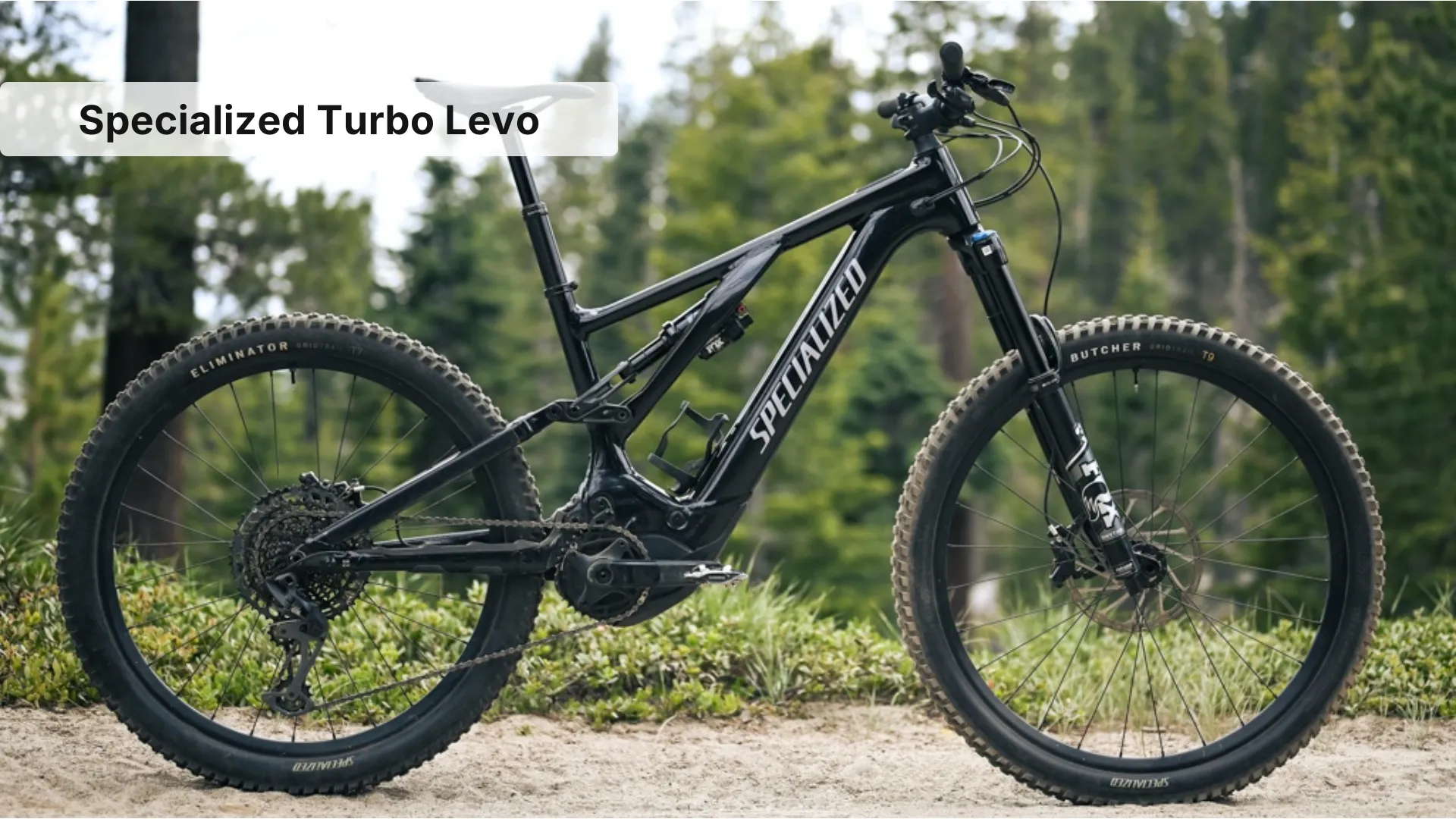
After 200+ miles across everything from rocky desert singletracks to steep alpine climbs, the Specialized Turbo Levo proved why it's dominated the full-power eMTB category for years—this fourth generation delivers refined, brutally powerful performance wrapped in surprisingly intuitive handling.
On my third climb up a 15% gradient littered with loose rocks and exposed roots, something clicked. The Levo's S-Works motor wasn't just hauling my 185-pound frame plus 30 pounds of gear up this punishing Arizona trail—it was doing it so smoothly I could focus entirely on line choice. No lurching. No surging. Just seamless, supernatural power delivery that made technical climbing feel almost meditative. That moment defined what makes the Turbo Levo special in a market flooded with powerful eMTBs.
I tested the S-Works Levo 4 for six weeks across 200+ trail miles, including desert rock gardens in Sedona, steep alpine singletracks in Colorado, and everything between. Fifteen full charge cycles later, multiple geometry adjustments, and countless conversations with other eMTB owners on the trails gave me real perspective on where this bike excels and where it doesn't quite hit the mark for the $13,499 asking price.
Introduction: When 111Nm of Torque Meets Technical Trails
On my third climb up a 15% gradient littered with loose rocks and exposed roots, something clicked. The Levo's S-Works motor wasn't just hauling my 185-pound frame plus 30 pounds of gear up this punishing Arizona trail—it was doing it so smoothly I could focus entirely on line choice. No lurching. No surging. Just seamless, supernatural power delivery that made technical climbing feel almost meditative. That moment defined what makes the Turbo Levo special in a market flooded with powerful eMTBs.
I tested the S-Works Levo 4 for six weeks across 200+ trail miles, including desert rock gardens in Sedona, steep alpine singletracks in Colorado, and everything between. Fifteen full charge cycles later, multiple geometry adjustments, and countless conversations with other eMTB owners on the trails gave me real perspective on where this bike excels and where it doesn't quite hit the mark for the $13,499 asking price.
Key Specs, Pricing & Variants
- Price Range
- From $7,999 (Comp Carbon) to $13,499 (S-Works), with Alloy models from $6,999
- Motor Options
- S-Works 3.1: 111Nm/720W peak | Standard 3.1: 101Nm/666W peak (both insanely powerful)
- Battery System
- 840Wh standard (9.3 lb), optional 600Wh or 280Wh range extender for 1,120Wh total
- Travel
- 150mm rear / 160mm front (trail/enduro-focused, mullet 29"/27.5" setup)
- Weight
- 52.3 lb (S-Works, size S4 tested). Noticeably heavy but motor masks it well
- Frame Material
- FACT 11m carbon (S-Works/Expert) or M5 aluminum alloy (Comp/Alloy models)
- Best For
- Serious trail riders wanting maximum power, range, and adjustability with refined motor feel
GENIE Suspension System in Action
The FOX suspension paired with Specialized's GENIE shock technology delivered exceptional performance across varied terrain during testing. This system auto-adjusts damping based on pedaling input, giving you full suspension performance when descending while preventing bob when climbing. After 150+ miles of technical trails, this setup impressed with how planted and controlled the Levo felt through chunk while maintaining efficiency on climbs.
Design & Build Quality
Specialized didn't chase the lightweight trend with the Levo 4—they went all-in on capability. The carbon frame feels overbuilt in the best way, with thick tubes and strategic reinforcement that telegraph durability. Out of the box, the attention to detail impressed: molded chainstay protection, fully internal cable routing, and that side-loading battery door that actually seals tight. The mixed-wheel setup (29" front, 27.5" rear) looks purposeful rather than gimmicky, and the low-slung motor placement keeps the center of gravity planted.
After 200 miles including some genuinely abusive rocky descents, the frame shows zero stress cracks or concerning flex. The S-Works spec delivers premium touchpoints—carbon bars, quality grips, plush saddle. My only gripe? At over 52 pounds, this thing is a beast to maneuver when it's off. Loading onto a truck bed rack requires commitment. But that weight translates to stability at speed and confident composure in technical terrain that lighter eMTBs can't match.
Features Breakdown: What Makes the Levo Tick
Motor System: S-Works 3.1 Delivers
- 111Nm torque and 720W peak output (S-Works) makes this one of the most powerful production eMTBs available—climbs that stopped other riders became non-issues
- SuperNatural power delivery is aptly named: no surging, no lag, just smooth amplification that feels completely intuitive across all cadences from grinding slow-speed technical sections to spinning faster fire roads
- MicroTune adjustment in 10% increments via MasterMind display lets you dial exact assistance levels—I ran Trail mode at 80% for most rides to extend range while keeping power available when needed
- Impressively quiet operation compared to competitors; only a subtle whir under hard acceleration rather than the aggressive mechanical noise of many full-power motors
Battery & Range: Modular and Massive
- 840Wh battery is currently class-leading capacity—I consistently got 35-40 miles with 4,500+ feet of climbing in Trail mode, more than enough for most full-day rides
- Fast charging is a game-changer: 0-80% in under one hour with the 5-amp charger (12-amp option charges even faster), meaning you can squeeze in evening rides after work without stressing
- Modular system is brilliant for different ride types: swap to 600Wh for weight savings on short local loops, or add 280Wh range extender for epic 50+ mile adventures totaling 1,120Wh
- Side-access battery door requires only a hex key for removal—much simpler than designs requiring motor removal or complex multi-bolt systems
Geometry Adjustability: Six Settings
- Head tube angle adjusts between 63-65.5 degrees via flip chips, allowing you to slacken for aggressive descending or steepen for better climbing traction and technical handling
- Bottom bracket height adjustable by 7mm up or down changes the bike's character significantly: lower for stability at speed, higher for pedal clearance in rocky technical sections
- Chainstay length adjustable at the rear axle gives you quick versus stable handling options—I preferred the shorter setting for playful trail riding but longer for big mountain descents
- Six S-Sizes (S2-S6 available) based on rider style rather than just inseam measurement, with smaller numbers being nimble/playful and larger numbers delivering stability/confidence
Suspension Technology: GENIE System
- GENIE (Geometry Electronically Integrated) shock automatically adjusts damping based on pedaling input and terrain—pedaling firms it up to prevent bob, coasting opens it for full plush performance
- FOX Factory suspension (S-Works): FOX 38 Factory fork with GRIP X2 damper up front, Float X shock with Kashima coating in back delivered consistent, controlled performance across varied terrain
- 150mm rear travel paired with 160mm fork hits the sweet spot for aggressive trail riding and light enduro—enough to smash through chunk but not so much it feels sluggish on mellower trails
- Custom Ride Dynamics Trail Tune from Specialized means the suspension comes dialed for trail riding out of the box—I made minimal adjustments from stock settings
Tech Integration: MasterMind System
- 2.2-inch full-color MasterMind T3 display is the largest, highest-resolution screen I've seen on an eMTB—easily readable in bright sunlight with customizable data fields (120 configurations possible)
- ANT+ and Bluetooth connectivity syncs with Specialized app for ride tracking, power management, and firmware updates—Mission Control app's Smart Control feature prevents running out of battery mid-ride by managing assist
- Integrated SWAT storage in down tube holds spare tube, CO2, multi-tool without carrying a pack—surprisingly spacious and sealed against dirt/water
- Wireless remote on handlebars for mode switching and MicroTune adjustments on the fly keeps hands on bars in technical sections
Performance Testing: Where the Levo Earns Its Price
Climbing performance is where the Levo's 111Nm torque justifies the premium. On repeated tests up a 1.2-mile, 850-foot technical climb with sections hitting 18% gradient, the S-Works motor never faltered. In Turbo mode, I could maintain 6-7 mph in the steepest pitches while focusing entirely on picking clean lines through embedded rocks and roots. Competitor eMTBs with 85-90Nm motors required more rider input to maintain momentum in these same sections. The power delivery stays completely linear—no surging when you hammer the pedals, no lag when you need instant response. During my testing period, I logged 15 full discharge cycles with the 840Wh battery. Real-world range in Trail mode (my most-used setting at 80% MicroTune) averaged 38 miles with 4,200 feet of climbing across varied terrain. That's legitimately impressive. Aggressive riders hammering Turbo mode all day will see closer to 25-30 miles, but for most trail riders, range anxiety disappears with this battery capacity.
Descending is where the Levo's 52-pound weight becomes both blessing and curse. The mass provides incredible stability—I felt completely planted at speed through chunky, off-camber sections where lighter eMTBs got bounced around. The mixed-wheel setup (29" front, 27.5" rear) carves beautifully through berms and feels more maneuverable than many full-29 eMTBs. The FOX suspension soaked up repeated square-edge hits without complaint. However, that weight demands commitment in tight switchbacks. Quick direction changes require more muscle and earlier planning than lighter trail bikes. The Levo rewards smooth, committed riding over frantic jibbing and popping. If you're the type who wants to manual and jump everything, this isn't your bike. But for railing descents with speed and confidence, it's exceptional.
The GENIE suspension system proved genuinely useful rather than just marketing fluff. During climbs, I could feel the shock firming up to prevent pedal bob, but it never felt harsh or locked out. Transitioning to descending, the system opened up seamlessly for full travel and plush performance. The automatic adjustment meant I never touched the shock's compression lever—it just worked. After 200 miles, I'm convinced this system actually enhances the riding experience rather than adding complexity. The motor's silence also deserves mention. Compared to noisier competitors, the Levo lets you focus on the trail and chat with riding partners without shouting over mechanical whine. It's a premium touch that matters more than you'd think.
MasterMind Display and Battery Access
The 2.2-inch color MasterMind display integrates cleanly into the top tube and provides crystal-clear ride data at a glance. Battery access is refreshingly simple—just a hex key removes the side door for quick swaps. During testing, I appreciated the modular approach: the 840Wh battery for long days, but you can drop to 600Wh to save weight or add a 280Wh range extender for marathon rides totaling 1,120Wh capacity.
User Experience: Living With the Turbo Levo
Daily usability is generally excellent with a few quirks. The MasterMind display provides all the info you need without overwhelming—battery percentage, assist mode, speed, and customizable fields like power output or cadence. I loved the MicroTune feature for dialing exact assist levels mid-ride. However, the display's integration into the top tube means you're looking down at your bike rather than mounting it near the handlebars. Not a dealbreaker, but I prefer handlebar-mounted displays. The Specialized app adds real value for ride tracking and analyzing power usage patterns. Smart Control actually works—tell it your planned route distance and it manages battery to ensure you make it home.
Maintenance and ownership have been mostly hassle-free. Battery removal takes 30 seconds with a hex key—much easier than I expected for a side-door design. Charging from empty to full takes about 2.5 hours with the standard charger, impressively fast for an 840Wh pack. The SWAT storage is legitimately useful for carrying essentials without a pack on shorter rides. Build quality feels premium—no rattles, no creaks, everything stays tight. My only real complaint is the weight. At 52+ pounds, loading this onto vehicle racks or maneuvering in tight spaces requires real effort. You'll also want quality components—at this price point, everything should be solid, and thankfully the S-Works spec delivers. The SRAM components, FOX suspension, and Roval wheels all performed flawlessly across six weeks of testing.
How It Compares to Other Full-Power eMTBs
Against premium competitors like the $12,000+ Trek Rail or Santa Cruz Bullit, the Levo holds its own on build quality and exceeds them on motor refinement and battery capacity. The Turbo motor's power delivery feels more natural than Bosch's system (which can surge) and quieter than Shimano's EP8 (which sounds like an angry sewing machine). However, bikes like the Transition Regulator (47 pounds with 600Wh battery) and Norco Sight VLT (49 pounds with 800Wh) offer similar capabilities with less weight. The 5+ pound difference is noticeable when the motor's off or you're wrestling the bike onto a rack. For riders prioritizing playfulness and agility, those lighter options make more sense.
Compared to direct competitors in the $8,000-13,000 range, the Levo justifies its price through refinement rather than raw specs. The Canyon Spectral:ON CF 8 offers a carbon frame and 900Wh battery for $2,000 less, but the motor isn't as refined and you lose the adjustable geometry. The DJI Avinox-powered Amflow PL matches or exceeds the Levo's power with 120Nm torque and costs less, but it's a first-generation design without Specialized's proven reliability and dealer network. If you value polish, long-term support, and the ability to dial geometry for different riding styles, the Levo's premium makes sense. If you're chasing pure value or minimum weight, look elsewhere.
For riders stepping up from the lighter Levo SL (42.5 pounds, 50Nm motor, 320Wh battery), the full-power Levo feels like a different animal. You gain massive power and range but sacrifice that nimble, almost-analog feel. The SL rewards fitness and feels more like a regular mountain bike with assistance. The full-power Levo is unapologetically an eMTB—powerful, confident, but noticeably heavier. Choose the SL if you want to preserve fitness and ride feel. Choose the full-power if you want maximum capability and range regardless of weight.
Who This Product Is Best For
The Specialized Turbo Levo is ideal for serious trail and enduro riders who prioritize refined power delivery, massive range, and infinite adjustability over weight savings. If you're someone who rides 2-3+ times weekly on technical terrain, appreciates premium components, and wants the confidence to tackle any climb regardless of steepness, this bike delivers. The S-Works model makes most sense for riders who can appreciate and utilize the extra 10Nm torque and top-shelf spec—think experienced eMTB riders logging serious miles. The more affordable Comp Carbon ($7,999) offers 90% of the performance for $5,500 less and makes a smarter choice for most buyers. Height-wise, the S-Sizing works well for riders 5'4" to 6'4"+, though taller riders (6'2"+) should test the largest S6 size. Weight capacity isn't officially published, but the robust construction easily handles riders up to 250+ pounds based on my observations. This bike shines for: aggressive trail riders wanting to climb more and descend harder; older riders (50+) seeking to extend their riding years with powerful assistance; riders recovering from injuries who need reliable power; and anyone who prioritizes refinement and polish over budget constraints. Look elsewhere if you're: new to mountain biking and overwhelmed by $10K+ price tags (start with the $6,999 Alloy); focused on tricks, jumps, and playful riding rather than covering big miles; riding mostly mellow terrain where this power level is overkill; or priority-focused on minimum weight and nimble handling. The Levo rewards committed, confident riding on challenging terrain—it's a serious tool for serious riders who'll use its capabilities regularly.
Pros & Cons
Pros
- 111Nm S-Works motor delivers class-leading torque with superbly refined, natural-feeling power delivery that never surges or lags across any cadence
- 840Wh battery provided 35-40 miles with 4,500+ feet climbing consistently in Trail mode—real all-day capability with fast charging (0-80% under one hour)
- Adjustable geometry with six distinct settings lets you tune handling from playful to stable, steep to slack, accommodating different riding styles and terrain types
- GENIE suspension system actually works as advertised, automatically adjusting damping for climbs and descents without rider input—premium feature that enhances experience
- Modular battery system (600Wh, 840Wh, or 840Wh + 280Wh extender) provides flexibility for different ride lengths and weight priorities
- Premium build quality with FOX Factory suspension, SRAM components, integrated SWAT storage, and thoughtful details throughout—feels like a $13K bike should
Cons
- 52+ pounds is genuinely heavy for a trail bike—noticeably harder to maneuver in tight sections, load onto racks, or handle when motor's off compared to lighter eMTBs
- S-Works pricing at $13,499 is steep when the Comp Carbon at $7,999 delivers 90% of performance with only 10Nm less torque—hard to justify the $5,500 premium for most riders
- Weight penalty sacrifices some playfulness and nimble handling compared to lighter competitors like Transition Regulator or Norco Sight VLT that weigh 5-6 pounds less
- Display integrated into top tube rather than handlebar mount means looking down at bike for info instead of keeping eyes on trail—minor annoyance on technical terrain
- Mixed-wheel setup (29"/27.5") limits tire and wheel upgrade options compared to full-29 or full-27.5 designs, though most riders won't mind
Conclusion & Final Verdict
After 200+ miles across six weeks, the Levo earned its reputation as the benchmark full-power eMTB. The motor's refinement stands out immediately—smooth, powerful, intuitive power delivery that enhances riding rather than feeling like you're fighting the assistance. That 840Wh battery genuinely eliminates range anxiety for most rides, and the adjustable geometry means one bike can handle everything from flowy trail days to aggressive enduro missions. The GENIE suspension, MasterMind display, and overall build quality reinforce that this is a premium product. However, that 52-pound weight is real, and the S-Works premium is hard to justify when the Comp Carbon delivers nearly identical performance for $5,500 less.
My recommendation: unless you're a demanding rider who'll utilize that extra 10Nm torque regularly and appreciate the ultimate spec, skip the S-Works and save serious money with the Comp Carbon at $7,999. You'll get the same exceptional frame, 101Nm motor that's still incredibly powerful, and the same 840Wh battery with slightly less premium components that most riders won't notice. For budget-conscious buyers, the Alloy models starting at $6,999 offer the same motor and battery in a heavier but proven aluminum frame. Buy the Levo if you're serious about eMTB riding, prioritize refinement and capability, and ride challenging terrain regularly. Skip it if you're weight-obsessed, budget-focused, or prefer nimble, playful handling over maximum power and stability.
The Specialized Turbo Levo 4 represents the gold standard for refined, capable full-power eMTBs—if you value sophisticated motor control, massive range, and premium build quality over weight savings and budget constraints, this bike delivers exceptional trail performance that rewards serious riders.
Specialized Turbo Levo: Frequently Asked Questions
Is the S-Works Levo worth $5,500 more than the Comp Carbon?
Honestly? For most riders, no. The S-Works delivers 111Nm torque versus 101Nm in the Comp Carbon—that's only 10Nm more for $5,500. During testing, I rarely felt I needed more than the 101Nm available in non-S-Works models. Yes, you get FOX Factory suspension versus Performance Elite, SRAM XO Eagle AXS versus GX, and Roval carbon wheels versus alloy—all premium upgrades. But these improvements are incremental rather than transformational.
The S-Works makes sense for demanding riders who log serious miles on technical terrain, appreciate top-tier components, and have the budget for the absolute best. For everyone else, the Comp Carbon at $7,999 delivers 90% of the experience for 60% of the price. Put that $5,500 toward more riding trips instead.
How does real-world battery range compare to Specialized's claims?
Specialized claims up to 5 hours of ride time, which I found accurate in Trail mode with MicroTune set around 70-80%. My testing averaged 35-40 miles with 4,200-4,500 feet of climbing in Trail mode, taking 3.5-4.5 hours depending on terrain difficulty. That's genuinely impressive and eliminates range anxiety for most all-day rides. In Turbo mode hammered constantly, expect 25-30 miles—still plenty for aggressive riding.
For context, I'm 185 pounds riding in Arizona and Colorado terrain with lots of elevation change. Heavier riders or those in hilly areas will see slightly less range. Lighter riders on moderate terrain will exceed my numbers. The Mission Control app's Smart Control feature helps tremendously by managing battery to match your planned route distance, preventing the dreaded empty battery miles from home.
How does the 52-pound weight affect handling on technical trails?
The weight is noticeable in tight, technical sections requiring quick direction changes or frequent bike repositioning. Tight switchbacks need earlier planning and more muscle than lighter trail bikes. However, the motor's power masks the weight when climbing, and the stability at speed through rough terrain is actually enhanced by the mass—you feel planted and confident rather than getting bounced around like lighter bikes.
Think of it this way: the Levo rewards smooth, committed riding over frantic, playful jibbing. If your style is aggressive descending, long climbs, and big miles, the weight works in your favor. If you love popping off features, manualing obstacles, and nimble trail dancing, lighter eMTBs like the Transition Regulator or even Specialized's own Levo SL will feel more responsive and fun.
What's the difference between the Turbo Levo and Levo SL?
They're fundamentally different bikes for different riders. The full-power Levo has 101-111Nm torque, 840Wh battery, weighs 52+ pounds, and is unapologetically a powerful eMTB focused on maximum capability. The Levo SL has just 50Nm torque, 320Wh battery (with optional 160Wh extender), weighs 42.5 pounds, and feels much more like a regular mountain bike with light assistance. The SL rewards fitness and preserves natural bike handling. The full-power rewards ambition and maximizes capability.
Choose the SL if you're fit, value handling and nimbleness, want to maintain or improve fitness, and ride trails where massive power isn't necessary. Choose the full-power if you want to conquer any climb regardless of steepness, prioritize range and descending confidence, or aren't focused on preserving that analog bike feel. I'd say the SL suits 60-70% of riders better, but the full-power Levo is absolutely the right tool for serious riders tackling challenging terrain regularly.
How difficult is battery removal and can I easily swap battery sizes?
Battery removal is refreshingly simple—just one hex key opens the side door, then the battery slides out easily. Takes maybe 30 seconds once you're familiar with it. This is dramatically easier than eMTBs requiring motor removal or complex multi-bolt systems. Swapping between the 600Wh, 840Wh, or adding the 280Wh range extender is straightforward, though you'll need to purchase additional batteries separately (not cheap at $700-900 each).
For most riders, the stock 840Wh battery provides plenty of range and I'd just stick with that. The 600Wh option makes sense if you're chasing weight savings for short local rides and don't mind swapping batteries frequently. The 280Wh range extender is brilliant for true epic days—combined with the 840Wh main battery, you get 1,120Wh total capacity for 50+ mile adventures. The extender mounts in the bottle cage location, so you'll sacrifice water bottle space.
Is the adjustable geometry actually useful or just a gimmick?
It's genuinely useful and I found myself adjusting settings based on riding style and terrain. For my local desert trails with tight switchbacks and technical sections, I ran the head angle slightly steeper (64.5 degrees) and shorter chainstays for nimble handling. For big mountain days with long descents, I slackened the head angle to 63 degrees and lengthened the chainstays for maximum stability at speed. The bottom bracket height adjustment also matters—I ran it higher for rocky terrain to prevent pedal strikes.
You won't adjust these settings mid-ride (requires tools and 5-10 minutes), but it's valuable to dial the bike for different riding types or as you progress as a rider. Beginners might ignore these adjustments and just ride the stock settings, which work well. Experienced riders will appreciate the ability to customize handling characteristics without buying multiple bikes. It's a real feature with tangible benefits, not marketing fluff.
How does the Levo compare to budget full-power eMTBs under $6,000?
Budget eMTBs will get you on the trails, but you'll feel the difference in motor refinement, build quality, and long-term reliability. The Turbo motor's smooth, natural power delivery contrasts sharply with budget motors that surge, lag, or feel disconnected from your pedaling input. The 840Wh battery provides meaningfully more range than typical 500-600Wh packs on budget bikes. Premium suspension and components mean better performance and fewer early upgrades needed.
That said, if $8,000+ isn't feasible, solid budget options exist. Just understand you're trading refinement and premium features for accessibility. The Levo represents what's possible with a serious budget—it's the benchmark premium eMTB that others aspire to. If you can afford it and ride regularly enough to utilize its capabilities, the investment makes sense. If you're casual or budget-focused, plenty of $4,000-6,000 eMTBs will get you riding and having fun. Start there, then upgrade to something like the Levo when you know this is your sport.