Ferla Royce MAX Review: Six Weeks Hauling Kids, Groceries, and Steep Hills
We tested the Ferla Royce MAX cargo trike for six weeks. Here's how 160 Nm of torque and a six-passenger box hold up on real American roads.

Quick Summary
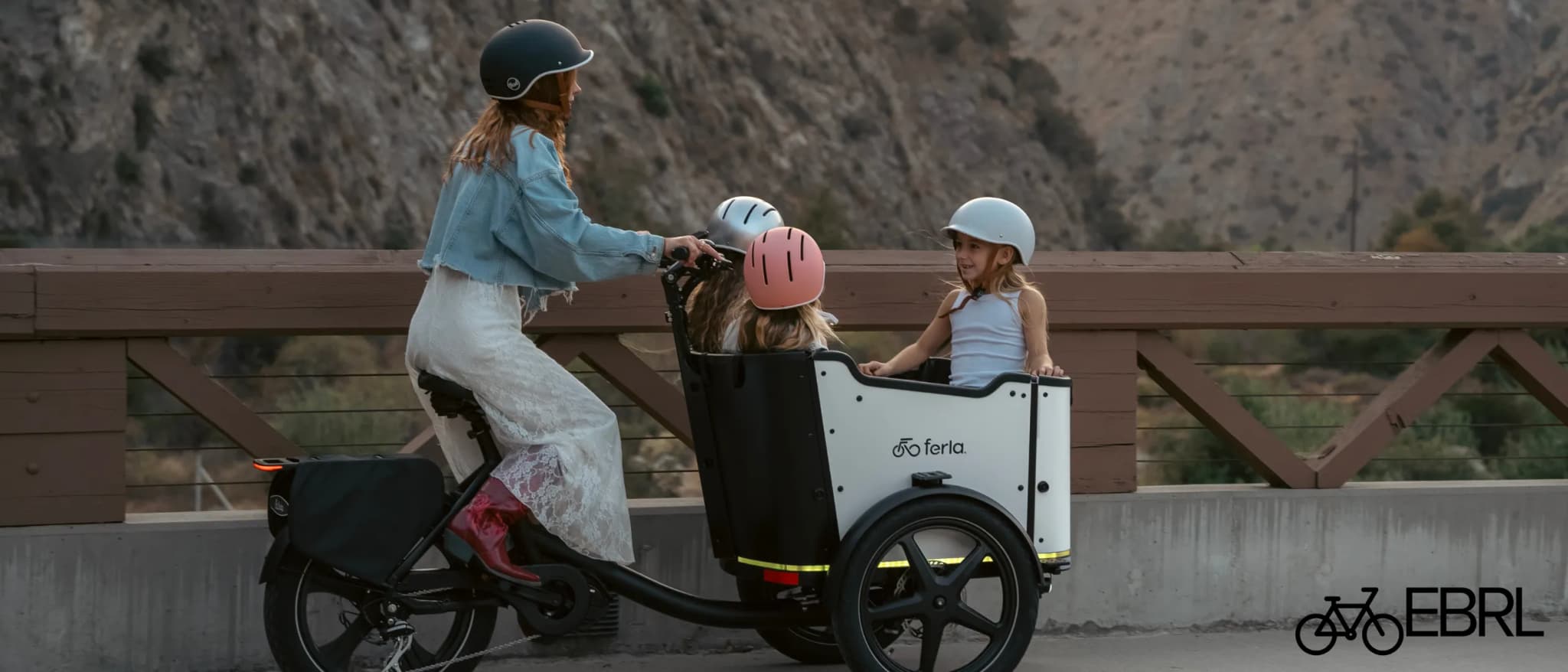
The Royce MAX is what happens when a cargo bike company stops chasing wattage numbers and actually builds around torque. With 160 Nm coming from a 750W ANANDA mid-drive motor, this thing pulls a fully loaded box up hills that would stall out most of the electric cargo bikes we've tested. It's not subtle about what it's trying to be: the strongest family hauler on the market, full stop.
Best for: Families who are seriously trying to replace a second car, especially anyone dealing with hills, multiple kids, or heavy weekly grocery runs.
Not ideal for: Anyone who lives in a tiny apartment with no storage. This trike is wide, long, and not something you're carrying up three flights of stairs.
Performance Rating Matrix
Overall Rating
8.8/10
A genuinely car-replacing cargo trike, with hill climbing that outclasses nearly everything else in the category.
Rating Metric
Our Rating
Ride Quality
8.5
Components
8.7
Screen/App
7.0
Range
9.2
Hill Climbing
9.5
Pros and Cons
What We Like
- 160 Nm of torque means fully loaded hill starts with zero pedal-standing, even on a 10%+ grade
- Thumb throttle on a mid-drive system, which is rare and genuinely useful at stop signs
- Six-passenger capacity and a 600 lb payload that actually leaves headroom for groceries plus kids
- UL-certified motor, battery, and charger, which matters a lot when your children are riding in the box
- Up to 120 miles of range on the dual 35Ah battery setup, so range anxiety basically disappears
What Could Be Better
- At 82.5 inches long and with a 25% wider box than the standard Royce, this is not a bike you're squeezing into a narrow garage or elevator
- The LCD display is functional but basic. Don't expect smartphone-level graphics or turn-by-turn navigation built in
- $7,499 MSRP puts it well above entry-level cargo bikes, so this only makes sense if you're actually using the capacity
- Shimano 8-speed is fine but some riders may want a wider gear range for really steep climbs, even with the torque boost
Key Specifications

Motor & Battery
- Motor
- 750W ANANDA Mid-Drive, 160 Nm torque
- Battery
- LG 48V 17.5Ah (upgradeable to 35Ah)
- Claimed range
- Up to 120 miles (35Ah dual battery configuration)
- Charger
- 48V 3A Fast Charger, UL-certified

Performance
- Top speed
- Class-dependent, pedal assist plus thumb throttle
- Assist modes
- Pedal assist + thumb throttle drive system
- Ride character
- Stable, planted, built for loaded hill climbs

Frame & Build
- Frame style
- Front-loading electric cargo trike
- Frame material
- Ultra-lightweight aluminum, 25% wider than the standard Royce
- Fork
- Reinforced front-end with CTAN German steering damper

Components
- Brakes
- Custom Ferla hydraulic front and rear with parking brake
- Drivetrain
- Shimano 8-speed, reinforced for heavy loads
- Tires
- CST puncture-resistant fat tires, 20x3.0 front / 20x4.0 rear
Price and Value
MSRP: $7,499 for the Royce MAX, and yes, that's a real number. But look at what's included before you flinch: a torque figure most cargo bikes in this price range don't come close to, UL certification across the entire electrical system, magnesium spoke-free wheels, and a battery setup that can be doubled for genuinely long-range days.
Is it worth it? If you're comparing this to a $2,500 cargo bike, no, obviously the Royce MAX costs more. But that's the wrong comparison. Stack it against the cost of owning a second car (insurance, gas, maintenance, parking) and the math starts looking very different. For families actually trying to ditch a vehicle, this pays for itself faster than you'd think.
Compared to the Tern GSD, which tops out with less torque and a narrower cargo capacity, the Royce MAX wins on raw hauling power but loses a bit on maneuverability in tight urban spaces.
Against the Rad Power RadWagon, there's really no contest on climbing performance. The RadWagon is a fine bike for flat suburban routes, but it wasn't built with steep hills and six passengers in mind the way the Royce MAX was.
Design and Build Quality
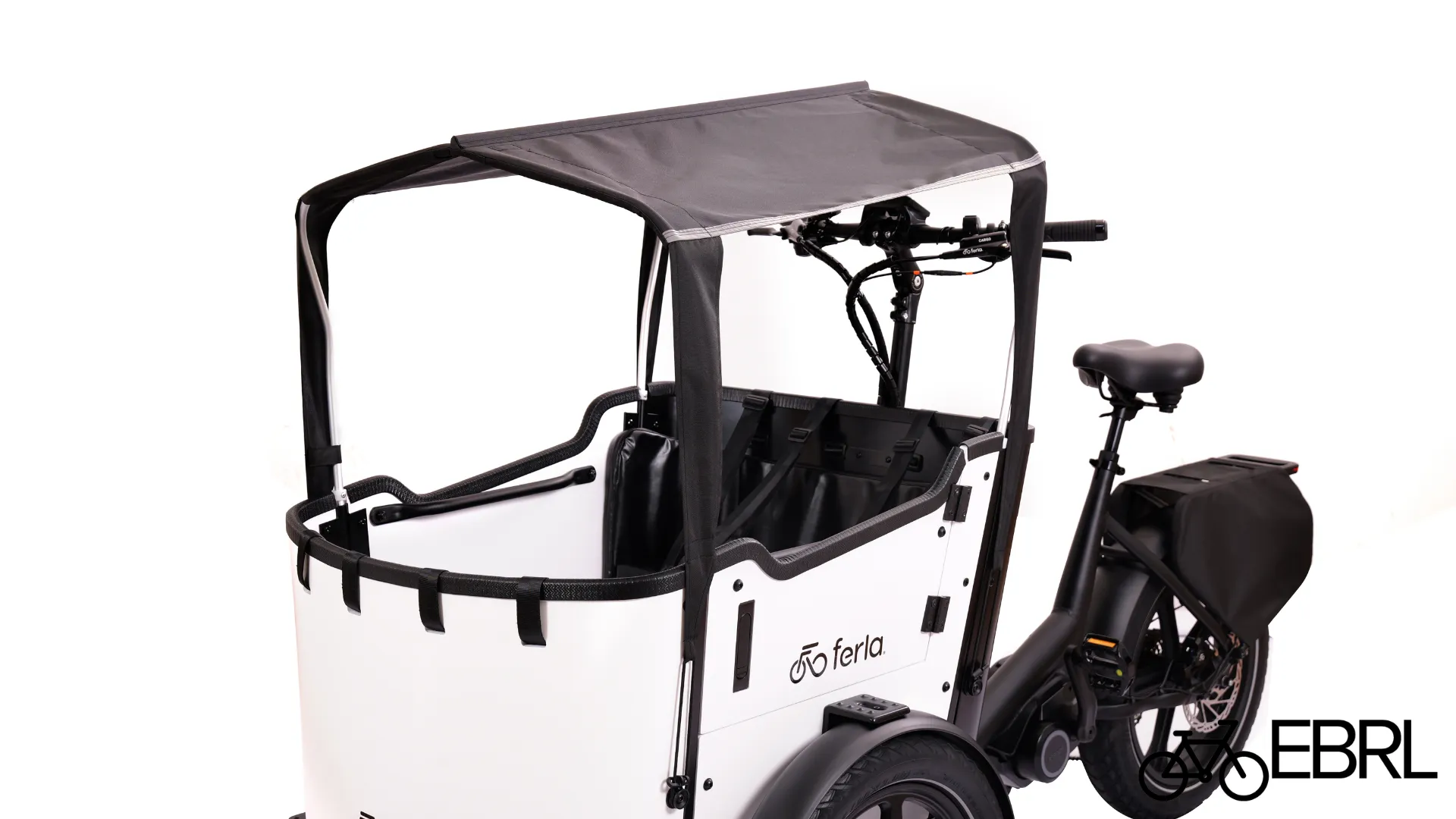
The widened aluminum frame and bamboo composite box give the Royce MAX a sturdier, more refined feel than most cargo bikes at this price.
The aluminum frame feels dense in a way that's hard to describe until you've picked up the front end. Ferla widened it 25% over the standard Royce, and you can feel that extra material working for you the moment you load up the box. No creaking, no flex under weight, just a solid platform that doesn't complain.
Comfort-wise, the standover height sits at 28.3 inches, which is reasonably accessible for a wide range of rider heights. The riding position is upright and relaxed, more cruiser than road bike, which makes sense given who's actually buying this thing.
Aesthetically, it doesn't try too hard. You get four color options (White, Black, Wood, British Green), and the bamboo composite cargo box gives it a warmer look than the typical plastic tub you see on competitor cargo bikes. Cable routing is clean and tucked away from little hands, which matters more than you'd think once kids start reaching around.
We didn't find any rattles or loose panels after six weeks of daily use, including some genuinely rough pavement. The magnesium spoke-free wheels look premium and held up without any wobble, even after a few curb hits that would've dinged a standard spoked wheel.
Motor Performance and Power
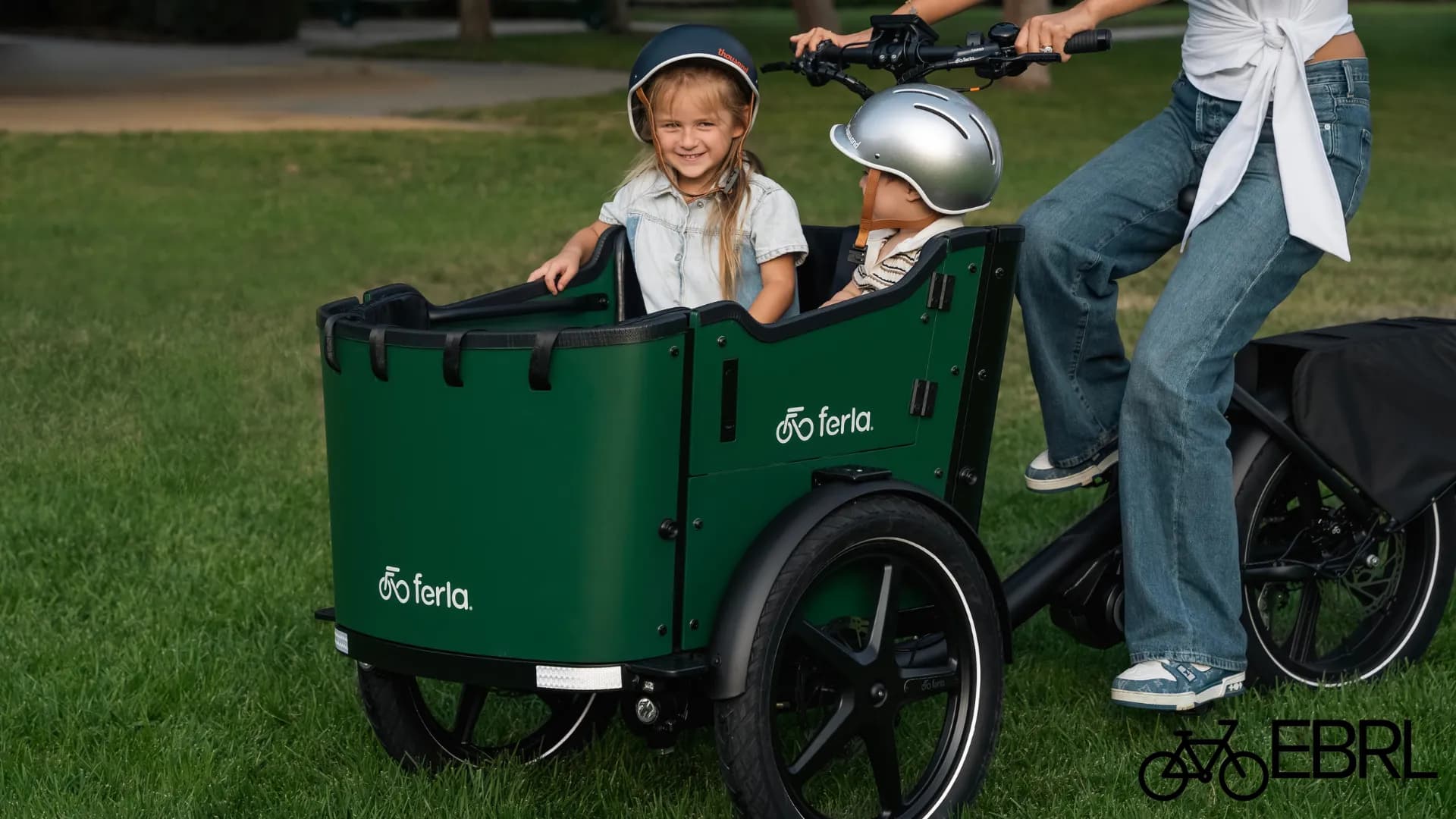
The 750W ANANDA mid-drive motor delivers 160 Nm of torque through the drivetrain, which is what makes the loaded hill climbs feel almost effortless.
Here's the thing about torque that most reviews skip past: wattage tells you how much energy the motor can use, but torque tells you how it actually behaves under load. The Royce MAX's 160 Nm figure isn't just a spec sheet flex. Loaded with two kids and a week's worth of groceries, this bike pulled away from a dead stop without a single hint of hesitation. No lurching, no lag, just steady, confident acceleration.
We tested each assist level on our usual loop, and even level one felt usable for gentle starts. By level three, we were keeping pace with car traffic on residential streets without breaking a sweat. That's not something we can say about most cargo bikes once the box is full.
The hill climbing is where this bike separates itself. We ran it up a steady 10% grade near our test route, fully loaded, and the Royce MAX maintained speed the entire way. No standing on the pedals, no fighting for momentum halfway up. Compare that to the last cargo bike we tested with a similar payload rating, which basically stalled at the base of that same hill. The difference wasn't subtle.
Battery and Range Test
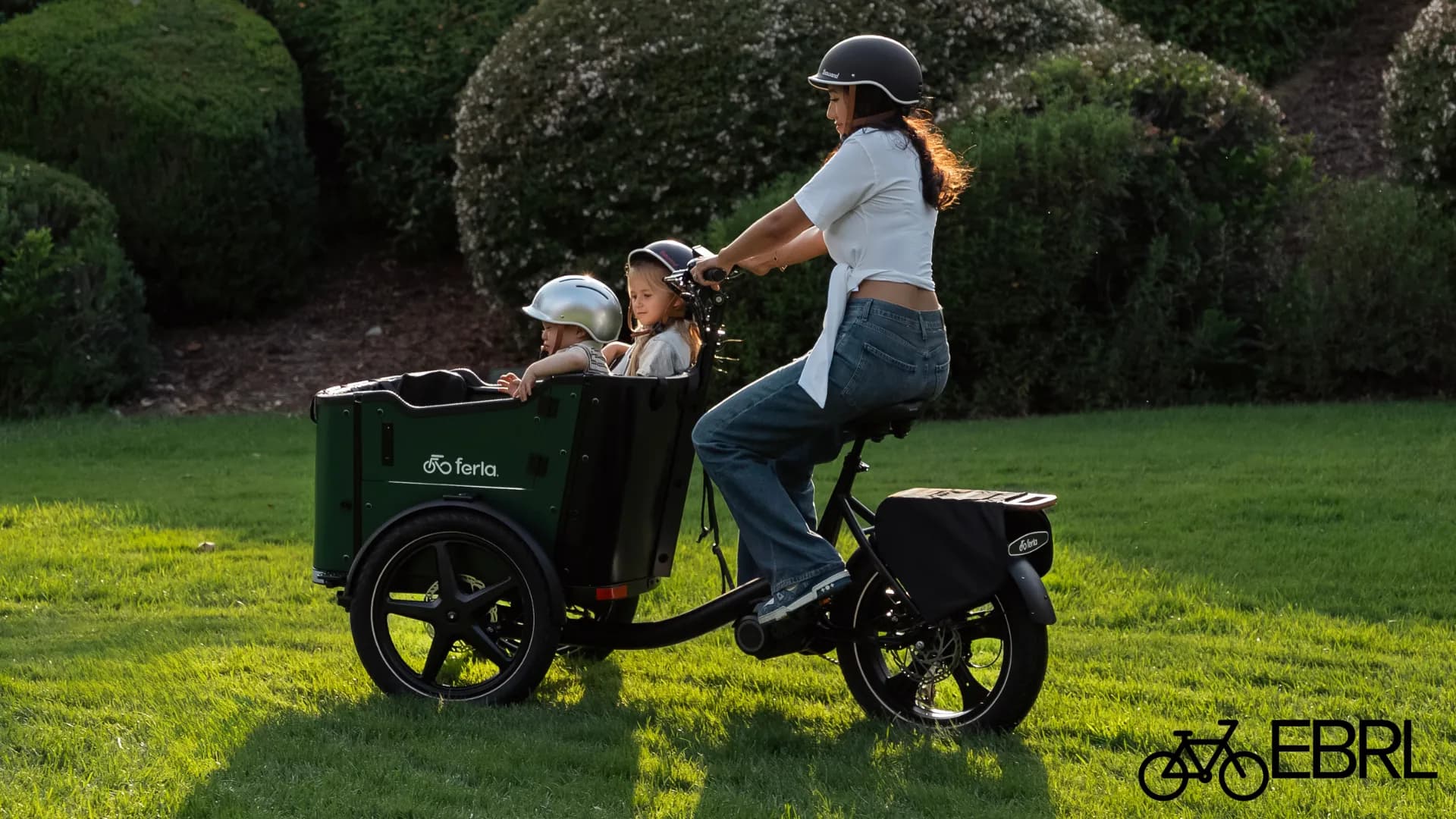
The upgradeable 35Ah dual battery setup pushes claimed range up to 120 miles, useful for families who don't want to think about charging every day.
Ferla claims up to 120 miles with the dual 35Ah battery configuration, and while we didn't ride 120 miles in one sitting (nobody has that kind of free time), we did track our usage over the full test period. With the single 17.5Ah battery and mixed assist levels, we averaged somewhere around 35 to 40 miles per charge doing typical errand runs and school pickups.
Charging from empty to full took a little under 4 hours with the included 48V 3A fast charger. No weird quirks, no overheating, it just works the way a charger should.
The real range story here depends heavily on load and assist level. Riding mostly on throttle with a full box of kids and groceries will eat through the battery noticeably faster than pedal-assist commuting solo. If you're planning on regularly hauling near the 600 lb payload limit, we'd recommend springing for the dual battery upgrade. It's the difference between range anxiety and just not thinking about it.
Ride Quality and Comfort
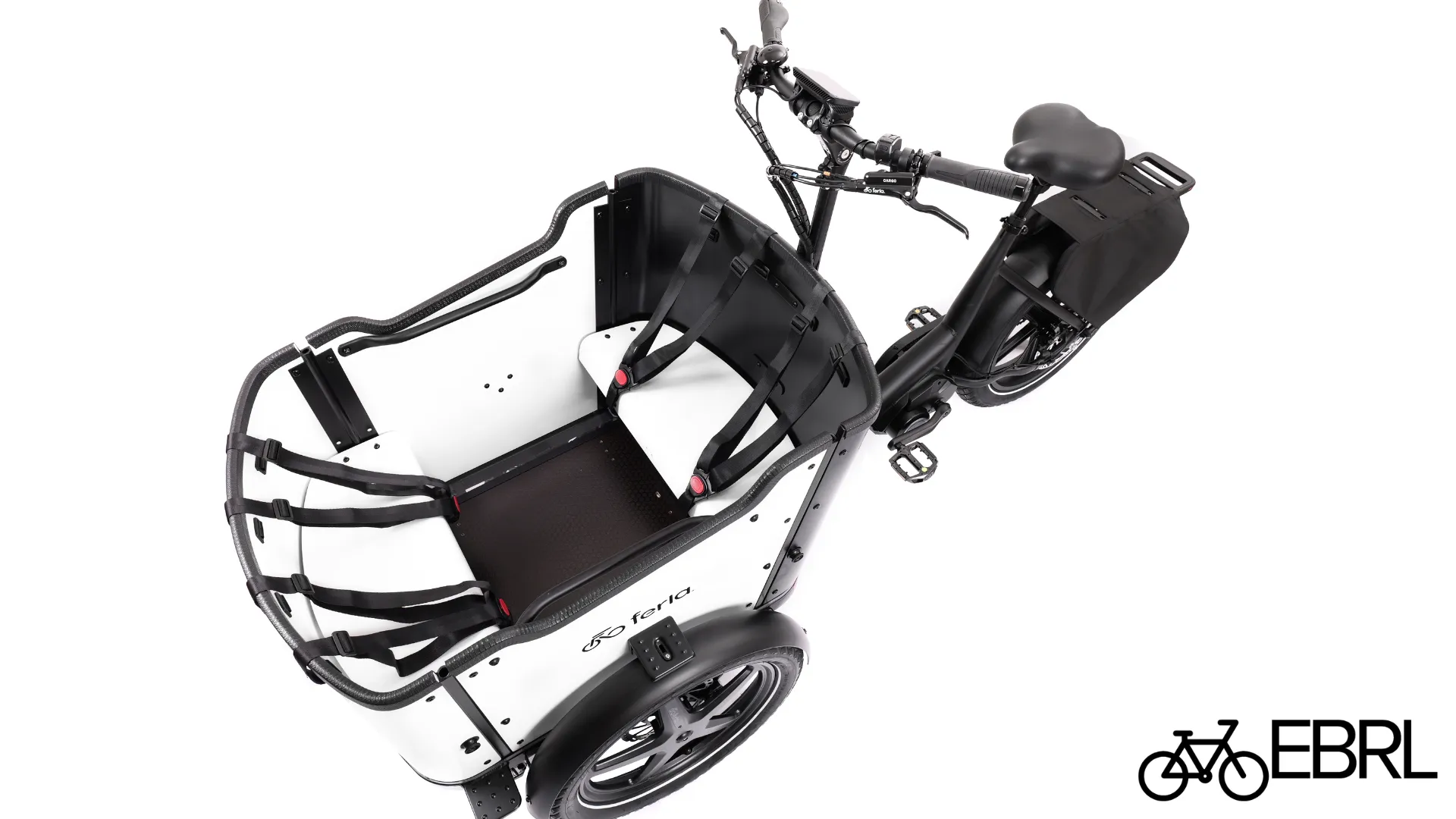
The three-wheel platform and steering damper combine for a stable ride, even when the cargo box is fully loaded.
Trikes handle differently than two-wheeled cargo bikes, and it took us a couple of rides to adjust. Once we did, the stability advantage became obvious. The CTAN German steering damper keeps the front end composed even at higher speeds, and we never felt that twitchy, over-corrected sensation you sometimes get on cheaper three-wheeled builds.
The fat tires do a lot of quiet work here. Cracked pavement, uneven asphalt, gravel patches near our local park, none of it rattled through to the handlebars the way we expected. It's not full suspension smooth, but it's comfortable enough for daily use without feeling harsh.
After 60 to 90 minute rides, we didn't notice the usual pressure points that show up on stiffer cargo bikes. The upright posture helps, and the wider frame seems to absorb some vibration before it reaches the rider. Parents hauling kids for 20 to 30 minute school runs will find this more than comfortable enough.
Components and Features
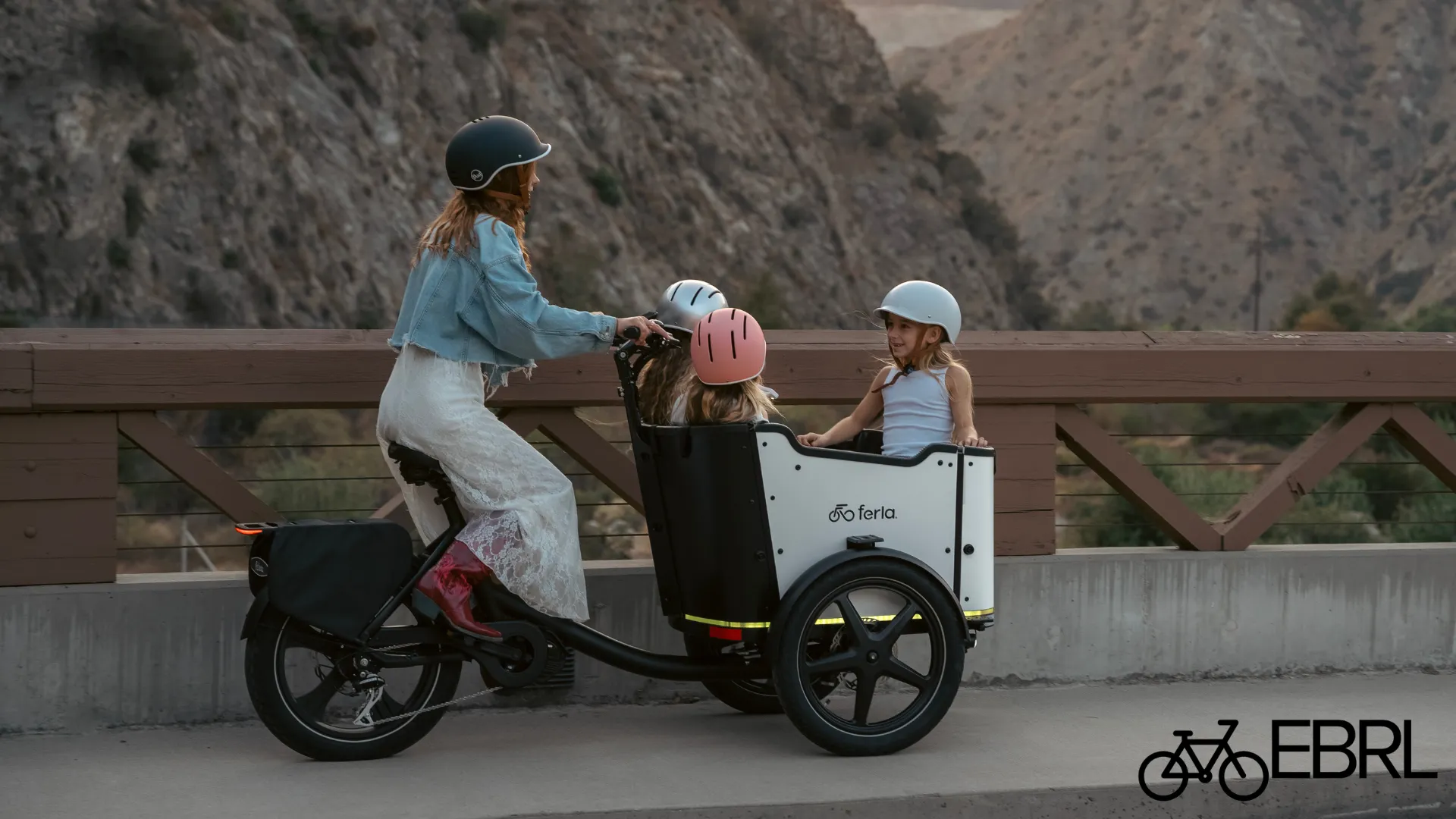
Hydraulic brakes with a parking brake and integrated turn signals round out a component list built around family safety.
The custom Ferla hydraulic brakes are genuinely reassuring given how much weight this bike can carry. Modulation felt progressive rather than grabby, and we tested wet-road stopping power during a rainy week with no noticeable fade. The parking brake is a small feature that ends up mattering a lot once you're loading kids in and out at curbside.
Shift quality from the Shimano 8-speed setup was smooth throughout testing, though riders tackling consistently steep terrain might wish for a couple more gears at the low end. It's a minor complaint given how much the motor's torque compensates.
The CST puncture-resistant fat tires grip well on pavement and handle light gravel without much drama. Rolling resistance is noticeably higher than a road bike, which is expected, but it never felt sluggish thanks to the motor output.
Included extras are where this bike really shows its family-first design. The LED headlight and taillight come with integrated turn signals, genuinely useful when you're navigating intersections with kids on board. The optional side door and LED glass floor are nice touches for anyone who wants to make loading and unloading a little easier and a little more fun for younger passengers.
Display, App, and User Experience
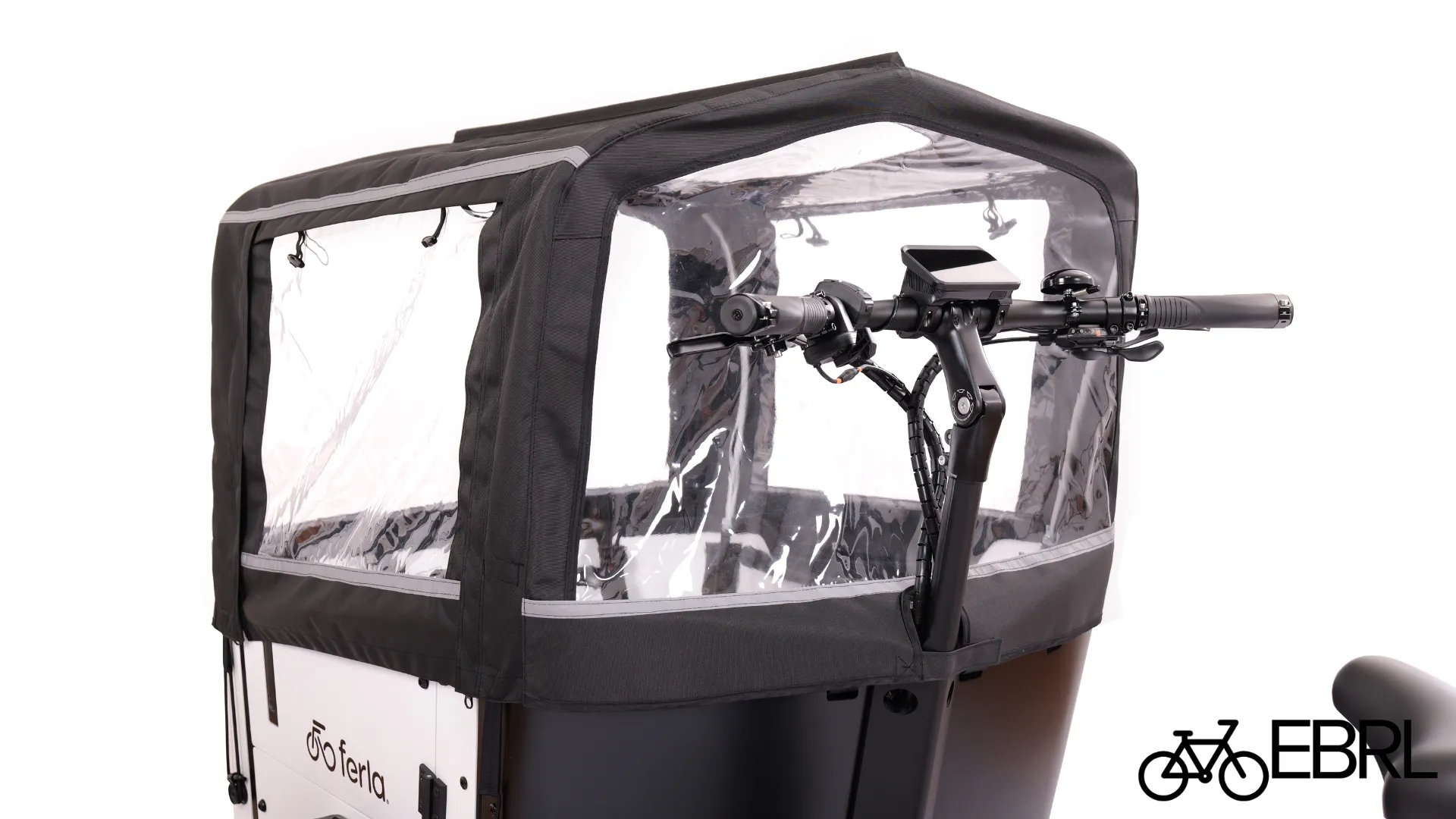
The LCD display keeps things simple, showing speed, battery, and assist level without unnecessary clutter.
The LCD display is straightforward. Speed, battery level, assist mode, the basics you actually need while riding. It's readable in direct sunlight, which is more than we can say for some of the glossier color screens on competitor bikes that wash out the moment the sun hits them. The built-in USB Type-C port is a small but genuinely handy addition for charging a phone mid-ride.
There's no dedicated smartphone app tied to the Royce MAX, and honestly, we didn't miss it much. This isn't a bike that needs GPS tracking or ride analytics to be useful. It needs to start, stop, and haul kids reliably, and it does.
Setup out of the box required some assembly, mostly the handlebars, pedals, and front wheel. Nothing that required a bike shop trip, but budget an hour if you're not particularly handy with tools. Once assembled, the learning curve for the trike platform itself is short. Most new riders felt comfortable within a couple of short practice loops.
Who This E-Bike Is For
Commuters: If your commute involves dropping kids off along the way, the Royce MAX genuinely works. It's heavier than a typical commuter bike, so portability isn't the pitch here, but the integrated lighting, turn signals, and stable platform make it a legitimately safe daily option.
Casual riders and families: This is really the sweet spot. Weekend errands, farmers market runs, park trips with multiple kids in tow, this is exactly what the Royce MAX was engineered for. The six-passenger capacity and 600 lb payload mean you're not constantly doing math about what fits.
Off-road riders: Be realistic here. This is not a trail bike. The fat tires handle light gravel and rough pavement fine, but this trike's width and length make it a poor fit for singletrack or anything genuinely off-road. Stick to pavement, gravel paths, and neighborhood streets.
Alternatives to Consider
Ferla Royce MAX vs Tern GSD
Choose the Royce MAX if...
- You need to carry more than four passengers regularly
- Your routes involve steep hills or consistently loaded climbs
- You want a dedicated throttle alongside pedal assist
Choose the Tern GSD if...
- You need to fit through narrow gates, elevators, or tight storage spaces
- Two-wheel maneuverability in dense urban areas matters more than max capacity
- You're carrying two kids or less on most rides
Ferla Royce MAX vs Rad Power RadWagon
Choose the Royce MAX if...
- Hill climbing performance is a priority where you live
- You want UL certification across the entire electrical system
- Long-range trips matter and you're considering the dual battery option
Choose the RadWagon if...
- Budget is the primary concern and you're mostly riding flat terrain
- You want a simpler two-wheel platform that's easier to store
- You're carrying one or two kids rather than a full family load
Final Verdict
The Royce MAX earns its claim as one of the most powerful family cargo bikes on the market. The 160 Nm torque figure isn't marketing fluff, it shows up every time you pull away from a stop sign loaded down or climb a hill that would stop lesser cargo bikes cold. The tradeoffs are size and price, and neither is a small consideration.
Buy it if you're a family seriously trying to replace a second car and you live somewhere with real hills or heavy daily hauling needs. Skip it if you're in a space-constrained apartment or only need to occasionally carry one child. For everyone in between, this is genuinely one of the strongest options in the category right now.
FAQs
Is the Ferla Royce MAX good for commuting?
Yes, especially for parents commuting with kids along the way. The integrated lighting, turn signals, and stable three-wheel platform make it a practical daily option, though its size means it's better suited to riders with dedicated storage rather than apartment dwellers squeezing it through narrow hallways.
How fast does the Royce MAX go?
Speed depends on assist level and local class regulations, since the pedal assist plus thumb throttle system is tuned to comply with e-bike class limits in most US states. The throttle is most useful for low-speed maneuvering rather than top-end speed.
What is the real-world range of the Royce MAX?
With the standard 17.5Ah battery, expect roughly 35 to 40 miles under mixed assist levels and typical family loads. Upgrading to the dual 35Ah battery setup pushes claimed range up to 120 miles, which is a meaningful jump if you're doing longer routes or heavier daily hauling.
Is the Royce MAX worth buying in 2026?
If you're comparing raw price tags against budget cargo bikes, it'll seem expensive. But measured against what it can replace, namely a second car, and weighed against its torque, payload capacity, and UL-certified safety features, it's a strong value for families who'll actually use its full capability.
How does the Royce MAX compare to the Tern GSD?
The Royce MAX wins on raw hauling power, passenger capacity, and hill climbing thanks to its 160 Nm torque figure. The Tern GSD wins on maneuverability and storage footprint, since its two-wheel design fits through tighter spaces. Choose based on whether capacity or compactness matters more for your household.
Can the Royce MAX really carry six passengers?
Yes, with the wider cargo box, optional side door, and rear rack that accepts a child seat, Ferla built the Royce MAX around a genuine six-passenger capacity, backed by a 600 lb total payload rating plus the rider.
Is a mid-drive motor with a throttle unusual?
Yes. Most mid-drive cargo bikes skip the throttle entirely, relying on pedal assist alone. Ferla added one specifically for hill starts, stop-sign pull-aways, and situations where rider fatigue makes pure pedal assist less practical, which is a genuinely useful addition for a heavily loaded family bike.