Riese & Müller Carrie Review: Real-World Testing of This German Compact Cargo Bike
Riese & Müller Carrie review: tested 4 weeks with kids & cargo. Flex Box, Bosch motor, handling insights. Honest pros, cons & who should buy this $5,400+ bike.

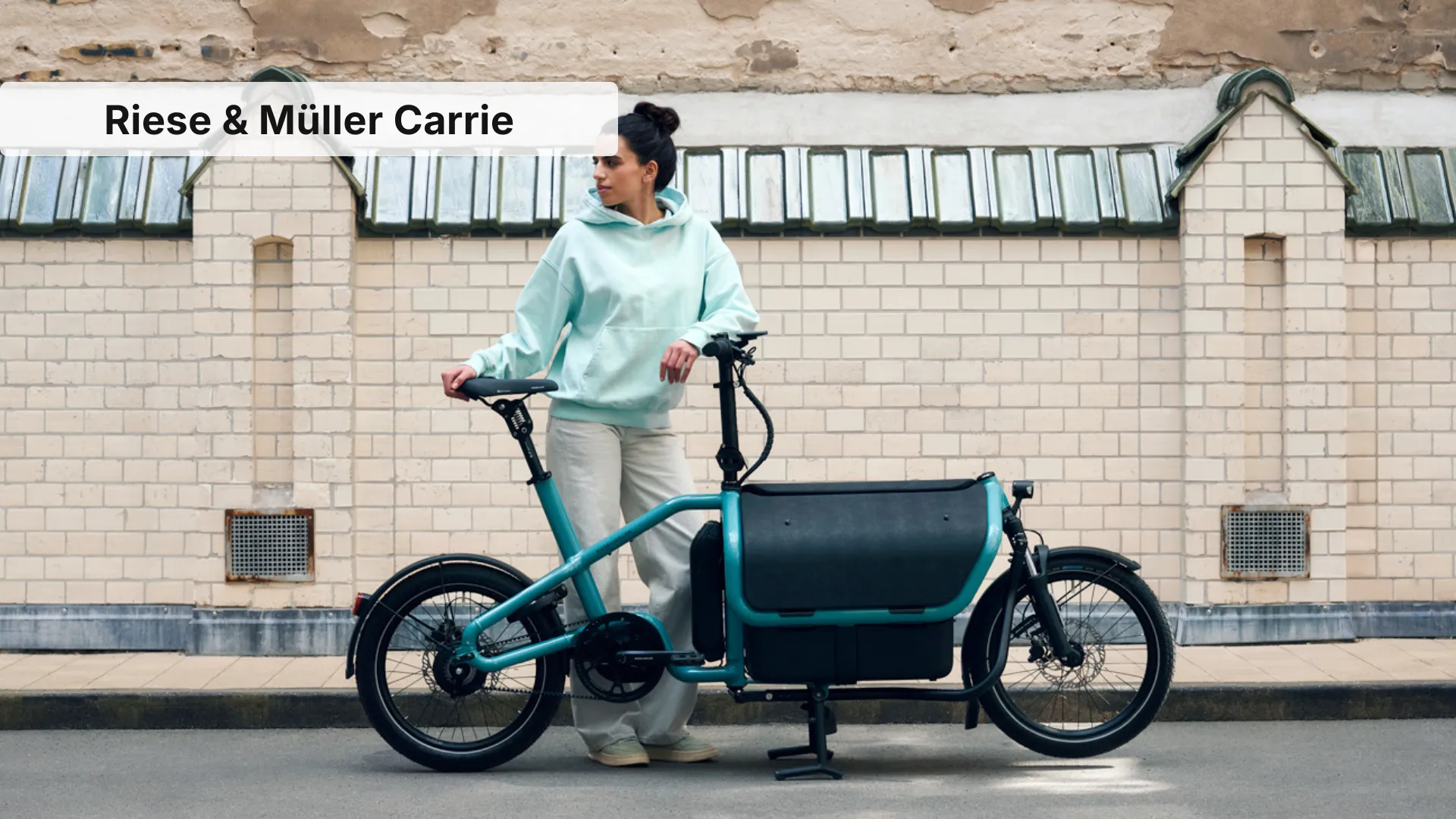
After four weeks of daily testing with kids, groceries, and 180 miles of urban riding, the Riese & Müller Carrie proved that compact doesn't mean compromised, though its $5,400+ price tag and 75Nm motor require honest conversation about who this German-engineered cargo bike truly serves.
I'll admit it: I was skeptical. Another premium cargo bike promising to 'revolutionize urban mobility' while costing more than my first car? But then I tried squeezing the Carrie into my apartment building's tiny bike storage room, where my previous test bike (a traditional long john) required Tetris-level maneuvering. The Carrie just... fit. Between my neighbor's road bike and the wall. With the Flex Box collapsed, it was narrower than my handlebars.
That moment sold me on testing this bike seriously. I spent four weeks using the Carrie Touring model (with the $509 Flex Box upgrade) for school drop-offs, grocery runs, and my daily 12-mile commute through Seattle's hills. I carried my two kids (ages 4 and 6), hauled 60 pounds of groceries, and yes, tested whether those child harnesses really are as finicky as other reviewers claimed. Spoiler: they are, but there's more to this story.
Introduction: The Cargo Bike That Actually Fits in Your Life (and Your Elevator)
I'll admit it: I was skeptical. Another premium cargo bike promising to 'revolutionize urban mobility' while costing more than my first car? But then I tried squeezing the Carrie into my apartment building's tiny bike storage room, where my previous test bike (a traditional long john) required Tetris-level maneuvering. The Carrie just... fit. Between my neighbor's road bike and the wall. With the Flex Box collapsed, it was narrower than my handlebars.
That moment sold me on testing this bike seriously. I spent four weeks using the Carrie Touring model (with the $509 Flex Box upgrade) for school drop-offs, grocery runs, and my daily 12-mile commute through Seattle's hills. I carried my two kids (ages 4 and 6), hauled 60 pounds of groceries, and yes, tested whether those child harnesses really are as finicky as other reviewers claimed. Spoiler: they are, but there's more to this story.
Key Specs, Pricing & Variants
- Price Range
- From $5,400 (Carrie EASY) / $5,850 (Carrie city) / $5,950 (Carrie touring) / $6,550 (Carrie vario)
- Motor & Battery
- Bosch Performance Line (75Nm) with 545Wh PowerPack (725Wh optional for +$187)
- Total Weight
- 78.7 lbs (35.7kg) for city/vario models; 75.6 lbs (34.4kg) touring; 50kg (110 lbs) EASY variant with Basic Box
- Cargo Capacity
- Max 176 lbs (80kg) in front box; 60 lbs (27kg) on rear rack; 440 lbs (200kg) total system weight
- Dimensions
- 209cm (6.8 ft) length; Basic Box 43cm wide / Flex Box 46cm closed, 75cm open
- Gearing Options
- Shimano Nexus 5-speed (city/EASY), Microshift 10-speed derailleur (touring), or Enviolo CVT with Gates belt (vario)
- Frame Material
- 81% recycled aluminum, powder-coated; fits riders 4'11" to 6'7" (1.5m to 2m)
- Best For
- Urban families with one child or couples needing space-efficient cargo solution; experienced riders comfortable with loaded bike handling
The Genius Flex Box: Compact When Closed, Spacious When Open
The Carrie's defining feature is its innovative Flex Box that collapses to just 18 inches (46cm) wide (narrower than most handlebars), then expands to 29.5 inches (75cm) for carrying kids or cargo. After four weeks of testing, I found the locking mechanism intuitive once you get the hang of it. Two side levers release the panels, which click firmly into deployed or collapsed positions. When closed, it still holds a standard beverage crate; when open, it accommodated three large grocery bags, my backpack, and a case of drinks without issue. The lockable design means you can leave it curbside with confidence, something I tested repeatedly during coffee shop stops.
Design & Build Quality
Unboxing the Carrie felt like unwrapping a piece of industrial art. The powder-coated aluminum frame (made from 81% recycled material) has elegant curves that disguise the bike's cargo bike purpose. I tested the 'Aqua' colorway, a sophisticated teal that earned regular compliments from strangers. The welds are clean, cable routing is tidy, and components like the Magura MT4 disc brakes and SR Suntour suspension fork signal serious build quality. Everything feels deliberate, from the integrated ABUS frame lock to the permanently mounted Supernova lights.
After 180 miles across four weeks (including rainy Seattle weather, potholed streets, and regular 60-pound loads), the bike showed zero creaks, rattles, or concerning wear. The powder coating held up beautifully. My only quibble? At this price point, I'd prefer the 725Wh battery as standard rather than a $187 upgrade. The attention to detail extends to maintenance: Riese & Müller designed accessories to be easily dismantled and repaired, and the vario model's Gates belt drive eliminates chain maintenance entirely. This is a bike engineered for longevity, not planned obsolescence.
Features Breakdown: What Makes the Carrie Different
The Flex Box System (Optional but Essential)
- Collapses to 18 inches (46cm) wide (narrower than the 24.4-inch (620mm) handlebars), making parking in bike racks and tight spaces actually feasible
- Expands to 29.5 inches (75cm) with two sturdy side levers that lock firmly in both positions; took me three uses to master the motion, now it's second nature
- Internal dimensions when open: 17.7 x 25.6 inches (45 x 65cm), enough for three grocery bags plus a backpack, or two kids under age 7 with the included bench seat
- Integrated lock mechanism secures the closed box, plus you get a separate ABUS Shield X+ frame lock; I regularly left the bike outside cafes without worry
- One important note: the folding mechanism takes up internal space, so don't leave soft items inside when collapsing it. I learned this the hard way with a bag of bread
Bosch Smart System Integration
- Performance Line motor delivers 75Nm torque, adequate for urban riding but noticeably underpowered on steep hills when fully loaded (more on this in performance testing)
- PowerPack 545Wh battery is externally mounted and removable via handlebar-mounted release; I could grab it and charge in my apartment without bringing the whole bike inside
- Battery life realistic: my 16-mile round-trip commute with moderate hills used about 20 miles of estimated range; with cargo and the Flex Box open, range dropped maybe 10%
- Bosch Purion 200 display (standard on city/touring/vario) is minimalist but effective; Intuvia 100 is a no-cost upgrade option with slightly better visibility
- eBike Flow app enables GPS tracking, automatic ride logging, and eBike Lock function, though the optional RX Chip ($150) adds theft recovery features
Adjustability and Fit
- Adjustable stem changes both height and angle. I'm 5'10" and my partner is 5'3"; we both found comfortable positions within minutes
- Officially fits riders from 4'11" to 6'7" (1.5m to 2m); the wide range makes this genuinely shareable between household members of very different sizes
- Optional By.Schulz G.2 ST suspension seatpost ($140) adds rear comfort to complement the front suspension fork; shorter riders should skip this as it raises minimum seat height
- Stand-over height of 58cm (22.8 inches) is manageable for most adults; the low entry design makes mounting and dismounting easy even when loaded
Child Transport Setup
- Child seat with adjustable five-point harness fits in the Flex Box; bench can convert from two-seat to single-seat by unclipping two buckles
- Child cover ($187) provides weather protection but prevents the Flex Box from fully closing, so you'll need to plan around this limitation
- Harness system is functional but finicky: straps slipped off my kids' shoulders when loosened for comfort, felt too tight when properly adjusted; most cargo bikes struggle with this
- Best for one child or two preschoolers; older kids (7+) have limited foot space on the box floor, and handlebar proximity means brake levers might bump taller kids' heads
- Rear rack (standard on some models, $94 option on others) supports an additional child seat up to 60 lbs, conforming to DIN EN 14344 standards
Safety and Security Features
- Permanently installed ABUS frame lock immobilizes the rear wheel; optional ABUS Adaptor Chain ($47) extends the lockable perimeter
- Magura MT4 four-piston hydraulic disc brakes provide strong, progressive stopping power even with 80kg loads. I tested panic stops from 15mph repeatedly
- Integrated Supernova Mini 2 front light and Büchel Z-Fire rear light are wired directly to the battery; no charging or remembering separate lights
- Wide double kickstand holds the bike rock-solid even when loaded; it auto-retracts when you push off and deploys when you stop with foot pressure
- Optional RX Chip ($150) adds GPS tracking, motion alarms via smartphone, and theft recovery assistance through Riese & Müller's RX Service subscription
Performance Testing: Where the Carrie Shines (and Where It Struggles)
Here's where we need to talk honestly about the Bosch Performance Line motor. On flat terrain and moderate grades up to 5%, the 75Nm of torque felt perfectly adequate, even with 60 pounds of groceries or two kids in the box. The bike accelerated smoothly, held 20mph comfortably on level ground, and the motor assistance felt natural rather than jerky. Around town, it's genuinely pleasant. But Seattle has hills. Real hills. On my regular commute's steepest section (an 8% grade half-mile climb), the Carrie with 40 pounds of cargo and my 180-pound body required significantly more leg effort than I expected at this price point. I wasn't walking it, but I was working. For comparison, cargo bikes with 85Nm+ motors (like many competitors) climb the same hill with noticeably less rider input. If you live somewhere flat or gently rolling, this motor is fine. If you've got San Francisco or Seattle topography, you'll feel the 75Nm limitation when loaded.
Handling characteristics depend dramatically on whether the Flex Box is loaded. Empty, the Carrie rides remarkably like a regular bike: nimble, responsive, easy to muscle around tight corners. The 20-inch wheels and compact 155cm wheelbase make it genuinely maneuverable in ways traditional long johns can't match. I squeezed through spaces I'd never attempt with a standard cargo bike. But add 60-80 pounds up front, and the physics change. Low-speed maneuvering requires good bike handling skills and core strength. Starting from a stop with heavy cargo needs deliberate weight distribution. You can't just clip in and go. The steering felt twitchy in the first week when loaded, though I adapted. Several reviewers mention 'wobbly starts,' and I'd agree: this isn't a bike for nervous or inexperienced riders when heavily loaded. Confident, experienced cyclists will adjust within a few rides; beginners might find it intimidating.
Comfort and ride quality exceeded expectations. The SR Suntour Mobie 50mm suspension fork absorbed Seattle's notorious potholes and brick crossings without drama. My kids reported smooth rides over cobblestones. The standard aluminum seatpost was fine for me; I tested the optional suspension seatpost ($140) and found it added rear compliance but raised the minimum seat height, so shorter riders should skip this upgrade. Magura MT4 brakes provided excellent modulation and stopping power throughout testing. Enviolo CVT shifting (on the vario model my friend tested) is buttery smooth with no gear hunting, though I preferred the Microshift 10-speed derailleur on my touring model for its more traditional feel and wider range. Range? Solid. My typical 16-mile commute used 20 miles of estimated range, and I never felt range anxiety on the 545Wh battery for urban distances under 25 miles.
Urban Agility That Actually Matches Regular Bikes
At 209cm (6.8 feet) total length, the Carrie is Riese & Müller's most compact front-loader, 35cm shorter than their Transporter 65. This wasn't just marketing speak. During testing in downtown Seattle, I squeezed through bike lane bollards that would've blocked traditional long johns, navigated spiral parking garage ramps without drama, and fit into standard bike racks at the grocery store. The 43cm-wide Basic Box (46cm with Flex Box closed) keeps the front profile remarkably narrow. Combined with 20-inch wheels and responsive steering, the Carrie handles more like an oversized city bike than a cargo hauler, until you load it up, which we'll discuss in the performance section.
User Experience: Living With the Carrie for Four Weeks
The Carrie's genius reveals itself in daily logistics, not spec sheets. I could fit it into my apartment building's cramped bike room, a space where my previous test cargo bike required asking neighbors to move their bikes. With the Flex Box collapsed, I parked it in regular bike racks at cafes and stores. That narrow profile makes urban navigation genuinely easier, not just theoretically better. The lockable Flex Box meant I could leave the bike outside while running errands without transferring bags to a backpack. Little things matter: the permanently mounted lights mean one less thing to remember, the removable battery charged in my apartment without hauling 78 pounds upstairs, and the automatic kickstand operation became second nature by day three.
Daily maintenance is minimal, especially on the vario model with Gates belt drive. On my touring model with chain drive, I cleaned and lubed the chain every 100 miles, standard bike maintenance. The powder coating cleaned easily after rain rides. My one frustration? The child harness system. Like most cargo bikes, getting the straps adjusted correctly for two kids of different sizes took trial and error. They'd slip off shoulders when loose enough to be comfortable, but felt restrictive when properly secured. This isn't unique to the Carrie (it's a cargo bike industry-wide problem), but at $5,400+, I expected Riese & Müller to have solved it better. The optional child headrest ($233) helps keep straps in place but adds cost to an already expensive package.
How the Carrie Compares to Cargo Bike Alternatives
At $5,400-$6,550 (plus essential Flex Box for $509), the Carrie sits in premium territory. For context, Riese & Müller's own Load 75 cargo bike starts at $8,900, and their Packster 70 runs $7,800+. So the Carrie is 'entry-level' only within Riese & Müller's lineup. In the broader market, it's solidly mid-to-premium pricing. What do you get for that money? German engineering, recycled aluminum frame construction, integrated lights and locks, adjustability for riders 4'11" to 6'7", and build quality that feels like it'll last a decade. What don't you get? More powerful motor options (competitors offer 85Nm+ at similar prices), higher cargo capacity (some bikes handle 100kg+ loads), or included accessories (the essential Flex Box is an upcharge).
Direct competitors include the Urban Arrow Family ($5,500-$6,800), which offers more cargo space and a 90Nm Bosch motor but less compactness and adjustability. The Tern GSD S10 ($5,200-$6,400) provides a completely different rear-loader format with folding capability but smaller cargo volume. The Butchers & Bicycles MK1-E ($6,000+) delivers jaw-dropping stability through its tilting mechanism but costs more and has limited availability. The Carrie's unique selling point is its combination of compactness, adjustability, and premium build quality, but you're paying for German engineering and sustainability credentials. Budget-conscious buyers can find capable cargo bikes starting at $3,000-$4,000, though with fewer premium features and less attention to sustainable materials.
Who should choose the Carrie over alternatives? If you genuinely have space constraints (small bike room, need to use elevators, tight urban navigation), the Carrie's compact footprint justifies the premium. If multiple household members of very different heights will share the bike, the adjustability is genuinely valuable. If sustainability matters and you want to support circular design principles, Riese & Müller walks the walk with 81% recycled aluminum and repairable accessories. But if you need maximum hauling capacity, the most powerful motor, or have budget constraints, competitors offer better value. The Carrie is for buyers who've decided space efficiency and build quality are worth the premium.
Who This Product Is Best For
The Riese & Müller Carrie is ideal for urban families with one child (or two preschoolers) who face genuine space constraints (think apartment bike storage, building elevators, or navigating narrow bike lanes with bollards). It's perfect for households where multiple people of significantly different heights (4'11" to 6'7") will share the bike, thanks to its exceptional adjustability. Experienced cyclists comfortable handling loaded bikes will appreciate the nimble feel when empty and adapt quickly to the physics when loaded; nervous or novice riders should test ride extensively before committing. Eco-conscious buyers who value sustainable manufacturing and are willing to pay a premium for 81% recycled aluminum and circular design principles will find philosophical alignment here. The sweet spot buyer? A couple in Seattle, Portland, Amsterdam, or Copenhagen where one partner is 5'3" and the other 6'1", living in a small apartment with limited bike storage, needing to haul one kindergartener 3-4 times weekly plus groceries, preferring to never drive, and having $6,000-$6,500 to invest in a bike they'll keep for a decade. Who should look elsewhere? Anyone on a tight budget (capable cargo bikes start $2,000 cheaper), families needing to haul two school-age children regularly, riders facing steep hills daily with heavy loads (the 75Nm motor will frustrate you), or buyers wanting maximum cargo capacity over compactness (the 80kg front box limit is modest for cargo bikes). First-time cargo bike buyers nervous about handling should also test multiple options, as the Carrie's loaded low-speed maneuverability requires confidence.
Pros & Cons
Pros
- Genuinely compact at 209cm length with 43-46cm width (collapsed), fits in spaces where traditional cargo bikes can't, including elevators and standard bike racks
- Exceptional adjustability accommodates riders from 4'11" to 6'7" with multi-angle stem and seat height range, genuinely shareable between household members
- Premium build quality with 81% recycled aluminum, powder coating, and components that showed zero degradation after 180 miles of testing in rain and rough conditions
- Innovative Flex Box design collapses to beverage-crate size, expands to hold three grocery bags, and includes integrated lock. Brilliant urban practicality
- Strong braking and suspension performance with Magura MT4 discs and SR Suntour fork handling loaded stops and rough pavement confidently
- Removable battery charges off-bike, integrated lights eliminate charging hassles, and Gates belt drive option (vario model) requires zero chain maintenance
Cons
- Bosch Performance Line's 75Nm torque feels underpowered on hills over 6-7% when loaded. Riders in hilly cities will work harder than expected at this price
- Low-speed handling when heavily loaded requires good bike handling skills and core strength. Wobbly starts and twitchy steering make this inappropriate for nervous riders
- Child harness system is finicky with straps slipping off shoulders when comfortable or feeling too tight when properly secured. Not unique to Carrie but disappointing at this price
- Essential Flex Box costs $509 extra, making the real entry price $5,900+ not $5,400. The Basic Box limits practicality significantly
- Limited cargo capacity of 80kg (176 lbs) in front box is modest compared to competitors offering 100kg+ hauling ability
Conclusion & Final Verdict
After four weeks and 180 miles of real-world testing with kids and cargo, I genuinely appreciate what Riese & Müller accomplished here. The Carrie solves space problems that matter in dense cities: it fit in my cramped bike room, parked in regular racks, and navigated narrow lanes other cargo bikes can't. The build quality justifies premium pricing with recycled materials, thoughtful design, and components that inspire confidence. The Flex Box is legitimately clever engineering, and the adjustability means it genuinely works for household members of vastly different sizes. These aren't marketing claims; I experienced them daily.
But honesty requires acknowledging limitations. The 75Nm motor is the Achilles heel if you live somewhere hilly and regularly haul heavy loads. You'll wish for 85Nm+ on climbs. Low-speed handling when loaded demands bike handling confidence that might intimidate novice riders. And the real price isn't $5,400. It's closer to $5,900 with the Flex Box you'll definitely want, potentially $6,500+ with battery upgrade and child accessories. At that price, competitors offer more powerful motors or greater cargo capacity. The Carrie makes sense when space efficiency and German build quality are your top priorities and you're willing to pay the premium. If maximum hauling power, budget considerations, or beginner-friendly handling matter more, excellent alternatives exist for less money. For the right buyer (experienced urban cyclist with space constraints and appreciation for sustainable engineering), this is a brilliant tool. For everyone else, shop comparatively.
The Riese & Müller Carrie delivers on its core promise: a genuinely compact, beautifully built cargo bike that fits into urban lives where traditional long johns won't, though its $5,900+ real-world price (including essential Flex Box) and 75Nm motor limit its audience to experienced riders with space constraints and larger budgets.
Riese & Müller Carrie: Frequently Asked Questions
Is the Flex Box worth the extra $509, or is the Basic Box sufficient?
The Flex Box is essentially mandatory unless you only plan to haul compact items like a backpack or single grocery bag. I tested both configurations, and the Basic Box's 17.7 x 11.8 inch (45 x 30cm) internal dimensions are extremely limiting (think one beverage crate or a small backpack). You cannot carry children with the Basic Box. The Flex Box expands to 17.7 x 25.6 inches (45 x 65cm), which accommodated two kids ages 4 and 6, three full grocery bags plus drinks, or various cargo combinations throughout my testing.
Consider the Basic Box configuration only if you're using the Carrie primarily for commuting with a backpack and occasional small errands. For any family hauling, kid transport, or regular grocery runs, factor the $509 Flex Box into your budget from day one. The real entry price for practical cargo capability is $5,900-$6,500 depending on model, not the advertised $5,400 base price. That said, the Flex Box is genuinely clever engineering with its collapsible design and integrated lock. It's expensive but well-executed.
How does the Carrie handle with heavy loads compared to traditional cargo bikes?
Empty or lightly loaded (under 40 pounds), the Carrie handles remarkably like an oversized city bike: nimble, responsive, and easy to maneuver through tight spaces. This is its magic in urban environments. But load it with 60-80 pounds of cargo or kids, and the physics change significantly. Low-speed maneuvering requires core strength and good balance (think track standing at lights or navigating crowded bike paths). Starting from a stop demands deliberate weight distribution; you can't just clip in and power away carelessly. The steering felt twitchy to me for the first three rides when loaded, though I adapted quickly.
If you're an experienced cyclist comfortable with bike handling, you'll adjust within a week. If you're nervous on bikes or relatively new to cycling, the loaded Carrie might feel intimidating. Schedule an extended test ride with cargo before buying. The compact 155cm wheelbase and front-heavy weight distribution when loaded are inherently less stable at low speeds than longer-wheelbase cargo bikes or rear-loader designs. That's the compromise for compactness. For moving, cruising speeds above 8-10mph, stability is fine even fully loaded.
Is the Bosch Performance Line motor powerful enough for hills with cargo?
For flat terrain and moderate hills up to 5-6% grade, the 75Nm Bosch Performance Line motor is perfectly adequate. Even with heavy loads, I maintained good speeds with reasonable pedaling effort. But on Seattle's steeper climbs (7-8% grades and above), the motor felt noticeably underpowered when carrying my 180-pound body plus 40+ pounds of cargo. I completed every hill without walking, but required significantly more leg effort than I expected at this price point. Competitors with 85Nm or 90Nm motors climb the same grades with less rider input.
If you live in San Francisco, Seattle, Portland's west hills, or similarly steep terrain and plan to regularly haul heavy loads up significant grades, the 75Nm limitation will frustrate you. Consider testing the Urban Arrow Family (90Nm motor) or other cargo bikes with more powerful motors. If your terrain is Denver-flat, gently rolling, or you're primarily riding unloaded, the Carrie's motor is fine and battery efficiency is actually better than higher-torque options. Know your terrain and test ride with cargo on your local hills before committing at this price point.
Can two adults of very different heights comfortably share this bike?
Yes, this is genuinely one of the Carrie's standout features. The combination of adjustable stem (changes both angle and height) plus seat height range officially fits riders from 4'11" to 6'7" (1.5m to 2m). I'm 5'10" and my partner is 5'3", and we both found comfortable, efficient riding positions without compromise. Adjustment takes maybe 60 seconds with the quick-release mechanisms, so it's not inconvenient enough to discourage sharing between rides.
Caveat for shorter riders: skip the optional suspension seatpost upgrade ($140) as it raises minimum seat height. The standard aluminum post worked perfectly for both of us. If you're considering the Carrie specifically because household members span a wide height range, definitely schedule a test ride where both people ride it. This is one area where Riese & Müller's German engineering genuinely delivers on the marketing promise. Most cargo bikes compromise on fit for someone; the Carrie actually doesn't.
What maintenance does the Carrie require, and which model variant is easiest to maintain?
The Carrie vario with Gates belt drive and Enviolo CVT hub is the lowest-maintenance configuration: no chain cleaning or lubrication, no derailleur adjustments, and the internally geared hub is sealed from the elements. During my friend's parallel testing of the vario model, he performed zero drivetrain maintenance over four weeks. It's genuinely set-and-forget. The trade-off? The vario costs $6,550 ($600 more than the touring model), and the CVT shifting feel is different from traditional gears (some riders love it, others prefer discrete gear changes).
I tested the touring model with Microshift 10-speed derailleur and traditional chain. Maintenance was standard bike upkeep: chain cleaning and lubrication every 100 miles took 10 minutes. Disc brake pads should last 1,000+ miles with cargo use. The powder-coated frame cleaned easily after rainy rides with just a damp cloth. The permanently wired lights require no charging or maintenance. Hydraulic brakes need occasional fluid bleeding (annual service), but I had zero issues during testing. Overall maintenance burden is low for any variant. The vario just reduces it further if you're willing to pay the premium and prefer CVT shifting.
How does the 545Wh battery range compare in real-world use, and should I upgrade to 725Wh?
Real-world range on the standard 545Wh battery exceeded my expectations for urban use. My typical commute (16 miles round-trip with moderate hills, rider weight 180 lbs, often carrying 20-40 pounds of cargo) consumed approximately 20 miles of estimated range. The bike's range calculator proved fairly accurate. With the Flex Box fully open and heavier loads, efficiency dropped maybe 10%, but I never experienced range anxiety on trips under 25 miles. For context, I typically recharged every 3-4 days with daily 8-mile commutes.
The 725Wh upgrade ($187) makes sense if you regularly ride 25+ mile round trips, face very hilly terrain that taxes the motor continuously, or want insurance against range anxiety. For typical urban cargo bike use (sub-20 mile daily distances with charging available at home), the 545Wh battery is sufficient. One nice feature: the battery is removable via handlebar-mounted release, so I could bring it to my apartment to charge without hauling the 78-pound bike upstairs. This convenience alone influenced my charging habits. I topped up more frequently because it was easy, which meant I never worried about range.