Beaumont Rev 3 Step-Through Review: Tested as a Real-World Electric City Bike
Honest Beaumont Rev 3 Step-Through review. We tested this $999 electric city bike on real commutes, covering range, motor power, comfort, and who should buy it.


Quick Summary
The Retrospec Beaumont Rev 3 Step-Through is a genuinely solid electric city bike at $999. It covers up to 42 miles per charge, tops out at 20 mph with throttle, and wraps a 350W Ananda hub motor in a vintage-styled steel frame that's remarkably easy to get on and off. For everyday commuters and casual riders who want a pretty, practical, and affordable e-bike, this one hits the mark.
Best for: Urban commuters, casual riders, and anyone who wants a step-through electric city bike that's comfortable, cargo-ready, and doesn't drain the bank account.
Not ideal for: Riders who need serious hill-climbing power, faster speeds beyond Class 2 limits, or a longer range beyond 42 miles on a single charge.
Performance Rating Matrix
Overall Rating
7.9/10
A well-rounded, approachable electric city bike that earns its price tag
Rating Metric
Our Rating
Ride Quality
8.2
Components
7.5
Display/Controls
7.0
Range
7.8
Value for Money
8.8
Pros and Cons
What We Like
- Step-through frame makes mounting and dismounting genuinely effortless, a real perk for shorter riders or anyone with mobility limitations
- 42-mile claimed range held up well in real-world testing at assist levels 2-3, easily covering a 15-mile round-trip commute with plenty of charge left
- Tektro mechanical disc brakes with anti-vibration rotors provide confident stopping power in both dry and light wet conditions
- Rear rack, full-coverage steel fenders, integrated headlight, and bell are all included, not sold separately like on many competitors
- UL2849 and UL2271 certified, which matters for safety and insurance in more and more cities
- Five color options (Eggshell, Larimar, Mint, Blush, Matte Graphite), and this bike actually looks good, which counts for something
What Could Be Better
- At 57.5 lbs, this is not a lightweight city bike. Hauling it up stairs or lifting it onto a rack takes some effort
- The rear taillight runs on AA batteries rather than being fully integrated into the electrical system, which feels like an odd choice at this price
- Rear rack max load of 22 lbs is lower than competitors like the Rad Power RadCity 5 Plus, which supports up to 120 lbs
- LED display is basic: no navigation, no app connectivity, and sunlight readability is just okay
- Hub motor rather than mid-drive means slightly less efficient hill climbing compared to bikes like the Gazelle Medeo or Aventon Pace 500
Key Specifications

Motor & Battery
- Motor
- 350W Ananda rear hub motor
- Battery
- 36V / 10.4Ah (374.4Wh) Li-ion, seat tube mounted
- Claimed range
- Up to 42 miles
- Charger
- 36V/2A standard charger
- Charge time
- 5-6 hours (full charge)

Performance
- Top speed
- 20 mph (throttle or max pedal assist)
- Class
- Class 2 e-bike
- Pedal assist levels
- 5 levels + throttle + walk mode
- Sensor type
- Cadence sensor
- Display
- Left-mounted LED display

Frame & Build
- Frame style
- Step-through
- Frame material
- Beaumont steel
- Fork
- Rigid steel
- Frame size
- 42cm (fits 5'0" to 5'10")
- Bike weight
- 57.5 lbs (battery included)
- Max rider weight
- 350 lbs

Components
- Brakes
- Tektro mechanical disc, 180mm anti-vibration rotors, semi-metallic pads
- Drivetrain
- 7-speed Shimano Tourney, 11-32T cassette
- Tires
- 27.5 x 2.4" city tires
- Handlebars
- Dutch-style alloy bars
- Extras
- Rear rack (22 lb capacity), full-coverage steel fenders, 40-lux headlight, bell, multi-tool
Price and Value
MSRP: $999.99. For under a grand, you're getting a complete, ready-to-ride electric city bike with fenders, a rear rack, integrated lights, and Tektro disc brakes already on it. That's genuinely good value. A lot of e-bikes in this price range ask you to purchase accessories separately. Retrospec doesn't.
Is it worth it? Yes, with some caveats. The 350W motor and 374Wh battery are modest specs, but they're appropriate for flat to mildly hilly city riding. If you live somewhere pancake-flat and want a reliable daily commuter under $1,000, the Beaumont Rev 3 Step-Through is hard to beat.
Compare it to the Aventon Pace 500.3 Step-Through at around $1,299: you get a more powerful 500W motor and a torque sensor, but you'll spend $300 more. For casual city riders who don't need maximum power, the Beaumont Rev 3 saves that money without sacrificing day-to-day usability.
Stack it against the Rad Power RadMission 1 at $999 and the Beaumont wins on accessories. The RadMission doesn't include a rear rack or fenders out of the box. If carrying cargo and riding in mixed weather are priorities, the Retrospec is the better-equipped choice at the same price.
Design and Build Quality
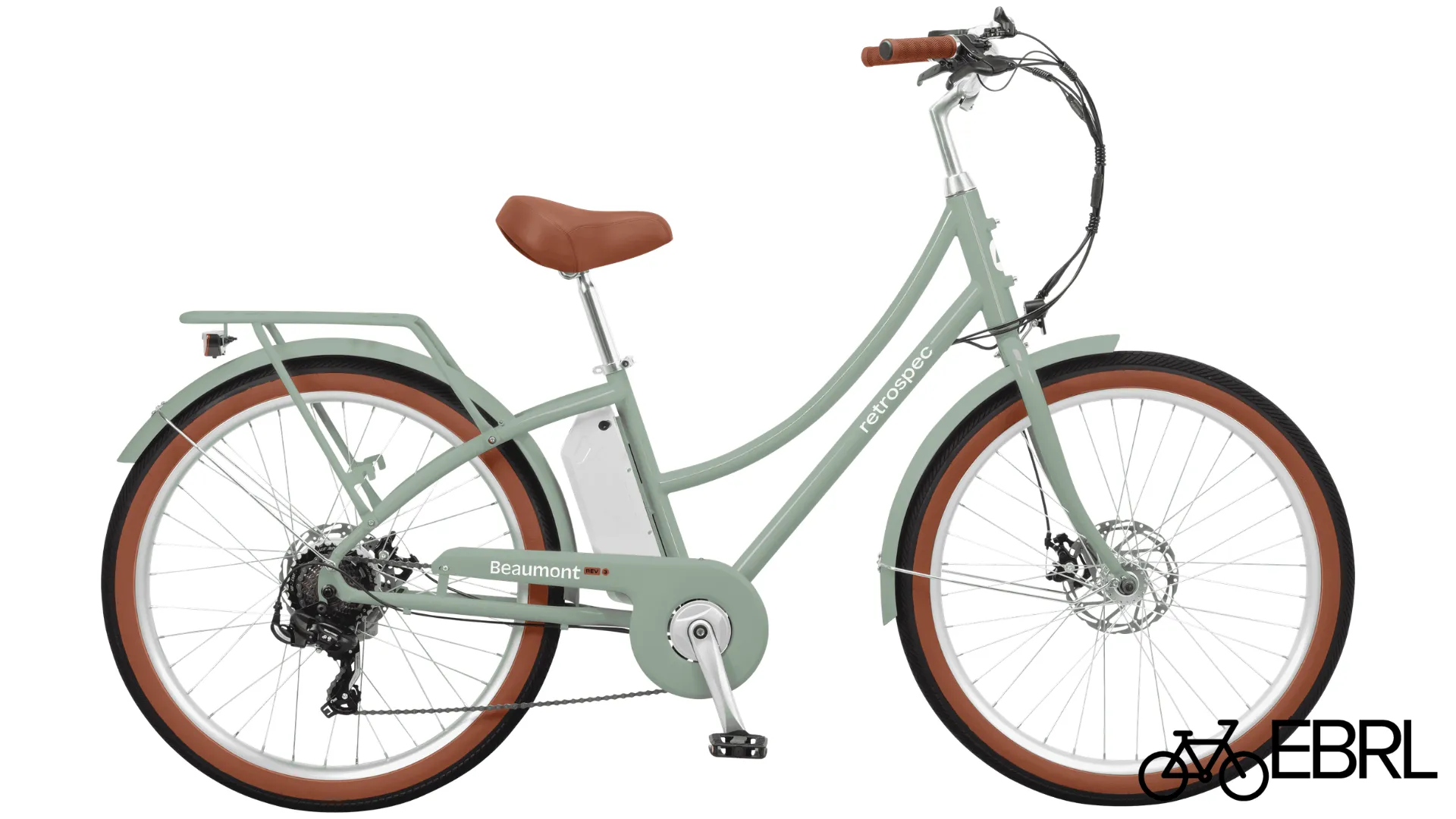
The step-through steel frame and upright Dutch handlebars define the riding experience
The step-through steel frame is the first thing you notice, and it's clearly the heart of the design. Getting on is genuinely effortless, especially for riders under 5'6" or anyone who's tired of awkwardly swinging a leg over a high top tube. The Dutch-style handlebars push you into an upright riding position that's immediately comfortable. Welds look clean, paint finish is consistent across all five color options, and the overall assembly feels tighter than what I'd expect from a $999 bike.
That said, 57.5 pounds is heavy. Pick it up to load it into a car and you'll feel it. This isn't the bike for people who regularly need to carry it up stairs or onto public transit. On the street, the weight disappears once you're moving, but it's worth knowing going in.
Aesthetically, Retrospec nailed it. The vintage city cruiser look is cohesive: cream-colored saddle with the Eggshell finish, chocolate-brown tires with the Blush and Mint options. Cable routing is reasonably tidy, and the integrated headlight doesn't look like an afterthought bolted on. For a sub-$1,000 e-bike, it genuinely looks like it costs more.
The full-coverage steel fenders are a practical bonus. They cover the tire completely rather than just catching the worst of the spray, which matters on wet city streets. Rear rack and integrated bell are both solidly mounted with no flex or rattle.
Motor Performance and Power
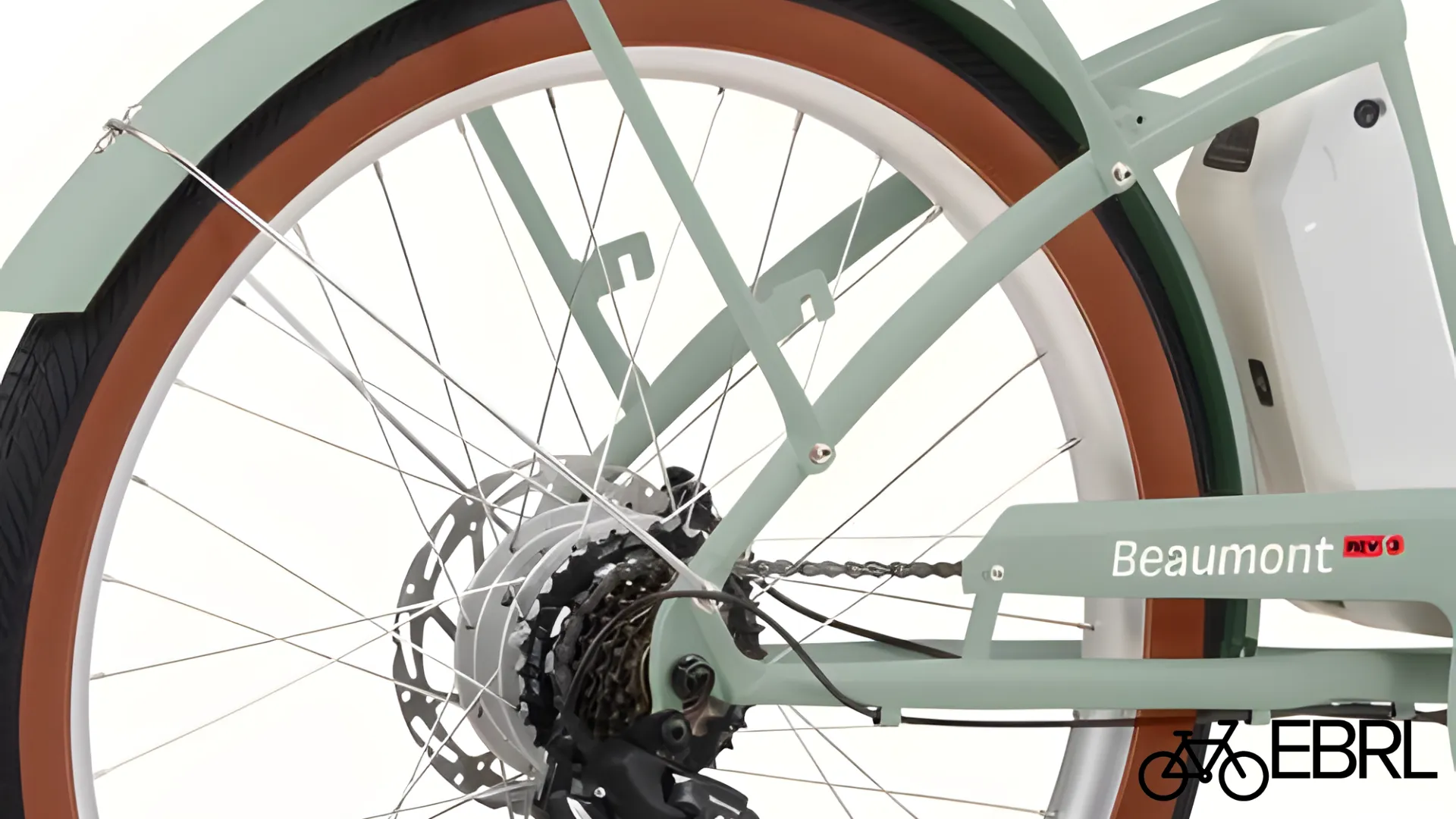
The 350W Ananda rear hub motor handles flat city terrain with smooth, predictable power
The 350W Ananda rear hub motor is smooth off the line. There's no aggressive lurch when you engage assist level 1 or 2. Power delivery is gradual and predictable, which is exactly what you want for city riding where you're constantly stopping and starting. Throttle response is quick but not jerky. From a dead stop, the throttle gets you up to 15 mph in about 4-5 seconds on flat pavement.
Pedal assist levels 1 through 3 are where most riders will spend their time. Level 1 just takes the edge off, which is great for long flat stretches where you want a workout but less fatigue. Level 3 is the sweet spot for a real commute: you're doing maybe 40% of the work and cruising at 15-17 mph comfortably. Levels 4 and 5 feel noticeably punchier, though battery drain ramps up fast above level 3.
Hills are where you feel the 350W rating honestly. Moderate grades (5-6%) are fine in level 4 or 5. Steep city hills (8%+) will have the motor working hard and speed dropping to 10-12 mph. It's not going to stall out on you, but don't expect the effortless hill-climbing you'd get from a 500W or mid-drive setup. For most city terrain, it's plenty. For San Francisco hills? You'd want more motor.
Battery and Range Test
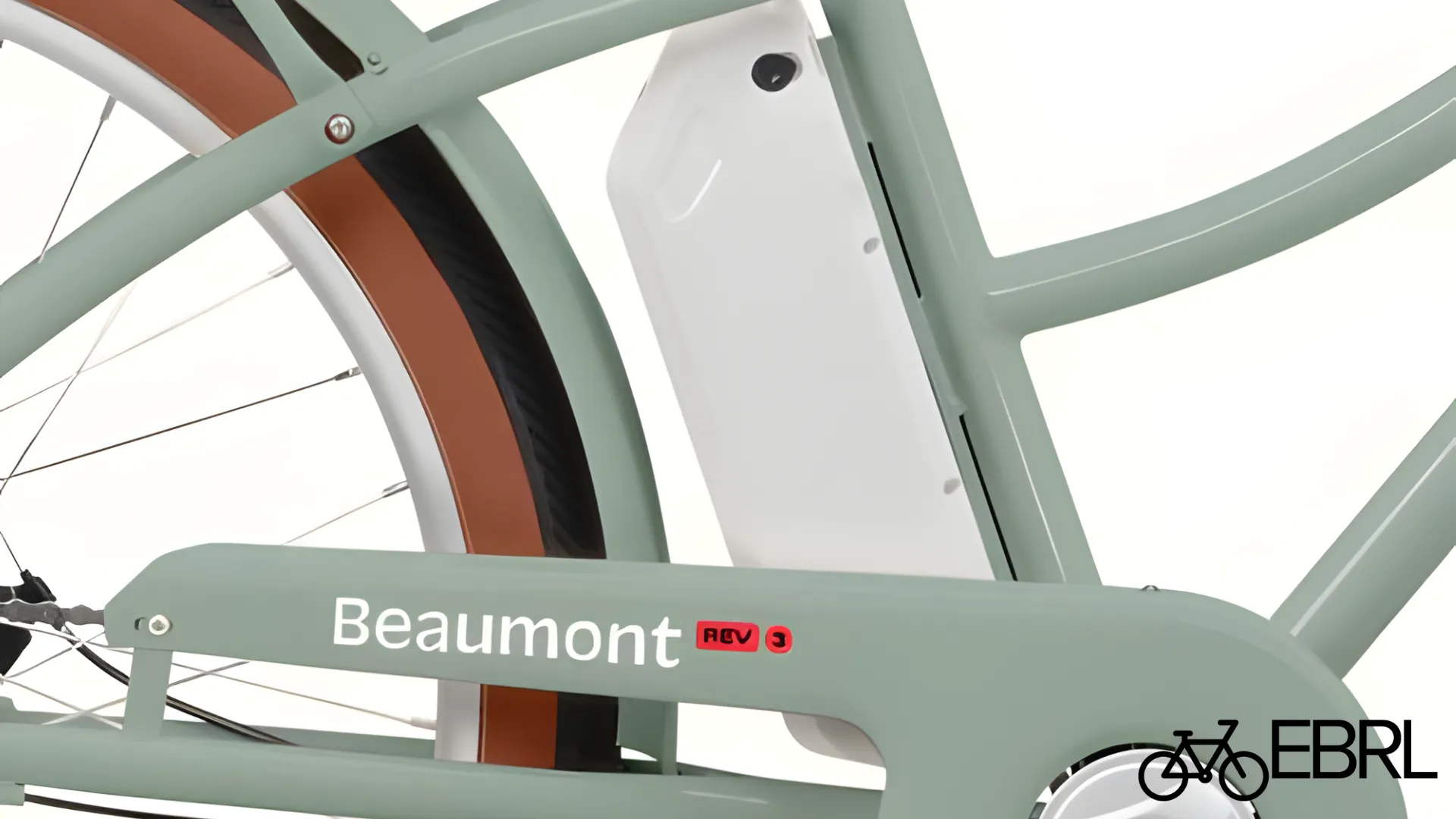
The external seat tube battery is easy to remove for indoor charging
Retrospec claims up to 42 miles. In real-world testing at a mix of assist levels (mostly 2 and 3) on flat city terrain with a 160-lb rider, I consistently got 32-38 miles. That's honest range, not the best-case-scenario number you see on spec sheets. Stick to assist level 1-2 exclusively and 40+ miles is genuinely achievable. Run level 4-5 the whole time and expect closer to 20-25 miles. Wind, hills, and rider weight all bite into that number.
Charging from near-dead took about 5.5 hours with the included 36V/2A charger. There's no fast-charging option, so if you run it flat mid-day you're waiting overnight. For most commuters doing 10-15 miles round trip, this isn't a problem. You'll rarely drop below 50% on a daily commute.
The battery is seat tube-mounted externally, which makes removal for charging straightforward. You can pop it off the bike and charge it at your desk rather than dragging the whole bike inside, a small but genuinely appreciated design decision. The battery indicator on the LED display shows five bars, which gives you enough warning before you're caught short.
Ride Quality and Comfort
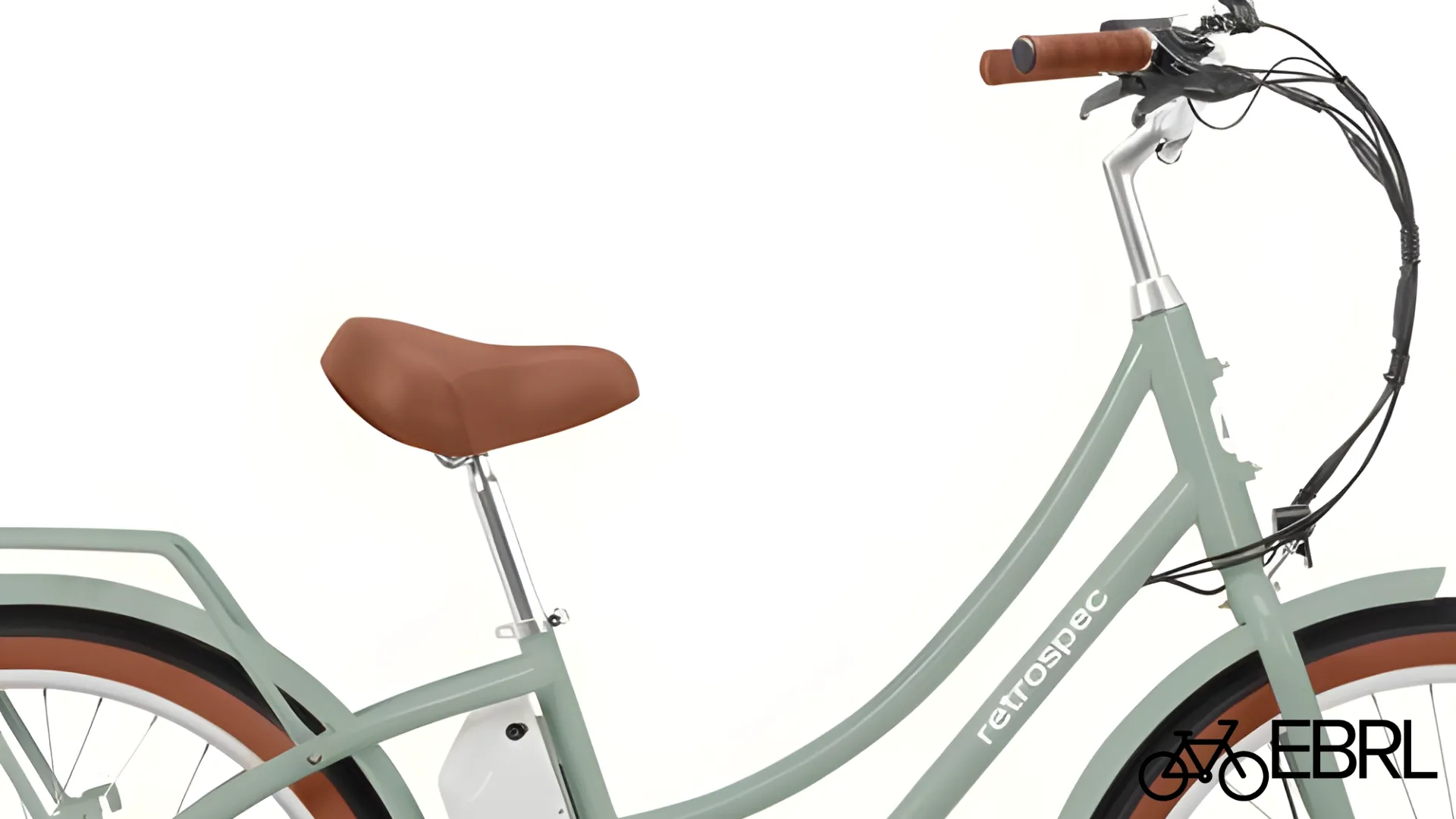
The upright Dutch riding position makes long city rides comfortable without back strain
This bike rides surprisingly well for a rigid steel frame with no front suspension. The 27.5 x 2.4" tires do a lot of the heavy lifting. That extra volume soaks up small cracks and rough asphalt better than a narrower tire would. At city speeds (12-18 mph), the ride is smooth and planted. You feel bigger bumps clearly through the bars, but nothing jarring.
The Dutch upright riding position is comfortable from the first minute. After an hour of riding, there's no lower back tension and no pressure from leaning over drop bars. The retrospec Cruising Comfort saddle is actually decent, not padded to the point of being mushy, but comfortable for 45-60 minute rides without needing padded shorts. Cornering feels stable and predictable at city speeds. At 20 mph the bike is perfectly composed.
The lock-on comfort grips dampen vibration noticeably compared to standard rubber grips. No buzzing in your hands on chip-seal pavement. One thing I'd note: the bike is one frame size only (42cm, rated for 5'0" to 5'10"), so taller riders may want to look elsewhere. The seatpost has good adjustment range, but very tall riders might find the reach a bit short.
Components and Features
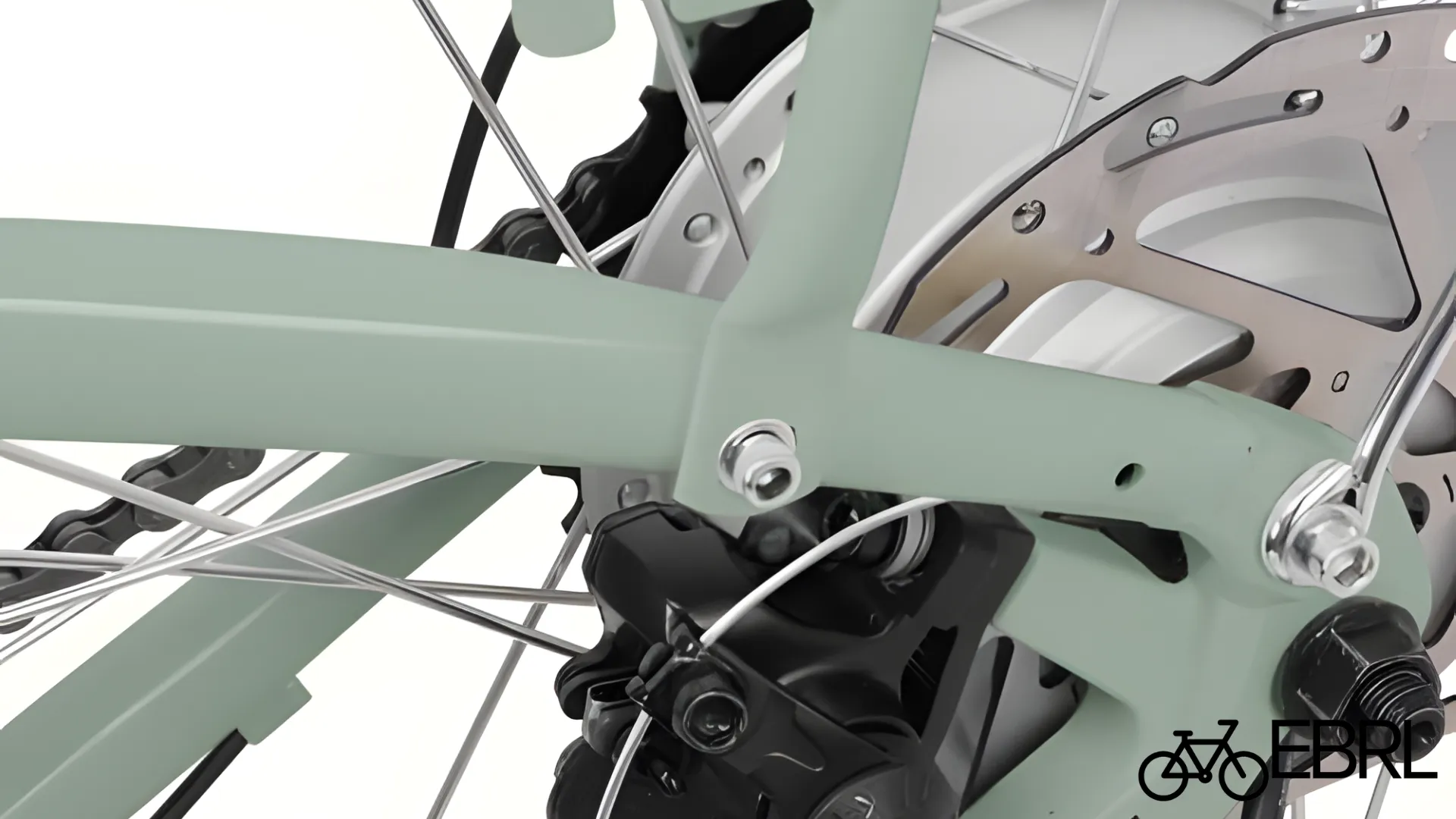
Tektro disc brakes and Shimano 7-speed Tourney keep stopping and shifting reliable
The Tektro mechanical disc brakes with anti-vibration 180mm rotors stop this bike well. Lever feel is firm and modulation is predictable. You can feather them smoothly rather than grabbing a handful and skidding. In light rain, stopping power held up without the fade you'd get from rim brakes on a wet steel rim. That said, they're mechanical, not hydraulic, so brake pad wear will need monitoring and cables will stretch over time.
The 7-speed Shimano Tourney drivetrain is entry-level but honest. It shifts cleanly when well-adjusted, the 11-32T cassette gives you a low enough gear for moderate hills, and the 42T chainring pairs well with the motor assist for a natural pedaling cadence. Don't expect buttery Deore-level shifting, but for a city commuter it's fully functional.
The 27.5 x 2.4" city tires are a highlight. They roll well on pavement and feel stable enough for packed gravel or a light trail. Puncture resistance is decent, though not at the level of Schwalbe Marathon tires you'd find on higher-end commuters. The 40-lux integrated headlight is genuinely bright enough for dawn and dusk riding. The battery-powered rear taillight is the one component that feels like a cost-cutting decision. It works, but needing AA batteries when you have a 36V battery on the frame is a bit puzzling.
Included rear rack (22 lb capacity) and full-coverage steel fenders are excellent add-ons. The multi-tool tucked in the box covers everything you'd need for trailside adjustments. The integrated bell is a nice touch, quiet but clear, and it's part of the brake lever assembly rather than a cheap afterthought.
Display, App, and User Experience
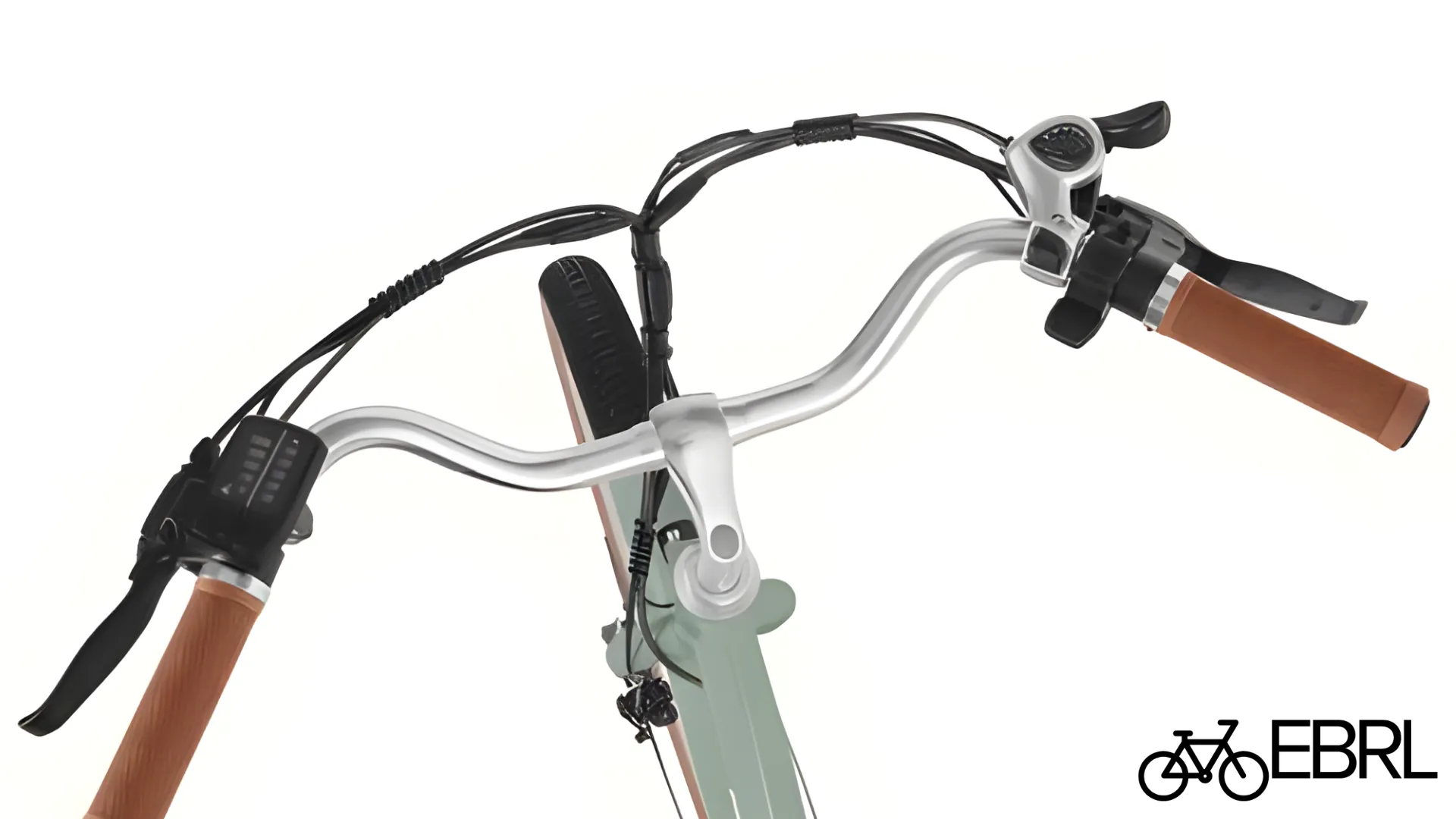
The Ananda handlebar controls keep everything simple, with assist, throttle, lights, and walk mode at your fingertips
The left-mounted LED display is simple. It shows battery level in five bars and your current pedal assist level, and that's about it. No speedometer, no odometer, no trip data. In direct sunlight it's a bit dim but readable enough to confirm your assist level at a glance. For riders who want data on every ride, this will feel limiting. For the average commuter who just wants to know battery level and assist mode, it's fine.
There's no companion app. No Bluetooth, no GPS tracking, no firmware updates over your phone. That's increasingly rare even at this price point. The Aventon Pace 500.3 and Rad Power RadCity 5 Plus both offer app connectivity. If app integration matters to you, those are better options. If you'd rather just ride without fussing with your phone, the Beaumont Rev 3's simplicity is actually refreshing.
Setup out of the box is straightforward. Retrospec includes the all-in-one multi-tool and a clear owner's manual. Assembly takes about 45-60 minutes for someone comfortable turning a wrench. Attaching the front wheel, handlebars, pedals, and saddle are the main tasks. The Ananda control unit on the handlebars pairs intuitively: throttle, assist level up/down, headlight toggle, and walk mode are all accessible without looking down.
Who This E-Bike Is For
Commuters: Yes, this works well for city commuting on mostly flat routes up to 15 miles each way. The rack handles a backpack or grocery bag, fenders keep you dry, and the lights mean you don't need to charge separate accessories. Lock it securely, because it's a good-looking bike. For hilly urban commutes, the 350W motor is workable but not effortless.
Casual riders: This is arguably the sweet spot. Weekend errand runs, farmers market trips, boardwalk cruises, neighborhood exploring: the Beaumont Rev 3 is made for all of that. The comfort-focused geometry and upright position make it pleasant for riders who want exercise with electric backup, not a workout machine with a motor bolted on.
Riders who need accessibility: The step-through frame is the real differentiator here. For riders with limited hip mobility, knee issues, or anyone who finds mounting a traditional bike awkward, the low standover height and Dutch bars make this an inclusive option. The 350 lb weight limit is also generous and accommodates a wide range of riders.
Alternatives to Consider
Beaumont Rev 3 Step-Through vs Aventon Pace 500.3 Step-Through
Choose the Beaumont Rev 3 if...
- You're working with a $999 budget and want a fully-accessorized package out of the box
- Your route is mostly flat and 42 miles of range is more than enough
- You prefer a simpler, app-free riding experience with vintage styling
Choose the Aventon Pace 500.3 if...
- You can spend $1,299 and want a more powerful 500W motor with torque sensor for hillier terrain
- You want app connectivity, GPS tracking, and a color display with speed data
- You ride at higher speeds and want that extra motor headroom
Beaumont Rev 3 Step-Through vs Rad Power RadCity 5 Plus Step-Thru
Choose the Beaumont Rev 3 if...
- You want a lighter (relatively speaking), more classic-looking city bike under $1,000
- You don't need a heavy-duty cargo rack, since 22 lbs capacity covers most commuter loads
- Style and aesthetics matter alongside function
Choose the Rad Power RadCity 5 Plus if...
- You regularly haul heavier cargo and need the 120 lb rack capacity
- You want a 750W motor, hydraulic brakes, and a more data-rich display
- You're willing to spend around $1,999 for a more heavy-duty commuter setup
Final Verdict
The Beaumont Rev 3 Step-Through does what a good electric city bike should do: it makes riding more accessible, more enjoyable, and more practical for everyday life. The step-through frame, comfortable upright position, and complete accessory package are genuine strengths. The 350W motor and basic display are honest limitations, not dealbreakers, as long as you go in with realistic expectations about flat-terrain performance.
Buy it if you're a casual city rider or commuter on a mostly flat route who wants a reliable, good-looking e-bike under $1,000 that's ready to ride out of the box. Skip it if you're tackling serious hills daily, hauling heavy cargo regularly, or want a data-rich display and app connectivity. For the right rider, this bike punches well above its price tag.
FAQs
Is the Beaumont Rev 3 Step-Through good for commuting?
Yes, for flat to mildly hilly routes up to 15 miles each way. The included rear rack, full fenders, and integrated headlight make it genuinely commuter-ready without buying extras. It's a Class 2 e-bike, so it's legal in bike lanes. If your commute has serious elevation gain, the 350W hub motor will manage but you'll burn battery faster and feel the motor working on steeper grades.
How fast does the Beaumont Rev 3 go?
Top speed is 20 mph in full throttle or max pedal assist (level 5). As a Class 2 e-bike, the motor cuts out at 20 mph. You can pedal faster than that under your own power, but the assist won't take you beyond the legal Class 2 limit. For city riding, 15-18 mph in pedal assist levels 3-4 is the practical cruising range.
What is the real-world range on the Beaumont Rev 3?
Retrospec claims up to 42 miles. In real testing at mixed assist levels (2-3) with a 160-lb rider on flat terrain, I got 32-38 miles consistently. Stick to level 1-2 and you can hit close to the claimed range. Run level 4-5 the whole way and expect 20-25 miles. Hills and heavier riders reduce range noticeably.
How heavy is the Beaumont Rev 3 Step-Through?
57.5 lbs with the battery included. That's on the heavier side for an electric city bike. It rolls easily once moving, but lifting it into a car, up a staircase, or onto a bus rack takes real effort. If you need to carry your e-bike frequently, look at lighter options like the Lectric XP Lite or Ride1Up Portola.
How does the Beaumont Rev 3 compare to the Aventon Pace 500?
The Aventon Pace 500.3 Step-Through costs around $1,299 and brings a more powerful 500W motor, torque sensor, color display with speed data, and app connectivity. The Beaumont Rev 3 is $300 cheaper, fully accessorized out of the box, and better-suited to flat city riding. If you have the budget and ride hilly terrain, the Aventon wins on power. For flat commutes where style and value matter, the Beaumont holds its own.
Is the Beaumont Rev 3 good for heavier riders?
The recommended weight limit is 350 lbs, which is higher than many competitors in this price range. The steel frame and 27.5 x 2.4" tires handle the load well on flat terrain. Heavier riders should expect reduced range compared to the claimed 42 miles, and steeper hills will be more challenging with the 350W motor.
Does the Beaumont Rev 3 have an app?
No. There's no companion app, no Bluetooth, and no smartphone integration. The left-mounted LED display shows battery level and assist mode only. If app connectivity, GPS, or detailed ride data matter to you, look at the Aventon Pace 500.3 or Rad Power RadCity 5 Plus instead.
Video Review
Rider review of the Beaumont Rev 3 in action on city streets, covering motor feel, comfort, and real-world commuting impressions alongside this written review.