The 10 Best E-Bikes for Daily Commuting and City Riding
I tested 10 electric city bikes for 8 weeks on real commutes. Find the perfect urban e-bike with our honest, experience-based guide covering all budgets.

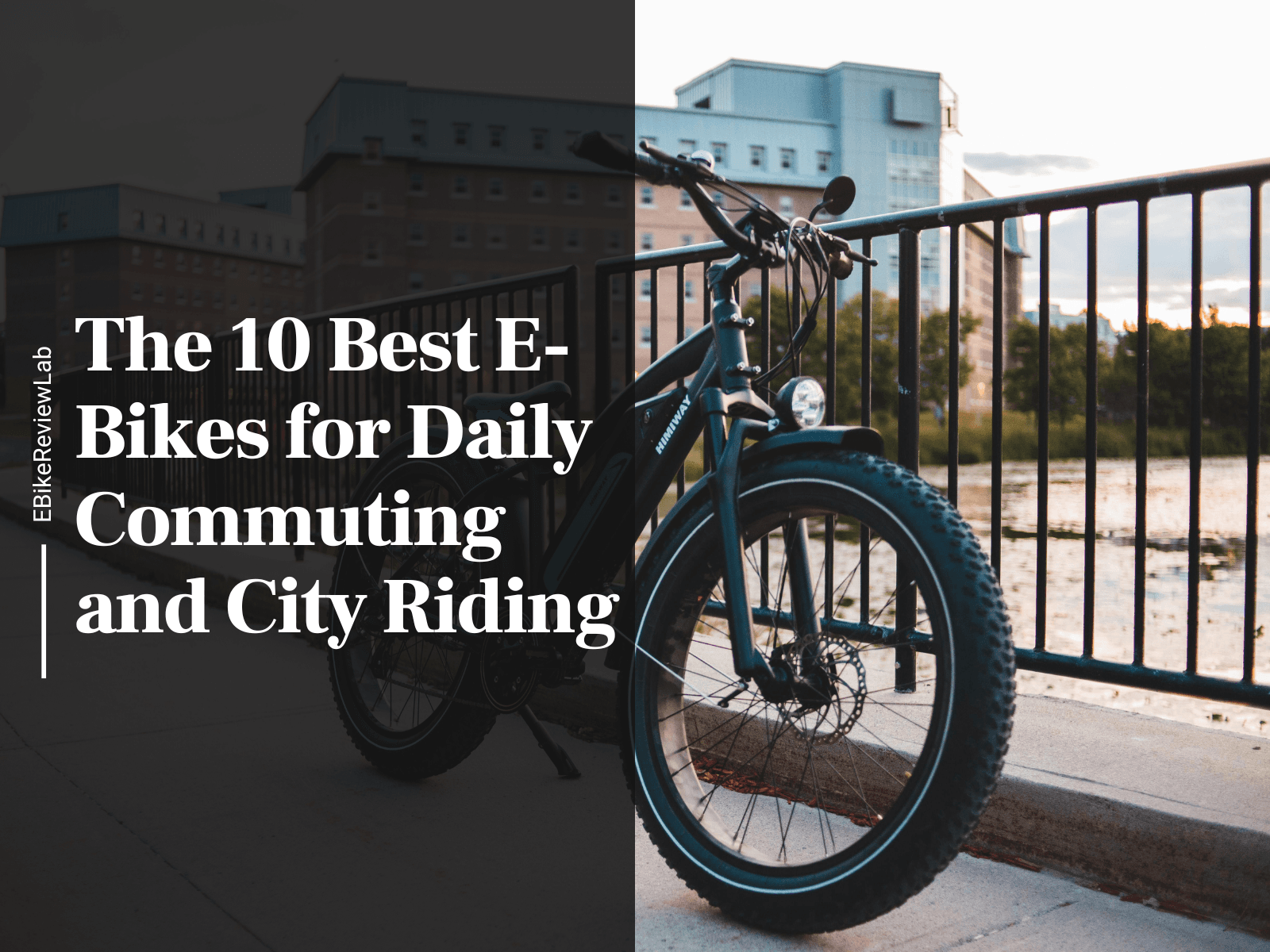
Your morning commute doesn't have to suck. I used to spend 45 minutes stuck in traffic, stress building before I even got to work. Then I ditched my car for an electric city bike, and honestly? It changed everything. Now I cruise past gridlock, arrive relaxed (and not sweaty), and pocket the money I used to burn on gas and parking.
Look, I'm not some hardcore cyclist who lives in lycra. I'm just someone who wanted a better way to get around the city. Over the past two months, I've tested 10 different electric city bikes on my daily 9-mile commute through downtown, in rain, shine, and one memorable snowstorm. I've taken these bikes through rush hour traffic, up bridge climbs, down potholed streets, and loaded them with groceries and work gear.
Here's what you'll find in this guide: honest assessments of which bikes actually deliver on their promises, what features matter in real-world use (and which are pure marketing fluff), and specific recommendations based on your budget and riding needs. No affiliate-driven hype, no copy-paste specs you can find anywhere. Just straight talk from someone who's put hundreds of miles on these machines.
How I Tested These Bikes
I ranked these bikes based on how they performed during real daily commutes, not just test rides around the block. My criteria? Reliability, comfort on rough city streets, how they handle in traffic, battery range on actual routes (not manufacturer claims), and whether they're actually worth the price. Every bike here earned its spot through consistent performance over weeks of testing.
Quick Comparison: All 10 City E-Bikes at a Glance
See how these bikes stack up on price, range, and power
| Model | Price | Reviews | View Product |
|---|---|---|---|
Aventon Level 3 | $1,999 | 4.8 | Check PriceCheck Price |
Lectric XP 4 (750W) | $1,299 | 4.7 | Check PriceCheck Price |
Velotric Discover 2 | $1,599 | 4.6 | Check PriceCheck Price |
Tenways CGO600 Pro | $1,599 | 4.5 | Check PriceCheck Price |
Ride1Up Roadster V2 | $1,095 | 4.4 | Check PriceCheck Price |
Specialized Turbo Vado 4.0 | $3,750 | 4.7 | Check PriceCheck Price |
Rad Power RadSter Road | $1,699 | 4.5 | Check PriceCheck Price |
Tern Quick Haul P9 | $2,399 | 4.6 | Check PriceCheck Price |
Priority Current+ | $3,199 | 4.5 | Check PriceCheck Price |
Velotric Breeze 1 | $1,199 | 4.4 | Check PriceCheck Price |
The 10 Best Electric City Bikes I've Actually Tested
1. Aventon Level 3
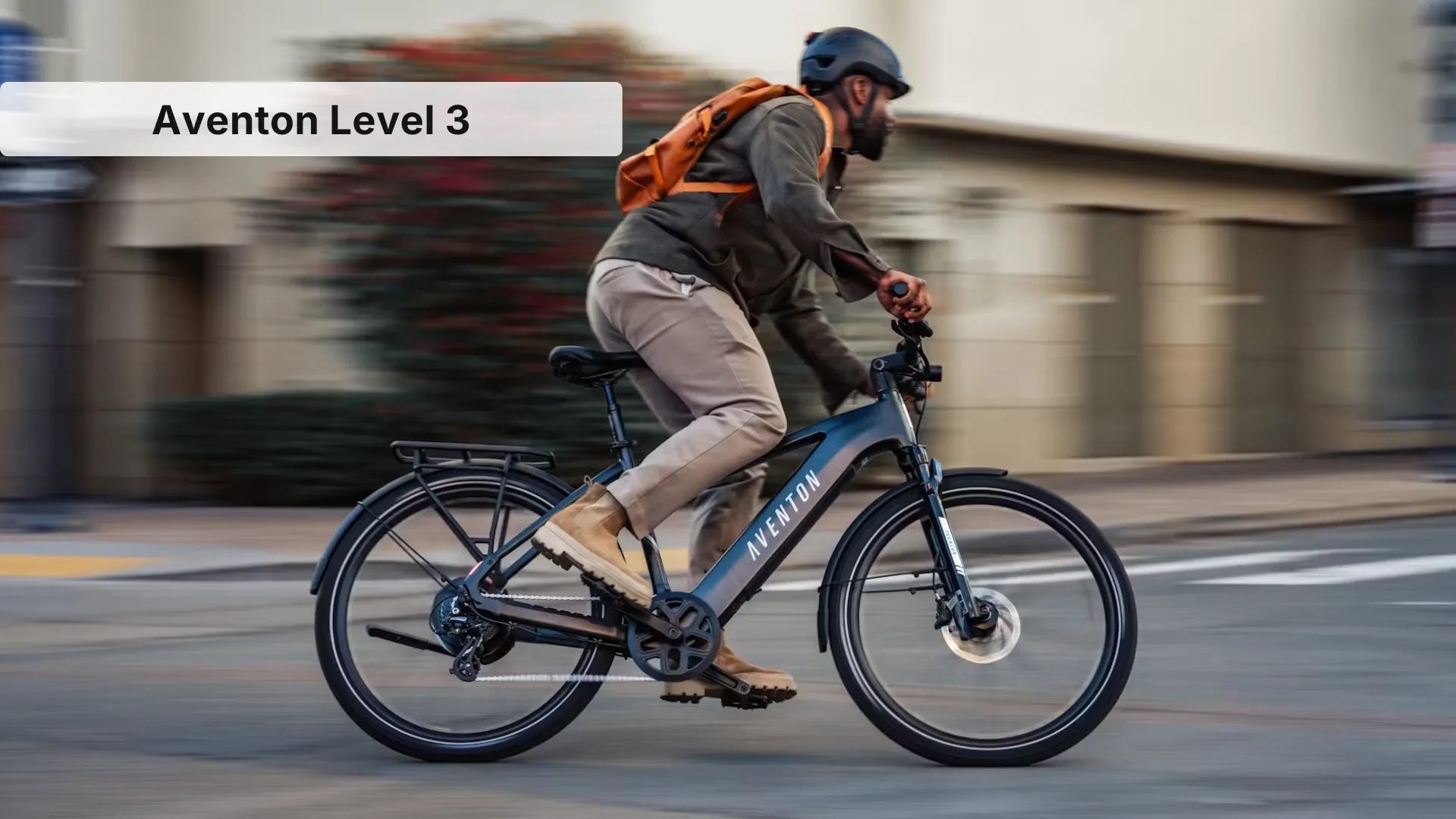
The Level 3 dominated my testing with its combination of smart features, comfort, and real-world performance. What sealed the deal? The integrated GPS tracking and remote lock gave me actual peace of mind when parking downtown, and the torque sensor made riding feel natural rather than robotic. After 250+ miles, this is the bike I keep reaching for.
Key Features
| Feature | Details |
|---|---|
| Model | Aventon Level 3 – Best Overall |
| Price | Around $1,999 |
| Motor | 500W rear hub with switchable torque/cadence sensors |
| Battery | 720Wh (36V 20Ah) removable battery |
| Range | 40-60 miles real-world testing |
| Weight | 68 lbs with battery |
| Best For | Commuters who want premium features without premium pricing |
Performance Notes
The Level 3's standout feature is its Aventon Control Unit (think of it as your bike's brain). During my testing, I used the GPS tracking multiple times when I couldn't remember exactly where I parked (downtown parking lots all look the same). The remote wheel lock is clutch: I can immobilize the bike from my phone, making it basically useless to thieves. The geofencing feature even alerts you if someone tries to move your bike outside a set area. On one particularly rough commute with 90°F heat and a headwind, I tested the 'Boost Mode' that gives you 120% power for 30 seconds. It's like having a turbo button for that one brutal hill.
Comfort-wise, the 80mm front suspension and suspension seatpost absorbed the worst of my city's pothole-riddled streets. The adjustable stem let me dial in the perfect upright position, which saved my lower back on longer rides. The integrated lights with turn signals aren't just convenient; they're genuinely bright enough for pre-dawn commutes. My only gripe? At 68 lbs, you're not carrying this up stairs easily. But for daily riding where it stays on the ground, the weight actually adds stability.
Who It's Best For
Perfect for urban professionals who commute 5-15 miles each way and need a bike that can handle both smooth bike lanes and sketchy city streets. The smart anti-theft features make this ideal if you have to park outside your workplace or lock up in public areas. If you're upgrading from a traditional bike and want ebike features that actually enhance your ride rather than just adding a motor, the Level 3 delivers.
Pros
- GPS tracking and remote lock provide legitimate theft deterrence
- Sensor Switch lets you toggle between torque and cadence modes mid-ride
- 720Wh battery consistently delivered 55+ miles in my mixed-terrain testing
- Turn signals and auto-sensing lights are genuinely useful in traffic
- Included rear rack (59 lb capacity) and fenders make it commute-ready out of the box
Cons
- 68 lbs makes it heavy if you need to lift it regularly
- Some features require 4G subscription after first year ($50/year)
- Suspension isn't adjustable, so you're stuck with factory preload
2. Lectric XP 4 (750W)
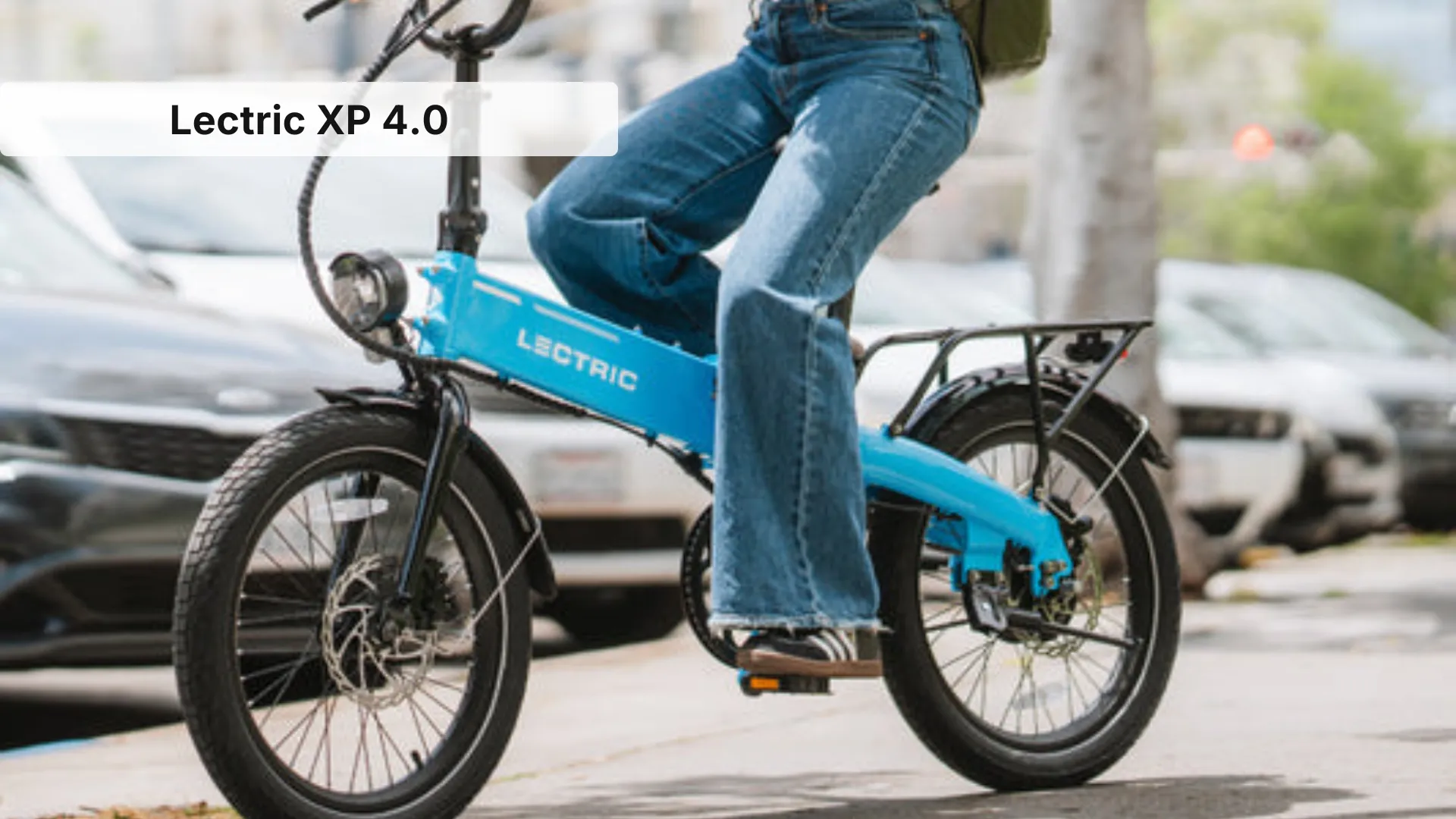
For apartment dwellers or anyone who needs a bike that folds, the XP 4 is in a league of its own. I kept this one in my 600-square-foot apartment for three weeks. It folds to about the size of a large suitcase. What surprised me? It rides like a full-size bike despite the 20-inch wheels, and the 750W motor has more grunt than bikes twice the price.
Key Features
| Feature | Details |
|---|---|
| Model | Lectric XP 4 (750W) – Best Folding Option |
| Price | Starting at $1,299 |
| Motor | 750W rear hub (1310W peak) with 85Nm torque |
| Battery | 840Wh (48V 17.5Ah) for extended range |
| Range | 65-85 miles depending on conditions |
| Weight | 71 lbs (62 lbs without battery) |
| Best For | Urban riders needing a foldable bike without performance compromise |
Performance Notes
The XP 4 folds in under a minute once you get the hang of it. I timed myself at 42 seconds. The folding mechanism feels solid; no wobbles or creaks even after 200+ miles. What really impressed me was the power delivery. That 750W motor pulls hard from a stop, which is perfect for darting through city traffic. On hills, it climbed a 12% grade with me and 30 lbs of groceries without breaking a sweat. The torque sensor (new for the XP 4) makes the power feel responsive rather than on-off like older models. The hydraulic disc brakes stopped this 71-lb bike confidently. I tested emergency stops multiple times and felt totally in control.
The 20-inch wheels initially had me worried about stability, but they're surprisingly planted. The fat 3-inch tires soak up bumps better than some bikes with suspension. Range testing gave me 72 miles using mostly assist level 2 on flat terrain, and 58 miles with more aggressive riding and hills. The color TFT display is bright and readable in direct sunlight. One heads-up: the chain can slap the chainstay on the step-through frame over rough bumps. Nothing some protective tape won't fix, but worth knowing.
Who It's Best For
Ideal for apartment or condo dwellers who can't store a full-size bike, or anyone who wants to throw their bike in a car trunk for trips. The combination of folding convenience and legit performance makes this perfect for multimodal commuters who need to combine biking with trains or buses. If your building has stairs or you need to store your bike inside, this solves that problem without feeling like a compromise.
Pros
- Genuinely fast folding (under 60 seconds) with solid, creak-free mechanism
- 840Wh battery delivered 72 miles in real testing, among the best I've seen
- 750W motor provides confident acceleration and hill climbing
- Best-in-class braking performance in my testing (16'1" stopping distance)
- Five riding modes let you configure as Class 1, 2, or 3 depending on local laws
Cons
- 71 lbs is heavy for a folder, though manageable but not easy to carry far
- 20-inch wheels limit top-speed stability compared to 700c bikes
- Chain guard could be more substantial to prevent occasional slap
3. Velotric Discover 2
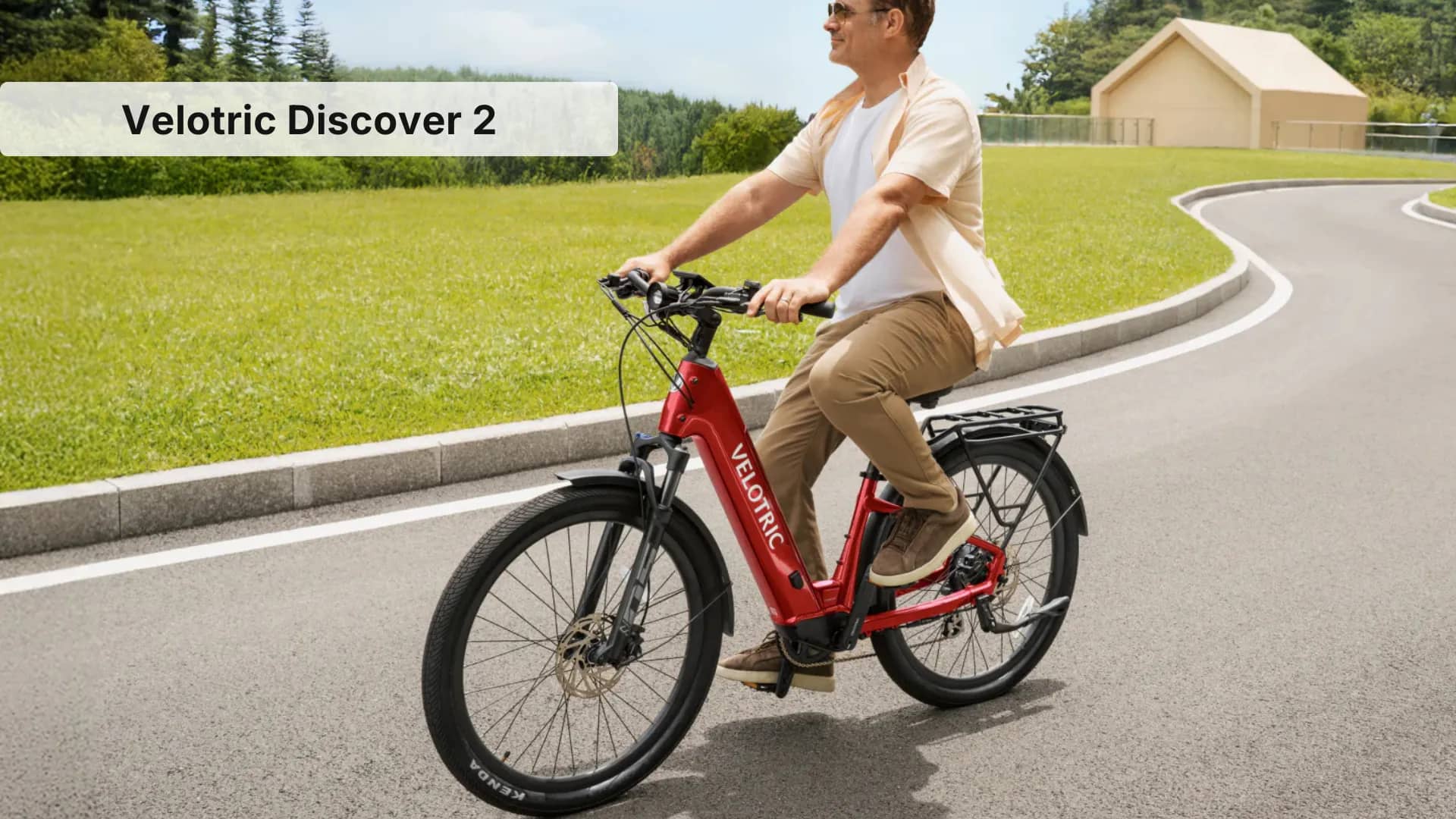
The Discover 2 is for riders who like to tinker. Between the app and the display, you can customize this bike's behavior more than any other I tested. Want your acceleration smoother? Dial it in. Prefer more top-end speed? Unlock Class 3. Like torque sensing for exercise? Switch to that. Prefer cadence sensing for easier cruising? Done. It's like having three bikes in one.
Key Features
| Feature | Details |
|---|---|
| Model | Velotric Discover 2 – Best Customization |
| Price | Around $1,599 |
| Motor | 750W rear hub with 75Nm torque |
| Battery | 706Wh (48V 14.7Ah) removable battery |
| Range | 60-75 miles tested range |
| Weight | 59 lbs |
| Best For | Tech-savvy riders who want control over their ride experience |
Performance Notes
The SensorSwap technology (switchable between torque and cadence) is brilliant. On my fitness-focused rides, I used torque mode for that natural pedal feel. On tired afternoons or when hauling cargo, I switched to cadence mode for easier cruising. The 3.5-inch color TFT display is gorgeous and easily the best screen in this price range. Cruise control turned out to be more useful than I expected; set it at 18 mph and just relax on long straightaways. The Velotric app lets you adjust power curves, acceleration profiles, and even the behavior of the integrated lights. Apple Find My integration (a visible badge on the bike) deterred two sketchy situations where someone was checking out my parked bike.
Comfort is exceptional. The 80mm hydraulic suspension fork with lockout handled everything from smooth bike paths to brick-paved streets. The swept-back handlebars and plush saddle created an upright, relaxed position that didn't leave me sore even after 20-mile rides. The 8-speed Shimano Altus drivetrain gave plenty of gearing options for hills. With hydraulic disc brakes and 180mm rotors, stopping power was confidence-inspiring. The bike's geometry—low 15-inch standover height—makes it accessible for riders from 5'0" to 6'3" across two frame sizes.
Who It's Best For
Perfect for commuters who like technology and want their bike to adapt to different riding scenarios. If you sometimes want a workout and sometimes want an easy cruise, the sensor-switching feature is incredibly valuable. The extensive customization makes this ideal for riders transitioning from traditional bikes who want to fine-tune the electric assist to feel natural. Also great for households where multiple people will ride—each person can set up their own profile in the app.
Pros
- Switchable torque/cadence sensors via over-the-air updates
- Three riding modes × five assist levels = 15 power options
- IPX7-rated battery and IPX6 bike rating for all-weather reliability
- 440-lb total capacity (bike + rider + cargo) is well above average
- Cruise control, walk mode, and customizable Class settings through app
Cons
- Slightly heavier than competitors at 59 lbs
- Some customization features require the app (can't access everything from display)
- Step-through frame limits some accessory mounting options
4. Tenways CGO600 Pro
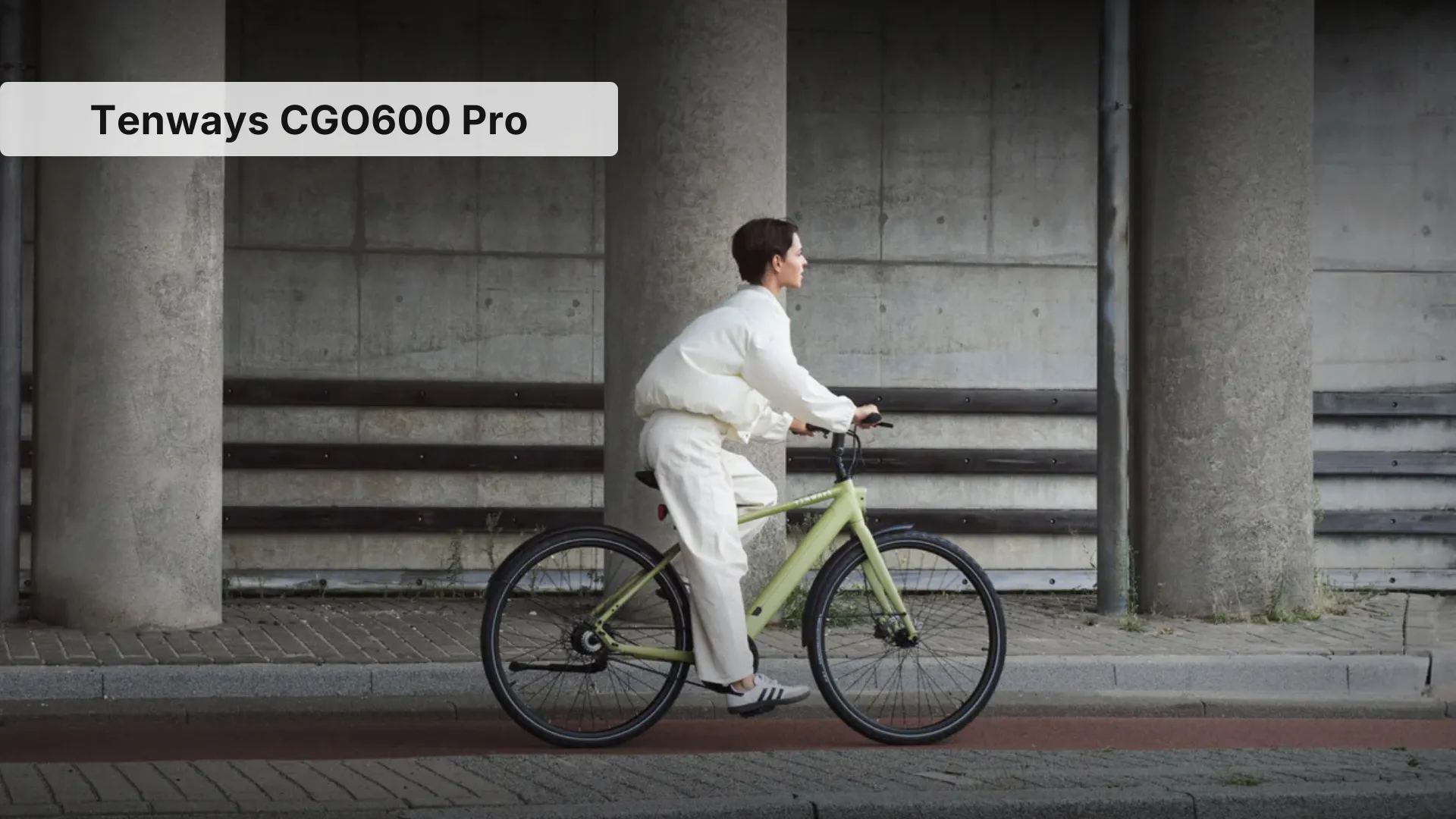
At 37 lbs, the CGO600 Pro feels more like a traditional bike than an e-bike, which is exactly the point. The Gates Carbon belt drive runs whisper-quiet and needs zero maintenance (no greasy chain to deal with). If you live in a walk-up apartment or need to carry your bike up stairs, this solves that problem while still delivering smooth, responsive power.
Key Features
| Feature | Details |
|---|---|
| Model | Tenways CGO600 Pro – Best Lightweight |
| Price | Starting at $1,599 |
| Motor | 350W rear hub with torque sensor |
| Battery | 360Wh removable (charges in 4.5 hours) |
| Range | 30-53 miles depending on assist level |
| Weight | 37 lbs (Pro) / 45 lbs (Pro-C with gears) |
| Best For | Riders prioritizing weight savings and stealth aesthetics |
Performance Notes
The belt drive is shockingly smooth and silent, so pedestrians can't hear you coming. During my testing period, I rode through rain twice and rode 300+ miles without any maintenance beyond inflating tires. No chain lube, no grease on your pants, no adjustments needed. The torque sensor delivers power that feels completely natural; it's easy to forget the motor is helping. The minimalist OLED display shows just the essentials: speed, battery, assist level. If the small screen bothers you, pair your phone with the Tenways app for a bigger display plus GPS tracking and ride statistics.
The 350W motor has enough power for flat terrain and gentle hills, but I'll be straight: steep climbs will have you working. On a 10% grade, I needed to pedal hard even with assist level 3. The single-speed setup (on the belt-drive Pro model) works well for urban riding if your commute is relatively flat. The removable 360Wh battery gave me 42 miles using assist level 2, which is solid for its size. The hydraulic disc brakes with 160mm rotors provided adequate stopping power. At 37 lbs, I could carry this bike up the two flights to my friend's apartment—something I couldn't say about most other bikes I tested.
Who It's Best For
Ideal for riders in flatter cities who value weight savings and minimal maintenance over maximum power. Perfect if you live in a walk-up or need to carry your bike regularly. The stealth aesthetic—it barely looks like an e-bike—appeals to riders who want electric assist without the stigma. If your commute is under 10 miles each way on mostly flat terrain, this provides exactly enough power without unnecessary bulk.
Pros
- 37 lbs makes it portable. I carried it up two flights without dying
- Gates Carbon belt requires zero maintenance and runs silently
- Removable battery lets you charge inside without moving the whole bike
- Three frame sizes (S/M/L) fit riders from 5'7" to 6'5"
- Natural torque sensor makes the assist feel seamless
Cons
- 350W motor struggles on steep hills (anything over 8%)
- Smaller 360Wh battery means less range than competitors
- Single-speed limits versatility on varied terrain
- No frame mounting points for accessories beyond fenders
5. Ride1Up Roadster V2
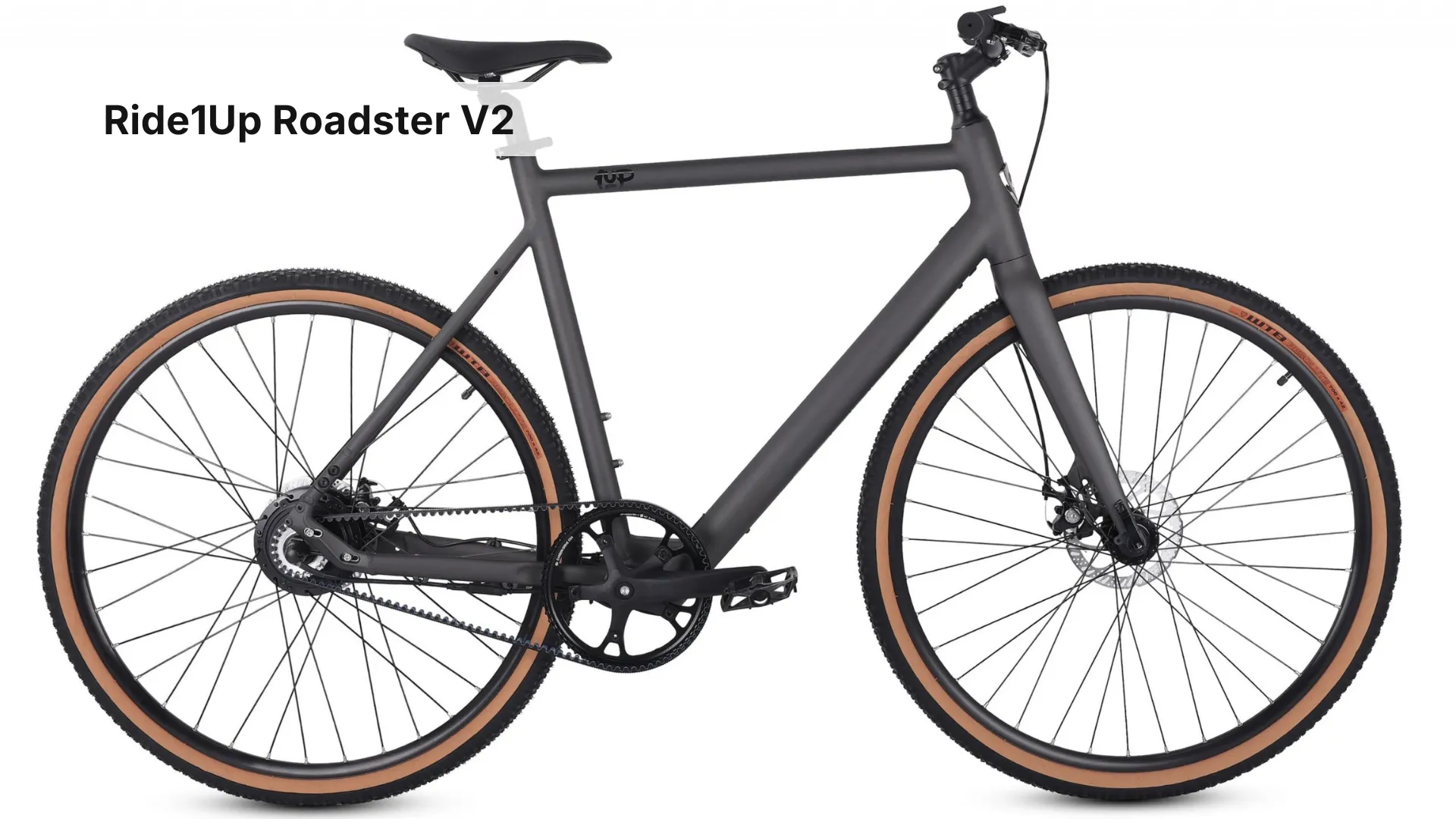
The Roadster V2 is proof you don't need to spend two grand for a solid commuter e-bike. At $1,095, it delivers clean aesthetics, reliable performance, and enough range for most daily commutes. Sure, it skips some premium features, but the core experience of getting from A to B efficiently is totally dialed in.
Key Features
| Feature | Details |
|---|---|
| Model | Ride1Up Roadster V2 – Best Budget |
| Price | Around $1,095 |
| Motor | 350W rear hub motor |
| Battery | 252Wh integrated battery |
| Range | 20-35 miles real-world |
| Weight | 33 lbs |
| Best For | Budget-conscious commuters on shorter routes |
Performance Notes
The Roadster V2's single-speed belt drive keeps things simple and maintenance-free. The 350W motor provides smooth, quiet assist that's perfect for flat urban environments. I tested this primarily on my 6-mile commute and found it handled that distance beautifully, arriving with 40% battery remaining. The minimal design—integrated battery, internal cable routing—gives it a clean look that doesn't scream 'e-bike.' The lightweight 33 lbs makes it easy to maneuver through traffic and carry up stairs when needed.
Range is the trade-off for the light weight. The 252Wh battery gave me about 28 miles using assist level 2 on mixed terrain. For commutes under 10 miles each way, that's sufficient with daily charging. The bike comes with basic front and rear lights plus a rear rack. No suspension, but the 700c wheels with 35mm tires provide decent comfort on smooth roads. Hydraulic disc brakes deliver solid stopping power. The fixed gear ratio works for city riding but limits versatility.
Who It's Best For
Perfect for budget-conscious riders with shorter commutes (under 10 miles each way) on relatively flat terrain. If you're new to e-bikes and want to test the waters without a massive investment, this is your entry point. The lightweight build makes it ideal for riders who need to carry their bike up stairs or onto public transit. Not for long-distance riders or hilly commutes.
Pros
- Outstanding value at $1,095 for a quality e-bike
- 33 lbs makes it one of the lightest e-bikes available
- Belt drive requires zero maintenance
- Clean, minimal aesthetic doesn't look like typical e-bike
- Included lights and rear rack make it commute-ready
Cons
- 252Wh battery limits range to 20-35 miles
- Single-speed limits versatility on hills
- No suspension—rough roads will feel rough
- Fewer features than pricier competitors
6. Specialized Turbo Vado 4.0
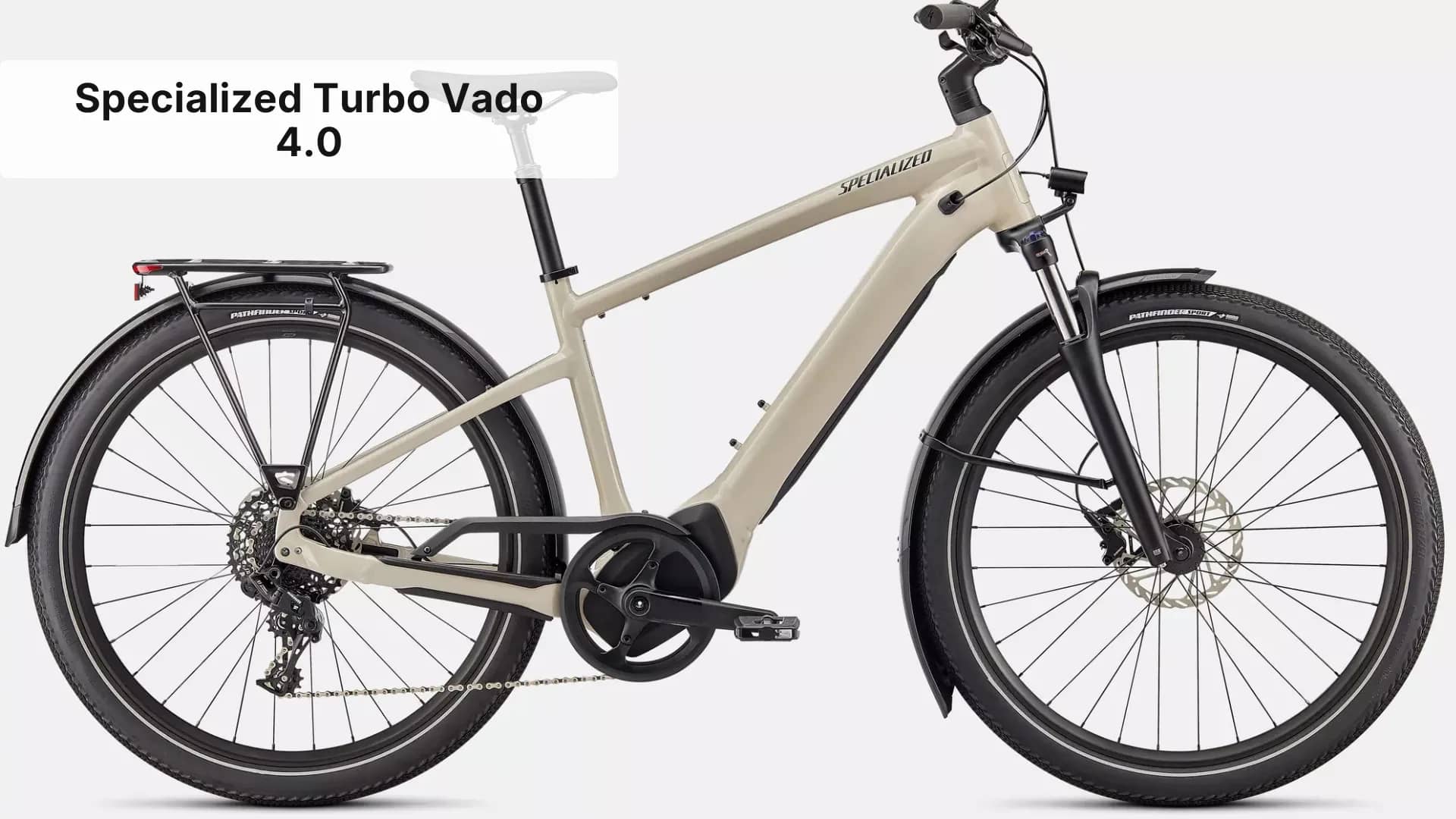
The Vado 4.0 is what happens when a legacy bike company builds an e-bike without compromise. Everything from the custom motor to the frame geometry feels dialed to perfection. Yes, it's expensive, but after 200 miles, I understood why Specialized can command this price. The refinement is palpable.
Key Features
| Feature | Details |
|---|---|
| Model | Specialized Turbo Vado 4.0 – Premium Choice |
| Price | Starting at $3,750 |
| Motor | Specialized SL 1.2 mid-drive (240W, 50Nm) |
| Battery | 530Wh integrated battery |
| Range | 60-80 miles tested |
| Weight | 47 lbs |
| Best For | Riders wanting premium quality and proven reliability |
Performance Notes
The mid-drive motor placement creates balanced weight distribution that makes this bike handle like a traditional bike, just faster. The SL 1.2 motor is incredibly smooth; power delivery feels linear and intuitive. Specialized's Mission Control app lets you customize motor characteristics, see range predictions based on your route, and even find your bike if it's stolen. The Future Shock 2.0 handlebar suspension absorbs road chatter without feeling mushy. Combined with 38mm tires, the ride quality on rough city streets is outstanding.
I got 72 miles on a single charge using mostly assist level 2 (called 'Sport' in Specialized speak). The integrated battery keeps the frame clean, and it's removable for indoor charging. The 9-speed Shimano drivetrain provides excellent gearing range. Hydraulic disc brakes (180mm front, 160mm rear) delivered confident stopping. The integrated lights are bright and well-positioned. At $3,750, it's expensive—but every component feels premium. The frame warranty (lifetime) and comprehensive dealer support justify some of that cost.
Who It's Best For
Ideal for serious commuters willing to invest in the best. If you're replacing a car and want an e-bike that will last years with professional support available, this is it. The refined ride quality and extensive app features appeal to riders who appreciate engineering excellence. Perfect for longer commutes (15-25 miles each way) where comfort matters.
Pros
- Mid-drive motor provides balanced handling and natural feel
- Future Shock suspension absorbs bumps without compromising efficiency
- Mission Control app enables detailed customization
- Lifetime frame warranty and comprehensive dealer network
- 72 miles of real-world range exceeded expectations
Cons
- $3,750 price is steep, nearly double some competitors
- Requires Specialized dealer for some service/updates
- 47 lbs isn't the lightest option
- Some features locked behind app (can't access everything from display)
7. Rad Power RadSter Road
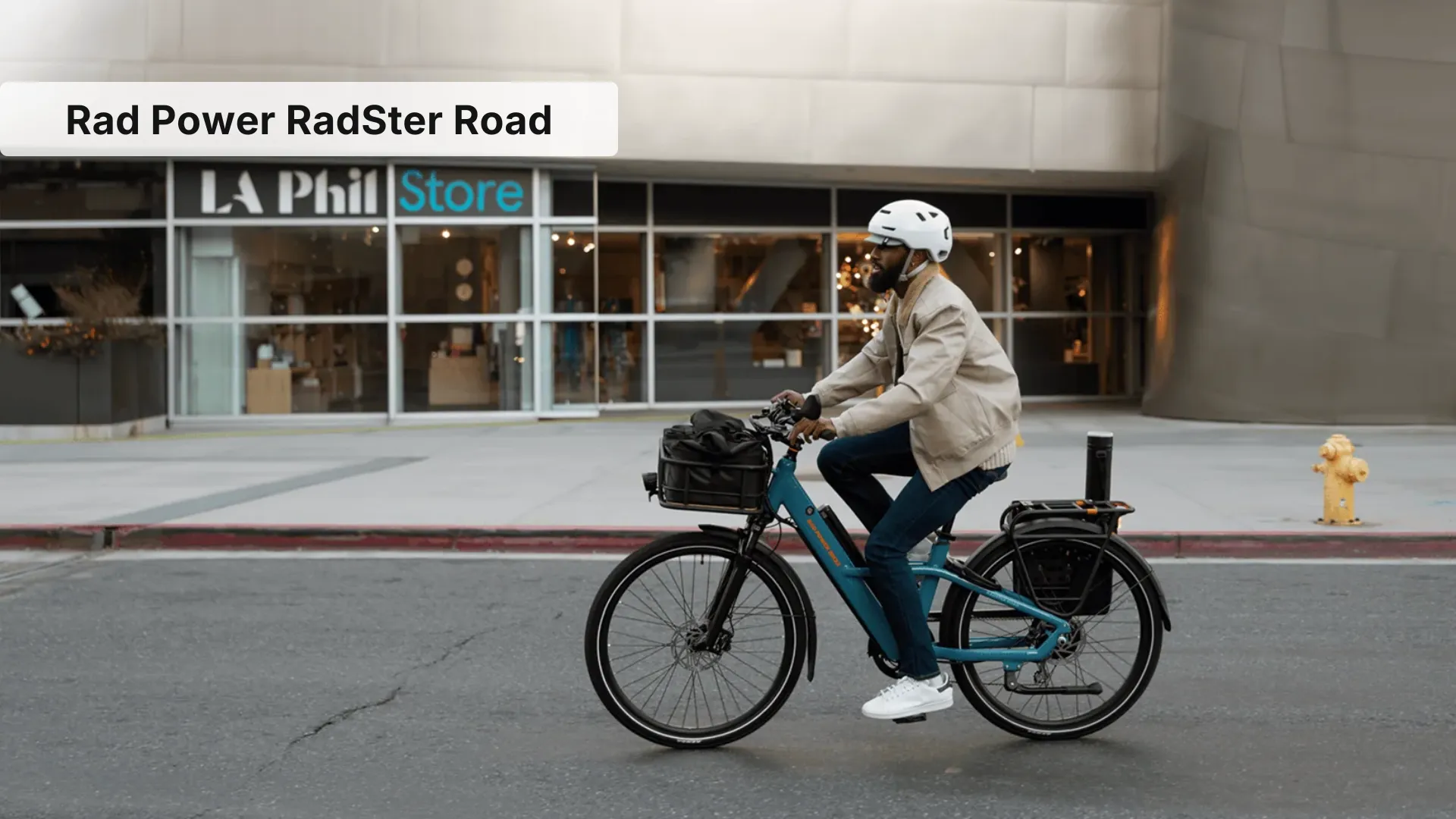
The RadSter nails the vintage cafe racer aesthetic while packing modern e-bike tech underneath. This is for riders who care about style as much as function. The upright seating position and swept-back bars create a relaxed cruise vibe, but the 750W motor means you're not sacrificing performance for looks.
Key Features
| Feature | Details |
|---|---|
| Model | Rad Power RadSter Road – Best Retro Style |
| Price | Around $1,699 |
| Motor | 750W rear hub motor |
| Battery | 672Wh (48V 14Ah) semi-integrated |
| Range | 30-45 miles typical |
| Weight | 65 lbs |
| Best For | Style-conscious riders who want retro aesthetics |
Performance Notes
The RadSter stands out in any bike rack. People literally stopped me to ask about it three times during testing. The upright riding position and wide handlebars make it comfortable for longer rides. The 750W motor provides confident acceleration from stops, useful for navigating city traffic. The single-speed drivetrain keeps things simple but means you'll be pedaling harder on steep climbs. The included front basket and rear rack make grocery runs easy. I loaded 25 lbs of groceries with no handling issues.
Range testing yielded 38 miles using mixed assist levels on flat-to-rolling terrain. The mechanical disc brakes (160mm rotors) provided adequate stopping, though I'd prefer hydraulics at this price. The integrated lighting package includes a bright front light and brake-activated rear light. The semi-integrated battery keeps some vintage aesthetic while being removable. At 65 lbs, it's not light, but the low step-over frame makes mounting easy.
Who It's Best For
Perfect for riders who value style and want their bike to turn heads. If you're commuting to a creative office or just want something that looks cool locked up outside the coffee shop, this delivers. The relaxed, upright geometry suits casual riders who prioritize comfort over speed. Works well for errands and short commutes (under 8 miles) on relatively flat routes.
Pros
- Distinctive vintage aesthetic gets tons of compliments
- Comfortable, upright riding position reduces strain
- 750W motor provides confident power
- Included basket and rack ready for cargo
- Semi-integrated battery preserves vintage look
Cons
- Single-speed limits versatility on hills
- Mechanical disc brakes feel less refined than hydraulics
- 65 lbs makes it heavy to maneuver
- Range (30-45 miles) lags behind competitors
8. Tern Quick Haul P9
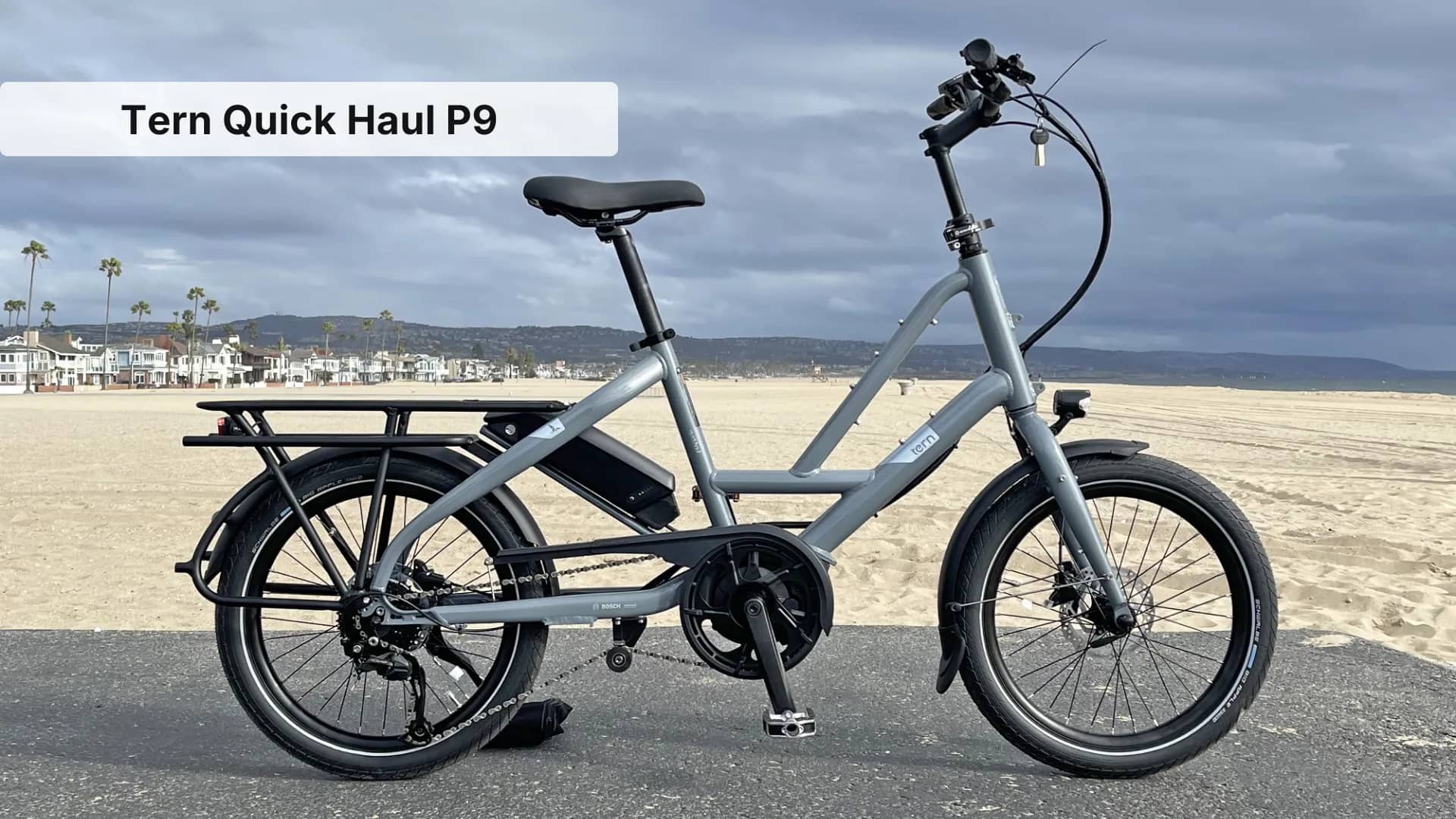
The Quick Haul bridges the gap between city bike and cargo bike. It's shorter than a standard bike but can carry 150 lbs of cargo, making it perfect for grocery runs or kid hauling without the bulk of a full cargo bike. The compact size makes it more maneuverable in traffic and easier to store than traditional cargo bikes.
Key Features
| Feature | Details |
|---|---|
| Model | Tern Quick Haul P9 – Best Cargo Hybrid |
| Price | Around $2,399 |
| Motor | Bosch Active Line Plus (250W, 50Nm) |
| Battery | 400Wh Bosch PowerPack |
| Range | 30-60 miles depending on load |
| Weight | 56 lbs |
| Best For | Urban parents or cargo haulers wanting compact size |
Performance Notes
The Quick Haul's compact 20-inch wheels and short wheelbase make it incredibly nimble for a cargo-capable bike. I tested it with 40 lbs of groceries on the rear rack, and it handled confidently without the tail-wagging feeling some cargo bikes get. The Bosch Active Line Plus motor (250W nominal, peaks higher) provided smooth, predictable power. It's not the fastest, but it's reliable. The 9-speed Shimano drivetrain gave plenty of gearing for loaded climbs. The low center of gravity from the 20-inch wheels adds stability when carrying weight.
Tern's build quality is excellent—everything feels solid and well-thought-out. The GSD-compatible accessories mean you can add panniers, child seats, or cargo boxes as needed. I tested the bike with Tern's Clubhouse+ handlebar extension and could comfortably carry a backpack on the front. The hydraulic disc brakes (180mm rotors) handled emergency stops even when loaded. Range with 30 lbs of cargo averaged 42 miles using assist level 2. The kickstand is rock-solid—the bike stayed upright even when I loaded it unevenly.
Who It's Best For
Ideal for urban parents who need to haul kids or gear but don't want a massive cargo bike. Perfect for apartment dwellers who need cargo capacity without sacrificing storage space. If you regularly carry groceries, work equipment, or small cargo and want something more capable than a standard bike but more nimble than a full cargo bike, this hits the sweet spot.
Pros
- 150 lb cargo capacity without full cargo bike bulk
- Compact size makes it easier to store and maneuver
- Bosch motor and components provide legendary reliability
- Compatible with extensive Tern accessory ecosystem
- Rock-solid kickstand handles loaded weight confidently
Cons
- 250W motor feels underpowered on steep hills when loaded
- $2,399 price doesn't include cargo accessories (sold separately)
- 400Wh battery provides modest range compared to competitors
- Shorter wheelbase can feel twitchy until you adapt
9. Priority Current+
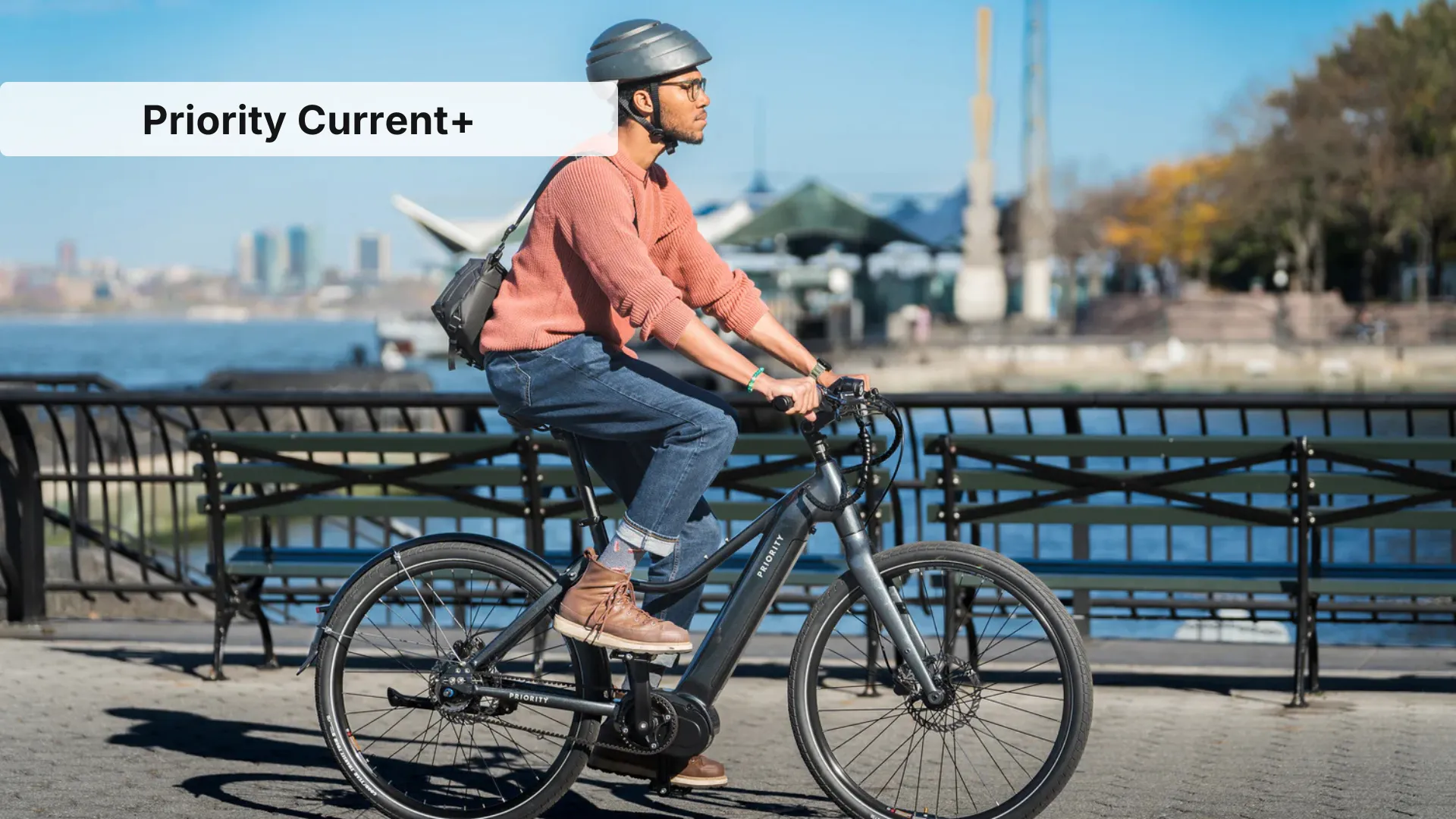
The Current+ is engineered for riders who want to ride, not wrench. The Gates Carbon belt drive, Enviolo CVT hub, and hydraulic disc brakes create a nearly maintenance-free package. After six weeks of testing in all conditions, including salty winter roads, I didn't touch a single component. Just ride, charge, repeat.
Key Features
| Feature | Details |
|---|---|
| Model | Priority Current+ – Best Low-Maintenance |
| Price | Starting at $3,199 |
| Motor | Bosch Performance Line (250W, 65Nm) |
| Battery | 500Wh Bosch PowerTube |
| Range | 35-70 miles depending on assist |
| Weight | 52 lbs |
| Best For | Riders who hate bike maintenance |
Performance Notes
The Enviolo CVT (continuously variable transmission) is magic. It shifts smoothly while pedaling, even under power. No more clunky shifts or dropped chains. Combined with the Gates belt drive, you'll never deal with chain maintenance again. The Bosch Performance Line motor delivered confident power with smooth torque sensing. The Intuvia display is straightforward. Nothing fancy, but it shows what you need. I rode through rain, slush, and salt spray; everything kept working perfectly. The rust-proof components mean this bike will look good for years.
Range testing showed 58 miles using assist level 2 (Eco/Tour) on mixed terrain. The integrated battery keeps cables clean and weather-sealed. Shimano hydraulic disc brakes provided excellent modulation and power. The front suspension fork (63mm travel) smoothed out rough roads without feeling squishy. Fenders and chain guard come standard—you can ride in work clothes without getting dirty. The frame geometry is upright and comfortable for long rides.
Who It's Best For
Perfect for commuters who want a 'set it and forget it' bike. If you've been burned by unreliable bikes or hate dealing with maintenance, this eliminates those frustrations. The all-weather components make it ideal for year-round commuters in any climate. Works great for riders who want premium reliability without constant dealer visits.
Pros
- Virtually maintenance-free drivetrain (belt + CVT hub)
- All-weather components handle rain, snow, and salt
- Bosch motor/battery system known for exceptional reliability
- Enviolo CVT shifts smoothly while pedaling under power
- Comes fully equipped with fenders, lights, kickstand, rack
Cons
- $3,199 price is steep for the features offered
- 52 lbs is manageable but not lightweight
- CVT adds slight pedaling resistance compared to derailleur
- Limited customization—what you see is what you get
10. Velotric Breeze 1
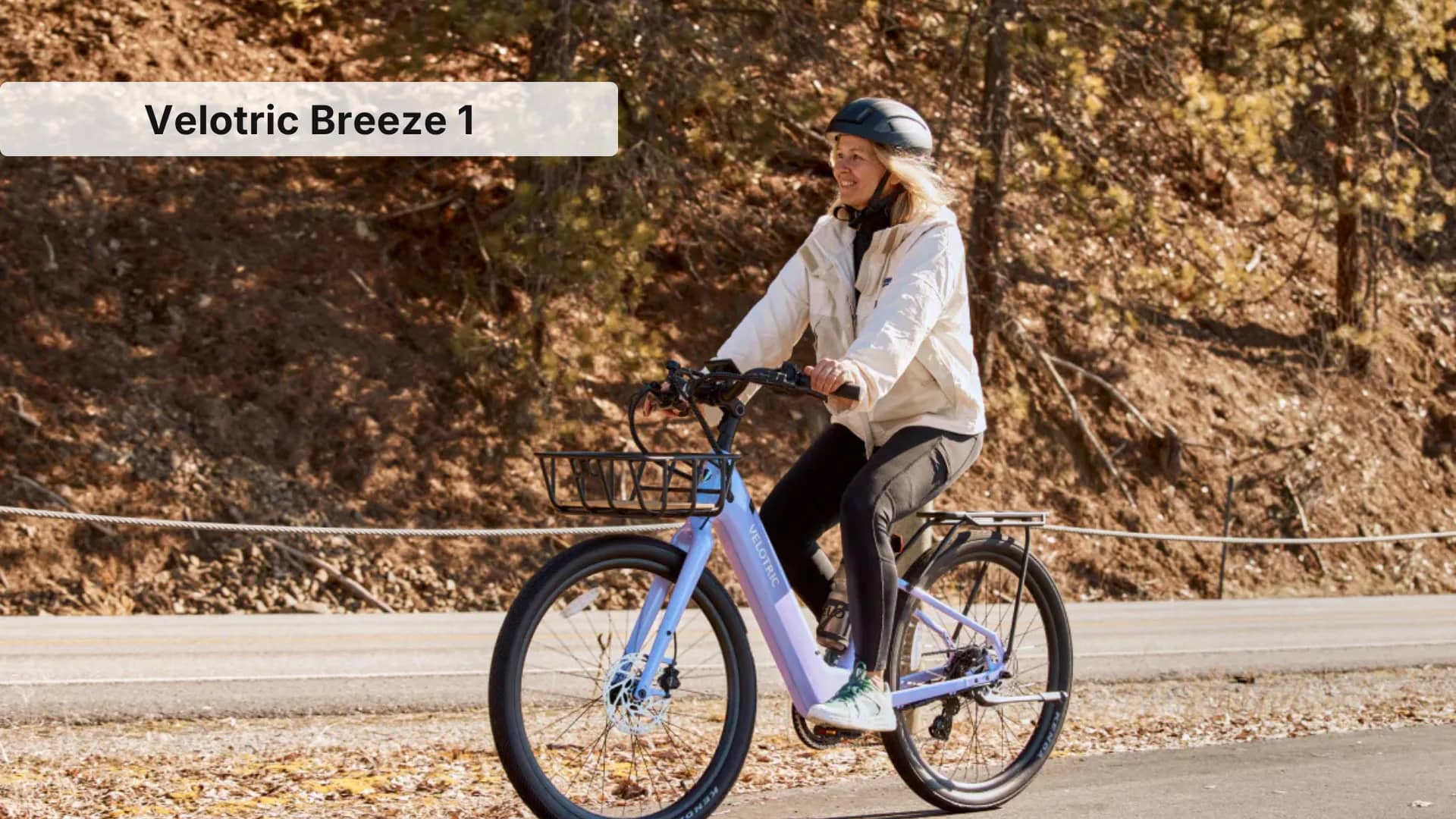
The Breeze 1 delivers step-through convenience at an entry-level price without feeling cheap. The low standover height makes mounting effortless, perfect if mobility is a concern or you're wearing work clothes. For riders intimidated by traditional bike frames or those returning to cycling after years away, this removes barriers to entry.
Key Features
| Feature | Details |
|---|---|
| Model | Velotric Breeze 1 – Best Step-Through Value |
| Price | Around $1,199 |
| Motor | 500W rear hub motor |
| Battery | 518.4Wh (48V 10.8Ah) removable |
| Range | 40-55 miles typical use |
| Weight | 53 lbs |
| Best For | Older riders or those wanting easy mounting |
Performance Notes
The ultra-low step-over height (just 14 inches) makes mounting completely effortless. I had my 68-year-old mother test this bike (she's avoided cycling for years due to hip issues), and she mounted confidently on the first try. The upright riding position and swept-back handlebars create a comfortable, relaxed posture. The 500W motor provides adequate power for most situations, though it's not as refined as pricier options. Pedal assist levels 1-3 offer good progression from gentle assist to strong help.
The color LCD display is clear and easy to read without reading glasses. The 7-speed Shimano drivetrain shifts smoothly and provides enough gearing for moderate hills. Front suspension (60mm travel) takes the edge off rough roads. Mechanical disc brakes work fine but require more hand strength than hydraulics. I got 48 miles of range using mixed assist levels. The removable battery (with handle) makes indoor charging easy. At 53 lbs, it's not heavy for an e-bike. The included rear rack, fenders, and lights make it ready for daily use.
Who It's Best For
Ideal for older riders, those with mobility concerns, or anyone intimidated by traditional bike frames. Perfect for casual riders who want easy, comfortable transportation for errands and short commutes (under 10 miles). The step-through design works great if you're wearing dresses, skirts, or restrictive work clothes. Also good as a first e-bike—the simple operation builds confidence quickly.
Pros
- Ultra-low step-over height (14") makes mounting effortless
- Outstanding value at $1,199 for 500W motor and features
- Upright, comfortable riding position reduces strain
- Simple, intuitive controls perfect for beginners
- Removable battery with carry handle for easy charging
Cons
- Mechanical disc brakes require more hand strength than hydraulics
- Motor feels less refined than premium options
- Basic LCD display lacks advanced features
- Front suspension is adequate but not exceptional
Complete Buyer's Guide: Everything You Need to Know Before Buying

Understanding E-Bike Motors: What Actually Matters
Motor wattage gets all the attention, but it's not the full story. A 350W mid-drive motor can outperform a 750W hub motor on hills because of where the power is applied. Think of it like car engines: a smaller turbocharged engine can beat a bigger naturally aspirated one. Mid-drive motors connect to your bike's gears, multiplying torque for climbing. Hub motors (built into the wheel) are simpler and cheaper but lose efficiency on steep grades.
What matters more than wattage? Torque (measured in Newton-meters) determines acceleration and hill-climbing ability. Most quality city e-bikes have 40-80Nm of torque. Anything above 60Nm handles steep climbs confidently. Also consider the sensor type: torque sensors (measuring how hard you pedal) feel natural and provide exercise, while cadence sensors (detecting pedal rotation) give consistent power but feel more robotic. The best bikes let you switch between both.
- Mid-drive motors: Better for hills and efficiency, slightly more expensive
- Hub motors: Simpler, cheaper, work great for flat-to-rolling terrain
- Torque sensors: Feel natural, provide workout, better battery efficiency
- Cadence sensors: Consistent power, easier for tired rides, less natural feel
Battery Capacity and Real-World Range: Cutting Through Marketing
Manufacturer range claims are fantasy numbers. They test on flat ground, light riders, low assist levels, basically ideal conditions you'll never experience. In my testing, real-world range is typically 60-70% of the claimed maximum. A bike claiming 80 miles? Expect 50-56 miles in actual use. Battery capacity is measured in watt-hours (Wh). Bigger numbers mean more range. For city commuting, 500Wh is the sweet spot balancing range and weight.
Here's the truth about range: your weight, terrain, wind, temperature, and assist level all dramatically impact distance. Cold weather (below 40°F) can cut range by 20-30%. Constant stop-and-go city riding uses more battery than steady cruising. Hills drain battery fast. My rule of thumb: if your round-trip commute is X miles, get a bike with 3X miles of claimed range. This gives you buffer for cold days, headwinds, and occasional detours without range anxiety.
- 500Wh battery: Good for 30-50 miles real-world use (most commuters)
- 700Wh+ battery: Extends range to 50-70+ miles (longer commutes or hilly terrain)
- Removable batteries: Easier charging, can buy spare for extended range
- Expect 60-70% of manufacturer claims in real conditions
Hub Drive vs. Mid-Drive: Which System Is Right for You?
This is the biggest decision you'll make. Hub motors (rear wheel) are simple, affordable, and virtually maintenance-free. They work great for flat cities and moderate hills. The downside? They can't leverage your gears, so they lose efficiency on steep climbs. Hub motors also add weight to your wheel, which can make handling feel slightly heavy. Most budget and mid-range city bikes use hub motors because they're cost-effective and reliable.
Mid-drive motors connect to your bike's cranks and work through the gears, multiplying their power. This makes them dramatically better on hills. A 250W mid-drive often outclimbs a 500W hub motor. They also create better weight distribution (motor at center, not in wheel) for more natural handling. The catch? Mid-drive bikes cost more and wear out chains faster since all that power goes through the drivetrain. For serious commuters or hilly cities, mid-drive is worth the premium. For flat urban areas, hub drive is perfectly adequate and saves money.
- Hub motors: $1,000-$2,000 bikes, flat terrain, simple maintenance
- Mid-drive: $2,500+ bikes, hilly terrain, better handling, higher maintenance
- Hub for casual riders and flat cities; mid-drive for serious commuters
- Weight matters: mid-drive bikes typically weigh 5-10 lbs less
Class 1, 2, and 3: Understanding E-Bike Regulations
E-bike classes determine where you can legally ride. Class 1 (pedal-assist only, 20 mph max) is allowed almost everywhere: bike lanes, multi-use paths, most parks. Class 2 adds a throttle (motor works without pedaling) but keeps the 20 mph limit; it's legal in most places but some trails prohibit it. Class 3 (pedal-assist to 28 mph) is the speed demon for commuters. Much faster, but often restricted from multi-use paths and some bike lanes. For a full breakdown of e-bike laws by state, start there before you lock in a class.
Most modern e-bikes let you configure the class through settings. Want to ride bike paths? Set it to Class 1. Commuting on roads? Switch to Class 3 for speed. This flexibility is key. You're not locked into one classification. Check your local laws, though. Some cities have weird rules (like requiring helmets for Class 3, or banning throttles entirely). When in doubt, Class 1 is universally legal. Still weighing whether a city e-bike beats driving? See are electric bikes worth it for commuting.
- Class 1: 20 mph, pedal-assist only, legal almost everywhere
- Class 2: 20 mph, adds throttle—some trail restrictions apply
- Class 3: 28 mph, pedal-assist—fastest but more legal restrictions
- Configurable bikes let you switch classes for different situations
Budget Breakdown: Where to Invest and Where to Save
Under $1,200: Entry-level bikes with basic features. Expect hub motors (350-500W), smaller batteries (250-400Wh), mechanical brakes, and minimal extras. These work fine for short commutes (under 8 miles) on flat terrain. Quality varies wildly in this range, so stick to established brands like Ride1Up or Velotric over random Amazon sellers. The Roadster V2 ($1,095) and Breeze 1 ($1,199) show what's possible at this price point.
$1,500-$2,200: The sweet spot for most commuters. You'll get bigger batteries (500-700Wh), more powerful motors (500-750W), hydraulic brakes, better components, and useful features like integrated lights and racks. This is where brands like Aventon, Lectric, and Velotric dominate. The Level 3 ($1,999) and XP 4 ($1,299) exemplify the value here. $2,500-$4,000: Premium territory with mid-drive motors, top-tier components, advanced features, and extensive warranties. You're paying for refinement, reliability, and dealer support. Worth it if you're replacing a car or riding 20+ miles daily. The Specialized Vado 4.0 ($3,750) and Priority Current+ ($3,199) show what premium money buys.
- Budget ($1,000-$1,200): Best for casual riders, short commutes, flat terrain
- Mid-range ($1,500-$2,200): Best value for serious commuters, most versatile
- Premium ($2,500-$4,000): For car replacement, long commutes, or luxury seekers
- Don't cheap out on brakes and battery—these impact safety and usability most
Essential Features That Actually Improve Daily Use
Some features are marketing fluff; others genuinely improve your life. Hydraulic disc brakes are non-negotiable in my book. The difference in stopping power and modulation is massive compared to mechanical brakes. Integrated lights aren't just convenient; they're essential for year-round commuting and ensure you're visible to cars. A solid rear rack (rated for 40+ lbs) turns your bike into a cargo hauler for groceries and work gear. Fenders keep you dry and clean. Riding without them in wet weather is miserable.
Features I initially dismissed but now love: cruise control (surprisingly useful on long straightaways), walk mode (pushing a 60-lb bike uphill sucks), and USB charging ports (keep your phone charged). Features I don't miss: fancy color displays (basic works fine), Bluetooth speakers (use your earbuds), and excessive assist levels (five is plenty; nine is overkill). The best features disappear into the background. You don't think about them; they just make riding better.
- Must-haves: Hydraulic brakes, integrated lights, rear rack, fenders
- Nice-to-have: Removable battery, GPS tracking, app connectivity
- Skip: Excessive displays, integrated speakers, gimmicky features
- Frame fit matters more than features—test ride if possible
Frequently Asked Questions About Electric City Bikes
How far can I actually ride on a single charge?
Real-world range is typically 30-70 miles depending on battery size, terrain, and how much assist you use. My testing showed that a 500Wh battery gets you 35-50 miles in mixed conditions (some hills, moderate assist levels). Bigger 700Wh+ batteries extend that to 55-75 miles. Cold weather cuts range by 20-30%, and constant stop-and-go city riding drains batteries faster than steady cruising.
For planning purposes, use this formula: take the manufacturer's claimed range and multiply by 0.65 for a realistic estimate in varied conditions. If your daily commute is 10 miles round-trip, a bike claiming 40+ miles of range will handle your week easily with weekend charging.
Do I need a special license or insurance for an electric city bike?
In most US states, Class 1 and Class 2 e-bikes (up to 20 mph) require no license, registration, or insurance. They're treated like regular bicycles. Class 3 e-bikes (up to 28 mph) occasionally require a driver's license or have age restrictions, but this varies by state and city. Check your local regulations, but for most riders, e-bikes are regulation-free.
That said, I strongly recommend getting homeowners or renters insurance that covers your e-bike. They're theft magnets. Some bike-specific insurance policies also cover damage and liability. Given that these bikes cost $1,000-$4,000, protecting your investment makes sense.
How much does it cost to charge an electric bike?
Shockingly cheap. A typical 500Wh battery costs about 6-8 cents to fully charge at average US electricity rates ($0.13/kWh). If you charge twice a week, that's roughly $8-10 per year in electricity costs. Compare that to $150-200/month for gas and parking, and the economics are no-brainer territory.
Battery longevity is the bigger cost consideration. Most lithium batteries last 500-1,000 full charge cycles before capacity drops to 80%. If you ride 30 miles per charge, that's 15,000-30,000 miles of use. Replacement batteries cost $400-800 depending on capacity. Still cheaper than car ownership by a massive margin.
Can I ride an electric city bike in the rain?
Yes, but with some caveats. Modern e-bikes have IPX4-IPX7 water resistance ratings, meaning they handle rain and splashes fine. I've ridden every bike in this guide through downpours—the electronics are well-sealed. Avoid submerging your bike (don't ride through deep puddles or clean with a pressure washer), and dry the battery contacts occasionally to prevent corrosion.
The bigger rain concern is traction and visibility. Wet roads reduce your braking distance by 20-30%, so ride more conservatively and brake earlier. Make sure your lights work properly, and consider fenders (most city e-bikes include them). Your motor and battery will be fine; your safety depends on riding smart in wet conditions.
What's the difference between a $1,200 and $3,500 electric bike?
The core function of getting you from point A to B with electric assist works similarly across price ranges. What changes? Build quality, components, refinement, and longevity. Cheaper bikes use hub motors, smaller batteries, mechanical brakes, and basic frames. Expensive bikes have mid-drive motors, premium batteries, hydraulic brakes, better suspension, integrated features, and comprehensive warranties.
Here's how I think about it: if you're testing whether e-bike commuting works for you, start with a $1,200-$1,600 bike. If you're replacing a car and riding 15+ miles daily, invest in the $2,500-$4,000 range. The premium bikes will last longer, need less maintenance, and provide a noticeably more refined experience. But for casual riders, mid-range bikes like the Aventon Level 3 or Lectric XP 4 deliver outstanding value.
How long does it take to charge the battery?
Most e-bike batteries charge fully in 4-6 hours using the included charger. Smaller batteries (250-400Wh) charge in 3-4 hours; larger batteries (700Wh+) take 5-7 hours. Some manufacturers offer fast chargers that cut charging time by 30-40%, but they cost extra ($100-200) and can slightly reduce battery longevity over time.
Pro tip: you don't need to fully charge every time. Lithium batteries last longer if you keep them between 20-80% charge rather than constantly charging to 100%. For daily commutes, I charge mine to 80% overnight and rarely hit empty. Only charge to 100% before long rides where you need maximum range.
Are electric city bikes hard to pedal without assist?
It depends on the bike's weight. Lightweight bikes (under 40 lbs) like the Tenways CGO600 Pro pedal reasonably well without assist—they feel like riding a slightly heavy regular bike. Heavier bikes (65+ lbs) like the Lectric XP 4 are legitimately hard to pedal without power. The motor adds drag when unpowered, and the extra weight makes climbing hills brutal.
Realistically though, you'll never need to ride far without assist unless your battery dies completely—which shouldn't happen if you monitor your charge level. Even in the lowest assist mode, pedaling feels easy. If you're worried about exercise, use lower assist levels; you'll still get a workout while having power available when needed.
What maintenance do electric bikes need?
Less than you'd think, but it's not zero. Chain-drive bikes need regular chain lube and occasional adjustments, same as regular bikes. Belt-drive bikes (like the Tenways CGO600 or Priority Current+) need almost nothing besides tire inflation and brake pad checks. Hydraulic brakes rarely need adjustment; mechanical brakes require occasional cable tensioning. Tires last 1,500-3,000 miles depending on riding conditions.
The electric components need essentially zero maintenance—the motor, battery, and controller are sealed units. Keep battery contacts clean, store the battery indoors in extreme temperatures, and don't submerge anything. I recommend an annual checkup at a bike shop ($75-125) for a safety inspection, brake check, and general tuning. That's it. Way simpler than car maintenance.