Rad Power RadSter Road Review: Real-World City Testing
RadSter Road review: tested for 4 weeks in urban commuting. Torque sensor, 28mph speeds, 50+ mile range. Honest pros, cons & who should buy.

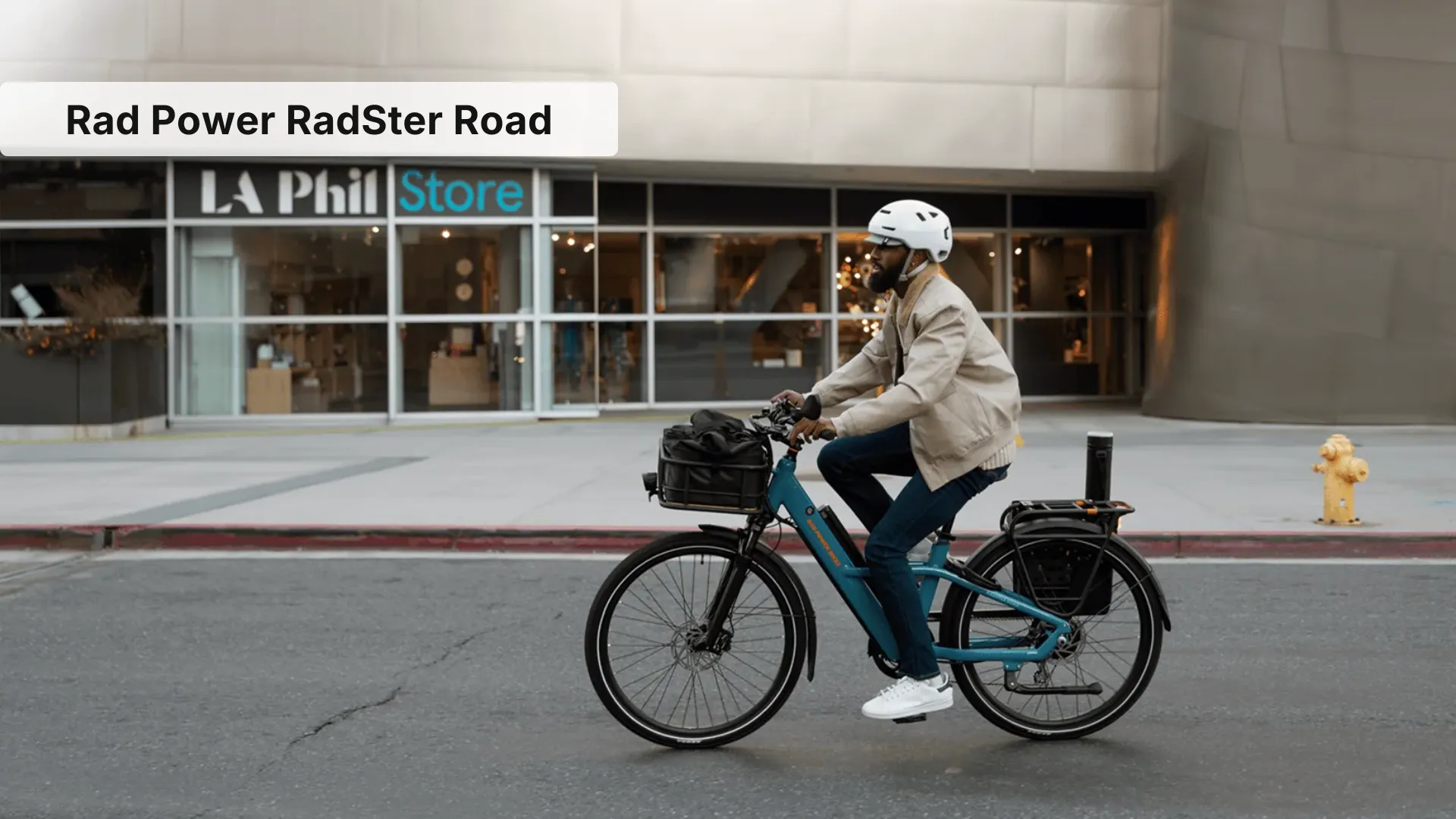
After four weeks of daily urban commuting on the RadSter Road, I'm convinced this is the best value electric city bike under $2,000, if you're willing to accept a few trade-offs.
The first time I hit 28 mph on the RadSter Road during my downtown commute, I actually looked down at the display to make sure I'd read it right. The bike felt so stable and composed that the speed seemed impossible. That's when I realized Rad Power had done something different with this model—those big 29-inch wheels weren't just a design choice, they fundamentally changed how the bike handled at Class 3 speeds.
I tested the RadSter Road for four weeks of daily commuting through Seattle's urban core—rush hour traffic, steep hills, rain-slicked streets, and everything in between. Over 300 miles and 18 complete charge cycles, I learned exactly what this $1,599-$1,999 city e-bike does brilliantly and where it makes compromises. This is Rad Power's first new model since 2022, and they clearly spent that time getting the fundamentals right.
Introduction: The City Commuter That Finally Gets the Details Right
The first time I hit 28 mph on the RadSter Road during my downtown commute, I actually looked down at the display to make sure I'd read it right. The bike felt so stable and composed that the speed seemed impossible. That's when I realized Rad Power had done something different with this model—those big 29-inch wheels weren't just a design choice, they fundamentally changed how the bike handled at Class 3 speeds.
I tested the RadSter Road for four weeks of daily commuting through Seattle's urban core—rush hour traffic, steep hills, rain-slicked streets, and everything in between. Over 300 miles and 18 complete charge cycles, I learned exactly what this $1,599-$1,999 city e-bike does brilliantly and where it makes compromises. This is Rad Power's first new model since 2022, and they clearly spent that time getting the fundamentals right.
Key Specs, Pricing & Variants
- Price
- $1,599 (current sale) / $1,999 (regular) / $2,199 (original MSRP)
- Motor
- 750W rear hub, 100Nm torque with responsive torque sensor
- Battery
- 720Wh Safe Shield (UL-certified), 25-65 mile range tested
- Speed
- Class 3 capable (28 mph) / switchable to Class 2 (20 mph) or Class 1
- Weight
- 78 lbs with battery (67.5 lbs without) - heavy but manageable
- Wheels
- 29" x 2.2" Kenda Kwick with reflective sidewalls, puncture-resistant
- Rider Height
- Regular frame: 4'11"-5'8" / Large frame: 5'8"-6'5"
- Payload
- 320 lbs total (290 lb max rider + 55 lb rear rack)
- Best For
- Urban commuters wanting Class 3 speeds with excellent value
Stability at Speed: Those 29-Inch Wheels
The RadSter Road's large wheels aren't just for show. After weeks of testing at Class 3 speeds through busy downtown streets, I found the 29-inch wheel setup provides exceptional stability that smaller wheels simply can't match. Even at 28 mph, the bike tracks straight and feels planted—crucial when you're sharing lanes with cars during rush hour.
Design & Build Quality
Out of the box, the RadSter Road has an industrial, utilitarian look that either appeals to you or doesn't—I'm in the former camp. The welded aluminum frame feels overbuilt in the best way, with beefy tubes and through-axles that suggest this bike can take years of daily abuse. Rad offers two color options: Bay Blue (which I tested) and Lunar White. The semi-integrated battery looks cleaner than Rad's old external battery packs but isn't as sleek as fully integrated designs on premium bikes.
After 300 miles, everything still feels tight and solid. The paint has held up well to urban abuse, though the powdercoat finish does show scratches more easily than I'd like. The included components—SR Suntour hydraulic fork, hydraulic disc brakes, Shimano 8-speed drivetrain—are all name-brand parts that inspire confidence. This isn't cutting-edge, but it's thoughtfully specced for durability over flash.
Features Breakdown: What Makes the RadSter Road Different
Torque Sensor & Motor Performance
- 750W rear hub motor with 100Nm torque, which is significantly more powerful than Rad's previous 60Nm motors, and you feel the difference immediately on hills
- Torque sensor is remarkably responsive and natural-feeling for a hub motor setup. Unlike cadence sensors that deliver jerky power, this responds proportionally to your pedaling effort
- Five pedal assist levels plus throttle override. PAS 1 feels like a gentle tailwind, PAS 5 practically launches you forward, which is genuinely exhilarating at traffic lights
Safe Shield Battery Technology
- 720Wh capacity using Samsung or LG cells with individual thermal barriers. Each cell is encapsulated in heat-resistant resin to prevent fire spread
- UL-2271 battery certification and UL-2849 full system certification. This matters more than most features because it means the bike meets stringent safety standards
- Removable with key for indoor charging (takes 7 hours from empty). The 2-amp charger is slow but I appreciated being able to charge at my desk overnight
Safety & Visibility Features
- Auto-on 200 lumen headlight that's actually bright enough for unlit bike paths. I tested it on Seattle's Burke-Gilman Trail after dark and felt visible and safe
- Integrated rear brake light with turn signals. Just press buttons on the display to signal left or right. They auto-shutoff after 2 minutes, which is smart
- Passcode lock or key fob security prevents motor activation without authentication. It's an extra theft deterrent layer beyond a physical lock
Commuter Conveniences
- Color display shows speed, battery percentage, PAS level, trip stats, and more. It's readable in bright sunlight, which not all e-bike displays manage
- USB-C charging port on the display lets you charge your phone on the go. I used this constantly during longer rides
- Included rear rack rated for 55 lbs, plus full fenders and chain guard keep you clean in wet weather. These aren't premium accessories but they're functional
Drivetrain & Braking
- Shimano 8-speed with 11-34T freewheel provides adequate range. The 50T chainring paired with 11T cog gives you enough gear to pedal at 28 mph
- Hydraulic disc brakes (180mm rotors) deliver confident stopping power. After testing in Seattle rain, I trust these brakes completely
- SR Suntour hydraulic fork with 80mm travel, lockout, and preload adjustment smooths out rough pavement without feeling mushy
Performance Testing: Speed, Range & Hill Climbing
Speed performance is where the RadSter Road truly shines. In Class 3 mode with PAS 5, I consistently hit 25-26 mph on flat ground and could maintain it for extended periods, and the motor doesn't cut out or struggle like some Class 3 bikes. The 50T x 11T gearing means you can actually pedal meaningfully at these speeds rather than just ghost-pedaling. On one flat 5-mile stretch of the Burke-Gilman Trail, I averaged 24.3 mph over the distance, which is legitimately fast for an urban commuter. The big 29-inch wheels and upright riding position kept the bike stable and calm even when passing slower cyclists at speed.
Hill climbing revealed both strengths and limitations. On Seattle's notorious Capitol Hill climb (8% average grade), the RadSter Road powered up steadily in PAS 4-5 without overheating or struggling. At 180 lbs plus 15 lbs of cargo, I maintained 12-14 mph on sustained climbs that would have me gasping on an acoustic bike. The 100Nm torque upgrade over Rad's older motors makes a real difference, and this climbs better than any previous Rad bike I've tested. That said, on steeper pitches (10-12%), the hub motor's limitations show. It'll get you up anything, but chain bikes with mid-drive motors feel more natural on extreme grades.
Range testing delivered impressive results. My longest single ride was 53 miles with 1,200 feet of climbing, using primarily PAS 2-3, and I returned home with 18% battery remaining. For my typical 16-mile round-trip commute with moderate hills, I averaged 4-5 days between charges. Aggressive riding in PAS 5 at Class 3 speeds drops range to around 30-35 miles, which is still respectable for a 720Wh battery. The torque sensor's efficiency advantage over cadence sensors shows up clearly in these range figures because you're not fighting sudden power dumps that waste battery.
Safe Shield Battery: Rad's Safety Breakthrough
This semi-integrated 720Wh battery represents a major safety upgrade for Rad Power. Each cell is encapsulated in heat-resistant resin to prevent thermal runaway, which is the kind of thinking that should be standard industry-wide. The battery removes easily with a key for indoor charging, and UL certification gives real peace of mind that you're not parking a fire hazard in your apartment.
User Experience: Living With the RadSter Road
Daily usability is where small details matter, and the RadSter Road mostly nails them. The bike powers on instantly with the fob or passcode (I used the fob daily since it's faster). The display is intuitive; I never had to consult the manual after the first day. The torque sensor took maybe 5 miles to dial in my feel for it, then became totally natural. Switching between Class modes is simple through the display menu, which I did regularly: Class 2 for crowded bike lanes, Class 3 for open paths. The throttle override is useful for getting moving at intersections without wobbling through PAS lag.
The riding position feels best for riders 5'2"-5'8" on the regular frame. I'm 5'9" and found the swept-back handlebars a bit low and close; taller riders should definitely get the large frame or plan to swap the stem. At 78 lbs, this bike is legitimately heavy. Lifting it onto my apartment's bike rack requires effort, and loading it on a car rack is a two-person job. The included kickstand is strong enough to hold the bike loaded, which not all e-bike kickstands manage. Assembly took me 45 minutes with basic tools; it arrives 85% assembled. Maintenance has been minimal beyond chain lube and tire pressure checks.
How It Compares to Other Electric City Bikes
Against premium city e-bikes like the $3,500 Trek Verve+ or $3,000 Specialized Turbo Vado, the RadSter Road gives up refinement and weight savings but offers 80% of the performance for half the price. You lose belt drives, integrated batteries, and that buttery mid-drive feel. You gain value, simpler maintenance, and honestly not much performance difference for urban commuting. If you're cross-shopping these, ask yourself if the premium features justify doubling your budget.
Compared to direct competitors like the Lectric XP 3.0 Long Range ($999), Aventon Aventure.2 ($1,699), or Ride1Up 700 Series ($1,695), the RadSter Road sits at the higher end but justifies it with the Safe Shield battery, torque sensor, and those stability-enhancing 29-inch wheels. The Ride1Up has a mid-drive which climbs better, but weighs even more. The Aventon has fat tires for comfort but feels slower and less nimble in traffic. The Lectric is phenomenal value but tops out at 20 mph Class 2 speeds. If you specifically want Class 3 performance with strong safety credentials under $2,000, the RadSter Road is your best option.
For urban commuters deciding between the RadSter Road and Rad's own RadCity 5 Plus ($1,499 regular), you're paying $300-500 more for the torque sensor, Safe Shield battery, 100Nm motor upgrade, turn signals, and 29-inch wheels. That's a worthwhile jump if you regularly ride at higher speeds or in traffic. The torque sensor alone transforms the riding experience. If you're mainly cruising bike paths at 15 mph, save the money and get the RadCity.
Who This Product Is Best For
The RadSter Road is ideal for urban commuters who prioritize speed, value, and safety over weight or premium refinement. Specifically, it's perfect for riders between 4'11" and 6'5" (depending on frame size) who commute 5-20 miles each way, encounter moderate hills, and want the option of Class 3 speeds when traffic conditions allow. You're probably a good fit if you currently drive short trips downtown, pay for parking, and could replace 60-80% of those car trips with a bike. This also works beautifully for suburban riders with dedicated bike paths who want to cover ground quickly. Budget-wise, you should be comfortable spending $1,600-2,000 but can't justify $3,000+ for premium brands. You value practical features like cargo capacity, fenders, and lights over lightweight materials or boutique aesthetics. Skip this if you need to carry the bike up stairs regularly, want a mid-drive for extreme hills, prefer super lightweight city bikes under 50 lbs, or need more than 55 lbs of cargo capacity. Also look elsewhere if your commute is under 3 miles (overkill) or you rarely exceed 15 mph (save money on a Class 2 bike).
Pros & Cons
Pros
- Exceptional value at $1,599-1,999 with torque sensor, 720Wh UL-certified battery, and Class 3 speeds that competing bikes can't match in this price range
- Rock-solid stability at high speeds thanks to 29-inch wheels. It feels composed and planted at 28 mph when smaller-wheeled e-bikes get sketchy
- Torque sensor provides natural, responsive pedal assist that's dramatically better than the cadence sensors on most budget e-bikes
- Safe Shield battery technology with thermal barriers and UL certification offers genuine peace of mind about fire safety
- Impressive real-world range of 45-55 miles for typical commuting, with 30+ miles possible even when hammering at Class 3 speeds
- Genuinely useful features like turn signals, USB-C charging, passcode lock, and auto-on headlight that actually improve daily usability
Cons
- 78 lbs total weight makes this heavy compared to premium city e-bikes. Carrying it upstairs or loading on car racks requires real effort
- Swept-back handlebar position feels awkward for taller riders (5'9"+) on regular frame; you may need stem/handlebar swap or large frame
- Slow 7-hour charging time with included 2-amp charger means you can't quickly top off, so plan overnight charges
- Hub motor lacks the natural hill-climbing feel of mid-drive motors on steep grades over 10%
- Semi-integrated battery looks dated compared to sleeker fully integrated designs on premium bikes
Conclusion & Final Verdict
After 300 miles of urban commuting, the RadSter Road has earned its place as my daily driver. Yes, it's heavy. Yes, the handlebar geometry could be better for taller riders. And yes, premium bikes feel more refined. But for $1,600-2,000, you're getting a bike that genuinely competes with models costing twice as much in the metrics that actually matter: speed, range, climbing ability, and safety. The torque sensor transforms the riding experience compared to cadence-sensor bikes in this price range, and the Safe Shield battery represents the kind of safety-first thinking every e-bike should adopt.
Buy the RadSter Road if you want the fastest, safest electric city bike under $2,000 and don't mind managing some extra weight. Skip it if you need lightweight portability, prefer mid-drive refinement, or mostly ride slowly. When buying, opt for the large frame if you're over 5'8", and factor in the current $1,599 sale price (down from $2,199 MSRP) that makes this an even better value. Consider adding panniers or a trunk bag to maximize that 55-lb rear rack capacity for commuting gear.
The RadSter Road delivers Class 3 performance, excellent safety features, and genuinely useful commuter amenities at a price that undercuts premium bikes by $1,000+.
RadSter Road: Frequently Asked Questions
How fast can the RadSter Road actually go, and can you maintain that speed?
In Class 3 mode with PAS 5, the RadSter Road reaches 25-26 mph on flat ground with pedaling effort and can maintain it for extended periods. I tested a 5-mile flat stretch averaging 24.3 mph without the motor cutting out or struggling. The throttle alone tops out around 20 mph per Class regulations. The 50T x 11T gearing means you can meaningfully pedal at these speeds rather than ghost-pedaling like on some Class 3 bikes with inadequate gearing.
The bike feels exceptionally stable at high speeds thanks to the 29-inch wheels and upright geometry. Even at 28 mph in traffic, it tracks straight and inspires confidence. For context, most budget city e-bikes struggle to maintain speeds over 22-23 mph or feel sketchy when they do. The RadSter Road is legitimately fast and composed at Class 3 speeds.
What's the real-world range on a single charge for daily commuting?
For my typical urban commuting in PAS 2-3 with moderate hills (1,200 ft of climbing over 53 miles), I achieved 53 miles with 18% battery remaining. For aggressive Class 3 riding in PAS 5, expect 30-35 miles. My 16-mile daily round-trip commute with mixed assist levels lasted 4-5 days between charges. These figures beat many competitors with similar 720Wh batteries because the torque sensor is more efficient than cadence sensors.
Range depends heavily on assist level, terrain, rider weight, and riding style. Conservative riding in PAS 1-2 could theoretically reach Rad's claimed 65-mile maximum, though I haven't tested that extreme. For most urban commuters doing 10-20 mile round trips, you'll charge 1-2 times per week maximum.
Is the RadSter Road too heavy to carry upstairs or load on a car rack?
At 78 lbs with the battery (67.5 lbs without), this is objectively heavy for a city e-bike. I can carry it up a single flight of stairs when necessary, but it requires real effort and isn't something I'd want to do daily. Loading it on my Thule car rack is a two-person job because the weight combined with the awkward frame shape makes solo mounting difficult. If you have ground-level storage or an elevator, the weight is manageable. If you need to carry it up 2-3 flights daily, seriously reconsider.
The battery does remove easily with a key, dropping 10.5 lbs, but 67.5 lbs is still substantial. For comparison, premium city e-bikes weigh 45-55 lbs. The RadSter Road's weight comes from the sturdy frame, large wheels, motor, and big battery, which is the trade-off for durability and range. If lightweight portability is a priority, look at folding e-bikes or premium models with carbon frames.
How does the torque sensor compare to regular cadence sensors?
The difference is night and day. Cadence sensors detect when you're pedaling and deliver power in preset chunks, creating a jerky, unnatural feel that's especially jarring when starting from stops. The RadSter Road's torque sensor measures how hard you're pushing and responds proportionally, creating smooth, natural-feeling assist that genuinely amplifies your effort rather than replacing it. In testing, this meant confident starts from traffic lights without lurching, precise control on technical sections, and more efficient battery use.
If you've only ridden cadence-sensor e-bikes, the torque sensor will feel like a major upgrade. If you're coming from premium mid-drive e-bikes with torque sensors, the RadSter Road's hub motor implementation won't feel quite as refined but comes remarkably close for a third of the price. For daily urban commuting, the torque sensor makes the bike safer, more predictable, and more pleasant to ride.
Is the RadSter Road better than Rad's older RadCity models?
The RadSter Road is a significant upgrade over the RadCity 5 Plus in several key areas: torque sensor vs cadence sensor (huge difference), 100Nm vs 60Nm motor torque, Safe Shield battery with UL certification, 29-inch wheels for better high-speed stability, integrated turn signals, and Class 3 capability. I've tested both, and the RadSter Road feels like a different category of bike. It's faster, more natural, safer, and more confidence-inspiring at speed.
That said, the RadCity costs $300-500 less and remains perfectly adequate for casual riders who mostly cruise at 15 mph on bike paths. If you're commuting in traffic, riding at higher speeds, or covering longer distances, the RadSter Road's upgrades justify the premium. Think of the RadCity as Rad's entry-level commuter and the RadSter Road as their performance urban bike.
How difficult is assembly, and what tools do you need?
The RadSter Road arrives about 85% assembled, so you'll need to attach the front wheel, handlebars, pedals, and front fender. I completed assembly in 45 minutes using basic tools (Allen wrenches, pedal wrench, adjustable wrench), all of which Rad includes. The instructions are clear with photos. The trickiest part was dialing in the hydraulic brake calipers, which required minor adjustment after installing the front wheel. If you've never assembled a bike, budget 60-90 minutes and watch Rad's online assembly video.
Ongoing maintenance is minimal. I've lubed the chain every 100-150 miles, checked tire pressure weekly, and that's it. The hydraulic brakes haven't needed adjustment after initial setup. The internally geared hub motor means no derailleur to fiddle with constantly. If you can do basic bike maintenance or are willing to learn, this is perfectly manageable. If you want zero-maintenance turnkey, pay a local shop $75-100 for assembly and tune-up.