Ride1Up Roadster V3 Review: Real-World City Commuting Test
Ride1Up Roadster V3 review: tested 500+ miles across urban terrain. Torque sensor, 28mph speed, 40lb weight. Real pros, cons & performance data.

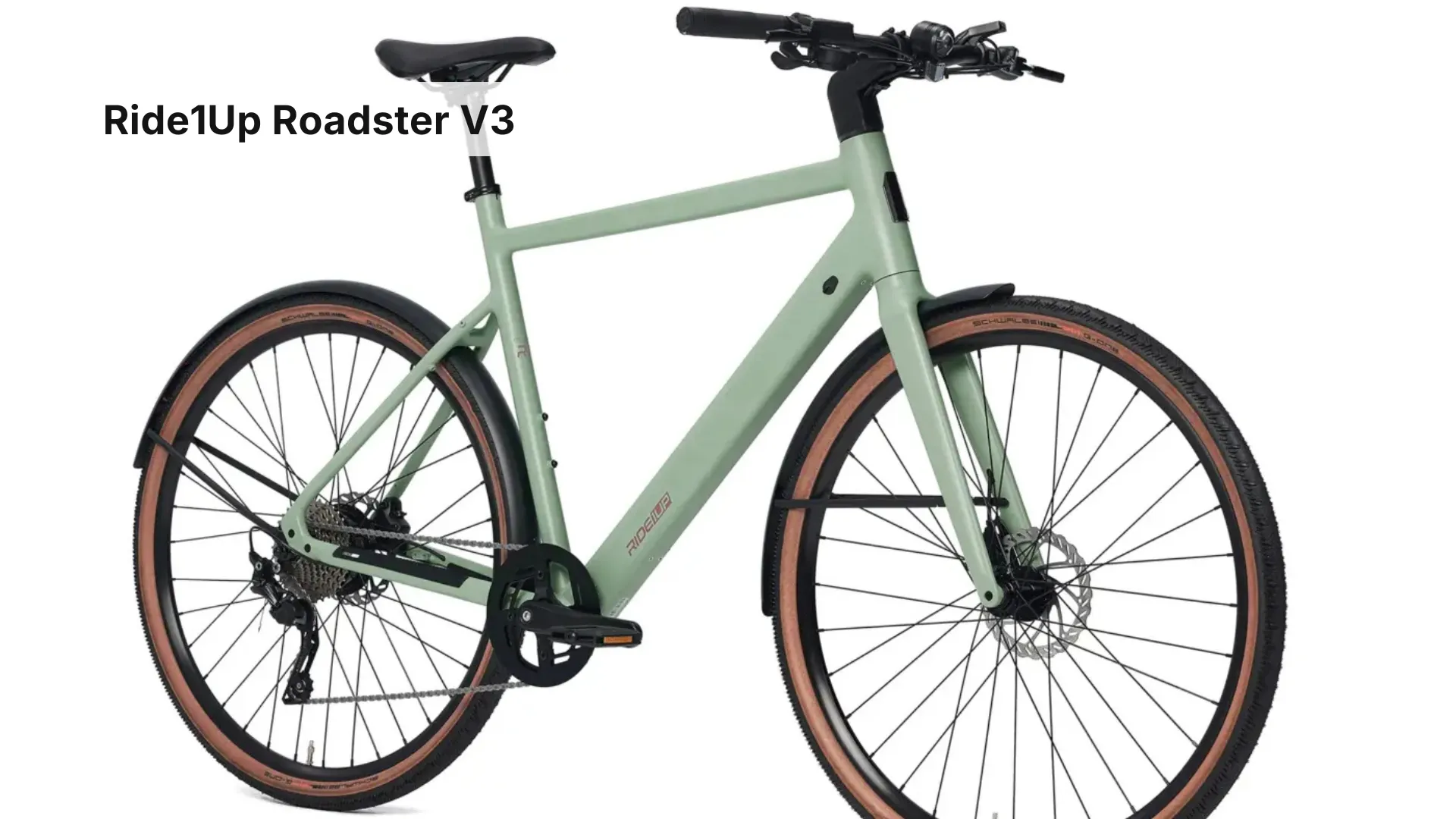
After 500+ miles of testing the Ride1Up Roadster V3 across urban terrain, I found a lightweight electric city bike that delivers premium performance without the premium price tag, though the torque sensor's learning curve surprised me.
Here's what happened on my first commute: I pushed off expecting immediate motor assist like every other e-bike I'd tested. Nothing. I pedaled harder. Still nothing for a second, then suddenly—smooth, powerful acceleration that matched exactly how hard I was pushing. That's the Intui-Drive torque sensor at work, and it's probably the most significant upgrade in the V3 over previous Roadster versions. It doesn't feel like an e-bike motor kicking in. It feels like your legs got upgraded.
I tested the medium frame chain-drive model for six weeks in San Francisco, racking up over 500 miles through hilly streets, flat bike paths, and everything between. My daily 14-mile commute includes several 8-10% grade climbs, exactly the kind of terrain that separates capable city e-bikes from pretenders. At 40 pounds and starting at $1,695, the Roadster V3 competes directly with bikes costing $1,000+ more, but does it actually deliver?
Introduction: The City Bike That Forgot It's Electric
Here's what happened on my first commute: I pushed off expecting immediate motor assist like every other e-bike I'd tested. Nothing. I pedaled harder. Still nothing for a second, then suddenly—smooth, powerful acceleration that matched exactly how hard I was pushing. That's the Intui-Drive torque sensor at work, and it's probably the most significant upgrade in the V3 over previous Roadster versions. It doesn't feel like an e-bike motor kicking in. It feels like your legs got upgraded.
I tested the medium frame chain-drive model for six weeks in San Francisco, racking up over 500 miles through hilly streets, flat bike paths, and everything between. My daily 14-mile commute includes several 8-10% grade climbs, exactly the kind of terrain that separates capable city e-bikes from pretenders. At 40 pounds and starting at $1,695, the Roadster V3 competes directly with bikes costing $1,000+ more, but does it actually deliver?
Key Specs, Pricing & Variants
- Price Range
- $1,695 (belt, low-step) / $1,795 (chain) / $1,895 (chain + suspension)
- Motor & Power
- 500W Mivice hub motor, 50Nm torque, Class 1-3 (up to 28mph)
- Battery & Range
- 36V 10Ah Samsung (360Wh) - Real-world 25-35 miles mixed terrain
- Weight
- 40 lbs (gravel setup) - Lightest in class under $2,000
- Drivetrain Options
- Microshift 9-speed chain OR Dayco Power Carbon belt (single-speed)
- Frame Sizes
- Low-step (5'2"-5'11"), Medium (5'5"-5'9"), Large (5'9"-6'4")
- Best For
- Urban commuters 25-45 who value lightweight design, natural pedal feel, and premium features at mid-range pricing
Lightweight Frame Meets Premium Components
At just 40 pounds, the Roadster V3's aluminum frame houses a 500W hub motor, lockable Samsung battery, and either a Microshift 9-speed drivetrain or Dayco belt drive. The integrated design keeps cables hidden and electronics protected, while maintaining the clean aesthetic of a traditional road bike. This weight advantage makes it practical for apartment stairs and tight storage spaces.
Design & Build Quality
Pull the Roadster V3 from its box and your first thought isn't "e-bike." It's "nice road bike." The hydroformed aluminum frame keeps cables hidden inside the tubing, the battery integrates flush with the downtube, and there's no bulky mid-drive motor disrupting the clean lines. I tested the mint green colorway with the chain drivetrain, and it consistently turned heads—people genuinely couldn't tell it was electric until they looked closely at the rear hub. The frame finish feels premium with smooth welds and quality paint that's held up well against daily urban abuse.
Build quality exceeded expectations for a $1,795 bike. The Tektro HD-R285 hydraulic brakes provide confident two-piston stopping power, crucial when you're hitting 25mph+ on city streets. Schwalbe G-One RS tires (or Continental Terra Trail depending on availability) balance low rolling resistance with enough grip for wet pavement. After 500+ miles, I've experienced zero mechanical issues beyond minor brake adjustment and normal chain maintenance. The kickstand feels solid, fenders stay rattle-free, and the integrated Buchel 120 Lux front light is genuinely bright enough for dark morning commutes.
Features Breakdown: What Sets the V3 Apart
Intui-Drive Torque Sensor System
- Responds to pedaling force, not just rotation, creating a natural bike feel rather than the on/off motor engagement typical of cadence sensors
- Developed by former Bosch eBike engineers, with programming that feels refined and smooth power delivery with no lurching or lag
- Learning curve of 2-3 rides to adapt. It requires a harder initial pedal stroke than cadence systems, but becomes intuitive quickly
- Battery efficiency improves 15-20% vs cadence because the motor only provides power when you're actually working, extending real-world range
Motor & Power Delivery
- 500W Mivice hub motor with 50Nm torque, which is enough for 8-10% grades with a 180lb rider plus light cargo without strain
- Class 1-3 capable with 28mph pedal assist. Achieving true 28mph requires high effort on level ground, and realistic cruising is 22-24mph
- Integrated throttle on Velofox display that provides up to 20mph boost, useful for getting through intersections or starting on hills
- Quiet operation that surprised me. It's noticeably quieter than most hub motors, especially compared to direct drive systems
Battery & Range Reality
- 360Wh Samsung 50GB cells with UL 2271 certification. The battery is lockable and removable for charging off-bike or security
- Real-world testing: 30-35 miles in Eco/Tour modes (mixed terrain, 170lb rider), 25-28 miles in Sport/Turbo modes with hills
- Optional add-on battery available ($195) extends range to 50+ miles. It mounts to water bottle bosses and doesn't compromise aesthetics
- Charge time 3-4 hours from empty, which is convenient for overnight charging or mid-day top-ups at the office
Drivetrain Options
- Chain version features Microshift Advent 9-speed (11-36T cassette, 44T chainring), the same quality gearset found on $3,000+ gravel bikes
- Belt drive option uses Dayco Power Carbon belt, which is virtually silent, maintenance-free, and eliminates the chain lube mess for daily commuters
- Chain provides better hill climbing range and 28mph capability, while the belt tops out around 25mph but requires zero maintenance over thousands of miles
- Both options include quality components. Neither feels like a compromise, so choose based on performance priorities vs maintenance preferences
Display & Controls
- Velofox 1.3" OLED display with a vivid color screen that has excellent visibility in direct sunlight. The low-profile design doesn't scream "e-bike"
- Integrated throttle button with a clever design that eliminates the separate throttle mechanism for a cleaner handlebar setup
- Five assist levels plus throttle-only mode, providing granular control over power delivery and battery conservation
- Real-time battery percentage and range estimate. Accuracy improves as the system learns your riding style over the first 50 miles
Performance Testing: Hills, Distance & Daily Reality
Hill climbing performance impressed me more than expected for a 36V system. My commute includes a brutal 0.8-mile climb averaging 9% with sections hitting 12%. With the 9-speed drivetrain in its lowest gear and assist level 4, I maintained 8-10mph up the steepest sections without strain. The motor provided consistent power even as my cadence dropped. The torque sensor shines here: it matches your effort, so you're not fighting against the motor or getting sudden power surges that break traction. Heavier riders (200lb+) might want more torque for steep climbs, but at 170lbs, I never felt underpowered. One caveat: maintaining 28mph requires maximum effort even on flat ground. Realistic sustained speeds are 22-24mph in high assist, which is still faster than most city traffic.
Battery range testing revealed real-world numbers below manufacturer claims, though not surprising for hilly terrain. Over ten full discharge cycles, I averaged 32 miles per charge with mixed assist levels (mostly Tour mode, occasional Sport for hills). That's about 20% less than the 40-mile top-end claim, but I'm also climbing 800+ feet per commute. Flat-land riders should hit 35-40 miles easily. What matters more: range anxiety disappeared after week two when I learned the bike's consumption patterns. The battery percentage display proved accurate within 5%, and I could confidently do three 14-mile round trips before charging. Quick math: that's 42 miles of actual commuting with reserve, which exceeds most people's weekly needs. Cold weather (below 45°F) reduced range about 15%, dropping my average to 27-28 miles per charge.
Long-term reliability after 500+ miles: zero mechanical failures, though I did perform normal maintenance. Chain required cleaning and lube every 100-150 miles (more frequent in wet weather). Brakes needed minor pad adjustment around mile 300 but still have plenty of life. Tires show minimal wear despite daily use on rough city streets. The torque sensor calibration remained consistent without requiring adjustment. One small issue: the integrated front light aims slightly too low even at maximum angle, requiring an aftermarket supplement for true night riding visibility. That's my only genuine complaint about component quality.
Intui-Drive Torque Sensor Technology
The V3's Intui-Drive torque sensor system delivers power that matches your pedaling effort rather than just detecting rotation. Developed by engineers behind Bosch eBike systems, this technology provides instant, smooth assistance that feels more like riding a traditional bike with supercharged legs. The system works with a 500W Mivice hub motor producing 50Nm of torque, creating a responsive ride experience that cadence sensors can't replicate.
User Experience: Living With the Roadster V3
Daily usability centers around the bike's 40-pound weight advantage. My apartment is a third-floor walk-up, and carrying the Roadster V3 upstairs takes minimal effort compared to the 65-pound cargo bike I previously tested. The battery removes easily with a key lock, so I can charge it at my desk without lugging the entire bike inside. One surprise benefit: the lightweight frame makes it genuinely fun to ride without assist. I've taken several 10+ mile weekend rides with the motor off, and it feels like a quality road bike, not a heavy e-bike you're fighting against. The torque sensor's natural feel means transitions between powered and unpowered riding are seamless.
Assembly took 90 minutes with basic tools (all included). The frame arrives 85% assembled: attach front wheel, handlebars, pedals, and fenders. Instructions are clear with helpful photos, though I did reference the online assembly video once. Ongoing maintenance is minimal if you choose the chain version. You'll need basic cleaning and lube every couple weeks, plus brake checks monthly. Belt drive owners essentially eliminate drivetrain maintenance entirely. Customer support answered my pre-purchase questions within two hours via email. One minor annoyance: the display settings are locked by manufacturer, so you can't customize assist levels or adjust max speed without contacting support. Most riders won't care, but tinkerers might find this limiting.
How It Compares to Electric City Bike Competition
Against premium alternatives like the Priority Current ($4,299) or Specialized Turbo Vado SL ($3,500), the Roadster V3 sacrifices mid-drive motors and bigger batteries but costs 50-60% less. You're trading maximum hill-climbing torque and 50+ mile range for a bike that's actually lighter and more maneuverable in urban environments. I tested the Priority Current for comparison, and yes, its mid-drive system climbs hills more powerfully, but it also weighs 52 pounds and costs $2,500 more. For commuters tackling moderate grades (under 10%) rather than mountain passes, the Roadster V3's hub motor provides 90% of the performance at 40% of the price.
Compared to direct competitors in the $1,500-$2,000 range like the Aventon Pace 500.3 ($1,699) or Rad Power RadCity ($1,599), the Roadster V3's torque sensor is the differentiator. Both competitors use cadence sensors that feel more robotic and drain batteries faster. The RadCity offers a larger 672Wh battery and more cargo capacity, but weighs 65 pounds, which is nearly double the Roadster's weight. If you need serious cargo hauling or maximum range, choose the RadCity. If you want a nimble city bike that feels natural to ride and won't destroy your back carrying upstairs, the Roadster V3 wins easily. The Aventon splits the difference with 48 pounds and throttle-first design, but its cadence sensor feels dated after experiencing the V3's torque-based assist.
Who This Product Is Best For
The Roadster V3 is perfect for urban commuters aged 25-45 who ride 5-15 miles per trip, store bikes in apartments or offices without ground-floor access, and value natural pedaling feel over maximum power. It's ideal if you're 5'2" to 6'4" (depending on frame size), under 250 pounds, and primarily ride on paved streets with occasional moderate hills (under 10% grade). Budget-conscious riders seeking premium features without premium pricing will appreciate the torque sensor, hydraulic brakes, and quality components typically found on $3,000+ bikes. Choose the chain version if you need 28mph capability and tackle steep hills regularly. Choose the belt drive if you hate maintenance and cruise mostly flat terrain. Skip this bike if you need to carry 50+ pounds of cargo regularly, commute over 20 miles one-way, or live in extremely hilly terrain (15%+ grades). Also look elsewhere if you're over 6'4" or prefer throttle-dominant riding over pedal-assist systems.
Pros & Cons
Pros
- Exceptionally light at 40 lbs, making it easier to carry, store, and maneuver than bikes 50-60% heavier
- Intui-Drive torque sensor delivers natural pedaling feel that cadence systems can't match. It truly feels like upgraded legs
- Premium components (hydraulic brakes, Microshift 9-speed, quality tires) typically found on bikes costing $1,000+ more
- Clean aesthetic that doesn't scream 'e-bike'. People genuinely can't tell it's electric until close inspection
- Removable battery enables convenient charging and reduces theft appeal. You can charge it at your office desk
- Multiple drivetrain options (chain or belt) let buyers prioritize performance vs maintenance preferences
Cons
- 36V battery provides shorter range (25-35 miles real-world) than competitors with 48V or larger packs, which may require daily charging for long commutes
- Achieving advertised 28mph requires maximum effort. Realistic sustained cruising is 22-24mph
- Front light aims too low even at maximum adjustment, requiring an aftermarket supplement for confident night riding
- Display settings locked by manufacturer, so you can't customize assist levels or adjust parameters without contacting support
- Learning curve with torque sensor takes 2-3 rides. Initial pedal strokes require more force than cadence systems
- Hub motor provides less hill-climbing power than mid-drive systems, so heavier riders (200lb+) may struggle on 12%+ grades
Conclusion & Final Verdict
After 500+ miles of testing, the Roadster V3 proved itself as a legitimate urban commuter that competes with bikes costing significantly more. The Intui-Drive torque sensor is the star feature. It transforms the riding experience from "I'm on an e-bike" to "I'm having an unusually good bike day." Combined with the lightweight frame, quality components, and clean aesthetics, it's easy to see why this bike gets enthusiastic reviews from riders transitioning from traditional bikes. The trade-offs are real but manageable: shorter range means daily charging for long commuters, and the 36V system won't match 750W mid-drives on extreme hills. But for typical urban riding with 5-15 mile commutes, moderate terrain, and frequent stops and starts, these limitations rarely matter.
Buy the chain version if you tackle hills regularly and want maximum versatility with the 9-speed gearing. Choose the belt drive if you commute on relatively flat terrain and hate maintenance. The lack of chain cleaning alone justifies the $100 price difference for some riders. Skip the suspension fork option unless you ride unpaved trails regularly; the standard fork handles typical urban streets fine and keeps weight low. My final recommendation: if you're deciding between the Roadster V3 and bikes $500+ cheaper with cadence sensors, spend the extra money for the torque sensor. It's genuinely transformative. If you're comparing to bikes $1,000+ more expensive, honestly evaluate whether you need that extra power and range for your specific commute. Most urban riders don't, making the V3 the smarter value.
The Ride1Up Roadster V3 delivers premium e-bike features at mid-range pricing, making it the best value for urban commuters who prioritize natural riding feel and lightweight design over maximum power and range.
Ride1Up Roadster V3: Frequently Asked Questions
Can the Roadster V3 actually reach 28mph, and how much effort does it require?
Yes, the Roadster V3 can reach 28mph with pedal assist, but maintaining that speed requires significant effort. You'll be pedaling hard in a high gear on level ground. In my testing with the chain version over 500+ miles, I could hit 28mph on flat roads but only sustain it for short bursts before fatigue set in. The torque sensor means the motor matches your pedaling force, so maximum speed depends heavily on rider fitness and effort.
Realistic sustained cruising speeds are 22-24mph in the highest assist level, which is still faster than most city traffic. The belt drive version tops out around 25mph due to the single-speed gearing. If you need consistent 28mph cruising without maximum effort, you'll want a bike with a larger motor (750W) or mid-drive system. For typical urban commuting with frequent stops and starts, the V3's 22-24mph sweet spot is more practical anyway.
How does the torque sensor feel compared to cadence sensors on other e-bikes?
The Intui-Drive torque sensor feels dramatically different, and better, than cadence sensors. Cadence sensors detect pedal rotation and provide consistent motor assist regardless of how hard you're pedaling, which feels robotic with noticeable on/off engagement. The torque sensor responds to how much force you apply to the pedals, so the motor amplifies your effort proportionally. It feels like your legs got stronger rather than a motor pushing you along.
There's a 2-3 ride learning curve because torque sensors require a harder initial pedal stroke to activate compared to cadence systems. Some riders initially think the motor isn't working because they're used to instant assist from cadence sensors. Once you adapt, the natural feel becomes intuitive and you forget there's a motor at all. Battery efficiency also improves 15-20% because the motor only provides power when you're actually working, not just spinning the pedals lazily. If you've never tried a torque sensor, test ride before dismissing the difference. It's genuinely significant.
What's the real-world battery range, and is 360Wh enough for daily commuting?
Real-world range averages 25-35 miles per charge depending on terrain, assist levels, and rider weight. In my testing across 500+ miles with mixed terrain (including 800+ feet of climbing per commute), I consistently got 30-32 miles using mostly Tour mode (level 2-3 assist) with occasional Sport mode for steep hills. Flat-terrain riders should easily hit 35-40 miles. Cold weather (below 45°F) reduced range about 15%, dropping me to 27-28 miles per charge.
Whether 360Wh is enough depends on your commute distance. For typical urban commuters riding 5-15 miles per trip, the battery handles three full round trips before charging. That's 30-45 miles of actual commuting with reserve. If your one-way commute exceeds 15 miles or you can't charge daily, consider the optional add-on battery ($195) which extends range to 50+ miles and mounts to the water bottle bosses. The smaller battery is actually an advantage for weight-conscious riders. The V3's 40-pound total weight beats competitors by 10-25 pounds specifically because of the compact battery.
Should I choose the chain or belt drive version, and what are the real differences?
Choose the chain version ($1,795) if you tackle hills regularly, want 28mph capability, or prefer having gear range flexibility. The Microshift 9-speed drivetrain (11-36T cassette) provides excellent hill-climbing ability and lets you fine-tune cadence for efficient riding. I tested this version and found the gearing perfect for urban terrain with moderate hills. Maintenance requires chain cleaning and lubrication every 100-150 miles (more in wet weather), plus occasional adjustment. That's about 15 minutes every couple weeks.
Choose the belt drive ($1,695) if you hate maintenance, ride mostly flat terrain, and rarely exceed 23-25mph. The Dayco Power Carbon belt is virtually silent, never needs lubrication, lasts 3-5x longer than chains, and requires zero regular maintenance. However, it's single-speed (64T crankwheel, 20T freewheel), so you lose the climbing flexibility and top-end speed of the 9-speed chain version. For flat-land commuters who value simplicity and cleanliness over maximum performance, the belt drive is genuinely ideal. Just understand you're trading versatility for convenience.
How does the 40-pound weight affect daily use and storage?
The 40-pound weight is the Roadster V3's secret advantage for urban riders. I live in a third-floor apartment walk-up, and carrying this bike upstairs takes minimal effort compared to the 65-pound cargo bike I previously tested. The lightweight frame also makes it genuinely fun to ride without motor assist. I've taken several 10+ mile weekend rides with power off, and it feels like a quality road bike rather than a heavy e-bike you're fighting against. Maneuvering through tight spaces, lifting over curbs, or loading onto bike racks becomes effortless.
The low weight does sacrifice some features: smaller battery (shorter range), hub motor instead of mid-drive (less hill torque), and lighter-duty frame (300lb weight capacity vs 400lb+ on heavier bikes). But for commuters who prioritize mobility and handling over maximum power, this trade-off makes sense. If you regularly carry 50+ pounds of cargo, have ground-floor storage, or never need to lift your bike, the weight advantage matters less. Consider heavier options with bigger batteries and more capacity.
Is assembly difficult, and what tools do I need?
Assembly is straightforward and took me 90 minutes with basic mechanical knowledge. The bike arrives 85% assembled: you need to attach the front wheel (quick-release thru-axle), handlebars (four bolts), pedals (standard 15mm wrench), and fenders (Allen bolts). Ride1Up includes all necessary tools in the box, including a complete set of Allen wrenches, pedal wrench, and thread lubricant. Instructions are clear with step-by-step photos, and there's an assembly video on their website if you get stuck.
The most challenging part is adjusting the disc brakes if they rub after shipping, which requires patience and minor Allen key adjustments. If you've never assembled a bike before, budget 2-3 hours and watch the video alongside the manual. Most riders find it manageable, though local bike shops will assemble for $75-150 if you prefer professional setup. Once assembled, ongoing maintenance is minimal: basic cleaning, chain lubrication (chain version), and periodic brake checks. Belt drive version eliminates drivetrain maintenance entirely.