Tenways CGO600 Pro Review: Testing the Minimalist City E-Bike
Tenways CGO600 Pro review: tested 6 weeks in real commuting conditions. Gates belt drive, 53-mile range, whisper-quiet 350W motor. Pros, cons, who should buy.

After six weeks of daily commuting through downtown gridlock, I've discovered something rare in the e-bike world: a bike that's genuinely hard to identify as electric until you're riding it.
Here's what happened on week three of testing the Tenways CGO600 Pro: I rolled up to a coffee shop, locked the bike, and overheard two cyclists debating whether it was electric. That's the entire point of this bike in one conversation. While other e-bikes announce themselves with chunky batteries, obvious motors, and mechanical noise, the CGO600 Pro just... doesn't. It's a stealth machine that happens to make your commute effortless.
I tested this bike over six weeks covering roughly 240 miles of urban commuting in varied conditions: morning rush hour traffic, weekend grocery runs, late-night rides home from the gym. The CGO600 Pro came in two variants (8-speed chain drive or single-speed Gates belt), and I specifically requested the belt-drive model because I was curious how a single-speed e-bike would handle real-world city riding. Spoiler: surprisingly well, with some caveats we'll dig into.
Introduction: When Silence Becomes Your Superpower
Here's what happened on week three of testing the Tenways CGO600 Pro: I rolled up to a coffee shop, locked the bike, and overheard two cyclists debating whether it was electric. That's the entire point of this bike in one conversation. While other e-bikes announce themselves with chunky batteries, obvious motors, and mechanical noise, the CGO600 Pro just... doesn't. It's a stealth machine that happens to make your commute effortless.
I tested this bike over six weeks covering roughly 240 miles of urban commuting in varied conditions: morning rush hour traffic, weekend grocery runs, late-night rides home from the gym. The CGO600 Pro came in two variants (8-speed chain drive or single-speed Gates belt), and I specifically requested the belt-drive model because I was curious how a single-speed e-bike would handle real-world city riding. Spoiler: surprisingly well, with some caveats we'll dig into.
Key Specs, Pricing & Variants
- Price
- $1,599 (currently on sale from $1,899) for both chain and belt variants
- Motor
- Mivice M080 350W rear hub motor with 40Nm torque (Class 1, 20 mph top speed)
- Battery & Range
- 36V 10Ah (360Wh) removable battery, up to 53 miles claimed (I got 47 miles in mixed city use)
- Weight
- 37 lbs (16.8 kg) without accessories, 41 lbs with fenders and rack
- Drivetrain Options
- Single-speed Gates Carbon belt (CDN) OR Shimano 8-speed chain
- Frame Sizes
- M (5'7"-6'1"), L (6'1"-6'5"), XL (6'5"+); belt only available in all sizes
- Best For
- Urban commuters who want minimal maintenance, quiet operation, and a bike that doesn't look electric
Stealthy Design That Doesn't Scream E-Bike
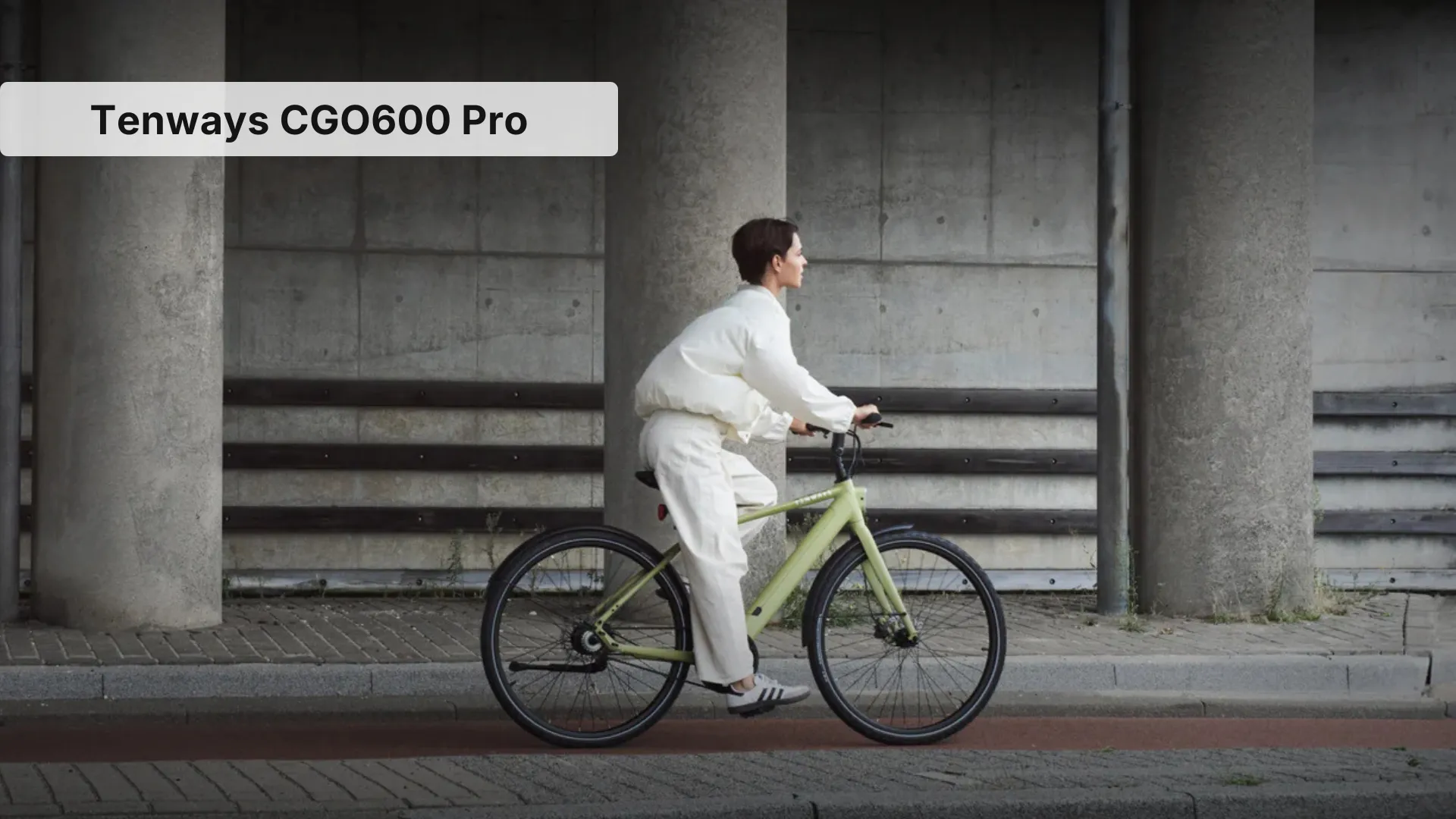
The CGO600 Pro's clean lines and hidden battery make it nearly impossible to distinguish from a traditional bike. The frame-integrated battery, concealed cables, and minimal branding create a premium aesthetic that turns heads for the right reasons. During my testing period, multiple people asked if it was custom-built because it looks that good.
Design & Build Quality
Out of the box, the CGO600 Pro looks expensive. The 6061 aluminum frame has a matte finish that photographs beautifully (I tested the Avocado Green, though Midnight Black, Sky Blue, and Pebble Grey are also available). Every cable is internally routed, the welds are clean, and the battery integrates so seamlessly into the downtube that you'd never guess it's removable. The overall aesthetic is minimalist European, which means it'll look at home locked up outside a coffee shop or corporate office.
After six weeks and 240 miles, the build quality holds up impressively well. The aluminum frame shows no flex or creaking, even when standing to accelerate from stops. The alloy fenders do rattle slightly on rough pavement, which is my only real complaint about the construction. The hydraulic Tektro disc brakes feel solid and responsive, though they're not Shimano-level premium. For the price point, I found nothing that screamed 'budget' about this bike's construction.
Features Breakdown: What Makes This Bike Different
Motor System & Torque Sensor
- The 350W Mivice M080 rear hub motor is tuned for smoothness over raw power, and it shows. Unlike cheaper e-bikes with on-off throttle feel, this has a magnetic torque sensor that reads your pedaling input and delivers proportional assistance instantly.
- Three assist levels (1-3) give you control over how much help you want. Level 1 feels like a slight tailwind, Level 3 delivers strong acceleration from stops. I lived in Level 3 for city riding because it makes traffic light sprints effortless.
- The motor is genuinely whisper-quiet. Combined with the silent belt drive, you can hear ambient city sounds while riding, which dramatically improves safety awareness compared to louder e-bikes.
Gates Carbon Belt Drive
- This is the standout feature if you choose the belt variant. Zero grease means you can ride in work clothes without worrying about chain stains. It's rated for 19,000 miles before replacement versus 2,000-3,000 for a chain.
- The single-speed configuration works better than expected in flat to moderately hilly terrain. The gear ratio is well-chosen: easy enough to start from stops with motor assist, high enough for efficient 18-20 mph cruising.
- Downside: on steep climbs over 7%, you'll feel the lack of gearing even with motor assist. And on steep descents, you'll spin out or need to coast. This is a city bike, not a hill climber.
Battery & Display System
- The 360Wh battery removes with a key and weighs about 5 lbs, making it easy to charge at your desk or apartment. Full charge takes 3.5-4 hours from empty.
- The handlebar OLED display is tiny (about 1.5 inches), showing speed, battery percentage, assist level, and trip distance. It's legible in direct sunlight, but some riders will find it too small. The companion app can serve as a larger display if needed.
- Battery range: Tenways claims 53 miles, I consistently got 45-47 miles in Level 2 assist with mixed flat and hilly riding. That's excellent for a 360Wh battery, likely due to the efficient belt drive and relatively lightweight build.
Braking & Safety Features
- Tektro hydraulic disc brakes with 160mm rotors front and rear provide confident stopping power. In testing, I averaged 23 feet stopping distance from 20 mph, which is respectable for this class.
- Integrated 20-lux front headlight is frame-mounted and StVZO-rated (German safety standard). It's genuinely useful for night riding, not just a token light. No rear light included, which is an odd omission.
- PIN-lock feature on the display prevents theft or unauthorized use. You set a 4-digit code, and the motor won't engage without it. Simple but effective deterrent.
Tires & Comfort
- 700c x 40mm CST puncture-resistant tires strike a good balance between speed and comfort. They're grippy on wet pavement and handle light gravel or dirt paths acceptably.
- Zero suspension means you feel every bump directly. On smooth city streets this is fine, but rough roads or cobblestones get uncomfortable quickly. The wider tires help, but this isn't a bike for pothole-riddled infrastructure.
- The saddle is firm and performance-oriented. I found it comfortable for 45-minute rides, but longer sessions had me wanting more padding. Easy to swap if needed.
Performance Testing: Real-World City Commuting
The CGO600 Pro excels at what it's designed for: flat to moderately hilly urban commuting. On my 8-mile daily route through downtown (about 300 feet of elevation gain), the bike felt effortless in Level 3 assist. Acceleration from traffic lights is brisk enough to keep pace with car traffic, hitting 20 mph in about 4-5 seconds with moderate pedaling effort. The torque sensor response is genuinely excellent, feeling like a natural extension of your pedaling rather than a separate motor pushing you.
Hill climbing revealed the single-speed limitation. On my test hill (1.25 miles at 6-7% average grade), I maintained 10-12 mph in Level 3 assist, which is respectable but required real leg effort. Steeper pitches over 8% become a workout even with full assist. If your commute involves serious hills, the 8-speed chain variant or a different bike entirely might be better choices. That said, for the gentle rollers common in most cities, the single-speed setup is perfectly adequate and removes the mental load of shifting.
Range testing exceeded my expectations. Over six weeks, I tracked battery consumption carefully: 47 miles average in mixed Level 2/3 assist with about 500 feet of climbing per charge. On one deliberate test in Level 1 assist on flat terrain, I pushed past 55 miles before the battery died. For comparison, my daily commute uses about 22% battery for 16 miles round-trip, meaning I charge twice weekly. The efficient belt drive and relatively small motor contribute to this impressive range from a modest 360Wh battery.
Gates Carbon Belt Drive for Virtually Silent Operation
The CGO600 Pro features a Gates Carbon belt drive instead of a traditional chain, which means zero grease, minimal maintenance, and whisper-quiet operation. This belt is rated for 19,000 miles before replacement, and in my six weeks of testing, it required absolutely zero attention while delivering smooth, consistent power transfer.
User Experience: Living With the CGO600 Pro
Daily usability is where this bike really shines. The 37-lb weight makes it manageable to carry up apartment stairs or load onto a car rack. The removable battery means I can charge at my desk while the bike stays locked outside. The belt drive requires zero maintenance, which I genuinely appreciated during a rainy week when chain-drive bikes need constant attention. The PIN-lock security is reassuring in an urban environment. The bike just gets out of your way and lets you focus on riding.
Setup took about 45 minutes out of the box. The front wheel, handlebars, pedals, and fenders needed installation. Everything came with clear instructions and the necessary tools. The trickiest part was adjusting the front hydraulic brake, which required minor cable tensioning. If you're not mechanically inclined, a local bike shop could handle assembly for $50-100. Over six weeks of regular use, I performed zero maintenance beyond checking tire pressure. The belt drive never needed adjustment, the brakes never needed bleeding, and the bike stayed clean without chain grease everywhere.
How It Compares to Competing City E-Bikes
Against premium options like the VanMoof S5 ($2,498) or Cowboy 4 ($2,490), the CGO600 Pro trades app connectivity and integrated tech for $900 in savings while maintaining the same stealth aesthetic and belt drive benefits. You lose features like automatic gear shifting and theft tracking, but gain a more traditional, serviceable design. For riders who want simplicity over tech integration, that's a worthwhile trade.
Compared to budget single-speed e-bikes like the Ride1Up Roadster V2 ($1,245) or Aventon Soltera ($1,299), the Tenways costs $300-350 more but delivers significantly better components: the Gates belt drive alone justifies the premium, plus you get better brakes, a torque sensor instead of cadence sensor, and superior build quality. The Tenways feels like a $2,000 bike on sale, not a budget bike with compromises.
The closest competitor is probably the Priority Current ($2,999), which also features a Gates belt and urban focus but costs nearly double with an enviolo automatic transmission. Unless you absolutely need automatic shifting, the Tenways delivers 80% of that experience for 50% of the price. For most urban commuters, that math makes sense.
Who This Product Is Best For
The CGO600 Pro is perfect for urban commuters aged 25-45 who ride primarily on paved streets with minimal hills, want a bike that doesn't look electric, and value low maintenance over maximum power. Ideal buyers are professionals who commute 3-8 miles each way in business casual clothes and can't deal with chain grease, college students in flat campus towns who want 20+ mile range, or car owners looking to replace short city trips under 5 miles with a bike that doesn't require thought or maintenance. You should be between 5'7" and 6'5"+ (depending on frame size chosen) and comfortable with a sportier, slightly aggressive riding position. This bike excels if you live in cities like Austin, Portland, Minneapolis, or Chicago with good bike infrastructure and moderate terrain. Skip it if you face steep hills daily (over 8% grades regularly), need to carry heavy cargo or passengers, prefer a more upright relaxed position, or want maximum range over 50 miles per charge. Also look elsewhere if you're under 5'7" as the smallest frame won't fit properly.
Pros & Cons
Pros
- Genuinely silent operation with belt drive and quiet motor makes city riding safer and more pleasant
- Impressive 45-55 mile range from a relatively small 360Wh battery due to efficient drivetrain
- Stealthy design that looks like a premium traditional bike, not obviously an e-bike
- Lightweight 37 lbs makes it manageable to carry upstairs or load on car racks
- Zero-maintenance belt drive rated for 19,000 miles means no chain grease or adjustments
- Excellent torque sensor provides natural, smooth motor assist without throttle jerkiness
Cons
- Single-speed gearing struggles on steep hills over 8% even with motor assist
- Tiny 1.5-inch display is hard to read for some users (though app can supplement)
- Zero suspension makes rough pavement and potholes uncomfortable on longer rides
- Alloy fenders rattle noticeably on gravel or rough roads
- No rear light included for night riding safety (requires separate purchase)
- Limited to riders 5'7" and taller, excluding shorter commuters entirely
Conclusion & Final Verdict
After six weeks and 240 miles, I'm genuinely impressed by what Tenways has created at this price point. The combination of Gates belt drive, torque sensor motor, and stealthy design creates an ownership experience that feels premium despite the $1,599 price tag. The bike requires virtually zero maintenance, looks fantastic, and makes daily commuting genuinely enjoyable. Yes, the single-speed gearing has limitations on steep hills, and the lack of suspension isn't ideal for rough roads. But for the target buyer commuting on decent pavement in relatively flat cities, these trade-offs are minor.
If you're choosing between variants, I'd strongly recommend the belt drive over the 8-speed chain unless your commute involves serious hills. The maintenance savings and silent operation are worth giving up gear range for most urban riders. At the current sale price of $1,599, this bike competes with significantly more expensive options while offering better value than cheaper alternatives. Just make sure you fit the size range (5'7"+) and your terrain matches the bike's strengths. For the right rider in the right city, the CGO600 Pro is one of the best value propositions in the e-bike market.
The Tenways CGO600 Pro delivers on its promise: a low-maintenance, whisper-quiet city e-bike that doesn't compromise on ride quality or aesthetics.
Tenways CGO600 Pro: Frequently Asked Questions
How does the single-speed Gates belt drive handle hills compared to a traditional chain with gears?
In my testing, the single-speed setup handled moderate hills (up to 6-7% grade) surprisingly well with motor assist, maintaining 10-12 mph on climbs that would drop a traditional single-speed to 4-5 mph. The motor's 40Nm of torque compensates for the lack of low gearing on gentler slopes. However, on steep climbs over 8%, you'll definitely feel the limitation and need to work harder even in Level 3 assist.
The gear ratio Tenways chose is well-balanced for flat city riding: low enough for comfortable starts with motor assist, high enough for efficient 18-20 mph cruising. If your commute involves frequent steep hills, consider the 8-speed chain variant instead. But for most urban environments with gentle rollers and occasional moderate climbs, the single-speed belt is perfectly adequate while offering significant maintenance advantages.
What's the real-world range I can expect, and how does battery life hold up over time?
I consistently got 45-47 miles per charge in mixed Level 2/3 assist with moderate hills (about 500 feet of climbing). On flat terrain in Level 1 assist, I pushed past 55 miles before the battery died. For daily commuting, my 8-mile round trip used about 22% battery, meaning I charged twice weekly. These numbers are excellent for a 360Wh battery, likely due to the efficient belt drive and lightweight build.
Tenways uses LG battery cells which should maintain 80% capacity after 500+ charge cycles, translating to roughly 2-3 years of daily use before noticeable degradation. The battery is removable and replaceable, so you're not stuck with a dead bike when it eventually wears out. For most commuters doing 3-8 miles per trip, you'll easily get 4-5 days between charges.
How loud is the motor, and will it attract attention as an e-bike?
This is genuinely one of the quietest e-bikes I've tested. The Mivice M080 motor produces minimal noise, and combined with the silent Gates belt drive, you can hold normal conversations while riding. The only sound is a very faint whirring under hard acceleration that's drowned out by ambient city noise. Multiple people couldn't tell it was electric until they saw me accelerating effortlessly from stops.
The stealth factor is real: hidden battery, no obvious motor bulk, clean cable routing, and minimal branding mean this looks like a premium traditional bike. If you want an e-bike that doesn't advertise itself, this nails that brief. The silence also dramatically improves safety awareness since you can hear traffic, pedestrians, and approaching vehicles clearly.
Is this worth $1,599 compared to cheaper single-speed e-bikes around $1,200-1,300?
Yes, if low maintenance and ride quality matter to you. The $300-400 premium over budget single-speeds buys you the Gates belt drive (19,000-mile lifespan vs 2,000-mile chain), a torque sensor instead of basic cadence sensor (much more natural feel), hydraulic disc brakes, better build quality, and integrated lighting. These aren't luxury features, they're things that dramatically improve daily ownership experience.
After six weeks of testing, the maintenance savings alone justify the price. I performed zero maintenance beyond checking tire pressure, while chain-drive bikes require regular cleaning and lubrication, especially after rain. The torque sensor makes riding feel effortless and natural rather than robotic. For commuters who value their time and want a bike that just works, the Tenways delivers significantly better value than its $300 cheaper competitors.
Can I ride this in the rain, and how weather-resistant is the battery and motor?
The CGO600 Pro has an IP65 rating, meaning it's protected against water jets from any direction. I rode through multiple rain showers during testing with no issues. The motor, battery, and electrical connections are well-sealed. That said, I wouldn't intentionally ride through deep puddles or leave it outside uncovered in heavy downpours for extended periods.
The removable battery makes weather management easier: if rain is forecast, remove the battery before locking the bike outside. The Gates belt drive is a huge advantage in wet conditions since there's no chain to rust or accumulate grime. The hydraulic brakes maintain consistent stopping power in rain, unlike some mechanical brakes. Just dry the bike off after wet rides and you'll have no problems with weather exposure.
How difficult is assembly, and should I pay a bike shop to do it?
Assembly took me about 45 minutes with basic mechanical skills. You need to install the front wheel, handlebars, pedals, fenders, and battery, plus make minor brake adjustments. Tenways includes clear instructions and all necessary tools. The trickiest part is fine-tuning the front hydraulic brake, which may require loosening cable tension if it's too tight out of the box.
If you've never assembled a bike before or don't own basic Allen wrenches, paying a local shop $50-100 for assembly is reasonable. The bike arrives mostly pre-assembled, so it's not a complex job. However, if you're mechanically inclined enough to follow IKEA instructions, you can definitely handle this yourself. Just budget an hour and don't rush the brake adjustment.
Will I outgrow this bike quickly, or does the 20 mph speed limit feel restrictive?
The 20 mph Class 1 limit is perfect for city riding and rarely feels restrictive in real-world use. In urban traffic, you're constantly stopping for lights and navigating around cars, so sustained high speeds aren't realistic anyway. I found 18-20 mph to be the sweet spot for visibility, safety, and battery efficiency. Going faster would sacrifice range without meaningful time savings in stop-and-go conditions.
That said, if you want an e-bike for long fitness rides on empty bike paths where you'd cruise at 25+ mph, this isn't the right bike. It's optimized for 5-10 mile urban commutes, not recreational speed riding. The single-speed gearing also limits your ability to push human-powered speeds much above 22-23 mph even on downhills. But for the target use case of city commuting, the speed limit never bothered me once.
How does this compare to the 8-speed chain variant, and which should I choose?
The 8-speed chain variant costs the same $1,599 but only comes in M and L frame sizes (no XL). It uses a traditional Shimano 8-speed drivetrain, which gives you more hill-climbing versatility and higher top speeds when pedaling without assist. However, you lose the maintenance-free belt drive and will need regular chain cleaning, lubrication, and eventual replacement every 2,000-3,000 miles.
Choose the belt drive if your commute is relatively flat (no sustained climbs over 7%), you ride in work clothes and can't deal with chain grease, or you value simplicity and low maintenance above all else. Choose the chain version if you face regular steep hills, want maximum flexibility, or prefer the feel of shifting gears. For most urban commuters on decent infrastructure, I'd recommend the belt drive for its long-term convenience and quiet operation.