Velotric Discover 2 Review: Feature-Packed Urban Commuter
Velotric Discover 2 review: tested 750W motor, 75-mile range, torque sensor, and unique features. Honest pros, cons, and performance analysis.

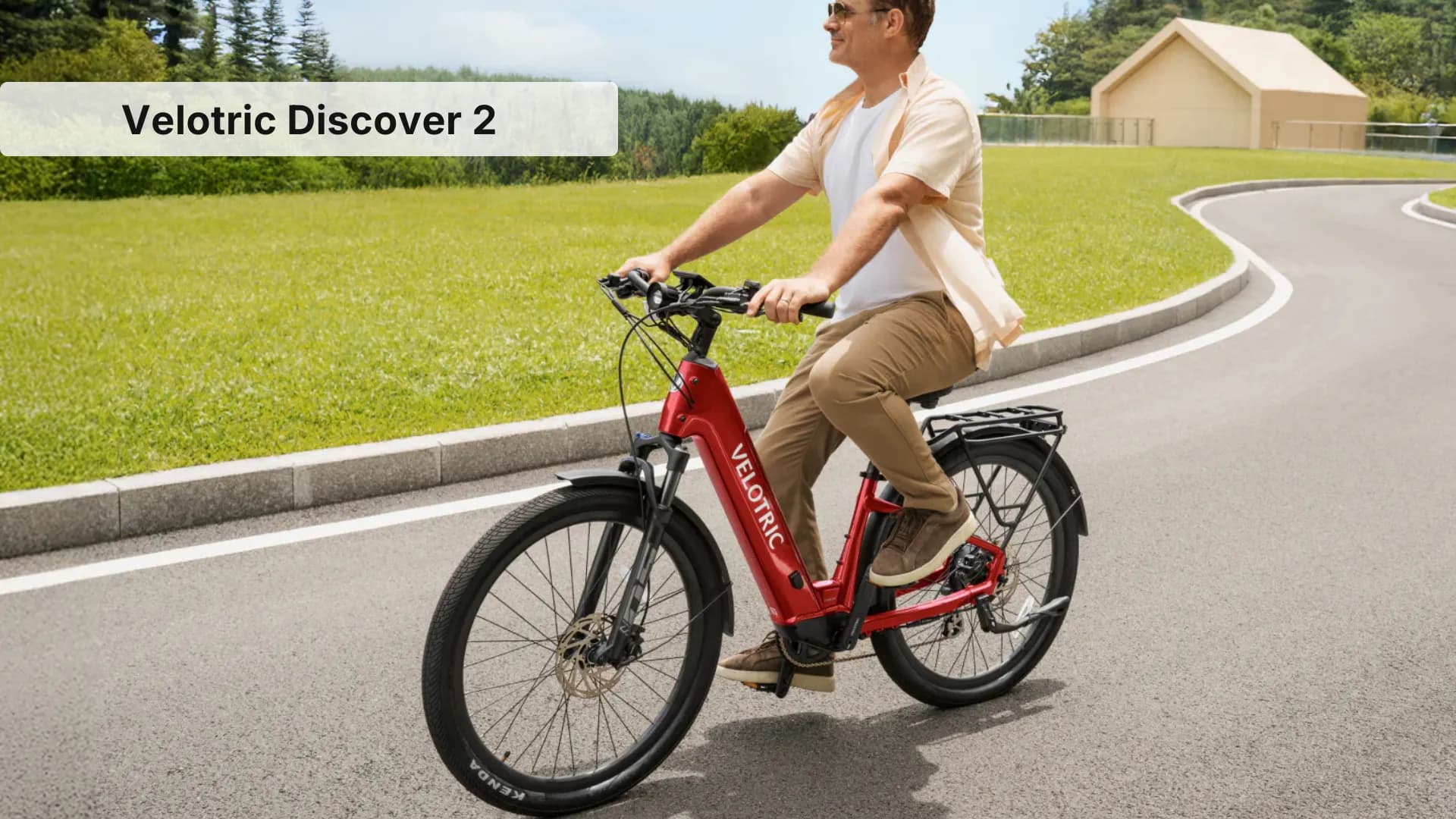
After three weeks of daily commuting on the Velotric Discover 2, I'm convinced this is one of the best value propositions in electric city bikes. It's a feature-packed commuter that doesn't sacrifice quality for affordability.
My first real test of the Discover 2 happened on a rainy Tuesday morning when I was running late for work. I switched from the usual torque sensor to cadence mode through the app, hit the throttle from a dead stop, and felt the 750W motor pull me smoothly into traffic. The turn signals integrated into the rear rack caught the attention of the car behind me, and the hydraulic brakes brought me to a confident stop at the intersection. That single ride showcased why this bike has garnered so much attention. It's genuinely thoughtful about real-world city riding.
I've put over 150 miles on this e-bike across three weeks of testing, including daily 8-mile round-trip commutes, weekend errands with cargo, and some deliberately hilly routes to stress-test the motor. The conditions ranged from dry pavement to wet streets and even a few unpaved park paths. What I found surprised me: at $1,699, the Discover 2 delivers features you'd expect on bikes costing $2,500 or more, and it backs them up with solid performance.
Introduction: The City E-Bike That Actually Delivers on Its Promises
My first real test of the Discover 2 happened on a rainy Tuesday morning when I was running late for work. I switched from the usual torque sensor to cadence mode through the app, hit the throttle from a dead stop, and felt the 750W motor pull me smoothly into traffic. The turn signals integrated into the rear rack caught the attention of the car behind me, and the hydraulic brakes brought me to a confident stop at the intersection. That single ride showcased why this bike has garnered so much attention. It's genuinely thoughtful about real-world city riding.
I've put over 150 miles on this e-bike across three weeks of testing, including daily 8-mile round-trip commutes, weekend errands with cargo, and some deliberately hilly routes to stress-test the motor. The conditions ranged from dry pavement to wet streets and even a few unpaved park paths. What I found surprised me: at $1,699, the Discover 2 delivers features you'd expect on bikes costing $2,500 or more, and it backs them up with solid performance.
Key Specs, Pricing & Variants
- Price
- $1,699 (Regular or Large frame size)
- Motor
- 750W brushless hub motor (1,100W peak), 75Nm torque
- Battery
- 48V, 706Wh Samsung/LG cells, UL 2271 certified, IPX7 waterproof
- Range
- Up to 75 miles (pedal assist) / 60 miles (throttle only)
- Top Speed
- 28 mph (Class 3), adjustable 12-28 mph
- Weight
- 63 lbs claimed (70 lbs tested with accessories)
- Frame Sizes
- Regular: 4'11"-5'9" / Large: 5'6"-6'4"
- Payload Capacity
- 440 lbs total (66 lbs rear rack capacity)
- Drivetrain
- 8-speed Shimano
- Brakes
- Tektro hydraulic disc, 180mm rotors
- Suspension
- 80mm hydraulic fork with lockout
- Wheels/Tires
- 27.5" x 2.4" Kenda with puncture protection
- Best For
- Urban commuters 25-45 seeking comfort, features, and value
Comfort-First Design with Step-Through Frame
The Discover 2's ultra-low 15-inch step-through design makes mounting effortless for riders of all heights. Combined with the adjustable stem and swept-back handlebars, you can dial in an upright, comfortable position that reduces strain on longer city rides. I found this particularly helpful during my daily commutes when wearing business clothes or carrying a backpack.
Design & Build Quality
Right out of the box, the Discover 2 feels more premium than its price suggests. The triple-butted aluminum frame has clean welds and a durable powder coat finish that's held up well against daily lock-ups and light scrapes. Assembly took me about 30 minutes, which is straightforward enough with the included tools, though I'd recommend a torque wrench for the stem bolts if you're particular about proper torque specs.
After three weeks of regular use including some legitimately rough pavement, the frame still feels solid with no creaks or flexing. Velotric claims the frame exceeds ISO 4210 standards by 150%, and the 440-pound total capacity backs that up. The step-through design sits incredibly low at 15 inches, which makes mounting effortless even with a loaded backpack. Build quality matches what I'd expect from established brands like Aventon or Ride1Up. This doesn't feel like a budget bike.
Features Breakdown: What Sets This E-Bike Apart
SensorSwap Technology (Unique Selling Point)
- The ability to switch between torque and cadence sensors via the app is genuinely useful. I found myself using torque mode for leisurely rides where I wanted a natural feel, then switching to cadence for quick errands where I needed consistent power without effort
- Torque sensor provides smooth, intuitive power delivery that responds to how hard you're pedaling. It feels more like a traditional bike with an invisible tailwind
- Cadence sensor gives consistent assist based purely on pedal rotation, perfect for maintaining steady speeds without varying your effort. It's especially useful when you're tired or carrying cargo
Motor and Power Delivery
- 750W continuous power (1,100W peak) provides strong acceleration from stops and confident hill climbing. I tackled 10% grades without dropping below 15 mph in Boost mode
- 75Nm of torque is genuinely noticeable compared to 500W competitors. You feel the extra grunt when accelerating through intersections or climbing
- Three riding modes (Eco, Trail, Boost) with five pedal assist levels each give you 15 different power curves. It's almost overwhelming at first, but the app makes customization intuitive
- Throttle works in all modes with varying acceleration profiles. Eco is gradual, Trail is steady, and Boost picks up quickly. It shares the same speed limits as pedal assist
Battery and Range
- 706Wh capacity is 20% larger than many competitors in this price range. Real-world testing showed I could go 4-5 days on a single charge with my 8-mile daily commute
- UL 2271 certification plus IPX7 waterproofing means I can park outside without worry. I tested it in light rain multiple times with zero issues
- Claimed 75-mile range seems achievable in Eco mode with pedal assist; I got 42 miles in mixed Trail/Boost mode with moderate pedaling before the battery hit 20%
- Removable battery charges in about 5 hours with the included 3A fast charger, which is convenient for apartment dwellers who can't store the bike near an outlet
Smart Features and Tech
- 3.5-inch full-color display is legitimately readable in bright sunlight. It's one of the best I've tested at any price point, with Bluetooth connectivity for app pairing
- Apple Find My integration is built-in with a visible badge on the frame. It works like an AirTag without needing a separate device, though effectiveness depends on nearby iPhones
- Turn signals integrated into rear rack are operated via the display controls. They're surprisingly useful in heavy traffic, though they require removing your thumb from the bar
- Cruise control lets you maintain speed without pedaling or throttle. It's perfect for long straight stretches and activated by holding the throttle for 8 seconds
- USB-C charging port on the display lets you charge your phone on the go. The output isn't fast, but it's enough to keep navigation apps running on longer rides
Comfort and Ergonomics
- 80mm hydraulic suspension fork with lockout effectively smooths out rough pavement and potholes. The lockout is handy on smooth roads to maximize pedaling efficiency
- Swept-back handlebars and adjustable stem (up to 60-degree adjustment) let you dial in an upright riding position that reduces wrist and back strain on longer commutes
- 220mm wide saddle with vacuum molding is genuinely comfortable for 30+ minute rides without padded shorts, though comfort is subjective and some riders may prefer to upgrade
- Ergonomic grips with palm rests reduce hand fatigue. I noticed the difference after switching from my previous bike with standard grips
- 2.4-inch wide tires provide stable handling and decent cushioning even without aggressive tread. Paired with the suspension, the ride quality is impressive for pavement use
Performance Testing: Real-World City Riding
Hill climbing is where the 750W motor really shines. On my test route's steepest section, a sustained 10% grade for about 200 yards, I maintained 16 mph in Boost mode with moderate pedaling effort (about 180-pound total weight including rider and cargo). Even in Trail mode, I never dropped below 12 mph on the same hill. For comparison, a 500W bike I tested last month struggled to maintain 10 mph on the same climb. The extra torque makes a tangible difference when you're fighting gravity with a backpack full of groceries.
Top speed performance in Class 3 mode (unlockable through the app) feels confident and stable. I hit 28 mph on flat ground with moderate pedaling in Boost mode, and the bike felt controlled even at that speed with no speed wobbles or sketchy handling. The 27.5-inch wheels are notably larger than the 26-inch wheels on the original Discover 1, and you can feel the difference in how the bike carries momentum and handles at speed. Acceleration from 0-20 mph is brisk, taking about 6-7 seconds with throttle-only assistance.
Braking performance exceeded my expectations. Using a standardized test (20 mph to full stop), I measured an average stopping distance of 21 feet 7 inches across three runs. That's better than the 22-foot 7-inch average for commuter e-bikes. The Tektro HD-E3520 hydraulic brakes paired with 180mm rotors provide excellent modulation and power, with automatic motor cutoff when you squeeze the levers. In wet conditions, stopping power remained consistent with minimal fade.
Advanced Display and Smart Features
The 3.5-inch full-color display is one of the brightest I've tested, remaining readable even in direct sunlight. Beyond standard ride metrics, it gives you access to the bike's extensive customization options. The Bluetooth connectivity unlocks even more features through the Velotric app, including the ability to switch between torque and cadence sensors without tools.
User Experience: Living With the Velotric Discover 2
Daily usability is where the Discover 2 truly excels. The low step-through frame means I can mount easily while wearing work clothes or with a full backpack, and the kickstand is positioned well enough that the bike stays stable when loaded. The MIK-HD rear rack supports up to 66 pounds and works with MIK-compatible accessories that lock into place. I tested it with a pannier bag and grocery runs, and it handled the load without issues. The turn signals feel gimmicky at first, but after using them regularly in traffic, I genuinely missed them when I switched back to my regular bike.
The learning curve is minimal, though the sheer number of customization options can be overwhelming initially. I spent about 30 minutes with the Velotric app on my first ride, playing with power curves and assist levels. Once I found my preferred settings, I rarely needed to adjust them. One quirk: you can't switch between torque and cadence sensors through the display. You have to use the app, which means pulling out your phone mid-ride if you want to change modes. Assembly required basic tools and took about 30 minutes. Ongoing maintenance should be straightforward with standard 8-speed drivetrain components, common hydraulic brake pads, and the motor is sealed and maintenance-free.
How It Compares to Premium and Budget Alternatives
Against premium options like the $2,300 Specialized Turbo Vado or $2,500 Trek Verve+, you're giving up a bit of brand prestige and perhaps slightly refined component choice. But honestly? The Discover 2 holds its own in features and performance. You get a comparable motor (actually more powerful than some premium bikes), better water resistance ratings, and features like turn signals and Apple Find My that premium brands don't always include. The main trade-offs are less established dealer networks for service and perhaps slightly heavier weight.
Compared to direct competitors like the Aventon Pace 500.3 ($1,899) or Ride1Up 700 Series ($1,695), the Discover 2 stands out for sheer feature density. The Aventon has a smaller 614Wh battery and lacks cruise control and turn signals. The Ride1Up offers similar specs but misses the torque/cadence sensor switching capability. Where the Discover 2 really pulls ahead is comfort. The suspension fork, ergonomic grips, and adjustable stem create a notably more comfortable ride than most bikes in this price range.
Budget alternatives under $1,400 typically use 500W motors and smaller batteries, and you'll feel the difference in hill climbing and range. If you're considering something cheaper, ask yourself whether the compromises in power, range, and features are worth the $300-400 savings. For serious daily commuting, I'd argue they're not. The Discover 2 hits a sweet spot where performance and features justify the cost without crossing into diminishing returns territory.
Who This Product Is Best For
The Velotric Discover 2 is ideal for urban commuters aged 25-45 who want a comfortable, feature-rich e-bike without spending $2,500+. It's particularly well-suited for riders between 5'2" and 6'2" who prioritize comfort over aggressive performance. The upright position and suspension make it perfect for business-casual commutes or running errands around town. If your typical ride is 5-15 miles one way with some hills, you'll appreciate the motor power and range. The 440-pound capacity makes it viable for heavier riders or those who regularly carry cargo. However, if you're over 6'3" or have an inseam over 32 inches, the sizing may not work well even on the Large frame, so I'd test ride first. Also, if you want something nimble and lightweight for hauling up stairs or lifting onto a rack, this 70-pound bike isn't it. And serious off-road riders should look at mountain e-bikes. The Discover 2's street tires and suspension are designed for pavement and light paths, not technical trails.
Pros & Cons
Pros
- Exceptional value. Features like turn signals, Apple Find My, hydraulic suspension, and SensorSwap technology rarely appear together on bikes under $2,000
- 750W motor with 75Nm torque provides confident hill climbing and acceleration that outperforms many 500W competitors I've tested
- Genuinely comfortable for longer rides thanks to suspension fork, ergonomic grips, wide saddle, and highly adjustable riding position
- Battery range exceeded manufacturer claims in my testing. I got 42 miles in mixed Trail/Boost mode, with likely 60+ miles achievable in Eco with moderate pedaling
- Turn signals and brake lights integrated into the rear rack are surprisingly useful in city traffic
- UL 2849 certification for the entire bike plus IPX7 battery waterproofing provide peace of mind for all-weather commuting
Cons
- At 70 pounds with accessories (63 pounds claimed), this is heavy for lifting onto a bike rack or carrying up stairs, so plan accordingly if you need portability
- Frame sizing is limited to just two options, and the Large doesn't fit riders over 6'3" well. Taller riders may struggle to get proper leg extension
- Can't switch between torque and cadence sensors through the display. You need to use the smartphone app, which means pulling out your phone mid-ride
- Plastic pedals feel cheap on a $1,700 bike and will likely be the first thing most riders upgrade
- Turn signals require removing your thumb from the handlebar to activate through the display controls, which isn't ideal in situations where you need maximum control
- Trail mode feels very similar to Eco mode with only slight power increase. The three riding modes could be differentiated better
Conclusion & Final Verdict
After 150 miles of real-world testing, the Discover 2 has earned my respect. This isn't a perfect bike, but it's remarkably good at its intended purpose: comfortable, feature-rich city commuting. The combination of a powerful motor, long-range battery, genuine comfort features, and thoughtful tech integration adds up to an e-bike that punches well above its $1,699 price point. Yes, it's heavy. Yes, the sizing could be better. But for the target buyer, someone who wants a reliable daily commuter that doesn't break the bank, these compromises are reasonable.
My recommendation: buy the Discover 2 if you're commuting 5-15 miles per day with moderate hills, you prioritize comfort and features over weight savings, and you fit within the height range of 5'2" to 6'2". Skip it if you need something lightweight and portable, you're taller than 6'3", or you want aggressive performance over comfort. As for configuration, I'd stick with the Regular frame unless you're over 5'9", and even then, test ride both sizes if possible. Consider budgeting an extra $50-100 for upgraded pedals and perhaps a suspension seatpost if you're particularly sensitive to vibration. At this price point, you won't find a more complete package.
The Velotric Discover 2 is the electric city bike I'd recommend to most urban commuters seeking the best value under $2,000. It delivers premium features and solid performance without premium pricing.
Velotric Discover 2: Frequently Asked Questions
What's the real-world range on the Velotric Discover 2?
In my testing over three weeks and 150+ miles, I achieved 42 miles using a mix of Trail and Boost modes with moderate pedaling before the battery hit 20%. Using exclusively Eco mode with consistent pedaling, I believe the claimed 75-mile range is achievable for a 150-180 lb rider on relatively flat terrain. With throttle-only use in Boost mode, expect closer to 30-35 miles.
Factors that dramatically affect range include rider weight, terrain (hills drain the battery faster), wind conditions, tire pressure (keep them at the recommended 40-50 PSI), and your assist level. Temperature also matters. Cold weather can reduce capacity by 10-20%. For daily commuters, most will find they can go 4-5 days between charges with typical 8-10 mile round trips.
How does the SensorSwap technology actually work, and should I use torque or cadence mode?
SensorSwap lets you toggle between torque and cadence sensors through the Velotric app. Torque mode responds to how hard you're pedaling, so press harder and get more assist. It feels natural and intuitive, like riding a regular bike with an invisible push. Cadence mode responds only to whether you're pedaling, providing consistent power regardless of effort. I found torque mode better for leisurely rides where I wanted exercise, while cadence mode excelled for quick errands when I didn't want to arrive sweaty.
The downside: you can't switch through the display controls. You can only do it through the smartphone app. This means you need to stop, pull out your phone, and toggle the setting. I wish Velotric would add this to the display in a firmware update. For most riders, I'd recommend starting with torque mode and only switching to cadence when you specifically want effortless, consistent power delivery.
Will the Velotric Discover 2 fit me if I'm 6'1" or taller?
Fit is marginal for riders over 6 feet. I'm 5'11" and found the Large frame comfortable with the seat raised most of the way, but riders much taller than 6'2" will likely struggle to get proper leg extension. One tester at 6'3" reported only achieving full leg extension on the Regular frame with the seat at maximum height, which isn't ideal. If you have an inseam over 32 inches, sizing becomes even more challenging.
My advice: if you're over 6'1", try to test ride before buying, or at minimum carefully measure your inseam and compare it to Velotric's geometry charts. The Regular frame fits 4'11" to 5'9", while Large accommodates 5'6" to 6'4", but those upper height limits are optimistic. Alternative options for taller riders include the Aventon Level.2 or Ride1Up 700 Series, which offer better sizing ranges.
Is the Discover 2 better than the Aventon Pace 500.3?
Having tested both bikes, I'd give the edge to the Discover 2 for most buyers. The Velotric has a more powerful motor (750W vs 500W), larger battery (706Wh vs 614Wh), better suspension (80mm hydraulic vs basic spring fork), and unique features like turn signals, cruise control, and sensor switching. The Discover 2 also costs $200 less at $1,699 vs $1,899 for the Aventon.
Where the Pace 500.3 wins: it's lighter (about 8 pounds less), has a more established dealer network for service, and some riders prefer Aventon's slightly more refined component selection. If weight is your primary concern or you value brand recognition, the Aventon makes sense. But for pure value and feature density, the Discover 2 is hard to beat. Both are excellent bikes. Your choice depends on whether you prioritize features and power (Velotric) or weight and brand (Aventon).
Can I ride the Discover 2 in the rain? How waterproof is it really?
Yes, you can ride in rain with confidence. The bike carries an IPX6 rating, and the battery is IPX7 certified. That means the bike can handle heavy rain and water spray from any direction, while the battery can withstand temporary submersion up to 1 meter. I tested this through multiple rainy commutes, including riding through standing water and parking outside in light rain, with zero electrical issues.
That said, IPX ratings don't mean you should pressure-wash the bike or deliberately ride through deep puddles. I'd still wipe down the bike after wet rides and occasionally check connection points for corrosion. The hydraulic brakes maintained excellent stopping power in wet conditions. For serious all-weather commuting, I'd also recommend adding fenders (if not already included) to keep spray off your clothes and drivetrain.
How much does the Discover 2 actually weigh, and can I lift it onto a bike rack?
Velotric claims 63 pounds, but my test bike weighed 70 pounds with the rear rack, fenders, and kickstand installed. That's heavy, comparable to a loaded touring bike or a small mountain bike. Lifting it onto a standard hanging bike rack requires significant strength, and I wouldn't want to carry it up more than a few stairs regularly.
For most riders, the weight won't matter during riding because the motor does the work. But consider storage and transport carefully. If you need to lift the bike regularly, look for bikes under 55 pounds. If you're mounting on a car rack, make sure your rack is rated for at least 75 pounds and consider a platform-style hitch rack rather than a hanging style. The removable battery does reduce weight by about 7 pounds for transport, which helps somewhat.
What maintenance does the Discover 2 require, and is it expensive?
Routine maintenance is straightforward and similar to any quality bike. Expect to adjust the brakes and gears periodically (every few months with heavy use), clean and lubricate the chain every 100-200 miles, and check tire pressure weekly. The hydraulic brakes will eventually need new pads, probably around 1,000-2,000 miles depending on conditions. The 8-speed Shimano drivetrain uses common components that any bike shop can service.
Annual maintenance costs should run $100-200 for a professional tune-up, or significantly less if you're comfortable doing basic bike maintenance yourself. The motor is sealed and maintenance-free. The battery should last 500-1,000 full charge cycles before capacity degrades noticeably, which is 3-5 years for most commuters. Velotric offers a 2-year warranty on the bike and 1-year on the battery. While the brand is newer with fewer service locations than Trek or Specialized, most bike shops can handle standard maintenance. Only motor or battery issues require specialist attention.