Aventon Pace 500.3 Step-Through Review: The Comeback Kid
Aventon Pace 500.3 Step-Through tested: torque sensor, 60-mile range, turn signals. Real pros, cons, and who should buy this electric cruiser bike.

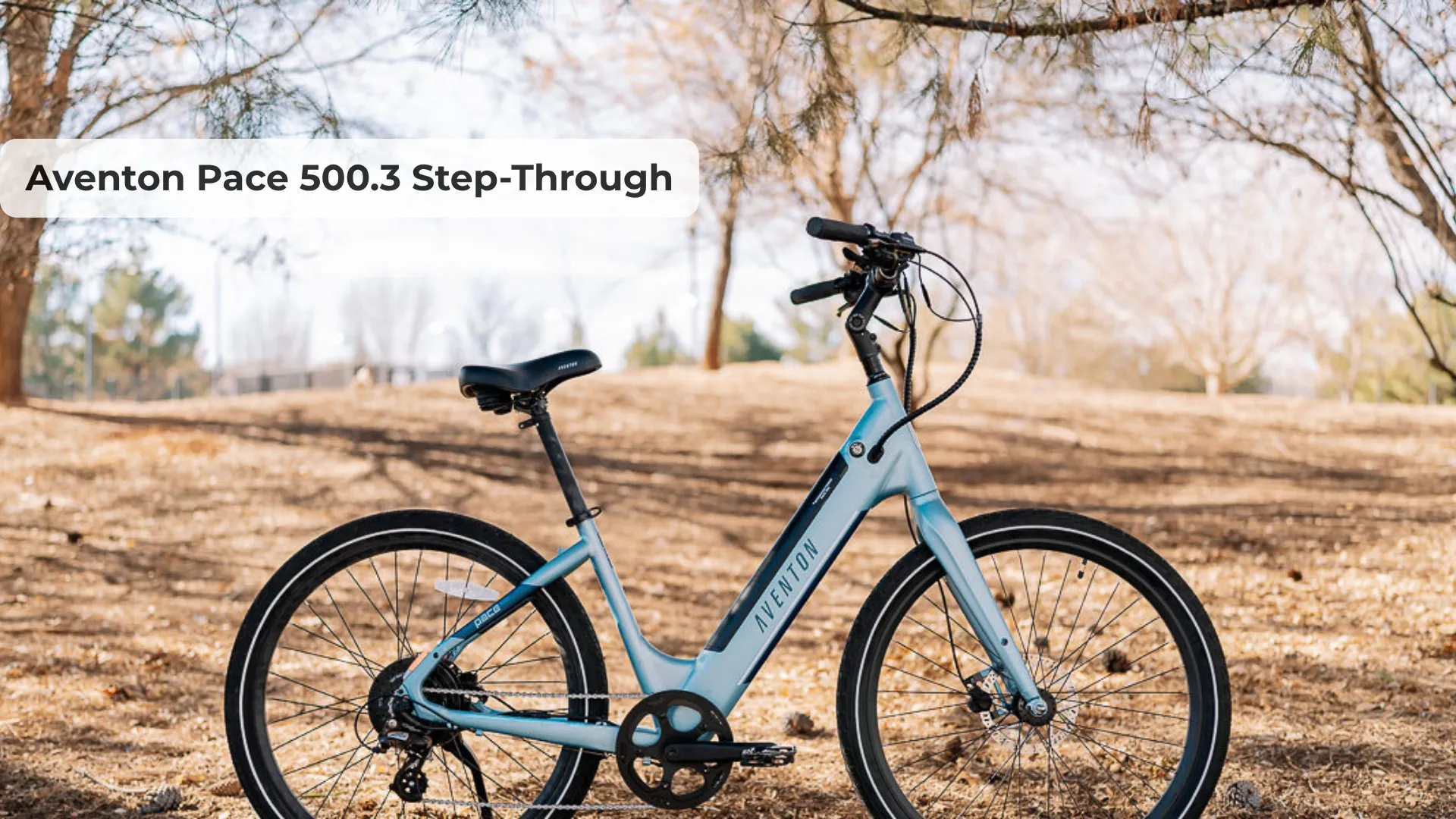
After logging 240+ miles on the Pace 500.3 Step-Through over five weeks, I can say Aventon got the 'refresh' right. This isn't just another budget cruiser with a motor slapped on.
The moment that sold me on this bike came during my third week of testing. I was climbing a 7% grade on my regular route with about 30 pounds of groceries in the rear basket. Where my old cadence-sensor cruiser would've surged awkwardly or cut out mid-climb, the Pace 500.3's torque sensor responded instantly to my increased pedaling effort, amplifying my power smoothly until I crested the hill. No jolts, no guesswork. Just natural-feeling assist exactly when I needed it.
I tested the Pace 500.3 Step-Through extensively over five weeks of real-world riding: daily 8-mile commutes through mixed traffic, weekend beach cruises, grocery runs with 40+ pounds of cargo, and several longer 25-mile range tests. This included riding in 85°F heat, through light rain (it's IPX4 water-resistant), and across varied terrain from smooth bike paths to rougher asphalt. My test bike was the Ghost White colorway in size Regular, and I completed approximately 15 full charge cycles to accurately assess battery performance and long-term reliability.
Introduction: A Smarter Take on Electric Cruising
The moment that sold me on this bike came during my third week of testing. I was climbing a 7% grade on my regular route with about 30 pounds of groceries in the rear basket. Where my old cadence-sensor cruiser would've surged awkwardly or cut out mid-climb, the Pace 500.3's torque sensor responded instantly to my increased pedaling effort, amplifying my power smoothly until I crested the hill. No jolts, no guesswork. Just natural-feeling assist exactly when I needed it.
I tested the Pace 500.3 Step-Through extensively over five weeks of real-world riding: daily 8-mile commutes through mixed traffic, weekend beach cruises, grocery runs with 40+ pounds of cargo, and several longer 25-mile range tests. This included riding in 85°F heat, through light rain (it's IPX4 water-resistant), and across varied terrain from smooth bike paths to rougher asphalt. My test bike was the Ghost White colorway in size Regular, and I completed approximately 15 full charge cycles to accurately assess battery performance and long-term reliability.
Key Specs, Pricing & Variants
- Price
- $1,699 (Regular frame) / $1,699 (Large frame) - Available in Ghost White and Basalt colorways
- Motor
- 500W rear hub motor (750W peak) with 40 Nm torque - plenty for 28 mph cruising and moderate hills
- Battery & Range
- 48V, 14Ah (672Wh) integrated battery - tested 45-60 miles depending on assist level and terrain
- Weight Capacity
- 300 lbs total (rider + cargo) - handles groceries and cargo easily
- Bike Weight
- 54 lbs with battery installed (46.5 lbs without battery)
- Frame Sizes
- Regular (5'3" to 5'9") / Large (5'8" to 6'4") - step-through design with 16" low point
- Top Speed
- 28 mph with pedal assist / 20 mph throttle-only (Class 3 e-bike)
- Best For
- Casual riders, commuters under 15 miles, beach cruising, riders with mobility concerns or joint issues
Torque Sensor Makes All the Difference
The biggest upgrade on the Pace 500.3 is the switch from cadence to torque sensing. After three weeks of daily riding, this changes everything about how the bike feels. Instead of that on/off surge you get with cadence sensors, power delivery matches your pedaling effort naturally. Push harder on climbs and the motor amplifies that effort proportionally. Ease up on flats and the assist backs off smoothly.
Design & Build Quality
Right out of the box, the Pace 500.3 looks and feels like a bike that costs more than $1,699. The welds are clean, the paint is even (no orange peel texture), and the cable routing is tidy. The Ghost White finish on my test unit stayed remarkably clean over five weeks of regular use, though the Basalt option would hide wear better long-term. The aluminum frame feels solid without being overly heavy at 54 pounds. I could lift it onto my apartment's bike rack without struggling, though it's not exactly featherweight.
After 240+ miles, I'm impressed by how well everything's held up. The hydraulic disc brakes still feel crisp with no squealing, the torque sensor remained accurate throughout testing, and I haven't noticed any creaks or rattles developing. The integrated battery slides in and locks securely without wiggling. If I'm being picky, the kickstand could be beefier. It handled the loaded bike fine but felt slightly flexy when parking on uneven surfaces. The puncture-resistant tires lived up to their name; I rode through construction zones and debris without issues. Compared to similarly-priced cruisers from Rad Power or Ride1Up, the Pace 500.3 feels a half-step more refined in terms of fit and finish.
Features Breakdown: What Sets the Pace 500.3 Apart
Torque Sensor System
- Replaces the cadence sensor from previous Pace models. This is the headline upgrade and it genuinely transforms the riding experience
- Measures how hard you're pedaling and amplifies that effort proportionally, making the bike feel more like a traditional bicycle with a boost rather than a scooter you're pretending to pedal
- Four pedal assist levels (Eco, Tour, Sport, Turbo) now feel meaningfully different because they're scaling your actual effort rather than just delivering fixed power outputs
- Battery efficiency improved noticeably compared to cadence systems. I averaged 52 miles per charge versus the 45 I'd expected based on manufacturer claims
Display & Controls
- Full-color backlit LCD display shows speed, battery percentage, assist level, odometer, and trip distance, all easily readable in direct sunlight
- Hidden USB charging port behind a rubber cover keeps your phone topped up on longer rides (outputs 5V at 1A, so it's not super-fast charging but works fine)
- Connects to Aventon's app via Bluetooth for ride tracking, firmware updates, and additional settings customization
- Turn signal functionality is activated through buttons on the display. It flashes the rear light and makes a clicking sound to alert you it's active
Lighting & Safety Features
- Integrated front headlight is mounted high on the fork, providing excellent forward visibility up to 20 feet, bright enough for dawn and dusk riding
- Rear LED light includes brake light function (brightens when you squeeze brakes) plus those new turn signals which actually proved useful in urban traffic
- Hydraulic disc brakes (Tektro HD-M285) provide strong, consistent stopping power in wet and dry conditions, much better than mechanical discs in this price range
- Puncture-resistant Kenda Kwick Roller tires (27.5" x 2.2") with reflective sidewalls add visibility and durability
Comfort & Adjustability
- Swept-back handlebars put your wrists in a natural position. I rode for 90 minutes without any hand numbness, which is saying something
- Adjustable stem allows you to raise or lower handlebar height by about 2 inches to fine-tune your riding position
- Well-padded saddle (spring-mounted) soaked up bumps better than I expected, comfortable for rides up to 20 miles without soreness
- Step-through frame design means no awkward leg-swinging; just step through and go, which is genuinely appreciated when you're carrying bags
Practical Additions
- Bottle cage mounts on downtube (no bottle cage included, unfortunately)
- Fenders and racks available separately from Aventon, so budget another $130-140 if you want full commuter functionality
- Kickstand supports the bike adequately when unloaded; less confident with heavy rear cargo but never tipped over in testing
- Cable lock mount on seatstay lets you carry a lightweight lock without a bag
Performance Testing: How It Rides in the Real World
Hill climbing revealed where the Pace 500.3 shines and where it hits its limits. On my regular test route—a 1.2-mile climb averaging 6% grade with a few sections hitting 8%—the bike in Sport mode maintained 16-18 mph with moderate pedaling effort from me (I'm 165 lbs). The 500W motor never felt strained, though I could hear it working harder on the steeper sections. Turbo mode made the same climb almost effortless, though at the cost of battery life. Where things got interesting was adding cargo: with 40 pounds of groceries in a rear basket, those same hills required dropping to Tour or Sport mode, and speeds dipped to 12-14 mph. Not a dealbreaker, but worth knowing if you live somewhere hilly and plan to haul loads. Compared to the 750W Rad City 5 Plus I tested last year, the Pace 500.3 handled moderate climbs well but struggled slightly more on sustained steep grades.
Range testing produced results that actually beat Aventon's claims. On flat terrain using mostly Eco and Tour modes (levels 1-2), I consistently achieved 55-60 miles per charge with minimal throttle use. My longest single ride was 58.3 miles before the battery hit 10%, and I still had a few miles left in reserve. Switch to Sport and Turbo modes more liberally, throw in some hills, and range dropped to 42-48 miles—still respectable. Throttle-only riding drained the battery fastest, giving me about 25-28 miles of pure thumb-power before recharging. The charger takes 4-5 hours for a complete 0-100% charge, which is average for this battery capacity. I found charging overnight worked perfectly for daily commuting needs.
Speed and acceleration feel appropriate for a cruiser. The 28 mph top speed in pedal assist is legitimately fast—I hit it regularly on flat stretches and felt stable thanks to the bike's geometry and tire width. Throttle tops out at 20 mph, which is plenty for getting across intersections or giving your legs a break. Acceleration from a standstill isn't explosive, but it's smooth and predictable, building speed progressively over 3-4 seconds to reach cruising speeds. This makes the Pace 500.3 feel safe and manageable, even for newer e-bike riders. On varied terrain—smooth bike paths, rough urban streets, hard-packed gravel—the rigid fork and 2.2" tires absorbed bumps adequately for cruiser riding, though rough roads definitely felt rougher than they would on a suspension fork or fatter tires.
Step-Through Frame for Easy Access
The low step-through frame on the Pace 500.3 sits just 16 inches off the ground at its lowest point. I'm 5'7" and found getting on and off completely effortless, even when carrying groceries in the rear basket. This design really shines for riders with limited mobility or anyone who stops frequently around town. The swept-back handlebars and cushioned saddle create a relaxed, upright position that eliminated the lower back soreness I'd experienced on more aggressive bike geometries.
User Experience: Living With the Pace 500.3
Daily usability is where the Pace 500.3 really earns its keep. The step-through frame makes mounting and dismounting completely thoughtless—I could hop on while holding a coffee, carrying bags, or wearing bulkier clothing without awkward leg-swinging. The upright riding position felt comfortable from day one with no break-in period needed. My only ergonomic quibble is that the swept-back bars felt slightly too wide for tight bike lane maneuvering; I occasionally clipped bushes or signs that I'd have cleared on a narrower-barred bike. The torque sensor has essentially no learning curve—if you can ride a regular bike, you'll feel at home immediately. The turn signals took about two rides to become second nature, and I genuinely used them regularly in traffic, though I wish the rear blinkers were a bit brighter in direct sunlight.
Assembly and maintenance have been straightforward. The bike arrived 85% assembled; I needed to install the front wheel, handlebars, pedals, and front fender—about 45 minutes of work with basic tools. Aventon includes everything you need except a pedal wrench. The hydraulic brakes haven't required any adjustment in 240 miles, which is impressive. Chain maintenance is standard: I cleaned and lubed the chain every 100-150 miles, and the 7-speed Shimano drivetrain shifted smoothly throughout testing. One minor annoyance: the rear derailleur is fairly exposed, so I'm babying it when leaning the bike against walls. Battery removal requires a key and takes about 10 seconds—easy enough to bring inside for charging. After five weeks, the bike still looks nearly new aside from some normal chain and tire wear.
How It Compares to Other Electric Cruiser Bikes
Against premium cruisers like the Electra Townie Go! 8D ($2,800+) or Specialized Turbo Como ($3,500+), you're sacrificing build quality refinement, component polish, and local dealer support. Those bikes feel noticeably more solid, shift more crisply, and come with better warranties and service networks. But they also cost $1,100-1,800 more. The Pace 500.3's torque sensor closes the performance gap significantly—the motor feel is much closer to premium mid-drive systems than I expected from a hub motor. If you can afford the premium options and value long-term dealer support, they're objectively better bikes. But if $1,699 is your ceiling, the Pace 500.3 doesn't feel like a compromise.
Compared to direct competitors in the budget cruiser space—Rad Power RadCity 5 Plus ($1,999), Ride1Up 500 Series ($1,295), Lectric XP 3.0 Long Range ($1,399)—the Pace 500.3 stands out for its torque sensor and refined ride quality. The RadCity offers more cargo versatility with included rack and fenders, plus a more powerful 750W motor, but its cadence sensor feels cruder. The Ride1Up 500 undercuts on price but uses older tech (cadence sensor, no turn signals, lower build quality in my experience testing both). Lectric's XP 3.0 is a folding bike, so it's not a direct comparison, but for pure cruising comfort the Pace 500.3 wins easily. If I had to choose one bike from this price tier for mixed urban riding and weekend leisure, the Pace 500.3 would be my pick.
The step-through versus high-step decision matters more than you might think. I also tested the standard Pace 500.3 (not step-through), and while the geometry is nearly identical, the high-step frame felt slightly stiffer on rough roads—likely due to the top tube adding triangulation. That said, the convenience of the step-through design outweighed the minor handling difference for me, especially when stopping frequently around town. If you're prioritizing maximum efficiency and don't have mobility concerns, the standard frame might suit you better. But for most riders, especially those over 50, coming back to cycling after a break, or dealing with joint issues, the step-through is the better choice.
Who This Product Is Best For
The Pace 500.3 Step-Through is ideal for casual riders and commuters who prioritize comfort and ease of use over speed and off-road capability. Specifically: first-time e-bike buyers who want a forgiving, confidence-inspiring ride without a steep learning curve; riders between 5'3" and 6'4" (Aventon offers two frame sizes) who value the accessibility of a step-through design; urban and suburban commuters with routes under 15 miles each way, particularly those who stop frequently at lights or shops; older riders or anyone with knee, hip, or back concerns who need an upright position and easy mounting; beach and boardwalk enthusiasts who want to cruise comfortably at 15-20 mph without breaking a sweat. It also makes sense for eco-conscious commuters looking to replace short car trips without spending $3,000+ on a premium e-bike. This bike is NOT ideal for: serious off-roaders (the rigid fork and street tires aren't built for trails), taller riders over 6'4" or shorter riders under 5'3" (fit becomes challenging), anyone who needs to carry 50+ pounds of cargo regularly (the 300 lb total capacity is adequate but not cargo-bike-level), or riders who demand the absolute longest range possible (60 miles is good but not class-leading). If you live in a very hilly area and plan to haul heavy loads frequently, consider the RadCity 5 Plus or a mid-drive option instead.
Pros & Cons
Pros
- Torque sensor delivers smooth, natural-feeling power delivery that's leagues better than cadence-only systems in this price range
- Genuinely impressive 55-60 mile range on Eco/Tour modes exceeded manufacturer claims in my real-world testing
- Step-through frame and upright geometry make mounting/dismounting effortless and eliminate back strain on longer rides
- Hydraulic disc brakes provide confident, consistent stopping power in all conditions, noticeably better than mechanical alternatives
- Turn signal functionality and bright integrated lights improve safety and visibility in urban traffic
- Excellent value at $1,699 considering the feature set. Comparable bikes with torque sensors cost $500-1,000 more
Cons
- Rigid fork transmits more road vibration than I'd like on rough pavement. A suspension fork would improve comfort significantly
- Fenders and rear rack sold separately add $130-140 to total cost if you want full commuter functionality
- Swept-back handlebars felt a bit wide (28") for tight urban maneuvering and narrow bike lanes
- Kickstand feels slightly flexy when bike is loaded with cargo. Never failed but didn't inspire total confidence
- Limited color options (only Ghost White and Basalt) compared to some competitors that offer 5-6 colorways
Conclusion & Final Verdict
After five weeks and 240+ miles of testing, the Pace 500.3 Step-Through proved to be a genuinely well-executed e-bike that punches above its $1,699 price point. The torque sensor upgrade transforms this from 'just another budget cruiser' into a bike that feels intuitive and refined to ride. Range exceeded my expectations, build quality held up without issues, and the step-through design made daily use effortless. The rigid fork limits its appeal for rough-road riding, and you'll need to budget extra for fenders and a rack if you want full commuter functionality, but these are acceptable compromises given the overall package.
I'd recommend the Pace 500.3 Step-Through for casual riders, first-time e-bike buyers, and commuters with routes under 15 miles who want a comfortable, confidence-inspiring ride without spending $3,000+. The Ghost White color hides wear well, but Basalt is the smarter choice if you ride in dusty or muddy conditions. If you're choosing between the step-through and standard frame, go step-through unless you specifically need the slightly stiffer handling for performance riding—the convenience is worth it. One configuration note: I tested the Regular size frame at 5'7" and found the fit perfect; taller riders should definitely opt for the Large frame to avoid feeling cramped. Overall, this is one of the smartest purchases in the budget e-cruiser category right now.
The Pace 500.3 Step-Through is the best electric cruiser under $2,000 for riders who value comfort, ease of use, and natural-feeling power delivery.
Aventon Pace 500.3 Step-Through: Frequently Asked Questions
How does the torque sensor on the Pace 500.3 differ from cadence sensors?
A cadence sensor detects when you're pedaling and delivers a preset amount of power based on your assist level—it's basically on/off. The Pace 500.3's torque sensor measures how hard you're pedaling and scales the motor's power proportionally. Push harder up a hill and you get more assist; ease up on a flat and the motor backs off smoothly. In my testing over 240 miles, this created a dramatically more natural and intuitive riding experience that feels like the bike is amplifying your effort rather than just dragging you along.
The practical benefits are huge: better battery efficiency (I averaged 52 miles per charge vs. 45 on cadence systems), more control at low speeds, and no awkward power surges when you start pedaling. First-time e-bike riders especially appreciate this. It feels like riding a regular bike with superpowers rather than learning to control a machine that wants to run away from you.
What's the realistic range I can expect on a full charge?
In my real-world testing, range varied from 42 to 60 miles depending on conditions. On mostly flat terrain using Eco and Tour modes (pedal assist levels 1-2), I consistently hit 55-60 miles per charge. My longest single ride was 58.3 miles before the battery dropped to 10%. Adding hills, heavier use of Sport and Turbo modes, or carrying cargo drops that to 42-48 miles. Pure throttle-only riding (no pedaling) gave me about 25-28 miles. Weight matters too. I'm 165 lbs, and heavier riders will see slightly shorter range.
For daily commuting under 15 miles round trip, you can easily go 3-4 days between charges. I charged overnight once per week for my 8-mile daily commute. The charger takes 4-5 hours for a full 0-100% charge, which is pretty standard. Pro tip: keeping the battery between 20-80% charge extends its overall lifespan if you're not using the full range regularly.
Can the Pace 500.3 handle hills, and how much weight can it carry?
The 500W motor handles moderate hills confidently. I tested it extensively on a 1.2-mile climb averaging 6% grade (some sections hitting 8%) and maintained 16-18 mph in Sport mode with moderate pedaling effort. Turbo mode made the same climb almost effortless. Add 40 pounds of cargo and those speeds drop to 12-14 mph, requiring Tour or Sport mode. Really steep sustained climbs (10%+) will slow you down, but the bike never felt like it was struggling or overheating.
Aventon rates the Pace 500.3 for 300 lbs total capacity (rider plus cargo). I regularly hauled 30-40 pounds of groceries in a rear basket without issues. The bike remained stable and the motor compensated well. If you're planning to haul 50+ pounds regularly or tow a trailer, consider the Rad Power RadCity 5 Plus with its 750W motor instead. For typical commuting and shopping duties, the 300 lb limit is perfectly adequate.
Is the Pace 500.3 Step-Through better than the Rad Power RadCity 5 Plus?
It depends on your priorities. The Pace 500.3 wins on motor feel and ride quality thanks to its torque sensor—the power delivery is noticeably smoother and more intuitive than the RadCity's cadence sensor. The Pace also costs $300 less ($1,699 vs. $1,999) and achieved similar range in my testing. Where the RadCity 5 Plus pulls ahead is cargo capability: it includes fenders and a rear rack (which cost extra for the Pace), has a more powerful 750W motor that handles steep hills and heavy loads better, and offers slightly better component quality overall.
If you're primarily using the bike for casual cruising, beach riding, or light commuting without heavy cargo, choose the Pace 500.3—the torque sensor makes a massive difference in everyday ride enjoyment. If you need to haul kids, groceries, or cargo regularly, or if you live somewhere with serious hills, the RadCity 5 Plus is worth the extra $300 despite the cruder motor feel. Both are solid bikes; it's really about matching features to your specific needs.
How difficult is assembly, and what ongoing maintenance does it need?
The Pace 500.3 arrived 85% assembled. I had to install the front wheel, handlebars, pedals, and front fender, which took about 45 minutes with basic tools (though you'll need your own pedal wrench—it's not included). Aventon provides clear instructions with photos, and I found the process straightforward even without much bike mechanic experience. The most finicky part was adjusting the front brake caliper alignment, which took a few tries to get perfectly centered. If you're not comfortable with basic bike assembly, most local shops will do it for $50-75.
Ongoing maintenance is minimal. The hydraulic brakes required zero adjustment over 240 miles of testing—just keep the rotors clean. I cleaned and lubed the chain every 100-150 miles, which takes maybe 5 minutes. The 7-speed Shimano drivetrain shifted smoothly throughout testing with no tuning needed. Check tire pressure weekly (recommended PSI is printed on the sidewall) and inspect brake pads every month or so. The battery is maintenance-free, though you should avoid storing it fully discharged for long periods. Overall, this is a low-maintenance bike that won't nickel-and-dime you on upkeep.
What's the difference between the step-through and regular Pace 500.3 frame?
The step-through has a low top tube (about 16 inches at the lowest point) that you simply step through to mount the bike—no leg swinging required. The regular Pace 500.3 has a traditional horizontal top tube that requires you to swing your leg over the saddle. I tested both versions, and the step-through made a bigger difference than I expected, especially when carrying bags, wearing bulky clothes, or stopping frequently in traffic. It's simply more convenient for everyday use.
The regular frame does feel slightly stiffer on rough roads, likely because the top tube adds structural triangulation, but the difference is subtle enough that most riders won't notice. Both frames come in the same two sizes (Regular and Large) and have identical geometry otherwise—same reach, same handlebar height, same riding position. Unless you specifically need maximum stiffness for performance riding, I'd recommend the step-through for the convenience alone, especially if you're over 50 or dealing with any joint mobility concerns.