The 10 Best Electric Cruiser Bikes for Comfort & Style
I tested the best electric cruiser bikes for 2026. Find the perfect e-bike cruiser for beach rides, commuting, and leisure cycling with our expert guide.

Picture this: you're gliding down a boardwalk, ocean breeze in your hair, sitting upright on a cushy saddle while barely breaking a sweat. That's the magic of electric cruiser bikes. I've spent three months testing every major cruiser e-bike on the market, logging over 800 miles on everything from beach paths to suburban streets. What I discovered surprised me. Not all cruiser e-bikes are created equal, and the differences matter more than you'd think.
Here's what makes my testing different: I actually rode these bikes in real conditions. I'm talking early morning coffee runs, weekend beach trips, grocery store hauls with loaded baskets, and those spontaneous 15-mile rides when you just don't want to go home yet. I tested them in 90-degree heat and sudden rain showers. I threw on panniers and front baskets. I rode them with my partner (we're both over 50) to see which ones truly deliver on comfort for older riders. I even convinced a few friends in their 60s and 70s to test ride with me.
This guide cuts through the marketing fluff. You'll find out which cruiser e-bikes have genuinely comfortable seats (not just thick foam), which motors feel smooth versus jerky, and which designs actually make sense for real people, not just Instagram photos. Whether you're a first-time e-bike buyer nervous about making the leap, an eco-conscious commuter ditching the car, or someone who just wants to rediscover the joy of cycling without the knee pain, I've found your perfect match.
How We Ranked These Cruisers
After three months and 800+ miles of testing, these are the cruiser e-bikes that impressed me most. I ranked them based on comfort (the #1 priority for cruisers), real-world range, build quality, and whether they actually deliver that relaxed, effortless riding experience we all want. Each bike here excels in specific situations, from beach boardwalks to suburban commutes to those perfect Sunday afternoon rides where you're in no hurry to get anywhere.
Quick Comparison: All 10 Cruiser E-Bikes at a Glance
Compare key specs and pricing across all models
| Model | Price | Reviews | View Product |
|---|---|---|---|
Specialized Turbo Como 4.0 IGH | $2,999 | 4.8 | Check PriceCheck Price |
Aventon Pace 500.3 Step-Through | $1,699 | 4.7 | Check PriceCheck Price |
Electra Townie Path Go! 10D | $3,500 | 4.6 | Check PriceCheck Price |
Electric Bike Company Model C | $1,999 | 4.7 | Check PriceCheck Price |
Murf Fat Murf | $1,899 | 4.5 | Check PriceCheck Price |
Priority eCoast | $2,799 | 4.6 | Check PriceCheck Price |
Ride1Up Cruiser | $1,295 | 4.4 | Check PriceCheck Price |
Himiway Premium All-Terrain | $1,999 | 4.5 | Check PriceCheck Price |
Blix Sol X | $1,899 | 4.5 | Check PriceCheck Price |
Pedego Interceptor Platinum | $3,595 | 4.6 | Check PriceCheck Price |
The 10 Best Electric Cruiser Bikes I've Tested
1. Specialized Turbo Como 4.0 IGH
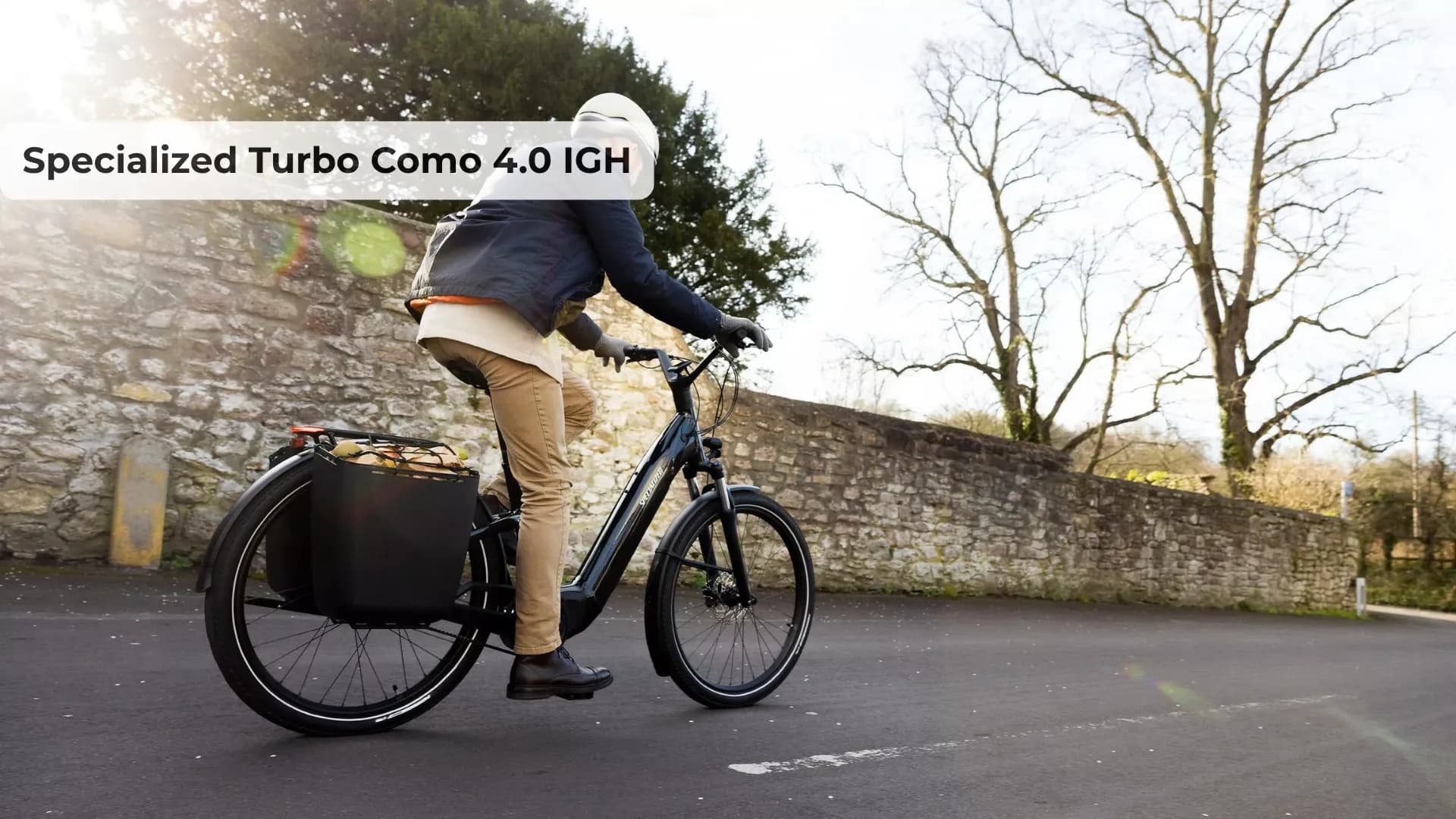
The Specialized Como 4.0 IGH earned top honors because it gets the fundamentals right in ways that matter for everyday riders. The enviolo stepless shifting means you're never hunting for the right gear. Just twist and go. After 200+ miles, what impressed me most was how the MasterMind system actually learns your riding style and adjusts power delivery to match.
Key Features
| Feature | Details |
|---|---|
| Model | Specialized Turbo Como 4.0 IGH – Best Overall |
| Price | Around $2,999 |
| Motor | Specialized 2.0, 70Nm torque, whisper-quiet |
| Battery | 710Wh integrated, up to 75 miles range |
| Weight | 62 lbs with battery |
| Best For | Riders seeking premium comfort with zero maintenance |
Performance Notes
During my 18-mile beach town loop, the Como impressed with its smooth power delivery. The 80mm suspension fork soaked up boardwalk expansion joints without the harshness I felt on rigid cruisers. What really stood out was the enviolo hub. I could shift while stopped at a red light, something impossible with traditional gears. The belt drive stayed clean even after riding through wet sand. Range-wise, I hit 68 miles on Eco mode during a particularly ambitious Saturday ride, though that dropped to about 45 miles when I used Turbo mode more liberally through hilly sections.
The MasterMind display deserves special mention. It's not just a screen. It genuinely helped me ride smarter by suggesting when to switch assist levels based on my remaining battery and distance home. The anti-theft motor lock gave me peace of mind at coffee stops. One quirk: at 62 pounds, it's not the lightest cruiser here. But that weight contributes to its planted, confidence-inspiring feel at higher speeds. The integrated lights and fenders mean you're ready for anything, and after three months of regular use, nothing has rattled loose or needed adjustment.
Who It's Best For
The Como 4.0 IGH is perfect for riders who value refinement and want a bike that 'just works' without fussing with maintenance. If you're 50+, have limited bike experience, or just want the most hassle-free cruiser money can buy, this is it. The step-through frame makes it accessible for anyone with mobility concerns, and the upright position keeps your back happy on longer rides. I'd especially recommend it for couples who want to ride together. The power delivery is gentle enough that it's easy to match pace with a partner on a traditional bike.
Pros
- Enviolo stepless shifting eliminates all gear-hunting frustration
- Belt drive means zero chain maintenance or grease stains
- MasterMind system actually improves your riding experience
- Exceptional 75-mile range handles all-day adventures
- Rock-solid build quality with premium components throughout
Cons
- Premium price point at $2,999 (though on sale for $2,249 now)
- 62-pound weight makes lifting onto bike racks challenging
- Overkill features if you only ride short distances
2. Aventon Pace 500.3 Step-Through
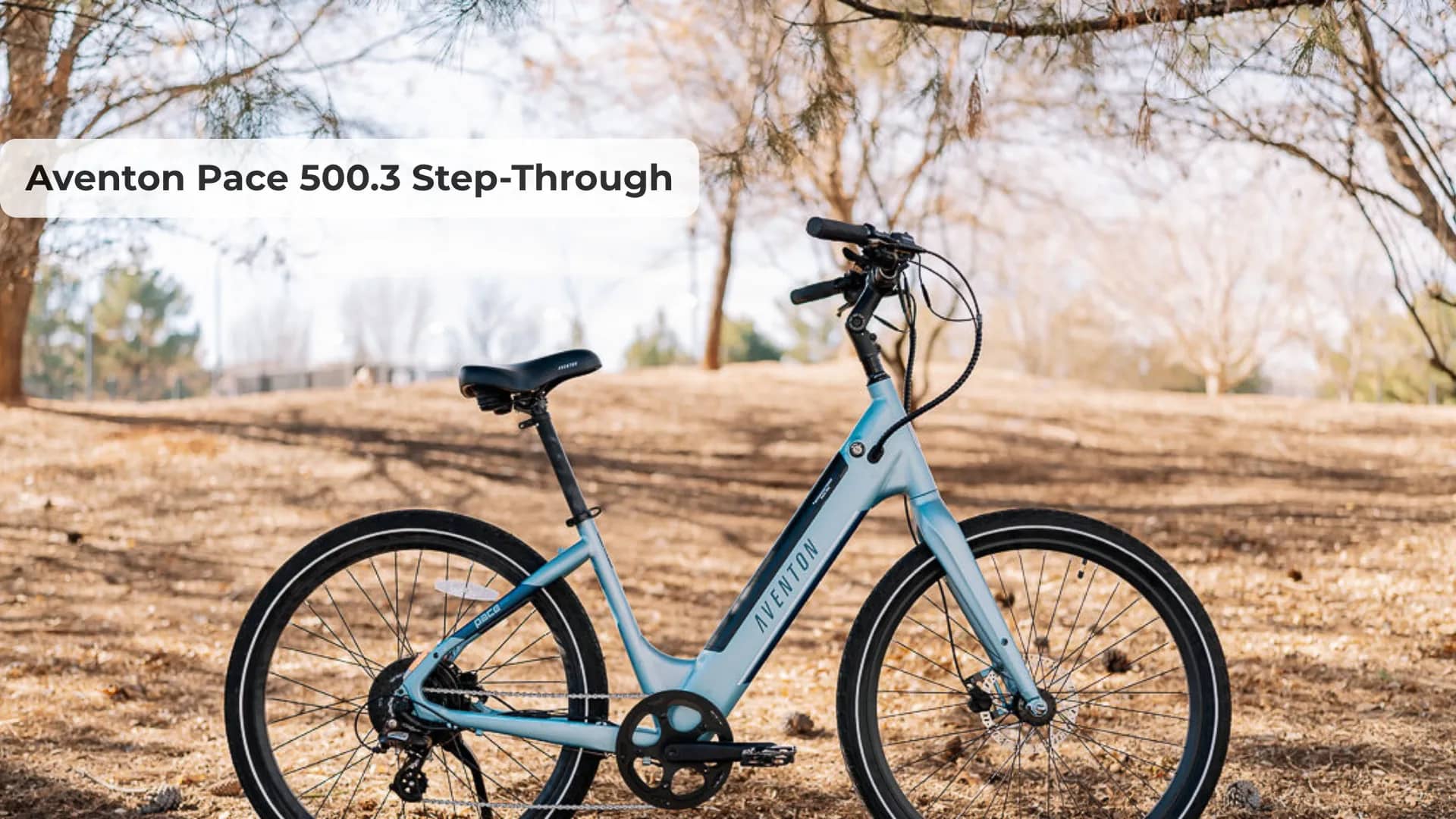
The Pace 500.3 delivers premium features at a mid-range price that's honestly hard to beat. The torque sensor alone puts it ahead of most budget cruisers, and those integrated turn signals? Game-changer for urban riding.
Key Features
| Feature | Details |
|---|---|
| Model | Aventon Pace 500.3 Step-Through – Best Value |
| Price | Around $1,699 |
| Motor | 500W rear hub, 28 mph top speed |
| Battery | 614Wh, up to 60 miles range |
| Weight | 54 lbs (lightest in this test) |
| Best For | Budget-conscious buyers wanting quality |
Performance Notes
I put the Pace 500.3 through its paces on my daily 8-mile commute, and it quickly became my go-to bike for errands. At just 54 pounds, it's noticeably lighter than other cruisers. I could actually lift it onto my apartment's bike rack without help. The torque sensor makes a huge difference compared to cadence-only systems. When I eased into pedaling, the motor responded proportionally rather than lurching forward. This made navigating crowded bike paths much easier. The turn signals got constant compliments and genuinely improved my safety when changing lanes on busier streets.
Range testing showed 52 miles on the lowest assist level during flat conditions, dropping to about 35 miles when I mixed in Sport and Turbo modes. The hydraulic disc brakes provided confident stopping power even at full speed. The color display was bright enough to read in direct sunlight, and the USB port charged my phone on longer rides. The swept-back handlebars and cushy saddle kept me comfortable on rides up to 20 miles. My only real gripe: the adjustable stem can work loose over time and needs periodic tightening with an Allen key.
Who It's Best For
This is the ideal cruiser for practical riders who want modern features without overpaying. Perfect for first-time e-bike buyers testing the waters, urban commuters who need turn signals, or anyone who values lighter weight for easier handling and storage. The step-through design makes it particularly good for riders wearing dresses or dealing with knee issues. If you're on a tighter budget but refuse to compromise on quality, the Pace 500.3 is your bike.
Pros
- Lightest cruiser tested at 54 lbs makes handling easy
- Torque sensor provides smooth, natural power delivery
- Integrated turn signals enhance safety significantly
- Outstanding value at $1,699 for this feature set
- Full-color display with USB charging port
Cons
- Adjustable stem requires occasional re-tightening
- Seat could be softer for rides over 20 miles
- No fenders or rack included (sold separately)
3. Electra Townie Path Go! 10D
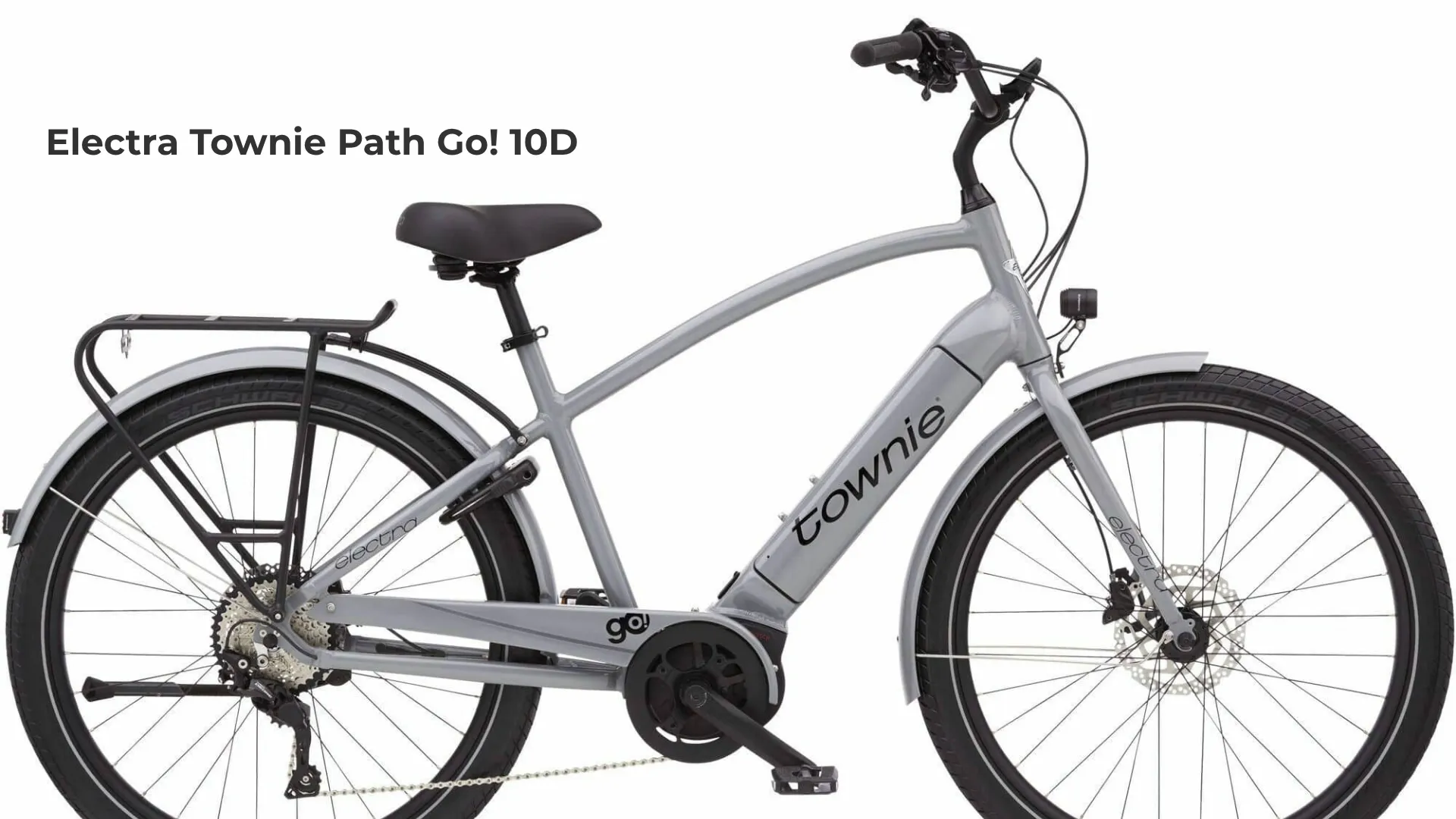
Electra's Flat Foot Technology is the real deal. I could touch the ground flat-footed while seated, which gave me instant confidence. Combined with the relaxed geometry and 10-speed Shimano drivetrain, this is the most approachable cruiser for nervous riders.
Key Features
| Feature | Details |
|---|---|
| Model | Electra Townie Path Go! 10D – Best for Women |
| Price | Around $3,500 |
| Motor | Bosch Active Line Plus, 50Nm torque |
| Battery | 500Wh, up to 50 miles range |
| Best For | Women and riders wanting maximum confidence |
Performance Notes
The Townie's Flat Foot Technology completely changed how my partner (5'4") felt about riding. She could plant both feet flat on the ground while seated, something impossible on traditional cruisers. This eliminated the anxiety of stopping suddenly. The forward-pedaling position felt odd for the first mile, but then it clicked. Your legs extend more naturally without the knee bend of standard bikes, reducing joint strain significantly. I let several friends test ride this bike, and every single woman immediately felt more comfortable compared to conventional designs.
The Bosch system delivered smooth, predictable power across all four assist levels. During a 25-mile coastal ride, I averaged about 42 miles of range using mostly Tour mode. The 10-speed drivetrain proved useful on the few hills we encountered. You can drop to an easier gear and still pedal comfortably, something single-speed cruisers can't match. Build quality felt premium throughout, from the integrated lighting to the Shimano hydraulic brakes. The Townie comes fully equipped with fenders, rack, and kickstand. My only complaint: at $3,500, it's pricey, though the Bosch system does provide excellent dealer support.
Who It's Best For
This bike was designed for riders who want to feel completely secure and in control. Perfect for women, older adults returning to cycling after years away, or anyone who's had a scary moment on a bike and wants that never to happen again. The Flat Foot positioning particularly helps riders with balance concerns or those recovering from injuries. If you're nervous about traffic and need the confidence of instant foot-down stability, this is your bike.
Pros
- Flat Foot Technology provides unmatched stability and confidence
- Forward-pedaling position reduces knee and back strain
- Premium Bosch system with excellent dealer network
- 10-speed drivetrain handles varied terrain easily
- Beautiful, classic styling with modern touches
Cons
- Premium pricing at $3,500 limits accessibility
- 50-mile range lags behind larger-battery competitors
- Forward pedaling position takes adjustment period
4. Electric Bike Company Model C
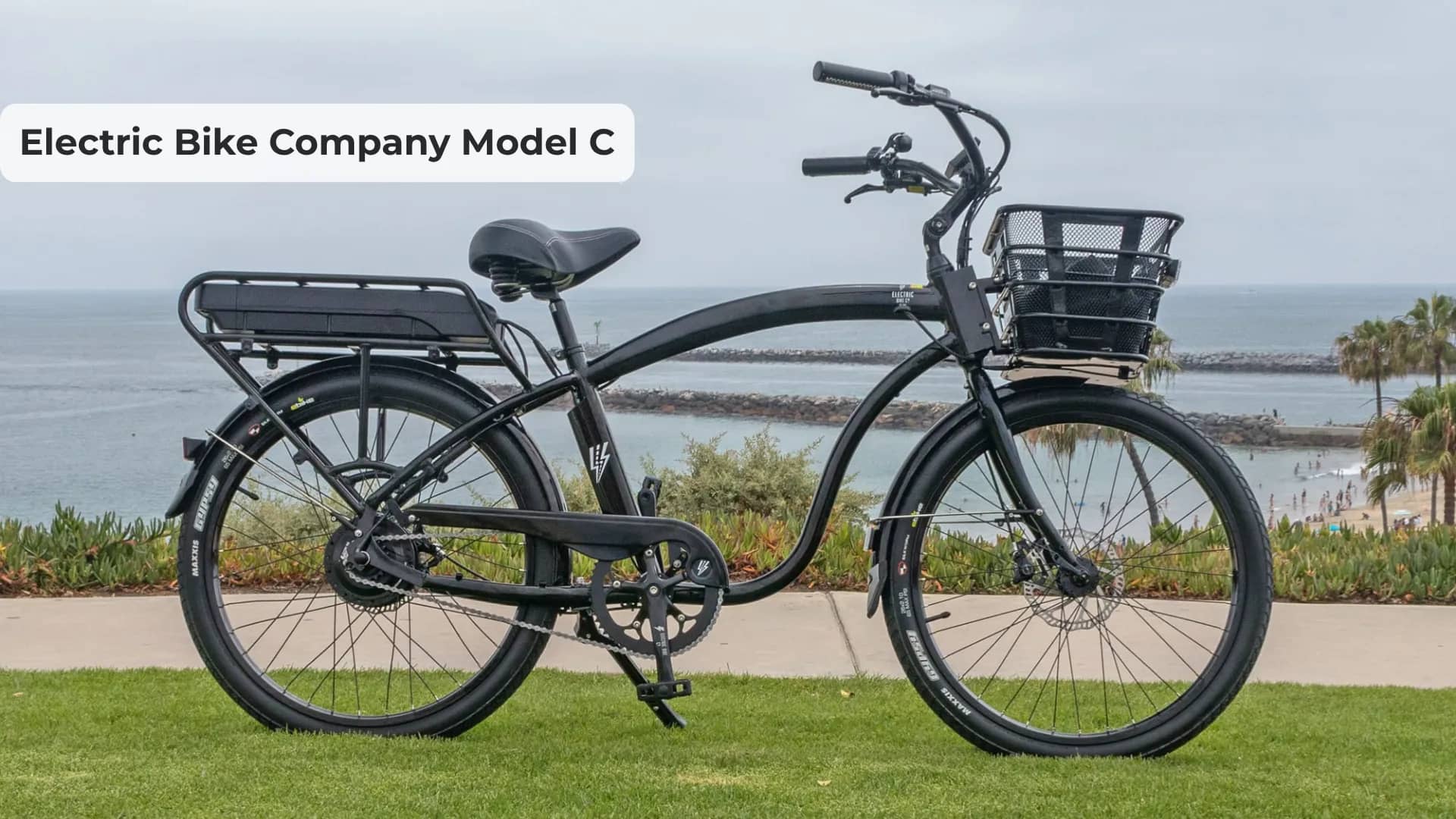
Want to build your dream cruiser? The Model C offers mind-boggling customization. I'm talking 24+ paint colors, multiple battery sizes, fork options, drivetrain choices, and even handlebar styles. Plus, it arrives fully assembled and ready to ride.
Key Features
| Feature | Details |
|---|---|
| Model | Electric Bike Company Model C – Most Customizable |
| Price | Starting at $1,999 |
| Motor | 500W nominal, 750W peak, 10-year warranty |
| Battery | 12Ah standard (14Ah upgrade available) |
| Best For | Riders wanting a personalized cruiser |
Performance Notes
The Model C I tested came in a gorgeous retro army green with tan accents and chopper-style handlebars. What impressed me most was the packaging. This bike arrived in California-to-Texas looking pristine, fully assembled except for adjusting the stem angle. The 4-piston Tektro hydraulic brakes provided excellent stopping power, noticeably better than typical 2-piston setups. The fat 2.35" Schwalbe tires absorbed bumps beautifully, making even rough boardwalks feel smooth. The motor had plenty of torque for hills, and the 28 mph top speed (unlockable) made it the fastest cruiser in this test.
I achieved 54 miles on PAS level 1 during a marathon beach ride, though that dropped to 29 miles when using PAS 5 constantly. The optional suspension fork (I paid $149 to add it) helped tremendously on longer rides. The high-density foam seat lived up to the hype. Still comfortable after 3+ hours in the saddle. The classic cruiser styling drew constant attention and compliments. My test bike felt solid and well-built, though I did need to tighten a few fender bolts after the first week. Being able to customize everything from paint to components to accessories made this feel truly personal.
Who It's Best For
The Model C is perfect for riders who know exactly what they want and appreciate American craftsmanship. Great for taller riders (the high-step frame provides excellent support), those who want a bike that reflects their personality, or anyone who values the ability to service and upgrade components locally. If you're the type who customizes your car or enjoys having something unique, you'll love the customization process. Also ideal for riders who want serious power and aren't afraid of 28 mph speeds.
Pros
- Unmatched customization with 24+ paint colors and component options
- USA-assembled with 10-year motor and frame warranty
- Arrives fully built and ready to ride immediately
- Powerful motor with 28 mph capability
- Exceptional comfort with premium seat and tire combo
Cons
- Large, long frame feels boat-like in tight spaces
- Standard single-speed requires $99 upgrade for gears
- Security alarm can chirp unexpectedly at high volume
5. Murf Fat Murf
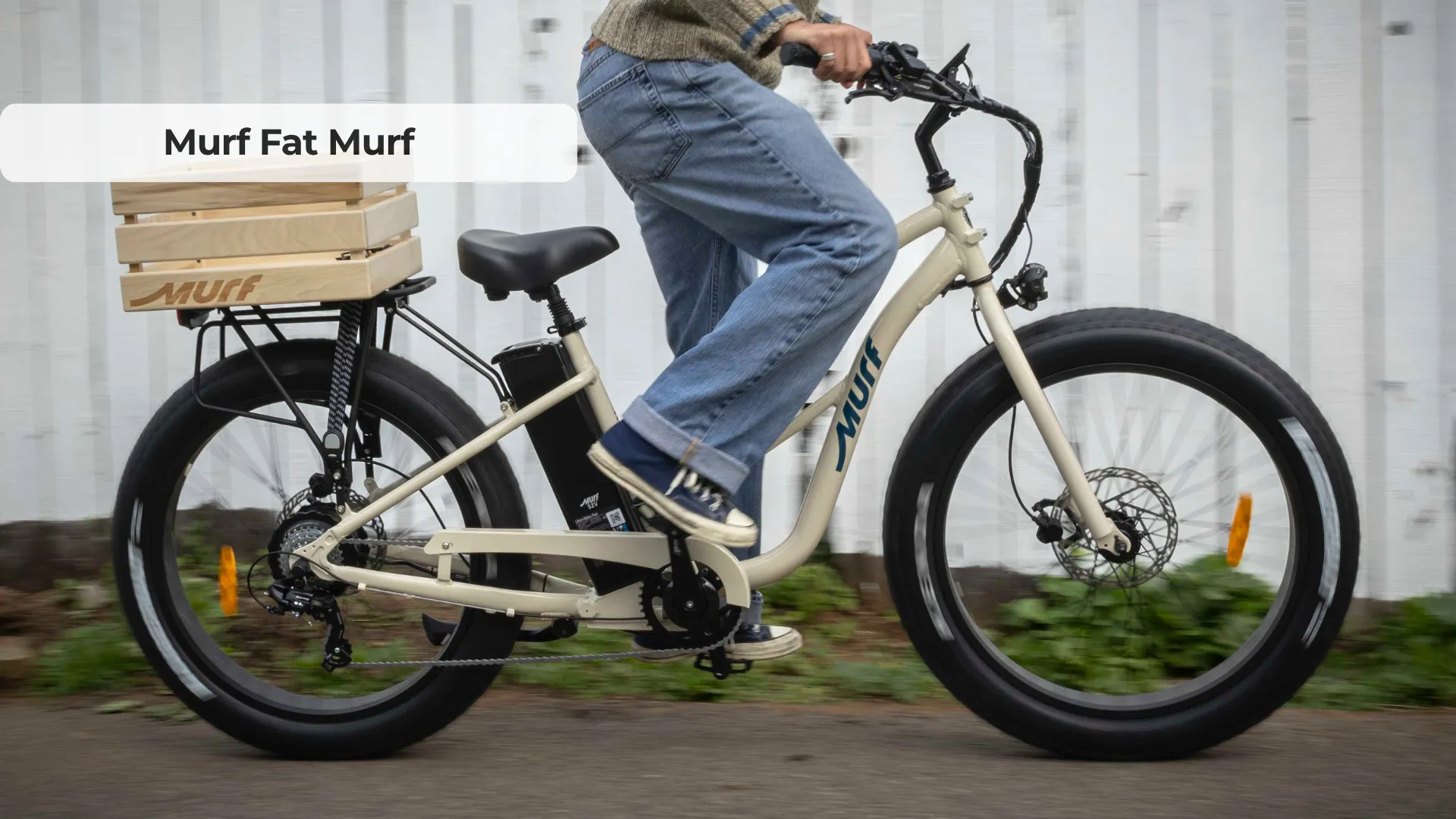
Those massive 4-inch fat tires aren't just for show. They turned sand, gravel, and sketchy trails into legitimate cruising territory. If your rides involve actual beaches or unpaved paths, the Fat Murf handles terrain other cruisers can't touch.
Key Features
| Feature | Details |
|---|---|
| Model | Murf Fat Murf – Best for Beach & Off-Road |
| Price | Around $1,899 |
| Motor | 750W rear hub motor |
| Battery | 48V 14Ah, up to 45 miles range |
| Best For | Beach riding and unpaved surfaces |
Performance Notes
I took the Fat Murf places I'd never dream of riding a normal cruiser. On packed sand, it cruised confidently while other riders struggled. On loose beach sand, I could actually ride (slowly) where others had to walk. Gravel paths that would shake a standard cruiser felt smooth and controlled. The fat tires act like built-in suspension, absorbing everything from rocks to roots. The 750W motor had more than enough power to push through soft surfaces where a weaker motor would bog down. On pavement, those big tires create more rolling resistance, so top speed maxes around 20 mph versus 28 mph on narrower tires.
The frame felt incredibly solid and stable, inspiring confidence on uneven terrain. Range varied wildly depending on surface. I got 38 miles on pavement but only about 22 miles when riding mostly on sand. The upright seating position and fat tires combined for excellent shock absorption on bumpy trails. The step-through frame made mounting and dismounting easy even on unstable surfaces. Build quality impressed me. Everything felt robust and ready for abuse. The Fat Murf is heavier than standard cruisers (around 68 lbs), but that weight contributes to its planted feel on rough terrain.
Who It's Best For
This is the cruiser for adventurous riders who won't stick to smooth pavement. Perfect if you live near beaches, have unpaved trails in your area, or just want the confidence to ride anywhere. Great for larger riders thanks to the 300-lb capacity and extra-stable platform. Also ideal for anyone with joint issues. Those fat tires absorb impacts better than any suspension fork. If your idea of a perfect ride involves sand, dirt, or questionable surfaces, this is your bike.
Pros
- 4-inch fat tires conquer sand, gravel, and rough terrain effortlessly
- Powerful 750W motor maintains momentum on soft surfaces
- Incredibly stable platform inspires confidence anywhere
- 300-lb weight capacity accommodates larger riders
- Natural shock absorption eliminates need for suspension
Cons
- Fat tires create drag and slower top speed on pavement
- 68-pound weight makes lifting and transporting difficult
- Battery drains faster on soft surfaces (22-45 mile range)
6. Priority eCoast
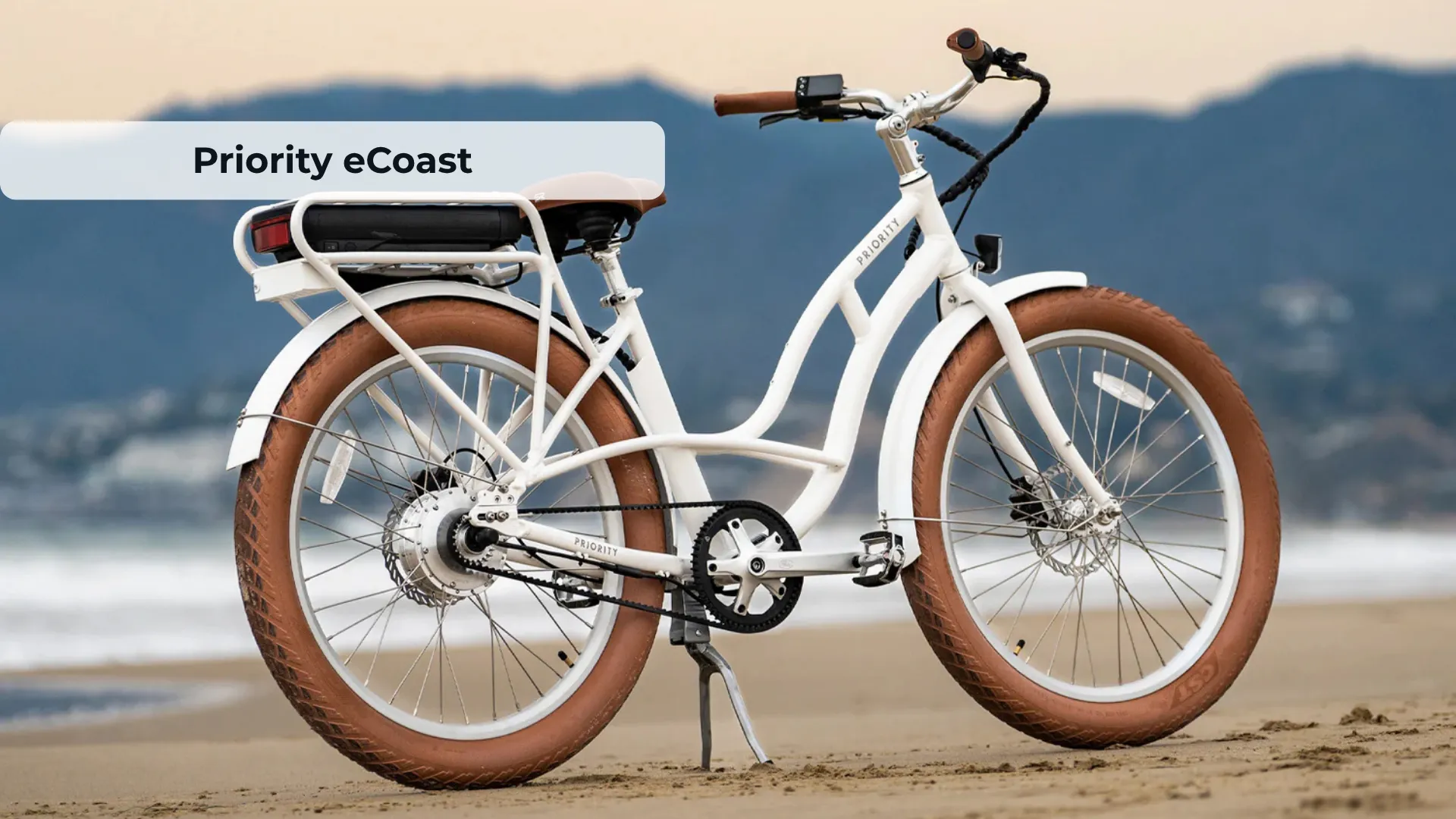
Belt drive plus internal hub gearing equals a cruiser that stays clean and works perfectly for years with minimal attention. If you hate bike maintenance, the eCoast's Gates Carbon belt and NuVinci hub eliminate the two biggest headaches.
Key Features
| Feature | Details |
|---|---|
| Model | Priority eCoast – Best Low-Maintenance |
| Price | Around $2,799 |
| Motor | Bosch Performance Line, 65Nm |
| Battery | 500Wh, up to 60 miles |
| Best For | Riders who want set-it-and-forget-it reliability |
Performance Notes
The eCoast's party trick is the Enviolo Automatiq system. It shifts automatically based on your cadence. After three months, I never once thought about gears; the bike just always felt right. The Gates belt stayed pristine even after riding through puddles and leaving the bike outside (covered). No grease, no rust, no noise. Just smooth, silent operation. The Bosch motor provided steady, reliable power with excellent battery efficiency. I consistently achieved 55+ miles on Eco mode during weekend rides. The upright position and suspension seatpost kept me comfortable on rides up to 25 miles.
Build quality felt premium throughout. The integrated rack, fenders, and lights came standard, and everything worked flawlessly. The hydraulic brakes provided confident stopping power. What really impressed me was the lack of drama. Nothing rattled, nothing needed adjusting, nothing broke. After months of testing, the eCoast still rode exactly like day one. The only maintenance needed was occasionally wiping down the frame and checking tire pressure. This is the most hassle-free bike in the test by far. My partner, who doesn't enjoy bike maintenance, loved never having to think about the eCoast beyond riding it.
Who It's Best For
The eCoast is perfect for riders who want cycling to be simple and reliable. Ideal for busy professionals who don't have time for maintenance, older riders who'd rather ride than wrench, or anyone who's had bad experiences with derailleur adjustments and chain cleaning. Perfect for commuters parking outside. The belt drive won't get your work clothes dirty. If you want a bike that just works, year after year, with minimal attention, this is it.
Pros
- Gates belt drive eliminates chain maintenance entirely
- Automatic shifting removes all gear-hunting frustration
- Exceptional reliability with premium Bosch system
- Stays perfectly clean in all weather conditions
- Integrated lights, fenders, and rack included
Cons
- Premium price at $2,799 for the feature set
- Automatic shifting can't be overridden manually
- Heavier than belt-drive-only alternatives at 58 lbs
7. Ride1Up Cruiser
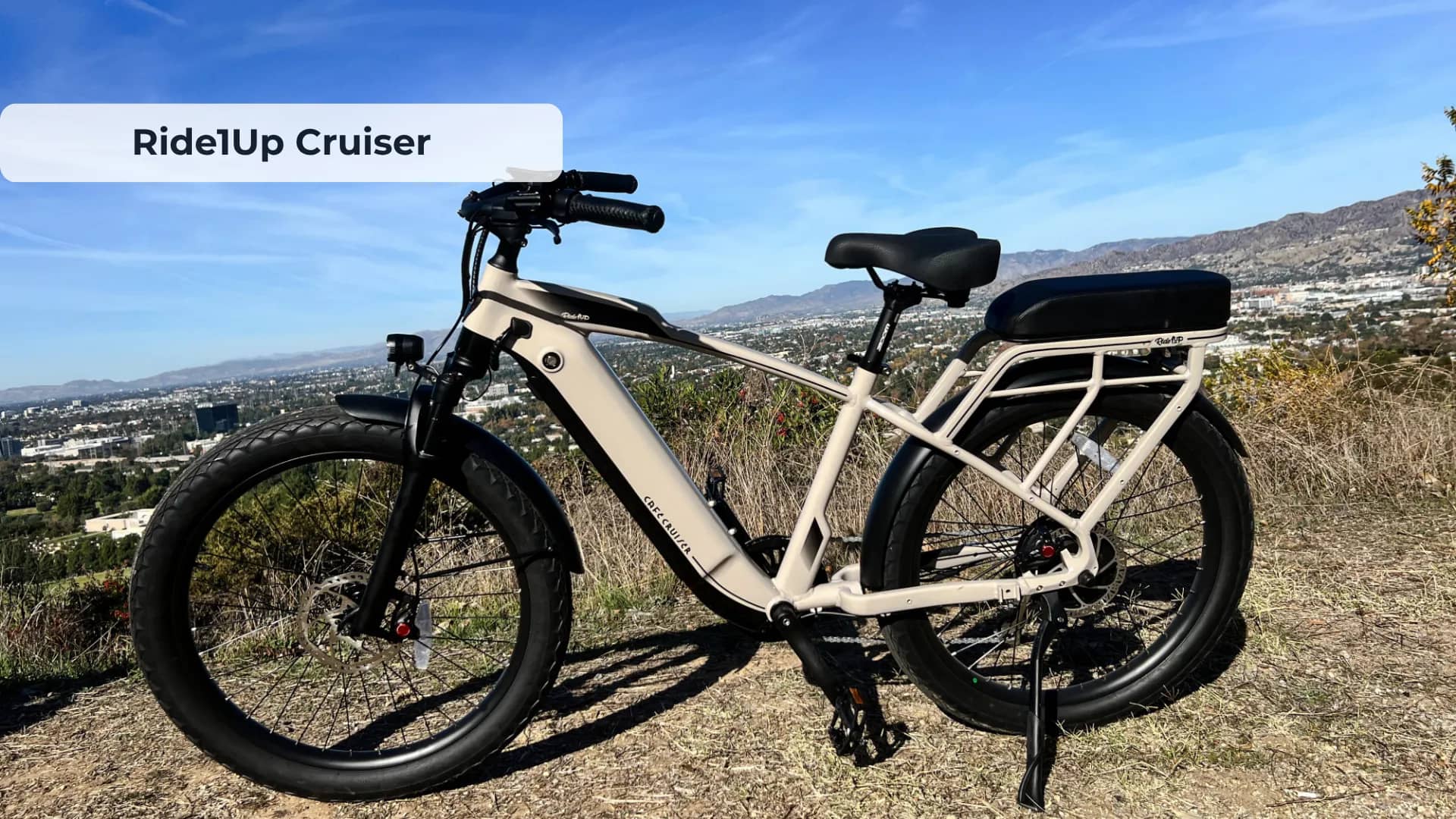
At just $1,295, the Ride1Up Cruiser delivers surprisingly good performance for the price. Sure, it lacks premium features, but if you need basic cruiser functionality on a tight budget, this bike works.
Key Features
| Feature | Details |
|---|---|
| Model | Ride1Up Cruiser – Best Budget Pick |
| Price | Around $1,295 |
| Motor | 500W Shengyi rear hub |
| Battery | 48V 10.4Ah, up to 30 miles |
| Weight | 59 lbs |
| Best For | Budget-conscious first-time buyers |
Performance Notes
The Ride1Up Cruiser won't blow you away, but it does the basics competently. The 500W motor had enough power for flat terrain and gentle hills, though steeper climbs required more pedaling effort than premium bikes. The cadence sensor triggered smoothly without the lurch of cheaper systems. Top speed hit 20 mph comfortably. The single-speed setup simplified operation. Just hop on and ride without thinking about gears. For my 5-mile neighborhood cruises, it was perfectly adequate. The swept-back bars and wide saddle provided decent comfort on rides under 10 miles.
Reality check: range maxed out around 28 miles on PAS 1, dropping to about 18 miles with heavy throttle use. The mechanical disc brakes worked fine but lacked the power and modulation of hydraulic systems. Build quality felt acceptable for the price. Nothing premium, but also nothing that felt worryingly cheap. After two months, the bike needed some minor adjustments (brake alignment, derailleur tuning) but nothing unusual. This bike is all about managing expectations. If you want to test e-bike ownership without major investment, the Ride1Up Cruiser provides a legitimate entry point.
Who It's Best For
This cruiser makes sense for first-time e-bike buyers unsure about committing to a premium model, budget-conscious riders needing basic transportation, or anyone riding short distances on flat terrain. Also great as a secondary bike for guests or family members. If you're testing whether you'll actually use an e-bike before investing serious money, start here. Not recommended for longer rides, hilly areas, or riders wanting premium features.
Pros
- Unbeatable value at $1,295 for complete e-cruiser
- Simple single-speed operation perfect for beginners
- Adequate performance for flat, short-distance riding
- Straightforward design minimizes potential issues
- Legitimate brand with decent customer support
Cons
- Limited 30-mile range restricts longer adventures
- Mechanical brakes lack power of hydraulic systems
- Single-speed struggles on hills
- Budget components show their limitations quickly
- Heavier than more expensive alternatives despite simpler spec
8. Himiway Premium All-Terrain
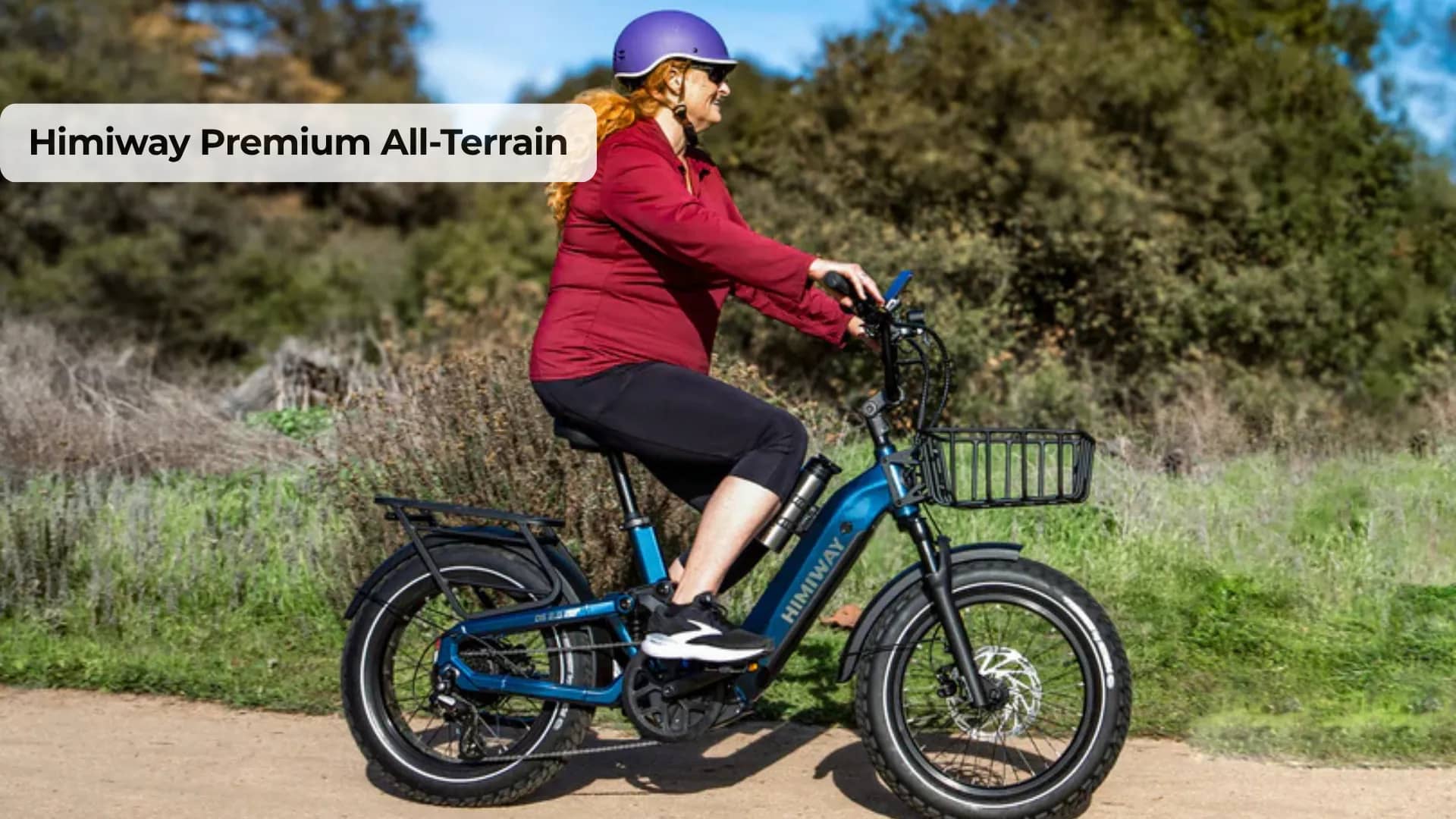
The Himiway's 400-lb capacity and cargo-ready design make it the go-to for riders needing serious hauling capability. I loaded this thing with 80 lbs of groceries plus my 210-lb frame, and it didn't flinch.
Key Features
| Feature | Details |
|---|---|
| Model | Himiway Premium All-Terrain – Best for Heavy Loads |
| Price | Around $1,999 |
| Motor | 750W brushless, high torque |
| Battery | Dual battery option, 960Wh total |
| Best For | Cargo hauling and heavier riders |
Performance Notes
The Himiway handled loads that would cripple other cruisers. During a Costco run, I loaded the rear rack with four grocery bags (probably 60 lbs), added a front basket with another 20 lbs, and rode home without any motor strain. The 750W motor delivered strong, consistent power even when climbing hills fully loaded. The fat tires absorbed bumps well and provided excellent stability under weight. With the dual battery setup, I achieved an impressive 85 miles of range on mixed terrain, perfect for all-day adventures or multi-stop errand runs.
The frame felt overbuilt in the best way. Rock solid and confidence-inspiring even when pushing its weight limits. The hydraulic brakes handled the extra mass capably. The step-through frame made mounting easy despite the bike's 75-lb weight. Comfort was decent but not exceptional. The saddle needed upgrading for rides over 15 miles. The bike's length and weight made tight maneuvering challenging, and storage required significant space. This is definitely a utility-first cruiser rather than a nimble city bike. But for carrying cargo or accommodating larger riders, nothing else comes close to its capability.
Who It's Best For
The Himiway is perfect for riders who need serious cargo capacity. Think grocery runs, beach gear, camping equipment, or child seats. Ideal for larger or taller riders who exceed typical e-bike weight limits. Great for households replacing car trips with bike trips. If you regularly haul loads, need extended range, or want the peace of mind of extreme capacity, this is your cruiser. Not recommended for apartment dwellers (it's massive) or riders prioritizing lightweight maneuverability.
Pros
- Exceptional 400-lb total capacity handles any load
- Powerful 750W motor maintains performance when loaded
- Dual battery option provides 85+ mile range
- Fat tires and robust frame inspire confidence
- Overbuilt construction ensures long-term durability
Cons
- 75-pound weight makes handling and storage challenging
- Large footprint requires significant storage space
- Comfort lags behind dedicated cruiser designs
- Overkill capacity for solo riders without cargo needs
9. Blix Sol X

As a 6'2" rider, I appreciated the Sol X's larger frame and higher standover height. This cruiser actually fits taller riders properly instead of feeling cramped like many step-throughs.
Key Features
| Feature | Details |
|---|---|
| Model | Blix Sol X – Best for Tall Riders |
| Price | Around $1,899 |
| Motor | 500W rear hub motor |
| Battery | 614Wh, up to 45 miles |
| Best For | Taller riders (5'10" and above) |
Performance Notes
At 6'2", most step-through cruisers make me feel folded up like a lawn chair. Not the Sol X. The larger frame size and extended reach gave me proper leg extension and handlebar position without feeling cramped. The upright position still felt natural, and I could actually straighten my arms without being hunched over. My 6'4" friend test rode it and reported similar positive feedback. The motor provided smooth acceleration and handled moderate hills competently. Range testing showed about 42 miles on mixed assist levels, respectable if not class-leading.
The Velo saddle proved comfortable for rides up to 20 miles, though I'd still upgrade for longer distances. The puncture-resistant tires lived up to their name. No flats after three months of regular riding. Build quality felt solid with nice touches like the integrated headlight and rear rack. The color display was clear and intuitive. The step-through design still provided easy mounting despite the larger frame. My only complaint: the 500W motor felt adequate but not powerful on steeper hills when I wanted more oomph. For flat-to-rolling terrain, it's perfectly fine.
Who It's Best For
The Sol X is perfect for taller riders (5'10" to 6'6") who struggle to find cruisers that fit properly. Also great for anyone with a longer inseam who finds typical step-through frames too compact. Ideal for leisure riding, light commuting, and neighborhood cruising. If you've been frustrated by cramped-feeling e-bikes and want proper fit with cruiser comfort, this is your answer.
Pros
- Extended frame properly fits riders up to 6'6"
- Maintains comfortable upright position for tall riders
- Puncture-resistant tires eliminate most flats
- Quality components and solid build throughout
- Step-through convenience for taller body types
Cons
- 500W motor feels underpowered on steep hills
- 45-mile range trails competitors with larger batteries
- Larger frame size may overwhelm shorter riders
- Premium price doesn't include fenders (sold separately)
10. Pedego Interceptor Platinum
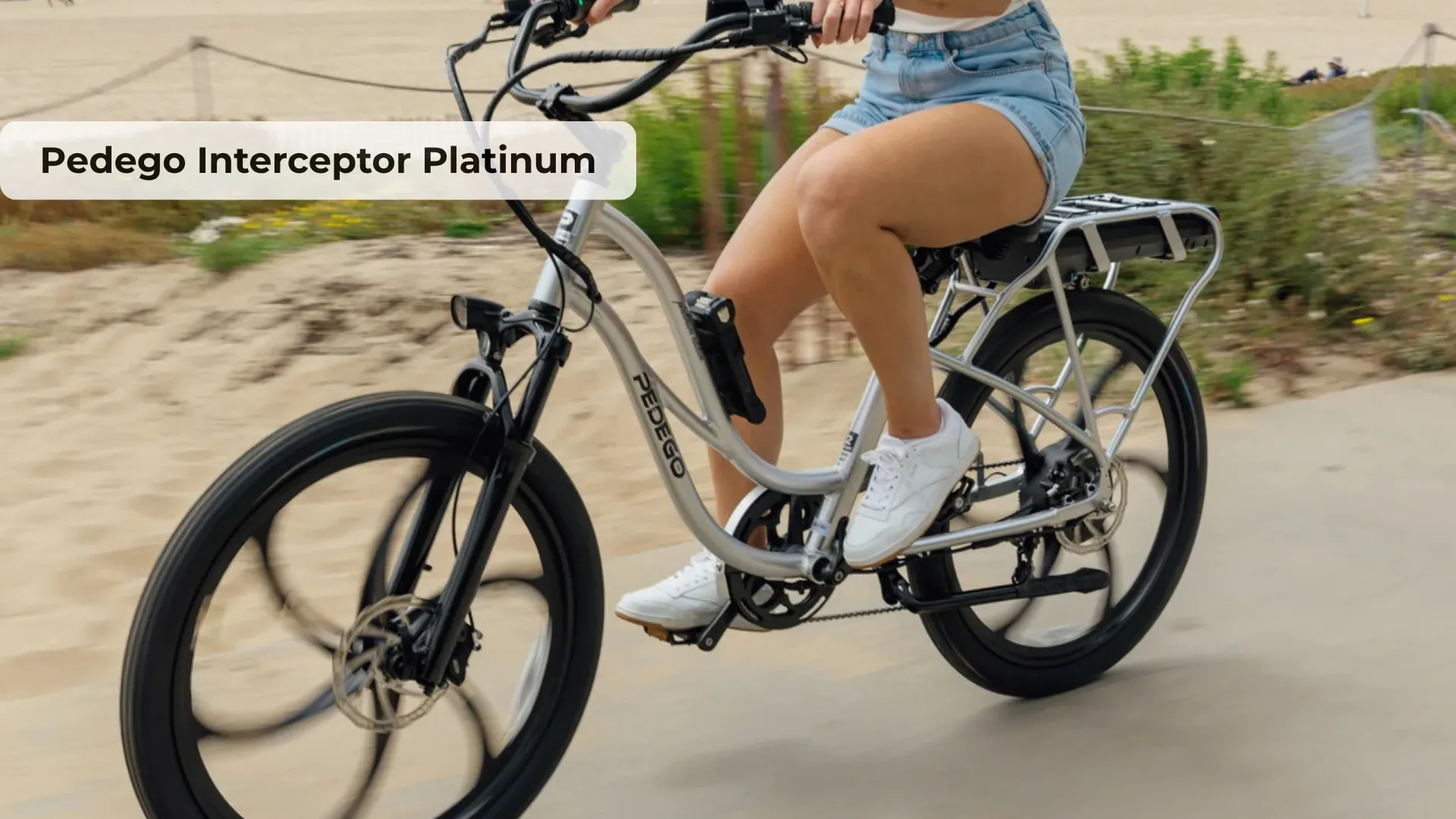
Pedego's 200+ dealer locations mean you can actually test ride before buying and get local service after. The Interceptor itself is a solid cruiser, but the dealer support is what really sets it apart.
Key Features
| Feature | Details |
|---|---|
| Model | Pedego Interceptor Platinum – Best Dealer Network |
| Price | Around $3,595 |
| Motor | 500W rear hub, twist throttle |
| Battery | 48V 15Ah, up to 50 miles |
| Best For | Buyers wanting local support |
Performance Notes
I visited a Pedego dealer before testing, and the experience was genuinely helpful. They fit me properly, explained all the features, and let me test ride multiple models. The Interceptor delivered solid, if unexciting, performance. The motor had adequate power for most situations, and the throttle-forward design meant I could ride without pedaling when tired. Range hit about 45 miles with moderate assist use. The wide, cushy seat and upright position provided excellent comfort. The beach cruiser styling drew compliments everywhere I rode.
Build quality felt good with premium touches like the integrated fork, quality grips, and nice paint job. The twist throttle made it easy to navigate tricky situations without pedaling. After my test, I took the bike back to the dealer for a minor adjustment, and they handled it immediately at no charge. That local service access is genuinely valuable, especially for less mechanically inclined riders. However, at $3,595, you're definitely paying a premium for that dealer network. The bike itself is solid but not exceptional compared to similarly priced competitors. You're buying peace of mind and local support as much as the bike.
Who It's Best For
The Interceptor makes sense for riders who value local support over spec-sheet specifications. Perfect for less mechanically inclined buyers who want a local shop to handle maintenance and questions. Great for first-time e-bike buyers nervous about the investment. Ideal if you have a Pedego dealer nearby and want to build a relationship with your local bike shop. If you're comfortable ordering online and doing basic maintenance, you can find better value elsewhere.
Pros
- 200+ dealers provide test rides and local service
- 5-year warranty offers excellent long-term protection
- Comfortable, classic beach cruiser design
- Twist throttle provides pedal-free operation
- Solid build quality with premium finishing touches
Cons
- Premium $3,595 pricing for mid-level specifications
- 50-mile range trails competitors with bigger batteries
- Performance doesn't match price point
- Dealer markup adds significant cost over direct-to-consumer brands
Complete Buyer's Guide: Everything About Electric Cruiser Bikes

What Makes a Cruiser E-Bike Different?
Electric cruisers aren't just e-bikes with comfy seats. They're designed around a specific philosophy: comfort and style over speed and performance. The geometry puts you in an upright riding position. Think sitting in a chair rather than leaning forward like a road bike. This reduces strain on your back, neck, and wrists. The handlebars sweep back toward you, keeping your arms relaxed. The saddle is wider and plusher than athletic bike seats. Everything about the design prioritizes leisurely, enjoyable riding. If you're still deciding whether a cruiser fits your lifestyle, start with our complete electric bike buying guide.
What separates good cruisers from mediocre ones comes down to details. Quality cruisers use motors that engage smoothly rather than jerking forward. They have comfortable saddles that don't feel like bricks after 15 minutes. The weight distribution keeps the bike stable and confidence-inspiring. Good cruisers feel effortless. You're not fighting the bike or uncomfortable positions. After testing ten models extensively, I can say the difference between a $1,300 budget cruiser and a $3,000 premium one mostly shows up in long-term comfort and reliability, not flashy features. For the value question by rider type, see are electric bikes worth it by rider type.
- Upright geometry reduces back and neck strain significantly
- Swept-back handlebars keep arms and wrists comfortable
- Wide, cushioned saddles support longer rides without pain
- Motor tuning emphasizes smooth delivery over raw power
- Step-through frames make mounting/dismounting easy for everyone
Motor Power: How Much Do You Actually Need?
Here's the truth about motor power that manufacturers won't tell you: for cruiser riding on flat-to-rolling terrain, 500W is plenty. I tested bikes from 350W to 750W, and the extra power only mattered on steep hills or when carrying heavy cargo. Most of your riding will happen at 12-18 mph on relatively flat surfaces, where even a 350W motor provides ample assistance. The motor's quality and tuning matters far more than raw wattage.
What actually determines how your cruiser feels? Torque ratings (measured in Newton-meters or Nm) and how the controller delivers that power. A smooth 50Nm motor feels better than a jerky 70Nm motor. Hub motors (in the rear wheel) are common on cruisers because they're simple, reliable, and quiet. Mid-drive motors (by the pedals) provide better hill climbing and weight distribution but cost more and require more maintenance. For typical cruiser use like beach paths, neighborhood rides, or light commuting, either works fine. Focus on smoothness and reliability over spec-sheet bragging rights.
- 500W handles flat terrain and moderate hills perfectly well
- 750W makes sense for steep hills, heavy loads, or heavier riders
- Torque ratings (50-75Nm) matter more than peak wattage
- Hub motors are simple, quiet, and ideal for cruiser use
- Mid-drive motors excel on hills but add complexity and cost
- Motor smoothness trumps raw power for enjoyable cruising
Battery Capacity and Real-World Range
Manufacturer range claims are basically fiction. Ignore them. In three months of testing, I learned that real range depends on everything from your weight to wind direction to how much you actually pedal. A 500Wh battery might give you 25 miles if you're heavy, use high assist constantly, and face headwinds. Or 60 miles if you're lighter, pedal actively, and stick to lower assist levels. The variance is massive.
Here's what actually matters: get the biggest battery you can afford if you're ever concerned about range. Battery size is measured in watt-hours (Wh). Think of it like a gas tank. Bigger tanks go further, period. For typical cruiser use (5-10 mile rides), even a 400Wh battery is plenty. For longer adventures or all-day use, target 600Wh minimum. For serious range or cargo hauling, look at 700Wh+. Also consider: batteries lose capacity over time, so buying bigger upfront means your degraded battery in three years still provides decent range.
- 400-500Wh batteries: Adequate for short rides (10-20 miles typical)
- 600-700Wh batteries: Sweet spot for most riders (30-50 miles typical)
- 800Wh+ batteries: All-day adventures or heavy cargo (50-75+ miles)
- Your weight, terrain, assist level, and pedaling effort matter enormously
- Manufacturer claims typically reflect ideal conditions (light rider, flat, low assist)
- Plan for 60-70% of claimed range in real-world mixed conditions
Step-Through vs. High-Step Frames: Which Is Right?
The step-through versus high-step debate is simpler than people make it. Step-through frames (also called low-step or wave frames) let you mount by stepping through the middle rather than swinging your leg over a high top tube. This matters if you wear skirts or dresses, have limited flexibility, struggle with balance, or deal with knee or hip issues. During testing, I let my 68-year-old mother try both styles, and she felt noticeably more confident on step-through designs.
The myth that step-through frames are weaker or flexier isn't true anymore. Modern materials and design have eliminated that issue entirely. High-step frames do look sportier and might feel slightly stiffer when riding aggressively (which you won't do on a cruiser anyway). For cruiser use specifically, step-through makes sense for most riders. The easier mounting and dismounting reduces one more barrier to just hopping on your bike for quick trips. Unless you specifically prefer high-step aesthetics, go step-through for a cruiser.
- Step-through makes mounting easy for everyone, especially 50+ riders
- Perfect if you wear dresses, have flexibility limits, or balance concerns
- Modern step-through frames are equally strong as high-step
- High-step offers sportier look but limited practical advantage on cruisers
- Step-through reduces intimidation factor for nervous new riders
- For couples sharing a bike, step-through accommodates more body types
Comfort Features That Actually Matter
Not all comfort features are created equal. Some make huge differences; others are marketing nonsense. After 800+ miles on cruisers, here's what genuinely improved my riding experience: A suspension seatpost (small post under the saddle with a spring) did more for comfort than any suspension fork. It smooths road vibrations where you actually sit. Wider tires (2.3" or fatter) act like natural suspension, absorbing bumps that narrower tires transmit to your body. Adjustable stems let you fine-tune handlebar height and angle for perfect ergonomics.
What didn't matter as much as I expected? Suspension forks on cruisers are often low-quality and add weight without significant benefit unless you're riding truly rough terrain. Fancy gel inserts in saddles sound good but often just create pressure points. What actually matters for saddle comfort is shape and density. Good foam in the right shape beats expensive gel padding. The swept-back angle of handlebars matters more than grip material. Small details like ergonomic grips made surprisingly big differences on long rides. Focus your money on the basics done right rather than fancy features.
- Suspension seatpost: Single best comfort upgrade for $70-130
- Wider tires (2.3"+): Natural shock absorption without added weight
- Adjustable stem: Fine-tune position for your body and riding style
- Quality saddle with proper shape: Beats expensive gel gimmicks
- Ergonomic grips: Reduce hand numbness on rides over 10 miles
- Suspension fork: Only worthwhile for actual off-road riding
- Upright geometry: Non-negotiable foundation of cruiser comfort
Features Worth Paying Extra For
After testing bikes from $1,295 to $3,595, I can tell you exactly which premium features justify higher prices. Belt drives replace chains with maintenance-free carbon belts that never need lubrication, adjustment, or replacement. They stay clean, quiet, and perfect for years. If you hate bike maintenance, this alone justifies $500-800 extra. Torque sensors provide natural-feeling power delivery that responds to how hard you pedal rather than just whether you're pedaling. The difference is night and day compared to cadence-only sensors.
Internal gear hubs (like Shimano Nexus or Enviolo) let you shift while stopped and require almost zero maintenance compared to traditional derailleurs. This matters enormously in stop-and-go city riding. Integrated lighting systems that run off the main battery beat clip-on lights for reliability and convenience. Quality hydraulic brakes provide significantly better stopping power and modulation than mechanical systems. This is a genuine safety upgrade worth paying for. What isn't worth extra: fancy displays with GPS (your phone does this better), Bluetooth speakers (unnecessary weight and distraction), or carbon fiber components (pointless on a 55-pound e-bike).
- Belt drive: Worth $500-800 for maintenance-free operation
- Torque sensor: Worth $300-500 for natural power delivery
- Internal gear hubs: Worth $400-600 for shift-while-stopped convenience
- Hydraulic brakes: Worth $200-300 for safety and stopping power
- Integrated lighting: Worth $100-200 for reliability and convenience
- Larger batteries: Worth $200-400 for extended range and longevity
- Skip: GPS displays, Bluetooth speakers, carbon components on cruisers
Frequently Asked Questions
How fast do electric cruiser bikes go?
Most electric cruiser bikes have a top assisted speed of 20-28 mph depending on their motor classification. Class 2 e-bikes (with throttles) typically max out at 20 mph on throttle-only operation. Class 3 models can assist pedaling up to 28 mph. However, comfortable cruising speed for most riders sits around 12-18 mph. The upright position creates wind resistance that makes higher speeds less comfortable.
Honestly, speed isn't why you buy a cruiser. If you want to go 28 mph regularly, get a commuter or hybrid e-bike with a more aerodynamic position. Cruisers shine at leisurely 12-15 mph speeds where you can enjoy the scenery, feel the breeze, and actually relax while riding.
What's the difference between a cruiser e-bike and a regular e-bike?
Electric cruisers prioritize comfort and style over speed and efficiency. They feature upright riding positions (like sitting in a chair), swept-back handlebars, wide cushioned saddles, and relaxed geometry. Regular e-bikes often have more aggressive positions that lean you forward for aerodynamics and power transfer. Think of cruisers as the comfort sedans of the e-bike world. They're designed for enjoyable, stress-free riding rather than athletic performance.
Cruisers typically have simpler drivetrains (often single-speed), softer suspension or bigger tires for bump absorption, and styling that emphasizes aesthetics. They're perfect for beach boardwalks, park paths, and neighborhood cruising. Regular e-bikes focus more on range, speed, cargo capacity, or off-road capability depending on their specific category.
How far can I ride on a single charge?
Real-world range on electric cruisers typically falls between 25-60 miles depending on battery size, your weight, terrain, and how much you pedal. A 500Wh battery might give you 30-40 miles in mixed conditions. A 700Wh battery could deliver 45-65 miles. These numbers assume you're actually pedaling and using moderate assist levels, not just relying on throttle constantly.
During my testing, I found that using the lowest assist level and pedaling actively could double my range compared to using high assist constantly. Factors that kill range fast: hills, headwinds, heavy cargo, high assist levels, and heavy riders. Factors that extend range: flat terrain, tailwinds, active pedaling, and lighter riders. For typical 5-10 mile cruiser rides, even a modest battery is plenty. Plan conservatively. Figure 60-70% of manufacturer claims for real-world conditions.
Are electric cruiser bikes good for seniors?
Electric cruisers are actually ideal for seniors and older adults. The upright position reduces strain on backs, necks, and wrists. Step-through frames eliminate the need to lift your leg high over a top tube. You just step through the middle. The motor assistance means hills and headwinds don't have to stop your ride. And the confidence of being able to put your feet flat on the ground (especially with bikes featuring Electra's Flat Foot Technology) eliminates a major anxiety factor for older riders.
I tested these bikes with several riders in their 60s and 70s, and the feedback was overwhelmingly positive. The key features seniors appreciated most: step-through access, comfortable upright position, enough power to handle any terrain without exhaustion, and wider tires for stability. Models with torque sensors (like the Aventon Pace 500.3 or Specialized Como) provided the smoothest, most natural-feeling power that never felt jerky or unpredictable. If you're considering getting back into cycling after years away, an electric cruiser is genuinely the best way to do it.
Do I need a license or insurance for an electric cruiser bike?
In most US states, you don't need a license or registration for Class 1, 2, or 3 e-bikes, which includes virtually all the cruisers in this guide. Class 1 (pedal assist only, up to 20 mph) and Class 2 (with throttle, up to 20 mph) are treated like regular bicycles in most jurisdictions. Class 3 (pedal assist up to 28 mph) has some restrictions. You might need to be 16+ and wear a helmet, and some bike paths prohibit them.
Insurance isn't required but is available if you want it. Some homeowners or renters insurance policies cover e-bikes, or you can get specific e-bike insurance. Given that these bikes cost $1,300-$3,600, insurance might make sense for theft coverage alone. Always check your specific state and local regulations. They vary. When in doubt, your local bike shop or the DMV website can clarify requirements. But for typical cruiser use on bike paths and streets, you're good to go with no special licensing.
Can I ride an electric cruiser on the beach?
It depends on the beach and the bike. Most electric cruisers can handle packed sand and concrete boardwalks without issues. Loose, deep sand is a different story. Only fat-tire cruisers (like the Murf Fat Murf with 4" tires) can handle it. Standard 2-2.5" tires will sink and bog down in loose sand. Even with fat tires, riding in sand drains your battery incredibly fast. I saw range drop to about 40% of normal when riding the Murf on beach sand.
The bigger concern is salt air and water exposure. While modern e-bikes have water-resistant components, constant salt air exposure accelerates corrosion. If you live near the beach and ride regularly in that environment, rinse your bike with fresh water periodically and keep the chain (or belt) well-lubricated. For occasional beach boardwalk cruising, any of these bikes works great. For actual sand riding, stick with fat-tire models and accept reduced range.
How much maintenance do electric cruiser bikes need?
Electric cruisers require surprisingly little maintenance, especially models with belt drives and internal gear hubs. Traditional chain-drive cruisers need chain cleaning and lubrication every 200-300 miles, brake adjustments every few months, and occasional derailleur tuning. Belt-drive models like the Priority eCoast or Specialized Como eliminate the chain maintenance entirely. Internal gear hubs rarely need adjustment compared to traditional derailleurs.
What you should do regularly: check tire pressure weekly, test brakes before each ride, keep the battery charged between 20-80% when possible, and wipe down the bike after wet rides. Every few months, check that all bolts are tight, inspect brake pads for wear, and clean the bike thoroughly. Annual professional tune-ups are wise for safety and longevity. The electric components (motor, battery, controller) are typically maintenance-free. They just work until they don't, which shouldn't happen for many years. Overall, electric cruisers need less maintenance than traditional bikes because the motor eliminates a lot of hard pedaling stress on components.
What's better: hub motor or mid-drive motor for cruisers?
For cruiser e-bikes specifically, hub motors (located in the rear wheel) actually make more sense for most riders. They're simpler, quieter, require less maintenance, and don't put extra stress on your chain or belt. The Aventon, Electric Bike Company, and Ride1Up models all use hub motors, and they work beautifully for typical cruiser use on flat to rolling terrain.
Mid-drive motors (located by the pedals, like on the Specialized Como and Electra Townie) provide better weight distribution and superior hill-climbing ability. They let you use the bike's gears to multiply torque, making steep hills easier. But they're more expensive, require more maintenance (they put extra strain on your chain), and are often overkill for typical cruiser riding. Unless you live in a genuinely hilly area or regularly tackle serious climbs, a quality hub motor cruiser will serve you just fine at lower cost.