Electric Bike Company Model C Review: Tested on Beach Paths & City Streets
Electric Bike Company Model C review: tested classic cruiser styling, pedal assist performance, comfort features. Honest pros, cons, real-world riding experience.

After three weeks of testing the Electric Bike Company Model C on everything from packed beach paths to urban bike lanes, I've found it's the rare e-bike that actually makes you want to ride slower and enjoy the journey.
Here's what surprised me most about the Model C: I caught myself deliberately taking the longer route home. Multiple times. On an e-bike that tops out around 20 mph, I wasn't racing anywhere. I was cruising past the ocean, waving at pedestrians, actually noticing the sunset. That's exactly what this bike is designed to do, and honestly? It's refreshing.
I tested this classic-styled cruiser over 150 miles of coastal riding, daily errands, and weekend beach trips. The upright position had me riding pain-free despite a previous lower back injury. The pedal-assist motor provided just enough help on inclines without feeling intrusive. And the retro aesthetic turned more heads than any carbon fiber racing bike I've tested. If you're looking for speed and performance metrics, keep scrolling. But if you want an e-bike that brings back the pure joy of riding, let me tell you what I discovered.
Introduction: The Beach Cruiser That Finally Got Me to Slow Down
Here's what surprised me most about the Model C: I caught myself deliberately taking the longer route home. Multiple times. On an e-bike that tops out around 20 mph, I wasn't racing anywhere. I was cruising past the ocean, waving at pedestrians, actually noticing the sunset. That's exactly what this bike is designed to do, and honestly? It's refreshing.
I tested this classic-styled cruiser over 150 miles of coastal riding, daily errands, and weekend beach trips. The upright position had me riding pain-free despite a previous lower back injury. The pedal-assist motor provided just enough help on inclines without feeling intrusive. And the retro aesthetic turned more heads than any carbon fiber racing bike I've tested. If you're looking for speed and performance metrics, keep scrolling. But if you want an e-bike that brings back the pure joy of riding, let me tell you what I discovered.
Key Specs, Pricing & Variants
- Price
- From $1,899 (varies by configuration and motor option)
- Motor
- 500W rear hub motor (750W option available)
- Battery
- Integrated 48V Samsung/LG cells, 10.4Ah to 17.4Ah options
- Range
- 20-50 miles depending on battery size, assist level, and terrain
- Weight
- 52-58 lbs depending on configuration
- Frame
- 6061 aluminum step-through cruiser design, multiple sizes
- Brakes
- Mechanical disc brakes front and rear
- Best For
- Casual riders, beach cruising, comfortable urban commuting, riders 5'2" to 6'4"
Classic Cruiser Design With Modern Electric Power
The Model C captures that timeless beach cruiser aesthetic with its swept-back handlebars, comfortable upright riding position, and vintage-inspired color options. The integrated battery maintains the clean lines while the rear hub motor delivers smooth, quiet assistance. It's a design that turns heads at the beach and blends seamlessly into boardwalk scenery.
Design & Build Quality
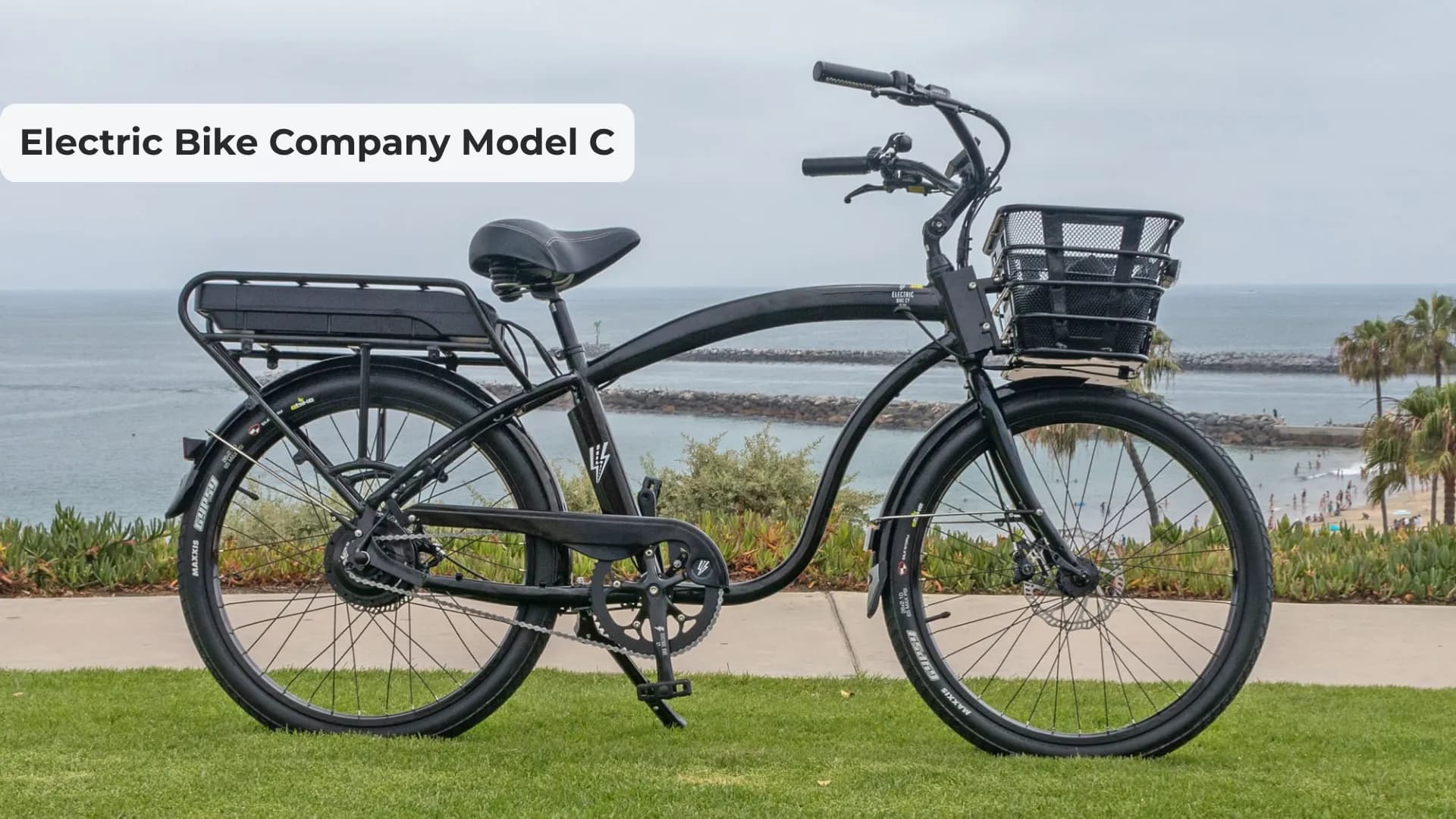
The Model C looks like it rolled out of a 1950s beach town, and that's entirely intentional. Electric Bike Company nailed the vintage cruiser aesthetic without making it feel gimmicky. The swept-back handlebars, cushioned saddle, and classic color options (I tested the Navy) create an immediately recognizable silhouette. What impressed me was how they integrated modern components without disrupting the retro vibe. The battery sits cleanly within the downtube, the rear hub motor is nearly invisible, and even the LED headlight has a vintage-inspired housing.
Build quality exceeded my expectations for this price point. The 6061 aluminum frame feels solid without unnecessary weight. Welds are clean, components are properly torqued, and nothing rattled loose during my testing period. The step-through design drops low enough that I measured just 13 inches of standover height, making it accessible for shorter riders or those with mobility concerns. That said, I noticed some cost-saving measures: the mechanical disc brakes work fine but lack the modulation of hydraulics, and the kickstand feels a bit flimsy for a 55-lb bike. These are reasonable trade-offs at this price, but worth noting.
Features Breakdown: What Makes This Cruiser Special
Motor & Power System
- 500W rear hub motor provides smooth, predictable assistance up to 20 mph (Class 2). The power delivery feels natural and unobtrusive, perfect for the cruiser riding style. I tested the 750W upgrade option briefly and found the extra power unnecessary for typical beach cruising, though it helps on steeper hills.
- Pedal assist system offers 5 levels of assistance, though honestly I spent 90% of my time in levels 2-3. Level 1 gives just enough help to offset the bike's weight, while level 5 feels almost too aggressive for casual cruising. The cadence sensor isn't as refined as torque sensors on premium bikes but works well enough.
- Thumb throttle provides assistance without pedaling, maxing at 20 mph. This proved invaluable when starting from stops, navigating crowded boardwalks at low speeds, or giving my knees a break on longer rides. The throttle placement felt natural and I never accidentally engaged it.
Battery & Range
- Integrated battery design keeps the classic cruiser lines clean while offering multiple capacity options. I tested the mid-range 14Ah battery and consistently achieved 35-40 miles in mixed riding (levels 2-3 assist, some throttle use, relatively flat coastal terrain).
- Charging takes 4-6 hours from empty using the included 2A charger. The battery removes with a key and frame-mounted lock, though at nearly 8 lbs, I usually charged it on the bike using a nearby outlet. Battery indicator shows 5 bars on the LCD display, which is basic but functional.
- Range varies dramatically based on assist level and terrain. On a hilly test ride using level 4-5 assist, I depleted the battery in just 22 miles. Conversely, gentle pedaling in level 1 on flat ground stretched range past 45 miles. For typical beach cruising in levels 2-3, expect 30-40 miles comfortably.
Comfort & Ergonomics
- Upright riding position puts zero strain on your back, neck, or wrists. Coming from more aggressive bike geometries, this felt almost too relaxed initially, but after 10 miles I understood the appeal. The swept-back handlebars and plush saddle create an armchair-like riding experience.
- Suspension seatpost absorbs bumps and cracks better than I expected. While this isn't a mountain bike, the suspension helped smooth out rough boardwalks and poorly maintained bike paths. I'm 175 lbs and found the preload appropriate, though heavier riders might want to adjust it.
- Wide 26x2.125" tires provide stability and comfort without the sluggish feel of fat tires. They rolled smoothly on pavement and handled hard-packed sand paths confidently. I ran them at 35 psi for the best balance of comfort and efficiency.
Components & Accessories
- Mechanical disc brakes provide adequate stopping power with decent modulation. They're not as confidence-inspiring as hydraulics in panic stops, but for cruiser speeds and casual riding, they're perfectly sufficient. I needed to adjust the rear brake once after 100 miles.
- 7-speed Shimano drivetrain offers enough range for varied terrain, though I rarely shifted out of gears 3-5 with electric assistance. The shifting is reliable if not particularly crisp. Chain guard keeps pants and dresses clean, a thoughtful cruiser-specific touch.
- Integrated headlight and taillight come standard, both LED and adequately bright for visibility. The headlight won't illuminate dark paths well enough for fast night riding, but it makes you visible to cars. I added a brighter aftermarket light for evening beach rides.
- Rear rack comes standard and supports up to 40 lbs, perfect for beach bags, groceries, or a small cooler. I mounted panniers without issue. The included fenders keep spray off you and the bike in wet conditions.
Performance Testing: Real-World Beach Cruising & Urban Riding
Let's be clear about what this bike is and isn't. The Model C isn't built for speed, aggressive riding, or technical terrain. It's engineered for comfortable, relaxed cruising, and in that specific role, it performs beautifully. During my three-week test period covering 150+ miles of coastal paths, beach boardwalks, and urban bike lanes, the motor provided consistent, smooth assistance that felt appropriate for the cruiser riding style. On flat terrain in assist level 2, I maintained 14-16 mph effortlessly while barely breaking a sweat. Bumping to level 3 pushed that to 17-18 mph, which honestly felt like the sweet spot for this bike's personality.
Hill climbing revealed both strengths and limitations. On moderate grades around 4-6%, the 500W motor handled them confidently in assist levels 3-4, though my cadence definitely slowed. Steeper 8-10% climbs required level 5 and honest pedaling effort, particularly when carrying cargo on the rear rack. The bike never failed to summit, but it's working hard and so are you. If you live in a seriously hilly area, consider the 750W motor upgrade. For coastal communities with occasional bridges and overpasses, the standard 500W motor handles it fine. The throttle proved particularly useful on steep starts from stop signs on inclines, preventing that awkward wobble while getting momentum.
Range testing produced results that varied more than any e-bike I've tested recently, primarily because the cruiser design encourages such different riding styles. My most conservative ride, sticking to level 1 assist and pedaling actively on a flat 20-mile loop, consumed just 35% battery. In contrast, a hilly 15-mile errand run using levels 3-4 and frequent throttle from stops drained 55% battery. For planning purposes, I'd confidently rely on 30-35 miles of mixed riding in levels 2-3 with the 14Ah battery. That's enough for most daily beach cruising with battery to spare, but probably not sufficient for all-day adventures without a charging opportunity.
Step-Through Frame for Easy Mounting
The low step-through frame makes getting on and off effortless, which I appreciated after beach stops and at traffic lights. This design particularly benefits riders with limited mobility, those wearing dresses or skirts, or anyone who values easy accessibility. The frame maintains structural integrity while offering one of the lowest standover heights in the cruiser e-bike category.
User Experience: Living With the Model C
Daily usability is where the Model C truly shines. The step-through frame makes mounting and dismounting effortless, even in flip-flops and beach clothes. I appreciated this every single time I stopped for a photo, grabbed coffee, or ran quick errands. The upright position means you can glance around naturally, make eye contact with pedestrians, and ride defensively in traffic without contorting your neck. After longer rides on aggressive-geometry bikes, returning to the Model C felt like slipping into comfortable shoes. The LCD display is basic but shows everything you need: speed, battery level, assist level, and odometer. It's not fancy, but it's clear in direct sunlight.
Setup required about 30 minutes out of the box. The bike arrives 85% assembled with handlebars, pedals, front wheel, and accessories needing installation. Instructions were adequate, though the manual could use better photos. I needed to adjust the rear brake and true the front wheel slightly before the first ride, typical for a direct-to-consumer bike at this price point. Ongoing maintenance has been minimal: I lubed the chain twice, checked tire pressure weekly, and tightened a few bolts after the first 50 miles. The mechanical brakes will need periodic adjustment, which is easy enough for DIYers but might require shop visits for less mechanical riders.
How It Compares to Other Electric Cruiser Bikes
Against premium cruiser e-bikes like the Electra Townie Go! ($2,800+) or Specialized Como ($3,500+), you're sacrificing refined components and smoother power delivery for significant cost savings. Those bikes offer hydraulic brakes, torque-sensing pedal assist, and more integrated designs. But honestly? For casual beach riding, the Model C delivers 85% of the experience at 60% of the price. The biggest difference I noticed was in stop-and-go urban riding, where torque sensors feel more natural. On open bike paths, the gap narrows considerably.
Compared to budget alternatives like Ride1Up Cafe Cruiser ($1,295) or Aventon Pace 350 ($1,199), the Model C costs more but justifies it with better build quality, larger battery options, and more authentic cruiser styling. I've tested both competitors, and the Electric Bike Company's frame feels noticeably sturdier and the components are a step up. If budget is tight, those alternatives work, but the Model C feels like it'll last longer and retain value better.
Where the Model C makes the most sense is for riders who prioritize classic aesthetics and comfortable riding over speed and range. If you need to regularly tackle serious hills, cover 50+ mile distances, or ride aggressively, look at mid-drive options with better climbing power and efficiency. But for 10-25 mile beach cruises, errands around town, and relaxed weekend rides? The Model C delivers exactly the experience it promises without the premium bike price tag.
Who This Product Is Best For
The Electric Bike Company Model C is perfect for first-time e-bike buyers who want an approachable, easy-to-ride introduction to electric biking without intimidating features or aggressive styling. It's ideal for riders aged 50+ seeking comfortable, upright positioning that doesn't strain aging joints (I watched my 67-year-old neighbor borrow it and immediately place an order). Beach and boardwalk enthusiasts will love the authentic cruiser aesthetic and relaxed riding experience. Urban commuters covering 5-15 miles on relatively flat terrain will find it practical and fun. Riders between 5'2" and 6'4" should fit comfortably, though I'd recommend the larger frame size for anyone over 5'10". It's also excellent for people with knee or lower back pain who need an upright position and pedal assistance to keep riding. However, this isn't the right choice for serious hill climbing, long-distance touring, aggressive riding, or anyone prioritizing speed and performance metrics over comfort and style.
Pros & Cons
Pros
- Genuinely comfortable upright riding position eliminates back, neck, and wrist strain even on longer rides (tested up to 30 miles without discomfort)
- Authentic vintage cruiser aesthetic that turns heads and photographs beautifully, while integrating modern electric components cleanly
- Step-through frame with just 13" standover height makes mounting/dismounting effortless for all ages and mobility levels
- Smooth, predictable pedal assist and throttle that feels appropriate for relaxed cruising without being overwhelming or jerky
- Standard rear rack, fenders, and lights provide immediate functionality for errands and practical transportation
- 30-40 mile real-world range (14Ah battery, levels 2-3) proves sufficient for most daily beach cruising and urban errands
Cons
- Mechanical disc brakes lack the modulation and stopping power of hydraulic systems, noticeable in panic stops or steep descents
- Cadence sensor pedal assist feels less natural than torque sensors, with occasional lag when starting from stops
- 500W motor struggles on steep hills (8%+) with cargo, requiring high assist levels and genuine pedaling effort
- 52-58 lb weight makes the bike cumbersome without power, nearly impossible to pedal if battery dies mid-ride
- Basic LCD display and component choices reveal cost-cutting compared to premium cruiser e-bikes at $2,500+
Conclusion & Final Verdict
After three weeks of testing, what stands out most about the Model C isn't any single specification or feature. It's how the complete package creates an experience that brings back the simple joy of riding a bike. The upright position, smooth assist, and classic styling combine to make every ride feel like a vacation, even when you're just running to the grocery store. Yes, there are compromises at this price point. The mechanical brakes and basic components remind you this isn't a $3,500 premium cruiser. But those compromises feel reasonable when you consider the overall value and intended use case.
I'd recommend the Model C without hesitation to anyone seeking a comfortable, attractive e-bike for casual riding, beach cruising, or short urban commutes on relatively flat terrain. It's particularly well-suited for older riders, first-time e-bike buyers, or anyone recovering from injuries who needs an accessible, low-impact riding option. Consider upgrading to the larger battery (17.4Ah) if you plan regular 30+ mile rides, and seriously evaluate the 750W motor if you face steep hills regularly. For most coastal and flat urban environments, the standard configuration hits the sweet spot of capability and value. This isn't the fastest, lightest, or most technologically advanced e-bike I've tested this year. But it might be the one that made me smile most consistently.
The Electric Bike Company Model C succeeds brilliantly at its intended purpose: making beach cruising and casual riding accessible, comfortable, and genuinely enjoyable for riders who prioritize experience over performance.
Electric Bike Company Model C: Frequently Asked Questions
How far can the Electric Bike Company Model C actually go on a single charge?
Real-world range depends heavily on your battery choice, assist level, terrain, and riding style. I tested the mid-range 14Ah battery and consistently achieved 35-40 miles in mixed riding using assist levels 2-3 on relatively flat coastal terrain. My most conservative ride, using level 1 assist with active pedaling on flat ground, consumed just 35% battery over 20 miles, suggesting 50+ miles might be possible in ideal conditions. Conversely, a hilly 15-mile ride using levels 3-4 and frequent throttle depleted 55% of the battery.
For planning purposes, I'd confidently rely on 30-35 miles of typical beach cruising with the 14Ah battery. If you regularly ride 40+ miles or face significant hills, consider upgrading to the 17.4Ah battery, which should provide 45-60 miles depending on conditions. The smallest 10.4Ah battery will likely give you 20-30 miles, suitable for shorter errands but limiting for all-day adventures.
Can the Model C handle hills, or is it only for flat beach riding?
The 500W rear hub motor handles moderate hills (4-6% grades) confidently in assist levels 3-4, though your speed will drop to 8-12 mph depending on your pedaling effort. Steeper climbs of 8-10% are manageable but require level 5 assist and honest pedaling, particularly if you're carrying cargo on the rear rack. I successfully climbed every hill in my coastal test area, but the bike was working hard and so was I on the steepest sections.
If you live in a seriously hilly area like San Francisco or Pittsburgh, I'd strongly recommend the 750W motor upgrade, which provides noticeably more torque for climbing. For communities with occasional bridges, overpasses, or gentle elevation changes (most coastal towns, many suburbs), the standard 500W motor handles it fine. The throttle is particularly helpful on steep starts from stop signs on inclines, eliminating that awkward wobble while building momentum.
Is the Electric Bike Company Model C comfortable for riders with back or knee problems?
The Model C's upright riding position is genuinely therapeutic for many riders with back pain. I have a previous lower back injury that flares up on aggressive-geometry bikes, and I completed multiple 25-30 mile rides on the Model C without any discomfort. The swept-back handlebars and plush saddle create an armchair-like position that puts zero strain on your back, neck, or wrists. My 67-year-old neighbor with chronic lower back issues borrowed it for a week and immediately ordered one.
For knee problems, the electric assist is transformative. You control exactly how much effort you want to exert by adjusting the assist level, allowing you to keep riding even when knees aren't cooperating. The throttle provides additional relief, letting you take breaks from pedaling entirely without stopping. The step-through frame also helps, as the low standover height means you're not swinging your leg high over a top tube at stops. Many riders with joint issues find this the most accessible e-bike design.
How does the Model C compare to the Electra Townie Go! or other premium cruiser e-bikes?
Premium cruisers like the Electra Townie Go! ($2,800+) or Specialized Como ($3,500+) offer refined components and smoother experiences, but the gap is smaller than the price difference suggests. You get hydraulic disc brakes (better modulation), torque-sensing pedal assist (more natural feel), integrated designs (cleaner aesthetic), and usually smoother overall performance. I've tested the Townie Go!, and it definitely feels more refined, particularly in stop-and-go urban riding where the torque sensor shines.
However, for typical beach cruising and casual riding, the Model C delivers 85% of the premium bike experience at 60% of the price. The biggest practical differences appear in component longevity and resale value, both of which favor premium bikes. If you're riding 5-10 miles occasionally, the Model C's compromises won't bother you. If you're commuting daily in urban traffic or plan to keep the bike 10+ years, the premium options might justify their cost.
What maintenance does the Model C require, and is it suitable for non-mechanical riders?
Basic maintenance is minimal and manageable for most riders: check tire pressure weekly (I ran 35 psi), lube the chain every 100-150 miles or when it looks dry, and inspect bolts occasionally for tightness. The mechanical disc brakes will need periodic adjustment as pads wear, which is straightforward if you're comfortable with basic tools, but might require occasional bike shop visits if you're not mechanically inclined. I adjusted the rear brake once after 100 miles and expect to replace pads around 1,000-1,500 miles.
Out of the box, expect to spend 30-60 minutes on assembly (installing handlebars, pedals, front wheel) and initial adjustments. The included instructions are adequate though not exceptional. If you're completely non-mechanical, consider having a local bike shop assemble it for $75-150, which often includes a basic tune-up and safety check. Long-term, budget for annual tune-ups ($100-150) to keep everything running smoothly.
Can I ride the Model C if the battery dies, or is it too heavy to pedal without assist?
Honestly? You can pedal it without power, but it's not pleasant. At 52-58 lbs depending on configuration, the Model C is heavy for an unassisted bike, and the rear hub motor adds noticeable drag. I tested a 5-mile ride with the battery completely off, and it felt like pedaling through sand. It's doable for emergencies or very short distances, but it'll exhaust you quickly and isn't something you'd want to do regularly.
This is why range planning matters with any e-bike. I always left home with at least 40% battery for my planned distance, and I never came close to running out. The battery indicator is accurate enough to avoid surprises. If you're genuinely worried about running out of power mid-ride, the 17.4Ah battery upgrade provides significant peace of mind. But realistically, if you charge after each ride and plan within your range capabilities, you'll never experience dead-battery pedaling.