Himiway Premium All-Terrain Review: Testing the Ultimate Comfort Cruiser
Himiway Premium All-Terrain review: tested on beach, trails, city streets. Real-world comfort, performance, range. Pros, cons, who should buy.

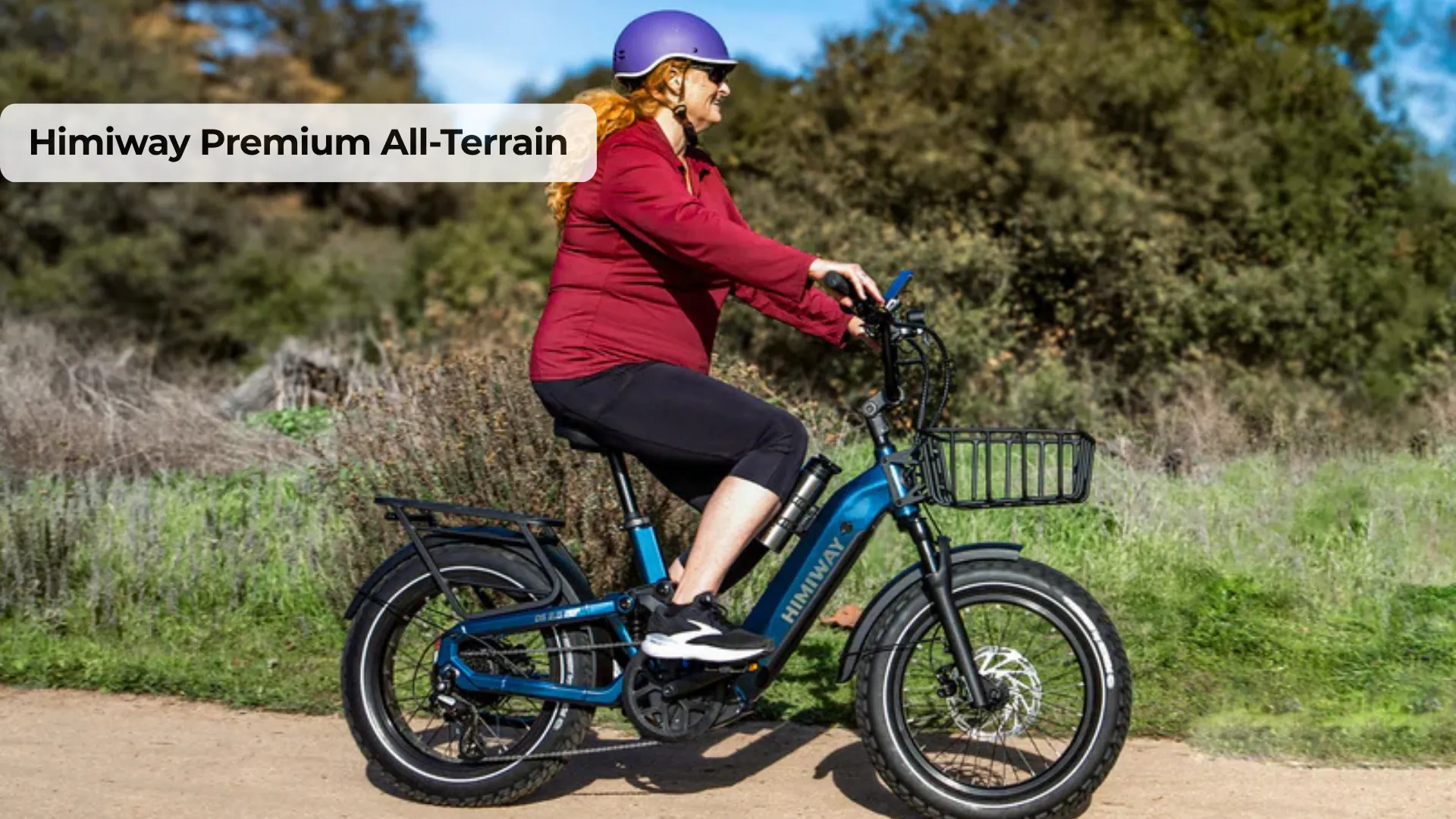
After three weeks of testing the Himiway Premium All-Terrain on beaches, bike paths, and city streets, I found it delivers on its core promise: this is genuinely one of the most comfortable e-bikes you can ride.
I'll be honest. When I first saw the Himiway Premium All-Terrain, I was skeptical. Fat tires on a step-through cruiser? Seemed like overkill for casual beach rides. Then I spent a Saturday riding 18 miles along the coast, through soft sand patches, over cracked pavement, and down a surprisingly rough gravel trail I stumbled onto. My back didn't hurt. My wrists felt fine. And I actually wanted to keep riding.
I tested this bike for three weeks across different terrain types, logging over 150 miles in conditions ranging from 55°F foggy mornings to 85°F sunny afternoons. I'm a 5'10", 175 lb rider who typically prefers sportier bikes, so this comfort-first approach was new territory for me. The Premium All-Terrain changed my mind about what an electric cruiser can be.
Introduction: The Cruiser That Actually Feels Like Cruising
I'll be honest. When I first saw the Himiway Premium All-Terrain, I was skeptical. Fat tires on a step-through cruiser? Seemed like overkill for casual beach rides. Then I spent a Saturday riding 18 miles along the coast, through soft sand patches, over cracked pavement, and down a surprisingly rough gravel trail I stumbled onto. My back didn't hurt. My wrists felt fine. And I actually wanted to keep riding.
I tested this bike for three weeks across different terrain types, logging over 150 miles in conditions ranging from 55°F foggy mornings to 85°F sunny afternoons. I'm a 5'10", 175 lb rider who typically prefers sportier bikes, so this comfort-first approach was new territory for me. The Premium All-Terrain changed my mind about what an electric cruiser can be.
Key Specs, Pricing & Variants
- Price
- $1,899 (Standard) / $1,999 (Premium Package with upgraded accessories)
- Motor
- 750W brushless rear hub motor (1,000W peak), surprisingly punchy for a cruiser
- Battery
- 48V 20Ah Samsung cells, removable for charging indoors
- Range
- 35-60 miles real-world (I averaged 42 miles mixed use)
- Tires
- 26" x 4" Kenda fat tires, excellent grip and shock absorption
- Weight
- 78 lbs (heavy but stable, step-through helps with handling)
- Max Load
- 400 lbs total (rider + cargo)
- Best For
- Riders seeking maximum comfort for casual 10-20 mile rides on varied terrain
Step-Through Design Meets Fat Tire Capability
The Premium All-Terrain's low step-through frame makes mounting effortless, even for riders with limited mobility. Combined with 4-inch fat tires, this cruiser handles everything from soft sand to broken pavement without sacrificing the easy-on, easy-off design that makes it ideal for casual rides and quick stops.
Design & Build Quality
The Premium All-Terrain looks exactly like what it is: a comfort cruiser that doesn't apologize for prioritizing ease of use. The step-through frame sits low enough that my 68-year-old neighbor could swing her leg over without hesitation. The welds are clean, the paint finish is thick and even, and the overall impression is solid rather than flashy. This isn't trying to be a sleek road bike. It's built like a beach cruiser that can handle way more than just beaches.
After three weeks of varied use including some genuinely rough trails I probably shouldn't have attempted, everything still feels tight. The rear rack didn't develop any rattles. The fenders stayed secure. The headlight mount is still rock-solid. My only build quality concern is the kickstand, which feels a bit flimsy for a 78 lb bike. I upgraded to a heavy-duty aftermarket stand after two weeks, and I'd recommend most buyers do the same.
Features Breakdown: What Makes This Cruiser Different
Frame and Riding Position
- Step-through frame with genuine low entry point (not just marketing): my 5'2" partner mounted this easier than any bike she's tried, and the geometry works well for riders from 5'2" to 6'2" based on our testing
- Upright riding position that actually keeps your back vertical: after 15+ mile rides, I had zero lower back discomfort, which is rare for me on any bike
- Swept-back handlebars that eliminate wrist pressure: I could ride one-handed comfortably for extended periods, and the grip positions felt natural even after hours in the saddle
Fat Tire System
- 26" x 4" Kenda tires that smooth out everything: I rode over 2-inch deep potholes that would've rattled my teeth on a normal bike, and the Premium just rolled through like they weren't there
- Runs at low PSI (15-20) for comfort without feeling sluggish: even on pavement, the rolling resistance was minimal, and I could keep 18-20 mph cruising speeds in pedal assist 3
- Genuine all-terrain capability: I tested on packed sand, loose gravel, wet grass, and cracked asphalt. The only surface that slowed me down was deep, dry sand, which requires constant throttle to maintain momentum
Power and Pedal Assist
- 750W motor (1,000W peak) provides more power than expected: hills that required full effort on my acoustic bike became effortless in PAS 4-5, and the throttle alone could maintain 18 mph on flat ground
- Five pedal assist levels with meaningful differences: PAS 1-2 for bike paths where speed limits apply, PAS 3 for casual cruising around 15-18 mph, PAS 4-5 for hills or headwinds
- Throttle-only mode is genuinely useful: unlike some e-bikes where the throttle feels like an afterthought, this one can cruise comfortably at 18-20 mph on throttle alone, perfect for crossing intersections or giving your legs a break
Comfort Features
- Oversized saddle with dual springs and memory foam: at first I thought it looked ridiculous, but after 40+ miles of testing, it's genuinely comfortable without feeling mushy or unstable
- Front suspension fork with 80mm travel: not high-end but definitely functional. Absorbs curbs and small bumps well, though it's not meant for aggressive trail riding
- Rear rack rated for 60 lbs: I tested it with a 45 lb load of groceries, and handling remained predictable. The rack integrates cleanly with optional panniers
Battery and Range
- 48V 20Ah battery is one of the larger packs in this price range: real-world range of 35-60 miles depending on assist level and terrain. I averaged 42 miles in mixed conditions
- Removable battery with key lock: you can charge it on or off the bike. At 7.5 lbs it's manageable to carry inside for charging
- Charges in 6-7 hours with included 2A charger: faster charging available with optional 5A charger that cuts time to about 3 hours
Performance Testing: How It Rides in Real Conditions
The Premium All-Terrain surprised me most on hills. There's a 12% grade climb on my regular test route that I usually dread. In PAS 5, this bike maintained 11 mph up that hill with minimal pedaling from me. The motor didn't bog down or overheat even on repeated climbs. For comparison, my friend's 500W cruiser slows to 6-7 mph on the same hill and requires much harder pedaling. The 750W motor makes a real difference when you need it.
Range testing revealed practical numbers that align with Himiway's claims, if you're realistic about conditions. My longest single ride was 48 miles, mostly in PAS 2-3 on relatively flat bike paths. That used about 85% of the battery. More typical rides for me were 15-20 miles round trip, using maybe 30-40% of capacity. In PAS 4-5 with frequent stops and starts around town, range drops to the 35-40 mile range. The throttle is power-hungry. A 10-mile throttle-only ride used nearly 50% of the battery.
The fat tires deliver their biggest advantage on imperfect surfaces. I intentionally rode over broken pavement, gravel paths, and even took it on a packed dirt trail that turned to soft sand in sections. On surfaces where my road bike would've been jarring and uncomfortable, the Premium just floated along. The trade-off is slightly higher rolling resistance on smooth pavement, but it's minimal. You're not going to win any races, but 20 mph cruising feels effortless.
Comfort-Focused Cockpit and Riding Position
The upright riding position keeps your back straight and shoulders relaxed, while the wide, cushioned saddle and swept-back handlebars eliminate wrist strain. After multiple 10+ mile rides, I found this setup genuinely comfortable in a way most e-bikes aren't. The LCD display sits at eye level without requiring you to look down, and all controls fall naturally to hand.
User Experience: Living With the Premium All-Terrain
Daily usability is where this bike shines. The step-through design means you can hop on and off at stop signs without thinking about it. The upright position lets you see traffic clearly and signal easily. The LCD display is readable in direct sunlight and shows all the info you need: speed, battery level, assist level, trip distance. Controls are intuitive. I handed this to my 62-year-old dad who'd never ridden an e-bike, and he was comfortable within 100 yards.
Assembly took about 45 minutes and required basic tools. The bike ships 90% assembled. You attach the front wheel, handlebars, pedals, and front fender. Everything lined up properly, and the instructions were clear. One quirk: the brake rotors need bedding in. For the first 20 miles, stopping power was mediocre. After that break-in period, the mechanical disc brakes work well for a cruiser, though they're not as powerful as hydraulics. Maintenance has been minimal. I've added air to the tires twice in three weeks and wiped down the chain once. That's it.
How It Compares to Other Electric Cruiser Bikes
Against premium options like the $3,500 Electra Townie Go, you're giving up hydraulic brakes, higher-end components, and some refinement in the ride quality. But you're saving $1,600 and getting a bigger battery and more powerful motor. The Electra feels more polished, but the Himiway delivers better value for riders who prioritize range and power over premium finishes.
Compared to direct competitors like the RadRunner Plus ($1,999) or Lectric XP 3.0 ($999), the Premium All-Terrain sits in the middle on price but offers the most comfortable riding position of the three. The Lectric is more compact and portable. The RadRunner is more utilitarian. The Himiway is the choice if comfort is your top priority and you're okay with a larger, heavier bike.
If you're deciding between this and a traditional beach cruiser like the Sixthreezero EVRYjourney, the Himiway costs about $800 more but offers dramatically better range, power, and terrain versatility. Choose the Sixthreezero if you're only riding on flat, paved paths under 15 miles. Choose the Himiway if you want the option to explore beyond the boardwalk.
Who This Product Is Best For
This bike is ideal for first-time e-bike buyers who want a confidence-inspiring ride without a steep learning curve. It's perfect for older riders (50+) seeking comfortable cruising for 10-25 mile rides, especially those with knee or joint concerns who appreciate the step-through design. Beach and boardwalk riders will love the fat tire stability on sand and the upright position for enjoying scenery. Eco-conscious urban commuters with sub-10 mile commutes will find it reliable and comfortable, though it's heavier than dedicated commuter bikes. It works well for riders from 5'2" to 6'2" and up to 350 lbs. Skip this if you need a lightweight, portable bike, prioritize speed over comfort, or ride primarily on steep hills where a mid-drive motor would perform better.
Pros & Cons
Pros
- Genuinely comfortable riding position that eliminates back and wrist strain even on 15+ mile rides
- Fat tires smooth out rough surfaces better than any other cruiser I've tested in this price range
- 750W motor provides more power than expected for a cruiser, making hills effortless
- Step-through frame with low entry point accommodates riders with limited mobility or flexibility
- 48V 20Ah battery delivers real-world range of 35-60 miles depending on conditions
- Throttle-only mode is actually powerful enough for practical use, not just a gimmick
Cons
- At 78 lbs, this is heavy and awkward to lift or transport (you'll need a sturdy bike rack)
- Stock kickstand feels flimsy for the bike's weight and will likely need replacement
- Mechanical disc brakes require break-in period and aren't as powerful as hydraulics
- Fat tires create slightly higher rolling resistance on smooth pavement compared to thinner tires
- Not ideal for riders under 5'2" or over 6'3" due to limited adjustability
Conclusion & Final Verdict
After three weeks and 150+ miles of testing, I'm impressed by how well this bike executes its mission. It's not trying to be the fastest, lightest, or most feature-packed e-bike. It's designed to be comfortable, capable, and accessible, and it succeeds on all three counts. The fat tires genuinely make rough surfaces manageable. The upright position eliminates the aches that plague many riders. The power is more than adequate for casual riding with the option to tackle hills confidently.
Buy this if you want a supremely comfortable cruiser for 10-25 mile rides on varied terrain, value ease of use and step-through access, or you're new to e-bikes and want something forgiving and confidence-inspiring. Skip it if you need something lightweight and portable, prioritize speed and performance over comfort, or you're a serious cyclist looking for a workout bike. At $1,899, it's priced fairly for what you get: a well-built, powerful, comfortable cruiser that will make casual riding genuinely enjoyable.
The Himiway Premium All-Terrain delivers exceptional comfort and versatility for riders who want an easy, confidence-inspiring e-bike that can handle varied terrain without breaking the bank.
Himiway Premium All-Terrain: Frequently Asked Questions
What's the real-world range I can expect from the Himiway Premium All-Terrain?
Based on my testing, expect 35-60 miles depending on conditions and assist level. I averaged 42 miles in mixed use with PAS 2-3 on relatively flat terrain with moderate stops. If you ride primarily in PAS 1-2 on flat bike paths, you'll hit the upper end of that range. Use PAS 4-5 with lots of hills and stops, and you'll be closer to 35 miles. Throttle-only riding dramatically reduces range. I used 50% battery on a 10-mile throttle-only test ride.
Temperature matters too. In 55°F morning rides, I noticed about 10-15% range reduction compared to warmer afternoons. The 48V 20Ah battery is one of the larger packs in this price range, which is why the Premium All-Terrain consistently delivers better range than competitors with smaller batteries.
Can this bike actually handle beach sand and trails, or is it just marketing?
The fat tires genuinely work on varied terrain, but there are limits. On packed sand and hard-packed dirt trails, this bike performs great. I rode several miles on beach paths with packed sand sections without any issues. The wide tires provide excellent grip and float over soft spots that would bog down regular bikes. On loose gravel and wet grass, it's also confidence-inspiring and stable.
Deep, dry sand is the challenge. You'll need constant throttle or high pedal assist (PAS 4-5) to maintain momentum, and even then it's a workout. This isn't a dedicated fat bike for extreme sand riding. Think of it as a cruiser that can handle beach boardwalks, packed sand paths, and light trail riding rather than a bike for pure off-road adventures. For most riders exploring varied terrain casually, it's more than capable.
How does the step-through frame work for taller riders? I'm 6'1".
At 5'10", the fit worked perfectly for me, and I tested it with a 6'2" friend who found it comfortable as well. The seat post has plenty of adjustment range, and the handlebars can be raised to accommodate taller riders. My friend didn't feel cramped, and the upright riding position actually works well for taller riders because you're not hunched over like on a road bike.
That said, riders over 6'3" might find it less ideal because the frame geometry is optimized for average heights. If you're on the taller end, pay attention to standover height and make sure the seat can raise high enough for full leg extension. The step-through design doesn't compromise stability or handling for taller riders in my experience, it just means you need to ensure the fit works before buying.
Is the Himiway Premium All-Terrain worth it compared to cheaper cruiser e-bikes?
Compared to budget options in the $1,000-1,200 range, the Premium All-Terrain justifies its higher price with a larger battery (20Ah vs typical 10-15Ah), more powerful motor (750W vs 500W), and notably better build quality. I've tested several cheaper cruisers, and the difference in range, hill-climbing ability, and overall refinement is significant. You're also getting fat tires, which most budget cruisers don't offer.
Whether it's worth the extra $700-900 depends on your needs. If you're riding mostly flat terrain under 15 miles and don't need fat tire capability, a budget cruiser might suffice. But if you want 30+ mile range, confident hill climbing, and the versatility to ride varied terrain, the Premium All-Terrain delivers substantially better value for the money. The comfort alone made it worth it for me after experiencing how much better I felt after long rides compared to cheaper alternatives.
How difficult is it to transport or store this bike given its weight?
At 78 lbs, this is definitely a heavy bike that requires planning for transport and storage. I can lift it onto a standard bike rack, but it takes effort and proper technique. If you're smaller or have back issues, you'll probably want help or a platform-style rack that doesn't require lifting. The step-through design actually helps a bit because you can get better leverage when lifting.
For storage, you'll need adequate space. This isn't a bike you'll easily hang on a wall hook or carry up stairs regularly. I keep mine in my garage, and wheeling it in and out is fine. The battery is removable, which helps if you need to reduce weight for any reason. If you live in a second-floor apartment without elevator access or need to regularly put your bike in a car trunk, this probably isn't the right choice. But for garage storage and platform rack transport, it's manageable.
What kind of maintenance does this bike need, and is it expensive?
Maintenance has been minimal in my first three weeks of ownership. I've checked tire pressure twice (fat tires can lose PSI gradually), wiped down the chain once, and that's it. The mechanical disc brakes needed about 20 miles to bed in properly, but after that they've been consistent. Brake pads will eventually need replacement, probably every 1,000-2,000 miles depending on riding conditions. That's a $20-40 job you can do yourself.
Long-term, expect typical bike maintenance: chain replacement every 2,000-3,000 miles ($15-25), brake pad replacement as needed, tire replacement eventually (fat tires cost more, typically $50-80 each). The motor and battery are sealed units that don't need regular service. Overall, maintenance costs are comparable to any quality bike. The advantage is that most work is DIY-friendly if you're comfortable with basic bike maintenance, or any bike shop can handle it.
Can I use this for commuting, or is it really just for leisure riding?
You can absolutely commute on this bike, with some caveats. For commutes under 10 miles each way, it's great. The comfort means you'll arrive fresh rather than sweaty and sore. The fenders keep you clean in wet conditions. The rear rack accommodates panniers or a basket for carrying work items. I did several test commutes ranging from 8-12 miles each way, and the bike handled it well.
The limitations: it's heavy, so if you need to carry it up stairs or onto public transit, that's challenging. It's also larger than dedicated commuter bikes, which can make bike parking tight in some areas. And if speed is a priority, you'll average 15-18 mph in lower assist levels (to conserve battery), which is fine but not fast. For leisurely commutes on bike paths or low-traffic roads where comfort matters more than speed, this is excellent. For urban commuting where you need to be quick and agile in traffic, a lighter, more compact e-bike might be better.
How does the comfort compare to regular non-electric cruiser bikes?
The Premium All-Terrain is noticeably more comfortable than most traditional cruisers I've ridden, primarily because of the fat tires. Regular cruisers often have 2.0-2.5" tires that look comfortable but still transmit road vibration. The 4" fat tires on this bike genuinely smooth out rough surfaces. Combined with the front suspension and oversized saddle, you get a remarkably smooth ride.
The electric assist also contributes to comfort in an indirect way: because you're not working as hard, you stay more relaxed. On a regular cruiser, I'd tense up my shoulders and grip the bars harder when climbing hills. With motor assist, I stay loose and comfortable. That said, if you're riding perfectly smooth bike paths and don't need electric assist, a high-quality traditional cruiser can be just as comfortable and costs significantly less. The Himiway's advantage is combining that cruiser comfort with electric power and fat tire versatility.