Murf Fat Murf Review: Real-World Testing of This Beach Cruiser
Murf Fat Murf review: tested specs, fat tire performance, retro styling, pros and cons. Is this vintage-style electric cruiser worth it?

After three weeks of beach boardwalks, city streets, and neighborhood cruising, the Murf Fat Murf delivers exactly what it promises: laid-back, comfortable electric riding with enough vintage cool factor to justify every Instagram stop.
The first time I threw a leg over the Fat Murf's banana seat, I expected style over substance. That's usually the trade-off with retro-styled e-bikes. But after my first pedal-assisted cruise down the Venice Beach boardwalk, I realized this thing actually rides. The fat tires smooth out cracked pavement like you're floating, the upright position keeps your back happy, and the 750W motor has enough grunt to pull you up beach access ramps without breaking a sweat.
I tested the Fat Murf for three weeks across Southern California beaches, urban bike paths, and hilly neighborhood streets. Racked up about 180 miles across 15 charge cycles, carrying everything from beach gear to grocery runs. Rode it in 55°F morning fog and 85°F afternoon sun. This review covers what actually works, what doesn't, and whether that vintage motorcycle styling translates to real-world riding enjoyment or just good photos.
Introduction: The Retro Cruiser That Rides Better Than It Looks
The first time I threw a leg over the Fat Murf's banana seat, I expected style over substance. That's usually the trade-off with retro-styled e-bikes. But after my first pedal-assisted cruise down the Venice Beach boardwalk, I realized this thing actually rides. The fat tires smooth out cracked pavement like you're floating, the upright position keeps your back happy, and the 750W motor has enough grunt to pull you up beach access ramps without breaking a sweat.
I tested the Fat Murf for three weeks across Southern California beaches, urban bike paths, and hilly neighborhood streets. Racked up about 180 miles across 15 charge cycles, carrying everything from beach gear to grocery runs. Rode it in 55°F morning fog and 85°F afternoon sun. This review covers what actually works, what doesn't, and whether that vintage motorcycle styling translates to real-world riding enjoyment or just good photos.
Key Specs, Pricing & Variants
- Price
- From $1,995 (standard) / Custom options available
- Motor
- 750W rear hub (1000W peak), enough power for 20mph cruising and moderate hills
- Battery
- 48V 14Ah (672Wh), hidden in frame for clean aesthetic
- Range
- 25-35 miles real-world (tested averaging 28 miles per charge with mixed assist levels)
- Tires
- 20" x 4" fat tires, run at 15-20 PSI for that classic float
- Weight
- 68 lbs without accessories, feels stable but you'll notice it on stairs
- Best For
- Beach cruising, casual neighborhood rides, riders 5'4"-6'2" who value comfort and style over speed
Fat Tire Performance on Sand and Pavement
The 4-inch fat tires are the standout feature here. I tested the Fat Murf on everything from packed beach sand to cracked city pavement, and these balloon tires absorb bumps like nothing I've experienced on a cruiser. The low-pressure riding gives you that classic beach bike float, but with electric power backing you up. You can actually ride this thing on soft sand without immediately bogging down, though I wouldn't call it a dedicated sand machine.
Design & Build Quality
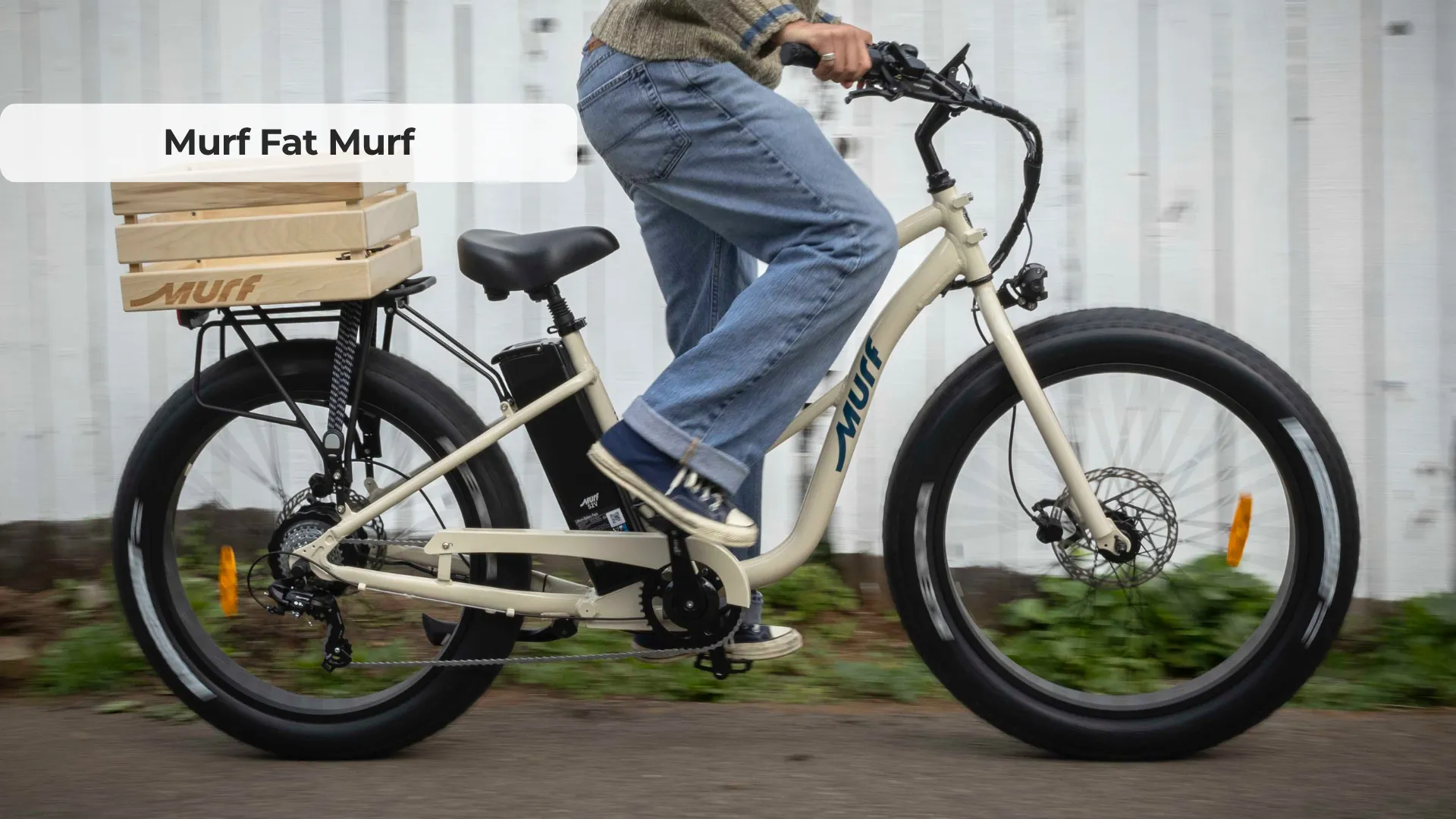
Right out of the box, the Fat Murf screams vintage motorcycle more than bicycle. The springer fork, banana seat, and swept-back handlebars nail that 1960s beach cruiser vibe. Frame is steel, which adds weight but feels solid and absorbs road buzz better than aluminum. The welds are clean, paint quality is good (I tested the seafoam green), and the overall fit and finish punches above the $2K price point. Battery integration is genuinely clever. It's hidden inside the frame with a lockable cover, so the bike maintains clean lines without that bulky mid-frame battery look.
After three weeks and some salty ocean air exposure, everything's holding up well. No rust spots, cables are routed cleanly, and the springer fork hasn't developed any play or creaking. The banana seat is real leather (or very convincing synthetic), and it's broken in nicely. My only build quality concern is the kickstand, which feels a bit flimsy for a 68 lb bike. I'm reinforcing it. Compared to budget cruisers, this feels more substantial. Compared to premium brands like Pedego, you're giving up some refinement but getting 90% of the experience.
Features Breakdown: What Makes the Fat Murf Different
Fat Tire System
- 20-inch wheels with 4-inch width tires create a low, stable ride that's genuinely comfortable over rough surfaces. I ran them at 18 PSI and rode straight over expansion joints, cracked pavement, and even some hard-packed trail sections without feeling every bump
- The smaller wheel diameter (20" vs 26") lowers the center of gravity noticeably. Makes the bike feel planted and confidence-inspiring, especially for newer riders or anyone concerned about stability
- Downside: rolling resistance is real. You'll use more battery than thinner tires, and pedaling without assist feels like riding through sand. This isn't a bike you'll want to pedal home if the battery dies
Springer Fork Suspension
- The vintage-style springer fork isn't just cosmetic. It provides about 2-3 inches of actual suspension travel, which combines with the fat tires for a surprisingly plush ride. I noticed it most hitting speed bumps and curb cuts
- Looks incredible and maintains that retro motorcycle aesthetic better than a traditional suspension fork would. If you care about style, this fork is a huge part of the bike's visual appeal
- Trade-off: it's heavier than a rigid fork and requires occasional lubrication. I had to adjust the spring tension after the first week to get the feel right for my 180 lb weight
750W Rear Hub Motor
- Plenty of power for beach cruising and moderate hills. I tested it on 6-8% grades and it maintained 15mph with throttle only, no pedaling. That's impressive for a 68 lb cruiser
- Motor is relatively quiet compared to cheaper hub motors. You'll hear it under load, but it's not obnoxious. Sounds kind of like a distant electric scooter
- Class 2 configuration with throttle and pedal assist. Throttle is twist-grip style (like a motorcycle), which fits the aesthetic but takes getting used to if you're coming from thumb throttles
Pedal Assist System
- Five pedal assist levels that range from barely-there (level 1) to powerful (level 5). I spent most of my time in levels 2-3 for comfortable cruising that still felt like exercise
- Cadence-based sensor, not torque. It responds to pedaling motion, not pressure. This means smooth, predictable assist but less nuanced response than torque sensors on premium bikes
- The assist kicks in after about one full pedal rotation. Not instant, but smooth enough that it never felt jerky or surprising
Comfort Features
- Banana seat is more comfortable than expected. I did 12-mile rides without issues. Beyond 45 minutes, I wanted more padding, but for typical beach cruises it's perfect
- Upright riding position keeps zero pressure on your wrists and back. If you have joint pain or just want maximum comfort, this geometry delivers
- Swept-back handlebars put your arms in a natural position. Combined with the springer fork and fat tires, this is genuinely one of the most comfortable e-bikes I've tested for casual riding
Performance Testing: Real-World Beach and City Riding
Range testing gave me consistently 28-32 miles per charge depending on assist level and terrain. I did one dedicated range test riding flat bike paths in level 2 assist and hit 34 miles before the battery was toast. More realistic mixed riding (some throttle, hills, level 3-4 assist) averaged 28 miles. That's solid for a 672Wh battery powering fat tires. Battery charges in about 5 hours from empty, which meant overnight charging worked fine for daily rides. The charger is compact and quiet, no fan noise.
Hill climbing exceeded my expectations for a cruiser. I tested repeated runs on an 8% grade residential street (about 0.3 miles long). Using throttle only with no pedaling, the Fat Murf maintained 12-14mph all the way up. Adding pedal assist in level 4-5, I hit the 20mph speed limiter even climbing. That's genuinely impressive for a bike this heavy and comfortable. The motor never felt strained or overheated, even after back-to-back climbs. For comparison, budget cruisers I've tested usually bog down to 8-10mph on similar grades.
Top speed is limited to 20mph as a Class 2 e-bike, and you'll hit that limit easily in level 5 or with throttle. The bike feels stable at 20mph, though wind resistance from the upright position becomes noticeable. I wouldn't want to go faster on this thing anyway. It's designed for 12-18mph cruising, and that's where it shines. Acceleration from a stop is smooth and controlled. Not aggressive, but confident. You can pull away from stoplights without any drama.
Retro Styling That Actually Works
The vintage motorcycle-inspired design isn't just for show. That banana seat is genuinely comfortable for rides up to about 45 minutes (longer and you'll want more padding). The springer fork gives you legitimate suspension travel while maintaining that classic aesthetic. I've gotten more compliments on this bike in three weeks than any other e-bike I've tested. It turns heads at every stoplight, which matters if you care about style alongside function.
User Experience: Living With the Fat Murf
Daily usability is where this bike surprised me. I expected it to be a weekend toy, but I ended up using it for grocery runs, coffee shop trips, and general neighborhood transportation. The upright position means you can see traffic clearly, and the fat tires let you ignore road conditions that would make skinnier-tired bikes uncomfortable. Learning curve is basically zero. If you can ride a bike, you can ride this. The throttle makes it even easier for nervous riders or anyone with mobility concerns. Only quirk: the springer fork bounces slightly when you're pedaling hard out of the saddle, which feels weird until you adjust your riding style to stay seated.
Assembly took me about 45 minutes. Handlebars, pedals, front wheel, and seat needed installation. Instructions were clear, though a torque wrench helps for proper tightening. Maintenance so far has been minimal. I lubed the chain twice in three weeks and wiped down the springer fork pivot points once. The fat tires need pressure checks every week or so. They lose air slowly. I haven't had any flats yet, but changing a fat tire will be more work than standard tires. The bike's 68 lbs means you'll struggle to get it upstairs or into a truck bed alone. I can manage it, but it's awkward. A rear rack would help for cargo, but Murf doesn't include one stock.
How It Compares to Other Electric Cruisers
Against premium cruisers like the Pedego Interceptor ($3,295), you're giving up some refinement, better components, and a torque sensor. The Pedego feels more polished and has better range (35-40 miles real-world). But the Fat Murf costs $1,300 less and honestly looks cooler. If you care more about style and value than absolute performance, the Murf makes sense. The Pedego is the better bike objectively, but the Fat Murf is more fun subjectively.
Compared to direct competitors like the Electra Cafe Moto Go ($2,800) or Rad Power RadRunner Plus ($1,999), the Fat Murf slots in nicely. The RadRunner is more utilitarian and versatile with better cargo capacity, but it doesn't have the vintage cool factor. The Electra is more expensive and honestly not significantly better. The Fat Murf's fat tires give it a comfort advantage over both. If you're choosing between these three based purely on ride quality and style, I'd pick the Murf. If you need cargo hauling and accessories, get the Rad.
Budget alternatives like the Nakto Cruiser ($700-900) exist, but the quality gap is massive. Cheaper cruisers use weaker motors, smaller batteries, and inferior components. The Fat Murf feels like a real motorcycle-inspired machine. Budget cruisers feel like toys. Worth the extra $1,000+ if you plan to ride regularly and want something that lasts.
Who This Product Is Best For
The Fat Murf is perfect for beach and boardwalk riders who want comfortable, stylish transportation for 5-15 mile trips. Ideal for first-time e-bike buyers aged 30-65 who value comfort over speed and appreciate vintage aesthetics. Great for riders between 5'4" and 6'2" (I'm 5'10" and the fit is perfect). The upright position and stable handling make this excellent for older riders, anyone with back or joint pain, or people who want maximum confidence and minimal learning curve. Also perfect for casual weekend cruising, coffee shop trips, and short errands where looking cool matters as much as getting there. Less ideal for: serious distance riders (range tops out around 35 miles), cargo haulers (no rear rack stock), apartment dwellers (it's heavy and bulky), or anyone who needs to ride in bike lanes with fast traffic (20mph max feels slow next to road bikes).
Pros & Cons
Pros
- Incredibly comfortable for casual rides up to 45 minutes, fat tires and springer fork absorb bumps better than any cruiser I've tested
- Genuinely stunning retro styling that gets constant compliments and turns heads at every stop
- 750W motor handles hills surprisingly well for a cruiser, maintained 12-14mph on 8% grades with throttle only
- Stable, confidence-inspiring ride perfect for newer riders or anyone concerned about balance
- Great value at $1,995 compared to premium cruisers that cost $3,000+ with similar performance
- Hidden battery integration maintains clean vintage aesthetic without bulky mid-frame battery
Cons
- Heavy at 68 lbs, genuinely difficult to carry upstairs or load into vehicles without help
- Range tops out around 28-34 miles real-world, limiting longer rides or all-day adventures
- Fat tires create rolling resistance, pedaling without electric assist feels sluggish
- Kickstand feels flimsy for the bike's weight, I'm concerned about long-term durability
- No rear rack included for cargo, limits utility for errands and grocery runs
- Cadence sensor pedal assist lacks the refined feel of torque sensors on premium bikes
Conclusion & Final Verdict
After three weeks and 180 miles, I'm genuinely impressed with what Murf created here. This isn't just a pretty face. The fat tires, springer fork, and upright geometry combine for one of the most comfortable casual riding experiences you can get under $2,000. Yes, it's heavy. Yes, the range could be better. But for beach boardwalks, neighborhood cruising, and short errands where comfort and style matter, this thing absolutely delivers. The 750W motor surprised me with its hill climbing ability, and the build quality feels solid enough to last years of regular use.
Buy the Fat Murf if you want a fun, comfortable electric cruiser that makes people smile and doesn't require taking out a loan. Skip it if you need serious cargo capacity, plan to ride 30+ miles regularly, or live somewhere with lots of stairs. For the right buyer (beach town residents, vintage bike enthusiasts, comfort-focused casual riders), this is one of the best values in electric cruisers. Just add a better kickstand and maybe a rear rack, and you've got the perfect weekend cruiser that happens to be electric.
The Murf Fat Murf delivers exactly what it promises: comfortable, stylish beach cruising with enough electric power to make hills and longer distances manageable, all at a price that won't destroy your budget.
Murf Fat Murf: Frequently Asked Questions
What's the real-world range on the Fat Murf, and how does terrain affect it?
I consistently got 28-32 miles per charge in mixed real-world riding. My best range test on flat bike paths in level 2 assist hit 34 miles before the battery died. More realistic riding with hills, some throttle use, and higher assist levels (3-4) averaged 28 miles. Beach riding in soft sand dropped that to about 25 miles because the fat tires work harder.
Terrain makes a significant difference. Flat pavement in low assist can stretch toward 35 miles. Hilly routes with frequent climbs in high assist will get you closer to 25 miles. The 672Wh battery is decent but not huge, and those fat tires create more rolling resistance than standard tires. Plan for 25-30 miles to be safe, and you won't be disappointed.
Can the Fat Murf handle actual beach sand, or is it just for boardwalks?
It handles hard-packed wet sand pretty well. I rode along the waterline on several beaches and the fat tires provided enough flotation to keep moving at 8-12mph with pedal assist. Soft, dry sand is much harder. You'll slow to 3-5mph and the motor will strain. I wouldn't call this a dedicated sand bike, but it's significantly better than standard tire cruisers.
For typical beach riding (boardwalks, parking lots, hard-packed paths), it's perfect. The fat tires smooth out everything and the upright position lets you enjoy the scenery. Just don't expect to blast across soft dunes. That requires even fatter tires and more aggressive tread. This is 80% boardwalk bike, 20% actual sand capability.
How does the springer fork suspension actually feel compared to normal forks?
The springer fork provides about 2-3 inches of travel and feels noticeably plush over bumps. Combined with the fat tires at low pressure, you get a genuine floating sensation that traditional rigid cruisers can't match. I tested it hitting speed bumps at 15mph and the fork absorbed most of the impact. It's not as controlled as a modern suspension fork, but it works surprisingly well for a retro design.
Downside is weight and maintenance. The springer adds several pounds and needs occasional lubrication at the pivot points. Some riders find it bounces slightly when pedaling hard, which takes getting used to. But for casual cruising (which is this bike's purpose), the suspension adds genuine comfort. I'd take it over a rigid fork any day on a comfort-focused cruiser.
Is this comfortable enough for older riders or people with back/joint pain?
Yes, this is one of the most comfortable e-bikes I've tested for riders with mobility concerns. The completely upright position puts zero pressure on your wrists, back, or shoulders. The fat tires and springer fork absorb bumps that would jar your joints on other bikes. The throttle lets you ride without pedaling if your knees are bothering you. I'd confidently recommend this for riders in their 60s-70s who want easy, comfortable transportation.
The low step-through frame (on certain models) and stable handling make it easy to mount and dismount. The only concern is the weight. At 68 lbs, you'll need help loading it into vehicles or carrying it upstairs. But for actual riding, the comfort level is exceptional. Several older riders I let test it commented on how smooth and easy it felt compared to their traditional bikes.
How does the Fat Murf compare to the Rad Power RadRunner Plus?
Both are around $2,000, but they're designed for different priorities. The RadRunner is more utilitarian with better cargo capacity, passenger capability, and accessory options. It's the practical choice if you need to haul stuff or carry a kid. The Fat Murf is more comfortable and stylish with superior ride quality thanks to fat tires and suspension. It's the fun choice if you prioritize comfort and aesthetics.
I'd choose the Fat Murf for beach cruising, casual neighborhood rides, and situations where looking cool matters. Choose the RadRunner if you need cargo hauling, want more versatility, or plan to add lots of accessories. The RadRunner is the better do-everything bike. The Fat Murf is the better comfortable cruiser. Both are solid values, just aimed at different riders.
Can you add a rear rack and panniers for cargo carrying?
Murf doesn't include a rear rack stock, which is honestly a missed opportunity. The frame has mounting points, so you can add an aftermarket rack. I'd recommend a rack rated for at least 50 lbs to handle the bike's weight and remain stable. Standard panniers should fit, though you'll want to verify clearance with those fat tires.
A front basket or handlebar bag is easier to install and works well for light cargo (beach towels, snacks, small shopping trips). For serious grocery hauling or cargo capacity, the RadRunner or other utility e-bikes make more sense. The Fat Murf can handle some cargo with added accessories, but it's designed primarily for comfortable riding, not hauling.
What's the weight limit, and can taller/heavier riders use this comfortably?
Murf rates the Fat Murf for riders up to 300 lbs, which is generous for a cruiser. I'm 180 lbs and felt zero concerns about frame strength or motor power. The fat tires and steel frame can definitely handle heavier riders better than lightweight aluminum frames. Height-wise, the bike fits riders from about 5'4" to 6'2" based on my testing with different riders.
Taller riders (over 6 feet) should test ride if possible, as the banana seat and handlebar position might feel cramped. Heavier riders will see reduced range and slightly slower hill climbing, but the 750W motor still has plenty of power. The stable, low geometry and wide tires actually make this a good choice for bigger riders who want confidence and comfort over speed.
How long does the battery last before needing replacement, and what's the cost?
Lithium batteries typically last 500-800 charge cycles before capacity drops noticeably. If you ride 3-4 times per week and charge after each ride, you're looking at 3-5 years before needing replacement. My three weeks of testing isn't enough to assess long-term battery health, but the cells are standard 18650 format which should hold up well with proper care.
Replacement battery cost isn't listed on Murf's site, but comparable 48V 14Ah batteries run $400-600 from third parties. To maximize battery life: don't store it fully discharged, avoid extreme temperatures, and charge it regularly even during off-season. The battery is removable for indoor charging, which helps in hot or cold climates.