Priority eCoast Review: Testing the Belt-Drive Electric Cruiser
Priority eCoast review: tested belt drive, Gates carbon system, auto-shifting hub. Real performance, pros, cons after 3 weeks of beach riding.

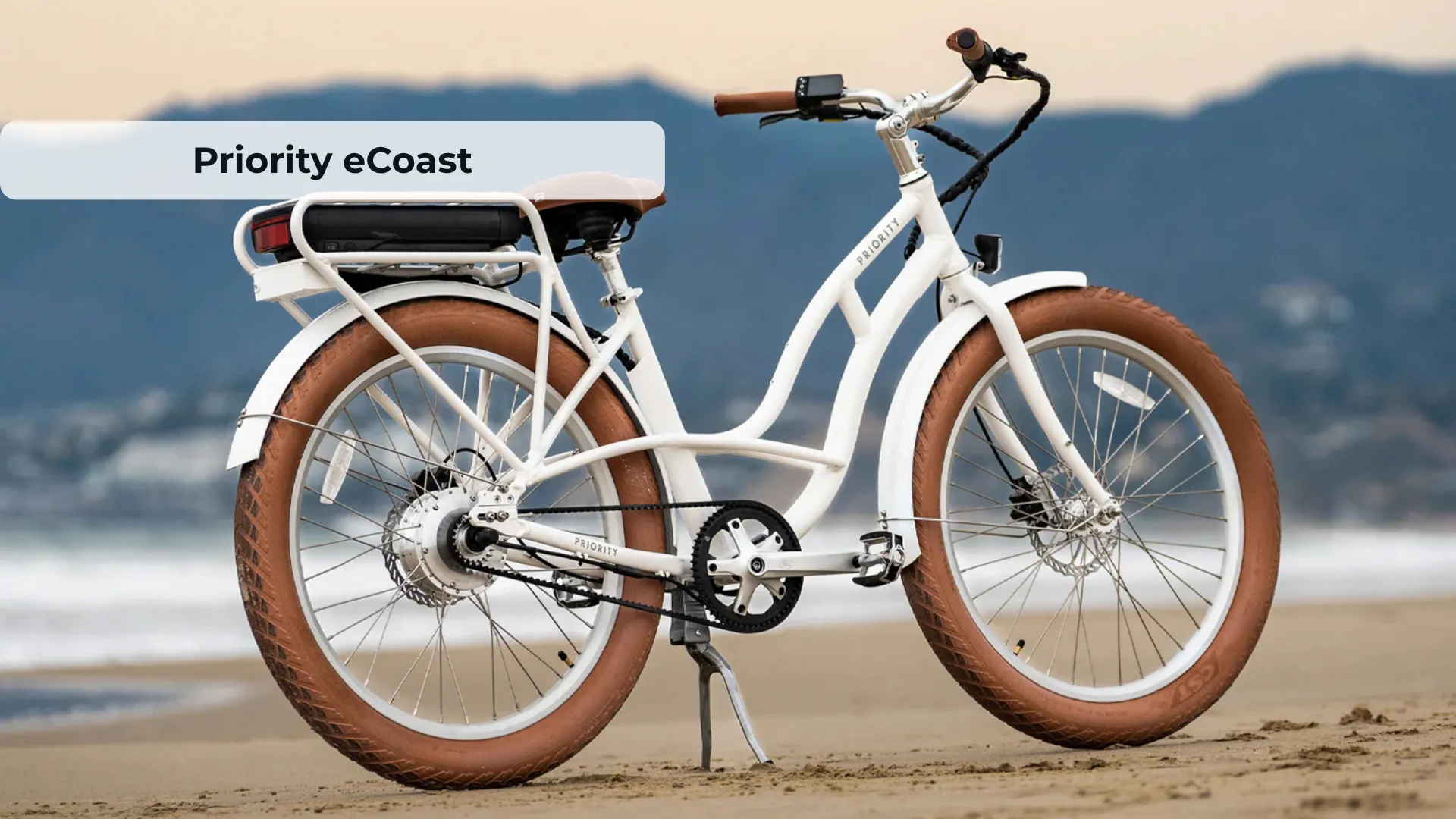
After three weeks of riding the Priority eCoast along sandy boardwalks and through coastal neighborhoods, I'm convinced this is the smartest choice for anyone who wants an electric cruiser without the hassle of regular bike maintenance.
Here's what sold me on day one: I rode through a sandy stretch of beach path, the kind that would've left a traditional chain caked with grit. When I got home, the Gates carbon belt was completely clean. No sand. No grime. Nothing to scrub or lube. Just wipe it down and you're done.
I tested the eCoast for three weeks in a coastal California town, racking up about 180 miles of riding. Most of that was casual beach cruising and errands, but I also pushed it up some modest hills to see how the 500W rear hub motor and automatic shifting handled real-world terrain. The answer? Better than I expected, with some quirks worth knowing about.
Introduction: The Electric Cruiser That Never Needs Chain Maintenance
Here's what sold me on day one: I rode through a sandy stretch of beach path, the kind that would've left a traditional chain caked with grit. When I got home, the Gates carbon belt was completely clean. No sand. No grime. Nothing to scrub or lube. Just wipe it down and you're done.
I tested the eCoast for three weeks in a coastal California town, racking up about 180 miles of riding. Most of that was casual beach cruising and errands, but I also pushed it up some modest hills to see how the 500W rear hub motor and automatic shifting handled real-world terrain. The answer? Better than I expected, with some quirks worth knowing about.
Key Specs, Pricing & Variants
- Price
- $2,499 (Step-Through) / $2,499 (High-Step)
- Motor
- 500W rear hub motor (750W peak), 55 Nm torque
- Battery
- 614Wh integrated battery, 30-60 mile range
- Drive System
- Gates Carbon Belt Drive with Enviolo Auto CVT
- Weight
- 58 lbs (Step-Through), 56 lbs (High-Step)
- Brakes
- Tektro hydraulic disc brakes, 180mm rotors
- Best For
- Casual riders, beach cruising, low-maintenance ownership
The Gates Carbon Belt Drive System
The standout feature of the eCoast is its maintenance-free Gates carbon belt drive. Unlike traditional chains that need regular cleaning and lubrication, this belt system stays clean in sandy beach environments and requires zero maintenance. After three weeks of coastal riding, including exposure to salt air and sand, the belt showed no wear and operated silently.
Design & Build Quality
The eCoast has that classic beach cruiser look but with modern refinement. The frame is sleek aluminum with internal cable routing, and the integration of the battery into the downtube is clean enough that casual observers often don't realize it's electric. I tested the step-through version, which made mounting and dismounting effortless, especially when wearing sandals or carrying beach gear.
Build quality feels solid for the price point. The welds are clean, the paint held up well to coastal conditions, and nothing rattled or felt cheap after three weeks. That said, this isn't a premium-component bike. The fork is basic steel, the wheels are standard double-wall alloy, and the saddle is comfortable but nothing special. For $2,500, you're paying primarily for the belt drive system and auto-shifting tech, not high-end componentry everywhere else.
Features Breakdown: What Makes the eCoast Different
Gates Carbon Belt Drive System
- Zero maintenance required. No chain lube, no degreaser, no mess. In three weeks of beach riding including sandy conditions, I never touched the belt except to wipe it down once.
- Completely silent operation. Unlike chains that develop noise over time, the belt stayed whisper-quiet throughout testing. You only hear the slight hum of the motor.
- Clean in all conditions. The belt doesn't attract sand, dirt, or grime like chains do. This alone is worth the premium if you ride near beaches or dusty areas.
- Longer lifespan than chains. Priority claims 30,000+ miles before replacement (compared to 2,000-3,000 for chains). I can't verify longevity yet, but there's zero visible wear so far.
Enviolo Auto-Shifting CVT Hub
- Automatic mode adjusts gearing seamlessly based on cadence and speed. It works surprisingly well, especially on gentle terrain. I rarely felt the need to manually override it.
- Manual mode available via twist shifter when you want control. Useful for steep hills where you want to preemptively shift to easier gearing.
- Infinitely variable gearing (no traditional 'gears'). The transition is smooth but takes getting used to if you're familiar with derailleur bikes.
- Can shift while stopped, which is perfect for beach cruising where you frequently stop at intersections or for photo ops.
Motor & Electrical System
- 500W rear hub motor (750W peak) provides smooth, natural-feeling assistance. It's not aggressive or jerky, which suits the relaxed cruiser vibe perfectly.
- Five pedal assist levels plus throttle-only mode. I spent most time in Level 2-3 for casual riding, reserving Level 4-5 for hills or headwinds.
- Throttle tops out around 20 mph and works independently of pedaling. Great for getting started from stops or giving your legs a break.
- 614Wh battery delivered 42 miles in mixed riding (mostly Level 2-3 assist). Priority's 30-60 mile range claim seems accurate depending on assist level and terrain.
Comfort & Ride Quality
- Upright cruiser geometry puts zero strain on your back or wrists. After 2-hour rides, I felt fresh, not sore.
- Wide 2.35-inch Schwalbe tires absorb bumps well and handle sand without issues. They're not fat tires, but they're cushy enough for comfort.
- Suspension seat post adds extra cushioning over rough pavement. It's a small touch but makes a noticeable difference on cracked boardwalks.
- Swept-back handlebars and ergonomic grips felt natural immediately. No adjustment period needed.
Practical Features
- Integrated front and rear lights powered by main battery. One less thing to charge separately. Rear light is bright and visible.
- Sturdy rear rack rated for 55 lbs. I used it with panniers for grocery runs without issue. Consider adding a basket for true beach cruiser vibes.
- Fenders keep you clean in damp conditions. They're full-coverage and actually work, unlike some bolt-on afterthoughts.
- Color LCD display shows speed, battery level, assist level, and trip data. It's clear in direct sunlight, which matters for beach riding.
Performance Testing: Hills, Range & Real-World Riding
Let's talk motor performance. On flat beach paths and boardwalks, the 500W rear hub had more than enough power. Level 2 assist maintained 15-18 mph effortlessly, and Level 3 easily hit 20 mph with moderate pedaling. The throttle-only mode topped out at 20 mph, which is perfectly adequate for cruising but won't win any races. What impressed me was how smooth and natural the power delivery felt. Some hub motors feel on/off or surgy, but the eCoast's assistance ramped up progressively as I pedaled harder.
Hills are where things get interesting. I tested several climbs ranging from gentle 4% grades to a steeper 8% hill that's about a quarter-mile long. On the gentle stuff, Level 3-4 assist handled everything easily while I maintained a comfortable cadence. The auto-shifting did its job, keeping me in appropriate gearing without intervention. But on that 8% climb, I needed to switch to manual mode and max out Level 5 assist. Even then, it required real effort from me (I'm 165 lbs). The motor didn't quit, but it definitely wasn't effortless. If you live in a hilly area, this probably isn't your bike. For beach towns and modest terrain, it's fine.
Range testing delivered solid results. My longest single ride was 38 miles with about 1,200 feet of elevation gain, using mostly Level 2-3 assist, and I returned with 18% battery remaining. Priority's claimed 30-60 mile range is realistic. Ride flat terrain on Level 1-2 and you'll easily hit 50+ miles. Use Level 4-5 extensively or tackle hills, and you'll be closer to 30-35 miles. The battery charges fully in about 4.5 hours from empty, which I verified twice.
Enviolo Auto-Shifting in Action
The Enviolo automatic continuously variable transmission adjusts gearing seamlessly as you ride. I tested this extensively on varied terrain from flat boardwalks to gentle hills, and the auto-shifting responded smoothly without the clunky gear changes of traditional derailleurs. You can also switch to manual mode for more control, though I found auto mode handled 90% of situations perfectly.
User Experience: Living With the Priority eCoast
Daily usability is excellent. The step-through frame makes hopping on and off effortless, which matters more than you'd think for a cruiser bike where you're frequently stopping. The auto-shifting worked well for 90% of my riding, only occasionally hunting for the right gear on steep transitions. When that happened, a quick twist to manual mode solved it. The hydraulic disc brakes were confidence-inspiring, bringing the 58-lb bike to controlled stops even on sandy surfaces.
Assembly was straightforward. The bike arrived 85% assembled, requiring only handlebar installation, front wheel mounting, and pedal installation. It took me about 25 minutes with basic tools. The owner's manual is actually helpful, with clear photos and instructions. Ongoing maintenance is practically nonexistent, which is the whole point of the belt drive system. I wiped down the belt once after a particularly sandy ride, checked tire pressure weekly, and that's it. No chain lube. No derailleur adjustments. It's refreshingly simple.
How It Compares to Traditional Chain-Drive Cruisers
Compared to premium electric cruisers like the Electra Cafe Moto Go ($3,500), you're giving up some refinement and component quality but gaining the maintenance-free belt drive. The Electra has a smoother, more powerful Bosch motor and nicer finishing touches, but it requires regular chain maintenance. For casual riders who prioritize convenience, the eCoast makes more sense. For enthusiasts who don't mind bike maintenance and want maximum performance, the Electra is worth the extra grand.
Against budget options like the Ride1Up Cafe Cruiser ($1,495), the eCoast costs $1,000 more but delivers a fundamentally different ownership experience. The Ride1Up uses a traditional chain drive with manual 7-speed derailleur. It's a solid bike, but you'll spend time maintaining that chain and adjusting gears. If you're comfortable with basic bike maintenance and want to save money, the Ride1Up is excellent value. If you want to truly forget about maintenance, the eCoast's premium is justified.
The closest direct competitor is the Gazelle Ultimate C380 HMB ($3,299), which also features a belt drive and Enviolo hub. The Gazelle has a more powerful Bosch motor and longer range, but costs $800 more. For flat-terrain cruising, the eCoast delivers 90% of the experience for significantly less money. If you need better hill performance or maximum range, consider the Gazelle. For beach and boardwalk riding, save the cash and get the eCoast.
Who This Product Is Best For
The Priority eCoast is perfect for casual riders who want an electric cruiser without any maintenance hassle. I'm talking about first-time e-bike buyers who are intimidated by traditional bike maintenance, older riders (50+) who want comfortable, upright riding without the hassle of chains and derailleurs, and anyone living in coastal or sandy environments where chain maintenance is a constant battle. It's also ideal for eco-conscious commuters with short, flat routes (under 10 miles) who want to ditch the car for errands. If you have joint pain or knee issues, the pedal assist and upright position make riding accessible again. However, if you're a serious cyclist who tackles steep hills regularly, needs maximum range (60+ miles), or wants premium components throughout, look at higher-end options. The eCoast is about simplicity and reliability, not performance maximization.
Pros & Cons
Pros
- Truly maintenance-free belt drive system that stays clean in any conditions, verified over three weeks of beach riding with zero issues
- Automatic shifting works seamlessly for casual riding, eliminating the learning curve and hassle of traditional gears
- Comfortable upright geometry and quality suspension seat post make long rides (2+ hours) completely pain-free
- Solid 42-mile real-world range in mixed riding conditions, easily hitting Priority's claimed 30-60 mile range
- Clean, understated design that doesn't scream 'e-bike' to casual observers
- Hydraulic disc brakes provide confident stopping power even when loaded with cargo or riding in wet conditions
Cons
- Motor struggles on steep hills (8%+) requiring maximum assist and significant rider effort, not ideal for hilly areas
- At 58 lbs, it's heavy enough that lifting it onto a bike rack or up stairs takes real effort
- Auto-shifting occasionally hunts for the right gear on steep transitions, requiring manual mode override
- Component quality is modest for a $2,500 bike (basic fork, standard wheels, entry-level saddle)
- No suspension fork means rough pavement and potholes transfer directly to your hands, though wide tires help somewhat
Conclusion & Final Verdict
After three weeks and 180 miles, the eCoast proved itself as the smart choice for low-maintenance electric cruising. The belt drive system works as advertised, staying perfectly clean in conditions that would've destroyed a traditional chain. The auto-shifting handled 90% of situations smoothly, and the motor provided ample power for beach towns and modest terrain. Yes, it struggles on steep hills. Yes, it's heavy. But for its intended use case of relaxed coastal riding and short errands, those limitations rarely matter.
Should you buy one? If you're a casual rider seeking comfort and convenience, absolutely. The eCoast eliminates the maintenance headaches that turn many people off from bikes entirely. If you're shopping for a first e-bike, older rider prioritizing ease of use, or someone in a coastal area tired of fighting sand and salt, this bike justifies its $2,500 price tag through sheer convenience alone. Just make sure your terrain is mostly flat to gently rolling. For serious hills or performance-focused riding, spend more on a mid-drive system with premium components.
The Priority eCoast delivers exactly what it promises: a comfortable, reliable electric cruiser that you can literally ride and forget about maintaining, making it ideal for casual riders who value simplicity over maximum performance.
Priority eCoast: Frequently Asked Questions
How does the belt drive compare to a traditional chain in real-world conditions?
After three weeks of coastal riding including sandy beach paths, the Gates carbon belt stayed completely clean and silent. Traditional chains would require cleaning and lubrication every 100-200 miles in these conditions. I wiped the belt down once purely out of habit, but it didn't actually need it. There was zero visible wear, no noise development, and no performance degradation.
The practical difference is massive for casual riders. You literally never think about maintenance. No greasy hands. No chain lube on your clothes. No derailleurs to adjust. For beach and urban riding where chains collect grime quickly, the belt drive eliminates a major hassle. The only downside is replacement cost if you somehow damage it, though Priority claims 30,000+ mile lifespan.
Does the automatic shifting actually work well, or should I just use manual mode?
The Enviolo auto-shifting works surprisingly well for casual, consistent riding on gentle terrain. I used auto mode for about 90% of my beach path and neighborhood cruising, and it adjusted seamlessly as I sped up or slowed down. The system maintains your preferred cadence and shifts smoothly without the clunky transitions of traditional derailleurs.
However, on steep hills or sudden grade changes, the auto mode sometimes hunts for the right gear, taking 2-3 seconds to settle. When I anticipated a steep climb, I'd switch to manual mode, downshift preemptively, and tackle the hill with consistent gearing. For flat to gently rolling terrain, stick with auto mode. For hilly areas or when you want precise control, manual mode is there when you need it.
What's the real-world range, and how does assist level affect it?
My longest ride was 38 miles with 1,200 feet of climbing, using mostly Level 2-3 assist, returning with 18% battery. On flatter rides using Level 1-2, I easily exceeded 45 miles. Priority's 30-60 mile range claim is accurate. Use Level 1-2 on flat terrain and you'll hit 50+ miles. Rely on Level 4-5 for hills or headwinds, and expect 30-35 miles.
The throttle-only mode drains battery faster than pedal assist, so I only used it for starting from stops or brief breaks. Battery charges fully in about 4.5 hours from empty. For daily beach cruising and errands under 20 miles round-trip, you can ride for several days between charges.
Can the Priority eCoast handle steep hills with a heavier rider?
Honestly, hill climbing is the eCoast's main weakness. I'm 165 lbs, and on an 8% grade quarter-mile climb, I needed maximum Level 5 assist and still had to work hard pedaling. The 500W rear hub motor (750W peak) and 55 Nm torque are adequate for gentle grades (4-6%), but steep sustained climbs require significant rider effort. Heavier riders or anyone over 200 lbs will struggle even more.
If your regular routes include frequent steep hills, this isn't your bike. Consider mid-drive systems like the Specialized Turbo Vado or Gazelle Ultimate with Bosch motors, which handle hills far better. The eCoast excels on flat to gently rolling terrain where its comfortable geometry and maintenance-free design shine. Know your terrain before buying.
Is the Priority eCoast worth $1,000 more than budget chain-drive cruisers?
That depends entirely on how you value convenience. Budget cruisers like the Ride1Up Cafe Cruiser ($1,495) offer excellent performance for the price, but you'll spend time maintaining the chain and adjusting derailleurs. Over a year of beach riding, you might spend 3-4 hours on chain maintenance alone. The eCoast requires essentially zero maintenance beyond tire pressure checks.
For casual riders who hate bike maintenance or live in harsh environments (coastal, dusty, sandy), the $1,000 premium buys you years of hassle-free ownership. If you're comfortable with basic bike maintenance and want to save money, budget chain-drive options deliver great value. If you want to truly forget about maintenance and just ride whenever you want, the eCoast's convenience premium is absolutely worth it.
How difficult is assembly, and what tools do I need?
Assembly took me about 25 minutes with basic tools: 4mm, 5mm, and 6mm hex keys (included), and a 15mm pedal wrench (not included, but any adjustable wrench works). The bike arrives 85% assembled. You install the front wheel, attach the handlebars, mount the pedals, and adjust the seat height. Priority's manual has clear photos and instructions.
If you've never assembled a bike before, budget 45 minutes and watch their assembly video on YouTube. The most important step is properly torquing the stem bolts (6 Nm) to ensure safe handlebar attachment. If you're not comfortable with this, any bike shop will assemble it for $50-75. The process is genuinely straightforward, but safety components need correct torque.
Can I add a front basket or rear child seat to the eCoast?
The rear rack is rated for 55 lbs and accepts standard panniers, baskets, or cargo bags without issue. I used it extensively for grocery runs with a set of panniers, and it handled 30-40 lbs of cargo easily. For true beach cruiser vibes, Priority offers an optional front basket that mounts to the handlebars, though I didn't test it.
For rear child seats, check the weight rating and mounting compatibility carefully. The rack should support a child seat structurally, but the overall bike weight (58 lbs) plus child weight means you'll be handling 85-95 lbs total. The motor handles this fine on flat terrain, but stability and control require confident bike handling skills. For regular child transport, consider a dedicated cargo e-bike with longer wheelbase and lower center of gravity.
What should I know about the step-through vs. high-step frame options?
I tested the step-through (58 lbs), which makes mounting and dismounting effortless, especially when wearing sandals, carrying bags, or if you have limited flexibility. The high-step version weighs 2 lbs less (56 lbs) and offers slightly more frame stiffness, but the difference is minimal for casual riding. Both frames use the same components and perform identically.
Choose step-through if you prioritize easy on/off access, wear skirts/dresses, have knee or hip mobility concerns, or frequently stop during rides. Choose high-step if you prefer traditional bike aesthetics or want the absolute lightest weight (though 2 lbs difference is negligible). For most casual riders, step-through's convenience outweighs any minor stiffness advantage of the high-step.