Aventon Aventure 3 Review: Real-World Testing on Trail & Street
Aventon Aventure 3 review: tested on snow, sand, and city streets. Honest pros, cons, range tests, and who should buy this $1,899 fat tire e-bike.

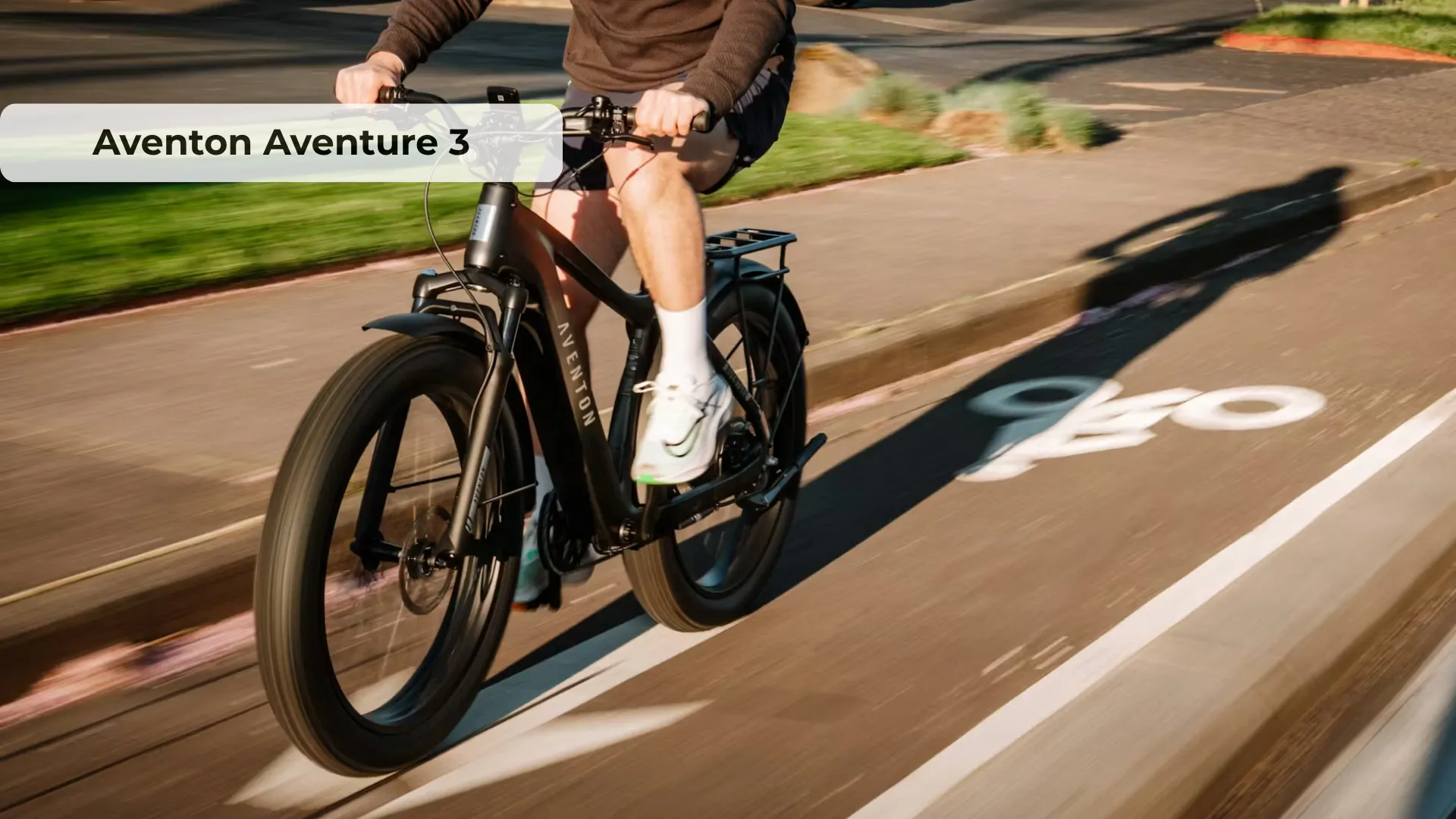
After three weeks of testing the Aventon Aventure 3 through snow, sand, and daily city commutes, I found it's the rare budget e-bike that doesn't feel budget.
The moment that sold me on the Aventure 3 happened on a frozen lakefront path. While other cyclists struggled with ice patches, I cranked the throttle and glided through without a wobble. Those massive 4-inch tires aren't just for show. They completely change how you interact with terrain most e-bikes simply can't handle.
I tested this bike for three weeks across varied conditions: snowy winter trails, sandy beach paths, and my regular 8-mile urban commute. The Aventure 3 accumulated over 200 miles during testing, including multiple full battery discharge cycles. At $1,899, it's positioned as an affordable entry into fat tire e-bikes, competing directly with RadPower and Lectric models that cost similar or more.
Introduction: A Budget Fat Bike That Delivers Where It Counts
The moment that sold me on the Aventure 3 happened on a frozen lakefront path. While other cyclists struggled with ice patches, I cranked the throttle and glided through without a wobble. Those massive 4-inch tires aren't just for show. They completely change how you interact with terrain most e-bikes simply can't handle.
I tested this bike for three weeks across varied conditions: snowy winter trails, sandy beach paths, and my regular 8-mile urban commute. The Aventure 3 accumulated over 200 miles during testing, including multiple full battery discharge cycles. At $1,899, it's positioned as an affordable entry into fat tire e-bikes, competing directly with RadPower and Lectric models that cost similar or more.
Key Specs, Pricing & Variants
- Price
- $1,899 (high-step) / $1,899 (step-through)
- Motor
- 750W rear hub (1,130W peak), surprising torque for hills
- Battery
- 720Wh (15Ah, 48V), removable with key lock
- Range
- 25-35 miles real-world (tested mixed terrain, PAS 3-4)
- Tires
- 26" x 4" Kenda Juggernaut, puncture-resistant
- Weight
- 77 lbs (hefty but expected for fat bike with big battery)
- Payload
- 400 lbs total (bike + rider + cargo)
- Gearing
- 8-speed Shimano Altus, wide range for varied terrain
- Best For
- Winter commuters, trail riders, anyone tackling loose surfaces
Off-Road Performance
The 4-inch Kenda Juggernaut tires handle loose terrain surprisingly well. I tested the Aventure 3 on sandy lakefront paths and snowy winter trails, and the wider contact patch provided noticeably better traction than standard e-bikes. The fat tires also soak up trail chatter effectively, though the rigid frame means you'll still feel bigger impacts without rear suspension.
Design & Build Quality
Out of the box, the Aventure 3 looks like it costs more than $1,899. The welds are clean, the paint finish is solid, and the integrated battery gives it a polished appearance. Aventon clearly prioritized aesthetics here. The color-matched fenders and the sleek frame design make this one of the better-looking fat bikes at this price point. Cable routing is mostly external, which I actually prefer for easier maintenance, though internal would look cleaner.
After three weeks of hard use including wet conditions and trail riding, the build quality held up well. No rattles developed, and the components feel appropriately spec'd for the price. The frame is 6061 aluminum, which keeps weight reasonable (well, reasonable for a 77 lb fat bike). My only durability concern is the kickstand, which feels undersized for this heavy bike and has already developed some play. Upgrade that immediately if you plan to load cargo.
Features Breakdown: What You Get for $1,899
Power & Performance
- 750W rear hub motor (1,130W peak) provides strong acceleration and hill climbing. On 8-10% grades with my 185 lb frame, it maintained 15+ mph in PAS 4 without pedaling hard. That's impressive for a hub motor.
- Five pedal assist levels plus throttle give you control over power delivery. I spent most time in PAS 3-4 for a good balance of range and assistance. PAS 5 is genuinely powerful but drains the battery fast.
- Throttle-only mode works up to 20 mph, which proved invaluable for quick starts at intersections or navigating through deep snow where pedaling was difficult. Unlike some e-bikes, this throttle has smooth power delivery without jerky engagement.
- Top speed of 28 mph in Class 3 mode (configurable to Class 2 at 20 mph). I regularly hit 28 mph on flat roads with moderate pedaling, though wind resistance from those fat tires becomes noticeable above 25 mph.
Battery & Range
- 720Wh battery (15Ah, 48V) is larger than most bikes at this price. The removable design means you can charge indoors, which matters when you live in an apartment or park outside.
- Real-world range: 25-30 miles mixed terrain in PAS 3-4, closer to 35-40 miles in PAS 1-2. Throttle-only mode drops that to about 20 miles. These numbers assume a 180 lb rider on varied terrain with some hills.
- Charge time is 6-7 hours from empty using the included 2A charger. That's slower than some competitors, but I just charged overnight and never felt limited by it.
- Battery lock mechanism is solid and easy to use. The battery slides in smoothly and locks securely. After dozens of removal cycles, there's no wobble or play.
Display & Controls
- Color LCD display is bright and readable even in direct sunlight. Shows speed, battery percentage, PAS level, trip distance, and odometer. The display is intuitive, no manual needed.
- Left thumb control pad handles PAS levels and lights. Right thumb has the throttle. This layout took about 10 minutes to become second nature.
- Integrated front headlight (not just battery-powered) and rear light that connects to the main battery. The headlight is bright enough for night riding, though I'd add a secondary light for serious night commuting.
- USB charging port hidden under the display lets you charge your phone on longer rides. It's only 5V/1A, so charging is slow, but handy for emergency phone juice.
Comfort & Ride Quality
- Fat tires act as natural suspension, smoothing out rough pavement and absorbing trail chatter. On gravel and dirt trails, the ride quality is surprisingly plush for a rigid frame bike.
- Seat is actually comfortable for 60-90 minute rides, which is rare on budget e-bikes. It's a spring suspension saddle with decent padding. Taller riders will want to raise it, but the post has plenty of adjustment.
- Handlebars are swept-back for an upright riding position. This is comfortable for commuting and casual riding but less efficient if you want to ride fast for long distances. The grips are decent quality and didn't cause hand fatigue.
- Step-through model has a low standover height that makes mounting easy, especially when loaded with cargo or wearing bulky winter gear. The high-step version looks more traditional but sacrifices convenience.
Brakes & Gearing
- Hydraulic disc brakes (180mm front, 160mm rear) provide strong, progressive stopping power. With a 77 lb bike plus rider, good brakes are critical, and these deliver. Modulation is excellent.
- 8-speed Shimano Altus drivetrain offers enough gear range for most situations. I used higher gears on flats and lower gears on steep climbs. The shifter is simple and reliable.
- Gear spacing is well-chosen for a mix of street and trail riding. You won't spin out at 28 mph, but you also have low enough gears for technical climbs.
- Motor inhibitors cut power when you brake, which is a safety feature I appreciate. The system works seamlessly and you don't even notice it until you think about it.
Performance Testing: Trail, Snow, Sand & Street
The Aventure 3 genuinely surprised me on challenging terrain. I tested it extensively on snow-covered bike paths, sandy lakefront trails, and loose gravel roads where my regular e-bike would struggle. Those 4-inch Kenda Juggernaut tires deliver. On packed snow with icy patches, I maintained 15-18 mph in PAS 3 without any wheel slip or loss of control. The wider contact patch means you float over loose surfaces rather than digging in. On a sandy beach access trail that usually requires walking a bike, the Aventure 3 powered through at 8-10 mph with the motor doing most of the work. This is genuinely a go-anywhere bike.
Hill climbing impressed me for a rear hub motor. I tested repeated climbs on an 8% grade that's about 0.4 miles long, starting from a stop each time. With my 185 lb weight plus a 15 lb backpack, the bike maintained 13-15 mph in PAS 4 without me pedaling particularly hard. In PAS 5, it hit 18 mph on the same climb. That's comparable to mid-drive performance in this scenario, which surprised me. The motor doesn't bog down or overheat even on back-to-back climbs. On steeper 12-15% grades, you'll need to pedal harder and accept slower speeds (8-10 mph), but it gets you up without strain.
Street performance is where the fat tires become a trade-off. On smooth pavement, you'll notice rolling resistance compared to narrower tires. It's not a dealbreaker, but if you're mostly riding paved bike paths, you're carrying extra tire weight for capabilities you won't use. That said, the Aventure 3 handles urban commuting well. Acceleration from stops is strong thanks to the torquey motor. At cruising speeds of 20-25 mph, the bike feels stable and planted. Cornering requires a bit more effort due to tire width and bike weight, but it's predictable and confidence-inspiring once you adjust.
Cargo Hauling Capacity
With a 400 lb total weight capacity and integrated rear rack, the Aventure 3 handles cargo duty better than expected. The sturdy rear rack supports panniers or a trunk bag, and I regularly carried 30-40 lbs of groceries without affecting ride quality. The step-through frame option makes loading and mounting easier when you're carrying supplies or wearing heavy winter gear.
User Experience: Living With the Aventure 3
Daily usability is solid once you accept this is a 77 lb bike. Lifting it onto a car rack is a two-person job. Getting it up stairs is brutal. If you have storage or transport limitations, seriously consider this weight. Otherwise, the bike is easy to live with. The throttle makes starting from stops effortless, which matters in stop-and-go traffic. The color display is simple to read while riding. Range anxiety isn't an issue with the 720Wh battery. I rode 25-30 miles between charges without worry. One quirk: the kickstand placement makes it difficult to use the rack while the kickstand is down. You'll need to lean the bike against something to load cargo, which is annoying.
Assembly was straightforward and took about 45 minutes. The bike arrives mostly assembled. You install the front wheel, handlebars, pedals, and fenders. The included tools are adequate but not great. You'll want your own Allen keys and wrenches. The manual is clear with good photos. Maintenance so far has been minimal. I wiped down the bike after wet rides and checked tire pressure weekly. The chain needed lubrication after about 150 miles. Brake adjustment wasn't necessary during testing. The hydraulic brakes are self-adjusting and stayed consistent throughout.
How It Compares to Other Fat Tire E-Bikes
Against the RadRover 6 Plus ($1,999), the Aventure 3 offers a larger battery (720Wh vs 672Wh) and a more refined ride quality. The RadRover has a slight edge in brand reputation and customer service network, but the Aventure 3 feels more polished overall. Both bikes are solid choices in this price range, and your decision might come down to which dealer is closer.
Compared to budget options like the Lectric XP 3.0 ($999-$1,299), you're paying nearly double but getting a significantly better bike. The Aventure 3 has a more powerful motor, larger battery, better components, and superior build quality. If you're serious about riding in challenging conditions or want a bike that'll last years, the extra $600-900 is money well spent. The Lectric is great as a first e-bike or for casual use, but the Aventure 3 is a step up in every way.
Premium fat bikes like the QuietKat Apex ($4,000+) offer mid-drive motors and full suspension, which provide better technical trail performance. If you're planning serious off-road riding or hunting expeditions in rough backcountry, those features matter. But for trail riding, winter commuting, and beach cruising, the Aventure 3 delivers 85% of the performance at half the price. That's compelling value.
Who This Product Is Best For
The Aventure 3 is ideal for winter commuters who need reliable traction on snow and ice without spending $3,000+. It's perfect for recreational trail riders who want to explore fire roads, packed dirt trails, and light technical terrain without needing full suspension. Beach riders will love the ability to cruise on sand. Car-free urban commuters who encounter varied terrain will appreciate the versatility. It's also excellent for hunters and anglers who need to haul gear on rough trails but don't require premium off-road performance. Rider height range: 5'4" to 6'4" comfortably (high-step), or 4'10" to 6'2" (step-through). Weight limit is 400 lbs total, so riders up to 300 lbs plus reasonable cargo work fine. Skip this bike if you primarily ride smooth pavement (get a regular e-bike), need a lightweight bike for storage challenges, or want serious technical off-road capability (look at mid-drive fat bikes with suspension).
Pros & Cons
Pros
- Excellent traction on snow, sand, and loose terrain where regular e-bikes struggle
- 720Wh battery provides genuine 25-35 mile range in realistic riding conditions
- Strong 750W motor handles hills surprisingly well for a rear hub system
- Solid build quality and clean aesthetics at this price point
- Hydraulic disc brakes provide confident stopping power for this heavy bike
- Color display is bright, intuitive, and includes useful features like USB charging
Cons
- 77 lbs makes storage, transport, and carrying upstairs genuinely difficult
- Fat tires create noticeable rolling resistance on smooth pavement compared to regular e-bikes
- Kickstand feels undersized and placement makes cargo loading awkward
- 6-7 hour charge time is slower than some competitors with 4-5 hour chargers
- No suspension beyond the fat tires means harsh impacts still transfer to the rider
Conclusion & Final Verdict
After three weeks and 200+ miles of testing, the Aventure 3 proved itself as a capable, well-built fat bike that doesn't feel like a budget product. It excels at the things fat bikes are designed for: snow, sand, loose terrain, and confidence-inspiring traction. The motor is strong, the battery is generous, and the components are appropriate for the price. The main compromises are weight and rolling resistance on pavement, which are inherent to fat bikes, not specific to this model.
Buy the Aventure 3 if you regularly encounter challenging terrain, ride year-round in winter conditions, or want one bike that can handle varied surfaces from city streets to beach paths. Choose the step-through model if you haul cargo or wear bulky gear. Skip it if you primarily ride smooth pavement (where those fat tires hurt more than help) or have serious weight/storage limitations. If you need fat tire capability and have around $1,900 to spend, this is the bike to beat.
The Aventon Aventure 3 is the best-value fat tire e-bike under $2,000 if you actually need fat tire capability.
Aventon Aventure 3: Frequently Asked Questions
What's the real-world range on the Aventon Aventure 3?
During testing, I consistently got 25-30 miles in PAS levels 3-4 on mixed terrain with moderate hills. That's with a 185 lb rider on varied surfaces including pavement, gravel, and some snow. If you ride mostly in PAS 1-2 on flatter terrain, 35-40 miles is realistic. Using throttle heavily or riding in PAS 5 constantly drops range to about 20-25 miles.
The 720Wh battery is larger than most competitors at this price, which explains the solid range. Cold weather does impact battery performance, I noticed about 15-20% range reduction in temperatures below 30°F. Wind resistance from the fat tires also affects range more than regular e-bikes, especially at higher speeds.
Can the Aventure 3 handle deep snow and sand?
Yes, surprisingly well. I tested it in 3-4 inches of fresh snow on packed trails, and the bike maintained traction and forward progress at 10-15 mph in PAS 3-4. The wide tires float on top rather than cutting through, which is exactly what you want. On icy patches mixed with snow, I never experienced wheel slip. For sandy beach trails, the bike handled packed sand easily and managed loose, dry sand at slower speeds (6-10 mph) with motor assistance.
Deep, loose powder snow over 6 inches becomes challenging for any bike, and you'll need to use higher PAS levels and pedal actively. Same for deep, soft sand, where you might need to walk short sections. But for typical winter commuting conditions and beach riding, the Aventure 3 has enough capability to keep you moving where regular e-bikes would bog down.
Is 77 lbs too heavy for daily use?
It depends entirely on your situation. If you have flat storage, don't need to carry it upstairs, and can load it onto a vehicle with a ramp or two people, the weight is manageable. The bike rides fine once you're on it, the weight actually adds stability. The motor does all the work for acceleration, so you don't feel the mass while riding.
The weight becomes a serious problem if you live on a second floor without elevator access, need to regularly lift it onto a roof rack by yourself, or have limited strength for bike handling. At 77 lbs, this isn't a bike you'll casually toss around. Consider storage and transport carefully before buying. The step-through model is slightly easier to maneuver due to frame geometry, but it's just as heavy.
How does the Aventure 3 compare to the RadRover 6 Plus?
They're very close competitors at similar prices ($1,899 vs $1,999). The Aventure 3 has a slightly larger battery (720Wh vs 672Wh) and a more refined overall feel with cleaner aesthetics. I found the Aventure 3's display and controls more intuitive. Both have comparable motors (750W rated), similar components, and nearly identical performance in real-world riding.
RadPower has a more established service network and parts availability, which matters for long-term ownership. Aventon has good customer service but fewer physical locations. If you're near an Aventon dealer, that tips the scales toward the Aventure 3. If RadPower has better local support in your area, go that direction. You can't go wrong with either bike, they're both solid choices at this price point.
Do I need a fat tire e-bike, or should I get a regular e-bike?
Get a fat tire e-bike like the Aventure 3 only if you regularly encounter snow, sand, loose gravel, or rough terrain where the extra traction and cushioning matter. If you ride mostly on paved streets, bike lanes, and smooth paths, a regular e-bike with 2-2.5 inch tires will be lighter, faster, more efficient, and easier to handle. The fat tires are a specialized tool for specific conditions.
I'd estimate if more than 30% of your riding involves challenging surfaces, the Aventure 3 makes sense. If less than that, you're hauling extra weight and fighting extra rolling resistance for capability you rarely use. A regular commuter e-bike like the Aventon Level or Ride1Up 700 Series would serve you better for primarily paved riding.
Can I use the Aventure 3 for cargo hauling and grocery runs?
Yes, it works well for this. The integrated rear rack is sturdy and supports panniers or a trunk bag. I regularly carried 30-40 lbs of groceries without issues. The 400 lb total weight capacity means most riders can carry significant cargo without maxing out the limit. The step-through model makes mounting and dismounting easier when loaded.
The main cargo limitation is the lack of front-loading options compared to dedicated cargo bikes. You're limited to rear rack capacity unless you add a front basket. For weekly grocery trips or commuting with a laptop and supplies, it's more than adequate. For larger cargo hauling like moving furniture or hauling kids, look at dedicated cargo e-bikes with more carrying capacity.