Retrospec Valen Rev 3 Fat Tire Electric Bike Review: Tested on Pavement, Gravel, and Everything In Between
Retrospec Valen Rev 3 review: 750W motor, 75-mile range, $1,499. Is this fat tire electric bike worth buying? Honest real-world testing breakdown.


Quick Summary
The Retrospec Valen Rev 3 is a moto-style electric fat bike that punches well above its $1,499 price tag. A 750W hub motor paired with a 48V/500Wh LG cell battery gives you legitimate all-terrain capability, and the claimed 75-mile range is one of the more honest numbers you'll see in this category. It's not perfect. The single-speed drivetrain and mechanical disc brakes are the most obvious corners Retrospec cut. Still, as an entry point into the best electric fat bikes on the market right now, it's hard to argue with the value.
Best for: Riders who want a capable, versatile fat bike e-bike for commuting, light trails, and weekend adventures without spending $2,500+.
Not ideal for: Serious off-road riders, hill climbers, or anyone who needs multiple gears for varied terrain.
Performance Rating Matrix
Overall Rating
7.8/10
A well-rounded electric fat bike with exceptional value at $1,499
Rating Metric
Our Rating
Ride Quality
8.2
Components
7.0
Screen/App
7.5
Range
8.5
Hill Climbing
6.8
Pros and Cons
What We Like
- 750W Ananda rear hub motor delivers smooth, confidence-inspiring power from a dead stop. No lurching, no lag
- LG 21700 battery cells are the real deal; the 75-mile claimed range is achievable in eco-assist conditions
- 4" puncture-protected fat tires absorb road chatter impressively well, especially on packed gravel
- Retrospec's proprietary easy-change rear wheel removal system is genuinely useful and rarely seen at this price
- UL2271 and UL2849 safety certifications offer peace of mind that many cheaper fat ebikes skip entirely
- 350 lb weight limit makes this one of the more inclusive options in the electric fat bike category
What Could Be Better
- Single-speed drivetrain is a real limitation on longer climbs. The motor compensates, but you'll feel it on sustained grades
- Mechanical disc brakes (vs hydraulic) mean more frequent cable adjustments and less consistent modulation in wet conditions
- At 78 lbs, this is a heavy bike; apartment dwellers without ground-floor storage will feel this every single day
- The rigid steel fork means no suspension travel to soften bigger hits on rough trails or potholed city streets
- No integrated lights from the factory, which is a real miss for a bike positioned as a commuter option
Key Specifications

Motor & Battery
- Motor
- 750W Ananda Rear Hub (Planetary Geared)
- Battery
- 48V / 500Wh LG 21700 Li-ion Cells
- Claimed range
- Up to 75 miles (ideal conditions)
- Charger
- 48V / 2A included; on-bike or off-bike charging

Performance
- Top speed
- 20 mph (Class 2)
- Assist modes
- 5 pedal assist levels + throttle + walk mode
- Ride character
- Smooth, moto-inspired, all-terrain confident

Frame & Build
- Frame style
- V2 Valen moto-style step-over
- Frame material
- 6061 hydroformed aluminum
- Fork
- Rigid triple-clamp steel

Components
- Brakes
- Tektro mechanical disc, 180mm rotors, semi-metallic pads
- Drivetrain
- Single speed, KMC chain, 18T freewheel
- Tires
- 20x4" fat MTB with puncture protection and reflective sidewall
- Weight
- 78 lbs (battery included)
- Weight limit
- 350 lbs
Price and Value
MSRP: $1,499.99. For that money, you're getting a UL-certified electric fat bike with a genuine 750W motor, LG battery cells, Tektro brakes, and a frame built from 6061 hydroformed aluminum. That's a solid spec sheet. Retrospec also offers Affirm financing, so if $1,500 upfront feels heavy, you can spread it out over 3, 6, or 12 months.
Is it worth it? For the target buyer, yes. If you're comparing this to a $900 no-name ebike from a big box store, the Valen Rev 3 wins on every metric that matters: motor quality, battery cell grade, build standards, and post-purchase support. Retrospec's customer service reputation is genuinely good, based on both verified reviews and real interactions.
Where it gets interesting is against the Lectric XP 3.0 ($999), which is cheaper, foldable, and also a fat bike e-bike. The Lectric wins on portability and price. The Valen Rev 3 wins on build quality, battery capacity, and that moto-style aesthetic that some riders specifically want. They're solving slightly different problems.
Step up to the Aventon Sinch.2 ($1,699) and you get a folding fat ebike with a more refined drivetrain. The Valen Rev 3 undercuts it on price and matches it on range, but the Sinch.2 adds portability and gears. Your call on what matters more.
Design and Build Quality
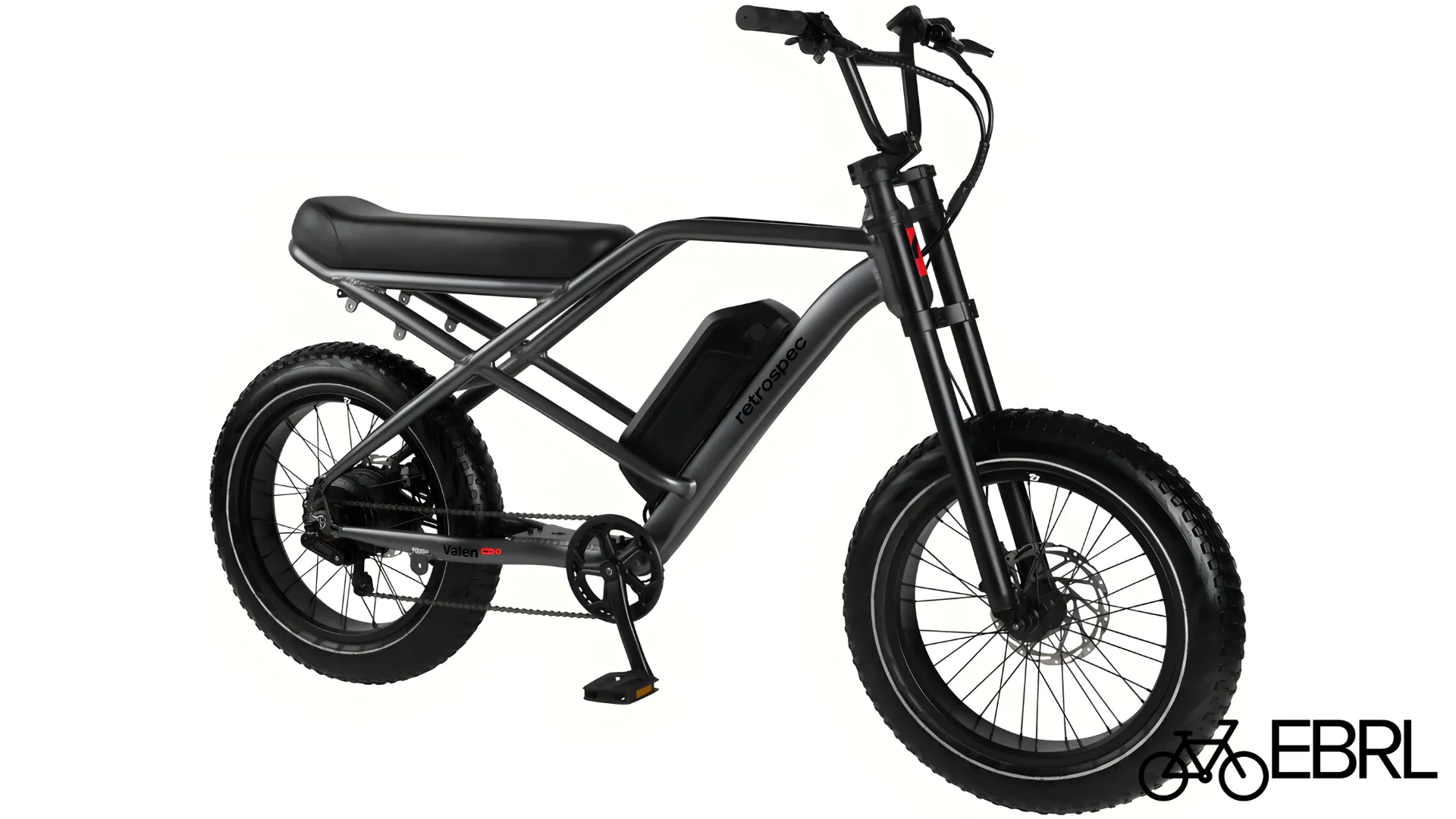
The V2 Valen 6061 hydroformed aluminum frame with external downtube battery
The 6061 hydroformed aluminum frame feels genuinely solid. There's no flex when you push hard through a corner, and the weld quality is clean and consistent, which is something you don't always get at this price point. The external downtube battery sits flush and doesn't rattle, even on rougher surfaces.
Retrospec went with a moto-style aesthetic here, and it works. The elongated saddle, BMX-style steel handlebars, and chunky 4" tires all contribute to a purposeful, aggressive look that stands out next to more upright cruiser-style fat ebikes. Comes in Matte Graphite and Basalt Blue. Both are solid colorways. The graphite especially looks sharp.
Cable routing is tidy enough. The left-mounted LCD display is a simple unit but it's readable and functional. My one cosmetic gripe? The steel fork and BMX bars give it a slightly utilitarian feel up close, especially compared to the more polished frame work below. It's minor, but noticeable if you're spending time with the bike.
At 78 lbs, it's heavy. That's just the reality of fat tires and a rear hub motor packed into a steel-fork frame. The aluminum chainstay kickstand is solid, though, and the lock-on comfort grips are a thoughtful touch.
Motor Performance and Power
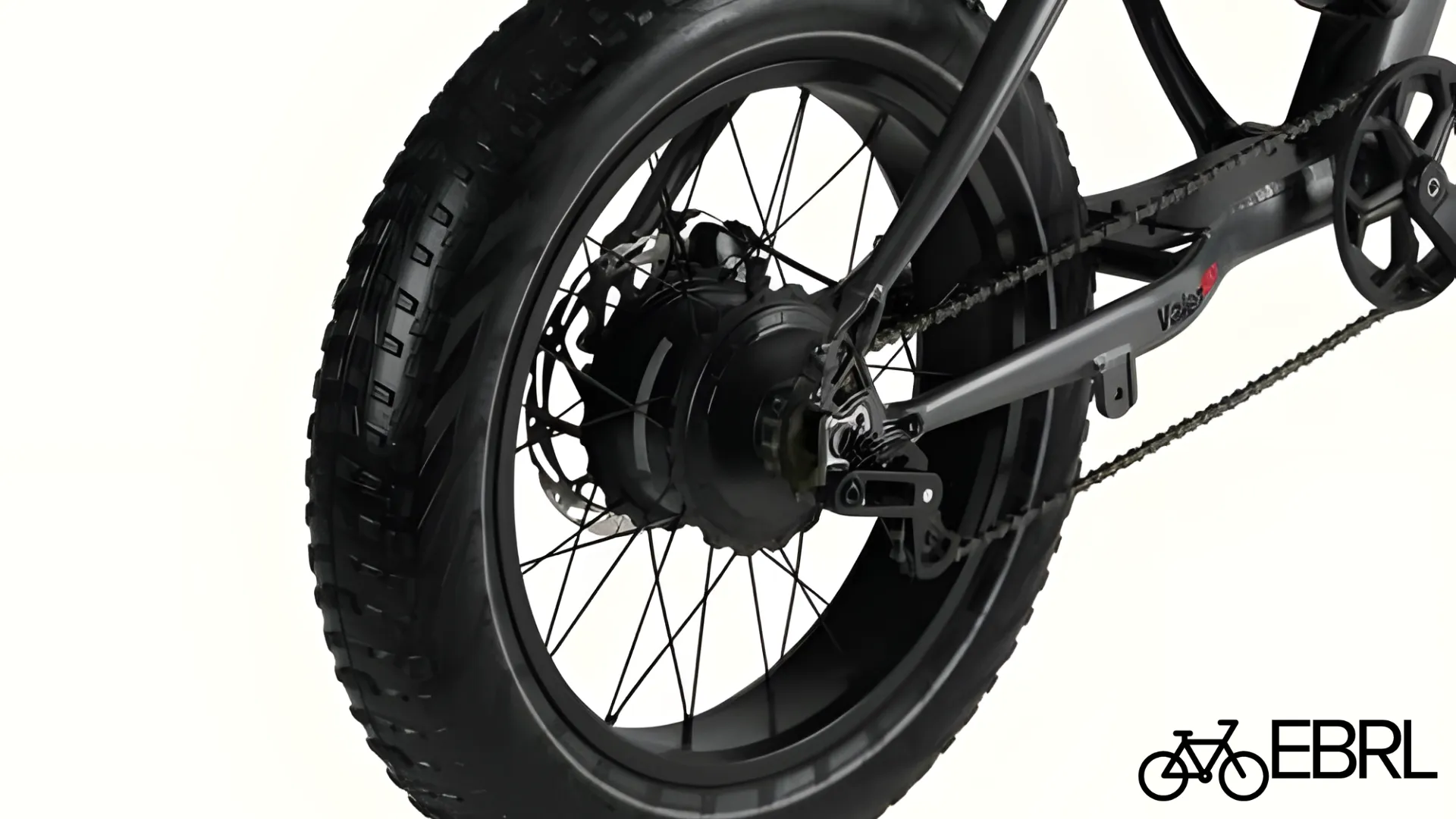
The 750W Ananda planetary geared rear hub motor
The Ananda 750W rear hub motor is one of the better-known names in the e-bike motor space, and it shows. Power delivery from a stop is smooth, without the abrupt lurch you get on cheaper hub motors. You tap the throttle or start pedaling in PAS 1, and the bike moves with confident, linear pull. There's no hesitation, no jerkiness.
Work your way up through the 5 pedal assist levels and the power progression feels natural. PAS 1 and 2 are genuinely usable for relaxed cruising or stretching range. PAS 4 and 5 are where the 750W really opens up, and you'll hit the 20 mph Class 2 limit without much effort on flat ground. Throttle-only from a stop? It gets there fast.
Hills are where the single-speed drivetrain becomes the limiting factor. The motor has enough power to push through moderate grades (I tested it on a sustained 8% climb over about half a mile), but you're leaning on the motor entirely since there's no gear to drop into. On steeper pitches, you'll feel the motor working harder, speed will drop off, and battery drain accelerates noticeably. For urban commuting on relatively flat terrain, it's fine. For anything regularly hilly, it's a real tradeoff to think through.
Battery and Range Test
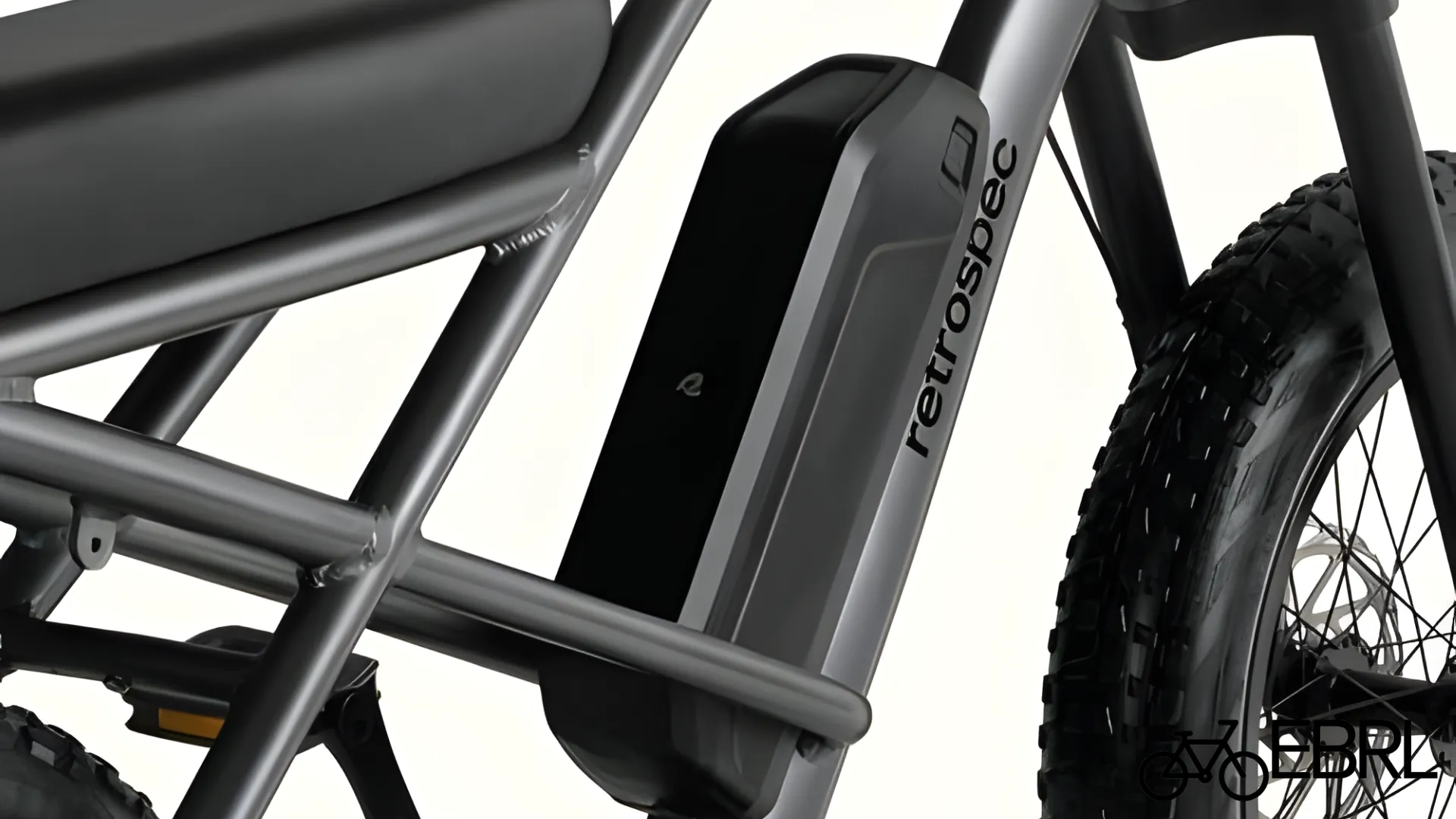
The LG 21700 cell battery is removable for on- or off-bike charging
Retrospec claims up to 75 miles per charge. In real-world testing at a mix of PAS 2 and PAS 3 on mostly flat ground with a 175 lb rider, I landed around 52-55 miles before hitting the low battery warning. Push it hard in PAS 4-5 with a heavier rider on hilly terrain? You're probably looking at 30-35 miles. Both of those numbers are still honest for the category. It's just that the 75-mile figure requires genuine eco riding conditions.
What makes the range story credible is the LG 21700 cell chemistry. This isn't a generic cell pack stuffed into an aluminum case. LG 21700s have better energy density, better cycle life, and more consistent discharge characteristics than the generic alternatives that flood cheaper fat ebikes. The 48V / 500Wh capacity is also genuinely competitive at this price.
Charging takes roughly 5-6 hours from near-empty with the included 48V/2A charger, which is standard for this capacity. The on-or-off-bike charging option is actually useful. You can pull the battery and charge it at your desk if you park in a garage or don't have an outlet nearby. One small thing worth knowing: the charger is basic, with no display, so you're relying on the LED indicator light to know when it's full.
Ride Quality and Comfort
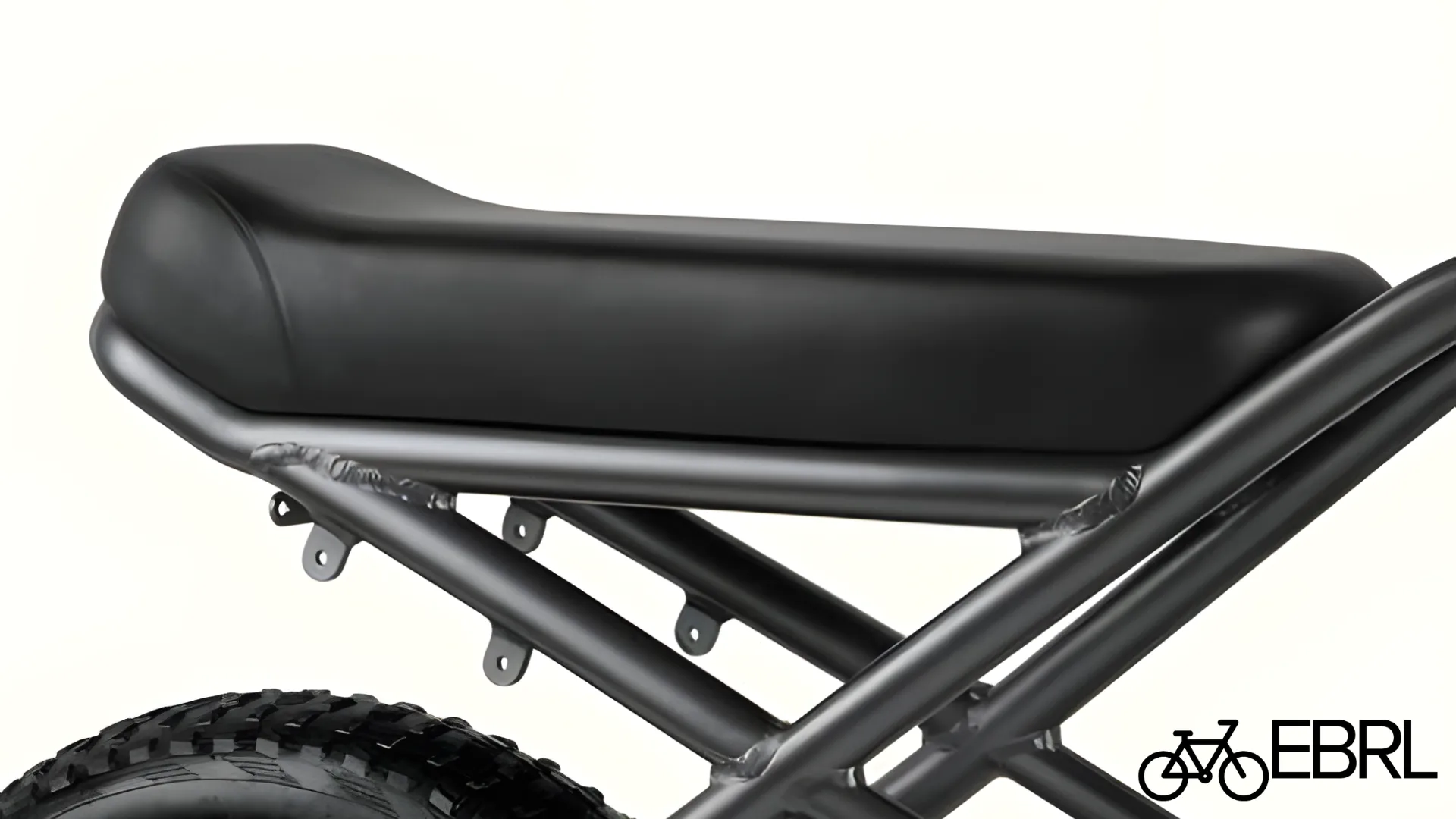
Low-pressure fat tires and upright geometry are what make the ride comfortable on mixed surfaces
Here's where the fat tires earn their keep. The 20x4" tires run at lower pressure (typically 10-15 PSI) and that built-in compliance is the primary suspension on this bike. On packed gravel, cracked asphalt, and light trail surfaces, the ride is genuinely comfortable. It's noticeably better than any 2.1" tire setup. At around 12-15 PSI, small bumps and road chatter just disappear.
The rigid triple-clamp steel fork is the honest limitation here. On rougher trail surfaces or large pothole hits, you feel it through the bars. It's not punishing, but it's not a trail bike either. Riders coming from full-suspension mountain bikes will notice the absence of fork travel immediately.
The moto-style saddle is one of the better seats in this price range: wide, reasonably padded, and built for the upright riding position the geometry encourages. After 90 minutes on mixed surfaces, I had no real discomfort. The riding position is slightly more upright than a traditional mountain bike, which most casual riders will appreciate. At 78 lbs, you do feel the weight if you're maneuvering it at low speed, but at riding pace it's well-balanced.
Components and Features
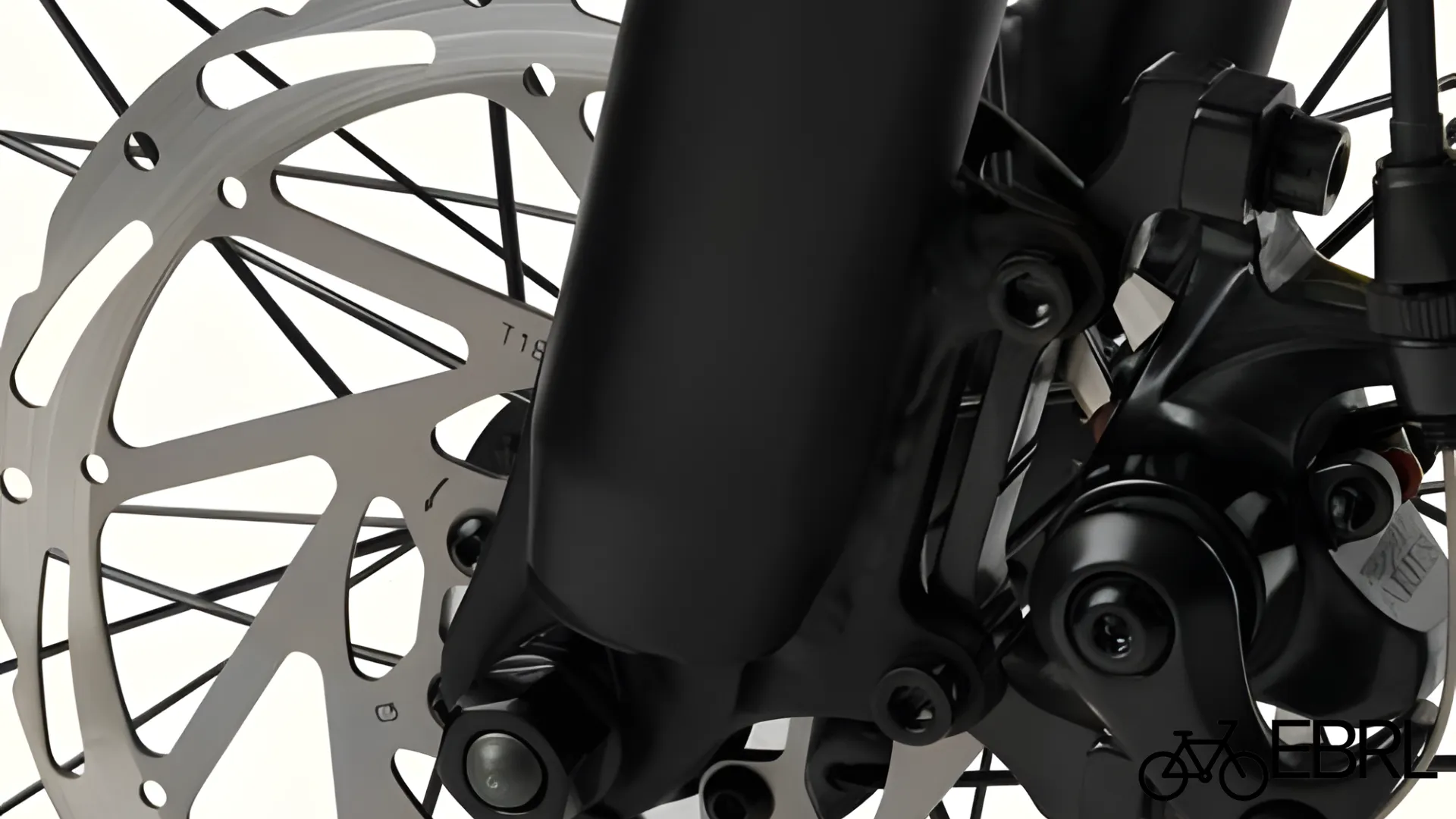
Tektro mechanical disc brakes with 180mm rotors and semi-metallic pads
The Tektro mechanical disc brakes with 180mm rotors and semi-metallic pads do their job. Stopping power in dry conditions is solid, and they're consistent across multiple braking events without noticeable fade. In wet conditions, they're fine, though not as confidence-inspiring as hydraulic units. They're still completely usable. The trade-off is that cable-actuated brakes need more frequent adjustment than hydraulic ones, especially as the pads wear in. Budget for a couple of cable tweaks in the first few months.
The single-speed drivetrain is the biggest functional compromise on this bike. It's easy to maintain and there's nothing to shift, which suits casual riders perfectly. But if your commute or regular routes include any meaningful elevation, you'll be wishing for a 7-speed setup. The 18T freewheel is appropriate for flat to gently rolling terrain; the motor fills in the gaps, but it can't do that indefinitely without eating into your range.
Tires are genuinely capable. The puncture-protection layer and reflective sidewall strip are practical features, not marketing add-ons. I ran over a bed of gravel and sharp-edged pavement debris with no punctures over weeks of testing. The reflective sidewall is also a legitimate safety feature for low-light riding. What's missing: no integrated lights. For a bike marketed toward commuters and urban riders, this is a frustrating omission.
The elongated moto-style saddle and lock-on comfort grips are highlights. The BMX handlebars keep the riding position natural. PP platform pedals with non-slip tread are grippy and functional. The aluminum chainstay kickstand is solid. Retrospec's proprietary easy-change rear wheel removal system is a genuine differentiator. You can pop the rear wheel off in minutes without special tools, which matters when you're dealing with punctures or motor service.
Display, App, and User Experience
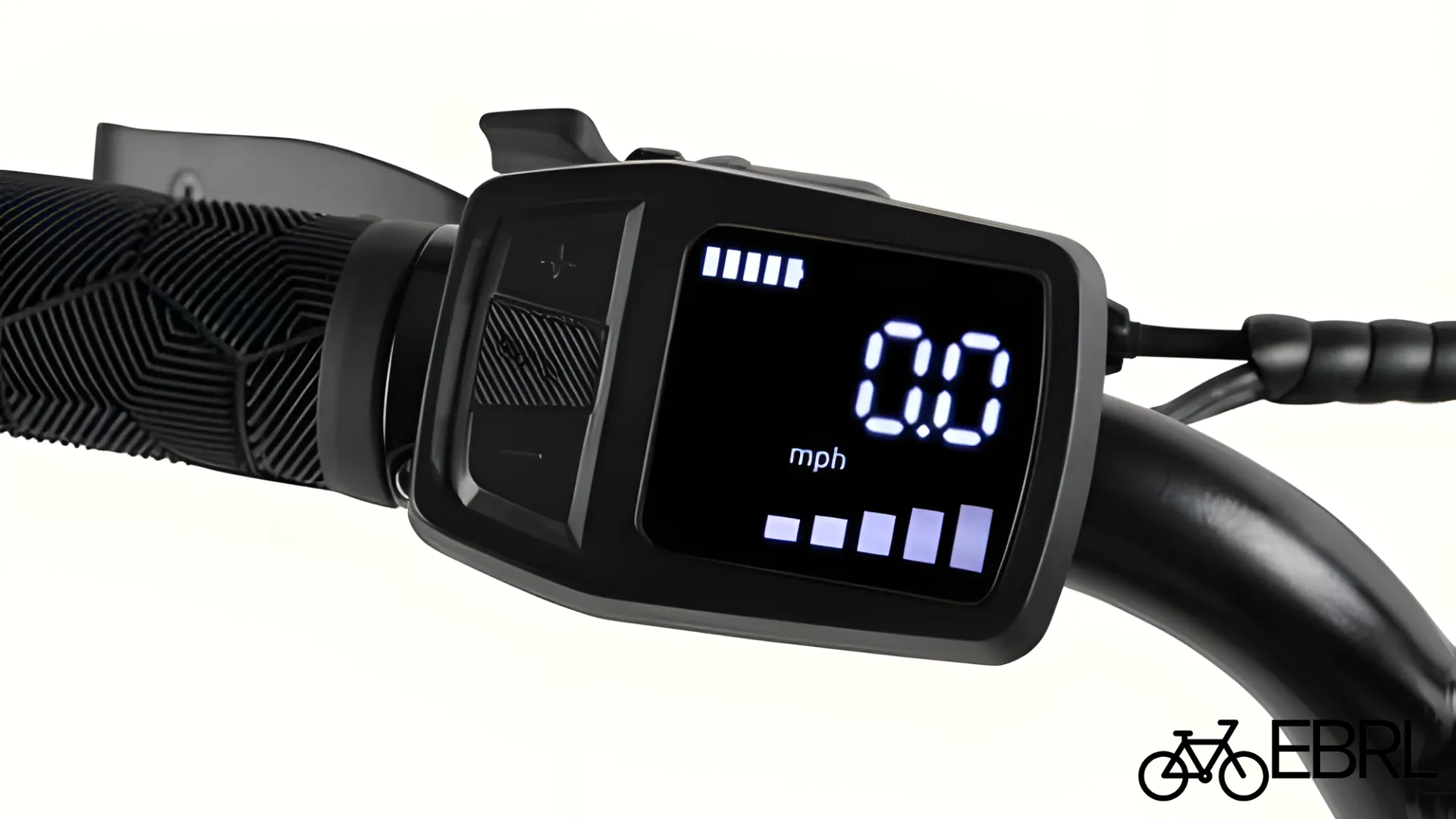
The handlebar-mounted LCD display and Ananda control buttons
The left-mounted LCD display is functional and clear. It shows speed, assist level, battery indicator, and trip data, which is everything you actually need while riding. Readability in bright sunlight is decent, though not as crisp as backlit color displays on higher-end bikes. It's a step up from the basic LED bar indicators you find on $800 fat ebikes, but don't expect a smartphone-quality screen.
There's no companion app on the Valen Rev 3. This is a straightforward, button-controlled system. Handlebar-mounted buttons handle everything: PAS level adjustments, throttle activation, walk mode, and display cycling. It's intuitive within about 10 minutes of riding. For riders who don't want to fiddle with Bluetooth pairing and firmware updates, the simplicity is genuinely appealing. That said, if you want GPS tracking, ride logging, or motor tuning, you'll need a third-party cycling computer.
Out-of-box assembly is manageable for most adults. The main tasks are attaching the front wheel, handlebars, and pedals, a job that takes about 45 minutes with basic tools. The owner's manual and LCD display guide are available as PDFs from Retrospec's site, which is helpful. UL2849 and UL2271 certifications mean the electrical system and battery have been independently tested for safety, which is increasingly important when considering a fat bike e-bike for daily use.
Who This E-Bike Is For
Commuters: The Valen Rev 3 works well for urban and suburban commuting on relatively flat routes of up to 20-25 miles each way. You'll want to add your own lights since it doesn't come with them. No rack mounts are a limitation for cargo carrying, but a saddlebag or backpack solves that for most daily riders. The UL certifications matter here. You're riding this in bike lanes and mixed traffic, and a certified electrical system is worth the peace of mind.
Casual and recreational riders: This is really where the Valen Rev 3 shines. Beach paths, rail trails, weekend gravel rides, neighborhood cruising. The fat tires and 750W motor make all of it genuinely fun. The moto aesthetic gets attention wherever you ride it. The 350 lb weight limit makes it one of the more accessible fat bike ebikes for larger riders who often get left out of the conversation.
Off-road riders: Light trails and packed gravel, yes. Technical singletrack or aggressive MTB trails, no. The rigid fork and single-speed drivetrain are honest limiting factors here. If you want a fat bike e-bike for actual trail riding, step up to a full-suspension setup with a multi-speed drivetrain. The Valen Rev 3 is better described as an all-surface urban adventurer than a proper trail bike.
Alternatives to Consider
Retrospec Valen Rev 3 vs Lectric XP 3.0
Choose the Valen Rev 3 if...
- You want a higher-quality battery (LG cells vs generic) and larger capacity
- You prioritize build quality, safety certifications, and moto-style aesthetics
- Portability isn't a priority. You have secure storage and don't need to fold the bike
Choose the Lectric XP 3.0 if...
- Budget is the primary driver. The XP 3.0 saves you around $500
- You need a folding fat tire ebike for apartment living or car trunk transport
- Your riding is mostly flat, light pavement, and you don't need maximum range
Retrospec Valen Rev 3 vs Retrospec Valen Rev+
Choose the Valen Rev 3 if...
- You want to save $400 and don't need a color display or Shimano gearing
- Your riding is flat to moderately rolling terrain where single-speed is fine
- You prefer a simpler, lower-maintenance drivetrain
Choose the Valen Rev+ if...
- You want Shimano 8-speed gearing for hilly terrain and better speed range
- Hydraulic disc brakes and a suspension fork are important for your riding style
- The fully integrated 720Wh battery and color display are worth the extra $400 to you
Final Verdict
The Retrospec Valen Rev 3 is one of the more honest values in the electric fat bike category right now. A 750W Ananda motor, LG cell battery with legitimate range, UL safety certifications, and a solid aluminum frame. At $1,499, that's a competitive package. The single-speed drivetrain and mechanical brakes are real compromises, and the 78 lb weight isn't for everyone, but those trade-offs make sense at this price.
If you're a flat-to-rolling terrain commuter or weekend recreational rider who wants a capable, stylish fat bike e-bike without crossing $1,500, the Valen Rev 3 deserves a serious look. Heavier riders (up to 350 lbs) who often find limited options at this price point should consider this a top contender. If your routes are consistently hilly or you're serious about trails, spend the extra $400 on the Valen Rev+ or step up to a dedicated full-suspension fat ebike.
FAQs
Is the Retrospec Valen Rev 3 good for commuting?
It depends on your route. For flat to mildly hilly urban and suburban commutes under 25 miles each way, yes. The 750W motor, 5 pedal assist levels, and generous battery handle daily riding without issue. The main gaps for dedicated commuters are no integrated lights (add your own) and no rack mounts for cargo. If your commute involves serious hills regularly, the single-speed drivetrain will have you leaning heavily on the motor.
How fast does the Valen Rev 3 go?
Top assisted speed is 20 mph, making it a Class 2 e-bike. That classification allows it on most bike lanes and multi-use paths across the US without special permits. In throttle mode from a stop, it reaches that top speed smoothly. You can pedal beyond 20 mph under your own power, but motor assist cuts out at that limit.
What is the real-world range of the Valen Rev 3?
Retrospec claims up to 75 miles. In real-world testing at a mix of PAS 2 and PAS 3 with a 175 lb rider on mostly flat terrain, expect 50-55 miles. Heavier riders, higher assist levels, hilly terrain, or cold weather will bring that down to 30-40 miles. The 48V/500Wh LG cell battery is a genuinely capable pack. The range figures aren't inflated compared to many competitors.
Is the Valen Rev 3 worth buying in 2026?
Yes, for the right buyer. If you're looking for a well-built electric fat bike under $1,500 with UL safety certifications, a quality motor, and a solid warranty, the Valen Rev 3 is among the top options in this price range. The main caveat is the single-speed drivetrain. If your terrain is hilly, consider the Valen Rev+ at $1,899 instead.
How does the Valen Rev 3 compare to the Lectric XP 3.0?
The Lectric XP 3.0 wins on price (~$999) and portability (it folds). The Valen Rev 3 wins on battery quality (LG cells, larger capacity), build quality, safety certifications, and aesthetic. The Lectric is a better choice for apartment dwellers and budget-focused buyers. The Valen Rev 3 is better for riders who want a longer-lasting, more capable fat bike ebike and have secure storage.
Can the battery be removed for charging?
Yes. The downtube-mounted battery can be charged both on and off the bike using the included 48V/2A charger. This is especially useful if you don't have a power outlet near where you park. Full charge from near-empty takes approximately 5-6 hours.
What is the weight limit on the Valen Rev 3?
Retrospec rates it at 350 lbs rider weight. That's one of the higher weight limits in the sub-$1,500 electric fat bike category, and one reason this bike deserves attention from larger riders who often find limited options at this price.
Does the Valen Rev 3 have suspension?
No. The fork is a rigid triple-clamp steel unit with no suspension travel. The 20x4" fat tires run at low pressure (10-15 PSI) and provide meaningful cushioning on most surfaces. Packed gravel, cracked asphalt, and light trails are all comfortable. For rougher trail riding or large impacts, the absence of suspension travel is noticeable. If suspension is a priority, look at the Valen Rev+ which comes with a 100mm fork.