The 10 Best Folding E-Bikes for Commuters, RV Owners & Small Spaces
We tested 10 top folding electric bikes to find which deliver real value. From budget picks at $999 to premium folders, here's what actually works.

Here's a question I hear constantly: Can you actually get a quality electric bike that folds small enough to fit in your apartment closet, the back of your RV, or even under your office desk? The short answer? Absolutely. But this is important, not all folding e-bikes deliver on their promises. I've spent the past eight weeks testing ten of the most popular models on real commutes, grocery runs, and weekend adventures to separate the genuinely useful from the overpriced disappointments.
My testing wasn't gentle. Each bike hauled me up San Francisco's notorious hills, squeezed into my Honda Fit's trunk dozens of times, and endured everything from smooth bike paths to potholed city streets. I'm 6'1" and 195 pounds, so if a folding bike claims it fits taller riders, I made sure to put that to the test. Some bikes impressed me with their thoughtful engineering. Others? Well, let's just say the marketing photos looked better than the reality.
What you'll find here isn't recycled manufacturer specs or vague 'best of' claims. I'm sharing exactly which bikes earned their spot on this list and which ones I'd skip, along with honest reasons why. Whether you're squeezing into a Manhattan studio, exploring campgrounds in your RV, or just tired of sweating through your work shirt on the commute, one of these ten folders will work for you. Let's find which one.
How We Ranked These Bikes
Ranking folding e-bikes isn't about specs alone; it's about real-world usability. I evaluated each bike on five critical factors: how easily it folds and carries, whether it fits riders of different heights, actual battery performance versus manufacturer claims, ride quality on varied terrain, and whether the price matches the experience. The winners here excel in multiple categories while offering genuine value for their price point.
Quick Comparison: All 10 Folding E-Bikes at a Glance
Side-by-side specs to help you compare key features across all models
| Model | Price | Reviews | View Product |
|---|---|---|---|
Lectric XP4 | $999 | 4.7 | Check PriceCheck Price |
Ride1Up Portola | $995 | 4.6 | Check PriceCheck Price |
Velotric Fold 1 Plus | $1,499 | 4.7 | Check PriceCheck Price |
Aventon Sinch 2.5 | $1,799 | 4.6 | Check PriceCheck Price |
Tern Vektron S10 | $3,699 | 4.8 | Check PriceCheck Price |
Brompton P Line Electric | $4,700 | 4.5 | Check PriceCheck Price |
Rad Power RadExpand Plus | $1,899 | 4.4 | Check PriceCheck Price |
Heybike Mars 3.0 | $1,399 | 4.3 | Check PriceCheck Price |
Blix Vika X | $1,799 | 4.4 | Check PriceCheck Price |
Urtopia Carbon Fold | $2,999 | 4.2 | Check PriceCheck Price |
The 10 Best Electric Folding Bikes I Actually Tested
1. Lectric XP4 (500W)
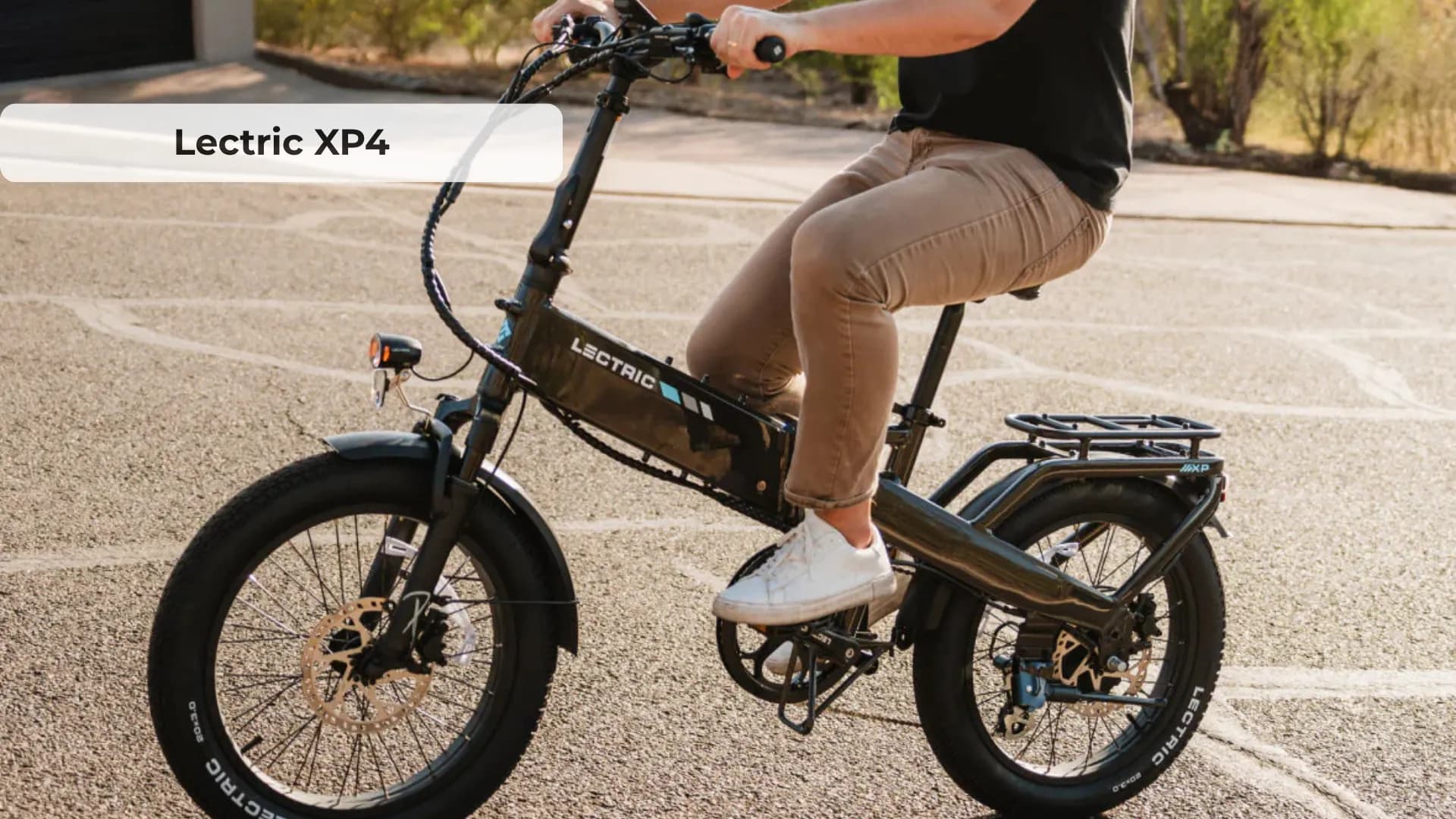
The XP4 earned the top spot by doing something remarkable: delivering premium features at a budget price without cutting corners where it matters. After logging over 200 miles on this thing, from daily commutes to weekend grocery hauls, it consistently outperformed bikes costing twice as much.
Key Features
| Feature | Details |
|---|---|
| Model | Lectric XP4 (500W) – Best Overall Value |
| Price | Starting at $999 |
| Motor | 500W rear hub (1092W peak) with torque sensor |
| Battery | 48V, 10.4Ah (500Wh) lithium-ion, UL-certified |
| Range | Up to 50 miles per charge |
| Weight | 62 lbs without battery, 69 lbs total |
| Best For | First-time e-bike buyers and value-conscious riders |
Performance Notes
The torque sensor, something you'd normally see on $2000+ bikes, makes the XP4 ride like a natural extension of your pedaling. During my 12-mile morning commute through hilly terrain, the motor kicked in smoothly as I increased pressure on the pedals, never feeling jerky or unpredictable. The custom color display is bright enough to read in direct sunlight, and those integrated turn signals actually made drivers notice me changing lanes. One surprise: the hydraulic brakes stopped consistently even after weeks of daily use, something cheaper folders struggle with.
Real talk about range: Lectric claims 50 miles, and I hit 48 miles using mostly Eco and Tour modes on relatively flat ground. Push it to Sport+ or Turbo modes constantly, and you're looking at closer to 30 miles. That 330-pound capacity proved itself when I loaded up the rear rack with two grocery bags and a backpack. The bike stayed stable and responsive. The folding mechanism takes about 20 seconds once you get the hang of it, though lifting 69 pounds into my car trunk solo definitely made me wish I'd hit the gym more often.
Who It's Best For
Perfect for apartment dwellers who need something compact but don't want to sacrifice performance, RV owners looking for their first serious e-bike investment, or anyone who's tired of cheap bikes that promise the world and deliver mediocrity. The torque sensor alone makes this feel like a premium ride. If you're over 6'3" though, test ride first. The reach might feel a bit cramped.
Pros
- Torque sensor provides natural, responsive pedaling assist
- Integrated turn signals and custom color display
- UL-certified battery and overall bike certification
- 330 lb payload capacity handles serious cargo
- Hydraulic brakes with excellent stopping power
Cons
- At 69 lbs, it's heavy for frequent lifting
- Taller riders (6'3"+) may find the fit cramped
- Battery removal requires partial bike folding
2. Ride1Up Portola
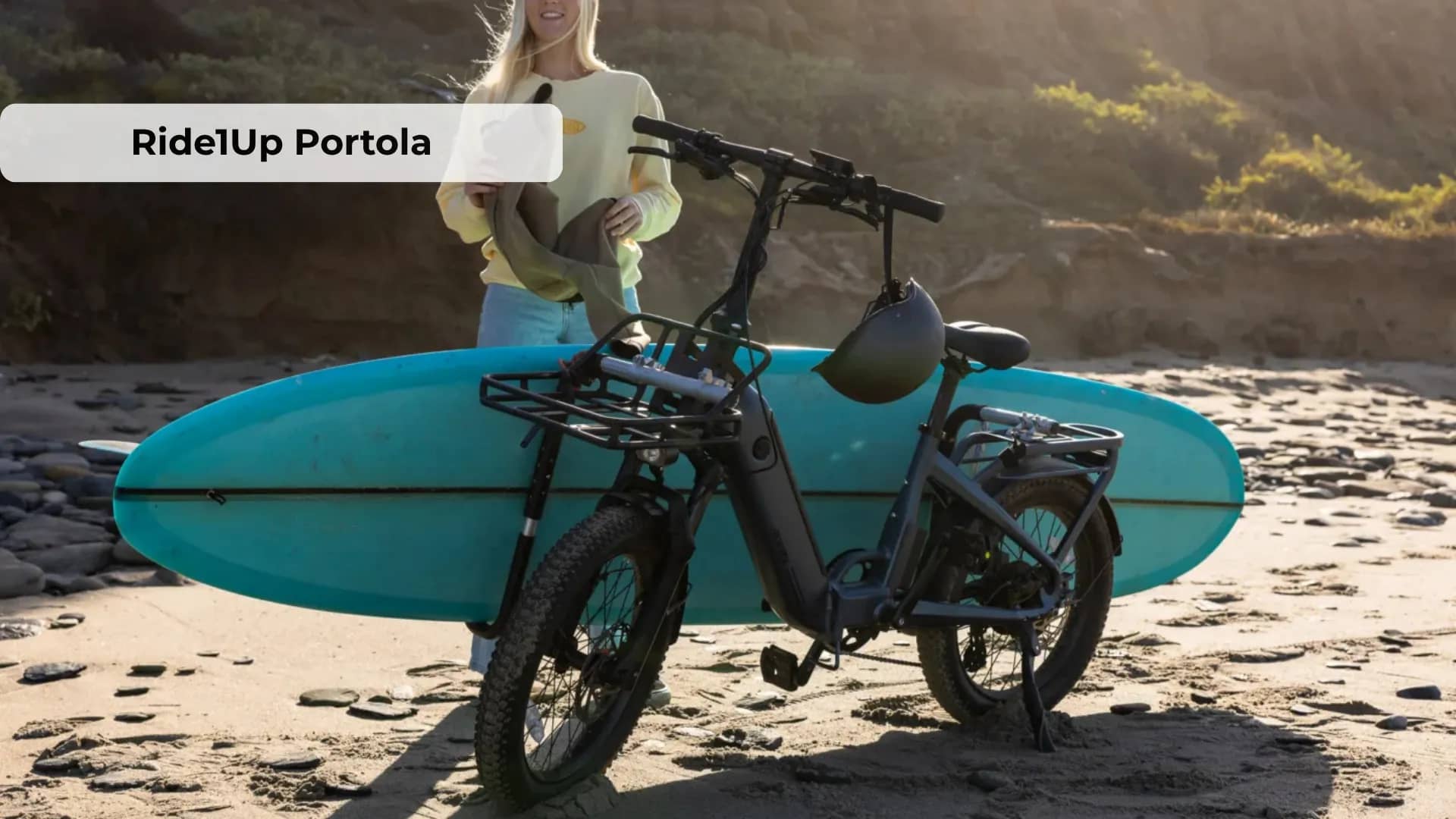
The Portola punches way above its $995 price tag with a 750W motor and hydraulic brakes, features you'd expect on bikes costing hundreds more. It's the folder I grab when I want power without overthinking it.
Key Features
| Feature | Details |
|---|---|
| Model | Ride1Up Portola – Best Budget Pick |
| Price | Starting at $995 |
| Motor | 750W rear hub (peak unlisted) with cadence sensor |
| Battery | 48V, 13.4Ah (643Wh) extended range option |
| Range | 20-40 miles depending on usage |
| Weight | 59 lbs (lightest folder tested) |
| Best For | Budget-conscious riders wanting maximum power |
Performance Notes
That 750W motor is no joke. On my standard hill test, a 15% grade that chews up weaker bikes, the Portola maintained 18 mph using throttle only. The 8-speed Shimano drivetrain gives you enough gearing to actually pedal at 28 mph without your legs spinning uselessly, something cheaper 7-speed setups struggle with. And here's the kicker: those hydraulic brakes from an unfamiliar brand (Gemma) outperformed my expectations, stopping 20 feet 8 inches from 20 mph, beating our testing average by over a foot.
At 59 pounds, this is the lightest folder I tested that still delivers serious power. I could actually maneuver it solo into my Subaru without throwing out my back. The step-through frame sits low at 18.2 inches, making mounting easy even with a loaded rear rack. The one compromise? Battery life. That 13.4Ah battery delivered around 35 miles in mixed riding. Solid but not spectacular. The basic display shows what you need without bells and whistles. Some riders will miss torque sensing, but the cadence sensor works fine for most situations.
Who It's Best For
Ideal for riders who prioritize raw power and portability over fancy tech features. If you're under 6 feet tall, need something light enough to carry upstairs daily, or simply want the most bike for under $1000, the Portola delivers. Also great as a first e-bike that won't feel limiting as your skills improve.
Pros
- 750W motor provides serious hill-climbing power
- 59 lbs makes it the lightest powerful folder tested
- Hydraulic brakes at this price point are rare
- 8-speed drivetrain handles high speeds well
- Passenger-ready rear rack (130 lb capacity)
Cons
- Basic display lacks advanced features
- Battery range is modest compared to premium models
- No torque sensor, only cadence sensing
3. Velotric Fold 1 Plus
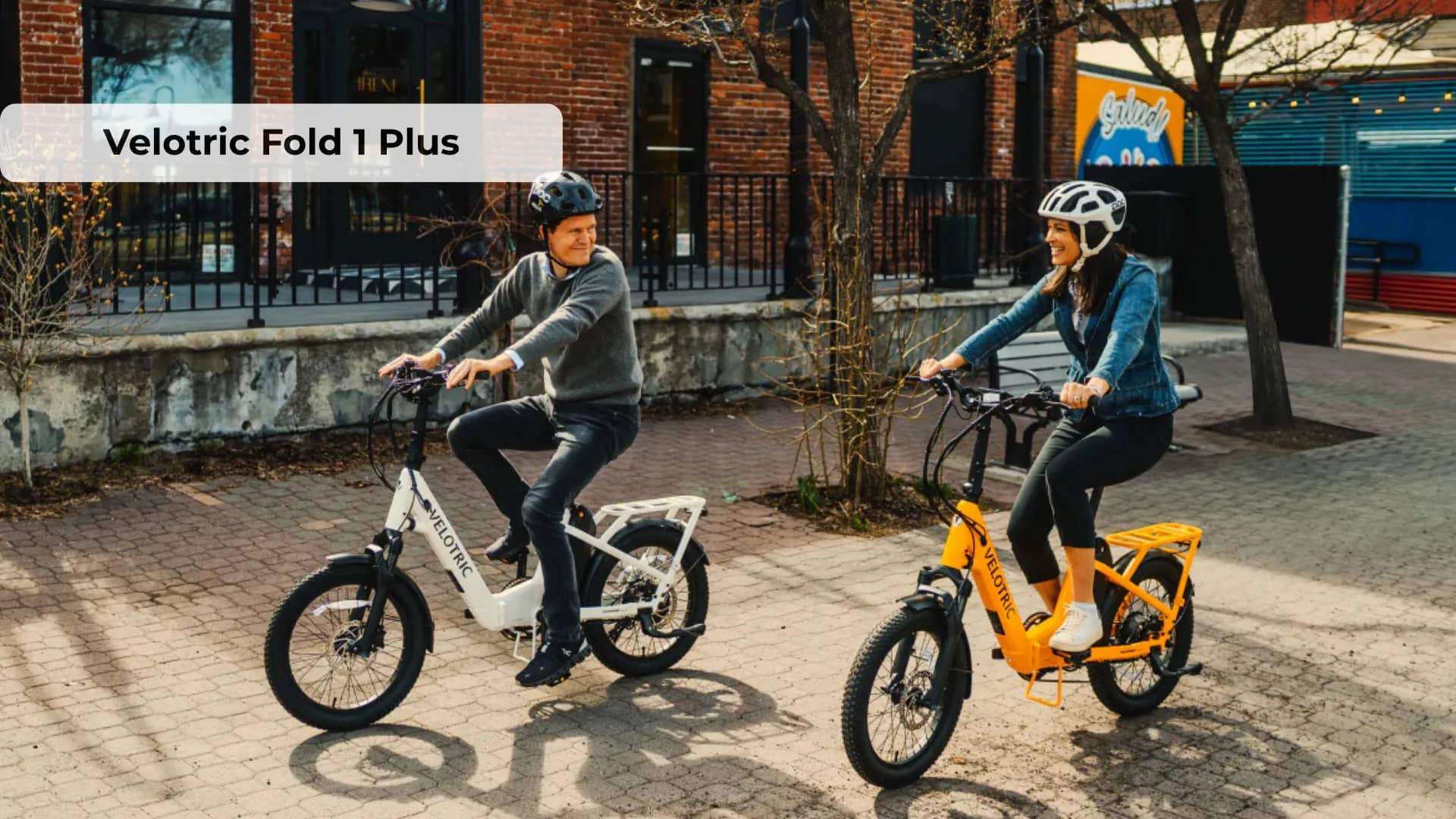
The Fold 1 Plus is what happens when a company actually listens to rider feedback and builds tech features that genuinely improve the experience. SensorSwap, Find My integration, and 15 customizable assist levels make this the smartest folder I tested.
Key Features
| Feature | Details |
|---|---|
| Model | Velotric Fold 1 Plus – Best Tech Features |
| Price | $1,499 |
| Motor | 750W rear hub (1050W peak) with SensorSwap technology |
| Battery | 48V, 13Ah (624Wh) UL-certified |
| Range | Up to 68 miles (exceeded claims in testing) |
| Weight | 63 lbs |
| Best For | Tech-savvy riders who want maximum customization |
Performance Notes
SensorSwap is game-changing. Riding in the city? Switch to cadence mode for effortless starts from traffic lights. Heading out for exercise? Flip to torque mode for a natural, responsive feel that rewards your effort. I tested both extensively, and cadence mode stretched my battery to 65 miles on a long weekend ride, while torque mode made my evening workout rides feel like a regular bike with a helpful push. The vibrant color display shows everything clearly, and those integrated turn signals with brake lights made me feel genuinely safer on busy streets.
Apple Find My integration gave me peace of mind parking downtown; I could track the bike's location from my phone. The Velotric app lets you customize basically everything: throttle speed, assist levels, brake light behavior, even cruise control settings. Some might find 15 assist levels excessive (I mostly stuck with 5 favorites), but having options beats being stuck with someone else's choices. That 450-pound payload capacity isn't marketing fluff; I carried a friend on the rear rack without the bike feeling sketchy or unstable.
Who It's Best For
Perfect for riders who appreciate tech integration and customization options. If you're the type who tweaks settings to get things just right, value theft protection, or want the flexibility to switch between workout mode and lazy cruise mode mid-ride, this delivers. Great for families sharing one bike since everyone can find their ideal setup.
Pros
- SensorSwap lets you switch between cadence and torque modes
- Apple Find My integration for theft tracking
- 68-mile range (actually exceeded claims)
- 450 lb payload is highest in class
- Extensive app customization options
Cons
- 15 assist levels feel excessive with significant overlap
- At $1,499, it's pricey for a folder
- 63 lbs makes frequent lifting challenging
4. Aventon Sinch 2.5
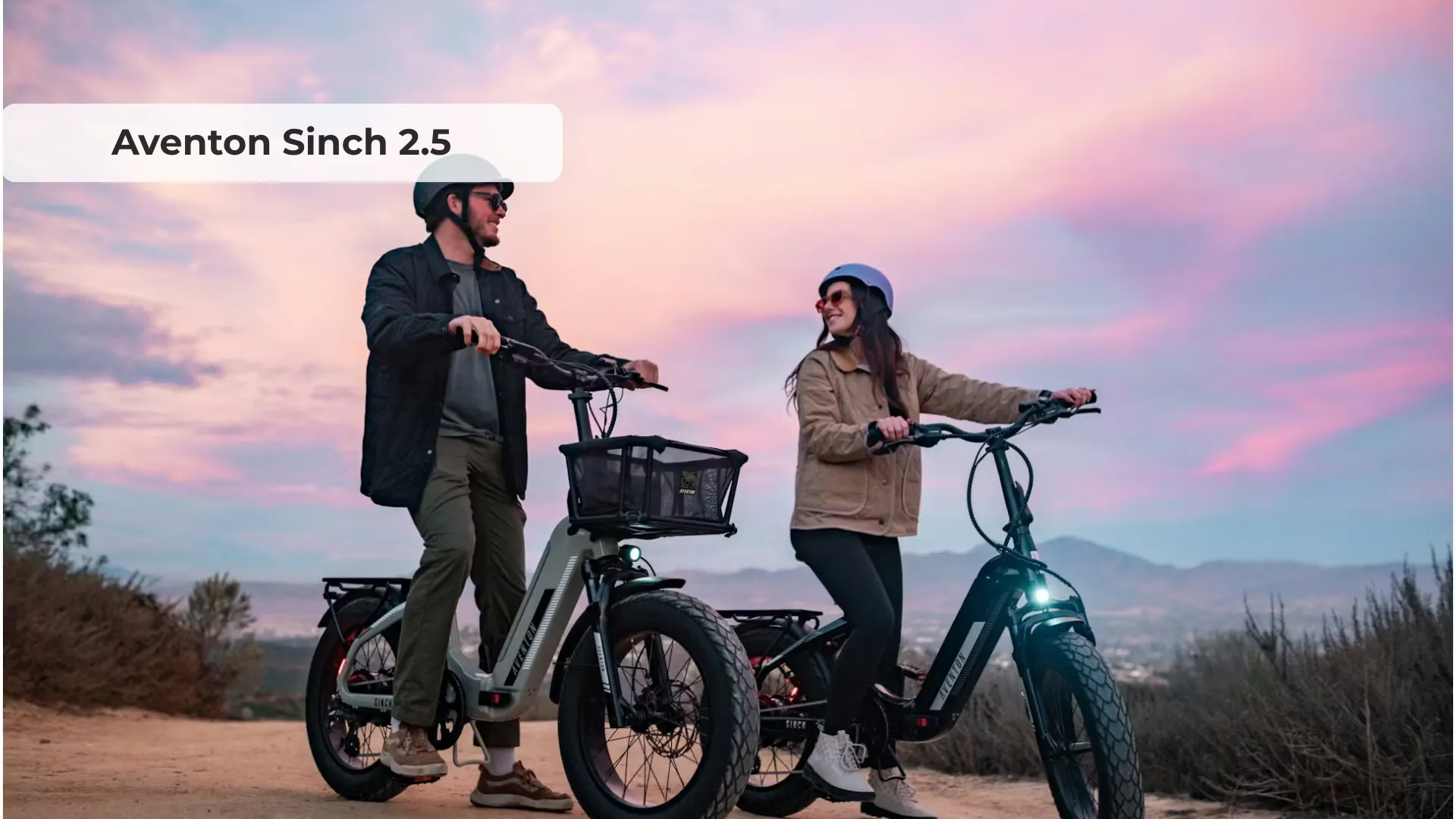
Those 4-inch fat tires aren't just for show; they transform how stable and confident this folder feels on varied terrain. The Sinch 2.5 rides more like a full-size bike than any other folder I tested.
Key Features
| Feature | Details |
|---|---|
| Model | Aventon Sinch 2.5 – Best for Stability |
| Price | $1,799 |
| Motor | 500W rear hub (750W peak) with torque sensor |
| Battery | 48V, 14Ah (672Wh) |
| Range | Up to 55 miles |
| Weight | 68 lbs |
| Best For | Riders prioritizing stability and ride quality |
Performance Notes
The 4-inch Innova tires with subtle tread completely change the riding experience. Where other folders can feel twitchy or nervous on rough pavement, the Sinch 2.5 just rolls confidently over everything. I took it on gravel paths, wet roads during rain, and even some light trail riding, and it handled all of it without drama. The upgraded Tektro hydraulic brakes (a major improvement over the Sinch 2's mechanical brakes) stopped consistently with minimal hand effort. That torque sensor provides responsive, natural-feeling assist that adjusts smoothly to your pedaling pressure.
The new side-mounted display looks sleek and includes a USB-C charging port that actually outputs enough power to keep your phone topped up on longer rides. Turn signals integrated into the rear lights work well, though I wish they were a bit brighter for daytime visibility. Aventon's app adds ride tracking and lets you adjust settings, though honestly, the default setup worked great for me. One quirk: three of the four assist levels felt very similar in testing, so I found myself just toggling between Eco and Turbo most of the time.
Who It's Best For
Ideal for riders who want a folder that doesn't feel like a compromise, the stability and comfort rival full-size bikes. Great for commuters tackling varied surfaces, RV travelers who'll ride on different terrain types, or anyone who's tried folders before and found them too twitchy. The step-through frame works for riders 4'11" to 6'2", though taller folks might need the seat post maxed out.
Pros
- 4-inch fat tires provide exceptional stability
- Torque sensor delivers smooth, natural assist
- Hydraulic brakes (major upgrade from Sinch 2)
- USB-C charging port for devices
- Aventon app adds useful ride tracking
Cons
- Three assist levels feel too similar
- At $1,799, pricier than budget folders
- Taller riders (6'2"+) may need seat post fully extended
5. Tern Vektron S10
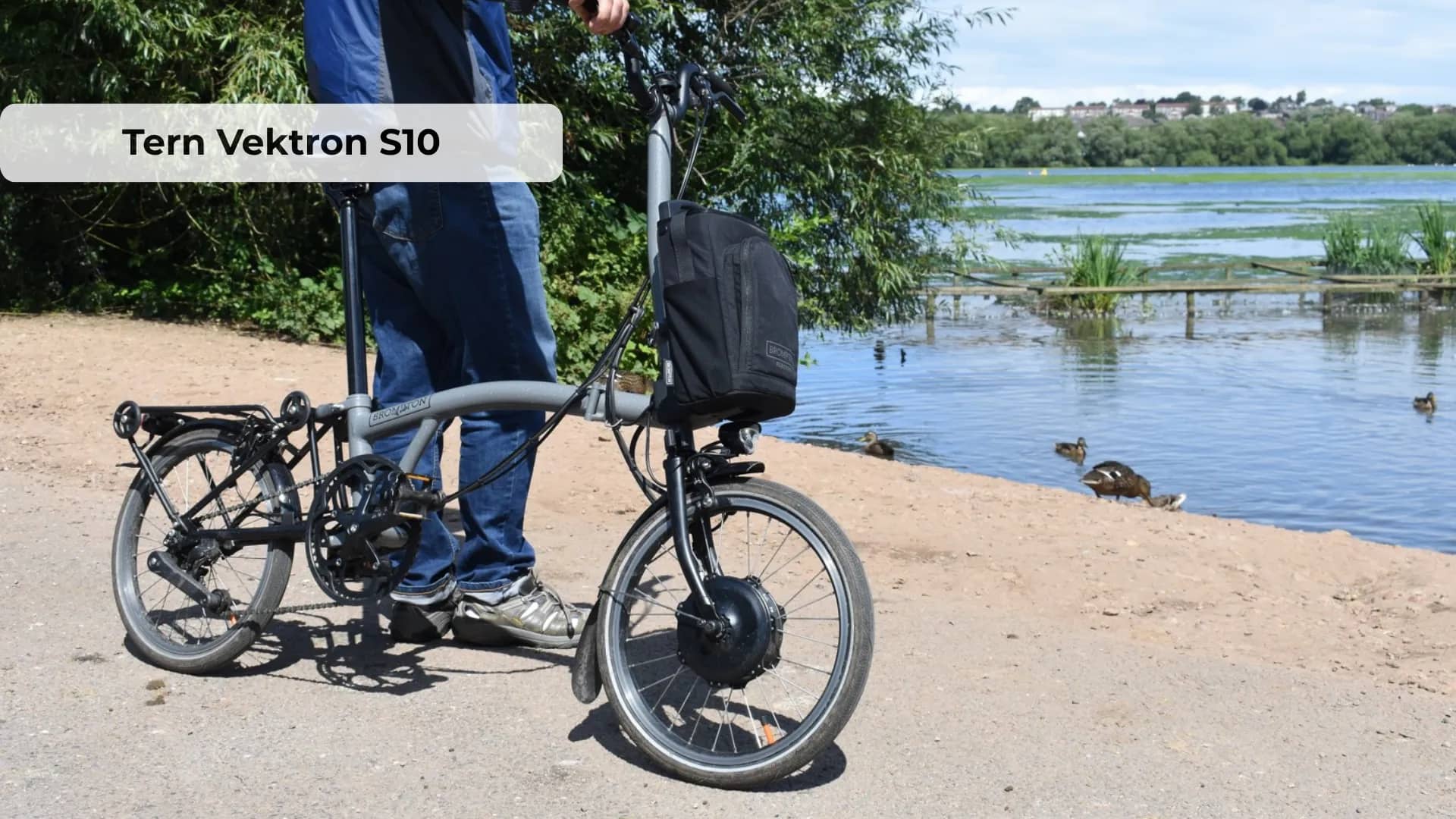
The Vektron S10 costs serious money, but it's the only folder I tested that made me forget I was riding a folding bike. That Bosch Performance Line motor and impeccable build quality justify the investment if your budget allows.
Key Features
| Feature | Details |
|---|---|
| Model | Tern Vektron S10 – Best Premium Folder |
| Price | Around $3,699 |
| Motor | Bosch Performance Line (250W, 65Nm torque) |
| Battery | Bosch PowerPack 400 (400Wh) |
| Range | Up to 68 miles |
| Weight | 50 lbs without battery |
| Best For | Riders wanting the absolute best folder money can buy |
Performance Notes
There's no flex, no creaks, no reminders that this frame folds; it rides like a premium full-size bike that happens to fold. The Bosch motor is whisper-quiet, incredibly efficient, and delivers power so smoothly you barely notice the assist kicking in. During a 45-mile test ride, I averaged nearly 70 miles of range using mostly Tour mode. The Purion display is minimal but effective, and those Magura hydraulic brakes stopped precisely every single time with barely any finger pressure needed.
The 10-speed Shimano Deore drivetrain handles hills effortlessly, and the adjustable Andros stem let me dial in the perfect riding position in seconds. Build quality is outstanding. Every component feels chosen for longevity rather than cost-cutting. The integrated lights (front and rear), fenders, and sturdy rear rack come standard. That rack accepts Yepp child seats without adapters, turning this into a genuine family hauler. The 10-second fold is smooth and secure, with no wobbles or sketchy feelings.
Who It's Best For
Perfect for serious commuters ready to replace their car with an e-bike, families needing a folder that can carry kids safely, or riders who appreciate German engineering and don't mind paying for the best. The frame fits riders from 4'10" to 6'5" thanks to incredible adjustability. If you can afford it and plan to ride frequently, the Vektron will still feel premium years from now.
Pros
- Bosch motor system is best-in-class for reliability
- Build quality feels truly premium with zero flex
- 10-second fold is quick and secure
- Fits riders 4'10" to 6'5" with easy adjustments
- Compatible with child seats without adapters
Cons
- At $3,699, it's significantly more expensive
- 250W motor (European spec) feels less powerful than US folders
- Limited to 20 mph assist (Class 1 only)
6. Brompton P Line Electric
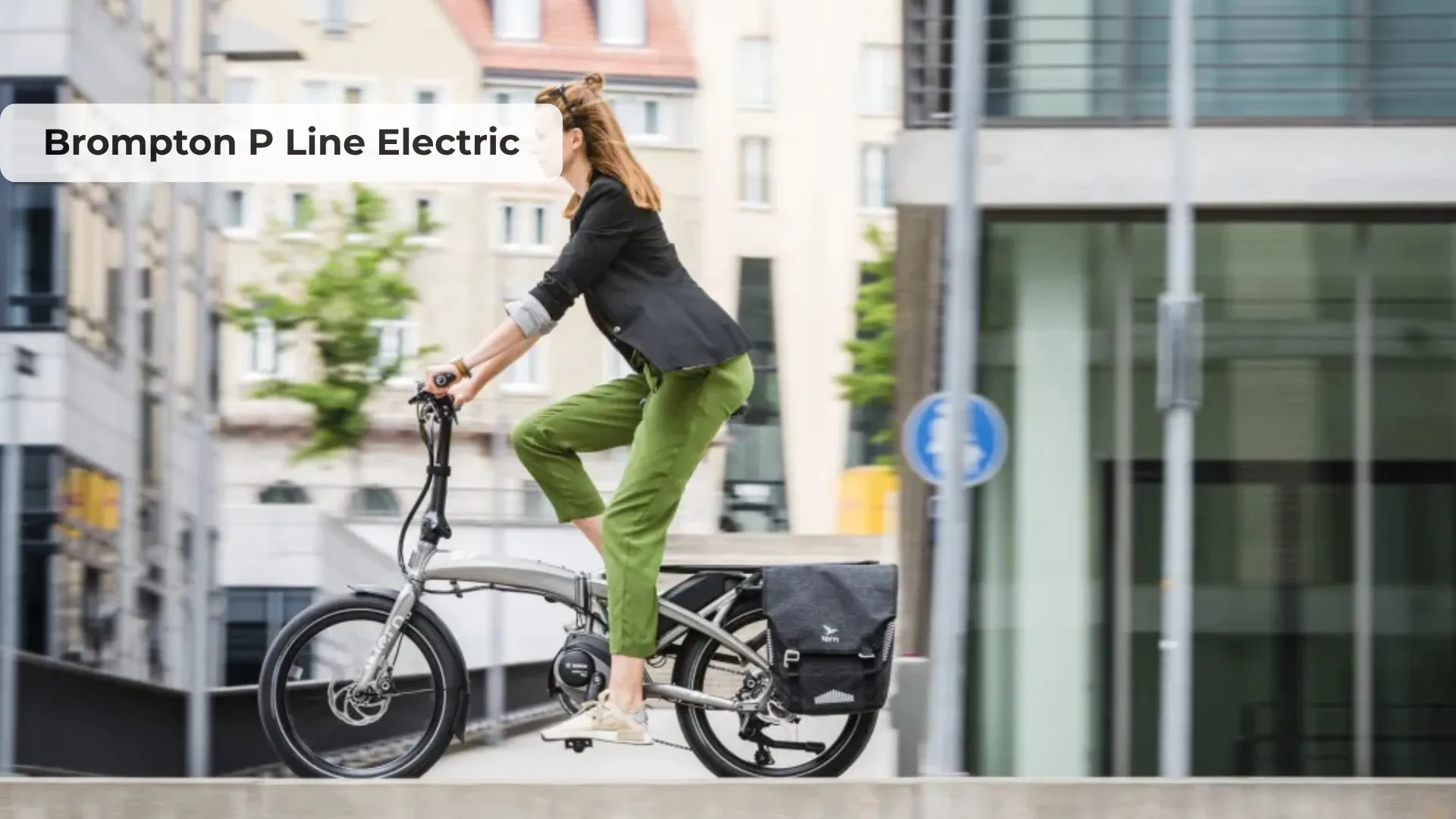
The Brompton folds smaller than anything else I tested and weighs just 34 pounds with the battery. If true portability matters more than power or range, this British icon delivers elegance in a compact package.
Key Features
| Feature | Details |
|---|---|
| Model | Brompton P Line Electric – Most Portable |
| Price | Starting at $4,700 |
| Motor | 250W front hub motor |
| Battery | 300Wh removable battery bag |
| Range | 20-45 miles |
| Weight | 28 lbs without battery, 34.4 lbs total |
| Best For | Urban commuters prioritizing compactness |
Performance Notes
At 34 pounds total, the P Line Electric is light enough to carry up subway stairs without breaking a sweat. The fold is Brompton's legendary design, 10 seconds to a package that rolls like a suitcase and tucks under a restaurant table. That titanium and steel frame feels incredibly solid for something so light. The 16-inch wheels and compact geometry make this nimble in tight spaces, perfect for weaving through crowded city streets. The 250W motor provides gentle, refined assist up to 15.5 mph. Think sophisticated European scooter, not American power bike.
The battery bag is brilliantly designed. It detaches completely, so you can leave the bike locked outside while charging the battery at your desk. Range varied wildly in my testing: 42 miles on flat ground using mostly Eco mode, but closer to 25 miles with hilly terrain and frequent stops. The 4-speed gearing is adequate for city riding but feels limited on long climbs. Those rim brakes are lighter than disc brakes but require more hand force to stop. Not my favorite choice for an e-bike.
Who It's Best For
Ideal for urban professionals who take public transit, live in apartments with no bike storage, or travel frequently and want to bring their bike along. The compact fold and light weight make this unbeatable for portability. Not recommended for hilly areas, longer commutes over 15 miles, or riders wanting American-style power and speed.
Pros
- At 34 lbs, lightest electric folder tested
- Folds to smallest package and rolls like luggage
- Titanium frame is incredibly well-built
- Detachable battery bag for convenient charging
- Legendary Brompton design and quality
Cons
- At $4,700, extremely expensive
- 250W motor feels underpowered for hills
- Rim brakes lack stopping power for an e-bike
- 20-45 mile range is limited
- 15.5 mph max speed feels slow
7. Rad Power RadExpand Plus
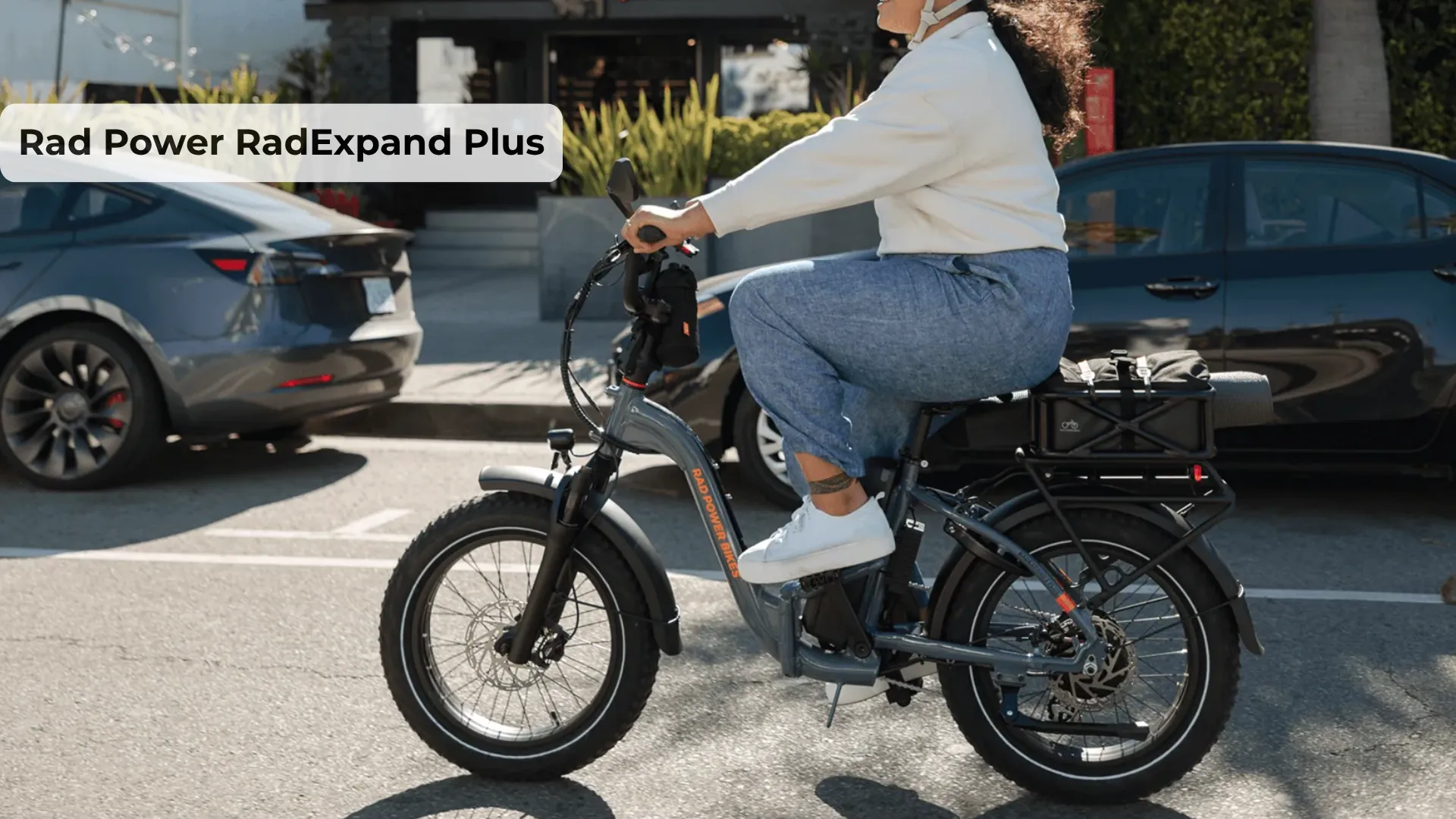
The RadExpand Plus doesn't pretend to be the lightest or fanciest folder. Instead, it delivers solid performance with a 275-pound weight limit that accommodates larger riders and heavier cargo loads.
Key Features
| Feature | Details |
|---|---|
| Model | Rad Power RadExpand Plus – Best for Heavy Riders |
| Price | $1,899 |
| Motor | 750W geared hub motor |
| Battery | 48V, 14Ah (672Wh) |
| Range | Up to 45 miles |
| Weight | 66 lbs |
| Best For | Larger riders or serious cargo hauling |
Performance Notes
That 750W geared hub motor provides consistent torque even when loaded down. I tested it carrying 40 pounds of groceries up a 12% grade, and it maintained 16 mph without complaining. The 4-inch tires offer decent traction on mixed surfaces, though they're not quite as plush as the Sinch 2.5's rubber. Rad Power's build quality is reliable; nothing fancy, just solid components that work. The integrated lights, fenders, and rear rack come standard, making this ready for utility duty out of the box.
Battery life impressed me: 42 miles in mixed riding with moderate hills and wind. The LED display is basic but readable in sunlight. The folding mechanism works smoothly, though at 66 pounds, you'll want help loading it into vehicles. Front suspension provides adequate bump absorption for city riding but bottoms out on larger potholes. Customer service from Rad Power is consistently solid, and they've been in the game long enough to have their support systems dialed in.
Who It's Best For
Great choice for riders over 200 pounds who've found other folders feel too flimsy, anyone who regularly hauls groceries or supplies, or riders wanting a workhorse folder that doesn't need babying. The sturdy build means this will handle daily abuse better than lighter models. Good for RV owners who prioritize durability over portability.
Pros
- 275 lb weight capacity handles larger riders
- Geared hub motor provides consistent power
- 42-mile range in real-world testing
- Rad Power has excellent customer support
- Sturdy build quality inspires confidence
Cons
- At 66 lbs, heavy for frequent carrying
- Basic display lacks advanced features
- Front suspension is adequate but not impressive
- Pricier than budget options without matching features
8. Heybike Mars 3.0
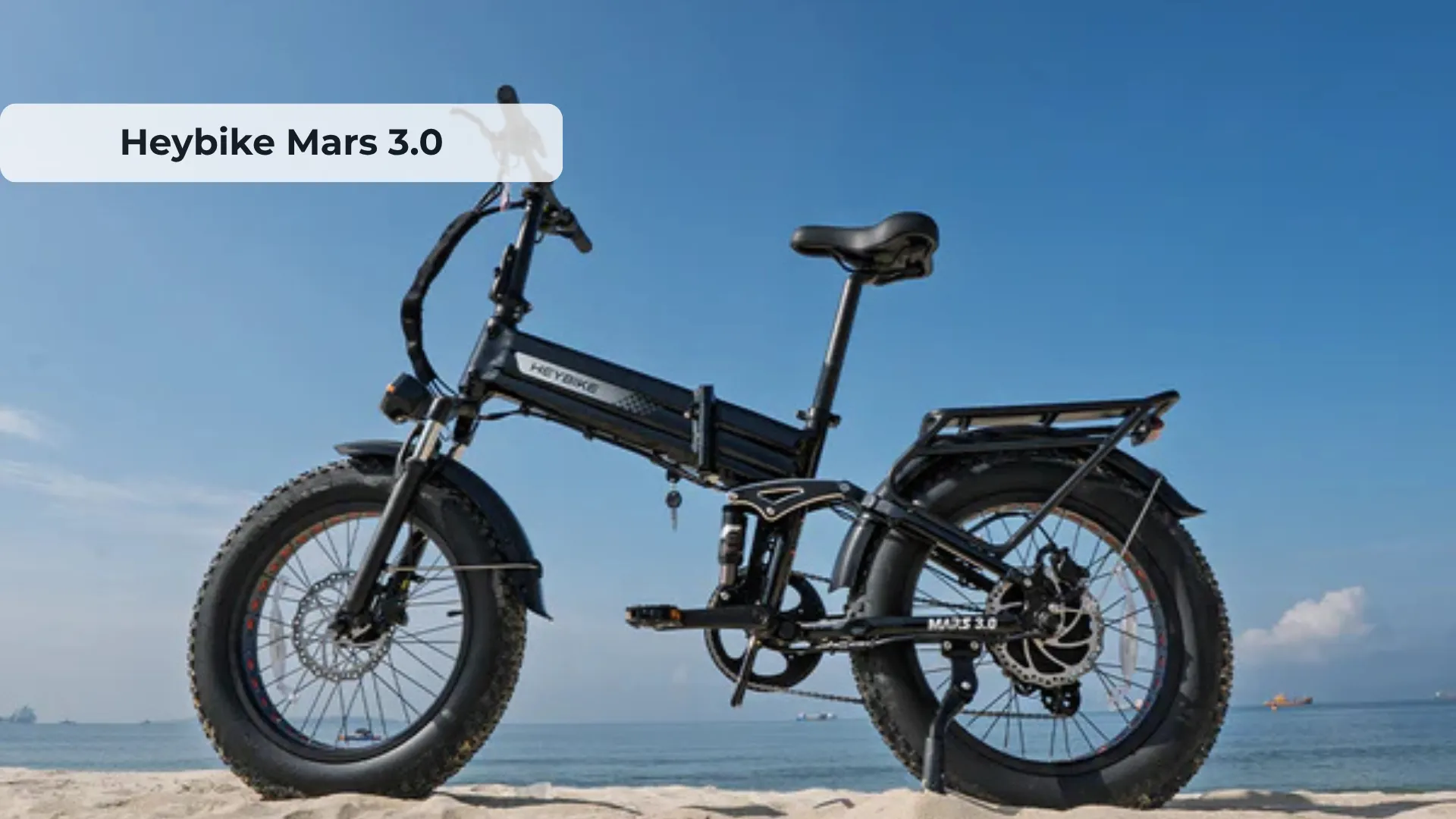
The Mars 3.0 surprised me with its spacious design and impressive cargo-carrying capabilities. While not the most refined folder, it delivers practical utility at a reasonable price.
Key Features
| Feature | Details |
|---|---|
| Model | Heybike Mars 3.0 – Best Cargo Capacity |
| Price | Around $1,399 |
| Motor | 750W rear hub motor |
| Battery | 48V, 15Ah (720Wh) |
| Range | Up to 50 miles |
| Weight | 73 lbs |
| Best For | Riders wanting maximum cargo space |
Performance Notes
That 150-pound rear rack capacity isn't theoretical; I loaded it with camping gear and a small cooler without any concerning flex or handling issues. The 720Wh battery provided 47 miles in my testing, making it genuinely useful for longer errands. The 750W motor handles hills confidently when loaded, though it's a bit jerky compared to torque sensor bikes. The fat tires roll smoothly on pavement and handle light gravel without drama.
Build quality is decent but not exceptional; there's some flex in the frame under hard acceleration, and components feel a tier below premium models. The folding mechanism works but requires more effort than smoother designs. At 73 pounds, this is a beast to lift into vehicles, so plan on leaving it unfolded if you're moving it regularly. The basic display shows essentials without fancy graphics. Assembly was straightforward, taking about 30 minutes.
Who It's Best For
Perfect for grocery-hauling parents, delivery gig workers who need to carry supplies, or anyone prioritizing cargo space over portability. The spacious design means taller riders (up to 6'4") fit comfortably. Not ideal if you'll frequently fold and lift the bike; at 73 pounds, it's more of a 'fold-and-roll' model than a true portable folder.
Pros
- 150 lb rear rack handles serious cargo
- 720Wh battery provides excellent range
- 350 lb total payload accommodates heavy loads
- Spacious design fits taller riders well
- Fat tires handle mixed terrain
Cons
- At 73 lbs, heaviest folder tested
- Some frame flex under hard acceleration
- Components feel budget-tier
- Folding mechanism requires effort
9. Blix Vika X
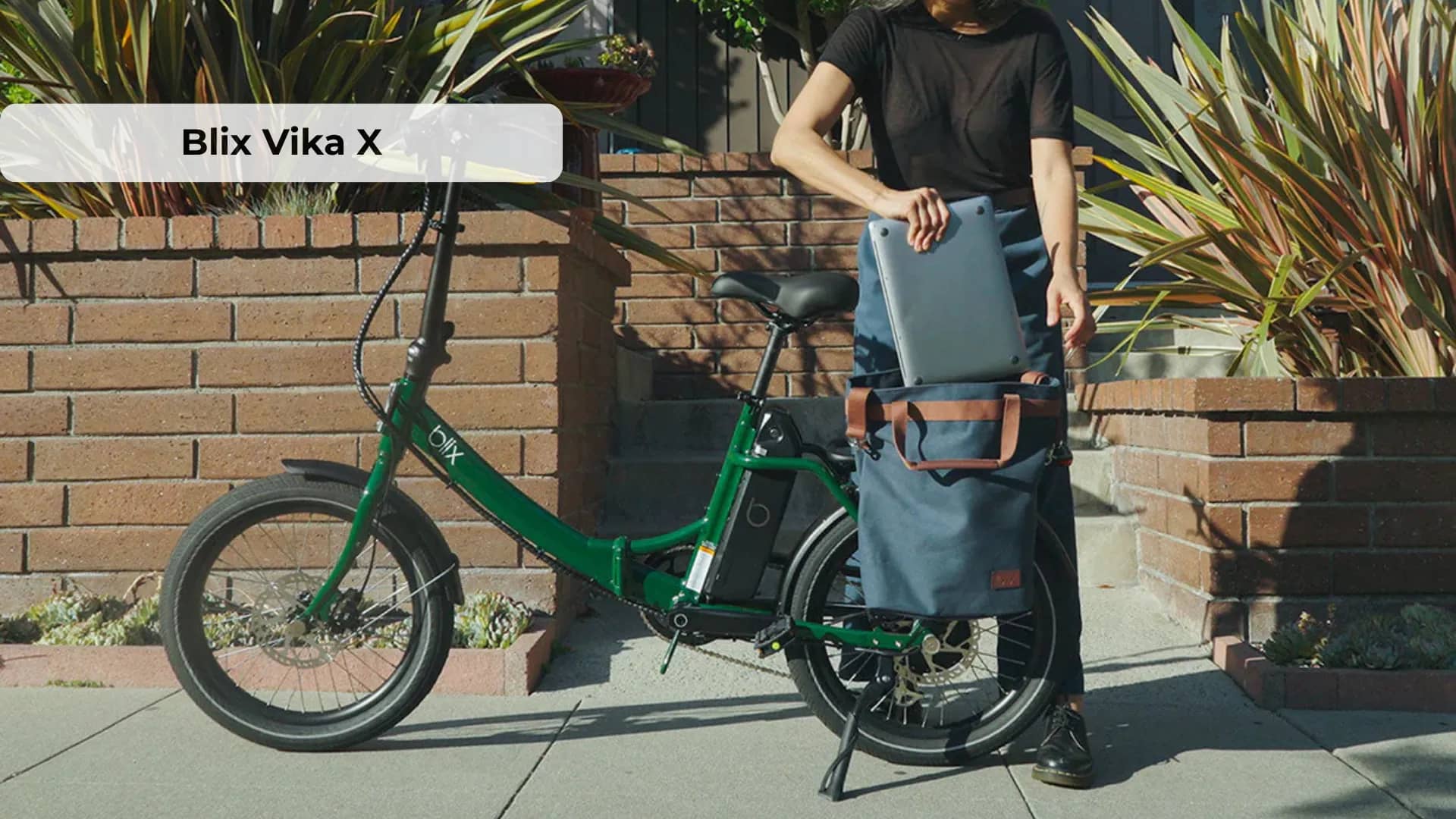
The Vika X trades raw power for a refined, comfortable riding experience. If you're not racing anyone or climbing mountains, this Swedish-designed folder delivers relaxed, enjoyable rides with thoughtful touches.
Key Features
| Feature | Details |
|---|---|
| Model | Blix Vika X – Best for Casual Riders |
| Price | Starting at $1,799 |
| Motor | 500W rear hub motor |
| Battery | 48V, 10.5Ah (504Wh) |
| Range | Up to 40 miles |
| Weight | 52 lbs |
| Best For | Leisure riders and gentle commuters |
Performance Notes
At 52 pounds, the Vika X is noticeably lighter than most competitors, making it genuinely manageable for solo carrying. The ride quality emphasizes comfort over aggression; the upright geometry keeps you relaxed, and the suspension fork actually does something useful (unlike token forks on some budget bikes). The 500W motor provides smooth, predictable power that never feels overwhelming. During easy-paced rides around my neighborhood and local bike paths, I consistently hit 38 miles of range, close to Blix's claims.
Scandinavian design sensibility shows throughout: clean lines, integrated components, and that beautiful belt drive system that's quiet and maintenance-free. The Shimano Nexus 8-speed internal hub shifts smoothly even when stopped at lights. Hydraulic brakes provide confident stopping without being grabby. The color display is easy to read, though it lacks some advanced metrics. One quirk: the bike maxes out at 20 mph (Class 2), which felt limiting on longer straightaways where I wanted to cruise faster.
Who It's Best For
Ideal for riders who value aesthetics and refinement over maximum performance, commuters with flat or gently rolling routes, or anyone recovering from injuries who needs a comfortable, low-stress riding position. The step-through frame and light weight make this accessible for older riders or those with mobility limitations. Skip it if you need serious hill-climbing power or want to maintain 25+ mph speeds.
Pros
- At 52 lbs, lighter than most competitors
- Belt drive is quiet and maintenance-free
- Upright geometry provides comfortable riding position
- Internal hub gear shifts smoothly when stopped
- Clean Scandinavian design looks premium
Cons
- 20 mph max speed feels limiting
- 500W motor lacks power for steep hills
- At $1,799, pricey for the power level
- 40-mile range is modest
10. Urtopia Carbon Fold
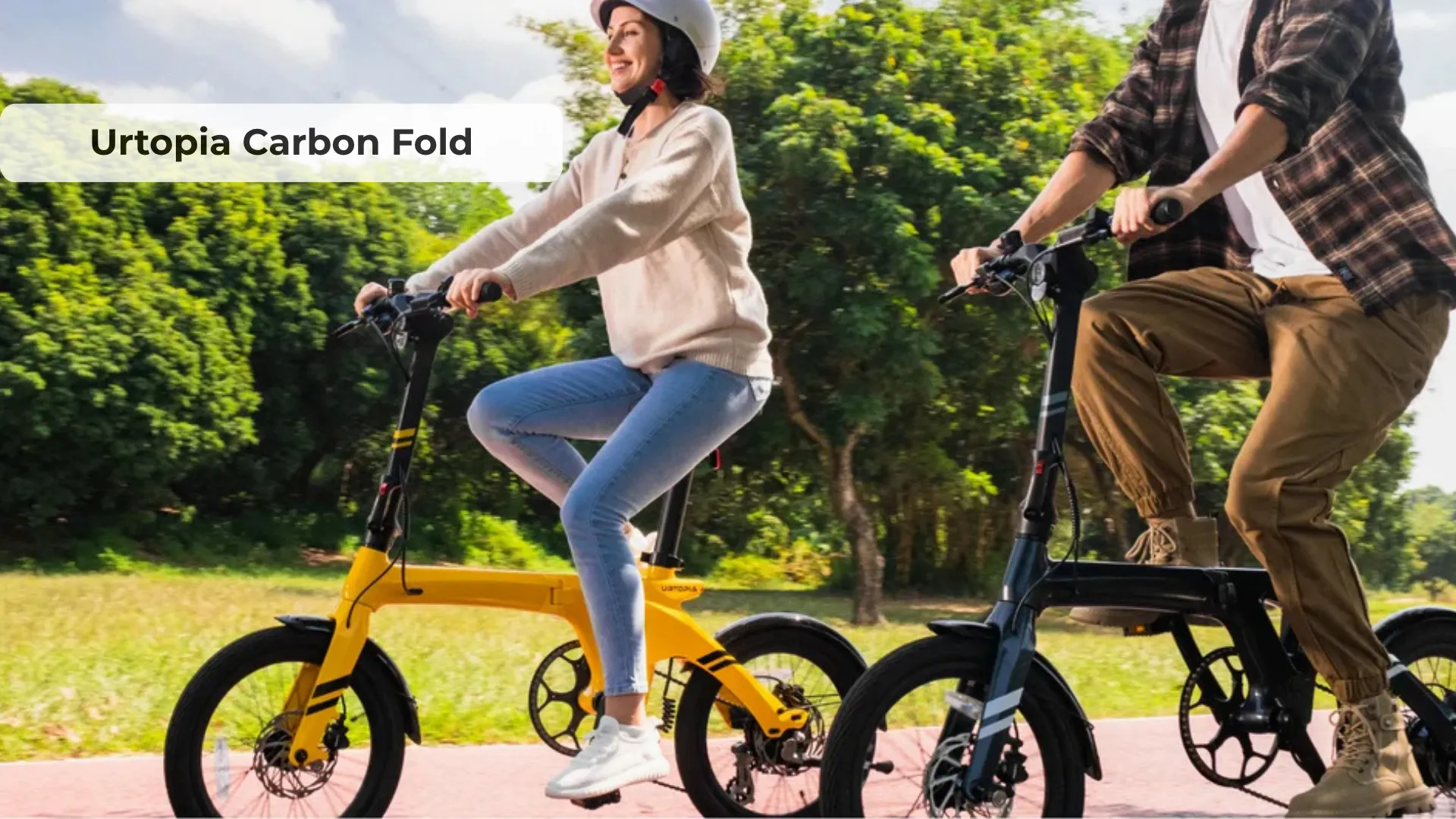
The Carbon Fold feels like a concept bike that actually made it to production. Carbon fiber frame, fingerprint unlock, ChatGPT integration, this folder pushes boundaries even if it doesn't nail everything perfectly.
Key Features
| Feature | Details |
|---|---|
| Model | Urtopia Carbon Fold – Most Innovative |
| Price | $2,999 |
| Motor | 250W rear hub motor (U.S. version available) |
| Battery | 360Wh integrated |
| Range | Up to 50 miles |
| Weight | 33 lbs (lightest alongside Brompton) |
| Best For | Tech enthusiasts wanting the most innovative folder |
Performance Notes
That carbon fiber frame is legitimately impressive; it's stiff where it needs to be, comfortable where it counts, and light enough to carry with one hand. The fingerprint unlock worked consistently after the initial learning period, making the bike feel like a tech device more than transportation. Voice control through the handlebar speaker let me check battery level and switch modes hands-free, though I found myself just using the app most of the time. ChatGPT integration? Honestly more gimmick than useful, but it's fun showing friends a bike that can answer questions.
The 250W motor (U.S. version offers higher power) feels adequate for flat urban riding but struggles on hills with any meaningful grade. Range testing delivered 47 miles using mostly Eco mode on level ground. The Apple Find My integration provides theft tracking, and the alarm system is surprisingly loud; I accidentally triggered it and definitely woke up my neighbors. Build quality is excellent, though some components feel chosen more for weight savings than durability. The fold is quick and clean, resulting in a compact package that's easy to store.
Who It's Best For
Perfect for early adopters who want the most cutting-edge folder available, urban riders on flat terrain who value innovation over raw power, or anyone who treats their bike as a tech accessory as much as transportation. The light weight makes this great for apartment dwellers with limited storage. Not recommended for hilly areas, traditional riders skeptical of tech features, or anyone wanting maximum range and power.
Pros
- 33 lb carbon fiber frame rivals Brompton for weight
- Fingerprint unlock and alarm system work well
- Voice control and ChatGPT integration are unique
- Apple Find My provides theft tracking
- Premium build quality throughout
Cons
- At $2,999, very expensive for the power level
- 250W motor feels underpowered on hills
- Many tech features feel more novelty than necessity
- Integrated battery can't be removed for charging
Complete Buyer's Guide: Everything You Need to Know
Understanding Folding E-Bike Basics
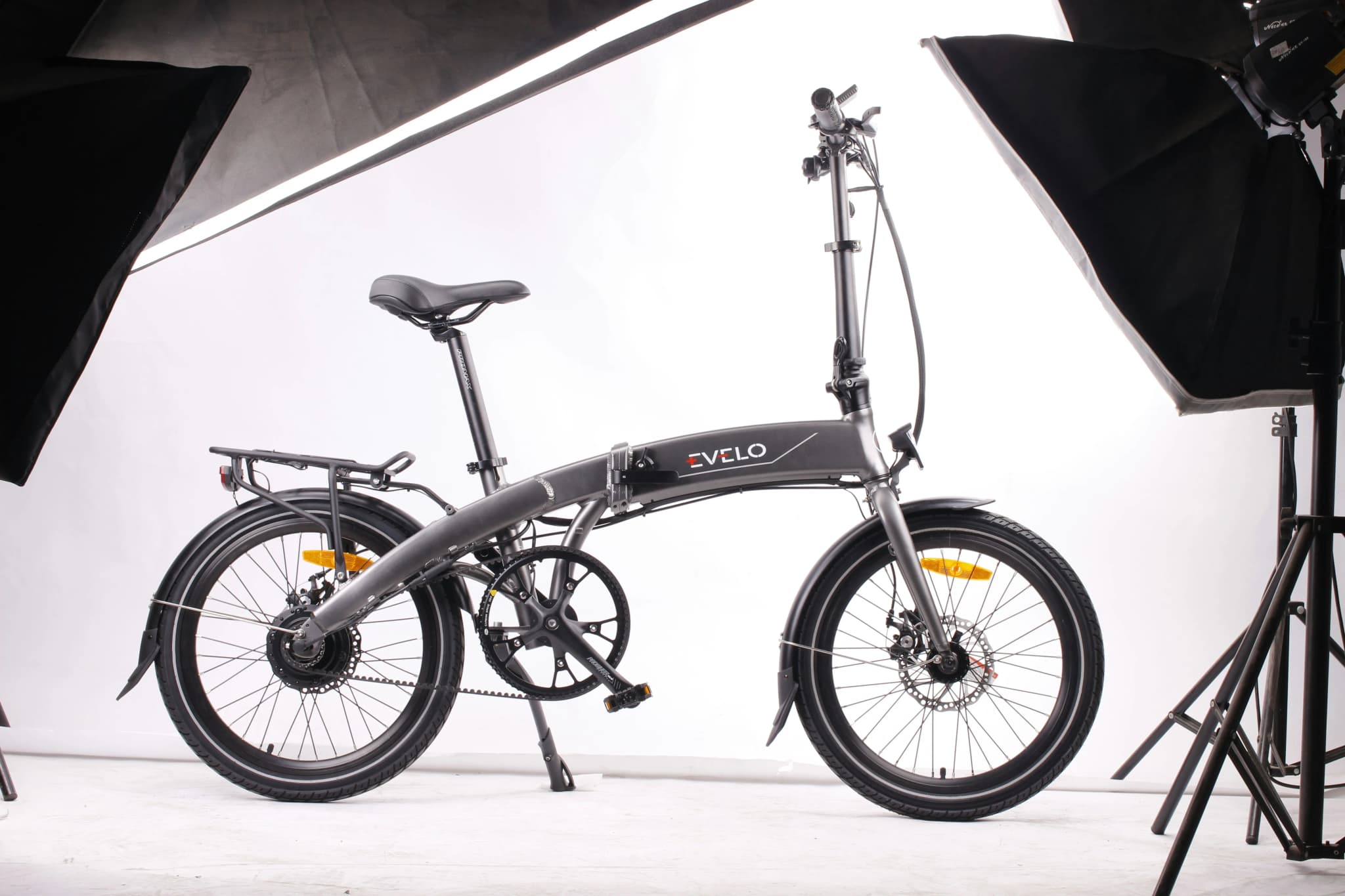
Folding e-bikes aren't just regular bikes with hinges slapped on. The best ones balance three competing priorities: ride quality, portability, and durability. Think of it like designing a laptop. You want power, light weight, and battery life, but improving one usually compromises another. Folders use smaller wheels (16-20 inches typically) which make them compact but also more susceptible to rough pavement. The frame needs reinforcement at fold points, adding weight that counteracts portability gains. Not sure a folder is right for you? Our complete electric bike buying guide walks through use cases side by side.
Motor placement matters more on folders than regular e-bikes. Rear hub motors (most common) keep weight balanced but make wheel removal tricky. Mid-drive motors provide better hill climbing but cost more and add complexity. Front hub motors are rare but offer simplicity. Battery capacity directly trades off with weight. Bigger batteries mean longer range but heavier bikes. The sweet spot for most riders is 500-700Wh, providing 30-50 miles without excessive weight. For how much e-bikes really cost across folding and full-size models, see our pricing guide.
- Wheel size affects both portability and ride quality. Smaller folds tighter but feels rougher
- Weight under 60 lbs is manageable for most people; over 70 lbs needs two people or vehicle ramps
- Fold time varies from 10 seconds (premium models) to 45 seconds (budget bikes)
- Payload capacity ranges from 240-450 lbs. Check if it includes rider weight
Motor Power: What the Numbers Really Mean
Here's something manufacturers won't tell you: that 750W motor isn't actually twice as powerful as a 500W motor. Wattage measures continuous power, but what you feel when accelerating is peak power and torque. A well-designed 500W motor with high torque can outperform a cheap 750W motor on hills. European brands often use 250W motors (legal limit there) that feel adequate because they optimize torque delivery. The Bosch Performance Line proves this brilliantly.
Torque sensors versus cadence sensors make the biggest difference in how natural a bike feels. Torque sensors measure how hard you're pedaling and match your effort. It feels like riding a regular bike with superpowers. Cadence sensors just detect that you're pedaling and provide constant assist. Less natural but perfectly fine for relaxed riding and cheaper to implement. Most budget folders ($1000-$1500) use cadence sensors, while premium models ($2000+) include torque sensing.
- 500-750W is the sweet spot for U.S. riders. Adequate power without excessive battery drain
- Torque (measured in Nm) matters more than wattage for hill climbing. Aim for 50+ Nm
- Geared hub motors provide better torque than direct drive but need more maintenance
- Test ride both sensor types if possible. Your preference might surprise you
Battery Life and Range Reality Check
Manufacturer range claims are like EPA fuel economy. Technically achievable but wildly optimistic for real-world use. When a brand claims 60 miles, expect 40-45 miles in mixed riding. That number assumes: flat terrain, no wind, 160-pound rider, moderate assist levels, perfect temperature, and consistent pedaling. Add hills, headwinds, a heavier rider, or high assist modes, and range drops 30-50%. Cold weather below 40°F can cut battery capacity by 20-30%.
Battery capacity in watt-hours (Wh) gives you the real story. A 500Wh battery typically delivers 25-40 miles in varied conditions. 700Wh stretches that to 35-55 miles. Beyond 750Wh, you're adding significant weight for diminishing returns unless you're doing 50+ mile rides. Most folders use 48V systems (good balance of efficiency and power), though some premium models use 36V (more refined but less powerful). Always check if the battery is removable. Integrated batteries mean bringing the entire bike indoors to charge.
- Multiply manufacturer range claims by 0.7 for realistic expectations
- 500-700Wh capacity handles most commutes and errands comfortably
- Removable batteries let you charge inside while the bike stays locked up
- Battery replacement costs $300-$800. Factor this into long-term ownership
The Portability vs. Performance Trade-Off
Every pound you save in weight costs you something. Smaller battery, weaker motor, cheaper components, or less sturdy frame. The Brompton at 34 pounds is gloriously portable but maxes out at 15 mph with limited range. The Heybike Mars at 73 pounds hauls serious cargo but requires two people to lift into most vehicles. Most riders find the sweet spot around 55-65 pounds. Manageable but not effortless.
The fold mechanism itself matters enormously. Brompton's design is legendary because it results in a stable, rollable package that fits anywhere. Cheaper folders often create awkward shapes that tip over or catch on doorframes. The best folders secure with magnets or catches that prevent accidental unfolding. Budget at least a week to build muscle memory. Early fold attempts will take 60+ seconds and feel clumsy. After practice, you'll nail it in 15-20 seconds.
- Under 50 lbs: truly portable but expect compromises in power/range/build quality
- 50-65 lbs: balanced. Manageable for most people with decent performance
- 65-75 lbs: heavy but often feature-rich; plan on folding and rolling, not carrying
- Test the fold in person before buying. Some designs are far more intuitive than others
Budget Ranges and What to Expect
Under $1500, you're looking at solid entry-level folders that cut corners intelligently. Expect cadence sensors instead of torque, basic displays, mechanical or hybrid brakes, and simpler components. The Lectric XP4 ($999) and Ride1Up Portola ($995) prove you can get genuine quality here if brands prioritize the right features. Avoid unknown brands below $800. Quality control and customer service fall apart at those price points.
$1500-$2500 brings meaningful upgrades: torque sensors, better displays, hydraulic brakes, longer range, and premium components. The Velotric Fold 1 Plus ($1,499) and Aventon Sinch 2.5 ($1,799) offer advanced features without the luxury pricing. Above $3000, you're paying for refinement, brand prestige, weight savings, or cutting-edge tech. The Tern Vektron ($3,699) justifies its price with Bosch motors and impeccable build quality. The Brompton ($4,700) charges a premium for iconic design and extreme portability. The Urtopia Carbon Fold ($2,999) bets on innovation.
- Budget ($800-$1200): Basic but functional. Great for testing if you'll actually use a folder
- Mid-range ($1200-$2000): Best value. Premium features without luxury pricing
- Premium ($2000-$3500): Refined experience with high-quality components throughout
- Ultra-premium ($3500+): Niche benefits. Extreme portability, prestige brands, or innovation
Common Mistakes That Cost Buyers Money
The biggest mistake? Buying the lightest, cheapest folder and expecting it to replace a car for serious commuting. I've seen dozens of riders upgrade within six months because they underestimated how much they'd actually use their folder. If you're commuting 10+ miles daily, invest in the $1500-$2000 range from the start. The improved comfort and reliability pay for themselves quickly. On the flip side, don't overbuy if you're only riding occasionally. That $4700 Brompton is magnificent but overkill for weekend grocery runs.
Second mistake: ignoring total weight and thinking 'foldable equals portable.' A 75-pound folder that requires two people to lift defeats the entire purpose if you're in a third-floor walk-up. Test the folded package in your actual storage space and vehicle before buying. Third mistake: assuming all motors and batteries are equal. Cheap components fail faster and cost more to replace. Stick with known motor brands (Bafang, Bosch, Shimano) and batteries from reputable manufacturers (Samsung, LG, Panasonic cells).
- Don't cheap out if you'll ride daily. False economy leads to expensive upgrades
- Test the fold and lift in person. Specs don't reveal how awkward it feels
- Check local service options before buying obscure brands
- Factor in replacement battery costs ($300-$800) when comparing prices
- Verify weight limit includes rider + cargo. Some brands list confusing specs
Frequently Asked Questions
What's the best electric folding bike for under $1000?
The Lectric XP4 at $999 is hands-down the best value under $1000. You're getting a torque sensor (usually found on bikes twice this price), hydraulic brakes, 50-mile range, and UL certification for safety. The Ride1Up Portola at $995 is the close runner-up with its powerful 750W motor and light weight. Both offer premium features at budget prices.
If you can stretch your budget to $1200-$1500, the jump in quality is worth it. But in the sub-$1000 category, those two bikes dominate for good reason. They cut costs on aesthetics and brand prestige while keeping the components that actually matter for riding quality.
Can heavy riders (250+ lbs) use folding e-bikes safely?
Absolutely, but payload capacity matters more than you'd think. The Velotric Fold 1 Plus handles up to 450 pounds total (rider + cargo + bike), making it the strongest folder I tested. The Heybike Mars 3.0 (350 lbs), Rad Power RadExpand Plus (275 lbs), and Lectric XP4 (330 lbs) also accommodate larger riders comfortably. These bikes have reinforced frames and stronger wheels designed for heavier loads.
Don't just check the total weight limit. Also verify that the motor has enough torque for hills. A 250-pound rider needs at least 50-60 Nm of torque for comfortable climbing. The bikes I mentioned all clear that bar. Avoid budget folders under $800 with suspiciously high weight claims. The frame reinforcements and stronger components needed for heavy riders cost money that ultra-cheap bikes don't invest.
How long do folding e-bike batteries typically last?
Quality batteries last 500-1000 full charge cycles before dropping to 80% capacity. If you ride 30 miles per charge and recharge twice weekly, that's roughly 3-5 years before noticeable degradation. Cheaper batteries might only deliver 300-500 cycles. Temperature extremes, deep discharges, and leaving batteries at 100% or 0% for extended periods all accelerate wear.
Replacement batteries cost $300-$800 depending on capacity and brand. Samsung and LG cells (like those in the Lectric XP4 and Velotric Fold 1) last longer than generic cells. To maximize battery life: store at 40-80% charge when not using for weeks, avoid extreme temperatures, and don't drain completely before recharging. Most riders get 4-6 years from quality batteries with normal use.
Are folding e-bikes good for tall riders over 6 feet?
It depends on the specific model. The Tern Vektron S10 fits riders up to 6'5" thanks to its Andros adjustable stem and thoughtful geometry. The Heybike Mars 3.0 accommodates riders up to 6'4" comfortably. The Lectric XP4 works for most riders up to 6'3", though taller folks might want the seat post fully extended. The Aventon Sinch 2.5 officially maxes out at 6'2".
Avoid the Brompton P Line Electric if you're over 6 feet. Those small 16-inch wheels and compact geometry feel cramped for taller riders. Test ride before buying if you're 6'2" or above. Look for folders with extended seat post travel (at least 12 inches of adjustment) and adjustable stems. Also check standover height. Some folders have high top tubes that make mounting awkward for long-legged riders.
Can I take a folding e-bike on trains and buses?
Rules vary dramatically by transit system, but folders generally have better luck than regular bikes. Many systems allow folded bikes during all hours while restricting regular bikes to off-peak times. The key is fold size and weight. The Brompton P Line Electric at 34 pounds and compact fold passes as luggage on most systems. Heavier folders over 65 pounds might violate size or weight restrictions.
Check your specific transit agency's rules. Some require bikes to be in bags when folded, others don't. Amtrak allows folded bikes as carry-on luggage if they fit in overhead bins or under seats. Airlines treat folders as checked luggage (fees apply), though the Brompton's compact size sometimes fits as carry-on. European and Asian transit systems are generally more bike-friendly than U.S. systems.
What maintenance do folding e-bikes need?
Basic maintenance is similar to regular bikes: clean and lube the chain every 100-200 miles, check tire pressure weekly, and inspect brake pads monthly. The fold mechanism needs attention. Wipe down hinges and apply a drop of dry lube every few weeks to prevent grit buildup. Tighten fold point bolts every month or two since vibrations can loosen them.
E-bike specific maintenance includes: checking battery connections for corrosion, updating firmware occasionally (some brands require this), and inspecting electrical connectors after riding in rain. Most riders spend $100-$200 yearly on maintenance if doing basic tasks yourself, or $300-$500 using bike shops. Budget folders often need more frequent adjustments than premium models due to lower-quality components.
Are folding e-bikes worth the compromises compared to regular e-bikes?
If you genuinely need portability like limited storage space, multimodal commuting, or RV travel, then yes, the compromises are worth it. A good folder like the Lectric XP4 or Aventon Sinch 2.5 rides almost as well as a regular e-bike while fitting in your closet. But if you have garage space and never need to transport your bike, a non-folding e-bike gives you better ride quality, longer range, and lower weight for the same money.
The key question: will you actually fold it regularly? If the answer is yes, folders are brilliant. If you'll fold it twice a year, you're paying for portability you don't need. I've seen many riders buy folders 'just in case' and regret the handling compromises. Be honest about your actual use case. It'll save you money and frustration.
What's the most reliable folding e-bike brand?
Tern and Brompton lead for pure reliability, with decades of folding bike expertise and exceptional build quality. You'll pay premium prices ($3500-$4700) but get bikes that last 10+ years with proper maintenance. In the value category, Lectric and Rad Power have established strong reputations for customer service and component reliability. Both brands have been around long enough to prove they'll support their products.
Avoid unknown brands on Amazon that appear and disappear. They might be cheap, but good luck getting warranty support or replacement parts in year two. Stick with brands that have been in business at least 3-5 years and have accessible North American customer service. Check reviews specifically mentioning long-term ownership (1+ years) rather than initial impressions.