Brompton P Line Electric Review: Testing the Titanium Folder
Brompton P Line Electric review: tested folding speed, ride quality, and real-world range. Honest pros, cons, and who should spend $5K+ on this premium folder.

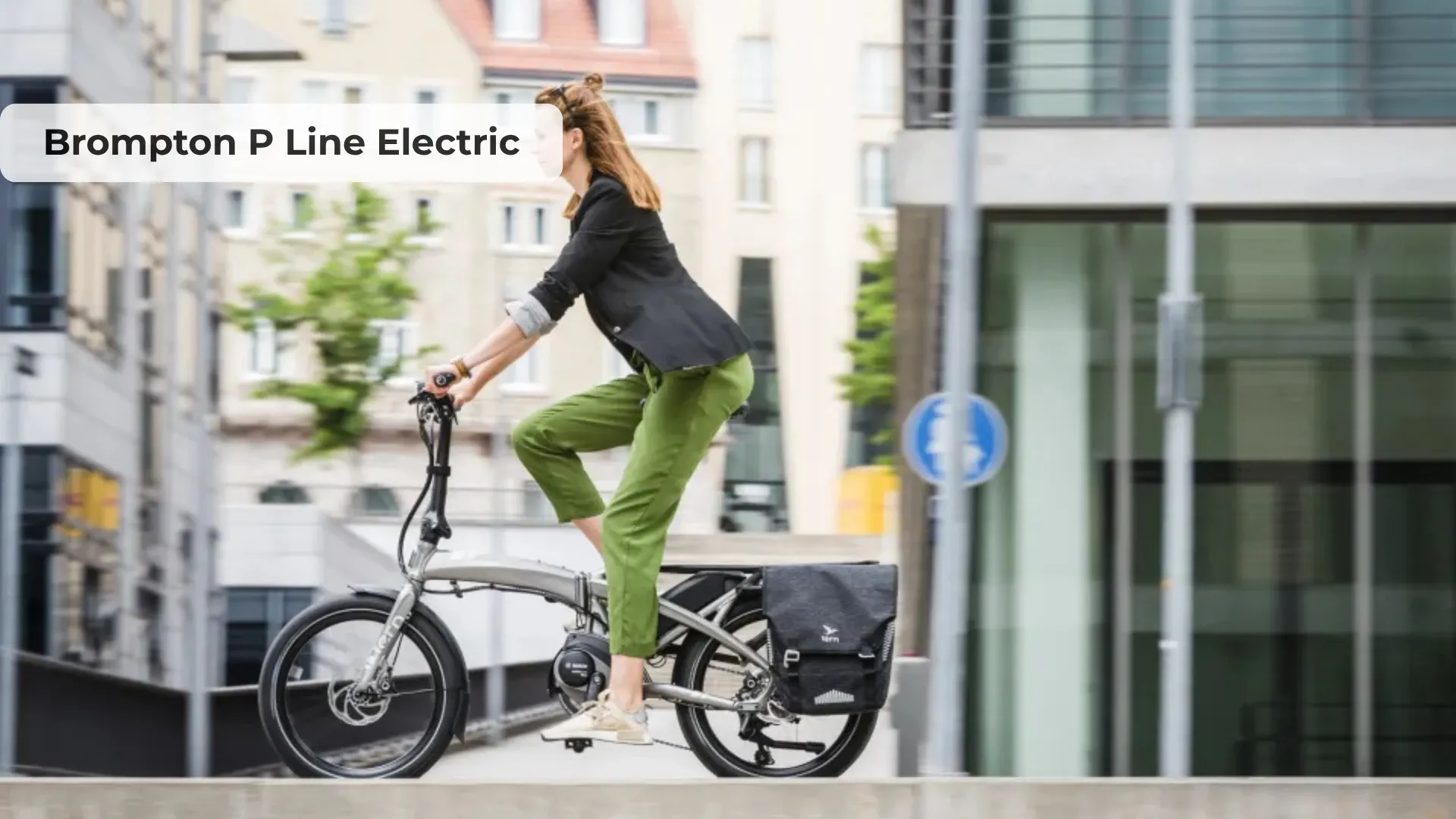
After six weeks of daily commuting with the Brompton P Line Electric, I can tell you it's the best folding e-bike I've tested, but whether it's worth roughly twice the price of competitors depends entirely on how much you value 26 pounds and a 15-second fold.
I'll never forget the look on the barista's face when I rolled the folded Brompton right up to the counter at my usual coffee stop. "Is that thing a scooter or a bike?" she asked. It's a question I've fielded probably 30 times now, and it perfectly captures what makes this bike both brilliant and divisive. When folded, it looks like high-tech luggage. When unfolded, it's unmistakably a bicycle, albeit one that seems to have shrunk in the wash.
I tested the P Line Electric across Manhattan for six weeks, combining it with subway rides, carrying it up four flights of walk-up stairs, and commuting 8 miles round-trip three days a week. The test period included two weeks of rain, one genuine cold snap below 20°F, and more potholes than I care to remember. I wanted to know if a $5,195 folding bike could justify its price against excellent alternatives like the Lectric XP Lite ($799) or even premium competitors like the Tern Vektron ($3,999).
Introduction: The $5K Question Nobody Wants to Ask
I'll never forget the look on the barista's face when I rolled the folded Brompton right up to the counter at my usual coffee stop. "Is that thing a scooter or a bike?" she asked. It's a question I've fielded probably 30 times now, and it perfectly captures what makes this bike both brilliant and divisive. When folded, it looks like high-tech luggage. When unfolded, it's unmistakably a bicycle, albeit one that seems to have shrunk in the wash.
I tested the P Line Electric across Manhattan for six weeks, combining it with subway rides, carrying it up four flights of walk-up stairs, and commuting 8 miles round-trip three days a week. The test period included two weeks of rain, one genuine cold snap below 20°F, and more potholes than I care to remember. I wanted to know if a $5,195 folding bike could justify its price against excellent alternatives like the Lectric XP Lite ($799) or even premium competitors like the Tern Vektron ($3,999).
Key Specs, Pricing & Variants
- Price
- From $5,195 (4-speed) / $5,695 (12-speed)
- Weight
- 26.4 lbs (4-speed) / 27.3 lbs (12-speed) with battery
- Motor
- 250W front hub motor, 50 Nm torque
- Battery
- 300Wh removable, 20-45 mile range (highly variable)
- Folded Size
- 23 x 22 x 11 inches (fits under most desks)
- Frame
- Titanium rear triangle, aluminum front with lacquer finish
- Wheels
- 16-inch with Schwalbe Marathon tires
- Best For
- Urban commuters combining bike + transit, limited storage situations
The Fold: Under 20 Seconds Every Time
After folding this bike probably 200 times over six weeks, I can confirm Brompton's claims aren't exaggerated. The P Line Electric folds to roughly 23 x 22 x 11 inches in about 15 seconds once you've got the sequence down. That's small enough to roll onto subway cars during rush hour without dirty looks, and it's fit under my desk at work without blocking the walkway. The titanium rear frame adds rigidity without the weight penalty of steel.
Design & Build Quality
Opening the box feels like unboxing jewelry, not a bike. The lacquer finish on the aluminum front frame has this deep, almost glass-like quality that photographs beautifully but shows every fingerprint and minor scuff. I've babied mine more than any bike I've owned, which feels ridiculous to admit but also speaks to the premium aesthetic Brompton nailed here. The titanium rear triangle doesn't just save weight compared to steel Bromptons, it adds this subtle metallic sheen that screams craftsmanship.
After six weeks and probably 300 miles of urban abuse, I've found exactly two issues. First, the lacquer finish chips easier than I'd like around the fold points where metal contacts metal. Nothing structural, just cosmetic annoyance for a $5K bike. Second, the front luggage mount loosened twice, requiring a hex key tightening each time. Otherwise? It's held up flawlessly. The hinges feel as tight as day one, there's zero frame flex even when sprinting out of the saddle, and the overall build quality justifies the British manufacturing premium. This thing feels engineered, not assembled.
Features Breakdown: What You Get for the Premium
Electric System & Controls
- 250W front hub motor with 50 Nm torque delivers surprisingly punchy acceleration from stops, though it maxes out around 15 mph and provides zero assist beyond that per EU regulations (which Brompton follows globally). Three assist levels controlled by a small, easy-to-read handlebar display.
- 300Wh battery removes in seconds via a twist-lock mechanism and weighs just 3.3 pounds separately. I carried it to my 4th-floor apartment nightly without issue. Charges fully in about 3.5 hours from empty.
- Range is wildly variable. I got 45 miles on eco mode with minimal elevation change, but only 22 miles when using boost mode aggressively in hilly areas. Plan for 25-30 miles of mixed use as a realistic expectation.
Folding Mechanism & Portability
- The fold happens in three main steps: fold rear wheel under, fold handlebars down, fold front wheel back. Brompton claims 10 seconds; I consistently hit 15-18 seconds. Unfolding takes slightly longer, maybe 20 seconds, because you need to engage the frame catch securely.
- When folded, it rolls on two small wheels like a shopping cart. Not smooth like a suitcase, but functional for short distances. I regularly rolled it through subway turnstiles, onto trains, and across office lobbies. The handle positioning is thoughtful.
- At 26.4 pounds (my 4-speed version), it's genuinely light enough to carry up stairs one-handed for short flights. Four floors? I needed both hands and took a breather halfway. Compare this to the Tern Vektron at 48 pounds, which requires serious muscle.
Gearing & Drivetrain Options
- I tested the 4-speed version with internal hub gearing. It's simple, virtually maintenance-free, and adequate for flat-to-moderate terrain. Gear spacing feels wide, meaning you're sometimes between ideal ratios, but it works for city use.
- The 12-speed option ($500 more) uses a 2x6 derailleur setup for better range and closer ratios. If you face serious hills regularly, it's worth considering. But it adds complexity and weight, plus derailleurs are more vulnerable when folded.
- Shifting happens via a twist grip on the right handlebar. It's intuitive after the first ride, though I occasionally mis-shifted under power early on. The internal hub allows shifting while stopped, which proved surprisingly useful at red lights.
Components & Finishing Touches
- Schwalbe Marathon 16-inch tires are small but surprisingly grippy and puncture-resistant. I hit metal grates, glass, and typical NYC street debris without a single flat across six weeks.
- Lighting system is integrated into the front and rear, powered by the main battery. Front light is adequate for being seen but not powerful enough for unlit paths. Rear light is bright and visible from 100+ feet.
- Brooks saddle comes standard (on the model I tested) and needed about 50 miles to break in properly. Now it's comfortable for my 45-minute commute, though the upright position still puts more weight on your sit bones than I prefer for rides over an hour.
Performance Testing: Real-World Urban Riding
Here's what nobody tells you about small-wheel electric bikes: they're twitchy as hell for the first five rides. The 16-inch wheels, upright position, and electric front hub create a handling dynamic that takes genuine adjustment time. I nearly dumped it twice in week one navigating tight turns at moderate speeds. By week three, I was threading through taxi traffic confidently. The short wheelbase makes it incredibly nimble once you adapt, but there's definitely a learning curve. On straightaways with the motor assist engaged, it accelerates smartly up to about 12 mph, then gradually pushes you to the 15 mph cutoff. It's not thrilling acceleration, but it's perfectly adequate for urban stop-and-go riding.
The motor's front-hub placement creates noticeable handling quirks. Under full boost acceleration from a dead stop, you feel the front wheel pulling you forward in a way that mid-drive motors don't. It's not unsafe, just different. I learned to ease into the throttle rather than pin it from stops. On wet pavement, the front motor occasionally broke traction on metal plates and painted crosswalks when I got too aggressive with boost mode. In normal conditions with moderate assist, traction was never an issue. Range testing gave me 45 miles in eco mode on a flat 12-mile loop, 28 miles of mixed city riding with moderate hills and stop-and-go traffic in regular mode, and just 22 miles when I deliberately hammered boost mode up every available incline. The realistic sweet spot for daily commuting is probably 25-30 miles.
Comfort is relative on this bike. The riding position is genuinely upright, putting zero strain on your back or neck, which I loved during 45-minute commutes. But those small wheels transmit every pothole directly to your hands and backside. There's no suspension beyond tire pressure (I ran 60 psi for best comfort-speed balance), so rough pavement gets old after 30 minutes. For short urban trips under 5 miles? Perfectly fine. For longer commutes, you'll feel it. I also discovered the hard way that strong crosswinds really push this bike around due to the upright position and light weight. Two blustery days had me working harder than expected to maintain a straight line.
Riding Position and Comfort
The upright geometry feels odd for the first couple rides if you're used to traditional bikes. You sit very vertical, almost like a beach cruiser, which puts zero strain on your back but feels twitchy until you adjust. The small 16-inch wheels amplify every crack and pothole, so this isn't a plush ride by any measure. But paired with the electric assist, it makes navigating tight city spaces incredibly agile in ways a full-size bike can't match.
User Experience: Living With the P Line Electric
The daily routine became surprisingly efficient. Roll out of apartment, unfold in 20 seconds, ride 2.5 miles to subway, fold in 15 seconds, carry onto train, ride to office, roll into elevator, unfold under my desk. Total time from apartment door to desk: 35 minutes including the subway portion. Compare this to my previous routine with a full-size bike locked outside the station, which took 40 minutes and always carried theft anxiety. The convenience factor is genuinely game-changing for multi-modal commutes. I also found myself taking the bike places I'd never bring a regular bike because the fold is so quick and the footprint so small.
Setup out of the box required basic assembly: attach pedals, adjust saddle height, and unfold. Took me 15 minutes following the included instructions. Brompton recommends professional assembly, but it's straightforward if you're remotely handy. Maintenance so far has been minimal beyond keeping the chain lubed (which you should do weekly in wet conditions) and checking tire pressure. The internal hub gearing requires essentially zero adjustment. Battery care is simple: I remove it nightly, charge it every 2-3 days depending on use, and store it at room temperature. One quirk: the battery level display only shows three bars, so you never quite know if you have 40% or 30% remaining. More granular indication would be helpful.
How It Compares to Other Folding E-Bikes
The elephant in the room is the Lectric XP Lite at $799. For literally one-sixth the price, you get a 46-pound folding e-bike with a 300W motor, similar range, and fat tires that smooth out rough roads. What you sacrifice is 20 pounds of weight, a slower fold (takes me 45 seconds), much bulkier dimensions when folded (won't fit under a desk), and build quality that's functional but nowhere near premium. If you have a garage or can lock it outside, and you're not carrying it up stairs regularly, the Lectric makes way more financial sense. But if you genuinely need the portability and light weight for apartment living or transit combinations, there's no comparison.
Against the Tern Vektron ($3,999), you're comparing two different philosophies. The Tern is a full-size folder with 20-inch wheels, Bosch motor, and more traditional bike handling. It folds, but not nearly as small or quickly, and at 48 pounds it's legitimately heavy to carry anywhere. The ride quality is significantly better for longer distances, and the Bosch system is more powerful with better range. Choose the Tern if you want a real bike that happens to fold. Choose the Brompton if the fold and portability are your primary concerns and you can adapt to the unique riding dynamics.
The GoCycle G4 ($4,999) is the closest direct competitor in price and concept. It weighs 37 pounds, folds in about 10 seconds to a similar footprint, and offers cleaner industrial design with a carbon belt drive. I haven't tested it extensively, but based on test rides, it feels more planted and stable than the Brompton due to larger wheels and longer wheelbase. However, it lacks the Brompton's established dealer network, decades of refinement, and customization options. If bleeding-edge design appeals more than British heritage, look at the GoCycle.
Who This Product Is Best For
This bike is specifically engineered for urban dwellers who combine biking with public transit and have limited storage space. If you live in a walk-up apartment in Manhattan, San Francisco, or Boston and need to carry your bike upstairs nightly, the 26-pound weight makes this possible where a 45-pound folder doesn't. If your commute involves subway, bus, or train segments where you need to fold quickly and carry the bike aboard during rush hour, the compact fold and relatively light weight are genuinely transformative. It's also ideal for RV and van life folks who need secondary transportation that stores in minimal space. Office workers who want to keep their bike under their desk instead of risking theft outside will appreciate that it actually fits in typical workspace. For older riders or those with physical limitations who want electric assist but can't manage heavy bikes up stairs or into storage, this hits a sweet spot. However, if you have garage parking or can lock outside, if you mostly ride on rough roads that need bigger wheels, if you want maximum comfort for 10+ mile rides, or if your budget is under $3,000, look elsewhere. Riders over 6'2" or under 5'2" should test ride first as the fit window is narrower than standard bikes.
Pros & Cons
Pros
- Legitimately portable at 26.4 lbs, light enough to carry up stairs without suffering
- Folds to incredibly compact 23x22x11 inches in about 15 seconds consistently
- Build quality and craftsmanship justify the premium with tight tolerances and premium materials
- Electric assist is smooth and adequate for urban riding up to 15 mph
- Handling becomes nimble and confidence-inspiring after the adaptation period
- Multi-modal commuting (bike + transit) becomes genuinely practical vs theoretical
Cons
- Price is genuinely hard to justify at $5,195 when excellent folders exist under $1,000
- Small wheels transmit every road imperfection directly to your body, comfort suffers on rough pavement
- Lacquer finish shows scuffs and fingerprints easily, chips at fold contact points
- Front hub motor creates twitchy handling dynamics that require adaptation time
- Battery display only shows three bars, making it hard to gauge remaining range accurately
- Riding position and small wheels create crosswind sensitivity on blustery days
Conclusion & Final Verdict
After six weeks of daily use, I understand both the devotion Brompton owners feel and the sticker shock skeptics express. This is an exceptionally well-engineered machine that solves specific problems (portability, quick folding, multi-modal transit) better than any competitor. The 26-pound weight, 15-second fold, and compact dimensions make combinations of biking and subway genuinely practical where a 45-pound folder with a slower fold creates friction. If you live in a city with limited storage, no elevator, and regular transit use, this bike transforms your commute in ways that are hard to quantify until you experience them.
But here's the reality: for the majority of riders, a $799 Lectric XP Lite or a $1,299 Rad Power folder delivers 80% of the functionality at 15% of the cost. You sacrifice portability and build quality, but you gain comfort, stability, and keep $4,000 in your pocket. The Brompton makes sense for a specific subset of riders, primarily urban apartment dwellers in dense cities who combine biking with transit regularly and have the budget for the premium. If that's you, this bike will genuinely improve your daily life and justify its cost over years of use. If you're unsure whether you need this level of portability, start with a cheaper folder and upgrade later if you find yourself wishing it were lighter and more compact. The P Line Electric is brilliant at what it does, you just need to be certain that what it does is what you actually need.
The Brompton P Line Electric is the best folding e-bike for urban multi-modal commuters who genuinely need the portability and can justify the premium, but it's wildly overpriced if your use case doesn't specifically demand the lightweight fold.
Brompton P Line Electric: Frequently Asked Questions
Is the Brompton P Line Electric actually worth $5,195 compared to cheaper folding e-bikes?
It depends entirely on whether you genuinely need the specific combination of light weight (26 lbs) and ultra-compact fold (23x22x11 inches). During my six weeks of testing, I carried this bike up four flights of stairs daily and folded it dozens of times on subway platforms. The 26-pound weight makes this feasible where a 45-pound competitor would have me considering alternative transportation within days. The 15-second fold means I can board trains during rush hour without blocking aisles or annoying passengers.
However, if you have ground-floor storage, can lock outside, or don't combine biking with transit regularly, excellent folders like the Lectric XP Lite ($799) deliver similar range and motor performance at one-sixth the price. You sacrifice portability and build quality, but for most recreational riders or those with garage parking, those sacrifices don't matter. The Brompton justifies its premium for urban apartment dwellers in walk-ups, RV travelers with limited storage, and multi-modal commuters. For everyone else, it's objectively overpriced.
How does the small 16-inch wheel size affect ride quality and handling?
The 16-inch wheels create a distinctly different riding experience that requires genuine adaptation. For my first week, the bike felt twitchy and unstable in ways that made me question the purchase. The short wheelbase and upright position mean the bike responds immediately to steering input, weight shifts affect direction more dramatically, and you feel every pothole and pavement crack directly through the handlebars and saddle. I nearly lost control twice navigating tight turns at moderate speed during week one.
By week three, something clicked and the nimble handling became an asset for threading through city traffic and navigating tight spaces. The learning curve is real but manageable. However, comfort on rough pavement never fully improves because there's no suspension beyond tire pressure. Rides longer than 45 minutes on typical city streets left my hands and backside noticeably fatigued. For short urban trips under 5 miles, it's perfectly adequate. For longer commutes or rough roads, seriously consider whether the portability justifies the comfort trade-off.
What's the realistic range I can expect from the 300Wh battery?
Range varies wildly based on assist level, terrain, and rider weight. I got 45 miles running eco mode on a flat loop with minimal stops. Under typical city conditions with moderate hills, traffic lights, and using the regular assist mode, I consistently got 26-30 miles before the battery died. When I deliberately hammered boost mode and sought out every available hill, range dropped to just 22 miles. Wind also affects range significantly due to the upright riding position.
For practical planning, assume 25 miles of mixed city riding as your baseline. The battery takes about 3.5 hours to charge fully from empty, and it removes in seconds via a twist lock so you can charge it separately indoors. I kept a charging routine of every 2-3 days based on my 8-mile round-trip commute. The three-bar battery display is frustratingly vague, you never know if you have 40% or 25% remaining, so I learned to charge conservatively rather than risk running out mid-commute.
Can I actually carry this bike up stairs or is it still too heavy?
At 26.4 pounds with the battery installed, I genuinely carried this bike up four flights of walk-up stairs nightly for six weeks. For one or two flights, it's no problem to carry one-handed using the frame. For three to four flights, I needed both hands and typically paused once to catch my breath. I'm a reasonably fit 180-pound guy, for reference. Compare this to my previous experience trying to carry a 48-pound Tern folder up the same stairs, which left me genuinely winded and considering alternative housing.
The weight distribution matters as much as the total weight. The Brompton balances well when carried by the frame, and when folded it rolls on two small wheels for short distances, so you can wheel it through lobbies or across platforms rather than carrying. If you face stairs regularly and can't store your bike outside, the 26-pound weight is genuinely transformative compared to typical 40-50 pound folders. However, if you have an elevator or ground-floor storage, this advantage disappears and you're paying premium prices for portability you don't actually need.
How long does it actually take to fold and unfold this bike?
After folding this bike probably 200 times over six weeks, my consistent times are 15-18 seconds to fold and about 20-22 seconds to unfold. Brompton claims 10 seconds for folding, which I've never achieved even when rushing. The fold involves three main steps: collapse the rear triangle, fold down the handlebars, then fold the front wheel back and engage the catches. Unfolding reverses this but takes slightly longer because you need to ensure the frame catch engages securely before riding.
For practical comparison, the Lectric XP Lite takes me 40-45 seconds to fold because it requires loosening clamps and the sequence is less intuitive. The GoCycle G4 claims 10 seconds and actually delivers on that, but costs similar money. The speed matters most when you're on a crowded subway platform trying to board quickly or navigating through a busy office lobby. Those extra 25 seconds versus cheaper folders add up to genuine convenience over hundreds of folds. When folded, it rolls on two small wheels, though not smoothly like luggage, so you wheel it rather than carry for short distances.
Should I get the 4-speed or 12-speed version?
I tested the 4-speed internal hub version and found it adequate for flat-to-moderate city terrain, which describes most of Manhattan where I ride. The internal hub allows shifting while stopped, requires virtually zero maintenance, and covers a decent range for urban use. However, the gear spacing is wide, meaning you're frequently between ideal ratios, and the top gear isn't tall enough for comfortable high-speed cruising when the motor cuts out above 15 mph.
The 12-speed derailleur version costs $500 more, adds about a pound of weight, and provides closer gear ratios with better range for hilly terrain. If you face serious hills regularly or want to ride beyond motor assist speeds efficiently, it's probably worth it. However, derailleurs add maintenance complexity and are more vulnerable to damage when the bike is folded and transported. For flat city riding where the motor handles most effort below 15 mph, save the $500 and weight penalty. For hilly cities like San Francisco or if you ride longer distances at higher speeds, consider the 12-speed seriously.
How does this compare to just getting a cheap folder and carrying a spare battery?
The weight and fold speed differences are genuinely transformative for specific use cases, not marginal improvements. A Lectric XP Lite weighs 46 pounds, folds to much larger dimensions, and takes 40+ seconds to fold. Over weeks of daily use combining biking with subway commutes and carrying up stairs, those differences compound into either sustainable routine or daily frustration. I previously tried using a 45-pound folder for the same commute and gave up after two weeks because the stairs were genuinely exhausting.
However, if your use case doesn't involve regular stairs, tight storage, or frequent folding for transit, the cheaper folder is the smarter choice financially. You're paying 6x the money for specific portability advantages. If you have garage storage, can lock outside, or mostly ride without folding, those advantages evaporate and you're left with a premium-priced bike with mediocre comfort and range. The Brompton makes financial sense only when the portability genuinely solves problems you face daily. For occasional folders or riders with flexible storage, buy the $799 Lectric and bank the $4,400 difference.
What are the biggest frustrations after the honeymoon period?
The lacquer finish, while beautiful, shows every fingerprint and minor scuff. After six weeks, the contact points where metal touches during folding have visible chips in the finish. Nothing structural, purely cosmetic, but annoying on a $5K bike. The three-bar battery display is frustratingly vague, I'm constantly unsure if I have 40% or 25% charge remaining. The front luggage mount loosened twice requiring hex key tightening, which suggests it needs Loctite from the factory.
Comfort on rough pavement never stops being an issue for rides over 30 minutes. The small wheels and lack of suspension mean you feel everything, and my hands go numb on particularly rough sections. Strong crosswinds push the light bike around more than expected, requiring constant correction on blustery days. Finally, the front hub motor occasionally breaks traction on wet metal plates or painted crosswalks when you get aggressive with boost mode, which creates momentary handling weirdness. These are all manageable quirks, but they're genuine trade-offs you accept for the portability advantage.