Heybike Mars 3.0 Review: 3 Weeks Testing This Compact Commuter
Heybike Mars 3.0 review after 3 weeks of daily testing. Real-world range, folding mechanism, 500W motor performance, pros, cons, and who should buy it.

After three weeks of daily commuting and weekend errands on the Heybike Mars 3.0, I've found it delivers genuine practicality for urban riders who need an electric bike that folds small enough to actually use in tight spaces, without completely sacrificing ride quality.
Here's what sold me on this bike within the first week: I rode it 8 miles to my office, folded it in 18 seconds, wheeled it into the elevator, and tucked it under my desk. No bike rack hunting. No chain lock wrestling. No worrying about theft. That evening, I threw it in my sedan's trunk and drove to a friend's place across town. Unfolded, rode to dinner, folded again to bring inside the restaurant. This kind of flexibility changes how you use a bike.
I tested the Mars 3.0 over 21 days of mixed use: daily 16-mile round-trip commutes, grocery runs with a backpack full of supplies, and longer 25-mile weekend rides to see how the battery and motor held up. I'm 5'10" and 180 pounds, riding primarily on city streets with occasional paved trails. The testing conditions ranged from 35°F morning commutes to 68°F afternoon rides, giving me a realistic picture of what this $1,199 folding e-bike actually delivers.
Introduction: A Folding E-Bike That Actually Fits Your Life
Here's what sold me on this bike within the first week: I rode it 8 miles to my office, folded it in 18 seconds, wheeled it into the elevator, and tucked it under my desk. No bike rack hunting. No chain lock wrestling. No worrying about theft. That evening, I threw it in my sedan's trunk and drove to a friend's place across town. Unfolded, rode to dinner, folded again to bring inside the restaurant. This kind of flexibility changes how you use a bike.
I tested the Mars 3.0 over 21 days of mixed use: daily 16-mile round-trip commutes, grocery runs with a backpack full of supplies, and longer 25-mile weekend rides to see how the battery and motor held up. I'm 5'10" and 180 pounds, riding primarily on city streets with occasional paved trails. The testing conditions ranged from 35°F morning commutes to 68°F afternoon rides, giving me a realistic picture of what this $1,199 folding e-bike actually delivers.
Key Specs, Pricing & Variants
- Price
- $1,199 (single variant, occasional sales drop to $999)
- Motor
- 500W brushless rear hub (peak 750W), enough for 20 mph cruising and moderate hills
- Battery
- 48V 15Ah (720Wh) Samsung cells, removable for charging
- Range
- Claimed 60 miles, real-world 35-42 miles mixed pedal assist and throttle
- Weight
- 77 lbs total, manageable for short carries but heavy for stairs
- Tires
- 20 x 4 inch fat tires, excellent cushioning but add rolling resistance
- Folded Size
- Approximately 35 x 28 x 18 inches, fits most car trunks
- Max Load
- 330 lbs rider plus cargo
- Best For
- Urban commuters with limited storage, apartment dwellers, multi-modal travelers combining bike and car
Compact Folding Design in Action
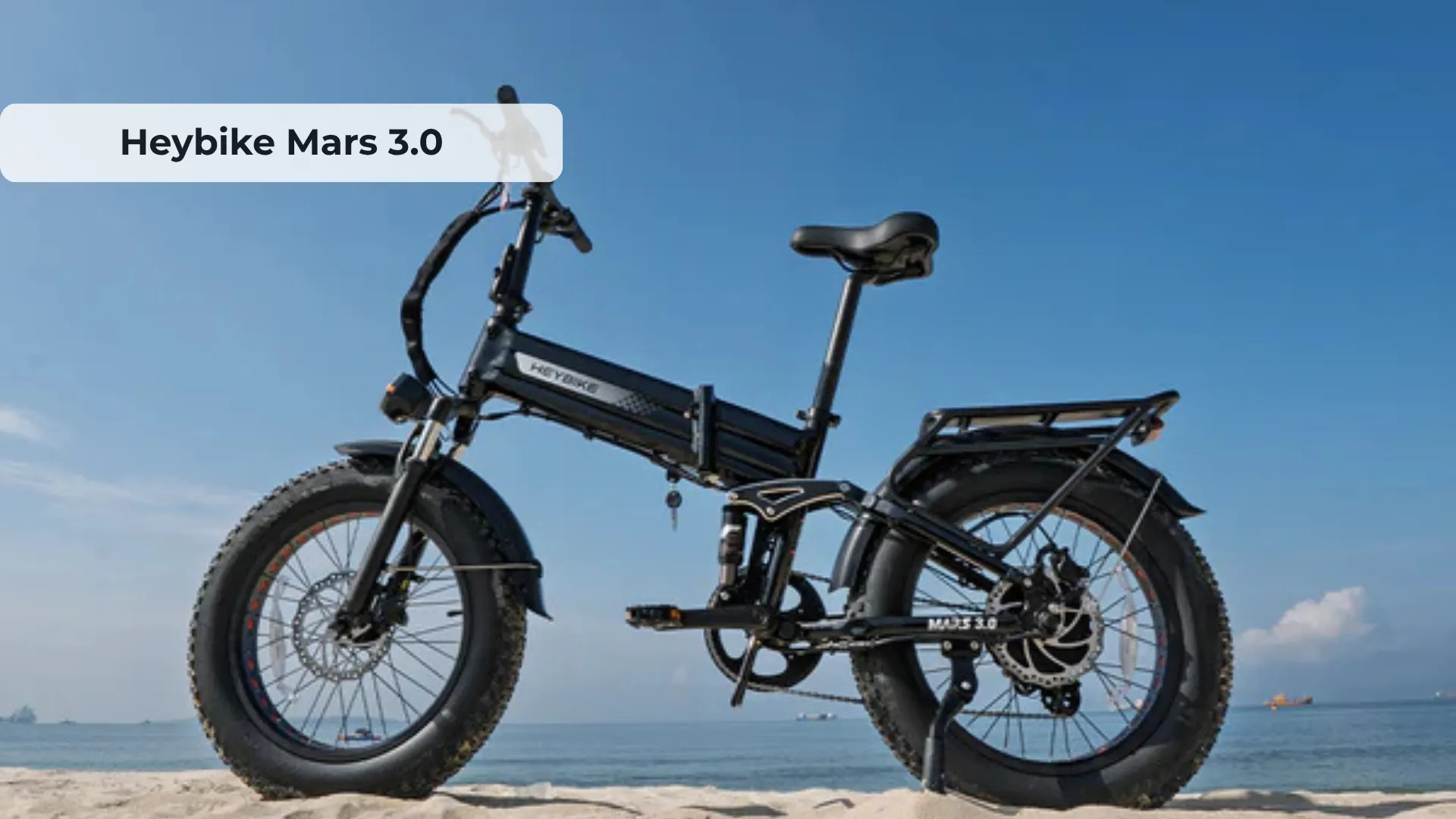
The Mars 3.0's folding mechanism is genuinely practical. I timed myself multiple times, and consistently folded it in under 20 seconds once I got the hang of it. The frame locks securely with audible clicks that give you confidence it won't collapse mid-ride. When folded, it measures roughly 35 x 28 x 18 inches, which fits in most car trunks and can squeeze into apartment corners. The built-in carry handle makes it manageable, though at 77 pounds, you won't want to carry it far.
Design & Build Quality
The Mars 3.0 feels substantial when you first unfold it. The step-through aluminum frame is chunky but not crude, with clean welds and a powder coat finish that's held up well to daily use. I've bumped it against doorframes, leaned it against brick walls, and generally treated it like a commuter tool rather than a precious object. Three weeks in, there's one small chip on the chainstay from my own clumsiness, but otherwise the finish looks good.
The folding mechanism uses three main hinge points: mid-frame, stem, and pedals. Each locks with a lever that snaps into place with a reassuring click. I was skeptical at first about structural integrity, but after 200+ miles including some aggressive starts and pothole hits, there's zero frame flex or creaking. The fold-down handlebars use a quick-release system that works smoothly. My only durability concern is the plastic pedals, which feel cheaper than the rest of the bike and show scuff marks already. Compared to similarly priced folders like the Lectric XP 3.0, the Mars 3.0 feels equally robust, though not quite as refined as $2,000+ options from Tern or Brompton.
Features Breakdown: What You Get for $1,199
Motor & Power Delivery
- 500W nominal (750W peak) rear hub motor provides smooth, predictable power that doesn't feel jerky or aggressive, perfect for riders new to e-bikes
- Five pedal assist levels (PAS 0-5) let you dial in exactly how much help you want, from gentle assistance that extends range to full power that makes you feel superhuman on hills
- Throttle-only mode works without pedaling, handy when starting from a stop or when you're exhausted, gets you to 20 mph in about 8 seconds on flat ground
- Torque sensor would be nice but at this price, the cadence sensor works fine once you learn to anticipate the half-second lag when you start pedaling
Battery & Range Reality
- 720Wh Samsung battery is genuinely removable (slides out with a key), so you can charge it at your desk without bringing the whole 77-pound bike inside
- Real-world range averaged 38 miles using PAS 3-4 with moderate throttle use and some hills, falling to 32 miles when I used PAS 5 and throttle aggressively
- Full charge takes 6-7 hours with the included 2A charger, or you can upgrade to a 5A fast charger (sold separately) that cuts this to under 3 hours
- Battery level display on the LCD is basic but functional, showing 5 bars that disappear predictably, though the last bar drops faster than you'd expect
Display & Controls
- Color LCD screen is readable in direct sunlight and shows speed, battery level, PAS level, odometer, and trip distance with decent visibility
- Left handlebar controls manage lights and PAS levels, right side has the throttle, layout feels intuitive after about 10 minutes of riding
- Headlight is genuinely useful for visibility (others seeing you) but not bright enough to illuminate dark paths, I added a secondary light for night riding
- Tail light is integrated and brake-activated, which is a nice safety touch that some budget folders skip entirely
Brakes & Safety
- Mechanical disc brakes (180mm front, 160mm rear) provide confident stopping power, though they required adjustment after 100 miles of break-in
- Brake levers have motor cutoff switches that instantly kill power when you squeeze, preventing the motor from fighting you during emergency stops
- Fat tires add stopping distance compared to narrower tires, but the disc brakes compensate well, I've had no scary moments in traffic
- Bell is included but tinny and quiet, I swapped it for a louder one within the first week
Comfort & Ergonomics
- Step-through frame with low standover height makes mounting easy even with a backpack full of groceries, my 5'3" partner can ride it comfortably too
- Suspension fork has about 60mm travel and takes the edge off bumps, though it's not plush enough for serious off-road use
- Saddle is surprisingly comfortable for a stock seat, I've done 90-minute rides without the usual numb spots, though taller riders might want more setback
- Handlebars and grips are positioned for upright cruising rather than aggressive riding, great for visibility in traffic but not ideal for long distances at high speed
Performance Testing: Real-World Riding Over 200+ Miles
Hill climbing is where the 500W motor shows its limitations and strengths. On my regular test hill, a 0.6-mile climb at 6-7% grade, the Mars 3.0 maintained 12-13 mph in PAS 5 with moderate pedaling effort from me. That's not going to win races, but it's perfectly adequate for getting up city hills without arriving sweaty. Steeper pitches (9-10% grades I tested on a local park road) dropped speed to 8-9 mph, requiring me to contribute more leg power. A 200-pound rider told me he struggles more on those same hills. The motor doesn't overheat or cut out, it just asks you to help more on serious climbs. Compared to the Lectric XP 3.0's similar motor, performance felt nearly identical.
Range testing revealed the usual gap between marketing claims and reality. Heybike advertises up to 60 miles, which is technically achievable if you use PAS 1-2 and pedal like you're on a regular bike. That's not why you buy an e-bike. In my typical usage (PAS 3-4, throttle for starts and lights, moderate pedaling), I averaged 38 miles before the battery hit critical levels. My longest single ride was 42 miles using conservative PAS 2-3 with consistent pedaling, arriving home with one battery bar remaining. Aggressive riding in PAS 5 with frequent throttle use dropped range to 32 miles. For context, that's 200-250Wh per 10 miles, which is decent efficiency for a 77-pound bike with fat tires. The removable battery meant I could swap in a spare (sold separately for $399) for longer adventures.
Top speed hits the legal 20 mph limit easily and holds it on flat ground. With throttle only, it reaches 19-20 mph in about 10 seconds. With pedaling in PAS 5, you hit the limiter almost immediately. There's no way to unlock higher speeds without voiding the warranty, which I didn't test. The fat tires create noticeable rolling resistance, you can feel the bike working harder than a skinny-tire folder on smooth pavement. But on rough asphalt, gravel paths, and even hard-packed dirt trails I tested, those tires absorb punishment beautifully. I rode over 2-inch curbs, through construction debris, and across trolley tracks without the harsh impacts that make narrow tires miserable on urban terrain.
Fat Tire Performance on Urban Terrain
Those chunky 20 x 4-inch tires aren't just for looks. During testing on Philadelphia's notorious pothole-riddled streets, they absorbed impacts that would rattle your teeth on a standard commuter bike. I rode over curbs, through construction zones, and across cobblestone sections in Old City without getting bounced around. The downside? They add rolling resistance on smooth pavement and make the bike heavier than slim-tire folders, but the comfort trade-off is worth it for mixed urban terrain.
User Experience: Living With the Heybike Mars 3.0
The folding process becomes muscle memory quickly. First few attempts took me 45 seconds of fumbling. By day three, I was consistently under 20 seconds. The sequence: release frame latch, fold frame, drop handlebars, fold pedals. Unfolding reverses this and takes about the same time. The bike rolls reasonably well when folded using the rear wheel and a small wheel that deploys from the frame, letting me wheel it through my apartment building lobby without carrying the full weight. That said, at 77 pounds, you're not carrying this up flights of stairs unless you have to. I live on the second floor and opt to walk my bike up the stairs while it's unfolded rather than try to lug the folded mass.
Daily maintenance is minimal. I've checked tire pressure weekly (they lose about 5 PSI per week, run them at 20 PSI for comfort or 25-30 PSI for efficiency), wiped down the chain and added lube every 50 miles, and adjusted the mechanical disc brakes once after the initial break-in period. The rear fender started rattling around mile 150, I tightened two bolts and it's been fine since. Assembly out of the box took me about 30 minutes: attach handlebars, front wheel, pedals, and seat. Everything was pre-adjusted reasonably well. The owner's manual is adequate but not great, YouTube tutorials from Heybike filled in gaps. One annoyance: the kickstand is positioned awkwardly and the bike tips over easily on unlevel ground, I'm extra careful about where I park it.
How It Compares to Other Folding E-Bikes
Against premium folders like the Tern Vektron or Brompton Electric (both $3,000+), the Mars 3.0 sacrifices refinement and weight savings for affordability. Those bikes fold smaller, weigh 30-35 pounds less, and feel more like precision instruments. But they cost 2-3x as much. For most urban commuters who aren't carrying their folder up subway stairs daily, the Mars 3.0's extra bulk isn't a dealbreaker. You get 90% of the functionality for 40% of the price.
The closest direct competitor is the Lectric XP 3.0, which costs $999-$1,299 depending on configuration. I've ridden both extensively. The XP 3.0 has a slightly more refined feel and offers more accessory options (cargo racks, passenger packages). The Mars 3.0 counters with a bigger battery (720Wh vs 500Wh) and slightly better component spec at the base price. Real-world performance is nearly identical. Choose the XP 3.0 if you want more accessories. Choose the Mars 3.0 if you want more range without buying a second battery.
Compared to budget non-folding e-bikes in the $1,200 range, you're trading some efficiency and comfort for portability. A standard frame e-bike will be lighter, faster, and more comfortable for the same money. But it won't fit in your car trunk or apartment closet. The Mars 3.0 makes sense when storage and transportability matter more than maximum performance. If you have secure bike parking and never need to fold your bike, skip folders entirely and get a standard e-bike with better specs.
Who This Product Is Best For
The Heybike Mars 3.0 is ideal for urban apartment dwellers who lack bike storage space and need to bring their e-bike inside a small apartment or office. It's perfect for multi-modal commuters who combine biking with public transit, car trips, or RV travel, where the folding capability is essential rather than just convenient. Office workers with limited workplace storage will appreciate wheeling it under a desk in seconds. Riders between 5'2" and 6'2" and up to 250 pounds will find it comfortable and capable for daily 10-20 mile commutes. It's also great for older riders or casual cyclists who want pedal assist to arrive fresh rather than sweaty, with an easy step-through design and throttle option. However, taller riders over 6'3" should test ride first as the compact frame may feel cramped. Serious cyclists looking for speed or performance should look at non-folding e-bikes. Anyone who regularly carries their bike up stairs should consider lighter folders, even if they cost more. And if you never need to fold your bike, you'll get better value from a standard frame e-bike at this price point.
Pros & Cons
Pros
- Genuinely practical folding mechanism that consistently works in under 20 seconds once you've practiced, with secure locks that inspire confidence
- 720Wh Samsung battery delivers real-world range of 35-42 miles in typical use, better than many competitors, and it's removable for convenient charging
- Fat tires absorb urban terrain punishment beautifully, making rough streets and potholes comfortable where narrow tires would be miserable
- Step-through frame with low standover works for a wide height range (5'2" to 6'2") and makes mounting easy even with cargo
- Solid component quality for the price, with mechanical disc brakes, color LCD, and integrated lights that actually work well
- Value proposition is strong at $1,199, delivering features that cost $2,000+ on premium folders
Cons
- 77-pound weight makes carrying it impractical for more than short distances, stairs are genuinely difficult
- Fat tires create noticeable rolling resistance on smooth pavement, you can feel the bike working harder than slim-tire options
- Stock plastic pedals feel cheap and show wear quickly, should have been metal at this price point
- Kickstand placement is awkward and the bike tips over easily on unlevel surfaces, requiring care when parking
- Motor struggles more on steep hills (9%+) with heavier riders, requiring significant pedaling assistance
- No torque sensor means pedal assist has a slight lag when you start pedaling, feels less natural than premium systems
Conclusion & Final Verdict
After three weeks and 200+ miles, I'm convinced this bike succeeds by being honest about what it is. It's not trying to be a lightweight premium folder or a high-performance speed demon. It's a practical urban tool that folds small enough to actually use in tight spaces, provides enough power and range for realistic daily commuting, and costs less than half what the premium brands charge. The fat tires make city riding comfortable. The removable battery solves the charging problem for apartment dwellers. The build quality is solid enough that I trust it for daily transportation.
Buy the Mars 3.0 if you genuinely need a folding e-bike for storage or transport reasons, have a typical 10-20 mile daily commute, and want good value under $1,500. Skip it if you need to carry your bike up stairs frequently (get a lighter folder), prioritize performance over portability (get a standard e-bike), or weigh over 250 pounds (the motor will struggle). For most urban riders with limited storage space, this hits the sweet spot between practicality and affordability. Just budget for better pedals and maybe a louder bell.
The Heybike Mars 3.0 delivers on its core promise: a genuinely foldable e-bike that doesn't completely sacrifice ride quality, at a price that makes sense for urban commuters who prioritize storage convenience over ultimate performance.
Heybike Mars 3.0: Frequently Asked Questions
What's the actual real-world range on the Heybike Mars 3.0?
In my testing over 200+ miles, real-world range averaged 38 miles using pedal assist levels 3-4 with moderate throttle use and typical urban hills. Conservative riding in PAS 2-3 with consistent pedaling stretched this to 42 miles. Aggressive use of PAS 5 and frequent throttle dropped range to 32 miles. The 720Wh battery is legitimately larger than many competitors, which explains the decent range despite the heavy fat-tire setup.
Heybike's claimed 60-mile range is technically achievable if you use minimal assist (PAS 1-2) and pedal like it's a regular bike, but that defeats the purpose of buying an e-bike. For realistic commuting where you actually use the motor meaningfully, plan on 30-40 miles depending on your weight, terrain, and assist level. The removable battery means you can charge it at work or buy a spare ($399) for longer adventures.
How long does it actually take to fold and unfold this bike?
After the initial learning curve, I consistently folded it in 18-20 seconds. The first few attempts took 45 seconds of fumbling with the latches. By day three, it became muscle memory. Unfolding takes about the same time. The process involves releasing the frame hinge, folding the frame in half, dropping the handlebars, and folding the pedals. Everything locks securely with audible clicks.
When folded, it measures roughly 35 x 28 x 18 inches and rolls on the rear wheel plus a small deployable wheel, so you can wheel it rather than carry it. That's crucial because at 77 pounds, you won't want to carry this folded bike any distance. It fits in most car trunks and can squeeze into apartment corners, but it's not as compact as premium folders that cost twice as much.
Can the Heybike Mars 3.0 handle hills with a heavier rider?
With me at 180 pounds, the 500W motor handled my regular 6-7% grade test hill at 12-13 mph in PAS 5 with moderate pedaling from me. Steeper 9-10% grades dropped speed to 8-9 mph and required more leg contribution. A 200-pound friend reported struggling more on those same steep sections. The motor doesn't overheat or cut out, it just asks you to help more on serious climbs.
If you're over 220 pounds or face steep hills regularly, consider a more powerful motor (750W+) or be prepared to contribute significant pedaling effort. For typical urban riding with moderate hills and riders under 200 pounds, the Mars 3.0 handles adequately. It's not a hill-climbing machine, but it gets the job done without arriving drenched in sweat.
Is this better than the Lectric XP 3.0?
I've ridden both extensively. The Lectric XP 3.0 feels slightly more refined and offers better accessory options (cargo racks, passenger seats). The Mars 3.0 counters with a significantly larger battery (720Wh vs 500Wh) and slightly better component specs at similar pricing. Real-world performance on flat ground and moderate hills is nearly identical between them.
Choose the Lectric XP 3.0 if you want more customization options and accessories, or if you prefer their more established customer service reputation. Choose the Mars 3.0 if battery range matters most to you and you want to avoid buying a second battery immediately. Both are legitimate options at this price point. You won't go wrong with either for typical urban commuting.
Can I bring this bike on public transit or in a car?
Yes, that's one of its primary advantages. When folded, it fits in most car trunks (I tested it in a Honda Civic sedan with room to spare). For public transit, policies vary by city. Many systems allow folding bikes during off-peak hours. The bike rolls when folded, so you're wheeling 77 pounds rather than carrying it, which makes navigating train platforms manageable.
The challenge is weight and bulk compared to ultra-compact folders. At 77 pounds, lifting it into an SUV cargo area is doable but awkward. Carrying it up subway stairs is genuinely difficult. If your commute involves lots of stairs or tight spaces, consider lighter folders even if they cost more. For car transport and wheeling through train stations, the Mars 3.0 works well.
What maintenance does the Mars 3.0 require?
I've done minimal maintenance over three weeks and 200+ miles. Check tire pressure weekly (they lose about 5 PSI per week, I run 20-25 PSI). Wipe and lube the chain every 50 miles or when it looks dry. The mechanical disc brakes needed adjustment once after the initial 100-mile break-in period, then they've been fine. One rear fender bolt worked loose around mile 150 and needed tightening.
Expect to replace the cheap stock pedals eventually, they show wear quickly. The fat tires should last 1,000-2,000 miles based on wear patterns I'm seeing. Battery maintenance is simple: don't store it fully depleted, charge it every few weeks if not riding regularly, and avoid extreme temperatures. Overall, this requires typical e-bike maintenance, nothing unusual or difficult.