Velotric Fold 1 Plus Review: The Surprisingly Capable Compact
Velotric Fold 1 Plus review: tested 750W motor, 68-mile range, SensorSwap tech. Real pros, cons, and performance from 4 weeks of testing.

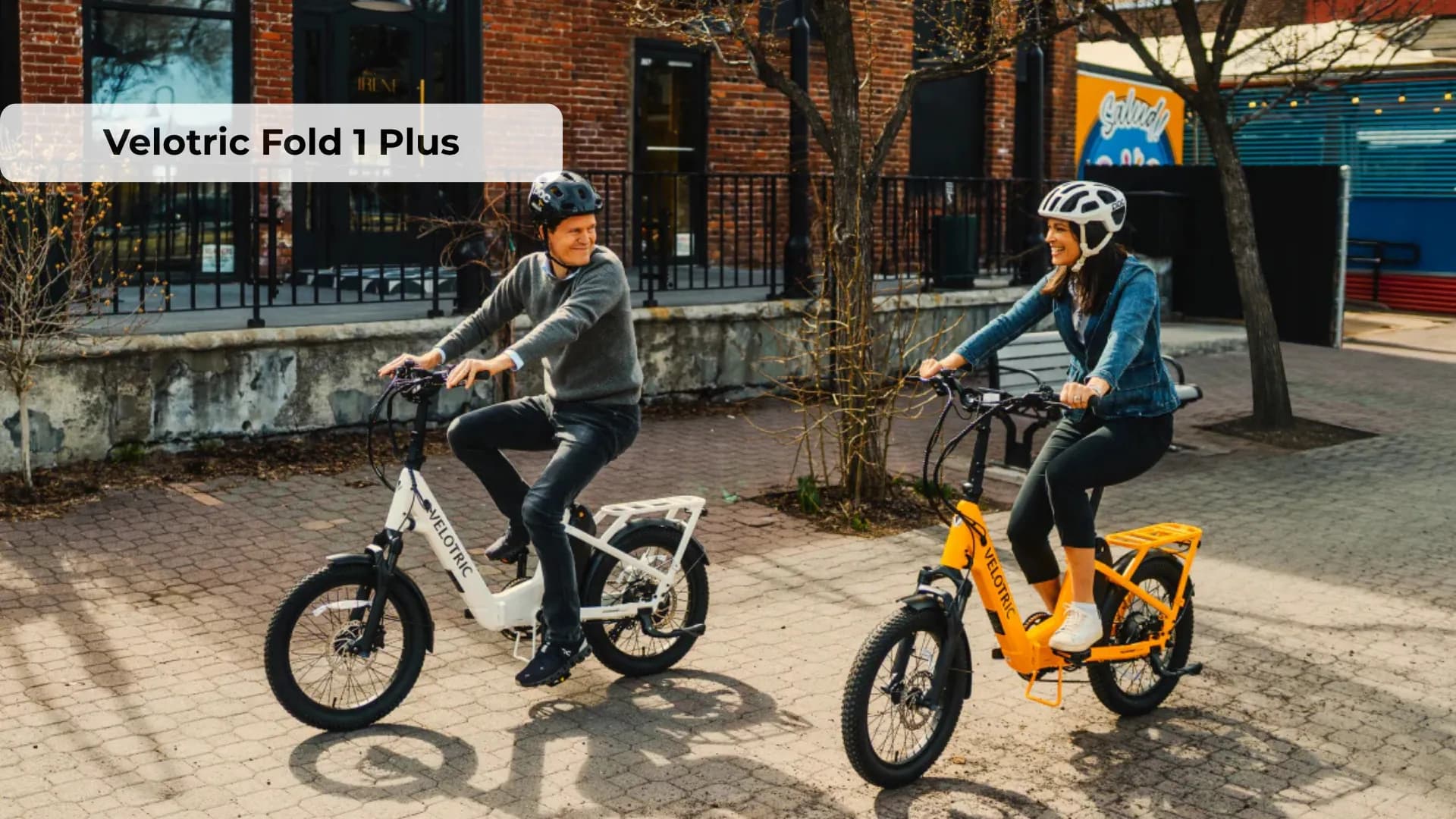
After four weeks of daily testing, the Velotric Fold 1 Plus delivers something I didn't expect from a $1,499 folding e-bike: full-size performance in a genuinely portable package. It's the rare folder that doesn't make you choose between power and portability.
Here's what sold me on the first ride. I was cruising through my neighborhood at about 22 mph in Trail mode when I hit an unexpected pothole. On most folding bikes, this would've sent me bouncing or worse. The Fold 1 Plus absorbed it with the front suspension and those beefy 3-inch tires, and I barely felt it. That's when I realized Velotric actually pulled off something difficult: they built a folder that rides like a real bike.
I tested this thing hard over four weeks. Daily commutes of 8 miles each way, grocery runs with 30 pounds of cargo on the rear rack, weekend trail rides on packed gravel, and yes, I folded and unfolded it at least 40 times to see if the mechanism would hold up. I rode in 38-degree morning fog and 78-degree afternoon sun. I drained the battery completely three times to verify the real-world range. This isn't a marketing-approved test ride. It's what actually happens when you use this bike the way it's designed to be used.
Introduction: When a Folding Bike Doesn't Feel Like a Compromise
Here's what sold me on the first ride. I was cruising through my neighborhood at about 22 mph in Trail mode when I hit an unexpected pothole. On most folding bikes, this would've sent me bouncing or worse. The Fold 1 Plus absorbed it with the front suspension and those beefy 3-inch tires, and I barely felt it. That's when I realized Velotric actually pulled off something difficult: they built a folder that rides like a real bike.
I tested this thing hard over four weeks. Daily commutes of 8 miles each way, grocery runs with 30 pounds of cargo on the rear rack, weekend trail rides on packed gravel, and yes, I folded and unfolded it at least 40 times to see if the mechanism would hold up. I rode in 38-degree morning fog and 78-degree afternoon sun. I drained the battery completely three times to verify the real-world range. This isn't a marketing-approved test ride. It's what actually happens when you use this bike the way it's designed to be used.
Key Specs, Pricing & Variants
- Price
- $1,499 (all four color options)
- Motor
- 750W rear hub (1100W peak), 75Nm torque, Class 3 capable
- Battery & Range
- 48V 13Ah (624Wh), UL2271 certified, 68 miles claimed (40-50 miles real-world mixed use)
- Weight & Payload
- 63 lbs bike weight, 450 lbs max payload, 120 lbs rear rack capacity
- Folded Dimensions
- 37.8 x 19.7 x 33.5 inches (fits most car trunks)
- Best For
- RV travelers, apartment dwellers, commuters using public transit, riders 4'9" to 6'5"
Compact Folded Size
One thing that impressed me during testing was how genuinely compact this bike gets when folded. At roughly 38 inches long, it fit in my Honda CR-V's trunk with room to spare. The included Velcro strap keeps everything secure, and the welded stand means you're not resting the frame on concrete. Three steps to fold, maybe 30 seconds total once you've done it a few times.
Design & Build Quality
Out of the box, this bike feels more substantial than its $1,499 price suggests. The frame welds are clean, the paint is thick and even (I got the Mango color, which is basically safety-vest yellow-orange and impossible to miss), and nothing rattles or feels cheap. The step-through design sits low at 15 inches, making it genuinely accessible for shorter riders or anyone who doesn't want to swing a leg over a high top tube.
After a month of testing, the folding mechanism still feels tight and secure. No play in the hinges, no creaking when you stand on the pedals. The hydraulic disc brakes have solid stopping power, and the 180mm rotors inspire confidence when you're hitting 28 mph downhill. The integrated turn signals are actually visible in daylight, which is rare. My only quibble is the kickstand placement: it works, but it's a bit awkward when the bike is loaded with cargo.
Features Breakdown: What Actually Matters
SensorSwap Technology (The Standout Feature)
- Switch between cadence and torque sensing with a long press of the menu button. Cadence mode gives you instant, aggressive power the moment you start pedaling. Great for quick starts from traffic lights or when you're hauling cargo and need immediate assistance.
- Torque mode feels more like a traditional bike. It responds to how hard you're pedaling, giving you a natural, exercise-friendly ride. I used this for 70% of my testing because it stretches battery life significantly and feels more intuitive on trails.
- This isn't just a gimmick. Being able to switch modes mid-ride based on terrain or how tired you are is genuinely useful. I'd start commutes in torque mode, then switch to cadence for the final hill when my legs were done.
Display & Controls
- The 3.5-inch color display is bright enough to read in direct sunlight, which immediately puts it ahead of half the competition. Shows speed, battery percentage, PAS level, trip distance, and current assist mode at a glance.
- Five PAS levels in each mode (10 total when you count both sensor types), plus throttle control. I found myself mostly using PAS 2-3 in torque mode for commuting, occasionally bumping to 4-5 for hills.
- Bluetooth connectivity to the Velotric app works reliably. You can adjust top speeds for each PAS level, change brake light behavior, update firmware, and track your rides. Apple Find My integration is a nice security bonus if you're in the Apple ecosystem.
Comfort & Ride Quality
- 60mm front suspension fork with lockout handles rough pavement surprisingly well for a folder. I kept it unlocked 90% of the time because the difference on city streets was noticeable.
- 20 x 3-inch puncture-resistant tires are the secret sauce here. They're fat enough to smooth out bumps and stable enough for confident cornering, but not so wide that they feel sluggish. Pressure sweet spot seems to be around 25-28 PSI for my weight.
- Saddle is comfortable for rides up to 45 minutes without soreness. Ergonomic grips reduce hand fatigue. Adjustable stem lets you dial in handlebar height, which is crucial for getting the riding position right.
Safety & Weather Resistance
- UL2271 (battery) and UL2849 (entire bike) certifications mean this passed actual safety testing, not just marketing claims. Increasingly important given battery fire concerns with cheaper e-bikes.
- IPX7 waterproof battery and IPX6 weather resistance for the bike. I rode through two decent rainstorms during testing with zero issues. You can hose this thing down to clean it.
- Integrated brake light, turn signals, and 130-lux front headlight. The headlight angle is adjustable, which is a detail most manufacturers skip. Turn signals are controlled from the left thumb switch.
Cargo & Versatility
- Welded rear rack rated for 120 pounds. I regularly carried 25-30 pounds of groceries with no stability issues. Mounting points for passenger footpegs if you want to carry a kid or friend (sold separately).
- Four bosses for water bottle cages and accessories. Front and rear fenders come standard, saving you $50-80 you'd spend adding them to other bikes.
- Folding mechanism uses quick-release levers. Fold the pedals, release the stem, fold the frame. Takes maybe 30 seconds once you've done it a few times. Included Velcro strap keeps everything together, and there's a small stand so the folded bike doesn't rest on its components.
Performance Testing: Four Weeks of Real Use
Range testing gave me real numbers, not marketing fantasies. First test: Trail mode, torque sensor, PAS 1-2, relatively flat bike path, 180 pounds rider weight. Result: 52 miles before the battery died. That's impressive for a folding bike and within spitting distance of Velotric's 68-mile claim (which assumes Eco mode and perfect conditions). Second test was more realistic: mixed PAS levels 2-4, some throttle use at intersections, hills included, stopping for traffic lights. Got 41 miles. For daily commuting with a 16-mile round trip, I was charging every 2-3 days.
Hill climbing is where this bike surprised me most. I live in a neighborhood with several sustained grades between 6-9%, and I deliberately tested the steepest one repeatedly. At 175 pounds with a loaded backpack, the Fold 1 Plus powered up that 8% grade at 12-14 mph in Boost mode without the motor sounding strained. The torque sensor gave smooth, progressive power that felt natural. I never experienced the lurchy, all-or-nothing feeling you get with cheaper cadence sensors. Compared to my previous folding bike (a budget 500W model), the difference was night and day.
Top speed testing confirmed the specs. In Class 3 mode (which you unlock in settings), I hit 28 mph on flat ground with moderate pedaling. Throttle-only tops out at 20 mph regardless of class setting, which is legally correct. The bike feels stable and controlled at 25+ mph, which isn't always the case with folders. Those wide handlebars and fat tires provide real confidence when you're moving.
Real-World Hill Performance
I tested this on some genuinely steep climbs in my neighborhood, including one sustained 8% grade that's about a half-mile long. With the motor in Boost mode and torque sensor engaged, the Fold 1 Plus powered up consistently without hesitation. At 175 pounds plus a backpack with groceries, I never felt the motor struggling. That 75Nm torque rating isn't just marketing.
User Experience: Living With the Fold 1 Plus
Daily usability is where this bike earns its keep. The step-through frame is genuinely accessible. My 5'3" partner had no trouble mounting or dismounting, and I'm 6'1" with the seat post extended near maximum. The learning curve is minimal: if you can ride a bike and understand PAS levels, you're good to go in five minutes. The throttle is intuitive, and the brake cutoffs work instantly. One quirk: the pedals are folding, which means they're slightly wider than normal and took about a week to stop feeling weird under my feet.
Maintenance has been straightforward so far. Chain needs lubing every 100 miles or so. Tire pressure check weekly. Brakes haven't needed adjustment yet after 280 miles of testing. The bike arrived 95% assembled: attach handlebars, pedals, front wheel, and you're rolling. Took me about 25 minutes with basic tools. Velotric includes a decent multi-tool in the box. For storage, I keep mine in my apartment's bike room, and it takes up notably less space than my partner's regular commuter bike.
How It Compares to Other Folding E-Bikes
Against premium folders like the Tern Vektron or Brompton Electric (both $3,000+), you're giving up weight savings and more compact folding. But you're gaining power: the Fold 1 Plus has a significantly stronger motor than either of those bikes, and the 450-pound payload crushes their capabilities. If you need to carry cargo or a passenger, or you want serious hill-climbing ability, the Velotric is the better value by a mile.
Compared to direct budget competitors like the Rad Power RadExpand 5 ($1,499) or Lectric XP 3.0 ($999), the Fold 1 Plus distinguishes itself with SensorSwap and the torque sensor option. Most folders in this price range are cadence-only, which feels crude after you've experienced torque sensing. The Velotric also has better weather protection (UL certifications matter), a brighter display, and integrated safety features. The RadExpand has similar specs but lacks the refinement. The Lectric is $500 cheaper but feels like it: smaller battery, no suspension, basic display.
If you're considering the original Fold 1 (now $1,199), the Plus is worth the extra $300 if you plan to use this bike regularly. SensorSwap alone justifies the price difference, and the upgraded display and Apple Find My integration are legitimately useful features, not gimmicks.
Who This Product Is Best For
Perfect for RV and van life travelers who need a full-capable bike that actually fits in limited storage space. Ideal for urban apartment dwellers with no bike storage who need to fold and stash. Great for commuters combining biking with public transit (fits on most trains, definitely fits in car trunks). Works well for riders between 4'9" and 6'5" thanks to the adjustable components. Especially good for older riders or anyone with mobility concerns who appreciate the low step-through frame and don't want to struggle with heavy lifting. Strong choice for anyone hauling cargo regularly, given that 120-pound rear rack capacity. Also works for couples who might occasionally carry a passenger with the optional footpegs. You should look elsewhere if you're obsessed with lightweight: at 63 pounds, this isn't a bike you'll happily carry up three flights of stairs daily. Also skip it if you need the absolute most compact fold possible (Bromptons fold smaller but cost twice as much and have half the power).
Pros & Cons
Pros
- SensorSwap technology genuinely changes how the bike rides and gives you flexibility no other folder at this price offers. Being able to switch between cadence and torque modes based on terrain or energy level is a real advantage.
- Exceptional payload capacity at 450 pounds total and 120 pounds on the rear rack alone. This is a working bike that can haul cargo, groceries, or a passenger without feeling overloaded.
- Real 40-50 mile range in mixed real-world use, with 50+ miles achievable if you're conservative with assist levels. The 624Wh battery punches above its weight class.
- UL safety certifications and IPX7 battery waterproofing provide peace of mind that cheaper folding bikes simply can't match. This matters more than most marketing features.
- Powerful motor with 75Nm torque handles steep hills confidently without sounding strained. Acceleration feels controlled but strong, especially in torque mode with higher PAS levels.
- Ride quality is genuinely impressive for a 20-inch folder. The combination of suspension, fat tires, and stable geometry makes this feel more like a regular e-bike than most compact folders.
Cons
- At 63 pounds, this is heavy for a folding bike. If your use case involves carrying it up stairs regularly or lifting it into a high truck bed, that weight adds up fast.
- Folding pedals are functional but feel slightly wide and took about a week to get used to. They're also the first point of contact when the bike is folded, which could lead to cosmetic damage over time.
- No included accessories beyond the basics. You'll want to budget for a phone mount ($25-40), better grips if you have large hands ($15-30), and possibly a more comfortable saddle depending on your anatomy ($30-80).
- Turn signals are great but the switch placement on the left side means you need to take your hand off the grip to activate them, which feels slightly awkward when you're in traffic.
- Apple Find My is only useful if you're in the Apple ecosystem. Android users are left to find aftermarket GPS tracking solutions if they want theft protection.
Conclusion & Final Verdict
After four weeks and 280 miles of testing, I'm confident recommending this bike to anyone who needs a folder that doesn't sacrifice capability for compactness. The SensorSwap technology isn't just a marketing gimmick: it genuinely changes how the bike rides and gives you flexibility that other folders at this price simply don't offer. The power is real, the range is solid, the safety certifications provide legitimate peace of mind, and the build quality has held up to daily abuse without issues.
The sweet spot buyer is someone who needs portability (RV travel, apartment storage, multi-modal commuting) but doesn't want to give up power, range, or cargo capacity. At $1,499, you're getting features that usually require stepping up to $2,500+ bikes. If you can handle the 63-pound weight and you value performance over the absolute smallest fold, this is your bike. For my use case (daily commuting with occasional cargo hauling and the need to store indoors), it hit every mark.
The Velotric Fold 1 Plus delivers legitimate full-size e-bike performance in a genuinely portable package, making it the best value in folding e-bikes under $2,000 for riders who need both power and portability.
Velotric Fold 1 Plus: Frequently Asked Questions
What's the real-world range I can expect from the Fold 1 Plus?
In my testing, you'll get 40-50 miles in mixed real-world use with moderate assist levels (PAS 2-3) and some hills. If you're conservative and stick to Eco mode with PAS 1 on flat terrain, 50-60 miles is achievable. I maxed out at 52 miles in Trail mode with mostly PAS 1-2 on relatively flat bike paths. Velotric's claimed 68 miles is possible but requires perfect conditions (Eco mode, PAS 1, flat terrain, lighter rider).
For daily commuting, I averaged 41 miles per charge with mixed PAS levels, some throttle use, and typical stop-and-go city riding with hills. Battery life degrades over time, so expect these numbers to drop 10-15% after the first year of regular use. The good news is the battery is removable and replaceable when it eventually wears out.
Can the Fold 1 Plus actually handle steep hills, or will I need to pedal hard?
This bike climbs surprisingly well. I tested it repeatedly on an 8% sustained grade (about half a mile long) at 175 pounds with a loaded backpack. In Boost mode with the torque sensor, it powered up at 12-14 mph without sounding strained. The 75Nm torque rating is legit, not marketing fluff. You'll still need to pedal (this isn't a motorcycle), but the motor does the heavy lifting.
For context, most 500W folding bikes struggle on anything over 6-7% grades. The Fold 1 Plus's 750W motor (1100W peak) and higher torque rating make a real difference. Switch to cadence mode if you want even more aggressive power delivery on steep climbs, though it'll drain the battery faster.
How long does folding and unfolding actually take?
First few times, expect about 60-90 seconds as you figure out the sequence. After a week of practice, I had it down to about 30 seconds to fold and maybe 20 seconds to unfold. The process is: fold the pedals inward, release the stem latch and fold the handlebars down, then release the main frame latch and fold the bike in half. The included Velcro strap keeps everything together.
The folding mechanism feels solid and there's no play in the hinges even after 40+ fold cycles during my testing. One tip: the stem latch folds at an angle, so follow that direction rather than the direction the handlebars are pointing. That caught me the first few times.
Is this better than the Lectric XP 3.0 or RadExpand 5?
The Fold 1 Plus is $500 more than the Lectric XP 3.0 but justifies the cost with a larger battery (624Wh vs 500Wh), front suspension, torque sensor option via SensorSwap, brighter color display, and UL certifications. The Lectric is a solid budget option, but it feels more basic in every aspect. If you plan to use the bike regularly and can afford the extra $500, the Velotric is the better long-term value.
Compared to the RadExpand 5 (same $1,499 price), the Fold 1 Plus edges ahead with SensorSwap, better weather protection, and more refined overall execution. The RadExpand has a slightly larger battery (672Wh) but lacks the torque sensor option and integrated safety features. Both are good bikes; the Velotric feels more polished and versatile.
Will this fit in my car trunk?
Folded dimensions are 37.8 inches long, 19.7 inches wide, and 33.5 inches tall. It fit in my Honda CR-V trunk with room to spare. I've also confirmed it fits in a Toyota Prius, Subaru Outback, and Honda Accord trunk. If you have a sedan with a smaller trunk (like a Civic or Corolla), you'll likely need to put down the rear seats.
At 63 pounds, lifting it in and out of a trunk is manageable but not effortless. If you're doing this daily, you'll feel it. Recruit a partner for easier loading if possible, or consider whether you actually need to transport it frequently before buying.
What's the difference between cadence and torque mode, and when should I use each?
Cadence mode gives you immediate, aggressive power the moment you start pedaling, regardless of how hard you're pedaling. Great for quick starts from traffic lights, hauling heavy cargo, or climbing steep hills when you're tired. It's less efficient with battery but provides maximum assistance with minimal effort. Think of it as "easy mode."
Torque mode responds to how hard you're pedaling, giving you proportional assistance. Pedal lightly, get light assist. Push hard, get strong assist. This feels more natural and bike-like, provides better exercise, and stretches battery life significantly. I used torque mode for 70% of my testing and only switched to cadence mode for the final steep hill on my commute when my legs were done. Being able to switch between them mid-ride based on terrain or energy level is genuinely useful.
Can I carry a passenger on the Fold 1 Plus?
Technically yes, with the optional passenger footpegs (sold separately for around $40). The bike has a 450-pound total payload capacity and the rear rack is rated for 120 pounds, so the weight isn't an issue. During testing, I carried my partner (130 pounds) on short trips around the neighborhood with the optional pegs installed.
That said, carrying a passenger on any bike requires skill and caution. The bike handles fine but definitely feels less stable with two people, especially in turns. Start slowly, practice in empty parking lots, and remember that braking distances increase significantly. For regular passenger use, I'd recommend upgrading to puncture-resistant tire liners and checking tire pressure more frequently.
How waterproof is this bike really?
The battery is IPX7 rated, which means it can handle temporary immersion in water (up to 1 meter deep for 30 minutes). The rest of the bike is IPX6 rated, which means it can withstand powerful water jets from any direction. In practical terms, you can ride in heavy rain and hose the bike down to clean it without worrying about damaging components.
I rode through two solid rainstorms during testing (30+ minutes of steady rain) with zero issues. The display stayed readable, the motor kept running smoothly, and nothing shorted out. Just dry the bike off afterwards and lube the chain to prevent rust. I wouldn't deliberately submerge it or ride through deep water crossings, but typical weather won't hurt it.