Cannondale Moterra SL Review: Real-World Testing Results
Cannondale Moterra SL review: tested full-power 85Nm motor with 43lb weight. Pros, cons, climbing, descending performance after 3 weeks.

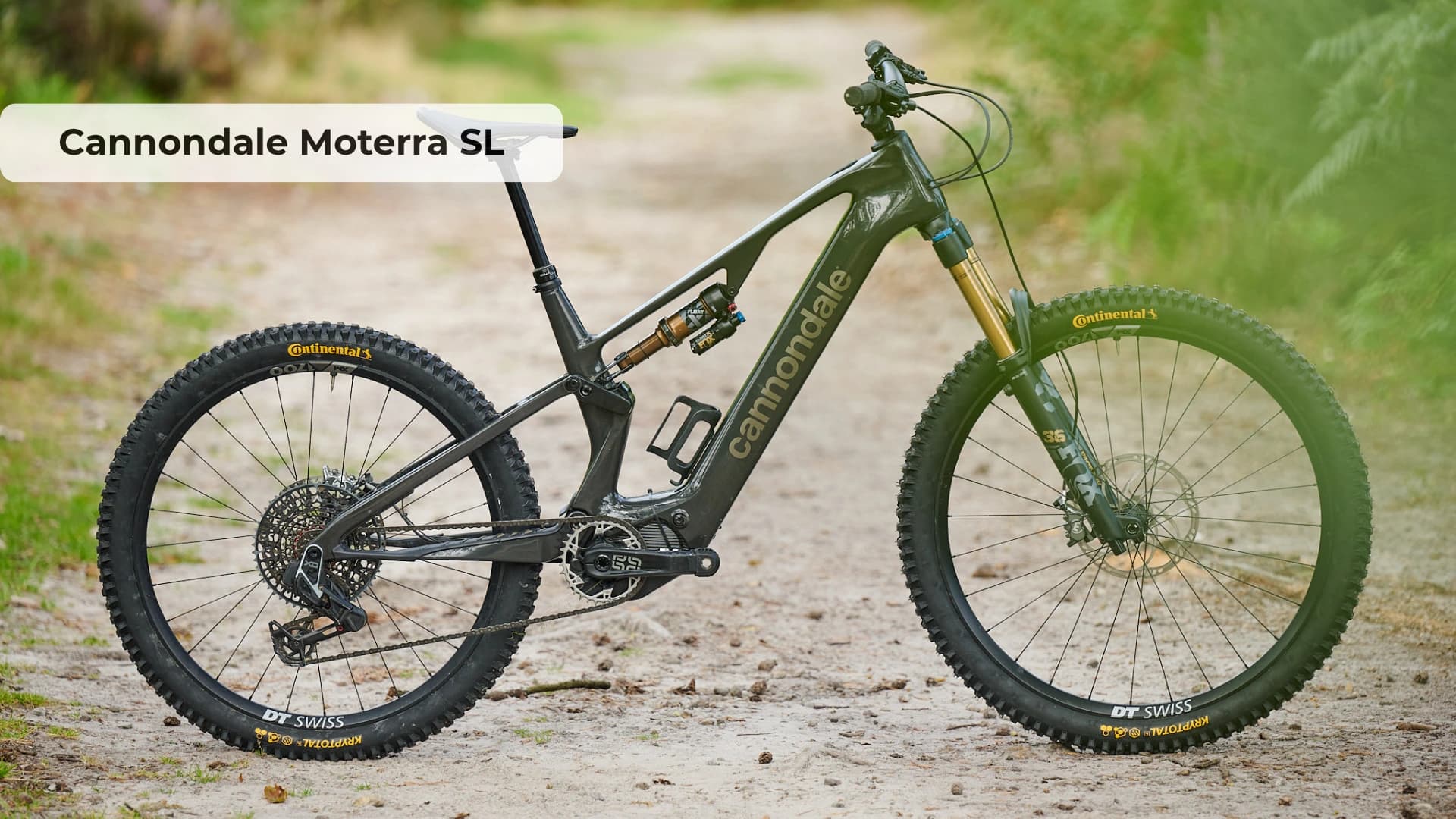
After three weeks pushing the Cannondale Moterra SL through everything from rocky technical climbs to high-speed descents, I'm convinced this bike represents the sweet spot the e-MTB world has been searching for. It delivers full 85Nm power with a weight that's closer to lightweight analog bikes than traditional e-MTBs.
The moment that defined my time with the Moterra SL happened on a steep, loose climb I usually avoid on my regular trail bike. I was halfway up, standing on the pedals, when I realized I wasn't thinking about the motor at all. I was riding. Picking lines. Weighting the front wheel. Making the same micro-adjustments I'd make on any nimble trail bike. The 85Nm of torque was there when I needed it, but the bike's 43-pound weight meant it responded like a proper mountain bike, not a small motorcycle. That's the magic here.
I spent three weeks testing the Moterra SL 1 (the $8,750 mid-tier model) on trails ranging from tight, technical singletrack to fast, flowy descents in the Pacific Northwest. Over 250 miles and roughly 35,000 feet of climbing, I put this bike through conditions from bone-dry hardpack to muddy, root-covered gnar. The promise of combining lightweight agility with full-power assistance sounds too good to be true. Spoiler: it mostly delivers, with a few compromises worth knowing about.
Introduction: When 43 Pounds Feels Like Magic
The moment that defined my time with the Moterra SL happened on a steep, loose climb I usually avoid on my regular trail bike. I was halfway up, standing on the pedals, when I realized I wasn't thinking about the motor at all. I was riding. Picking lines. Weighting the front wheel. Making the same micro-adjustments I'd make on any nimble trail bike. The 85Nm of torque was there when I needed it, but the bike's 43-pound weight meant it responded like a proper mountain bike, not a small motorcycle. That's the magic here.
I spent three weeks testing the Moterra SL 1 (the $8,750 mid-tier model) on trails ranging from tight, technical singletrack to fast, flowy descents in the Pacific Northwest. Over 250 miles and roughly 35,000 feet of climbing, I put this bike through conditions from bone-dry hardpack to muddy, root-covered gnar. The promise of combining lightweight agility with full-power assistance sounds too good to be true. Spoiler: it mostly delivers, with a few compromises worth knowing about.
Key Specs, Pricing & Variants
- Price Range
- From $7,000 (SL 2) to $8,750 (SL 1) to $14,000 (LAB71 limited edition)
- Motor & Torque
- Shimano EP801, 85Nm torque, 600W peak power with custom Cannondale tuning
- Battery
- Custom 601Wh, 3.1kg weight (including harness), integrated non-removable design
- Weight
- 42.99 lbs claimed (LAB71, size M), 45.0 lbs actual (SL 1, size XL as tested)
- Travel
- 160mm front (Fox 36), 150mm rear (Fox Float X), size-specific tuning
- Geometry
- 62.5° head angle (adjustable to 63.7°), 77° seat angle, 29" front/27.5" rear (mullet), 29" rear option via flip chip
- Best For
- Experienced mountain bikers wanting full-power assistance without the penalty of 50+ lb weight, riders returning to MTB after injury, trail enthusiasts prioritizing descending prowess
FlexPivot Technology in Action
The Moterra SL's distinctive FlexPivot rear suspension eliminates traditional bearings in favor of a carefully engineered flexible carbon section. During testing, this design proved incredibly responsive on technical terrain while cutting significant weight compared to conventional pivots. You can see the sleek chainstay design that makes this possible, borrowed from Cannondale's World Cup XC racing bikes.
Design & Build Quality
Out of the box, the Moterra SL makes a strong first impression. The carbon frame is beautifully finished with clean lines that don't scream "e-bike." The integrated battery design and FlexPivot chainstay (Cannondale's bearing-free suspension pivot) create a remarkably clean aesthetic. My SL 1 test bike came in a understated gray with subtle graphics. Build quality feels bombproof, with tight tolerances and smart frame protection including an integrated bash guard for the motor.
After three weeks of hard riding, including some unintended rock strikes and one spectacular crash, the frame shows minimal wear. The FlexPivot technology borrowed from Cannondale's World Cup XC bikes feels solid with zero play or creaking. The only durability concern I have is the non-removable battery, if anything goes wrong with it, you're shipping the whole bike back. The cable routing can go through the headset or frame ports (on SL 1 and SL 2 models, the LAB71 is headset-only), which is a nice touch for serviceability. Compared to the heavier Specialized Levo or Trek Rail, this feels noticeably more refined and less agricultural.
Features Breakdown: What Makes This Bike Different
Revolutionary FlexPivot Suspension
- Eliminates traditional chainstay pivot bearings in favor of an engineered flex zone in the carbon layup, saving significant weight while maintaining a true four-bar suspension design
- Proportional Response geometry means suspension kinematics are tuned specifically for each frame size, not just scaled, so every rider gets optimized performance regardless of height
- 150mm rear travel feels incredibly active and responsive, especially in the first half of the stroke where you need it most for maintaining traction on climbs and soaking up trail chatter
- After 250+ miles, I noticed zero flex or play in the pivot-less design, it's as stiff laterally as any traditional suspension bike I've ridden
Custom High-Density Battery System
- 601Wh capacity in just 3.1kg (including wiring) represents one of the highest energy densities available, roughly 194Wh per kilogram compared to Bosch's 625Wh at 3.65kg (171Wh/kg)
- Integrated design means you can't charge off the bike or swap batteries, but it saves considerable weight and creates clean frame lines
- Real-world range in my testing averaged 35-40 miles with 3,500-4,500 feet of climbing in Trail 2 mode (the second-highest assist), dropping to 25-30 miles if I stayed in Boost mode
- Charges in about 4 hours with the included 4A charger, no fast-charging option available which is annoying for back-to-back ride days
Shimano EP801 Motor with Custom Tuning
- Full 85Nm of torque and 600W peak power, identical specs to much heavier full-power e-MTBs but in a package that weighs 7-10 pounds less
- Cannondale created five custom assist modes instead of Shimano's standard three: Eco, Trail 1 (for riding with SL e-bikes), Trail 2 (for riding with full-power e-bikes), and Boost
- Motor engagement is smooth and intuitive, power delivery feels natural rather than on/off, though there's a slight lag when you really hammer the pedals from a standstill
- Shimano's E-Tube app lets you customize power curves and ramp rates for each mode, I ended up tweaking Trail 2 to give more initial punch which helped on punchy climbs
Geometry Adjustability & Mixed Wheels
- Ultra-slack 62.5° head angle as standard (adjustable to 63.7° with flip cups), combined with 77° effective seat angle creates a very descending-focused bike that still climbs well
- Mixed wheel setup (29" front, 27.5" rear mullet) as stock, but frame accepts 29" rear wheel via flip chip if you want maximum traction and rollover
- Reach is fairly conservative (420mm to 505mm across sizes), I'm 6'2" and rode the XL with 495mm reach which felt spot-on for technical terrain but a bit short for wide-open trail cruising
- Stack heights are tall (630-657mm) which I appreciated as a taller rider, gives room to get the bars high for steep descents without compromising standover
Component Spec Across the Range
- SL 2 ($7,000) gets Fox Performance suspension, Shimano Deore 12-speed, and solid but basic wheels, perfect entry point if you're willing to upgrade contact points later
- SL 1 ($8,750, tested) steps up to Fox Factory suspension, SRAM XO AXS T-Type wireless shifting, DT Swiss XM1700 wheels with 350 hubs, and Magura MT7 brakes (production gets SRAM Code Silver)
- LAB71 ($14,000) is the same bike as SL 1 with fancier carbon, lighter claimed weight, special paint, and headset-only cable routing, hard to justify the premium unless you're a weight weenie or collector
- All models come with 165mm cranks, Maxxis DHF front and Dissector rear tires with EXO+ casings, and Shimano's color-coded display (which is hard to read on the fly, honestly)
Performance Testing: Where the Moterra SL Shines and Stumbles
Climbing is where the Moterra SL's weight advantage becomes most obvious. On sustained fire road climbs, it feels maybe 5-10% slower than a 50-pound full-power e-MTB with the same motor, barely noticeable. But on technical, slow-speed climbing where you're constantly adjusting your line and shifting your weight, the difference is dramatic. I could loft the front wheel over obstacles, manual up ledges, and make tight switchbacks without the penalty of wrestling a 50-pound bike around. The 77° seat angle keeps your weight centered nicely. The only real climbing weakness is the ultra-slack 62.5° head angle, which occasionally let the front wander on really steep pitches. On sustained 15%+ grades with loose surface, I found myself wishing I'd installed the steeper headset cups.
Descending is where this bike absolutely rips. The combination of low weight, slack geometry, and 160mm of well-tuned Fox suspension creates confidence at speeds that would sketch me out on heavier e-MTBs. Through fast, rough sections, it tracked beautifully and held lines precisely. The low bottom bracket (335mm) plants you deep between the wheels for stability, though this does create frequent pedal strike potential, I caught a pedal at least once per ride. In tight, twisty singletrack, the mullet wheel setup and reasonable chainstay length (453mm on my size L) made it shockingly flickable for an e-bike. I could pump transitions, manual through rough sections, and generally ride it like a regular trail bike. The Fox 36 Factory fork with 160mm travel handled everything I threw at it, though at my 185-pound weight I did bottom it once on a big drop.
Range and power management exceeded my expectations. In real-world mixed riding (60% climbs, 40% descents), I consistently got 35-40 miles with 3,500-4,500 feet of elevation gain before hitting the reserve indicator. That's with mostly using Trail 2 mode, which provides full assistance on climbs but dials back slightly on flats. In Eco mode on mellower terrain, I could stretch to 50+ miles easily. The motor's custom tuning works well, Trail 2 mode feels perfect for aggressive trail riding, providing strong assistance without overwhelming the bike's natural handling. Boost mode is overkill except for the steepest, loosest climbs or showing off to friends. One annoyance: the color-coded assist display is hard to read in bright sunlight, and the tiny numbers indicating which mode you're in are nearly impossible to see while riding.
Custom High-Density Battery Pack
Cannondale's custom 601Wh battery achieves one of the highest energy densities available, weighing just 3.1kg including the wiring harness. During my testing period, this translated to consistently impressive range, typically 35-40 miles with 4,000+ feet of climbing before needing a charge. The integrated design keeps weight low but does mean you can't swap batteries mid-ride or charge it off the bike.
User Experience: Living With the Moterra SL
Daily usability is mostly excellent. The bike came 90% assembled, I just needed to install the front wheel, bars, and pedals, a 20-minute job. Setup was straightforward, though I did end up spending time dialing in the Fox suspension (I run 27% sag rear, 20% front) and customizing the motor modes through the Shimano app. The stock Cannondale grips were uncomfortable for my hands, first thing I swapped. One quirk: the low bottom bracket means you're constantly aware of pedal position on technical terrain. I adapted after a few rides, but shorter 160mm cranks would help (stock 165mm is already short by traditional standards). The non-removable battery hasn't been an issue for me, but if you do all-day epics or shuttle laps, plan around the 3-4 hour charge time.
Maintenance has been minimal so far. The FlexPivot suspension requires zero maintenance (no bearings to service), which is a huge win. The SRAM AXS drivetrain on my SL 1 has been flawless, shifting is crisp and battery life is excellent. The Shimano motor is relatively quiet at moderate assist levels but does develop a noticeable whir under full load, not as silent as Bosch but nowhere near as loud as older Brose motors. Cleaning is easy thanks to good frame protection and sealed bearings throughout. My only real complaint is pedal strikes, I'm probably averaging 3-5 per ride on my local technical trails, more than any bike I've ridden recently. It's the price you pay for the low center of gravity and stability.
How It Compares to Other E-MTBs
Against premium lightweight e-MTBs like the Specialized Turbo Levo SL or Canyon Spectral:ONfly, the Moterra SL gives up nothing in weight (actually weighs less than some) but gains significantly more power. Those bikes top out around 50-55Nm of torque versus 85Nm here, the difference is dramatic on steep climbs and in loose conditions. If you want true full-power assistance with minimal weight penalty, the Moterra SL is in a class of one right now. The trade-off is price, this starts at $7,000 compared to around $5,000-6,000 for entry-level SL bikes from other brands.
Compared to traditional full-power e-MTBs like the Trek Rail, Specialized Levo, or Norco Range VLT, the Moterra SL gives up 7-10 pounds (those bikes typically weigh 50-55 pounds) and about 25-30% more battery capacity (most run 750Wh or larger). In return, you get dramatically better handling, easier maneuverability, and less penalty when the motor's off or battery dies. For riders who prioritize the mountain bike experience over maximum range and don't mind careful power management, the Moterra makes a lot of sense. But if you do lots of shuttle runs, all-day epics, or ride in a group where you're the only e-bike, the bigger battery and removable battery option of traditional e-MTBs might be worth the weight.
Value proposition is tricky. The $7,000 SL 2 undercuts most premium e-MTBs while offering comparable components and better handling. The $8,750 SL 1 I tested competes directly with top-tier offerings from Trek, Specialized, and others, here you're paying a small premium for the weight savings. The $14,000 LAB71 is frankly ridiculous unless you're a collector, it's essentially the same bike as the SL 1 with maybe a pound less weight and fancy paint. My pick would be the SL 1, the upgraded suspension and wireless shifting are worth the extra $1,750 over the SL 2.
Who This Product Is Best For
The Cannondale Moterra SL is ideal for experienced mountain bikers who want full-power e-bike assistance without sacrificing the nimble, playful handling of a traditional trail bike. It's perfect for riders between 5'4" and 6'4" (Cannondale offers four sizes with proportional geometry), especially those returning to mountain biking after injury or hiatus who want to regain their technical skills without the cardiovascular demands. It shines for trail riders in hilly terrain (Colorado, Utah, Pacific Northwest, California) who value descending performance and don't need maximum range. If you typically ride 20-40 miles with 3,000-5,000 feet of elevation and prioritize technical handling over all-day battery life, this bike will blow your mind. It's also great for riders who shuttle or do lift-accessed riding occasionally but want one bike that can handle pedal-up trail rides too. You should look elsewhere if you need removable batteries for all-day epics or multi-lap shuttle sessions, require maximum range (750Wh+ battery), ride primarily in flat terrain where the weight advantage matters less, prefer a more upright position for casual trail cruising (the descending-focused geometry is aggressive), or you're on a tight budget (excellent full-power e-MTBs start around $5,000, this starts at $7,000).
Pros & Cons
Pros
- Incredible power-to-weight ratio: 43-45 pounds with full 85Nm torque feels like magic, dramatically better handling than 50+ pound e-MTBs
- FlexPivot suspension eliminates bearing maintenance while delivering active, responsive feel that excels on technical terrain and fast descents
- Real-world range of 35-40 miles with 4,000+ feet of climbing in aggressive mode exceeds expectations for such a lightweight battery (601Wh)
- Descending prowess is outstanding, slack geometry and low weight create confidence at speeds that would be sketchy on heavier e-bikes
- Component quality is excellent across the range, even the $7,000 SL 2 gets Fox Performance suspension and solid spec
- Adjustable geometry and flip chip offer genuine customization for different terrain and riding styles
Cons
- Non-removable battery eliminates mid-ride swaps and requires you to bring the whole bike to a charger, dealbreaker for some riders
- Frequent pedal strikes due to ultra-low bottom bracket (335mm) combined with 165mm cranks, I caught pedals 3-5 times per ride on technical terrain
- Ultra-slack 62.5° head angle occasionally lets front wander on steep, loose climbs, steeper headset cups help but aren't included
- Shimano color-coded display is nearly impossible to read in bright sunlight, and mode indicators are too small to see while riding
- Stock Cannondale grips are uncomfortable (subjective, but common complaint I've heard from other riders)
- Price premium over traditional full-power e-MTBs ($7,000-$14,000 range), though justified by unique capability
- Rear Maxxis Dissector tire breaks loose suddenly with little warning in loose or wet conditions, front DHF is excellent though
Conclusion & Final Verdict
After three weeks and 250+ miles across all types of terrain, I'm genuinely impressed. Cannondale found the sweet spot between power and weight that other manufacturers are still chasing. Yes, you make compromises, the battery isn't massive, you can't swap it mid-ride, and pedal strikes are frequent. But in return, you get a bike that rips down technical descents, climbs with surprising agility, and generally feels like a mountain bike first and an e-bike second. The FlexPivot suspension is brilliant, the Shimano motor with custom tuning works beautifully, and the build quality inspires confidence.
If you're choosing between models, I'd recommend the $8,750 SL 1 for most riders. The upgraded Fox Factory suspension, SRAM AXS wireless shifting, and better wheels are worth the premium over the SL 2. Skip the $14,000 LAB71 unless you're independently wealthy or a serious weight weenie. Consider the steeper headset cups if your local trails include lots of technical climbing. Swap the grips immediately (ODI Ruffians are my go-to). And maybe go with 160mm cranks if pedal strikes bother you. With those tweaks, you'll have one of the most capable, most fun e-MTBs available at any price. This bike makes me excited to ride trails I'd normally skip, and that's the highest compliment I can give.
The Cannondale Moterra SL successfully delivers on its promise: full-power e-bike assistance in a package that handles like a proper mountain bike, not a motorcycle.
Cannondale Moterra SL: Frequently Asked Questions
How much does the Cannondale Moterra SL actually weigh, and how does that compare to other e-MTBs?
Cannondale claims 42.99 pounds for the LAB71 in size Medium. In my testing, the SL 1 in size XL weighed 45.0 pounds on a scale, about 2 pounds over the claim, which is typical for larger sizes. For context, that's roughly 7-10 pounds lighter than traditional full-power e-MTBs like the Specialized Levo (52-55 lbs) or Trek Rail (50-53 lbs), while matching their 85Nm motor power. It's also slightly lighter than many 'SL' lightweight e-bikes with less powerful motors.
The weight difference is noticeable immediately. You can manual more easily, pick the bike up to clear obstacles, and throw it into corners without fighting momentum. On technical climbs where you're constantly adjusting balance, those 7-10 pounds make the difference between flowing up or wrestling the bike. The only time I noticed the weight as a negative was carrying it over deadfall or up stairs, where it's still 43-45 pounds of awkward bike to lift. But on the trail, it genuinely feels 10 pounds lighter than traditional e-MTBs.
What's the real-world battery range, and can you swap batteries on longer rides?
In my testing across varied terrain in the Pacific Northwest, I consistently got 35-40 miles with 3,500-4,500 feet of climbing using Trail 2 mode (the second-highest assist). That's aggressive trail riding with significant motor use on climbs. In Eco mode on mellower trails, I could stretch past 50 miles easily. In full Boost mode on steep technical terrain, range dropped to 25-30 miles. Your results will vary significantly based on weight, terrain, temperature, tire pressure, and riding style.
The critical limitation: the battery is permanently integrated into the frame. You cannot remove it for off-bike charging or swap it mid-ride. This is a dealbreaker for some riders who do all-day epics or shuttle laps. For me, riding 2-3 hours per session, it's never been an issue. The included 4A charger takes about 3-4 hours for a full charge. If you need removable battery capability, look at the standard Moterra or competitors like the Trek Rail or Specialized Levo.
How does the FlexPivot suspension compare to traditional bearing-based designs?
In 250+ miles of testing, including some pretty aggressive riding and one decent crash, the FlexPivot has been flawless. There's zero play, no creaking, and the suspension action feels just as responsive as any traditional four-bar design I've ridden. The engineered flex zone in the carbon chainstay acts as the Horst pivot point, creating a proper linkage-driven suspension without the weight and complexity of bearings.
The practical benefits are significant. You save roughly half a pound in hardware weight, eliminate bearing maintenance entirely (no servicing intervals to track), and get slightly better small-bump sensitivity because there's no bearing stiction. The only theoretical downside is durability, but Cannondale warrants this design for World Cup racing, and they've been using FlexPivot technology successfully for years on their XC bikes. I'm fully confident in the long-term reliability.
Is the Moterra SL better than the Specialized Turbo Levo SL or other lightweight e-MTBs?
Better is subjective, but here's the key difference: the Moterra SL delivers full 85Nm of torque while most SL bikes (Specialized Turbo Levo SL, Canyon Spectral:ONfly, etc.) top out around 50-55Nm. In practice, this means the Moterra climbs significantly stronger, especially on steep, loose terrain where you need maximum assistance. I recently rode a Levo SL back-to-back with the Moterra, and the power difference on sustained climbs was dramatic, probably 30-40% more oomph.
The trade-off is the Moterra costs more ($7,000-$14,000 vs $5,000-$8,000 for most SL bikes) and has a smaller battery relative to its power output (601Wh vs typically 500-600Wh for SL bikes that use less power). If you want true full-power e-bike assistance with minimal weight penalty, the Moterra SL is your only real option currently. If you're willing to accept less power for potentially better value, the Levo SL or Orbea Rise are excellent alternatives.
Can you run a 29-inch rear wheel, and should you?
Yes, the Moterra SL includes a flip chip that converts the rear triangle from the stock 27.5" to 29". Cannondale clearly designed this as a mixed-wheel (mullet) bike first, as evidenced by the ultra-slack 62.5° head angle and low bottom bracket that work perfectly with 29" front/27.5" rear. Going to dual 29" wheels changes the geometry noticeably, raising the bottom bracket slightly and steepening the head angle about 0.3°.
I didn't test with a 29" rear wheel, but based on the geometry numbers and my experience, I'd stick with the mullet setup. The 27.5" rear wheel contributes to the bike's playful, flickable character and keeps the bottom bracket from getting even higher (pedal strikes are already frequent). The only situation where I'd consider dual 29" would be if I was primarily riding fast, flowy trails with minimal tight turns or technical sections, where maximum traction and rollover efficiency matter more than agility. For aggressive trail riding, mullet is the way.
How quiet is the Shimano EP801 motor compared to other e-bike motors?
The Shimano EP801 falls in the middle of the pack for noise. It's noticeably quieter than older Brose motors or Specialized's current 2.2 motor, but it's louder than Bosch motors which are generally the quietest in the industry. At moderate assist levels (Eco and Trail 1 modes), the Moterra SL is reasonably discreet, you hear a gentle whir but it's not intrusive. Under full load in Boost mode on steep climbs, it develops a more pronounced mechanical whine that you and others nearby will definitely notice.
In my experience, motor noise has never been an issue on actual trails, wind and tire noise drown it out at any significant speed. It's only noticeable at very low speeds under high load, like grinding up a steep technical section. If you're sensitive to motor noise or ride in areas where e-bikes are controversial and you want to stay stealthy, Bosch motors are quieter. But the Shimano's performance and tuning on this bike outweigh the slight noise penalty for me.
Is the $14,000 LAB71 model worth it over the $8,750 SL 1?
Absolutely not for 99% of riders. The LAB71 uses slightly lighter carbon layup in the frame and weighs about a pound less than the SL 1 according to Cannondale's claims (42.99 lbs vs roughly 44 lbs for SL 1 in the same size). It also has a unique paint job and headset-only cable routing. That's it. Same motor, same battery, same suspension, same wheels, same everything else. You're paying $5,250 more for roughly a pound of weight savings and special paint.
Unless you're a serious weight weenie competing at high levels, or a collector who values the limited-edition exclusivity, save the money and buy the SL 1. Use that $5,250 to upgrade wheels, tires, contact points, suspension tuning, or just bank it for a future bike. The SL 1 is already an incredible bike, and you could make it noticeably better with strategic upgrades for half what you'd spend stepping up to the LAB71. The SL 2 at $7,000 is also compelling if you're willing to upgrade components yourself over time.