Santa Cruz Vala Review: Real-World Testing on Technical Trails
Santa Cruz Vala review: tested 150mm full-power e-MTB with Bosch CX Gen 5 motor. Detailed performance analysis, pros, cons, and who should buy.

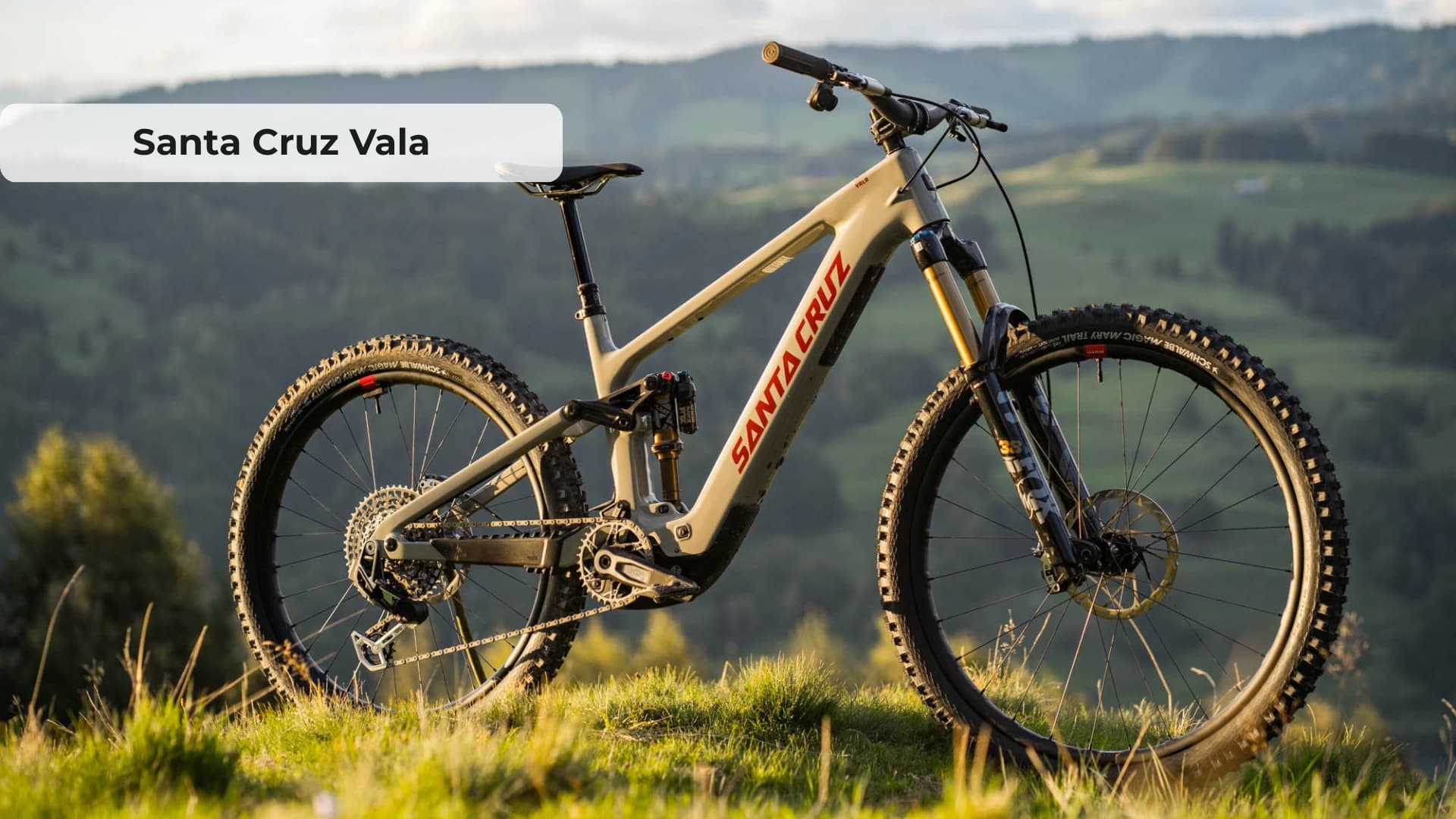
After testing the Vala for three weeks on everything from steep, chunky descents to punchy technical climbs, I found it delivers the most refined full-power e-MTB experience I've ridden, though the $7,299 entry price and 600Wh battery won't suit everyone.
Here's the thing. When a brand abandons a suspension platform they've used exclusively for over 20 years, you know something significant is happening. The Santa Cruz Vala isn't just another e-MTB release. It's the company's first four-bar suspension design and their first Bosch-powered bike, marking a complete departure from everything Santa Cruz has stood for since 2001. I spent three weeks hammering this bike on Rocky Mountain trails, logging 18 full charge cycles and tackling everything from bike park laps to technical singletrack sessions.
What surprised me most? The Vala feels more like a Santa Cruz than I expected. Despite ditching VPP suspension for a Horst-link four-bar design, the handling, suspension feel, and build quality all scream Santa Cruz in the best way possible. I tested the X0 AXS RSV build ($11,949) through variable conditions including dry hardpack, loose-over-hard corners, and wet root sections that typically challenge e-MTBs. The bike came equipped with Fox Factory suspension, SRAM X0 Transmission, and Schwalbe Magic Mary Radial tires.
Introduction: When Santa Cruz Ditches VPP, You Pay Attention
Here's the thing. When a brand abandons a suspension platform they've used exclusively for over 20 years, you know something significant is happening. The Santa Cruz Vala isn't just another e-MTB release. It's the company's first four-bar suspension design and their first Bosch-powered bike, marking a complete departure from everything Santa Cruz has stood for since 2001. I spent three weeks hammering this bike on Rocky Mountain trails, logging 18 full charge cycles and tackling everything from bike park laps to technical singletrack sessions.
What surprised me most? The Vala feels more like a Santa Cruz than I expected. Despite ditching VPP suspension for a Horst-link four-bar design, the handling, suspension feel, and build quality all scream Santa Cruz in the best way possible. I tested the X0 AXS RSV build ($11,949) through variable conditions including dry hardpack, loose-over-hard corners, and wet root sections that typically challenge e-MTBs. The bike came equipped with Fox Factory suspension, SRAM X0 Transmission, and Schwalbe Magic Mary Radial tires.
Key Specs, Pricing & Variants
- Price Range
- From $7,299 (R build) to $14,099 (XX AXS RSV)
- Motor
- Bosch Performance CX Gen 5 (85Nm torque, 600W peak)
- Battery
- 600Wh PowerTube (250Wh PowerMore extender available)
- Travel
- 150mm rear / 160mm fork (MX wheels: 29" front, 27.5" rear)
- Weight
- 48 lbs (size L, X0 build tested) - lightest Bosch CX bike we've weighed
- Frame Options
- C Carbon or CC Carbon (aluminum version also available)
- Best For
- Experienced riders wanting full-power trail performance without bulk
Four-Bar Suspension Design
The Vala marks Santa Cruz's first departure from VPP suspension, using a Horst-link four-bar design that packages the Bosch motor more efficiently. The one-piece bridged rocker link adds stiffness where it counts, and adjustable flip chips let you fine-tune geometry and progression from 26% to 29%.
Design & Build Quality
First impressions matter. The Vala looks different from any Santa Cruz you've seen before. The vertical shock, Horst-link pivot, and slimmer downtube give it a more conventional e-MTB aesthetic compared to the VPP-equipped Heckler it replaces. But pick it up and you'll immediately recognize Santa Cruz quality. The C Carbon frame on my test bike featured clean welds at the motor mounts, perfectly routed internal cables, and that signature Santa Cruz attention to detail where small things like the bridged seatstay design aren't just functional but beautifully executed.
After three weeks of aggressive riding including multiple bike park sessions, the frame showed zero signs of stress or creaking. The one-piece rocker link stayed silent, the collet-style pivot axles (same system used on VPP bikes) required no adjustment, and the integrated battery mount showed no movement whatsoever. The only wear visible was on the chainstay protector, which did its job protecting the carbon underneath. Build quality genuinely exceeds most competitors in this price range.
Features Breakdown: What Makes the Vala Tick
Bosch Performance CX Gen 5 Motor System
- 85Nm of torque with 600W peak power feels incredibly responsive to rider input, delivering power smoothly without the jerky on/off feeling of older systems
- Four riding modes (Eco, Tour, eMTB, Turbo) controlled via wireless handlebar remote with simple LED display showing battery percentage in six-bar increments
- Motor integration is exceptional with minimal lateral play and quieter operation than previous Bosch systems, though still audible at low speeds
- Bosch Flow app allows full customization of assist modes, route planning, and ride tracking, though I rarely felt the need to adjust from factory settings
Battery & Range Configuration
- 600Wh PowerTube battery keeps the frame slimmer (900g lighter than an 800Wh unit) and lowers center of gravity for better handling
- In Turbo mode with my 180 lb weight plus gear, I consistently achieved 3,200-3,500 feet of climbing per charge on technical trails
- 250Wh PowerMore range extender mounts to bottle bosses but adds 1,500g (3.3 lbs) - I only needed it for full-day epics exceeding 5,000 vertical feet
- Battery charges while installed via external port on downtube, taking approximately 4.5 hours from empty to full with included charger
Four-Bar Suspension Platform
- Independently adjustable flip chips at seatstay and lower shock mount allow geometry changes (64.2° to 63.9° head angle) and progression adjustment (26% to 29%)
- One-piece bridged rocker link provides superior lateral stiffness compared to typical four-bar designs, protecting shock from side loads during aggressive cornering
- Large oversized bearings with collet-style preload axles (same lifetime warranty as VPP bikes) stayed perfectly tight throughout testing with zero play developing
- Coil shock compatible with adjustable trunnion mount, though I found the Fox Float X air shock worked brilliantly at 180psi with 30% sag
MX Wheel Setup & Geometry
- 29-inch front wheel offers rollover and traction while 27.5-inch rear enables late corner adjustments and easier front wheel lifts on steep terrain
- Size large geometry (tested): 480mm reach, 632mm stack, 64.2° head angle, 77.5° seat angle creates aggressive yet comfortable riding position
- Standover height of 734mm (size L) allows plenty of clearance for technical moves, combined with 240mm OneUp dropper for complete saddle removal
- Chainstay length varies by frame size (439mm small to 450mm XXL) to maintain proportional handling across the size range
Performance Testing: How the Vala Rides
Climbing performance genuinely impressed me. On repeated 12% grade technical climbs with embedded rocks and root steps, the Bosch motor's sensitivity to pedal input made it easy to modulate power mid-stroke. Unlike some e-MTB motors that deliver power in surges, the Gen 5 Bosch responds almost instantly to pressure changes, which proved critical when navigating tricky rock gardens where traction comes and goes. The 77.5° seat angle keeps weight centered over the rear wheel, and I could clean technical sections I typically struggle with on lighter SL e-bikes. Battery efficiency in Tour mode delivered approximately 4,800 feet of climbing on mixed terrain.
Descending is where the Vala truly shines. The Fox Float X rear shock tuned to 30% sag (180psi for my 180 lb weight) provided exceptional mid-stroke support while remaining supple through small chatter. I found the low progression setting (26%) worked best for varied terrain, offering a bottomless feel when casing jumps or hitting compressions at speed. The MX wheel configuration took some adjustment coming from a full 29er, but after two rides I appreciated the rear-biased feel on steep descents. The bike wants to corner aggressively, and the stiff rocker link prevented any hint of harshness or side-to-side flex during hard carving.
At 48 pounds, the Vala handles more playfully than its weight suggests. I could manual over trail obstacles, pop off small features, and throw the bike around in ways that feel unnatural on heavier full-power e-MTBs. The relatively low weight comes from the 600Wh battery choice and carbon construction. Compared to bikes running 700-800Wh batteries, the Vala feels noticeably lighter when changing direction quickly or navigating tight switchbacks where every pound matters.
MX Wheel Configuration
The mixed-wheel setup pairs a 29-inch front wheel for traction and rollover with a 27.5-inch rear for agility and late-corner adjustments. Combined with 160mm front and 150mm rear travel, this configuration delivers confidence on technical descents while maintaining playful handling characteristics.
User Experience: Living With the Vala
Daily usability proved straightforward. The wireless Bosch remote mounted cleanly to the left handlebar, and mode changes became second nature within the first ride. The LED battery display shows six bars rather than a percentage, which took some getting used to, but I quickly learned that each bar represents roughly 16% battery. The bike powers on with a button press on the top tube controller, and the motor engages smoothly from a dead stop without any lurching. My only minor gripe involves the top tube display, which uses a plastic adapter shim (Bosch designed a new integrated display that wasn't ready for 2025 launches).
Maintenance and setup required minimal effort. The bike arrived from Santa Cruz mostly assembled, needing only handlebar alignment and derailleur limit screw adjustments. The SRAM X0 Transmission shifted flawlessly throughout testing without a single adjustment, even under full power. I serviced the Fox suspension at 50 hours following their recommendations, and the Schwalbe Magic Mary Radial tires showed minimal wear after three weeks despite aggressive cornering. The internal battery means no latches or removal headaches, though it does require access to an outlet for charging.
How It Compares to Full-Power Competitors
Against the Specialized Turbo Levo ($11,500 for comparable build), the Vala offers superior suspension kinematics and lower weight but lacks the Levo's larger 700Wh battery and more integrated display. The Levo's motor provides smoother cutoff at 20mph, though the Bosch system on the Vala delivers more tunability through the Flow app. Build quality feels comparable, with both bikes using premium carbon and components, but the Levo edges ahead in everyday convenience features.
Compared to the Trek Slash+ ($9,999 similar spec), the Vala costs more but delivers noticeably better suspension performance and handling precision. The Trek uses the same Bosch motor but with an 800Wh battery, making it heavier (51 lbs) and less playful. The Slash+ offers better value if battery capacity matters most, while the Vala wins on ride quality and weight savings. YT Decoy owners get exceptional value ($6,999 base) with similar performance, though Santa Cruz build quality and suspension refinement justify the premium for riders who can afford it.
Within Santa Cruz's lineup, the Vala replaces the Shimano-powered Heckler with superior motor performance and better suspension design. The four-bar platform simply works better for packaging the Bosch motor than VPP did with Shimano. Riders considering the lightweight Heckler SL ($10,049) sacrifice half the motor power (55Nm vs 85Nm) but gain incredible trail feel and lower weight (38 lbs). The SL makes sense for fit riders who want subtle assist, while the Vala suits those wanting full power without excessive bulk.
Who This Product Is Best For
The Santa Cruz Vala is perfect for experienced mountain bikers who want full e-MTB power without the compromises of heavier, bulkier bikes. It's ideal for riders in the 5'5" to 6'4" range (five sizes available) who prioritize descending performance and playful handling over maximum battery capacity. This bike shines for trail riders in areas with 3,000-4,000 feet of climbing per ride where the 600Wh battery provides plenty of range. Buyers willing to invest $7,299-$14,099 for premium build quality, refined suspension, and lightweight construction will find the Vala delivers exceptional value despite the premium price. It's also excellent for riders returning to mountain biking after injury or looking to extend their riding years without sacrificing technical trail performance. However, riders needing all-day range for 6,000+ foot epic rides should consider the PowerMore extender (adds $700 and 3.3 lbs) or bikes with larger integrated batteries. Budget-conscious buyers will find better value in the YT Decoy or similar offerings, though they'll sacrifice some refinement and build quality. The Vala isn't for beginners due to its aggressive geometry and high-performance nature.
Pros & Cons
Pros
- Lightest full-power Bosch e-MTB we've tested at 48 lbs maintains playful, agile handling despite motor assistance
- Exceptional suspension performance with adjustable progression and geometry keeps the bike composed on technical descents
- Bosch Gen 5 motor delivers smooth, responsive power with excellent sensitivity to rider input and minimal noise
- Premium build quality including lifetime bearing warranty and clean internal routing justifies Santa Cruz pricing
- MX wheel configuration provides confidence-inspiring traction up front with nimble rear-end handling
- 600Wh battery keeps frame slim and center of gravity low for better handling compared to 800Wh systems
Cons
- Limited battery capacity (600Wh) requires range extender for full-day rides exceeding 4,000 vertical feet
- Premium pricing starting at $7,299 makes this one of the most expensive options in the category
- LED battery display shows bars instead of percentage, requiring mental math to gauge remaining range
- Top tube display uses placeholder plastic adapter until Bosch's integrated display becomes available
- Non-removable battery requires outlet access for charging rather than convenient battery swaps
Conclusion & Final Verdict
After three weeks and 18 charge cycles covering everything from bike park laps to technical trail rides, the Vala proved its worth as a premium full-power e-MTB. The decision to abandon VPP suspension paid off with superior kinematics, and the Bosch Gen 5 motor provides class-leading power delivery. Yes, the 600Wh battery limits all-day range compared to 800Wh competitors, but the handling benefits from reduced weight make it worthwhile for most riders. The suspension adjustability via flip chips offers genuine tuning potential, and build quality justifies the Santa Cruz premium.
I'd recommend the Vala 90 build ($9,099) as the sweet spot offering Fox Performance suspension, SRAM T-Type drivetrain, and Reserve aluminum wheels without the cost jump to wireless shifting. Riders prioritizing maximum performance should consider the X0 AXS RSV ($11,949) I tested, which delivers premium components throughout. The base R model ($7,299) provides entry to Vala ownership but compromises on suspension adjustability. For buyers who can afford the premium and don't need maximum battery capacity, the Vala represents the pinnacle of full-power trail e-MTB design in 2025.
The Santa Cruz Vala delivers the most refined full-power e-MTB experience I've tested, combining playful handling with exceptional suspension performance, though buyers must accept the premium price and smaller battery as trade-offs for superior ride quality.
Santa Cruz Vala: Frequently Asked Questions
How much range does the 600Wh battery actually provide in real-world conditions?
During my testing at 180 lbs rider weight, I consistently achieved 3,200-3,500 vertical feet in Turbo mode on technical trails with mixed climbing and descending. In Tour mode (mid-level assist), that extended to approximately 4,800 feet of climbing. Eco mode stretched battery life even further, delivering over 6,000 feet of vertical, though with noticeably less assist on steep sections.
Your actual range will vary based on rider weight, terrain steepness, tire pressure, and assist mode selection. Heavier riders (200+ lbs) should expect 15-20% less range, while lighter riders (150 lbs) might see 10-15% gains. The optional 250Wh PowerMore extender adds roughly 40% more capacity but weighs an additional 3.3 lbs and costs $700.
Is the Vala worth the premium price compared to cheaper full-power e-MTBs?
The value proposition depends on your priorities. Compared to the YT Decoy ($6,999) or Canyon Spectral:ON ($7,999), you're paying $300-$2,300 more for Santa Cruz refinement. That premium buys you lighter weight (48 lbs vs 51-52 lbs), superior suspension tuning, adjustable geometry/progression, lifetime bearing warranty, and exceptional build quality. During testing, these differences translated to noticeably better handling and more composed descending.
If you're upgrading from a quality analog mountain bike and want the best e-MTB experience regardless of cost, the Vala justifies its pricing. Budget-conscious riders or those prioritizing battery capacity over handling refinement will find better value elsewhere. The sweet spot is the Vala 90 at $9,099, which delivers 90% of the performance for significantly less than top-tier builds.
How does the MX wheel setup affect handling compared to full 29ers?
The mixed-wheel configuration took about two rides to fully adapt to after testing full 29-inch bikes. The 29-inch front wheel provides excellent traction and rollover, while the 27.5-inch rear enables late corner adjustments and easier front-wheel lifts on technical climbs. The rear-biased weight distribution feels more natural on steep descents, requiring less dramatic body position shifts to maintain balance.
On flatter pedaling sections, you'll notice slightly less momentum compared to dual 29ers, though the motor compensates well. For aggressive trail riding and technical descents, the MX setup offers genuine advantages. Riders who primarily pedal fire roads or less technical trails might prefer full 29ers, but the Vala's target audience will appreciate the handling benefits.
Can I upgrade to a larger battery, and should I buy the PowerMore extender?
The Vala frame only accommodates the 600Wh PowerTube battery. The 800Wh option isn't compatible due to the narrower downtube design Santa Cruz chose for weight savings and aesthetics. The 250Wh PowerMore range extender mounts to bottle bosses and connects via cable, adding 40% capacity but weighing 3.3 lbs and costing $700.
I'd recommend the PowerMore only if you regularly ride 5,000+ vertical feet or do multi-day bikepacking trips. For typical 3-4 hour trail rides, the standard 600Wh battery proved sufficient. The extender is best purchased later if you discover you need it rather than as an upfront investment, since most riders won't use it regularly enough to justify carrying the extra weight.
How difficult is the initial setup, and what maintenance does the Vala require?
The Vala arrived mostly assembled, requiring only handlebar alignment, pedal installation, and derailleur limit screw fine-tuning. Suspension setup took 15 minutes following Santa Cruz's online calculator, which provided accurate starting points for my weight. The Bosch system requires no initial configuration and works out of the box, though I spent time in the Flow app customizing assist modes to my preferences.
Ongoing maintenance matches any quality mountain bike. The Fox suspension needs a lower leg service every 50 hours and full rebuilds at manufacturer intervals. The SRAM Transmission drivetrain required zero adjustments during three weeks of testing. Battery health is maintained by avoiding complete discharge and storage at 40-60% charge when not riding. The motor is sealed and maintenance-free, with software updates handled via the Flow app or dealer visits.
Is the Vala suitable for bike park and jump line riding?
Absolutely. I spent multiple sessions at the bike park during testing, and the Vala handled jump lines, rock gardens, and steep chutes confidently. The 150mm rear and 160mm front travel with proper setup (I ran low progression for bike park days) provided excellent bottom-out resistance when casing jumps. The stiff frame and one-piece rocker link prevented flex during hard landings, maintaining precise tracking through rough sections.
The 48 lb weight is heavier than dedicated park bikes but lighter than most full-power e-MTBs, making it easier to throw around on features. The motor proved useful for session laps, eliminating lift lines while maintaining energy for trick attempts. Riders wanting a dedicated park bike might prefer more travel (the Santa Cruz Bullit offers 170mm), but the Vala handles park riding better than most trail-oriented e-MTBs.