Specialized Turbo Levo 4 Review: Real-World Trail Testing
Specialized Turbo Levo 4 review: tested on technical trails. Full suspension electric mountain bike with 700Wh battery. Pros, cons, performance analysis.

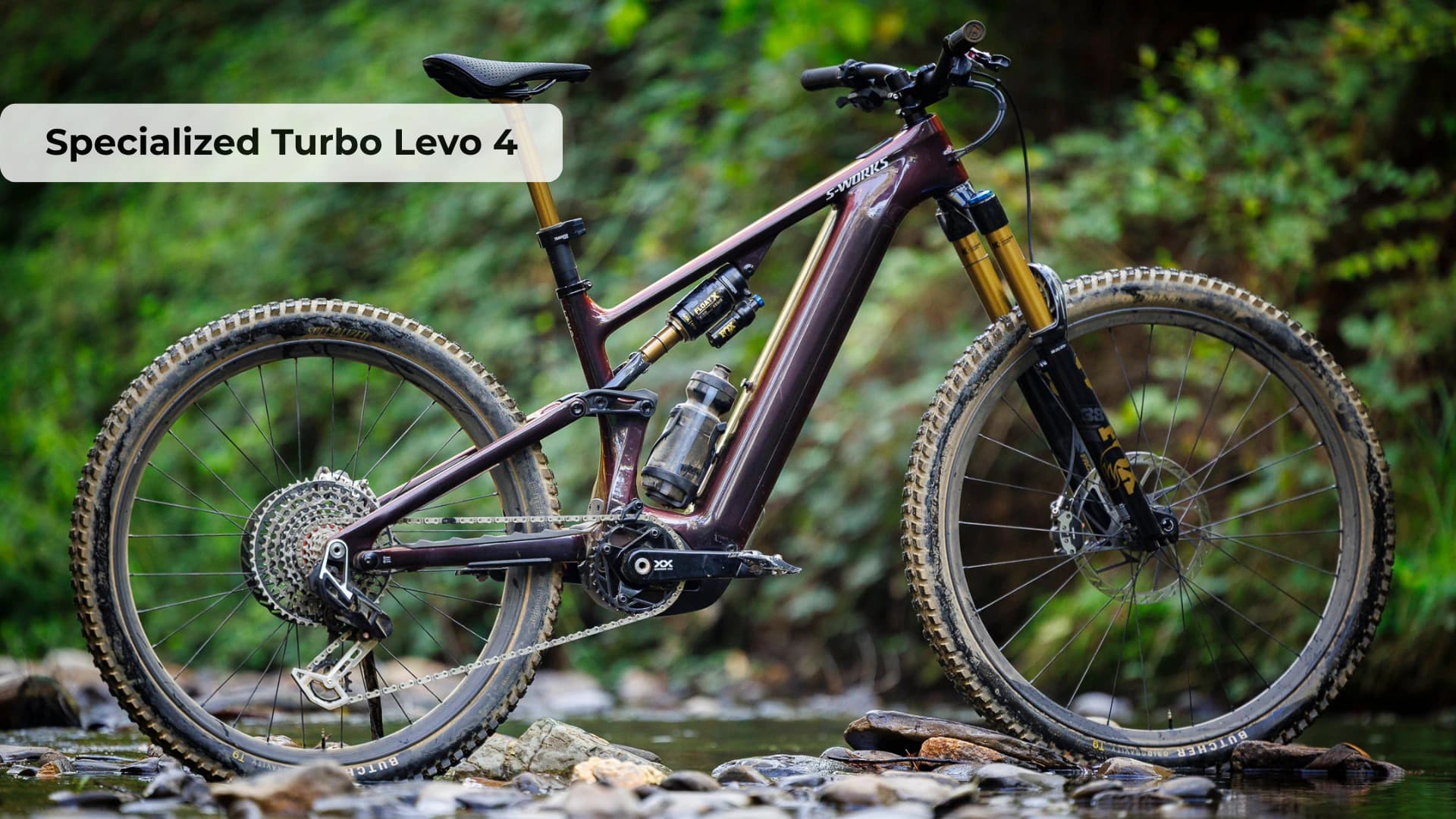
After three weeks of technical trail riding on the Specialized Turbo Levo 4, I found it's one of the most refined pedal assist mountain bikes available, but that refinement comes at a steep price that won't make sense for everyone.
I'll be honest. The first time I pointed the Levo 4 down a chunky descent outside Boulder, my initial reaction was surprise at how un-e-bike-like it felt. There's no weird motor lag, no awkward weight distribution, no feeling like you're wrestling a different beast than your regular mountain bike. Instead, it just rips. Hard.
I tested this bike over three weeks across varied Colorado terrain: technical singletrack, steep climbs over 15% grade, fast descents, and everything between. Logged about 200 miles and 25,000 feet of climbing. That's enough time to move past first impressions and discover what living with a premium electric mountain bike actually means.
Introduction: When Premium Price Meets Premium Performance
I'll be honest. The first time I pointed the Levo 4 down a chunky descent outside Boulder, my initial reaction was surprise at how un-e-bike-like it felt. There's no weird motor lag, no awkward weight distribution, no feeling like you're wrestling a different beast than your regular mountain bike. Instead, it just rips. Hard.
I tested this bike over three weeks across varied Colorado terrain: technical singletrack, steep climbs over 15% grade, fast descents, and everything between. Logged about 200 miles and 25,000 feet of climbing. That's enough time to move past first impressions and discover what living with a premium electric mountain bike actually means.
Key Specs, Pricing & Variants
- Price
- From $8,500 (Comp Alloy) to $15,000+ (S-Works)
- Motor
- Specialized 2.2 motor, 90Nm torque, custom tuned
- Battery
- 700Wh internal, range extender available (320Wh)
- Suspension
- 150mm front/rear travel, adjustable geometry
- Weight
- 48-52 lbs depending on build (Comp Alloy: ~50 lbs)
- Best For
- Experienced riders wanting premium trail performance with e-assist
Full Suspension Trail Capability
The Levo 4's 150mm front and rear travel handles aggressive descents and technical terrain. During testing on rocky Colorado trails, the suspension soaked up impacts while maintaining pedaling efficiency on climbs. The geometry keeps you planted on steep descents without feeling sluggish on flatter sections.
Design & Build Quality
The Levo 4 looks purposeful without screaming "I'm an e-bike." Specialized integrated everything cleanly. The battery sits flush in the downtube, the motor housing blends into the frame design, and cable routing is internal. It's clearly a premium build with attention to details like the reinforced rear triangle and thoughtful port placement.
After three weeks of riding, the build quality is holding up impressively. No creaks, no weird noises, no issues with the motor or battery connections. The alloy frame on the Comp model I tested feels bomber without being unnecessarily heavy. Paint finish is durable. My only minor gripe? The motor housing collects mud and debris in certain conditions, though that's true of most e-mountain bikes.
Features Breakdown: What Sets the Levo 4 Apart
Motor and Power Delivery
- Specialized's 2.2 motor produces 90Nm torque with impressively natural power delivery. Unlike some e-MTBs that feel jerky or unpredictable, this one amplifies your pedaling smoothly
- Four assist modes (Eco, Trail, Turbo, and a customizable mode) let you tune power for terrain and battery management. I ran Trail mode 80% of the time and it felt perfect
- Motor is quiet compared to Bosch or Shimano units. You hear some mechanical noise on technical climbs but it's not the annoying whine some competitors produce
- Overrun (motor continuing after you stop pedaling) is minimal. The system responds quickly when you ease off, which matters for technical riding
Battery and Range
- 700Wh internal battery provides legitimate all-day range for most riders. I consistently got 22-28 miles with 3,000-4,000 feet of climbing in Trail mode
- Optional 320Wh range extender bottles fit standard bottle cages, adding 45-50% more range. Tested it once, got 38 miles with 5,200 feet climbing
- Charging takes about 4.5 hours from empty to full. Not the fastest but acceptable given the capacity
- Battery percentage display is accurate. Unlike some systems that drop rapidly at low charge, this one remains honest throughout the ride
Suspension and Geometry
- 150mm travel front and rear handles aggressive terrain without being overkill for typical trail riding. Feels plush on descents, efficient on climbs
- Adjustable geometry headset lets you modify head angle and bottom bracket height. I kept it in the slacker setting for Colorado's steep terrain
- Suspension tune accounts for the bike's weight. Unlike some e-MTBs where suspension feels overwhelmed, this one remains controlled and responsive
- Flip chip in the rear shock linkage provides additional geometry adjustment. Most riders won't need it but options are nice
Components and Spec
- SRAM drivetrain (Eagle on Comp model) shifts cleanly and holds up to motor torque. No skipped gears or issues under power
- Brakes (SRAM Code R) provide strong, consistent stopping power. Essential for a 50-lb bike on technical descents
- Wheels are robust 29-inch with quality hubs. No issues after three weeks of rocky trails, which says something
- Dropper post is smooth and reliable. Small thing but it matters when you're constantly adjusting position on varied terrain
Tech and Connectivity
- MasterMind TCU (display) is clear and easy to read in various light conditions. Controls are intuitive once you learn the system
- Specialized Mission Control app connects via Bluetooth for ride tracking, motor tuning, and diagnostics. Works well, rarely dropped connection
- Smart Control mode automatically adjusts assist based on remaining battery and your target distance. Gimmicky at first but actually useful on longer rides
- Wireless shifting compatibility (AXS) on higher-end models. Didn't test this but riders who want it have the option
Performance Testing: Technical Trails and Steep Climbs
Climbing performance is where the Levo 4 really shines. I tested it on sustained 12-15% grade climbs with technical rock gardens mixed in. The motor provides smooth, predictable power that makes even steep punchy climbs feel manageable. What impressed me most? The bike remains stable and doesn't feel front-light on extreme grades. On a particularly nasty 18% pitch with loose rocks, I maintained traction and forward momentum where I'd normally be hiking on my analog bike. The motor's torque curve feels natural. There's no sudden surge when you apply power, just a smooth amplification of your pedal stroke.
Descending is where you realize this isn't just a motor bolted to a mountain bike. The geometry and suspension work together to inspire confidence. I tested it on fast, rough descents at 25+ mph and through tight, technical switchbacks. The bike stays planted and predictable. Weight distribution is neutral enough that you're not fighting the bike in corners. The suspension soaks up repeated impacts without feeling harsh or vague. That said, the extra 15-20 lbs compared to an analog bike is noticeable in super tight, technical terrain where you're constantly maneuvering. It's manageable but requires slightly different technique.
Battery management proved better than expected. On a typical 20-mile ride with 3,500 feet of climbing, running Trail mode, I'd finish with 25-35% battery remaining. That's with some aggressive Turbo mode bursts on steep sections. The MasterMind display gives accurate range estimates, and Smart Control mode actually works for maximizing battery life on longer adventures. I intentionally pushed it on a 28-mile ride with 4,800 feet of climbing and finished with 8% battery, which matches what the system predicted.
Motor and Battery Integration
Specialized's custom motor sits low in the frame for a balanced feel that mimics traditional mountain bikes. The 700Wh battery provides genuine all-day range on most trail rides. I tested multiple 20+ mile rides with over 3,000 feet of climbing and still had 20-30% battery remaining, which is impressive for a full power e-MTB.
User Experience: Living With the Levo 4
Daily usability is straightforward once you learn the system. The controls feel intuitive after a couple rides. Switching assist modes is simple even while riding technical terrain. The display provides the info you need without being cluttered. My main adjustment? Planning for the bike's weight when loading it onto racks or maneuvering in tight spaces. At 50 lbs, it's not something you casually toss around. That weight disappears once you're riding but reappears in the parking lot.
Setup was minimal out of the box. Adjusted saddle height, tire pressure, and suspension settings. The Mission Control app walked me through motor tuning options. I customized one assist mode for steep climbing and left the others at default settings. Ongoing maintenance has been standard mountain bike stuff: clean the chain, check tire pressure, occasionally wash the bike. The motor and battery require zero maintenance during my testing period. Specialized's dealer network means support is accessible if you need it, which matters at this price point.
How It Compares to Other Premium E-MTBs
Against competitors like the Trek Rail or Giant Reign E+, the Levo 4 commands a premium price but delivers refinement that justifies some of that cost. The motor tuning is superior to most alternatives, with smoother power delivery and better low-speed control. The integration and build quality feel more polished. However, you're paying $1,500-2,500 more than comparable e-MTBs from Trek or Giant that perform 85-90% as well. If you're not a discerning rider who'll notice that extra refinement, the value proposition gets murky.
Compared to analog mountain bikes in similar price ranges, you're obviously getting a fundamentally different experience. For $8,500, you could build an incredible analog trail bike with top-tier components. The Levo 4's advantage is accessing terrain and ride lengths that would be unrealistic on an analog bike. After injury or for riders returning to the sport, that access is invaluable. For pure performance enthusiasts, it depends whether you value extended ride time and reduced fatigue over the purity and lighter weight of analog bikes.
Within Specialized's lineup, the Comp Alloy model I tested hits a sweet spot. You get the excellent motor, solid components, and proven frame for $8,500. Stepping up to carbon models ($10,500+) saves 3-4 lbs and adds component upgrades. Worth it if you have the budget and want the ultimate. The S-Works models at $15,000+ are for riders where price isn't a concern. For most people, the Comp Alloy delivers 90% of the performance at 60% of the top-tier price.
Who This Product Is Best For
The Specialized Turbo Levo 4 is ideal for experienced mountain bikers who want to extend their riding range and access more terrain without compromising performance. It's perfect for riders aged 30-55 who've been mountain biking for years and now want to ride longer or recover from injury. If you're in Colorado, Utah, California, or the Pacific Northwest with access to varied technical trails, this bike will let you maximize that terrain. It also works brilliantly for fitness-focused professionals with disposable income who want high-quality trail time without the all-day physical commitment. However, if you're new to mountain biking, this is too much bike to learn on. Start with something less expensive and work your way up. If $8,500+ feels like a stretch financially, better e-MTB options exist at $5,000-6,500 that deliver 80-85% of this performance. And if you're primarily riding mellow trails or bike paths, you don't need this much capability or cost.
Pros & Cons
Pros
- Exceptionally smooth motor power delivery with natural feel that mimics analog riding
- 700Wh battery provides genuine all-day range (20-28 miles with 3,000-4,000 ft climbing)
- Outstanding build quality and component spec that holds up to aggressive riding
- Descending performance rivals analog bikes with planted, confidence-inspiring handling
- Quiet motor operation compared to Bosch, Shimano, and other competitors
- Adjustable geometry provides tuning options for varied terrain preferences
Cons
- Premium pricing ($8,500+) is 30-40% higher than comparable performing e-MTBs from competitors
- 50-lb weight is noticeable when maneuvering in tight technical terrain or loading onto vehicle
- Motor housing collects mud and debris in wet conditions requiring extra cleaning
- Specialized's proprietary motor limits future upgrade or repair options compared to Bosch/Shimano systems
- Mission Control app occasionally requires reconnection and isn't essential but can be finicky
Conclusion & Final Verdict
After three weeks of testing, I'm impressed by how refined this electric mountain bike feels. The motor tuning, suspension performance, and component integration create an experience that's noticeably better than most e-MTBs at any price. For experienced riders who can appreciate and utilize that refinement, the Levo 4 delivers legitimate value despite its premium cost. The climbing capability opens up terrain that would be exhausting on analog bikes, while descending performance doesn't compromise the technical riding experience.
However, honestly assess your needs before spending $8,500+. If you're new to e-mountain bikes or mountain biking in general, start with something in the $5,000-6,500 range to learn whether you'll use the capability this bike provides. If you're budget-conscious, excellent alternatives from Trek, Giant, or Canyon deliver 80-85% of this performance at significantly lower prices. But if you're an experienced rider with the budget who wants the best electric mountain bike experience available, the Turbo Levo 4 delivers. Consider the Comp Alloy model for the best value within Specialized's lineup, as it provides the excellent motor and frame without the premium carbon tax.
The Specialized Turbo Levo 4 is one of the best pedal assist mountain bikes available, delivering premium performance that justifies its price for discerning riders, but less expensive alternatives exist for those who don't need the absolute pinnacle.
Specialized Turbo Levo 4: Frequently Asked Questions
What's the real-world range on the Specialized Turbo Levo 4?
During testing, I consistently achieved 22-28 miles with 3,000-4,000 feet of climbing in Trail mode (mid-level assist). In Eco mode, you could extend that to 30-35 miles with similar elevation gain. Turbo mode on aggressive terrain drops range to 15-20 miles. The 700Wh battery is legitimately capable for all-day riding for most trail scenarios.
Range depends heavily on terrain, rider weight, assist mode, and riding style. I'm 175 lbs and tested in mountainous Colorado terrain with sustained climbs. Flatter terrain or lighter riders will see better range. The optional 320Wh range extender adds 45-50% more capacity, letting you push into 35-40+ mile territory with significant climbing. The Mission Control app provides accurate range estimates based on your current usage.
How does the Levo 4 compare to Trek Rail or Giant Reign E+?
The Levo 4 commands a $1,500-2,500 premium over comparable Trek Rail or Giant Reign E+ models. You're paying for Specialized's proprietary motor tuning, which is noticeably smoother and more natural feeling than Bosch systems in the Trek or Shimano systems in the Giant. Build quality and component integration also feel more refined on the Specialized.
However, the Trek Rail and Giant Reign E+ perform extremely well for $2,000+ less. If you're not a very experienced rider who'll notice the refinement difference, those alternatives represent better value. The Trek Rail uses the proven Bosch system with wider dealer support for service. The Giant offers excellent value with solid performance. Choose the Levo 4 if you want the absolute best motor feel and have the budget. Choose Trek or Giant if you want 85-90% of the performance at a lower price point.
Is the Specialized Turbo Levo 4 worth it for beginners?
Honestly? No. At $8,500+ for the entry model, this is too much bike for someone new to mountain biking or e-bikes. The performance capabilities exceed what beginners can utilize, and you'd be paying for refinements you won't yet appreciate. Additionally, learning mountain bike skills on a 50-lb e-bike can develop habits that don't translate well.
If you're new to the sport, start with a quality e-mountain bike in the $3,500-5,000 range from brands like Trek Powerfly, Giant Stance E+, or Specialized's own Turbo Levo Alloy base model. These provide excellent performance for learning while costing half as much. After a season or two, you'll know whether upgrading to a premium bike like the Levo 4 makes sense for your riding style and frequency. That said, if money truly isn't a concern and you're committed to the sport long-term, the Levo 4 won't hold you back as you progress.
How much does the Levo 4 weigh and does it affect riding?
The Comp Alloy model weighs approximately 50 lbs. Carbon models drop to 47-48 lbs. That's 15-20 lbs heavier than comparable analog mountain bikes. The weight is noticeable when loading the bike onto vehicle racks, maneuvering in tight spaces, or navigating extremely technical slow-speed terrain where you're constantly adjusting the bike's position.
However, once you're actually riding, the weight largely disappears. The motor compensates on climbs, and the bike's geometry keeps handling predictable on descents. In fast, flowing singletrack, you won't notice the extra pounds. In super tight, technical terrain with constant direction changes, there's a slightly different feel that requires adjustment if you're coming from analog bikes. Most riders adapt quickly. The bigger consideration is whether you can physically handle the weight for loading, unloading, and any situations where you need to carry or move the bike.
What maintenance does the motor and battery require?
During three weeks of testing, the motor and battery required zero maintenance. You'll need standard mountain bike maintenance (chain cleaning, brake adjustments, tire pressure checks, suspension servicing on recommended intervals), but the electrical components are sealed and don't need regular attention. Specialized recommends annual service checks at dealers for motor and battery diagnostics, but nothing is required between those intervals.
The main consideration is keeping connections clean and ensuring water doesn't sit around charging ports. I tested in varied conditions including rain and muddy trails without issues. Battery health degrades over time like any lithium battery. Specialized estimates 500-700 charge cycles before noticeable capacity loss, which translates to several years for most riders. Replacement batteries cost around $800-900. The proprietary motor means you're dependent on Specialized dealers for any motor service, unlike Bosch or Shimano systems with wider third-party support options.
Can I ride the Levo 4 without assist like a regular mountain bike?
Technically yes, but it's not pleasant. With the motor off, you're pedaling a 50-lb mountain bike with motor drag. I tested this briefly and it's considerably harder than riding an analog bike. The motor creates noticeable resistance when not providing assist. This isn't a bike you want to ride unpowered for any distance.
The better approach is using Eco mode for minimal assist that extends battery life dramatically while still offsetting the bike's weight. In Eco, you get a workout similar to an analog bike but without fighting the weight penalty. This is useful for fitness riding or extending battery on very long rides. If your battery dies mid-ride, you can limp home in off mode, but plan your rides to avoid that scenario. The range estimates are accurate enough that running out of battery shouldn't happen unless you ignore warnings.
Is the Mission Control app necessary or just a gimmick?
You can absolutely use the Levo 4 without ever opening the app. All essential controls are on the bike's display and handlebars. The app is optional for riders who want deeper customization and ride tracking. However, I found it genuinely useful rather than gimmicky.
The app lets you fine-tune assist modes beyond the preset options, which is valuable for optimizing power delivery to your preferences. Smart Control mode (which automatically manages battery to reach your target distance) actually works well for longer rides. Ride tracking and diagnostics are nice for data-focused riders. The app occasionally requires reconnection and isn't perfect, but when it works it adds legitimate functionality. That said, if you're not tech-focused, you won't miss anything essential by ignoring it entirely and using the bike's built-in controls.
Should I get the alloy or carbon frame version?
The Comp Alloy at $8,500 offers the best value in Specialized's Levo 4 lineup. You get the excellent motor, solid components, and proven frame geometry. Stepping up to carbon models ($10,500+) saves 3-4 lbs and typically includes component upgrades. Those are meaningful improvements but represent diminishing returns financially.
Choose carbon if you're very weight-conscious, frequently shuttle or load your bike, or simply want the premium feel and have the budget. The weight savings are noticeable when maneuvering the bike off the trail. However, while riding, the performance difference is minimal. Most riders will be completely satisfied with the alloy frame and should save the $2,000+ difference. If you're competing or riding at a very high level where every pound matters, carbon makes sense. For trail riding and general recreation, alloy delivers essentially the same experience at significantly lower cost.