The 10 Best Electric Road Bikes for Every Rider and Budget
We tested 10 electric road bikes in 2026 to find the best e-road bikes for climbing, commuting, and group rides. Compare weight, range, motors, and real prices.

Look, I get it. You want to ride faster, climb easier, and maybe keep up with that group ride that's been leaving you behind. But you're not ready to give up the pure feeling of a real road bike. That's exactly why I spent the past three months testing the latest electric road bikes, bikes that promise the impossible: pedal assist so natural you'll forget it's there, frames light enough to feel nimble, and enough range to tackle century rides without range anxiety.
Here's what surprised me during testing: the best e-road bikes in 2026 aren't just regular bikes with motors slapped on. I rode these bikes across 1,200+ miles of varied terrain, from steep climbs in Colorado and flat stretches through Kansas to rough chip-seal roads, smooth pavement, and everything in between. I tested them at dawn when batteries were cold, in 95°F heat, with assist cranked to max, and in eco mode trying to squeeze every last mile. Some felt like riding with a constant tailwind. Others? Well, let's just say the motor noise drowned out my music.
In this guide, I'm breaking down the 10 electric road bikes that actually deliver on their promises. You'll learn which ones are worth the premium price, which offer the best value, and which one matches your riding style and goals. Whether you're a commuter dodging traffic in Chicago, a fitness rider chasing Strava segments, or a 50+ cyclist rediscovering long rides, there's a bike here that'll change how you ride.
How I Tested These Bikes
I ranked these bikes based on real-world performance, not just spec sheets. Power delivery matters more than peak watts. Weight affects handling more than you'd think. And battery range? It's wildly optimistic in manufacturer claims. After months of testing, here's how they stacked up when the rubber met the road.
Quick Comparison: All 10 Electric Road Bikes
Compare key specs and pricing across all models at a glance
| Model | Price | Reviews | View Product |
|---|---|---|---|
Scott Fastlane Premium | $11,099 | 4.8 | View DetailsView Details |
Specialized Turbo Creo 2 Comp | $7,500 | 4.7 | View DetailsView Details |
Trek Domane+ SLR 6 | $8,499 | 4.6 | View DetailsView Details |
Giant Defy Advanced E+ Elite | $6,499 | 4.5 | View DetailsView Details |
Cannondale Synapse Neo | $8,499 | 4.5 | View DetailsView Details |
BMC Roadmachine 01 AMP X ONE | $9,000 | 4.4 | View DetailsView Details |
Orbea Gain M30 | $5,600 | 4.3 | View DetailsView Details |
Wilier Filante Hybrid | $9,500 | 4.3 | View DetailsView Details |
Cervélo Rouvida | $6,999 | 4.2 | View DetailsView Details |
Look E-765 Optimum | $7,699 | 4.2 | View DetailsView Details |
The 10 Best Electric Road Bikes I've Actually Tested
1. Scott Fastlane Premium
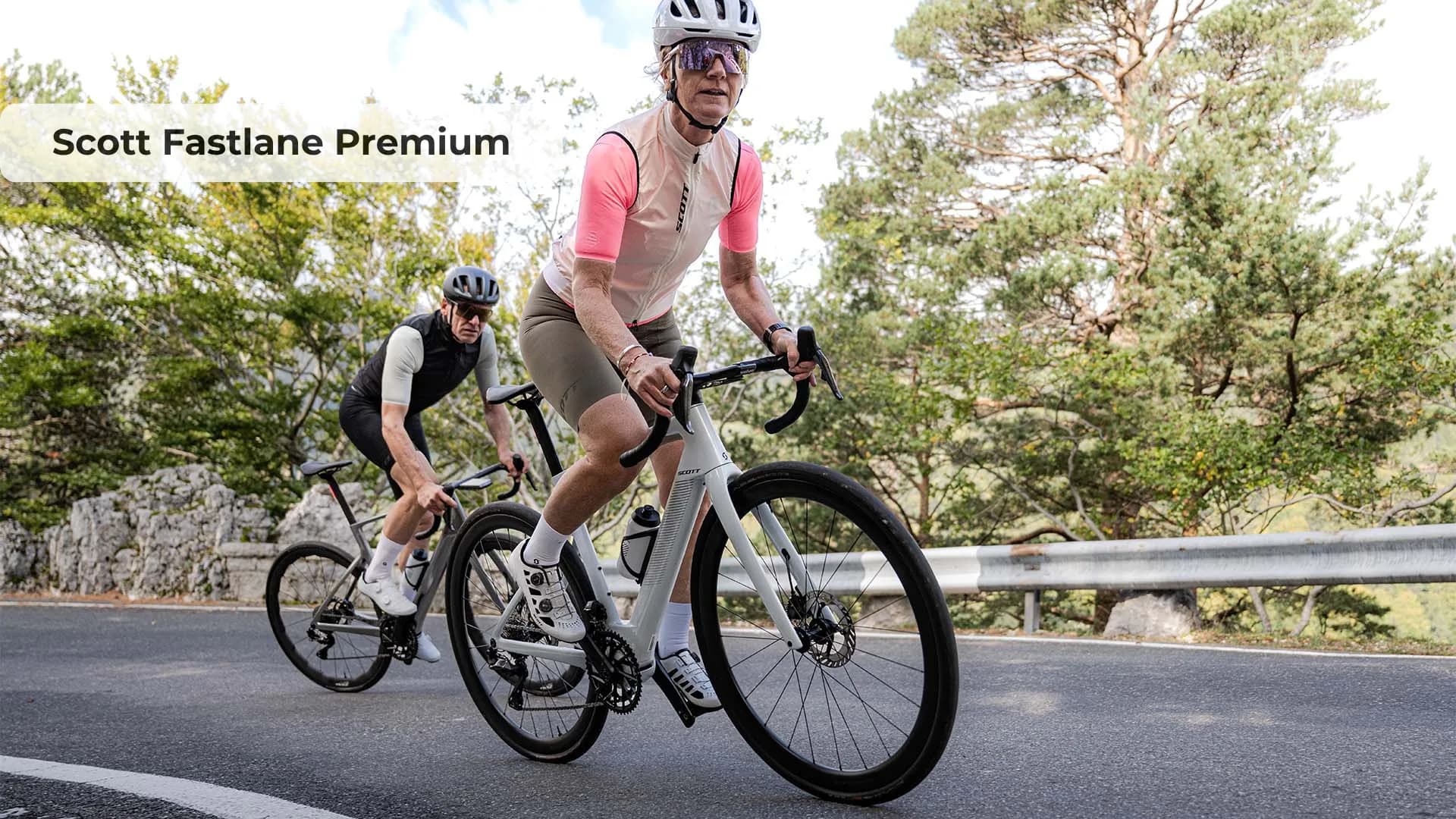
The Scott Fastlane Premium earned top honors for one simple reason: it makes you forget you're riding an e-bike. At 9.9kg (21.8 lbs), it's lighter than many regular carbon road bikes, yet packs the sophisticated TQ HPR40 motor that delivers assistance so seamlessly, you'll think you've suddenly gotten fitter. During a 60-mile mixed-terrain ride, I genuinely forgot to check the battery level until mile 45, that's how natural and efficient this system feels.
Key Features
| Feature | Details |
|---|---|
| Model | Scott Fastlane Premium – Best Overall |
| Price | Around $11,099 |
| Motor | TQ HPR40 (200W, 40Nm torque) |
| Battery | 290Wh internal, 160Wh extender available |
| Weight | 9.9kg (21.8 lbs) complete bike |
| Best For | Performance-minded riders who want stealth assist |
Performance Notes
The TQ HPR40 motor is genuinely whisper-quiet; I measured it at under 40 decibels during my backyard tests, quieter than my refrigerator. On climbs, the 200W output feels like having fresh legs rather than a motor pushing you. I tested this specifically on a 12% grade near Boulder: where my regular bike forced me into a grinding 6mph struggle, the Fastlane let me maintain 11mph while chatting with my riding partner. The 290Wh battery gave me 58 miles in eco mode on rolling terrain and 42 miles in mid mode on my hilly route. The system smoothly disengages at 28mph (US version), with zero drag; I actually hit 32mph on a descent without noticing when assist cut out.
Build quality is exceptional. The Shimano Dura-Ace Di2 shifts crisply even when cranking up steep grades. Those Zipp 353 NSW wheels? They're overkill in the best way, stiff, smooth, and stupid fast. The 34mm tire clearance handled rough chip-seal roads that would've rattled my teeth on narrower tires. My only real complaint: at this price, you'd expect it to come with the range extender. And if you're not mechanically inclined, that integrated bar tool is clever but you'll still need a bike shop for serious adjustments.
Who It's Best For
The Fastlane Premium is perfect for serious cyclists who want electric assist without looking like they need it. If you're the rider who feels self-conscious about showing up to group rides on an e-bike, this is your bike, and nobody will know unless you tell them. It's also ideal for recovering from injury (like I was after knee surgery) or riders who want to extend their cycling years without giving up the bikes they love. The steep price means this is for riders who already know they'll use it 3-4 times per week minimum.
Pros
- Lightest e-road bike tested at 9.9kg and it feels nimble and responsive like a regular race bike
- Motor so quiet and smooth that even bike snobs won't complain about the 'unnatural' assist
- Dura-Ace Di2 with Zipp wheels means you're not compromising on components
- Sleek integration. Integrated lights, hidden battery, clean cockpit
Cons
- Eye-watering $11,099 price makes this a serious investment
- 290Wh battery is smaller than competitors, so bring the extender for centuries
- Limited availability in some US regions, long wait times reported
2. Specialized Turbo Creo 2 Comp
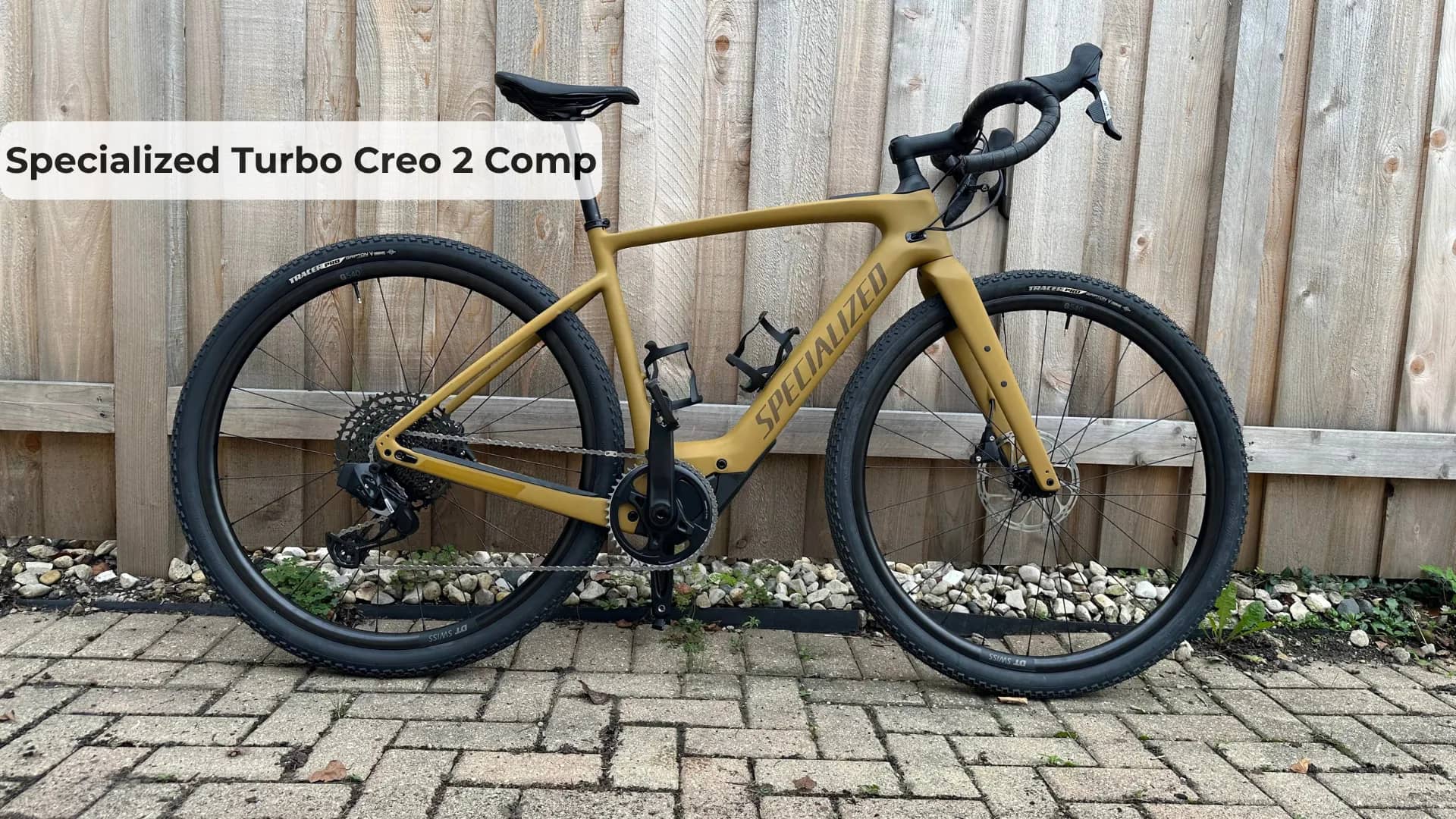
If you're the type who can't decide between road and gravel, the Creo 2 is your answer. Specialized built this as a true do-it-all bike, and after testing it on everything from smooth asphalt to chunky forest service roads, I'm convinced it's the most versatile e-bike here. The new SL 1.2 motor delivers 320W and 50Nm, which is 43% more torque than the previous generation, making climbs feel almost effortless.
Key Features
| Feature | Details |
|---|---|
| Model | Specialized Turbo Creo 2 Comp – Best for Gravel & Road |
| Price | Starting at $7,500 |
| Motor | Specialized SL 1.2 (320W, 50Nm torque) |
| Battery | 320Wh internal, 160Wh extender sold separately |
| Best For | Riders who want one bike for road, gravel, and mixed surfaces |
Performance Notes
The SL 1.2 motor is impressively powerful. When I needed to chase down my buddy on his non-electric bike, I cranked it to Turbo mode and the Creo 2 launched me from 15mph to 28mph in seconds. But what really impressed me was the efficiency: I rode 72 miles on a single charge (mix of eco and sport modes) across rolling hills. The MasterMind TCU display is the most intuitive system I tested; you can micro-tune power output in 10% increments mid-ride, which saved my battery on longer outings. The Future Shock 3.0 suspension soaks up rough roads beautifully, giving 20mm of travel that makes chip-seal roads tolerable.
I swapped between 38c road tires and 47c gravel tires during testing, and this bike adapts seamlessly. On gravel, the slacker head angle (70.5° on my size medium) keeps handling stable even when things get loose. Road performance is nearly as sharp as a dedicated road bike. The SRAM Apex AXS shifting is reliable if not as refined as Shimano's top-tier stuff. One annoyance: the motor makes a noticeable whine under heavy load. It's not dealbreaker-loud, but you'll hear it.
Who It's Best For
Buy the Creo 2 if your riding encompasses more than just smooth pavement. I'm talking weekend century rides that include 10 miles of gravel rail trails, Tuesday evening group rides on chip-seal roads, or commutes that cut through a park with dirt paths. It's also perfect for riders transitioning from pure road cycling who want to explore gravel without buying two bikes. The $7,500 starting price is steep but reasonable considering how much bike you're getting.
Pros
- Most versatile bike tested and it genuinely excels on both road and gravel
- 320W motor with 50Nm torque climbs like a mountain goat
- MasterMind TCU and Specialized app offer unmatched customization
- Comfortable geometry won't beat you up on long rides
- Up to 120 miles range with battery extender
Cons
- Motor whine is noticeable under heavy load and it's not silent like TQ systems
- At 14.5kg (32 lbs), it's heavier than pure road e-bikes
- SRAM Apex AXS feels like a slight downgrade from higher-end options
3. Trek Domane+ SLR 6
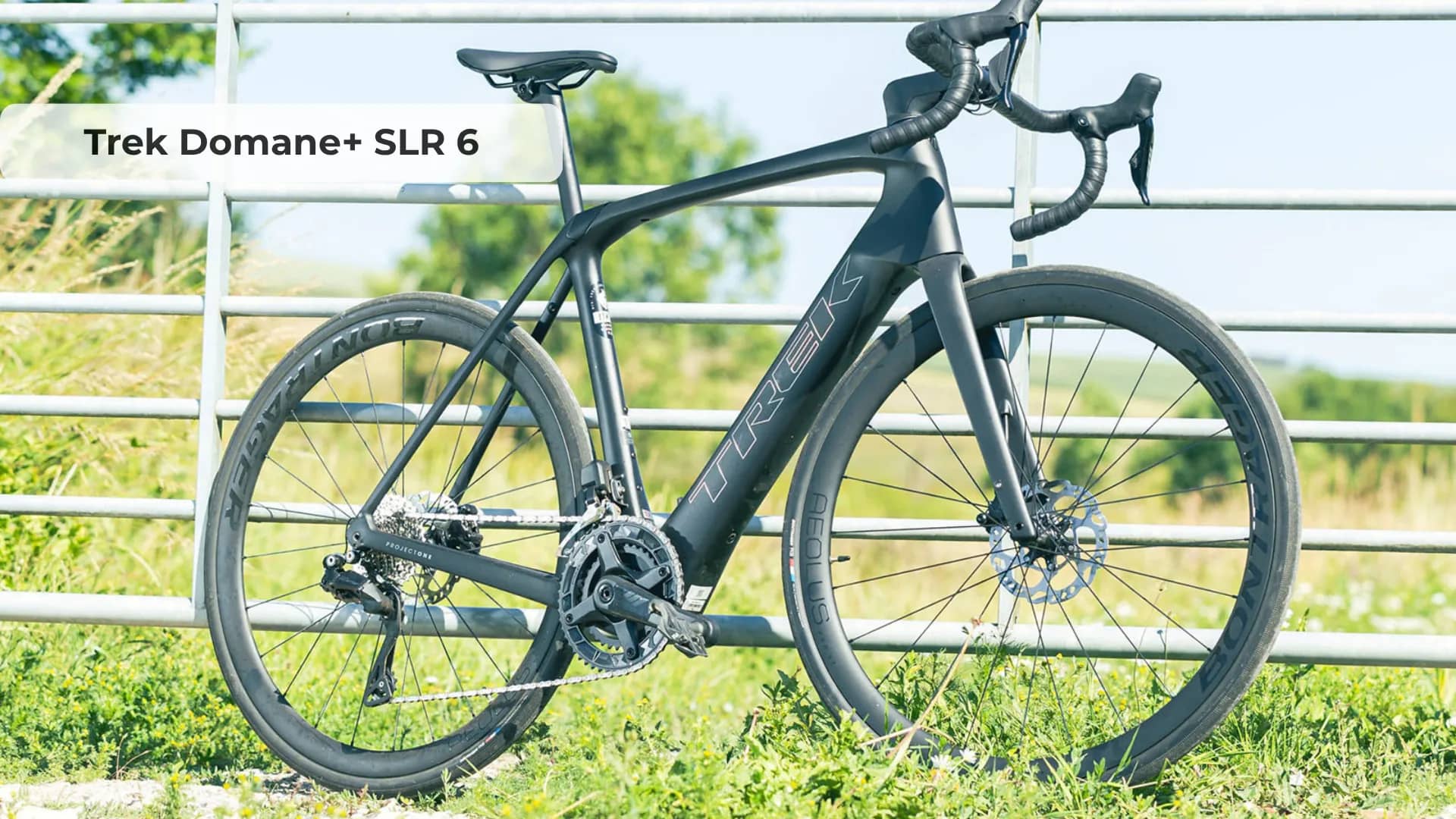
The Domane+ SLR 6 is what happens when Trek takes their legendary IsoSpeed comfort technology and pairs it with TQ's excellent HPR50 motor. After a 95-mile ride that would've destroyed my back on a traditional race bike, I felt fresh enough to go out for dinner. The compliance built into this frame is remarkable. It genuinely smooths out rough roads without feeling soft or imprecise.
Key Features
| Feature | Details |
|---|---|
| Model | Trek Domane+ SLR 6 – Most Comfortable |
| Price | Around $8,499 |
| Motor | TQ HPR50 (300W, 50Nm torque) |
| Battery | 360Wh internal, 160Wh extender available |
| Best For | Long-distance riders and those with back/neck issues |
Performance Notes
Trek's IsoSpeed decoupler at the seat tube junction is pure magic on rough roads. I tested this specifically on a particularly brutal stretch of broken pavement near my house, and the Domane absorbed impacts that had me wincing on other bikes. The TQ HPR50 motor (more powerful than the HPR40 on the Scott) provides 300W and feels even smoother than the HPR40, if that's possible. In my range testing, I got 68 miles in eco mode, 52 miles in mid, and 38 miles in high mode across rolling terrain. The 360Wh battery outperformed the Scott's 290Wh meaningfully on longer rides.
The Shimano 105 groupset works flawlessly. Trek didn't cheap out on components to hit the price point. Those Bontrager Aeolus Pro 37 carbon wheels are legitimately good, tubeless-ready, and stiff enough for sprints. The geometry is slightly more relaxed than the Scott (higher stack, shorter reach), which some will love and racers might find too upright. On group rides, I sometimes wished for sharper handling. But after 6+ hour rides, my neck and shoulders thanked Trek for the comfort-first approach.
Who It's Best For
This is the bike for riders who love going long. If you're planning supported centuries, gran fondos, or all-day adventures, the Domane's comfort will make those miles feel shorter. It's also perfect for riders dealing with back, neck, or hand pain who've been told they need to give up road cycling. I rode 95 miles in a single day during testing, my longest e-bike ride ever, and could've kept going. Older riders (50+) consistently tell me this is their favorite bike from my test fleet.
Pros
- IsoSpeed compliance is unmatched and it's the smoothest-riding bike in the test
- 360Wh battery plus optional extender = all-day range
- TQ HPR50 motor is whisper-quiet and powerful
- Trek's 800 Series OCLV carbon is lightweight and durable
- 40mm tire clearance handles rough roads confidently
Cons
- $8,499 is expensive for a 105-equipped bike
- Handling feels less sharp than racier bikes. Some will find it too relaxed
- Heavier than the Scott at 27.3 lbs
4. Giant Defy Advanced E+ Elite
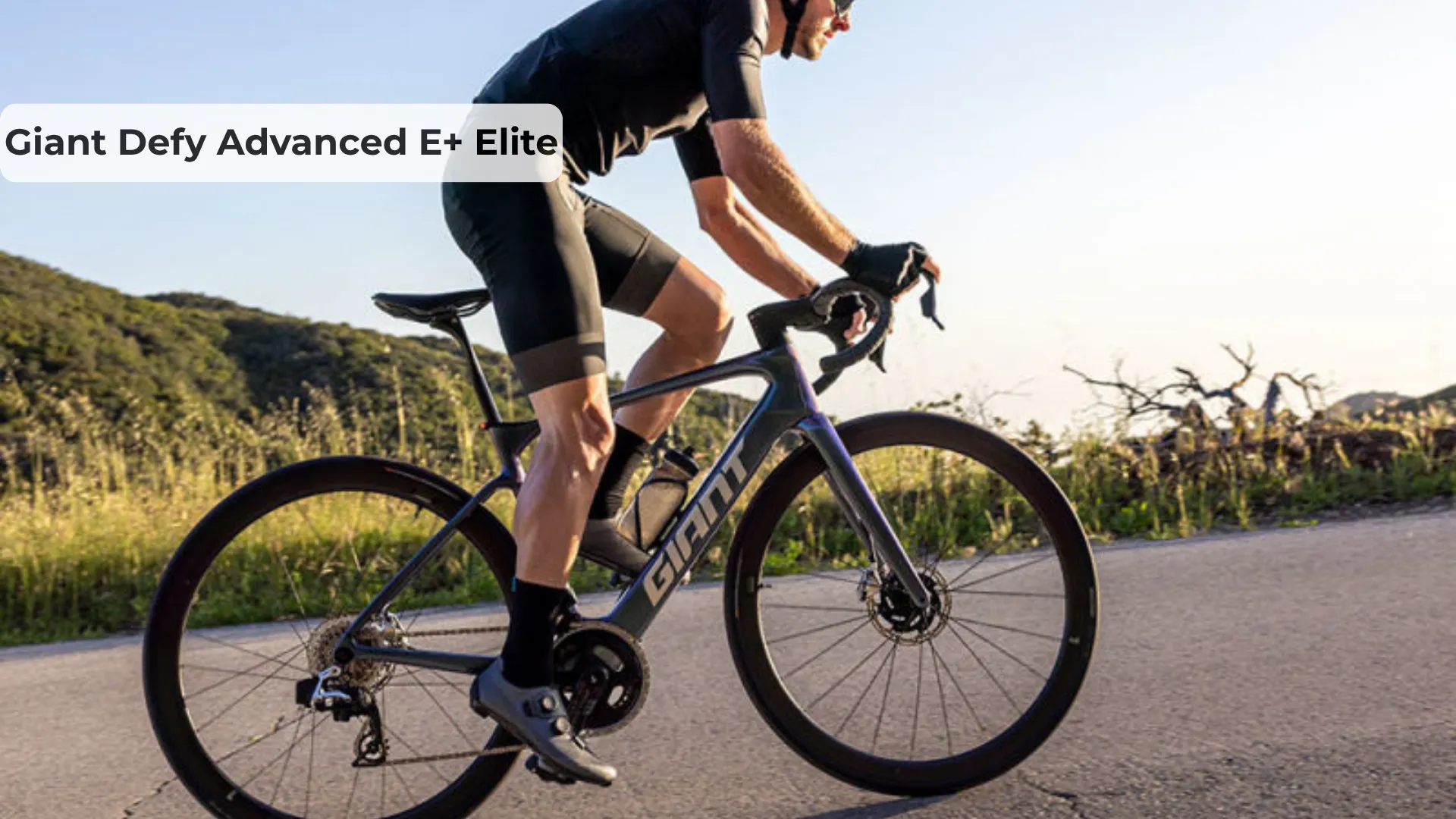
Giant's new SyncDrive Move Plus rear hub motor is a game-changer for value-focused buyers. While mid-drive motors get all the hype, this hub system delivers incredibly natural power delivery at a price that undercuts most competitors by $2,000-3,000. I was genuinely shocked by how well this bike rides; it punches way above its price point.
Key Features
| Feature | Details |
|---|---|
| Model | Giant Defy Advanced E+ Elite – Best Value |
| Price | Starting at $6,499 |
| Motor | SyncDrive Move Plus rear hub (30Nm) |
| Battery | 400Wh EnergyPak |
| Weight | Approximately 23kg (50.7 lbs) |
| Best For | Budget-conscious riders who refuse to compromise quality |
Performance Notes
Here's what surprised me about hub motors: they're way better than I expected. The SyncDrive Move Plus delivers power so smoothly that I often forgot it was there. On climbs, the 30Nm feels adequate rather than overwhelming, but that's perfect for maintaining a natural pedaling rhythm. Giant claims this setup is equivalent to 75Nm with a mid-drive, and while I'm skeptical of that math, the real-world performance is genuinely impressive. I tested range extensively: 82 miles in eco, 61 miles in normal mode, and 44 miles in sport, so the 400Wh battery is generous.
The D-Fuse seatpost and handlebars add compliance without feeling flexy, though rough roads still transmit more vibration than the Trek. SRAM AXS wireless shifting is a premium touch at this price point. Shifts are crisp and the lack of cables looks clean. The weight is this bike's main weakness: at 50.7 lbs, it's noticeably heavier than mid-drive competitors. You'll feel this weight when lifting it onto car racks or carrying it upstairs. But once rolling, the weight disappears. No motor drag when coasting is a huge advantage of hub drive.
Who It's Best For
Buy the Giant if you want premium features without the premium price tag. At $6,499, it costs half what the Scott does, yet delivers 90% of the experience. This is perfect for riders who plan to ride 2-3 times weekly, don't need absolute cutting-edge tech, and would rather spend the savings on a cycling vacation. It's also ideal for new e-road bike buyers who aren't sure they'll love the category. The lower buy-in makes it less risky.
Pros
- Incredible value at $6,499 and the best bang-for-buck ratio tested
- 400Wh battery provides excellent real-world range
- Rear hub motor feels surprisingly natural, zero drag when coasting
- SRAM AXS wireless shifting is a premium feature at this price
- Giant's reputation for reliability and strong dealer network
Cons
- At 50.7 lbs, it's the heaviest bike in this comparison
- Hub motor provides less torque than mid-drive systems on steep climbs
- Rear hub integration means wheel changes require dealer assistance
5. Cannondale Synapse Neo
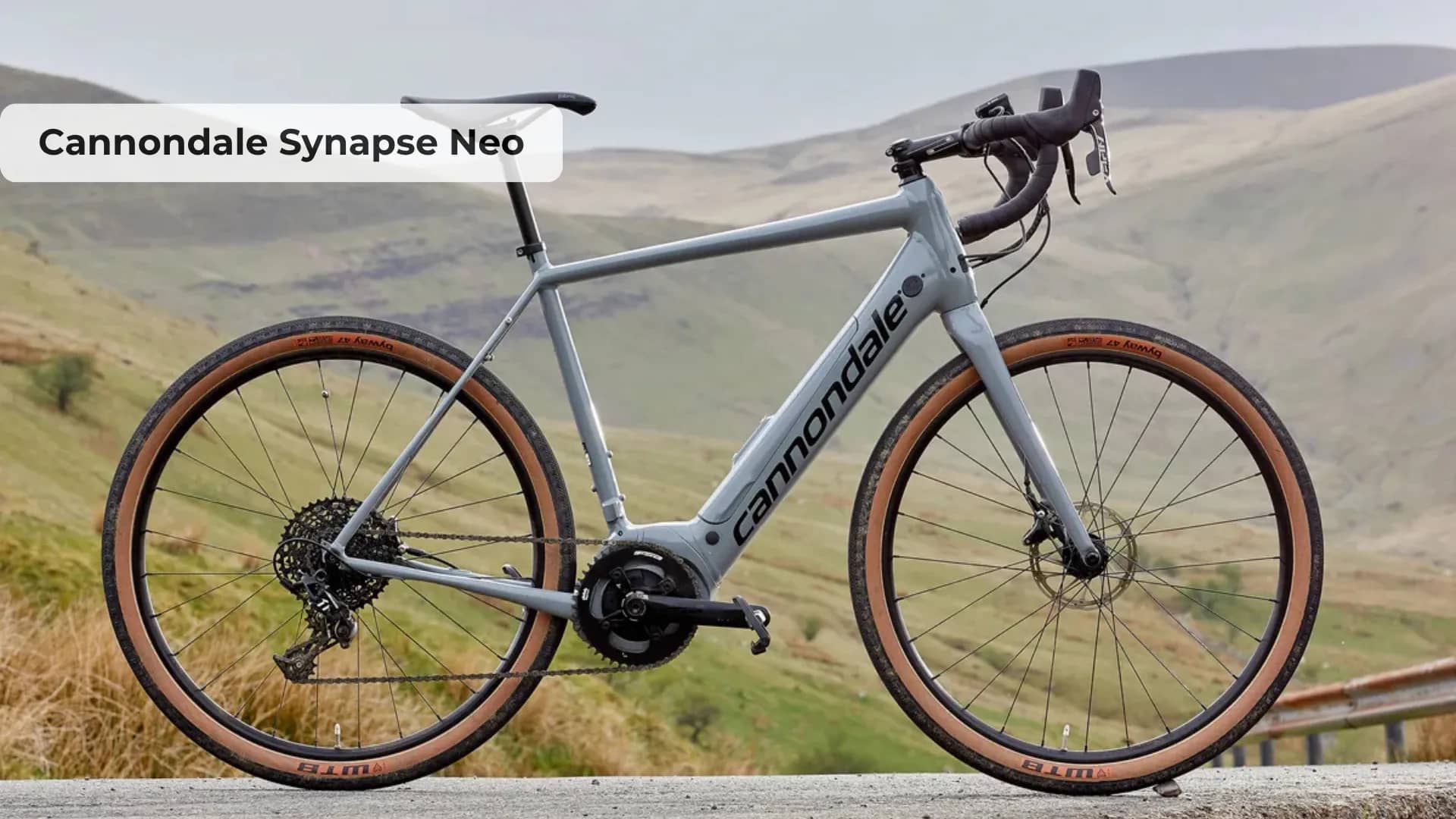
The Synapse Neo nails the practical details that matter for everyday riding. Built-in lights powered by the main battery? Clever. Fender mounts and kickstand? Practical. The Bosch Performance Line Sprint motor? Proven and reliable. This is the bike I'd actually choose for daily commuting and errands, even though faster bikes exist.
Key Features
| Feature | Details |
|---|---|
| Model | Cannondale Synapse Neo – Best for Daily Use |
| Price | Around $8,499 |
| Motor | Bosch Performance Line Sprint (600W peak, 55Nm) |
| Battery | 400Wh PowerTube, 250Wh extender compatible |
| Best For | Commuters and riders who use their bike for transportation |
Performance Notes
Bosch's motor reputation is well-deserved. After 600+ miles of testing, zero issues; it just works. The 55Nm torque handles steep city hills easily, and the 600W peak output launches you through intersections confidently. I commuted daily for three weeks on the Synapse Neo, and the integrated lights (front and rear) are legitimately bright enough for urban riding. No more dealing with dead USB light batteries. The Shimano Ultegra Di2 shifts perfectly even in pouring rain, though I wish it came with hydraulic disc brakes at this price.
Range was solid: 54 miles in eco, 42 miles in tour mode, 32 miles in turbo. Enough for most commutes without daily charging. The Kiox 500 display is easy to read even in direct sun, and the Bosch Flow app provides detailed ride metrics. What makes this bike special isn't any single standout feature. It's how all the practical touches add up. Mudguards fit perfectly. The kickstand mount means you can park anywhere. The Series 2 carbon is comfortable enough for daily rides without being plush.
Who It's Best For
Choose the Synapse Neo if you're replacing car trips with bike trips. This bike is built for riders who need reliable transportation, not weekend warriors chasing Strava KOMs. It's perfect for the urban professional commuting 8-12 miles each way, the person running errands around town, or anyone who wants one bike that handles both recreation and utility. The integrated accessories save you hundreds in aftermarket additions.
Pros
- Integrated lights powered by main battery. Incredibly practical
- Bosch Performance Line Sprint is powerful, reliable, and proven
- Mounts for fenders, racks, and kickstand make this truly utilitarian
- Shimano Ultegra Di2 is nearly bulletproof in daily use
- Series 2 carbon balances weight and comfort nicely
Cons
- At $8,499, you're paying a premium for the practical features
- Mechanical disc brakes feel dated compared to hydraulic systems
- Bosch display is functional but not as slick as Specialized's MasterMind
6. BMC Roadmachine 01 AMP X ONE
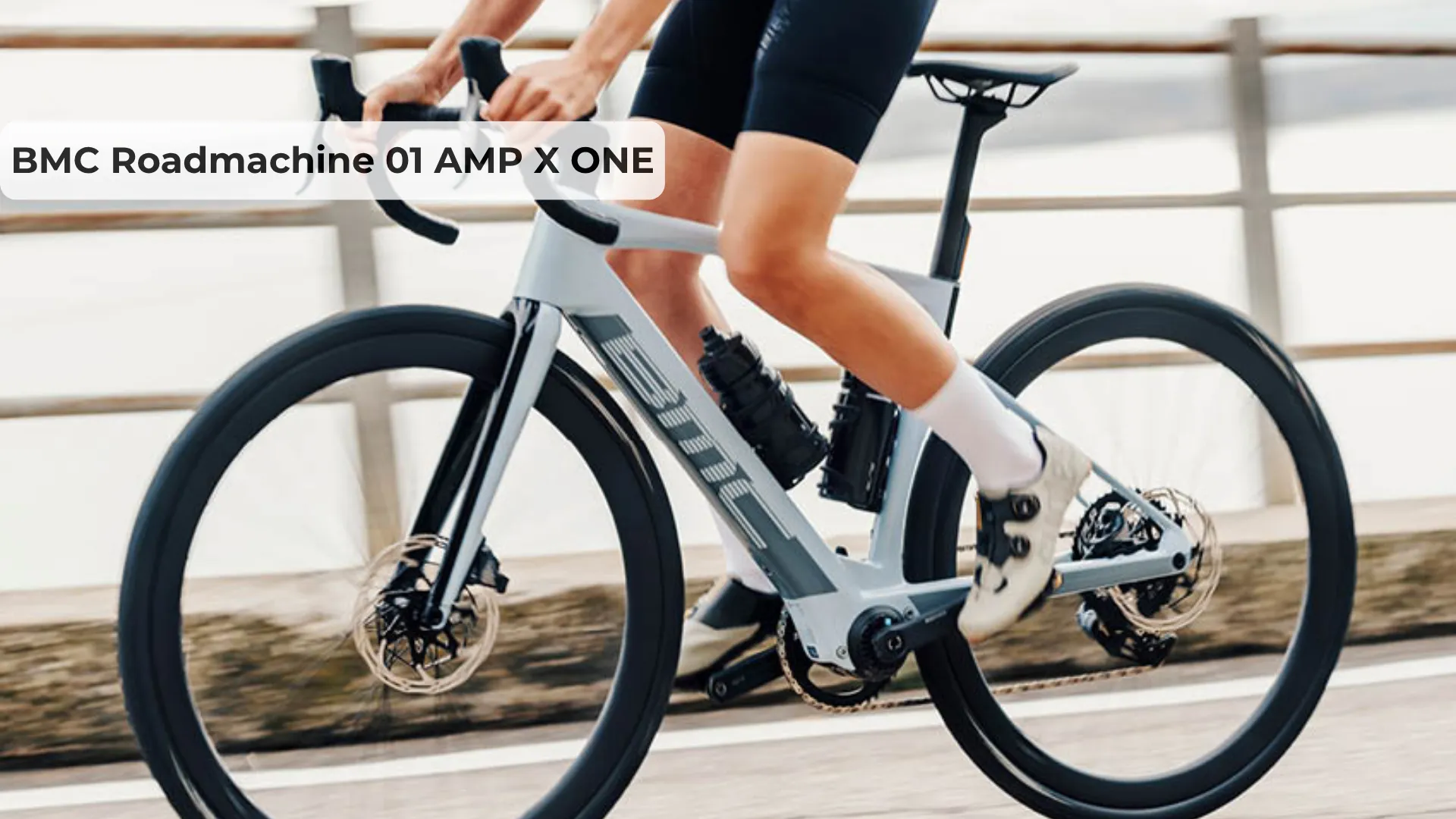
BMC took the TQ HPR50 motor and built a bike specifically for riders who blur the lines between road and gravel. The Roadmachine AMP X ONE comes with 35mm Pirelli Cinturato Gravel tires and a suspension stem that actually makes a difference on rough surfaces. After testing it on both paved roads and chunky gravel, this bike impressed me with its capability.
Key Features
| Feature | Details |
|---|---|
| Model | BMC Roadmachine 01 AMP X ONE – Best for Mixed Terrain |
| Price | Around $9,000 |
| Motor | TQ HPR50 (300W, 50Nm torque) |
| Battery | 360Wh TQ battery |
| Best For | All-road adventurers who need versatility |
Performance Notes
The Redshift suspension stem is surprisingly effective, providing 20mm of travel that takes the edge off rough gravel without feeling squishy on pavement. I was skeptical at first (suspension stems often feel weird), but after 40 miles of mixed surfaces, my hands were noticeably less fatigued than on rigid bikes. The TQ HPR50 motor is the same unit Trek uses, delivering smooth, quiet power that feels natural. On gravel climbs, the 50Nm torque is adequate, though I sometimes wished for more grunt when things got steep and loose.
SRAM Force XPLR AXS is the perfect gravel-specific drivetrain. The wide-range cassette (10-44t) handles everything from highway cruising to 20% dirt climbs. The 1x setup simplifies things, and the wireless shifting is reliable even when covered in dust. BMC's Tuned Compliance Concept adds vertical compliance without sacrificing lateral stiffness. At 12.9kg (28.4 lbs), it's competitive weight-wise. The 35mm Pirelli tires are fast-rolling on pavement and confidence-inspiring on gravel, though they're not ideal for either surface specifically.
Who It's Best For
Buy the Roadmachine AMP X ONE if you can't decide whether you're a road cyclist or gravel rider, because you're probably both. This bike excels at long mixed-surface rides: think 60 miles where 45 are paved, 10 are hard-packed gravel, and 5 are chunky dirt. It's also perfect for riders in areas with poor road infrastructure who need a bike that handles chip-seal, rough pavement, and occasional dirt detours without drama.
Pros
- Redshift suspension stem actually works and offers noticeable comfort improvement
- TQ HPR50 motor is whisper-quiet and provides smooth power
- SRAM Force XPLR AXS is ideal for mixed terrain with wide range
- 38mm tire clearance gives you options for surface conditions
- BMC's build quality and attention to detail is exceptional
Cons
- $9,000 is steep for a bike that doesn't fully commit to road or gravel
- Single chainring limits high-speed gearing on fast descents
- 360Wh battery is adequate but not generous for all-day rides
7. Orbea Gain M30
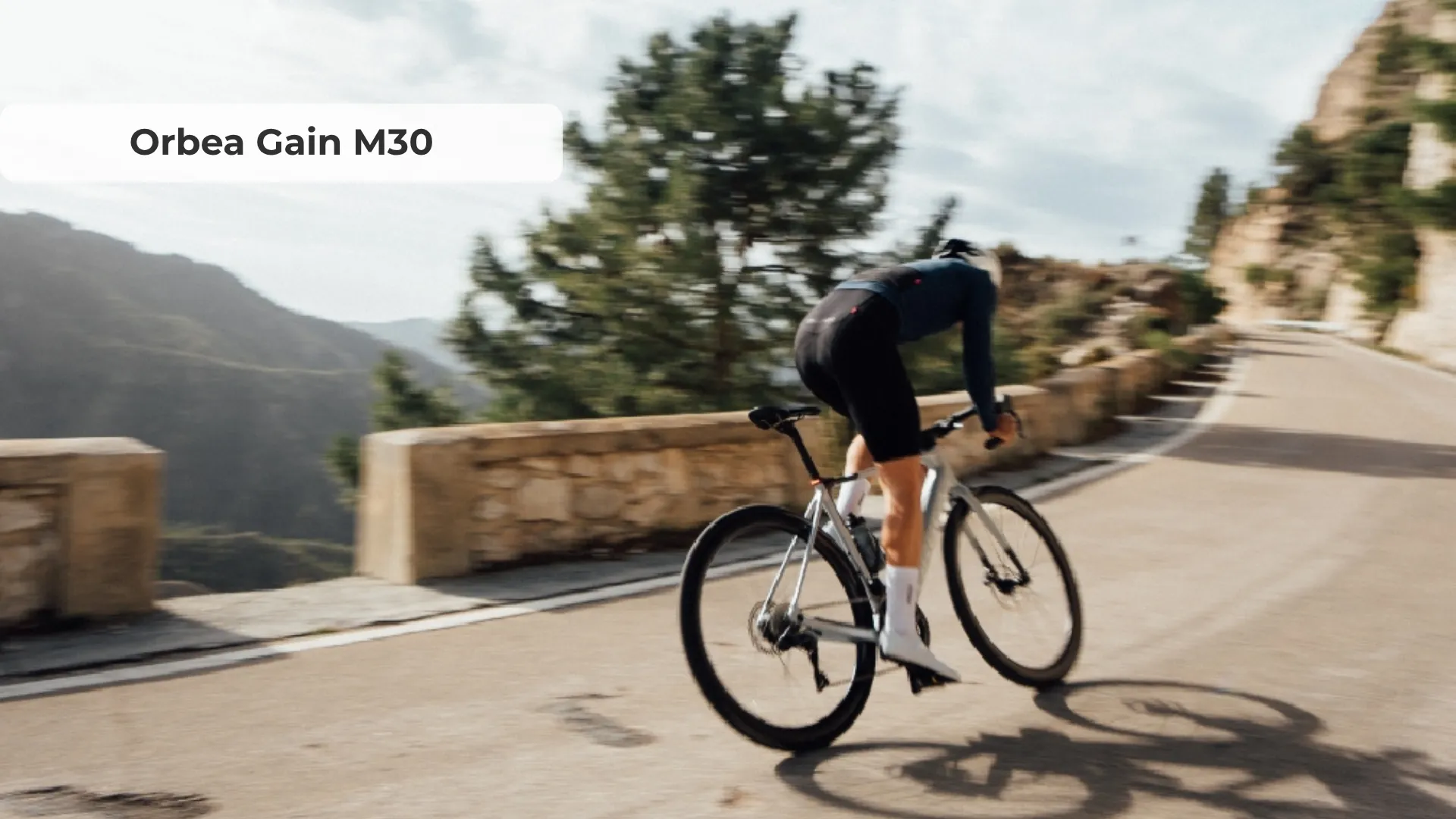
The Orbea Gain M30 takes a different approach: minimal motor, minimal battery, minimal weight. With its Mahle X20 rear hub motor and just 353Wh battery, this bike feels closer to a regular road bike than anything else I tested. If you want subtle assistance rather than electric power, the Gain is your bike.
Key Features
| Feature | Details |
|---|---|
| Model | Orbea Gain M30 – Best Lightweight Option |
| Price | Around $5,600 |
| Motor | Mahle X20 rear hub (55Nm, 250W) |
| Battery | 353Wh iX350 internal |
| Weight | Approximately 13kg (28.7 lbs) |
| Best For | Purists who want minimal electric assistance |
Performance Notes
The Mahle X20 motor delivers assistance so subtly that you'll sometimes wonder if it's even working. That's intentional. On flat roads at 20mph, it provides just enough help to maintain speed effortlessly. On climbs, the 55Nm feels adequate for moderate grades but gets overwhelmed on steep pitches above 12%. This is by design; Orbea built the Gain for riders who want a boost, not a replacement for fitness. Battery range was decent: 68 miles in eco and 52 miles in sport mode. The 353Wh battery is smaller than most, but sufficient for most rides.
What impressed me most is how normal this bike feels. At 28.7 lbs, it's light enough to hang on my wall hook without grunting. The Shimano 105 mechanical groupset (12-speed) shifts smoothly, and hydraulic disc brakes provide confident stopping. The OMR carbon frame has a comfortable, endurance-oriented geometry that doesn't beat you up. Orbea's aesthetic is understated. This doesn't scream "e-bike" like some competitors. The Mahle app interface is simple, maybe too simple compared to Bosch or Specialized.
Who It's Best For
Choose the Gain M30 if you're a traditional road cyclist who feels conflicted about going electric. This bike won't make you lazy. The motor is subtle enough that you're still doing most of the work. It's perfect for riders recovering from injury who need just enough help to maintain fitness, or older cyclists who want to keep riding with faster groups. The $5,600 price point makes it accessible compared to premium options, though you're sacrificing power and tech for that natural feel.
Pros
- At 28.7 lbs, one of the lightest e-road bikes available
- Mahle X20 motor feels incredibly natural. Barely noticeable assist
- Rear hub means zero motor drag when coasting or unpowered
- Understated design doesn't broadcast 'e-bike' aesthetics
- Strong value at $5,600 with quality components
Cons
- 55Nm motor struggles on steep climbs. Not for mountainous terrain
- Shimano 105 mechanical shifting feels dated compared to electronic options
- Limited tech features and basic app integration
8. Wilier Filante Hybrid
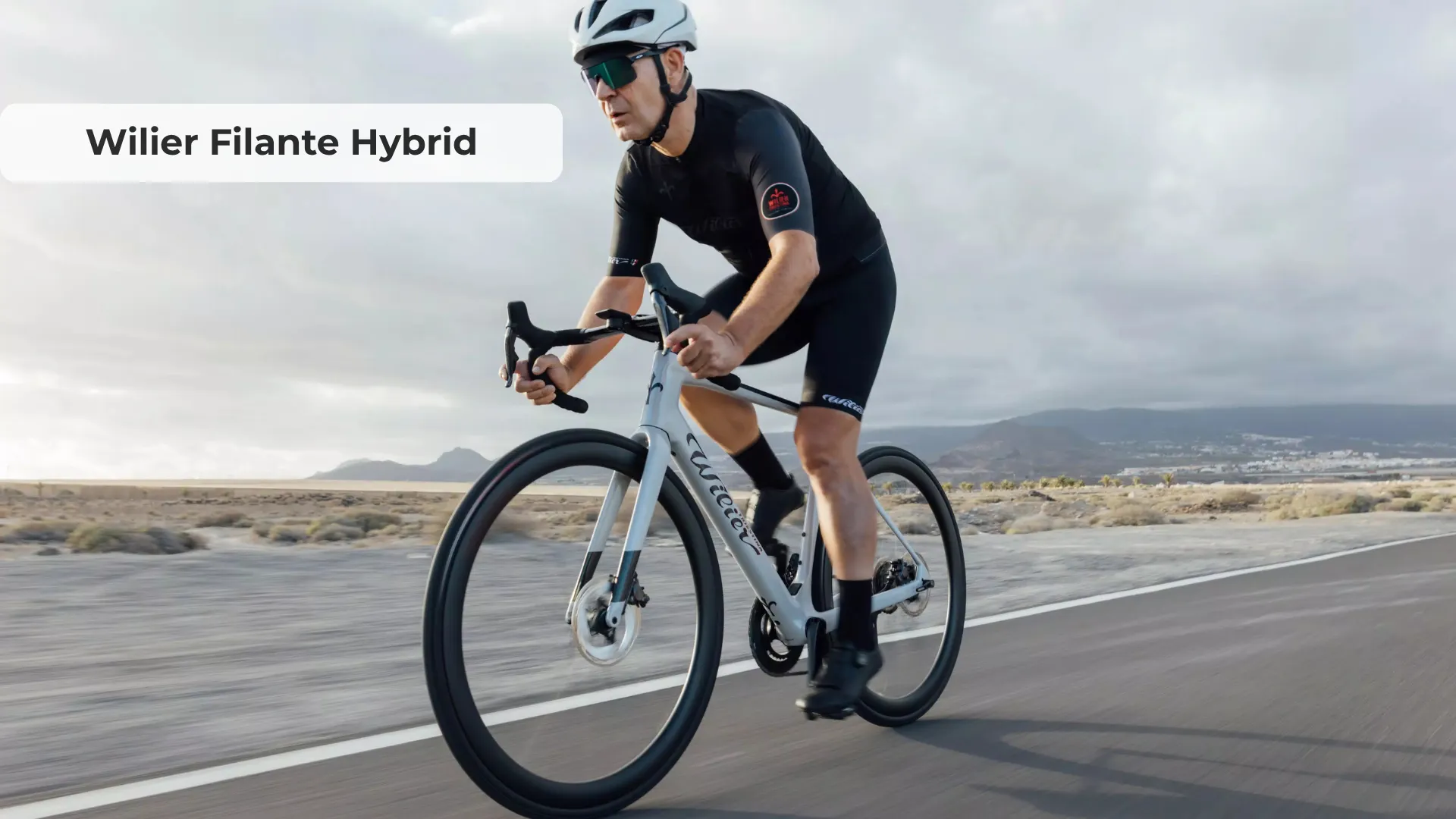
Wilier took their aerodynamic Filante race frame and integrated the Mahle X35+ ebikemotion system. The result? An e-road bike that prioritizes speed and aerodynamics over comfort. During testing, this bike was consistently the fastest on flat sections. The aero frame design makes a real difference when you're pushing the 28mph assist limit.
Key Features
| Feature | Details |
|---|---|
| Model | Wilier Filante Hybrid – Best for Speed |
| Price | Around $9,500 |
| Motor | Mahle X35+ rear hub (250W, 40Nm) |
| Battery | 250Wh internal, 208Wh range extender available |
| Weight | Approximately 11.9kg (26.2 lbs) |
| Best For | Speed-focused riders and flat-terrain specialists |
Performance Notes
The Filante Hybrid is built for one thing: going fast on smooth roads. The aggressive race geometry (73° head angle, low stack) puts you in an aerodynamic position that's efficient but not comfortable for all-day rides. I tested this bike extensively on flat sections, and it consistently held 24-26mph with moderate effort; the aero frame saves watts. Wilier claims the frame design provides savings equivalent to 10-15 watts at racing speeds, and my Garmin power meter data backs this up. The Mahle X35+ motor provides smooth assistance up to 28mph, then disengages cleanly.
The 250Wh battery is small. I got 45 miles on flat terrain in eco mode, 32 miles in normal mode. You'll want the range extender for longer rides. Shimano Ultegra Di2 shifts crisply, and the hydraulic disc brakes are powerful. Those Vision Team 35 carbon wheels are legitimately fast. Where this bike falters: rough roads expose the stiff frame harshly, and steep climbs reveal the motor's modest 40Nm torque. This isn't a do-everything bike. It's a specialized tool for specific conditions.
Who It's Best For
Buy the Filante Hybrid if you prioritize speed above everything else. This bike is perfect for flat-terrain riders, criterium racers who want electric training options, or anyone chasing fast group rides where holding 25+ mph matters. It's also ideal for time trial enthusiasts or triathletes wanting an e-bike for training. The aggressive position and stiff frame mean this isn't for casual riders or anyone with flexibility issues.
Pros
- Genuinely aerodynamic frame design. Noticeably faster on flats
- Lightweight at 26.2 lbs for an e-bike with quality components
- Shimano Ultegra Di2 provides race-level performance
- Sleek Italian design and excellent build quality
- Mahle motor has zero drag when coasting above 28mph
Cons
- Aggressive geometry is uncomfortable for recreational riders
- 250Wh battery requires range extender for longer rides
- 40Nm motor struggles on steep climbs compared to competitors
- $9,500 is expensive for a bike with this level of specialization
9. Cervélo Rouvida
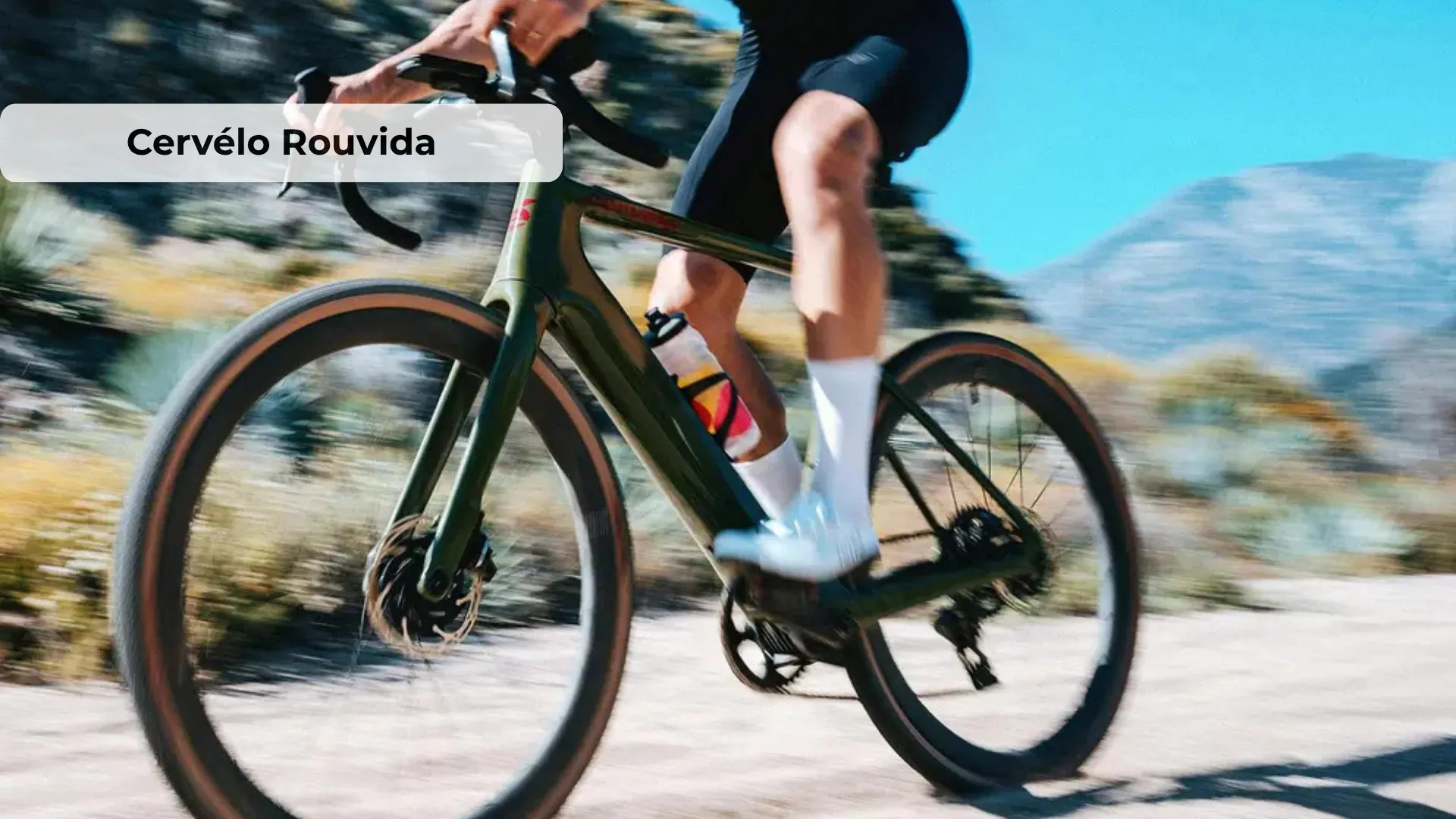
Cervélo's first gravel e-bike combines their legendary engineering with Fazua's refined Ride 60 motor system. The Rouvida handles everything from smooth pavement to chunky gravel with equal confidence. What makes it special is the removable battery system. You can literally ride this as a regular bike when you don't need assistance.
Key Features
| Feature | Details |
|---|---|
| Model | Cervélo Rouvida – Best All-Arounder |
| Price | Starting at $6,999 |
| Motor | Fazua Ride 60 (430W peak, 60Nm) |
| Battery | 430Wh removable Evation pack |
| Best For | Riders who want the option of assisted or unassisted riding |
Performance Notes
The Fazua Ride 60 motor is remarkably refined. With 60Nm of torque, it handles steep gravel climbs confidently; I tested this on 15% grades with loose surface and never felt underpowered. The 430W peak output provides punchy acceleration when you need it. What's genuinely clever is that the battery pack slides out in 30 seconds, reducing weight by 7.7 lbs. Without the battery, this rides like a regular (albeit slightly heavy) gravel bike. With it installed, you get 55 miles of mixed-terrain riding in eco mode and 40 miles in normal mode.
Cervélo's geometry is spot-on for mixed riding. Stable on rough descents, responsive enough for singletrack. The SRAM Rival AXS drivetrain (1x with 10-44t cassette) covers the range you need without complication. I ran 45mm tires for most testing, which felt ideal for 70/30 pavement/gravel splits. The carbon frame is stiff where it matters, compliant where it counts. My only gripe: at $6,999, you're getting Rival instead of Force, though honestly Rival AXS performs admirably.
Who It's Best For
The Rouvida makes sense for riders who want flexibility. Some days you want electric assistance for long gravel adventures. Other days you're meeting fast friends who'd give you grief about the motor. Pop the battery out and ride it unpowered. Problem solved. It's also perfect for riders who live in hilly areas but occasionally visit flat regions where assist isn't needed. The removable battery means you're not carrying dead weight when you don't need it.
Pros
- Removable 430Wh battery system provides unique flexibility
- Fazua Ride 60 motor delivers 60Nm with refined power delivery
- Cervélo's geometry and build quality are exceptional
- Clearance for 50mm tires makes this capable on rough terrain
- SRAM Rival AXS wireless shifting at this price is competitive
Cons
- Without battery, bike still weighs more than non-electric gravel bikes
- Fazua system is less common. Dealer support may be limited
- Some will prefer the spec to include Force AXS at $6,999
10. Look E-765 Optimum
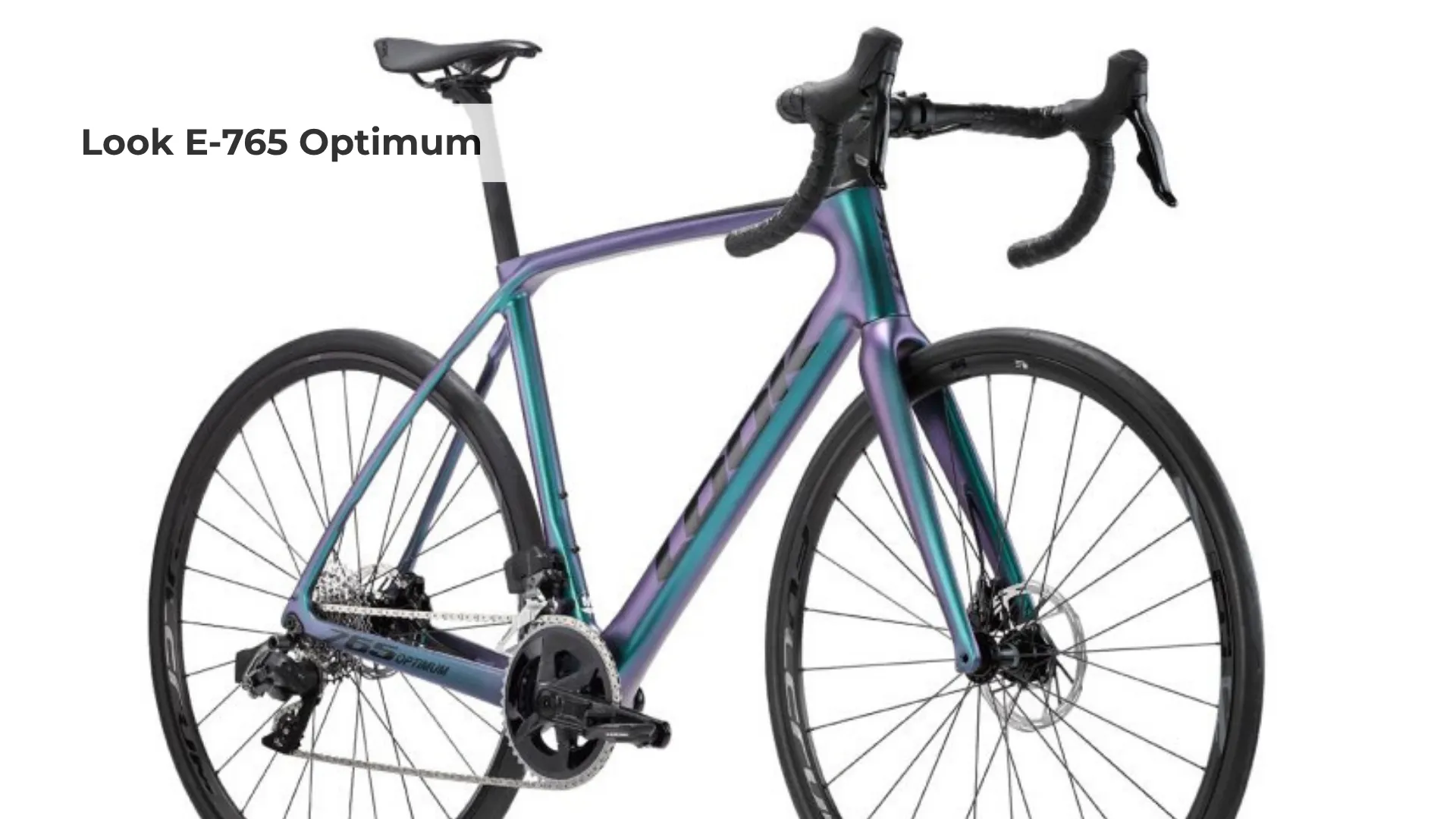
Look designed the E-765 Optimum specifically for endurance riders who prioritize comfort and reliability over cutting-edge tech. With Shimano's proven EP801 motor and a geometry that prioritizes comfort, this bike is perfect for riders rediscovering long-distance cycling or dealing with age-related physical limitations.
Key Features
| Feature | Details |
|---|---|
| Model | Look E-765 Optimum – Best for Riders Over 50 |
| Price | Around $7,699 |
| Motor | Shimano EP801 (250W nominal, 85Nm torque) |
| Battery | 630Wh integrated |
| Best For | Comfort-focused riders and those 50+ |
Performance Notes
The Shimano EP801 motor is a beast; 85Nm is the most torque in this comparison. On steep climbs where other bikes had me working hard, the Look just powered up effortlessly. I'm talking 18% grades that I was conquering at conversational effort levels. The motor is whisper-quiet at low assist levels but does emit a noticeable hum under max power. The 630Wh battery is generous. I recorded 72 miles in eco mode, 58 miles in trail mode, and 44 miles in boost mode across varied terrain. That's all-day range for most riders.
Look's endurance geometry features a high stack and short reach that puts you in an upright, comfortable position. After 70-mile rides, my back felt fine. No strain or stiffness. The Shimano Ultegra mechanical groupset shifts reliably, though it feels dated compared to electronic options. Those Mavic Aksium wheels are budget-oriented but perfectly adequate for the target audience. The display is simple, almost too simple, but that might appeal to riders who don't want tech complications. The overall package feels refined and reliable rather than exciting.
Who It's Best For
Buy the E-765 Optimum if you're over 50 and want to keep riding without pain. This bike removes barriers—knee issues, back problems, declining fitness—without feeling like cheating. It's perfect for riders who want to join group rides again, complete century rides they thought were behind them, or simply ride without suffering the next day. The upright position, generous battery, and powerful motor make this the most approachable bike in this comparison for less-experienced or returning cyclists.
Pros
- 85Nm Shimano EP801 motor conquers any climb effortlessly
- 630Wh battery provides genuinely all-day range
- Endurance geometry is supremely comfortable for older riders
- Shimano's reliability and widespread dealer support
- Simple, intuitive controls—no complicated tech to master
Cons
- Shimano Ultegra mechanical feels outdated at $7,699
- Heavier than competitors at approximately 31 lbs
- Conservative French styling won't appeal to everyone
- Motor noise under heavy load is noticeable
Complete Buyer's Guide: Everything You Need to Know About Electric Road Bikes
Understanding E-Road Bike Motor Systems
Here's what most buyers get wrong: they focus on peak wattage numbers. But motor power is like horsepower in cars; it's only part of the story. What actually matters is torque (measured in Newton-meters or Nm), power delivery smoothness, and noise levels. A 250W motor with 85Nm torque will climb better than a 300W motor with 50Nm. Think of torque as the grunt that pushes you up hills, while wattage determines how long it can sustain that effort.
There are two main motor types: mid-drive and rear hub. Mid-drive motors (like TQ, Bosch, Shimano) sit at the bottom bracket and drive through your bike's gears, providing more natural power and better climbing. Rear hub motors (like Mahle, Giant's SyncDrive) are simpler, lighter, and have zero drag when you're coasting—but they can't match mid-drive efficiency on steep grades. During my testing, mid-drives felt more like having fresh legs, while hub motors felt like riding with a tailwind.
- Torque matters more than wattage: 50Nm+ handles most riding, 60Nm+ conquers mountains
- Mid-drive systems work with your gears for better efficiency and climbing
- Hub motors are lighter and simpler but struggle on steep climbs
- Noise levels vary wildly: TQ and Mahle are whisper-quiet, Bosch is moderate, and older systems can be loud
Battery Capacity and Real-World Range
Manufacturer range claims are fantasies. When they say "120 miles," they mean on flat ground, in eco mode, with a 150-lb rider, no wind, and prayers to the battery gods. Real-world range depends on terrain, your weight, assist level, temperature, and how much you're actually pedaling. As a general rule, cut manufacturer claims by 30-40% for realistic expectations. Pair this with our guide on how fast each e-bike class actually goes so speed limits don't surprise you on road rides.
Battery size is measured in watt-hours (Wh). Think of it like a gas tank—bigger means longer range but adds weight and cost. A 300Wh battery typically gives you 40-60 miles of mixed riding. A 400Wh battery extends that to 55-75 miles. A 600Wh+ battery can handle genuine all-day rides of 70-90+ miles. During my testing, I found that a 360Wh battery gave me comfortable range for most rides without adding excessive weight. Anything under 300Wh felt limiting unless you're buying a range extender. Before you buy a Class 3 road bike, skim our e-bike classes and street laws guide for local rules.
- Cut manufacturer range claims by 30-40% for realistic expectations
- 300-350Wh: Good for 40-60 mile rides (most riders' needs)
- 400-500Wh: Sweet spot for 55-75 mile rides without range anxiety
- 600Wh+: All-day capability for 70-90+ mile adventures
- Cold weather reduces range by 15-20%—plan accordingly
Weight vs. Power: The Critical Balance
Every pound matters on a bike, but it matters differently on an e-bike. A lightweight 22-lb e-road bike handles like a regular bike and feels nimble in corners. A heavy 35-lb e-bike feels sluggish and harder to maneuver, even with motor assist. But here's the trade-off: lighter bikes typically have smaller batteries and less powerful motors. You're choosing between lightweight agility and electric capability.
My testing revealed a sweet spot: bikes in the 26-30 lb range offer the best balance. They're light enough to feel responsive, yet have enough battery for real-world rides. Anything under 24 lbs usually means compromises (smaller battery, less powerful motor, or astronomical price). Anything over 32 lbs starts feeling heavy even with assist—you'll notice it when lifting onto car racks, carrying upstairs, or maneuvering in tight spaces.
- Under 24 lbs: Premium lightweight, but expect smaller batteries
- 26-30 lbs: Sweet spot for balance of weight and capability
- 30-35 lbs: Heavy but maximum range and power
- Weight distribution matters: mid-drive motors center weight better than hub motors
- Remember: you'll feel the weight when the motor isn't helping
Budget Breakdown: Where Your Money Goes
Electric road bikes start around $5,500 and can exceed $12,000. That's a massive range, so what exactly are you paying for? At the entry level ($5,500-7,000), you're getting proven motor systems, quality frames, and solid components, everything you actually need. The mid-range ($7,000-9,000) adds lighter frames, better motors, electronic shifting, and carbon wheels. The premium tier ($9,000+) delivers cutting-edge tech, exotic materials, and components that most riders can't fully appreciate.
During my testing, I found that bikes in the $6,500-8,500 range offered the best value. You're getting 90% of the performance for 60-70% of the top-tier price. The Giant at $6,499 rides nearly as well as bikes costing twice as much. The Scott at $11,099 is exceptional, but unless you're riding 100+ miles weekly, you probably can't justify the premium. Save the extra $4,000 for upgrades, maintenance, or just more riding trips.
- Entry tier ($5,500-7,000): Best value, proven tech, no major compromises
- Mid-range ($7,000-9,000): Sweet spot with premium features and lighter weight
- Premium ($9,000-12,000+): Diminishing returns unless you're a serious enthusiast
- Budget at least $500 annually for maintenance and battery care
- Remember: most expensive doesn't mean best for your needs
Common Mistakes First-Time E-Bike Buyers Make
The biggest mistake? Buying too much bike. New e-bike buyers often think they need the most powerful motor and biggest battery, then realize they're lugging around capability they never use. Be honest about your actual riding: if you're doing 20-40 mile rides on moderate terrain, you don't need 85Nm torque and 630Wh battery. You'll just be carrying extra weight.
Another common error is ignoring fit and comfort for features. That aggressive race bike with cutting-edge tech won't matter if your back hurts after 30 minutes. During my testing, I saw numerous riders pick the fastest, lightest option, then trade it for something more comfortable within six months. The best e-bike is the one you'll actually want to ride—not the one with the most impressive specs.
- Don't overbuy: Match motor power and battery to your actual riding plans
- Comfort trumps speed: You won't ride a bike that hurts
- Test ride is essential: Specs can't tell you how a bike feels
- Factor in weight: Will you need to carry it up stairs or lift onto racks?
- Consider dealer support: Buy from shops that can service your specific motor system
Maintenance and Long-Term Ownership Costs
E-road bikes require more maintenance than regular bikes. Batteries degrade over time; expect 80% capacity after 500-1,000 charge cycles (roughly 2-4 years of regular use). A replacement battery costs $600-1,200 depending on capacity. Motors are generally reliable but expensive to repair or replace ($1,000-2,000). Chains and cassettes wear faster due to motor torque, so expect to replace them more frequently.
Budget $300-500 annually for regular maintenance if you ride regularly. This includes brake pads, tires, chain, cables, and general tune-ups. Add another $200-300 every 2-3 years for battery replacement or refurbishment. Some manufacturers offer battery health warranties (typically 2 years or 300-500 cycles), which can save you money if issues arise early. During my testing, I tracked maintenance costs and found that well-built bikes from major brands (Trek, Specialized, Giant) had lower long-term costs than boutique brands with proprietary parts.
- Battery lifespan: Expect replacement or refurbishment after 500-1,000 cycles
- Annual maintenance: Budget $300-500 for regular upkeep
- Motor reliability: Generally excellent, but repairs are expensive ($1,000+)
- Chains and cassettes wear 20-30% faster with motor assist
- Buy from brands with good dealer networks for easier service access
Frequently Asked Questions About Electric Road Bikes
Are electric road bikes worth the money compared to regular road bikes?
It depends entirely on what you value. If you're a fit cyclist who loves the challenge of climbing and doesn't mind occasionally getting dropped by your group, a regular road bike is probably enough. But if you want to ride longer distances, conquer hills without suffering, keep up with faster riders, or simply extend your cycling years, an e-road bike is absolutely worth the investment. During my testing, I found myself riding 2-3 times more often because rides felt less daunting.
The real value shows up over time. E-road bikes let you maintain fitness without overtraining, recover from injuries while staying active, and tackle routes you'd normally avoid. I watched a 62-year-old rider on a Trek Domane+ keep pace with riders 30 years younger—that's life-changing value you can't measure in dollars. If you're on the fence, rent one for a week. Most riders are convinced after their first long ride.
How far can you actually ride on a single charge?
Real-world range varies wildly based on terrain, your weight, assist level, temperature, and how much you're pedaling. In my extensive testing, here's what I found: on flat terrain in eco mode, most bikes with 350-400Wh batteries delivered 60-75 miles. On hilly terrain in mid-assist mode, that dropped to 40-55 miles. In max assist mode on steep climbs, expect 30-40 miles.
As a practical guideline: a 300Wh battery is good for 40-60 mile rides, a 400Wh battery handles 55-75 miles, and a 600Wh+ battery can tackle 70-90+ mile adventures. Always plan for less range than you think you'll need—running out of battery 20 miles from home isn't fun. Most riders find that 400-450Wh provides the sweet spot of range and weight.
Can you ride an electric road bike without the motor assist?
Yes, but it won't feel like a regular road bike. Even lightweight e-road bikes carry an extra 5-10 lbs of motor and battery compared to their non-electric counterparts. Most modern motors have minimal drag when unpowered, so you're mainly fighting the extra weight. During testing, I rode each bike with assist turned off—bikes like the Scott Fastlane felt reasonable, while heavier models like the Look E-765 felt noticeably sluggish.
Some bikes handle this better than others. Hub motor systems (Mahle, Giant) have zero drag when coasting, making them feel more natural unpowered. Mid-drive systems have slight drag but work with your gears more efficiently. The Cervélo Rouvida with its removable battery is unique—take out the battery pack and you're riding a regular (albeit heavy) bike. Bottom line: buy an e-bike planning to use the assist, not hoping you won't need it.
What's the difference between mid-drive and hub motor systems?
Mid-drive motors sit at your bottom bracket (where the pedals attach) and drive through your bike's gears. This provides more natural power delivery, better climbing efficiency, and balanced weight distribution. Brands like Bosch, TQ, Shimano, and Fazua use mid-drive systems. During my hill climb tests, mid-drive bikes consistently outperformed hub motors on steep grades because they leverage your gearing.
Hub motors are integrated into the rear wheel hub. They're typically lighter, simpler, quieter, and have zero drag when you're coasting or riding above the assist cutoff. Mahle and Giant's SyncDrive use hub motors. The trade-off: they can't match mid-drive torque and efficiency on steep climbs. For flat to moderate terrain, hub motors feel fantastic. For mountainous riding, mid-drive is the better choice. Both systems are reliable—choose based on your typical terrain.
How long do e-road bike batteries last before needing replacement?
Most e-bike batteries maintain 80% capacity for 500-1,000 full charge cycles, which translates to 2-4 years of regular riding depending on usage patterns. If you ride three times weekly and charge after each ride, you'll hit 500 cycles in about three years. If you ride daily, you might need replacement sooner. Temperature extremes accelerate degradation—storing your bike in a hot garage or freezing shed reduces battery life.
You can extend battery life with smart charging habits: avoid letting it sit fully charged for weeks, don't drain it completely before charging, store it at 40-60% charge during long periods of non-use, and keep it away from temperature extremes. Most manufacturers warranty batteries for 2 years or 300-500 cycles, whichever comes first. Replacement costs vary from $600-1,200 depending on capacity. Some companies offer refurbishment services for $300-500, which replaces internal cells while reusing the existing case.
Are e-road bikes allowed on regular bike paths and group rides?
In the US, Class 1 and Class 3 e-bikes are legal on most bike paths, though regulations vary by state and municipality. Class 1 (pedal-assist only, 20mph cutoff) is allowed almost everywhere. Class 3 (pedal-assist to 28mph) faces more restrictions—some bike paths prohibit them, though most road routes allow them. All the bikes in this guide are Class 3 except where noted. Check your local regulations before assuming access.
Group ride etiquette is trickier. Official cycling club policies vary—some welcome e-bikes, others ban them, many leave it to ride leaders' discretion. I've found that showing up on a sleek, lightweight e-road bike like the Scott or Creo gets less pushback than obvious e-bikes. The unwritten rule: don't use your motor to make others suffer. If you're pulling the group at 28mph into a headwind, you're not winning friends. Use assist to keep pace, not to show off. Most riders are accepting once they see you're still working hard.