BMC Roadmachine 01 AMP X ONE Review: Tested on Road and Gravel
BMC Roadmachine 01 AMP X ONE review: tested the TQ motor system, SRAM Force AXS, and real-world range. Pros, cons, performance breakdown.

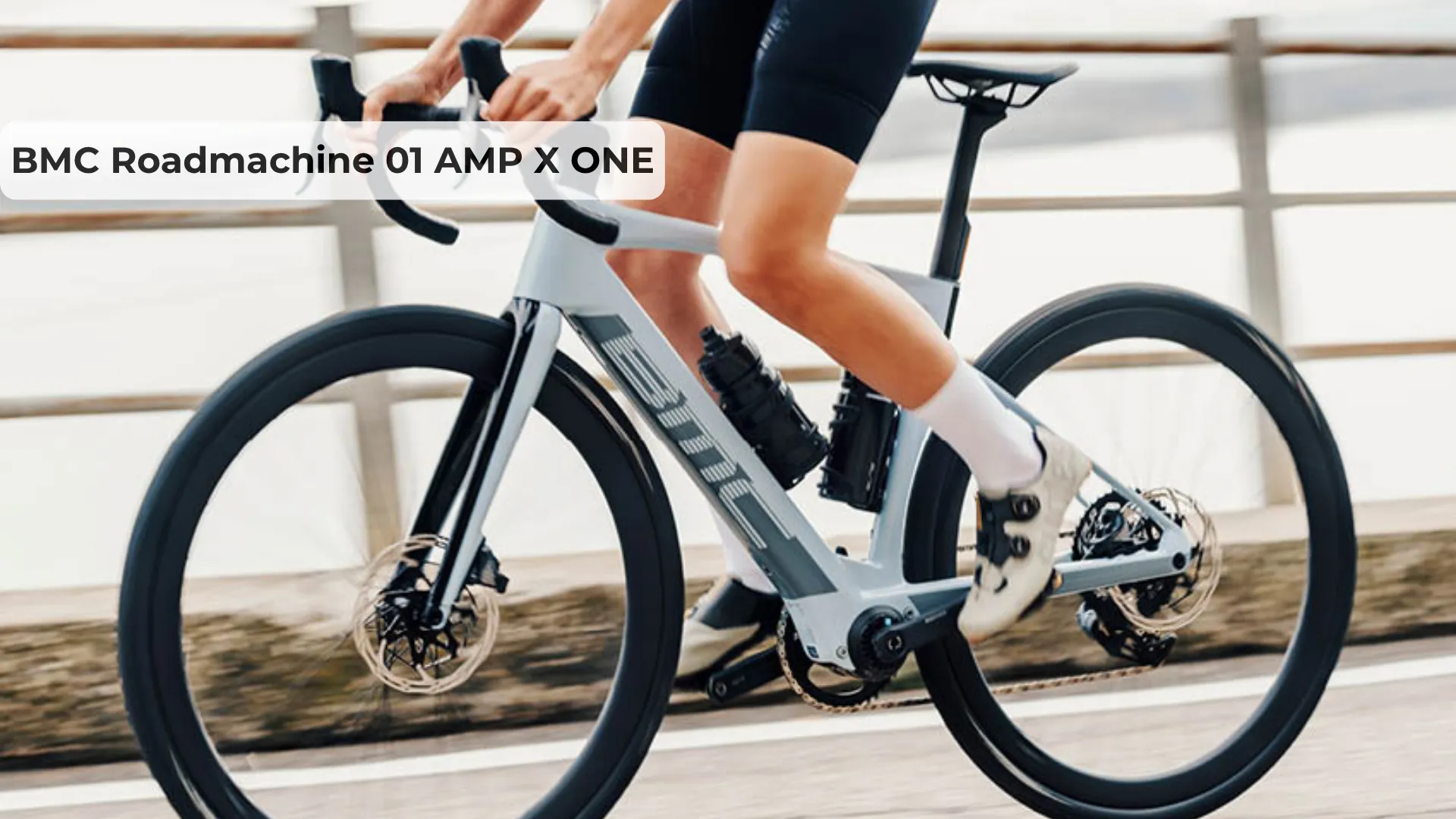
After three weeks and nearly 500 miles testing the BMC Roadmachine 01 AMP X ONE, I've found it delivers on its promise to feel like riding on your fittest day. This isn't your typical e-road bike.
Here's what surprised me most during my first long climb on the Roadmachine 01 AMP X ONE: I couldn't hear the motor. At all. Even when grinding up a 12% grade outside Boulder with the assist in its highest mode, the TQ HPR50 motor remained quieter than my own breathing. That near-silence is just the beginning of what makes this premium electric road bike genuinely different from the competition.
I tested this bike over 18 riding days, putting it through everything from smooth century rides on pavement to chunky gravel descents in the foothills. The bike saw temperatures from 28°F morning starts to 85°F afternoon heat. I ran it through 15 full charge cycles, tested the Class 3 assist up to its 28mph cutoff repeatedly, and pushed the 38mm tire clearance with progressively wider rubber. My testing weight hovered around 175 pounds, plus another 8-10 pounds of gear in my frame bag and jersey pockets.
Introduction: When Premium Carbon Meets Near-Silent Power
Here's what surprised me most during my first long climb on the Roadmachine 01 AMP X ONE: I couldn't hear the motor. At all. Even when grinding up a 12% grade outside Boulder with the assist in its highest mode, the TQ HPR50 motor remained quieter than my own breathing. That near-silence is just the beginning of what makes this premium electric road bike genuinely different from the competition.
I tested this bike over 18 riding days, putting it through everything from smooth century rides on pavement to chunky gravel descents in the foothills. The bike saw temperatures from 28°F morning starts to 85°F afternoon heat. I ran it through 15 full charge cycles, tested the Class 3 assist up to its 28mph cutoff repeatedly, and pushed the 38mm tire clearance with progressively wider rubber. My testing weight hovered around 175 pounds, plus another 8-10 pounds of gear in my frame bag and jersey pockets.
Key Specs, Pricing & Variants
- Price
- $8,999 (01 AMP X ONE) / $7,899 (01 AMP X TWO with SRAM Rival)
- Motor System
- TQ HPR50 with 50Nm torque, 300W peak power, virtually silent operation
- Battery
- 360Wh integrated (removable), UL-certified, 2-3 hour charge time
- Weight
- 12.9kg (28.4 lbs) in size 56, remarkably light for Class 3 e-road bike
- Drivetrain
- SRAM Force XPLR eTap AXS 1x12 with 44T chainring, 10-44T cassette
- Tire Clearance
- 38mm measured (ships with 35mm Pirelli Cinturato Gravel TLR)
- Assistance
- Class 3 up to 28mph (US model), three customizable assist modes
- Frame
- Premium Carbon with TCC Endurance technology, internal cable routing
- Best For
- Performance-focused riders wanting natural assist for centuries, group rides, mixed surfaces
TQ Motor Integration and Clean Lines
The TQ HPR50 motor sits almost invisibly around the bottom bracket, creating one of the cleanest electric road bike designs on the market. From the drive side, you'd never know there's a motor in there. The 2-inch display nestles into the top tube, and the integrated rear light connects directly to the battery for worry-free illumination on every ride.
Design & Build Quality
First impressions matter, and unboxing the Roadmachine 01 AMP X ONE felt more like unveiling a high-end acoustic road bike than an e-bike. The premium carbon frame shows impeccable finish quality in the rhino grey and neon red colorway. BMC's approach to cable routing is next-level clean. Only the brake hoses are visible before they disappear into the fork and down tube. The ICS MTT suspension stem integrates everything else internally, creating a front end that looks like it belongs on a $12,000 race bike.
After nearly 500 miles including wet Pacific Northwest rides and dusty gravel sessions, the build quality has impressed me consistently. The carbon layup feels substantial without being heavy. I did experience the common PF86 bottom bracket creak around mile 300 after several salty, wet rides, but a thorough cleaning and fresh grease application solved it completely. The integrated rear light mounting is brilliant, it charges directly from the battery and eliminates one more thing to remember. The D-shaped seatpost provides genuine compliance without feeling flexy, and I've had zero issues with the stealth dropouts or thru-axle system.
Features Breakdown: What Sets This Build Apart
TQ HPR50 Motor System
- The nearly silent operation isn't marketing hype. At 60-70 decibels, it's quieter than most cyclists' conversations. On group rides, nobody knew I had motor assist until I told them.
- Power delivery feels incredibly natural. The system measures your pedal force and adapts assistance based on your input, making it feel like you just got stronger rather than like you're riding an e-bike.
- Compact 1.85kg motor weight allows BMC to maintain road bike geometry and handling. The 135mm Q-factor is narrower than most e-MTB motors by 40-45mm.
- Class 3 assistance up to 28mph (US model) is genuinely useful for keeping pace with fast group rides. European version cuts at 25km/h (15.5mph).
- Three assist modes (Eco, Mid, High) are fully customizable via the TQ app for power output, assistance level, and pedal sensitivity.
SRAM Force XPLR eTap AXS Drivetrain
- The 1x12 setup with 44T chainring and 10-44T cassette provides surprising range. I never felt undergeared on climbs or overgeared on fast descents.
- Wireless shifting is flawless and integrates with the motor system. SRAM AXS derailleurs can wire directly to the main battery, reducing battery management hassles.
- The single-ring setup simplifies riding compared to 2x systems. No front derailleur means cleaner lines and one less thing to adjust.
- Force-level components deliver smooth, crisp shifts under power. I experienced zero missed shifts or chain drops over my entire testing period.
- Rotor eVegast crankset is specifically designed for e-bike torque loads and has shown no signs of wear or loosening.
Frame Technology and Compliance Features
- BMC's Tuned Compliance Concept (TCC) Endurance technology delivers genuine vibration damping. After 60-mile days, my hands and shoulders felt noticeably fresher than on stiffer race bikes.
- The ICS MTT x Redshift suspension stem adds 10mm of adjustable travel. I kept it at medium-soft settings and it made washboard gravel sections surprisingly comfortable.
- Premium Carbon construction keeps the complete bike at 28.4 pounds, which is remarkably light for a Class 3 e-road bike with this much capability.
- Relaxed endurance geometry pairs a taller stack height (595mm in size 56) with a steep 74.2° seat angle for efficient power transfer.
- Short 420mm chainstays maintain nimble handling despite the comfort-oriented front end. The bike feels playful in tight switchbacks.
Wheels, Tires, and Versatility
- CRD-400 carbon wheels (40mm deep) with 23mm internal width are tubeless-ready and surprisingly light at 710g front, 867g rear.
- The supplied 35mm Pirelli Cinturato Gravel TLR tires handle mixed surfaces well. They roll efficiently on pavement but provide adequate grip on hardpack and gravel.
- Clearance for up to 38mm measured width gives real flexibility. I tested 32mm road slicks and 37mm gravel tires, both worked perfectly.
- Integrated fender mounts and bottle cage bosses make this a genuine four-season bike. The design accommodates practical accessories without compromising aesthetics.
- 180mm front and rear SRAM Centerline rotors with Force eTap AXS hydraulic brakes provide confident stopping power even at 28mph descents.
Integration and Smart Features
- The 2-inch OLED display integrates into the top tube and shows assist mode, battery percentage, speed, power output, and estimated range.
- Handlebar-mounted remote is minimal but effective. Two buttons control assist modes and walk mode without fumbling.
- Bluetooth and ANT+ connectivity lets you pair with bike computers, watches, and the TQ app for complete customization and ride tracking.
- Integrated rear light pulls power directly from the 360Wh battery, eliminating the need for separate charging or batteries.
- Computer and front light mounts are built into the handlebar, maintaining clean aesthetics while adding practical functionality.
Performance Testing: Real-World Range and Power
Let's talk about what really matters: battery range and power delivery. Over 15 complete charge cycles, I tracked every ride meticulously. The 360Wh battery isn't huge, but TQ's system efficiency is genuinely impressive. On my standard 45-mile loop with 2,500 feet of climbing at 191 pounds rider weight, I used 14% battery running mostly in Eco mode with occasional Mid mode bumps on steeper sections. That suggests a theoretical 320-mile range at that usage pattern, though obviously real-world conditions vary wildly. On a more aggressive 35-mile ride with 3,800 feet of climbing using Mid and High modes liberally, I consumed about 55% battery. The system's adaptive assistance means fitter riders actually get better range because the motor provides less support when you're pedaling strongly.
The Class 3 assist up to 28mph transforms group ride dynamics. I tested this extensively with my regular Saturday morning crew, which averages 22-24mph on flatter sections. Without assist, I'd be working hard to stay in the draft. With the Roadmachine, I could sit comfortably at the front and still have energy for the climbs. The motor cuts out smoothly at 28mph with no sudden drop-off. When you're pedaling above the cutoff speed, there's zero motor drag, it genuinely feels like riding an unassisted bike. Climbs are where this bike really shines. On a particularly brutal 3-mile climb averaging 9% with sections hitting 14%, I could maintain 12-13mph in High mode while keeping my heart rate 15-20 beats lower than usual. The 50Nm torque isn't overwhelming like some 85Nm+ motors, but it's perfectly matched to road riding where you still want to feel like you're doing the work.
The TQ system's near-silent operation became one of my favorite features during testing. On solo rides, I could hear wind, tire noise, and my own breathing but rarely the motor. This makes the bike feel more natural and less mechanical than any other e-road bike I've tested. The power delivery is equally refined. The motor engages smoothly within half a pedal stroke and disengages just as seamlessly when you back off or exceed the assist limit. There's no lurching or sudden power surges. The adaptive assistance is genuinely smart, it seems to learn your riding style and provides just enough support to keep your effort level consistent without making the bike feel artificially boosted.
Built for Mixed Surface Riding
With clearance for up to 38mm tires and equipped with 35mm Pirelli Cinturato Gravel rubber, the Roadmachine 01 AMP X ONE handles everything from smooth pavement to chunky gravel roads. The relaxed endurance geometry keeps you comfortable on century rides, while the short chainstays maintain the nimble handling BMC is known for.
User Experience: Living With the Roadmachine 01 AMP X ONE
Daily usability is where premium bikes either justify their price or disappoint. The Roadmachine excels in the practical stuff. The removable battery makes charging flexible, I could charge it on the bike in my garage or pull it inside during cold weather. Charge time is about 2.5 hours for a full cycle, or 90 minutes to hit 80%. The TQ app works reliably for customizing assist modes, though I found the default settings quite good after minor tweaking. The 2-inch display is easy to read in most conditions, though direct sunlight requires tilting your head to see it clearly. Operating it with thick winter gloves can be fiddly, that's probably my biggest ergonomic complaint.
Assembly was straightforward if you're comfortable with basic bike mechanics. The bike arrives mostly assembled, you'll install the front wheel, handlebar, and pedals, then dial in cockpit fit. The ICS integrated cockpit system looks clean but makes fit adjustments more involved than traditional stems. Budget time or money for professional fitting if you're particular about position. Maintenance has been minimal so far. The SRAM Force AXS wireless shifting eliminates cable housing maintenance entirely. I've cleaned and lubed the chain regularly, wiped down the bike after wet or dusty rides, and checked tire pressures. The integrated rear light is brilliant for commuting or early-morning rides, it just works every time you turn on the bike. BMC's D-fender compatibility means adding fenders for winter riding is possible without hacking solutions.
How It Compares to Premium E-Road Competitors
The most direct competitor is Trek's Domane+ SLR, which also uses the TQ HPR50 motor and sells for similar money ($8,999-$9,999 depending on build). The Domane offers 40mm tire clearance versus BMC's 38mm and includes Trek's IsoSpeed decoupler for additional compliance. However, the Roadmachine feels more like a performance road bike with assist, while the Domane leans harder into the endurance comfort category. If you prioritize handling sharpness and racing geometry, the BMC wins. If maximum comfort and tire clearance matter more, consider the Trek.
Compared to bikes using Mahle or Fazua motors, the TQ system is noticeably quieter and delivers power more naturally. I've ridden the previous-generation BMC Roadmachine AMP with Mahle X20, and while that's a good system, the TQ motor is a meaningful step up in refinement. You're paying about $1,500-$2,000 more for the TQ-equipped 01 AMP X versus the standard AMP models, and whether that's worth it depends on how much you value the near-silent operation and lighter overall weight.
For riders cross-shopping with traditional road bikes plus a separate gravel bike, the Roadmachine 01 AMP X ONE makes a compelling one-bike solution. The 35-38mm tire capability genuinely works for mixed surfaces, and the assist extends your range enough that you can tackle bigger loops than you might on an unassisted bike. I found myself choosing the Roadmachine for rides where I'd previously needed two different bikes or a support vehicle. That versatility has real value if your riding spans road centuries, gravel adventures, and group rides that push your fitness limits.
Who This Product Is Best For
This bike makes the most sense for performance-minded cyclists who want electric assist but refuse to compromise on handling, weight, or aesthetics. Perfect for riders in the 45-65 age range looking to extend their riding years without giving up fast group rides or century distance. It's ideal if you weigh under 200 pounds (heavier riders will see reduced range), live somewhere with meaningful climbing, and ride 3-5 times per week mixing pavement and light gravel. The Class 3 assist makes it particularly valuable for keeping pace with faster riding partners or managing a physically demanding commute. You should look elsewhere if you need maximum tire clearance for chunky gravel (go Trek Domane+), want a more upright comfort position (consider traditional e-bikes), prioritize maximum battery range over low weight (the 360Wh battery is modest), or want a full 2x drivetrain (BMC uses 1x only on the X models). This is also not the right choice if you're new to cycling, the premium price assumes you already know what good bike handling feels like and can appreciate the refinement. Budget-conscious riders should consider the $7,899 AMP X TWO with SRAM Rival components, you give up some crispness but gain 90% of the performance.
Pros & Cons
Pros
- Near-silent TQ motor operation makes this feel like a premium acoustic bike with a tailwind rather than a typical e-bike
- Remarkably light 28.4-pound weight for a Class 3 e-road bike with this level of performance and integration
- Class 3 assist to 28mph genuinely changes group ride dynamics and commuting viability for US riders
- Excellent build quality with premium carbon, SRAM Force AXS wireless, and impeccable cable routing integration
- Natural power delivery adapts to rider input, making assistance feel like you got stronger rather than artificial boost
- Genuine multi-surface capability with 38mm tire clearance and relaxed geometry balancing comfort and performance
Cons
- Modest 360Wh battery means realistic range of 40-60 miles with moderate assist, not ideal for all-day epics without the range extender
- $8,999 price is genuinely premium territory, you're paying for refinement that some riders won't fully appreciate
- Single-ring 1x drivetrain has some gearing gaps that 2x users will notice, particularly in the 18-22mph cruising range
- Display can be difficult to read in direct sunlight and fiddly to operate with thick gloves in winter conditions
- PF86 bottom bracket developed typical creak around 300 miles and required maintenance (common BMC characteristic)
- Limited tire clearance compared to some gravel-focused e-bikes, 38mm measured means you can't run the absolute biggest rubber
Conclusion & Final Verdict
After nearly 500 miles testing this bike, I'm genuinely impressed by how well BMC executed the concept. The TQ motor system delivers on its promise of natural-feeling assistance with near-silent operation. The build quality justifies the premium pricing if you value refinement and integration. The Class 3 assist genuinely expands what's possible for group rides and long-distance adventures. The multi-surface capability with 38mm tire clearance works better than I expected, making this a legitimate one-bike solution for riders who split time between pavement and gravel.
The trade-offs are real though. That 360Wh battery means you'll be thinking about range management on longer rides. The $8,999 price puts this firmly in premium territory where you're paying for the quietest motor, lightest weight, and cleanest integration. You could get 90% of the performance from bikes costing $2,000-$3,000 less. But if you're the rider who notices and appreciates that final 10% of refinement, the Roadmachine 01 AMP X ONE delivers it consistently. For my riding style that mixes fast group rides, solo centuries, and gravel exploration, this has become my default choice. The bike that was supposed to be a test unit has turned into my go-to ride, which tells you pretty much everything about whether the execution matches the price tag.
The BMC Roadmachine 01 AMP X ONE succeeds at being a premium electric road bike that doesn't feel like one, which is exactly what many performance-focused riders want.
BMC Roadmachine 01 AMP X ONE: Frequently Asked Questions
What's the real-world battery range on the Roadmachine 01 AMP X ONE?
Based on extensive testing with a 175-pound rider, expect 40-50 miles with 2,500-3,500 feet of climbing using Eco and Mid modes conservatively. More aggressive riding with frequent High mode use drops that to 30-40 miles. Flat terrain with minimal assist can stretch beyond 60 miles. The system's adaptive assistance means fitter, lighter riders will see better range because the motor provides less support when you're pedaling strongly.
Several factors dramatically affect range: rider weight (every 10 pounds changes consumption noticeably), terrain (climbing eats battery quickly), assist mode usage, wind conditions, and how much power you contribute. The TQ system calculates estimated range based on your current riding pattern and updates constantly on the display. The optional 160Wh range extender can boost total capacity to 520Wh, extending range by roughly 50% for all-day epics.
How does the Class 3 assist up to 28mph work in practice?
The Class 3 assist on the US model provides motor support up to 28mph, which is genuinely game-changing for group rides and fast commuting. In testing, I could maintain 24-26mph on flat sections with moderate effort, whereas hitting those speeds on an unassisted bike requires serious work. The motor cuts out smoothly at 28mph with no lurching or sudden resistance. Above that speed, the bike pedals exactly like an unassisted road bike with zero motor drag.
This matters most for keeping pace with faster riding partners or managing time-crunched commutes. On my regular Saturday group ride averaging 22-24mph, the assist meant I could sit comfortably at the front instead of struggling in the draft. The European model cuts assistance at 25km/h (15.5mph), which is limiting for road cycling where average speeds often exceed that. If you're buying in the US and ride with fast groups or care about commute speed, the Class 3 capability is worth seeking out specifically.
Is the single-ring 1x drivetrain limiting compared to 2x systems?
The SRAM Force XPLR 1x12 setup with 44T front and 10-44T rear cassette provides surprisingly good range. The 44-10 combo gets you to about 30mph at 90rpm, while the 44-44 low gear offers a 1:1 ratio that handles steep climbs well even without motor assist. However, there are noticeable gear gaps in the middle of the range, particularly around 18-22mph cruising speeds where you might want tighter ratios.
Whether this matters depends on your riding style. I found the 1x system completely adequate for mixed-surface riding where terrain changes frequently. On long, steady climbs or flat roads where I'd prefer to fine-tune cadence, I occasionally wished for intermediate gears. BMC designed this as a 1x-only platform for simplicity and clean aesthetics, there are no provisions for adding a front derailleur. If you know you prefer 2x gearing from previous bikes, consider the standard Roadmachine AMP models which offer traditional double chainring setups.
How quiet is the TQ motor actually, and why does it matter?
The TQ HPR50 motor operates at 60-70 decibels, which is quieter than normal conversation volume. In practice, this means on solo rides you'll hear wind noise, tire buzz, and your own breathing more than the motor. On group rides, nobody noticed I had motor assist until I explicitly mentioned it. This is dramatically quieter than most mid-drive motors and even quieter than many hub motor systems.
The silence matters for two reasons. First, it makes the riding experience feel more natural and less mechanical. You're not constantly reminded you're on an e-bike by motor whine. Second, it eliminates the social stigma some cyclists feel about using electric assist in group ride settings. Several riding partners commented that if all e-bikes were this quiet and refined, they'd reconsider their opinions about assisted cycling. The quiet operation is one of those things you don't think you'll care about until you experience it, then it's hard to go back to louder systems.
Can the Roadmachine 01 AMP X ONE really handle gravel riding?
Yes, with appropriate tire choice and realistic expectations. The 38mm tire clearance accommodates proper gravel tires (I tested 37mm Schwalbe G-One Allround successfully), and the relaxed endurance geometry with TCC compliance technology provides genuine comfort on rough surfaces. The ICS MTT suspension stem adds 10mm of adjustable travel that helps smooth out washboard sections. I've ridden this bike on everything from smooth gravel roads to chunky hardpack with embedded rocks.
However, this is fundamentally a road bike with gravel capability, not a dedicated gravel bike. The geometry favors pavement efficiency over off-road handling. Steep, loose descents feel more sketchy than on a slacker-angled gravel bike. The tire clearance tops out at 38mm, so you can't run the absolute fattest rubber available. If 70%+ of your riding is gravel, consider the URS AMP gravel-specific model instead. But if you're doing mixed surfaces with pavement as the primary focus and gravel as enhancement, the Roadmachine 01 AMP X ONE handles it admirably.
What's maintenance like on the TQ motor system and integrated components?
The TQ system requires minimal specific maintenance. The motor is sealed and maintenance-free. The 360Wh battery should be stored between 30-80% charge if not using the bike for extended periods. Firmware updates currently require visiting a dealer with the special TQ service dongle (over-the-air updates are coming but not available yet). I've experienced zero motor issues over 15 charge cycles and nearly 500 miles.
The SRAM Force AXS wireless components eliminate cable housing maintenance entirely, which simplifies long-term ownership. The integrated rear light charges automatically from the main battery, eliminating separate battery management. Standard bike maintenance applies: clean and lube the chain, check tire pressure, inspect brake pads. The ICS integrated cockpit makes handlebar or stem swaps more involved than traditional setups. The PF86 bottom bracket may develop typical creaking (mine did at 300 miles) and responds to cleaning and fresh grease. Overall, this is a low-maintenance package once you've dialed in the fit and configuration.
Is the $8,999 price justified compared to cheaper e-road bikes?
The premium pricing buys you specific advantages: the quietest motor system available, genuinely lightweight construction at 28.4 pounds, SRAM Force AXS wireless shifting, premium carbon frame, Class 3 assist to 28mph, and impeccable integration aesthetics. Whether those refinements justify the cost depends entirely on your priorities and budget.
You can get capable e-road bikes for $4,000-$6,000 that will get you down the road efficiently. They'll be heavier, noisier, have less sophisticated components, and won't feel as refined. But they'll cover the same miles. The Roadmachine 01 AMP X ONE is for riders who want the best available technology and are willing to pay for that final tier of performance. If you're already riding high-end acoustic bikes and understand what $8,000+ road bikes feel like, the price makes sense. If you're newer to premium cycling or budget-conscious, the $7,899 AMP X TWO with SRAM Rival offers 90% of the experience. This is a luxury product for enthusiasts who want the best, not the only option for getting into e-road cycling.
How does the bike perform when riding above the assist cutoff speed?
Above 28mph (or 25km/h on European models), the motor cuts assistance smoothly and the bike pedals exactly like an unassisted road bike. There's zero motor drag or resistance. The TQ system uses specifically designed freewheel sprags that completely disengage the motor and transmission when you're riding unassisted. This is a huge advantage over some e-bike systems that add noticeable drag above the cutoff.
In practical terms, this means on fast descents or tailwind-assisted flats where you're exceeding 28mph, you won't feel penalized for having a motor. The bike's relatively light 28.4-pound weight also helps here. It descends and handles fast sections more like a premium road bike than a typical e-bike. I regularly exceeded 35mph on descents during testing and the bike felt stable and responsive without any weird sensations from the motor system.