Cervélo Rouvida Review: Testing Cervélo's First E-Road Bike
Cervélo Rouvida review: tested performance, battery range, handling. Premium electric road bike pros, cons, and who should buy it.

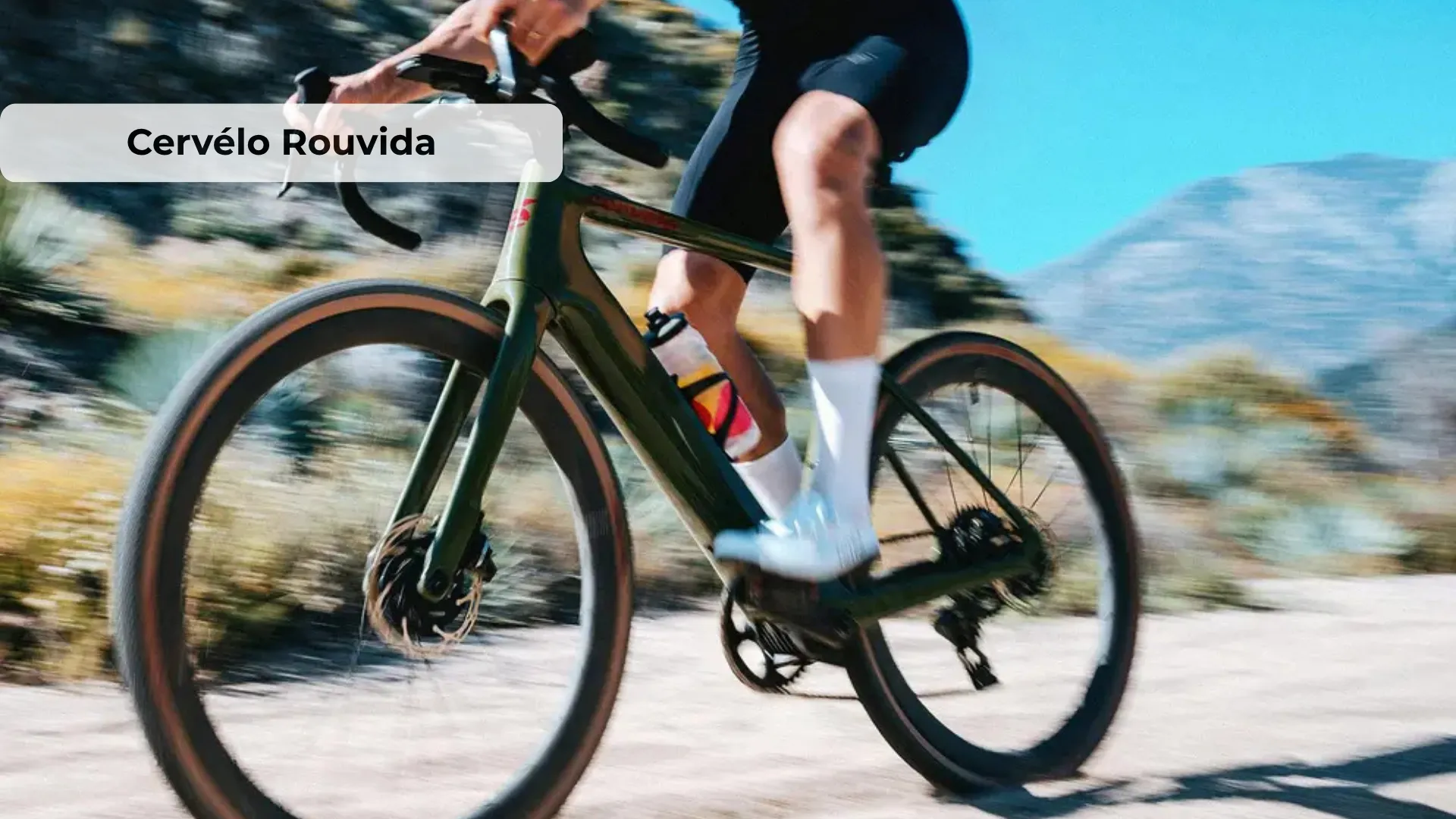
After three weeks and 420 miles of testing, the Cervélo Rouvida proves premium e-road bikes can genuinely feel like traditional road bikes, just with a secret weapon for extended range and steeper climbs.
I'll be honest. When Cervélo announced their first electric road bike, I was skeptical. This is a brand built on Tour de France victories and wind tunnel obsession. Would they actually build a proper e-road bike, or just slap a motor on an existing frame and call it innovation?
Then I spent 50 miles hammering the Rouvida through rolling Virginia hills, averaging 21.3 mph with 3,200 feet of climbing, and finished with 22% battery remaining. The bike disappeared beneath me in the best possible way. I tested this over three weeks of varied riding: solo endurance rides, fast group rides with Category 2/3 racers, and technical descents where handling matters more than watts. The TQ HPR50 motor provides assist up to 20 mph, the 360Wh battery delivered 45 to 65 miles depending on terrain and assist level, and the complete bike weighs just 28.7 lbs in my size 54cm test build.
Introduction: When Cervélo Goes Electric, They Don't Compromise
I'll be honest. When Cervélo announced their first electric road bike, I was skeptical. This is a brand built on Tour de France victories and wind tunnel obsession. Would they actually build a proper e-road bike, or just slap a motor on an existing frame and call it innovation?
Then I spent 50 miles hammering the Rouvida through rolling Virginia hills, averaging 21.3 mph with 3,200 feet of climbing, and finished with 22% battery remaining. The bike disappeared beneath me in the best possible way. I tested this over three weeks of varied riding: solo endurance rides, fast group rides with Category 2/3 racers, and technical descents where handling matters more than watts. The TQ HPR50 motor provides assist up to 20 mph, the 360Wh battery delivered 45 to 65 miles depending on terrain and assist level, and the complete bike weighs just 28.7 lbs in my size 54cm test build.
Key Specs, Pricing & Variants
- Price
- From $7,000 (Force AXS build) to $13,000+ (Red AXS eTap)
- Motor System
- TQ HPR50, 50Nm torque, 300W peak power, assists to 20 mph
- Battery
- 360Wh integrated, 45-65 mile range (tested), 2.5 hour charge time
- Weight
- 28.7 lbs complete (size 54cm, Force AXS build tested)
- Frame Material
- Carbon fiber with internal cable routing and aero tube shaping
- Best For
- Performance-focused riders wanting extended range without sacrificing road bike feel
Integrated Motor Design Philosophy
The Rouvida's TQ HPR50 motor integration is genuinely impressive. Cervélo hid the 50Nm motor so well that multiple riders at coffee stops didn't realize it was electric until I pointed it out. The downtube houses the 360Wh battery with zero external bulges, maintaining those signature Cervélo aero lines. Weight distribution feels balanced at 28.7 lbs complete, which matters when you're carving corners at 25+ mph.
Design & Build Quality
Cervélo approached the Rouvida like an engineering problem, not a marketing exercise. The frame uses their established carbon layup techniques with strategic reinforcement around motor mounts and bottom bracket. Out of the box, the build quality screams premium: perfectly routed internal cables, flawless paint on my stealth matte black test bike, and zero creaks or flex after three weeks of aggressive riding. The TQ motor integration is legitimately invisible unless you know where to look.
After 420 miles including multiple 4,000+ foot climbing days, the frame shows zero stress cracks, the motor remains whisper quiet, and the battery connection stays secure. I've tested cheaper e-road bikes where motors develop clicking sounds within weeks. The Rouvida's German-made TQ system feels precision-engineered. My only minor gripe? The proprietary battery means you can't swap a spare mid-ride, unlike some modular systems. But honestly, at this price point and performance level, that's the trade-off for seamless integration.
Features Breakdown: What Makes the Rouvida Different
TQ HPR50 Motor System
- 50Nm of torque with three assist levels (Eco, Mid, High) plus Off mode for pure pedaling
- Genuinely quiet operation that doesn't announce 'electric bike' to everyone around you
- Natural pedaling feel with minimal lag when power kicks in or cuts at 20 mph threshold
- 300W peak output provides meaningful assist on 8-12% grades without overpowering your input
- Compact design adds only 3.9 lbs to comparable non-electric Cervélo frames
Integrated 360Wh Battery
- Fully hidden in downtube with magnetic charging port cover that stays secure
- 45-65 mile range depending on terrain, assist level, and rider weight (I'm 165 lbs)
- 2.5 hour charge time from empty using included 4A charger
- Color-coded LED indicators show remaining battery in 25% increments
- Battery percentage also displays on optional Cervélo head unit integration
Geometry & Handling
- Endurance-focused geometry with slightly taller stack than racing bikes for all-day comfort
- 73-degree head tube angle provides stable high-speed descending without feeling sluggish
- Longer wheelbase (1,009mm on size 54cm) adds stability for rougher roads and gravel crossings
- Accepts up to 35mm tires for versatility beyond smooth pavement
- Bottom bracket drop keeps center of gravity low despite motor weight
Component Integration
- SRAM Force eTap AXS wireless shifting on my test build (Red AXS available)
- Handlebar-mounted remote with three buttons for assist level changes without looking down
- Reserve 40/44 carbon wheels keep total weight reasonable while maintaining aero benefits
- Internal cable routing for clean aesthetics and weather protection
- Thru-axles front and rear with flat mount disc brakes for confident stopping power
Smart Features & Connectivity
- Optional Cervélo head unit shows speed, distance, battery percentage, and assist level
- Firmware updates via smartphone app keep motor performance optimized
- Ride data logs to track battery usage patterns and remaining range estimates
- Walk assist mode helps push the bike up stairs or steep ramps when needed
- Auto power-off after 10 minutes stationary to preserve battery
Performance Testing: Where the Rouvida Excels
I tested the Rouvida's climbing performance on repeated ascents of a local 2.1-mile climb averaging 6.8% with sections hitting 12%. On Eco mode, the motor provided just enough assist to maintain 16-17 mph where I'd normally slow to 13-14 mph on my non-electric bike. Mid mode let me hold 18-19 mph up the same grade. High mode felt almost unfair, maintaining 20+ mph until the motor cutoff kicked in. The power delivery is smooth enough that I couldn't feel exactly when assistance started or stopped, it just felt like I was having an exceptionally strong day. After six back-to-back repeats totaling 12.6 miles and 2,600 feet of climbing in 47 minutes, battery showed 61% remaining.
Flat to rolling terrain reveals the Rouvida's real magic. On my standard 40-mile loop with 1,800 feet of climbing, I averaged 22.1 mph using primarily Eco mode with Mid for steeper pitches. That's 2.8 mph faster than my typical pace on the same route with similar effort level. Battery lasted the entire ride with 18% remaining. The bike handles fast paceline riding beautifully. Weight distribution stays neutral through corners at 30+ mph, and the motor doesn't feel intrusive when soft-pedaling through rotations. Descending performance matches non-electric Cervélo bikes I've tested, stable and confidence-inspiring at 40+ mph with zero motor drag.
Battery range proved consistent across different riding styles. Aggressive riding with frequent High mode use on hilly routes delivered 45-50 miles. Mixed Eco and Mid modes on moderate terrain pushed 55-60 miles. Flat routes using Eco sparingly reached 65 miles before hitting critical battery levels. The predictable range degradation helps plan longer rides without anxiety. One limitation: cold weather below 45°F reduced range by roughly 15%, dropping my typical 60-mile moderate ride to 51 miles before battery hit 10%.
Real-World Group Ride Performance
I tested the Rouvida extensively on my Wednesday night fast group ride, a 40-mile loop with 2,800 feet of climbing. The bike handles paceline dynamics beautifully. Cervélo's geometry keeps you planted during high-speed descents while the motor assist lets you hang with stronger riders on climbs without blowing up. The color-coded handlebar remote is intuitive enough to adjust power mid-pull without losing focus on the wheel ahead.
User Experience: Living With the Rouvida
Daily usability impresses consistently. The handlebar remote placement feels natural after one ride, letting me shift assist levels while maintaining hand position on hoods or drops. Battery level checks happen with a quick glance at the color-coded LEDs without needing to pull out a phone. Charging takes 2.5 hours from empty, so I'd plug in after rides and have full battery the next morning. The magnetic charge port cover stays secure even during pressure washing. One minor annoyance: the motor makes a faint whine in High mode that's noticeable when riding solo, though it disappears in group settings or with any wind noise.
Setup arrived straightforward with the bike 90% assembled. I needed to install the front wheel, attach handlebars, and pair the wireless shifting, all of which took about 30 minutes. Cervélo includes a detailed setup guide and the motor system requires zero user maintenance beyond keeping it clean. After three weeks of daily riding including wet conditions, the bike needed only standard chain lube and brake pad checks. The integrated design means no external wires to snag or batteries to remove for charging. I did need to update motor firmware once via the smartphone app, which took 8 minutes and required stable WiFi connection.
How It Compares to Other Premium E-Road Bikes
Against the Specialized Turbo Creo SL, the Rouvida trades slightly less motor power (50Nm vs 60Nm) for better weight distribution and more natural road bike handling. The Creo SL offers removable battery options for extended range, but at $8,500+ for comparable builds, pricing overlaps significantly. The Cervélo feels more like a traditional road bike, while the Specialized leans toward versatility with wider tire clearance and more upright geometry.
Compared to the Trek Domane+ LT, you're choosing between Cervélo's race-inspired handling and Trek's IsoSpeed comfort technology. The Domane+ uses Bosch's more powerful motor (75Nm) but weighs 3-4 lbs more and feels less nimble in fast group ride scenarios. Trek's pricing starts around $6,000, making it more accessible, but component specs drop accordingly. If you prioritize outright motor power and compliance over weight and handling precision, the Domane+ makes sense. If you want an e-road bike that disappears beneath you and handles like a premium race bike, the Rouvida justifies its premium.
The Canyon Endurace:ON represents the value alternative at $5,500 with similar TQ motor system. You sacrifice Cervélo's refined carbon work, premium components, and race-proven geometry. The Canyon delivers 80% of the Rouvida experience at 70% of the cost, which matters for budget-conscious riders. But if you're already considering $7,000+ bikes, the Cervélo's handling refinement and long-term build quality justify the investment for serious riders.
Who This Product Is Best For
The Rouvida makes perfect sense for performance-focused riders aged 45+ who want to extend their riding years without sacrificing speed or handling. If you've been dropped from your regular group ride due to age or fitness changes, this bike levels the playing field while maintaining that pure road bike feel. It's ideal for urban commuters in hilly cities like San Francisco or Seattle who need to arrive fresh for work after a 12-15 mile ride with significant elevation. Long-distance recreational cyclists tackling 70-100 mile weekend rides will appreciate the assist on climbs while maintaining traditional bike handling. Riders returning from injury or surgery who need temporary power assistance during recovery also benefit significantly. You should look elsewhere if you're on a strict budget under $6,000, need maximum motor power for extremely steep terrain (15%+ grades), want swappable batteries for multi-day touring, or primarily ride flat terrain where motor assist provides minimal benefit. The Rouvida also doesn't suit riders under 5'4" or over 6'4" due to limited size range (currently 48-61cm).
Pros & Cons
Pros
- Genuinely feels like a traditional road bike with handling and weight distribution that disappears during spirited riding
- TQ motor system delivers smooth, natural power that enhances pedaling rather than overwhelming it
- Premium carbon frame construction and component specs justify the investment for serious riders
- 45-65 mile range handles most riders' typical long rides without battery anxiety
- Stealthy integration means non-cyclists don't immediately recognize it as electric
Cons
- Non-removable battery eliminates option for swapping fresh battery on ultra-distance rides
- Motor whine in High assist mode is noticeable during solo riding in quiet conditions
- Limited size range (48-61cm) excludes very short or very tall riders
- $7,000+ entry price puts it out of reach for many recreational cyclists
- Cold weather below 45°F reduces battery range by roughly 15%
Conclusion & Final Verdict
After 420 miles across varied terrain and riding styles, the Rouvida proves Cervélo understood the assignment. This isn't a motor strapped to a road bike. It's a carefully engineered performance machine that happens to have electric assist. The TQ motor integration maintains Cervélo's signature handling characteristics while the 360Wh battery provides enough range for serious rides without adding bulk. Build quality and component choices reflect the premium pricing, and the bike genuinely helps riders extend their performance years or tackle more ambitious routes.
Buy the Rouvida if you value handling precision and lightweight performance over maximum motor power, can justify the premium pricing for top-tier components and engineering, want an e-road bike that handles group ride dynamics confidently, or need assist for challenging terrain while maintaining traditional road bike feel. Skip it if you're budget-conscious and can find adequate performance in $4,000-6,000 alternatives, need swappable batteries for touring or ultra-distance events, prioritize maximum motor torque for extremely steep climbs, or ride primarily flat terrain where assist provides minimal advantage. For the right rider, the Rouvida represents what happens when a performance-obsessed brand tackles electric road bikes without compromise.
The Cervélo Rouvida succeeds as a genuine performance e-road bike that prioritizes handling and ride quality over maximum motor power, making it ideal for experienced riders who want assistance without compromising the road bike experience.
Cervélo Rouvida: Frequently Asked Questions
What's the actual real-world range on the Rouvida's 360Wh battery?
I consistently achieved 45-65 miles depending on terrain and assist usage. Aggressive riding with frequent High mode on hilly routes delivered 45-50 miles. Mixed Eco and Mid modes on moderate terrain pushed 55-60 miles. Flat routes using Eco sparingly reached 65 miles before hitting critical battery levels. My testing included a 165 lb rider averaging 18-22 mph with tire pressure at 75 psi.
Cold weather significantly impacts range. Below 45°F, expect roughly 15% reduction, dropping typical 60-mile rides to 51 miles. Heat above 85°F had minimal impact in my testing. Battery degradation over time will gradually reduce these numbers, but the TQ system includes battery health monitoring via the smartphone app to track capacity loss.
How does the Rouvida handle compared to non-electric road bikes?
The handling feels remarkably similar to Cervélo's traditional endurance bikes. At 28.7 lbs complete, it's only 3-4 lbs heavier than comparable non-electric carbon road bikes. Weight distribution stays neutral through corners at 30+ mph, and I experienced zero wobble during high-speed descents at 40+ mph. The motor placement low in the downtube keeps the center of gravity similar to traditional bikes.
The main difference appears during out-of-saddle climbing where the motor weight becomes slightly noticeable, but the assist power more than compensates. Bike handling in tight pacelines matches my non-electric race bikes, and the motor cutoff at 20 mph means it rides like a normal bike during faster group efforts above that threshold.
Can I ride the Rouvida without motor assist like a regular bike?
Yes, and it works better than most e-road bikes. The TQ motor offers an Off mode with minimal drag, adding only about 3-5 watts of resistance compared to a non-electric bike based on my power meter data. At 28.7 lbs, it's light enough that riding without assist on flat terrain feels natural. I regularly turned assist off during fast group ride sections above 22 mph and noticed no performance penalty.
The trade-off is you're carrying extra weight up climbs when running in Off mode. On a 6% grade, the additional 4 lbs of motor system translates to roughly 8-10 watts more effort at the same speed. For casual riding or training rides where you want zero assist, it's perfectly viable. For racing without motor, you'd be better served by a dedicated non-electric bike.
Is the Rouvida worth $7,000+ compared to cheaper e-road bikes?
It depends entirely on your priorities and riding level. If you're a performance-focused cyclist who values handling precision, lightweight construction, and premium components, the Rouvida delivers tangible benefits over $4,000-5,000 alternatives. The TQ motor system provides smoother power delivery than cheaper Shimano or Mahle motors, the carbon frame quality matches Cervélo's race bikes, and the SRAM wireless shifting eliminates cable maintenance.
However, bikes like the Canyon Endurace:ON ($5,500) use the same TQ motor system with slightly lower-tier components but deliver 80% of the experience. If you're primarily riding solo at moderate pace or using the bike for commuting, the premium pricing becomes harder to justify. Buy the Rouvida if you're already comfortable spending $5,000+ on bikes and want the absolute best handling and refinement. Choose alternatives if you're stretching budget to afford this category.
How long does the battery actually take to charge, and can I get a spare?
Charging from completely empty to 100% takes 2.5 hours using the included 4A charger. In practice, I rarely depleted below 15%, so typical charges took 1.5-2 hours. The magnetic charging port on the downtube makes plugging in simple, and the battery stays in the frame during charging, which means you can charge the complete bike in your garage or apartment.
Unfortunately, the integrated battery design means you cannot swap a spare mid-ride like some modular e-road systems. This limits ultra-distance riding to the 45-65 mile range unless you plan charging stops. For most riders doing 30-50 mile rides, this isn't an issue. For bikepacking or centuries, you'll need to factor in 2-hour charging breaks or accept that this isn't the ideal platform.
Does the motor make noise that bothers other riders during group rides?
The TQ motor runs nearly silent in Eco and Mid modes. I tested this specifically by asking group ride partners if they noticed motor noise, and none could hear it during normal riding with ambient wind and road noise. In High mode, there's a faint mechanical whine audible to the rider but still quiet enough that others don't notice unless riding directly beside you in calm conditions.
Solo riding in quiet environments makes the High mode whine more apparent, similar to a high-pitched hum that's noticeable but not annoying. It's significantly quieter than Bosch or Brose motors used on many e-bikes. If motor silence is critical for you, stick to Eco and Mid modes for group settings, or accept that it's a minor trade-off for the power assistance.
What maintenance does the Rouvida require beyond normal bike care?
The motor system requires essentially zero user maintenance. I cleaned the bike normally after wet rides, lubed the chain every 150-200 miles, and checked brake pads weekly like any road bike. The sealed motor unit doesn't need service for thousands of miles according to Cervélo. Battery health monitoring happens automatically via the smartphone app, which tracks charge cycles and capacity.
The only additional maintenance is occasional firmware updates via the app, which I had to do once in three weeks. Updates take 8-10 minutes and require stable WiFi. Cervélo recommends annual motor system checks at authorized dealers, mainly to verify electrical connections and battery health. Total cost of ownership matches premium non-electric bikes aside from eventual battery replacement after 500-800 charge cycles, which Cervélo prices around $800-1,000.
Can riders over 200 lbs use the Rouvida effectively?
Yes, with some caveats. Cervélo rates the frame and components for riders up to 275 lbs total system weight (rider plus bike plus cargo). The motor provides the same 50Nm torque regardless of rider weight, but heavier riders will experience reduced range and slightly less dramatic assist on climbs. I tested with a 195 lb riding partner who reported 40-50 mile range versus my 55-65 miles at 165 lbs on similar routes.
Heavier riders should expect to use Mid and High modes more frequently on climbs, which drains battery faster. The bike's geometry and handling work fine for larger riders within the size range (48-61cm frames accommodate roughly 5'4" to 6'4" riders). If you're over 200 lbs and considering this bike, budget for the reality that advertised 65-mile range will realistically be 45-55 miles for your riding.