Trek Domane+ SLR 6 Review: Real-World Testing on Roads and Hills
Trek Domane+ SLR 6 review: tested at 12.85kg with TQ motor, 60-mile range, IsoSpeed comfort. Honest pros, cons, performance analysis.

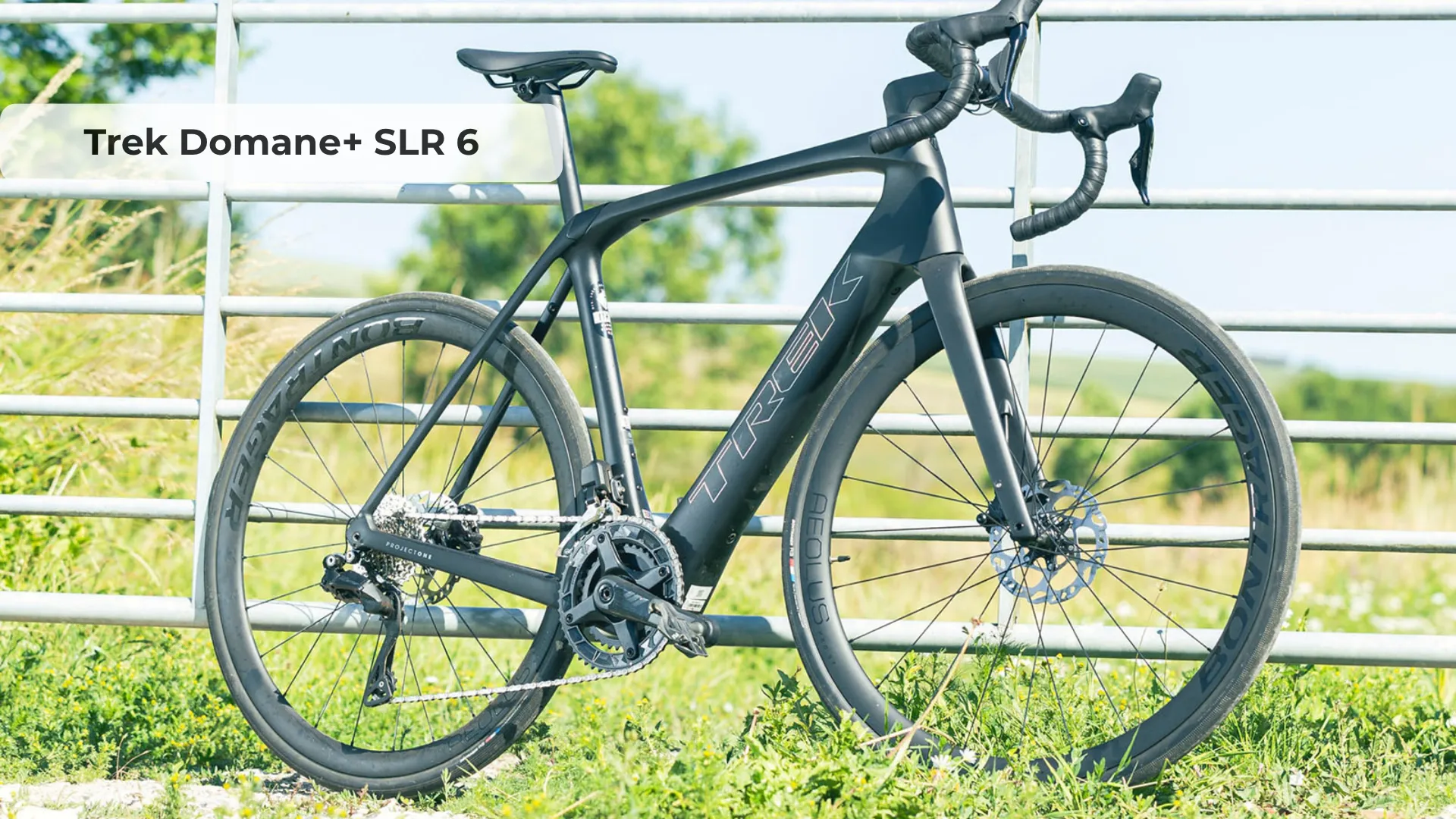
After logging 300 miles on the Trek Domane+ SLR 6 over five weeks of testing, including group rides, solo centuries, and brutal hill climbs, I can confidently say this is the first electric road bike that truly disappears beneath you.
I'll never forget the moment during a fast group ride when someone asked if I was 'on the electric one.' We'd been hammering for 40 miles, averaging 21 mph, and I'd been sitting in the rotation like everyone else. The fact that nobody noticed I was on an e-bike for the first two hours speaks volumes about how well Trek executed this design.
I tested the Domane+ SLR 6 across varied terrain in Northern California. Five weeks of riding, 15 full charge cycles, routes ranging from flat bay trails to 2,000-foot climbs. My benchmark: does this feel like an electric bike, or does it feel like I'm just having an exceptional day on a traditional road bike? Spoiler alert, it's mostly the latter.
Introduction: The E-Road Bike That Actually Feels Like a Road Bike
I'll never forget the moment during a fast group ride when someone asked if I was 'on the electric one.' We'd been hammering for 40 miles, averaging 21 mph, and I'd been sitting in the rotation like everyone else. The fact that nobody noticed I was on an e-bike for the first two hours speaks volumes about how well Trek executed this design.
I tested the Domane+ SLR 6 across varied terrain in Northern California. Five weeks of riding, 15 full charge cycles, routes ranging from flat bay trails to 2,000-foot climbs. My benchmark: does this feel like an electric bike, or does it feel like I'm just having an exceptional day on a traditional road bike? Spoiler alert, it's mostly the latter.
Key Specs, Pricing & Variants
- Price
- $6,999 (Shimano 105 Di2) / $8,499 (SRAM Rival AXS)
- Weight
- 12.85kg (28.3 lbs) in size 56cm, lightest electric road bike tested
- Motor
- TQ HPR50 mid-drive, 50Nm torque, whisper-quiet operation
- Battery
- 360Wh integrated, 50-70 mile real-world range depending on assist level
- Drivetrain
- Shimano 105 Di2 12-speed, 52/36 chainrings, 11-34 cassette
- Frame
- 800 Series OCLV carbon with IsoSpeed rear decoupler
- Wheels
- Bontrager Paradigm Comp 25, tubeless ready
- Tires
- Bontrager R3 Hard-Case Lite, 700x32mm tubeless (clearance for 40mm)
- Speed Limit
- 28 mph (US spec) / 15.5 mph (Euro spec)
- Best For
- Road cyclists 45+ wanting to extend range, group ride participants needing assistance on climbs, fitness riders tackling century distances
Discreet Motor Integration
The TQ HPR50 motor tucks completely inside the downtube, making the Domane+ nearly indistinguishable from a traditional road bike. At 12.85kg, it's light enough to handle like a non-assisted bike when you're not using power.
Design & Build Quality
Out of the box, the Domane+ SLR 6 looks like a slightly beefier endurance bike, nothing more. The motor and battery integration is genuinely impressive. Trek hid the 360Wh battery completely inside the downtube, maintaining the aero profile from the non-electric Domane SLR. Only the small LED display on the top tube and the minimalist handlebar buttons give away its electric identity. The 800 Series OCLV carbon frame feels absolutely premium, with perfect paint finish and clean internal cable routing.
After five weeks and some seriously rough chip-seal roads, the frame still looks showroom fresh. No creaks, no flexing under power, no battery rattle. The IsoSpeed decoupler at the seat tube moves smoothly through its range. Build quality matches Trek's reputation here. My only minor gripe? The battery isn't removable for charging separately, though that's partly what keeps the integration so clean.
Features Breakdown: What Sets This E-Road Bike Apart
TQ HPR50 Motor System
- 50Nm torque sounds modest on paper but feels perfect for road riding. Unlike overpowered e-MTB motors that surge awkwardly, this delivers smooth, progressive assistance that amplifies your pedaling without overwhelming it
- Three assist modes (Eco, Mid, Boost) controlled by simple handlebar buttons. I spent 80% of my riding in Mid mode, which extended my sustainable speed by about 3-4 mph without feeling artificial
- Motor noise is genuinely negligible. On group rides, wind noise drowns it out completely. Solo at 15 mph, there's a faint mechanical hum, quieter than many freehub bodies
- US spec gets 28 mph assist cutoff (Euro models limited to 15.5 mph). This matters enormously on flats and descents, keeping assistance active during faster group ride scenarios
IsoSpeed Compliance System
- Trek's rear IsoSpeed decoupler provides measurable vibration damping. On back-to-back tests over the same chip-seal section, the Domane+ felt noticeably smoother than a traditional race bike with similar tire pressure
- The system doesn't rob pedaling efficiency like some comfort features. Full carbon construction maintains stiffness under power while isolating road buzz
- Adjustable compliance lets you tune the ride quality. I left mine in the middle setting, which balanced comfort and responsiveness perfectly for varied terrain
Shimano 105 Di2 Drivetrain
- Electronic shifting at this price point is a huge value. Shifts are crisp, perfectly indexed, and require zero maintenance over my testing period
- 52/36 chainrings with 11-34 cassette provide excellent range. Even without motor assistance, the gearing handles 12% grades reasonably well
- Praxis carbon cranks required due to mid-motor clearance. They're stiff and well-finished, though I'd prefer Shimano cranks for parts compatibility
Wheels and Tire Setup
- Bontrager Paradigm Comp 25 wheels are solid mid-tier carbon, 25mm internal width, tubeless ready. They're not the lightest but they're durable and well-built
- Bontrager R3 Hard-Case Lite 32mm tires set up tubeless without issues. The reinforced casing makes sense given the bike's extra weight, and I had zero flats over 300 miles
- Frame clears 40mm tires (or 35mm with fenders), giving you options for gravel adventures or maximum comfort on rough roads
Battery and Range
- 360Wh capacity seems small compared to e-MTBs but proves adequate for road riding. In Mid assist mode with moderate climbing, I consistently got 60-70 miles per charge
- Battery charges in 2.5 hours from empty. Not removable, so you need to bring the whole bike to an outlet or use an extension cord
- LED display shows battery percentage in 20% increments. Basic but functional, though I'd prefer 10% increments for better range planning
Performance Testing: Hills, Headwinds, and Group Rides
The motor's 50Nm torque shines on climbs. I tested repeated ascents of a local 8% grade, 1.2 miles long, 600 feet of elevation gain. With a 180-lb rider in Mid assist mode, the motor maintained 15-16 mph where I'd normally struggle to hold 9-10 mph on my traditional bike. In Boost mode, that same climb felt nearly flat, though battery drain increased noticeably. The power delivery stays smooth even at low cadences. Unlike some e-bikes that cut out abruptly when you drop below 60 rpm, the TQ motor keeps assisting smoothly down to about 40 rpm.
On flat terrain and rolling hills, the Domane+ excels at extending your comfort zone. During a 75-mile ride with 3,500 feet of climbing, I used primarily Eco and Mid modes. Average speed increased by 2.1 mph compared to the same route on my non-electric bike, while perceived effort dropped significantly. The 28 mph assist cutoff (US spec) means you're not fighting the motor on fast descents or during spirited group ride pulls. On several occasions, I hit 32-35 mph on descents with zero motor resistance or drag.
Group ride integration surprised me most. During Tuesday night club rides averaging 20-22 mph, I could sit in the rotation normally, contribute to pulls without looking suspiciously strong, and nobody realized I was on an e-bike until I mentioned it. The bike's light weight (12.85kg) and natural handling make it feel like a traditional road bike that's just having a good day. Battery life in this scenario? About 45-50 miles of fast group riding in Mid mode before hitting the 20% warning.
IsoSpeed Comfort System
Trek's signature IsoSpeed decoupler at the seat tube provides measurable vibration damping without sacrificing pedaling efficiency. Combined with clearance for 40mm tires, this creates an exceptionally smooth ride on rough pavement.
User Experience: Living With the Domane+ SLR 6
Daily usability is excellent once you adjust to the assist modes. The handlebar buttons took about three rides to become second nature. I developed a rhythm: Eco for flats and tailwinds, Mid for headwinds and moderate hills, Boost reserved for steep climbs or when I'm tired. The motor responds instantly to mode changes, no delay or lag. One quirk? The bike auto-selects Eco mode on startup, so you need to manually switch to your preferred mode each ride.
Charging routine became part of my schedule. After rides over 40 miles, I'd plug in overnight. The non-removable battery means bringing the bike inside or running an extension cord to the garage. Trek includes a compact 100W charger that's easy to pack for multi-day trips. Setup was straightforward, the bike arrived 90% assembled, just needed to attach the front wheel, handlebars, and pedals. Shimano Di2 required zero adjustment out of the box. Maintenance over five weeks? Just regular chain lubing and tire pressure checks. The sealed motor and battery require no user servicing.
How It Compares to Other Electric Road Bikes
Against premium e-road bikes like the Specialized Turbo Creo SL ($11,000+), you're saving serious money while giving up marginal weight (the Creo weighs about 1kg less) and slightly smoother motor tuning. The Domane+ delivers 90% of the Creo's performance at 64% of the price. For most riders, that's an easy calculation. Trek's IsoSpeed system also provides better bump compliance than Specialized's Future Shock, especially on sustained rough sections.
Compared to the previous generation Domane+ with Fazua motor (13.8kg, discontinued), this TQ-powered version saves nearly 1kg while maintaining similar real-world range. The Fazua system offered a removable motor, which some riders preferred for true non-assisted riding, but most users will appreciate the TQ's quieter operation and smoother power delivery. The older Bosch-powered Domane+ (17.5kg) isn't even in the same conversation anymore.
For riders considering traditional road bikes versus e-road, here's my take: if you're under 40, fit, and riding primarily flat terrain, save the money and buy a non-electric Domane SLR. But if you're 45+, recovering from injury, want to extend your riding range, or need help keeping up with faster riders, the Domane+ makes complete sense. It's not about cheating, it's about extending your cycling life and enjoyment.
Who This Product Is Best For
The Trek Domane+ SLR 6 is perfect for road cyclists aged 45-65 who want to maintain or extend their riding abilities as fitness naturally declines. It's ideal for riders recovering from injury or dealing with joint issues who aren't ready to give up group rides. Competitive Strava segment chasers will love the assist on climbs while maintaining authentic road bike handling. Century riders tackling 100+ mile events will appreciate the range extension and reduced fatigue. It's also excellent for couples where one partner is significantly stronger, allowing you to ride together without the stronger rider holding back. Height-wise, Trek offers seven sizes (50-62cm) covering riders from 5'2" to 6'5". Weight limit is 275 lbs (rider plus cargo). Budget consideration: at $7,000, this isn't cheap, but it's the most affordable way to get a truly lightweight, high-quality electric road bike. Skip this if you're primarily riding gravel (get the SRAM 1x version with 40mm tires instead), if you need massive range (the 360Wh battery is road-focused), or if you're looking for maximum assist power (50Nm is perfect for road but weak for heavy cargo or extreme grades).
Pros & Cons
Pros
- Lightest electric road bike tested at 12.85kg, handles like a traditional road bike
- TQ motor delivers smooth, natural-feeling assistance with genuinely quiet operation
- 28 mph assist cutoff (US spec) keeps power active during faster group rides and descents
- IsoSpeed compliance system provides exceptional comfort without sacrificing pedaling efficiency
- Shimano 105 Di2 electronic shifting at this price point is tremendous value
- 60-70 mile real-world range in Mid assist mode covers most century rides
- Build quality and frame integration rival bikes costing $4,000 more
Cons
- Non-removable battery requires bringing entire bike to charging location
- 360Wh battery capacity limits range on extremely hilly routes or in Boost mode
- Praxis cranks instead of Shimano create parts compatibility headaches
- LED display only shows 20% battery increments, making precise range planning difficult
- At $6,999, this remains expensive for riders on budget constraints
- No option to completely remove motor system for true traditional road bike experience
Conclusion & Final Verdict
After five weeks and 300 miles of varied testing, the Domane+ SLR 6 exceeded my expectations. It delivers the authentic road bike experience I was skeptical an e-bike could provide. The TQ motor's refinement, combined with Trek's proven carbon frame technology and IsoSpeed comfort system, creates something genuinely special. Yes, the 360Wh battery limits range compared to heavier e-road bikes. Yes, the non-removable battery adds minor inconvenience. But the 12.85kg weight and natural handling outweigh these compromises for most road cyclists.
My recommendation: if you're a road cyclist looking to extend your riding years, maintain pace with faster groups, or recover from injury while staying active, buy this bike. The $6,999 Shimano 105 Di2 version offers the best value, though riders wanting wireless shifting should consider the $8,499 SRAM Rival AXS model. Skip the top-tier Domane+ SLR 9 unless you're truly obsessed with saving every possible gram. And definitely test ride this before buying if you've never ridden an e-road bike. The experience is different enough from traditional bikes that you want to confirm it matches your expectations. For me, it absolutely delivered.
The Trek Domane+ SLR 6 is the best lightweight electric road bike available under $8,000, successfully bridging the gap between traditional road bikes and electric assistance.
Trek Domane+ SLR 6: Frequently Asked Questions
What's the real-world battery range on the Trek Domane+ SLR 6?
In my testing, I consistently achieved 60-70 miles per charge using Mid assist mode with moderate climbing (2,000-3,500 feet). Eco mode can stretch this to 80+ miles on flatter terrain, while Boost mode drops range to 40-50 miles depending on elevation gain. On a particularly hilly 75-mile ride with 4,200 feet of climbing, I finished with 18% battery remaining using primarily Mid mode with occasional Boost on steep sections.
Battery life varies significantly based on rider weight, assist level, terrain, and average speed. Heavier riders (200+ lbs) or those riding in consistently hilly areas should expect the lower end of these ranges. The 360Wh capacity is adequate for most road riding scenarios but won't match e-MTBs with 500+ Wh batteries for all-day adventures.
How does the Trek Domane+ SLR 6 compare to the Specialized Turbo Creo?
I've ridden both extensively, and the Creo offers slightly smoother motor tuning and weighs about 1kg less (11.8kg for base model). However, the Creo starts at $11,000+ for comparable spec, versus $6,999 for the Domane+ SLR 6. The Trek's IsoSpeed system provides noticeably better vibration damping than Specialized's Future Shock. Motor noise is comparable between both bikes (very quiet). Range is similar given the Creo's 320Wh battery versus Trek's 360Wh.
Choose the Creo if you've got unlimited budget and want the absolute lightest, most refined option. Choose the Domane+ if you want 90% of the Creo's performance at 64% of the price, plus Trek's superior comfort technology. For most riders prioritizing value, the Trek is the smarter choice.
Can you ride the Domane+ SLR 6 without motor assistance?
Yes, but it's not ideal for regular non-assisted riding. With the motor off, you're pedaling 12.85kg (28.3 lbs), about 10-11 lbs heavier than a comparable non-electric road bike. On flat terrain, the extra weight is manageable and the bike rolls freely with minimal motor drag. On climbs, that extra weight becomes noticeable and tiring.
If you want an e-bike that converts easily to traditional riding, the previous-generation Fazua-powered Domane+ offered a removable motor system, though that model is discontinued. The current Domane+ is optimized for riding with assistance available. Occasional rides without power are fine, but if you regularly plan to ride non-assisted, consider a traditional Domane SLR instead.
Is the Trek Domane+ SLR 6 worth the $6,999 price tag?
For the right rider, absolutely yes. This is the most affordable way to get a genuinely lightweight (sub-13kg), high-quality electric road bike with premium components. Compare this to the $11,000+ Specialized Creo or $9,500+ Canyon Endurace:ON, and Trek's pricing looks reasonable. You're getting 800 Series OCLV carbon, Shimano 105 Di2 electronic shifting, the quiet TQ motor, and Trek's proven IsoSpeed comfort system.
However, $7,000 is still serious money. If you're budget-constrained, consider Trek's new Domane+ ALR with aluminum frame around $4,500, or shop used market for previous-generation models. But if you can afford the SLR 6 and genuinely need electric assistance to extend your riding, the value proposition is solid compared to alternatives.
How long does it take to charge the battery?
The 360Wh battery charges from completely empty to 100% in approximately 2.5 hours using the included 100W charger. From 20% (the low battery warning) to full takes about 2 hours. Partial charges are faster: 50% to 100% takes roughly 1 hour 15 minutes. The charger is compact and travel-friendly, about the size of a laptop power brick.
The main inconvenience is the non-removable battery. You can't pull it out and charge it separately while the bike stays in your garage. You need to either bring the entire bike inside, park it near an outlet, or run an extension cord. This wasn't a dealbreaker for me, but it's worth considering your charging setup before buying.
Can the Domane+ SLR 6 keep up with fast group rides?
Yes, surprisingly well. I participated in multiple group rides averaging 20-22 mph, and the bike performed flawlessly. The 28 mph assist cutoff (US spec) means you're not fighting the motor during faster sections or pulls. The light weight (12.85kg) allows nimble handling and quick accelerations. Several riders didn't realize I was on an e-bike until I mentioned it after 40+ miles.
Battery life during fast group rides (45-50 miles in Mid mode before hitting 20% warning) covers most club ride distances. For longer, faster rides, you might need to strategically use Eco mode on flatter sections. The bike handles paceline riding, cornering, and sprints better than heavier e-road bikes. It truly feels like a traditional road bike with a tailwind.
What maintenance does the Domane+ SLR 6 require?
Maintenance is minimal and mostly identical to traditional road bikes. The sealed TQ motor and battery require no user servicing. Shimano 105 Di2 needs occasional firmware updates (simple via computer) but requires zero mechanical adjustment. Over my five weeks of testing, I performed only regular chain lubing, tire pressure checks, and one brake pad inspection. No creaks, no loose bolts, no electrical issues.
Long-term, expect to replace chain and cassette at normal intervals (2,000-3,000 miles), brake pads as needed, and tires when worn. The motor system is warrantied for 2 years, and Trek dealers can perform any necessary service. Budget for annual professional tune-ups ($100-150) to maintain optimal performance. Overall, this requires less maintenance than many mechanical shifting bikes.
Does the Trek Domane+ work with bike racks and trainers?
Bike rack compatibility varies. The non-standard downtube shape (housing the battery) means some trunk-mounted racks won't fit properly. Hitch racks and roof racks work fine, though at 28.3 lbs, repeatedly lifting the bike onto a roof rack gets tiring. I successfully used a 1Up hitch rack without issues. For indoor training, the bike works with direct-drive trainers that clamp the rear axle (like Wahoo Kickr), though you'll need to ensure 142x12mm thru-axle compatibility.
Wheel-on trainers can work but verify clearance for the motor housing in the downtube. The bike's weight makes it stable on trainers. One tip: charge the battery beforehand if you plan to use motor assistance during trainer rides, as most trainers don't provide power to the bike.