Are E-Bike Batteries Actually Dangerous? Here's What the Numbers Say
Are electric bike batteries dangerous? Here's what fire department and CPSC data actually show, plus how to charge and store yours safely.


If you've spent any time near an e-bike lately, you've probably also seen a headline about one catching fire. It's a fair thing to worry about, especially if you're about to spend a few thousand dollars on one or you already keep one charging in your hallway.
So let's cut through the noise. Are electric bike batteries dangerous? The honest answer is yes, they can be, but not in the way most of the scary headlines make it sound. The risk is real, it's measurable, and it's also heavily concentrated in a few specific, avoidable situations. Once you understand what those are, the danger drops dramatically.
Here's what the actual fire data says, where the risk really comes from, and how to keep your setup on the safe side of the numbers.
The Honest Answer: Rare But Real, and Largely Preventable
Let's start with scale. New York City is the best-documented case study in the world for this, simply because it has the highest concentration of e-bikes (mostly from delivery workers) and the most aggressive fire department reporting. In 2023, lithium-ion battery fires killed 18 people in the city, a number that made it the deadliest fire year in two decades.
That's the number that launched a thousand scary news segments. But here's the part that gets left out: after the city forced stricter enforcement and consumer education, deaths fell 67% to six in 2024, and by 2025, the annual death toll was down to just one, even though the raw fire count barely moved.
That's the real story. The fires didn't disappear. What changed was where they happened and how people responded to them. Fire counts stayed almost flat between 2023 and 2024, at 268 and 277 respectively, but the number of fires happening outdoors, away from bedrooms and exit routes, nearly doubled from 90 to 133. People started keeping batteries out of hallways and away from where they sleep, and it saved lives even without fixing the underlying battery problem. For the odds of this happening to a typical owner, we break down the UK OPSS and NYC FDNY numbers against the size of the e-bike market.
Nationally, the picture is smaller in absolute terms but tells the same story. Looking across all micromobility products, not just e-bikes, federal regulators tracked 227 incidents between 2019 and 2023 involving fires, explosions, burns, and smoke inhalation, tied to 39 deaths and 181 injuries. Given that millions of e-bikes are now on American roads, that's a small number relative to exposure. It's not nothing. But it's also not the epidemic the panic-driven headlines suggest.
The pattern that matters most: this isn't really a story about e-bikes being inherently dangerous. It's a story about a specific type of battery failure, happening under specific conditions, that's almost entirely preventable with the right product and the right habits.
What Actually Causes an E-Bike Battery Fire (Thermal Runaway, Explained Simply)
The technical term you'll see everywhere is thermal runaway, and it sounds more complicated than it is.
Picture a lithium-ion battery as thousands of tiny cells packed close together, each one holding a lot of energy in a small space. Normally, that energy discharges in a controlled way, powering your motor as you ride. But if one cell gets damaged, overheated, or manufactured with a defect, it can start generating heat faster than it can release it.
That heat then triggers a chemical reaction inside the cell. The reaction produces more heat. More heat speeds up the reaction. It's a feedback loop, and once it gets going, it's very hard to stop. Within seconds, that single damaged cell can push enough heat into its neighbors to set them off too, and you get a fire that spreads cell to cell, often releasing flammable gas as it goes.
This is why e-bike fires look and behave differently from typical house fires. They tend to ignite fast, burn extremely hot, and are notoriously difficult to put out with a regular extinguisher because the fuel source is chemical, not just physical material burning.
What actually triggers that first cell to fail usually comes down to one of a handful of things: physical damage from a drop or crash, a manufacturing defect, exposure to water or extreme heat, or being pushed outside its safe electrical limits by a mismatched or faulty charger. We'll get into which of those matters most in a minute, because it's not evenly distributed. Some causes are far more common than others.
Certified vs. Uncertified Batteries: What UL 2849, UL 2271, and EN 15194 Actually Mean

If there's one single factor that separates a safe e-bike from a risky one, it's certification. This is the detail that gets buried in most articles but matters more than almost anything else on this list.
In the US, the relevant standards are UL 2849 (covers the whole electrical system of the e-bike, including the battery, motor, and charger working together), and UL 2271 (covers the battery pack itself). In Europe, the equivalent is EN 15194. These aren't marketing badges. They're independent lab tests that put the battery and its charging system through abuse scenarios, overcharge, short circuit, crush, extreme temperature, before it's allowed to carry the certification.
Why does this matter so much in practice? Because independent safety analysis has found that the overwhelming majority of e-bike fires trace back to uncertified aftermarket batteries or DIY conversion kits, not to properly manufactured, certified systems. In the UK, regulators found something similar: nearly half of all fires there, 45 to 46%, involved post-market battery conversions rather than the bike's original equipment.
NYC's own policy response backs this up directly. In 2023, the city passed a law requiring every e-mobility device sold, leased, or distributed in the city to be certified to UL 2849, UL 2272, and UL 2271. Two years later, deaths had dropped from 18 a year to one. That's not a coincidence. It's the single clearest natural experiment we have on this exact question.
The practical takeaway: when you're shopping, check for the UL or EN certification mark on the battery and the charger, not just the bike frame. If a listing doesn't mention certification at all, or if you're eyeing a cheap conversion kit to turn a regular bike into an e-bike, that's exactly the category where the risk data concentrates.
The Riskiest Habits (And the Ones That Barely Matter)
Not every risk factor is equal. Some habits genuinely move the needle. Others are more folklore than fact. Here's how they actually rank based on incident data.
Aftermarket and mismatched chargers. This one is bigger than most people realize. Between January 2023 and May 2024, the CPSC received 156 separate reports of fires or overheating tied specifically to universal or third-party chargers used with micromobility devices. Your charger and battery are engineered as a matched pair. A generic replacement that "should work" is one of the most common ways people unknowingly introduce risk.
Overcharging and charging while you sleep. Timing matters more than most riders assume. Federal incident data shows 53% of all recorded micromobility fire incidents happened while the device was actively plugged in and charging, accounting for 46% of all fatalities. That doesn't mean charging is inherently dangerous. It means charging is when a pre-existing defect or damaged cell is most likely to be pushed past its limit. Charging overnight, unattended, in a bedroom or blocking your only exit, stacks several risk factors at once.
Water damage. Battery housings are sealed to resist rain and splashes, not full submersion. A battery that's been soaked, whether from a storm, a flood, or being left out in heavy weather, can develop internal corrosion that sets up a short circuit days or weeks later, long after it looks dry on the outside.
Cheap conversion batteries and no-name replacement packs. As covered above, this is consistently the largest single category in incident data across US, UK, and Canadian sources. If you're buying a replacement battery separately from the bike itself, buying from the original manufacturer or an authorized retailer is worth the extra cost.
Physical damage from crashes or drops. A battery that's been dropped hard, run over, or involved in a crash can have internal damage that isn't visible from the outside. This is a genuine risk factor, but it's a manageable one: get it inspected before you charge it again.
What doesn't rank nearly as high, despite the anxiety around it: simply owning and riding a certified e-bike normally. Riding itself isn't when incidents cluster. Storage and charging conditions are.
How to Charge and Store Your E-Bike Safely
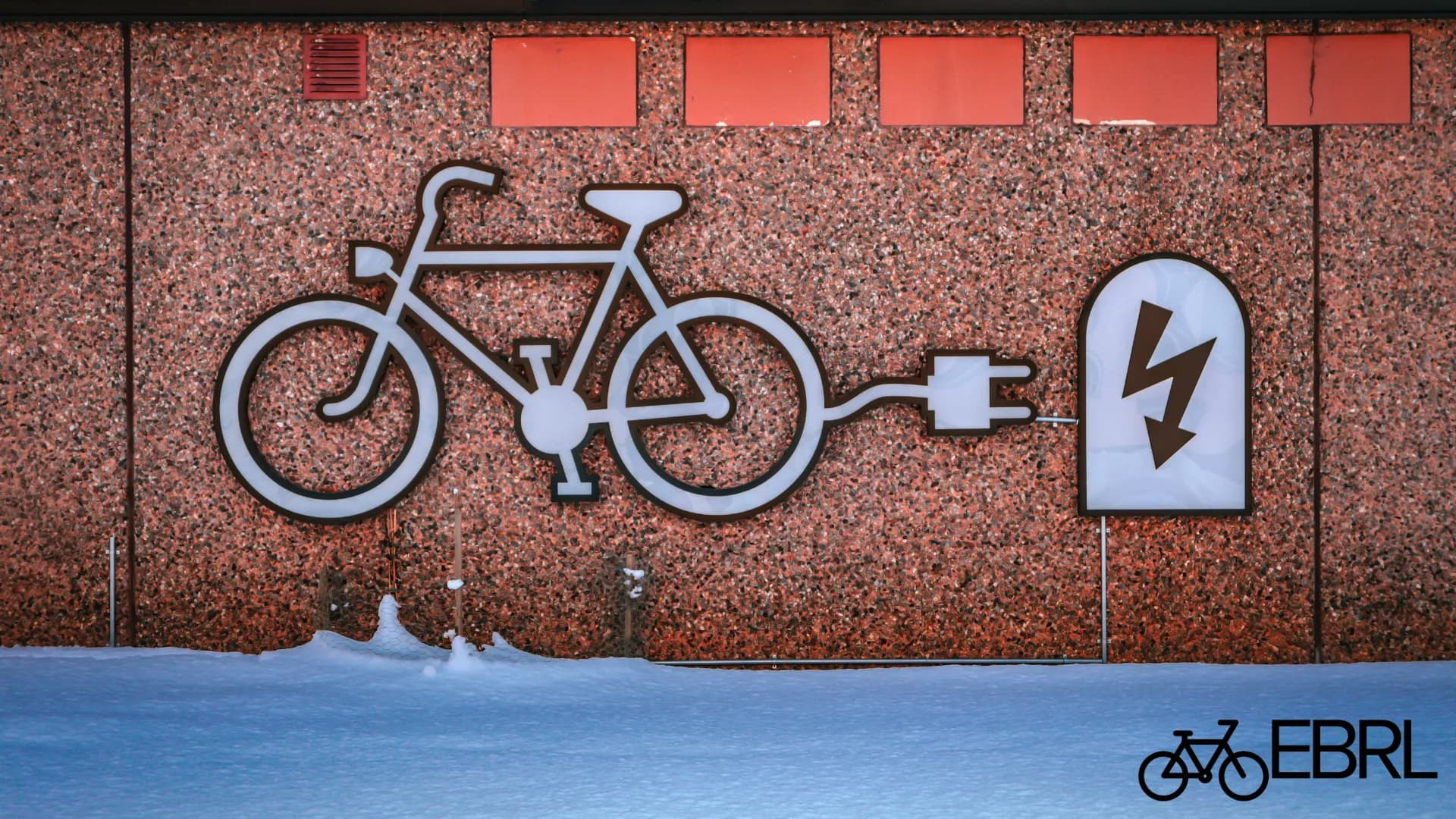
Given everything above, the safety habits that actually reduce your risk are pretty specific:
Charge on a hard, non-flammable surface, not on a carpet, bed, or couch. Use only the charger that came with your bike, and if you need a replacement, buy it from the original manufacturer. Avoid charging directly to 100% and leaving it plugged in for hours afterward; many riders stop around 80 to 90% for daily use, which also extends battery lifespan. Don't charge while you sleep or while you're out of the house for long stretches, since a fire caught early is vastly more survivable than one that smolders unnoticed for hours.
Store the battery away from your main exit routes and, if possible, outside living spaces entirely, in a garage, shed, or ground-floor storage area rather than a bedroom or a hallway you'd need to pass through to escape. Keep it away from extreme heat and out of direct sun in summer, and avoid leaving it in a freezing car overnight in winter. And if the battery has ever been dropped, crashed, or soaked, have it inspected before charging it again rather than assuming it's fine because it looks fine.
None of this requires special equipment or expertise. It's mostly about where you charge, what you charge with, and paying attention to a battery that's been through something rough.
Can Electric Bike Batteries Explode?
Technically, yes, though "explode" is doing some dramatic work in that sentence. What actually happens during a severe thermal runaway event is usually a rapid release of built-up gas and heat, sometimes violent enough to look and sound like an explosion, along with intense flames that can flare up within seconds. It's not typically a shrapnel-style detonation like you'd picture from the word "explode" in other contexts, but it is fast, hot, and genuinely dangerous to anyone standing nearby when it happens.
This is exactly why fire officials emphasize location so heavily. A battery that fails while sitting in a garage or a hallway closet gives you time and distance. The same failure happening next to your bed, or blocking your only way out the door, is a completely different situation. That's the lesson buried in the NYC data: the underlying battery failures didn't stop happening, but moving them away from where people sleep and away from exit paths is what actually saved lives.
Can a Damaged Battery Be Repaired, or Should It Be Replaced?
In almost every case, replace it. Don't repair it.
Unlike a phone or laptop battery, e-bike battery packs contain dozens of individual cells wired together, and a fault in even one cell can compromise the whole pack in ways that aren't visible from the outside. Reputable manufacturers and bike shops generally won't attempt cell-level repairs on a damaged pack, and for good reason: there's no reliable way to guarantee you've caught every weak point.
Signs a battery needs replacing rather than a workaround: any swelling or bulging in the casing, a sweet or chemical smell, unusual heat during normal charging or riding, a sudden drop in range of more than 30%, or any history of being dropped, crashed, or submerged in water. If you notice any of these, stop charging it, move it away from anything flammable, and contact the manufacturer or a certified repair shop rather than trying to diagnose or fix it yourself.
Recall Checklist: How to Check If Your Battery Has Been Recalled
Recalls happen more often in this category than most people expect, partly because the industry is still young and partly because regulators have gotten more aggressive about pulling unsafe products. Before you assume your battery is fine, run through this quick check:
- Find your battery's model number and serial number, usually printed on a label on the pack itself or in your original purchase paperwork.
- Search the CPSC's recall database directly at cpsc.gov, which covers all consumer products sold in the US, not just e-bikes.
- Check your specific manufacturer's website, since many companies post model-specific safety notices before a formal CPSC recall is even issued.
- If you bought your e-bike or a replacement battery secondhand, don't assume the previous owner registered it. Register it yourself so you'll actually get notified if a recall comes through later.
If you do find your battery on a recall list, stop using and charging it immediately, even if it seems to be working fine. Most recalls include a replacement or refund process specifically because the manufacturer has identified a failure risk that isn't obvious from normal use.
Frequently Asked Questions
Is it safe to charge my e-bike overnight?
It's better to avoid it if you can. A large share of fire incidents happen while devices are actively charging, and an overnight charge means the battery is unattended for hours at exactly the time it's most vulnerable. If you must charge overnight, at least keep the battery somewhere other than your bedroom and away from your exit path.
Can I leave my e-bike battery in the cold or heat?
Short exposure won't hurt it, but prolonged extreme temperatures will. Leaving a battery in a hot car all day or a freezing garage overnight accelerates degradation and, in rare cases, can contribute to the kind of internal stress that leads to failure. Room temperature storage is ideal when it's practical.
How do I know if my battery is going bad?
Watch for swelling, unusual smells, excessive heat during charging, a noticeably shorter range than usual, or slower charging than it used to take. Any one of these is worth getting checked out rather than waiting to see if it gets worse.
Are cheap e-bikes more dangerous?
Not necessarily because they're cheap, but because cheap often correlates with skipped certification. A budget e-bike from a manufacturer that still holds UL 2849 or EN 15194 certification isn't inherently riskier than an expensive one. It's the uncertified batteries, off-brand conversion kits, and generic chargers, which do tend to cluster at the lower end of the market, that the incident data consistently points to as the real problem.