Should You Buy an Electric Mountain Bike? A Balanced Look at eMTBs
Thinking about an eMTB? Here's an honest look at the real benefits, the downsides nobody advertises, and who actually benefits most.

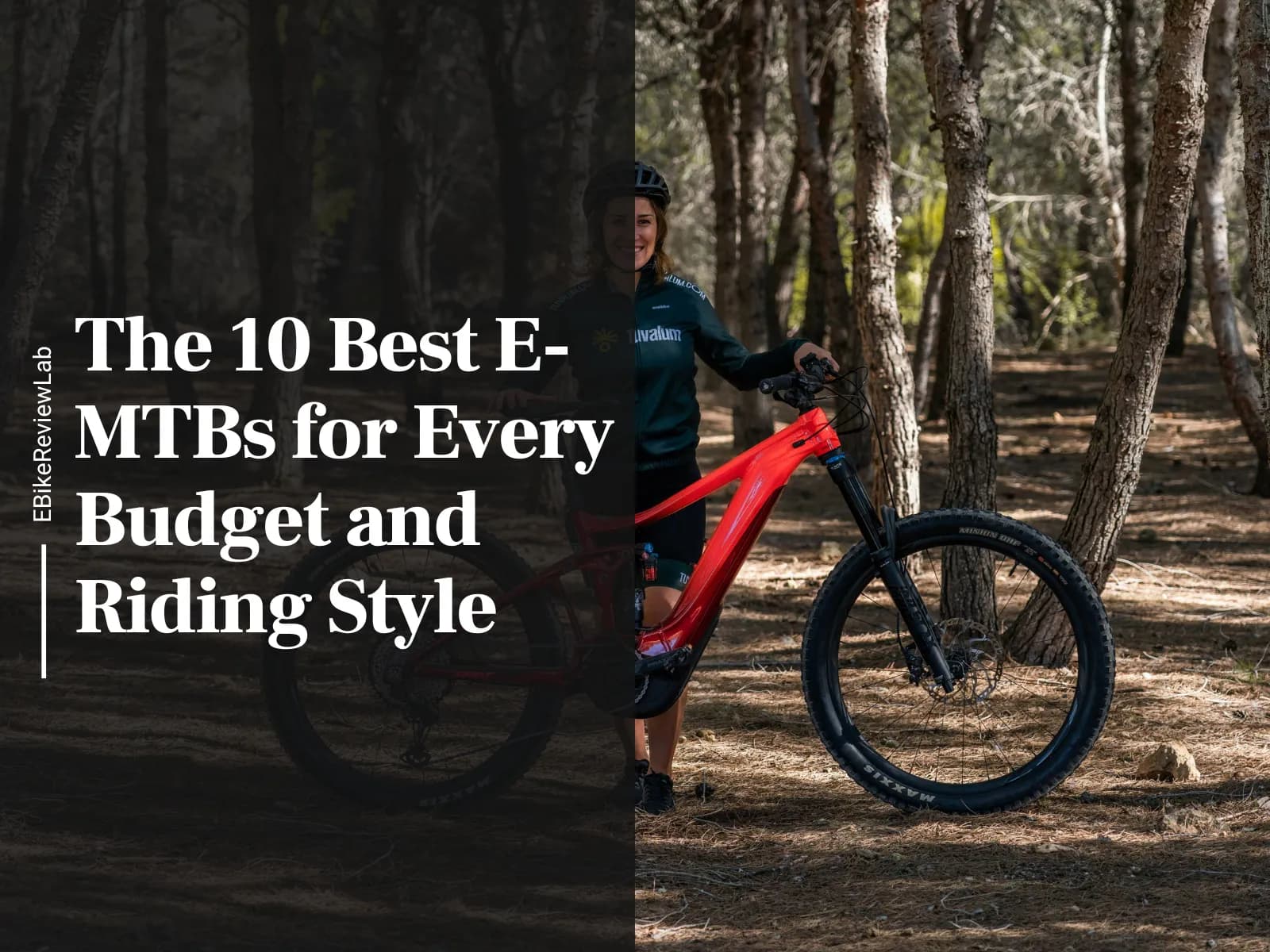
If you've spent any time on mountain bike forums, you already know the eMTB debate gets heated fast. Half the comments section swears an electric mountain bike changed their riding life. The other half insists you're not really mountain biking if a motor is doing part of the work.
Both sides have a point, honestly.
This isn't going to be another "10 reasons you need an eMTB" listicle that reads like it was written by someone trying to sell you one. I want to walk through what an electric mountain bike actually does well, where it genuinely falls short, and who ends up regretting the purchase versus who ends up wondering why they waited so long. If you're weighing the decision, that's a lot more useful than a hype piece.
The real benefits, backed by more than opinion
Let's start with what eMTBs actually deliver, because there's real substance here once you strip away the marketing language.
Riding longer and further with less fatigue
The most obvious benefit of an electric mountain bike is pedal assist. A mid-drive motor typically adds somewhere between 250 and 750 watts of assistance, depending on the mode you're in and the bike's tuning. That doesn't mean the bike rides itself. You still pedal, you still work, but the motor takes the edge off the effort curve.
In practice, this means you can string together climbs that would otherwise wreck your legs for the descents. A ride that might take three hours on an analog bike, with an hour of that spent grinding up fire roads, can turn into a two-hour loop where most of your energy goes toward the technical stuff that actually matters. More descending, less suffering on the way up. That trade-off is the entire appeal for a huge number of riders.
Research on eMTB use backs this up too. A study published in the Journal of Science and Medicine in Sport found riders on eMTBs covered significantly more distance and elevation gain per outing than they did on traditional bikes, while reporting similar or even higher levels of enjoyment. More miles, more vertical, comparable satisfaction. That's not nothing.
Making tougher trails accessible to a wider range of fitness levels
Not everyone lives near mellow, rolling singletrack. If your local trail network is mostly steep, technical climbs connecting short punchy descents, a traditional mountain bike can turn a fun hobby into a fitness test you didn't sign up for.
An eMTB changes that equation. Trails that used to be off-limits because the climb was simply too brutal become doable. This matters more than it sounds like on paper. A rider who's intimidated by a 1,500-foot climb might avoid mountain biking entirely, or stick to the same easy loop every weekend. Give that same rider assist, and suddenly the whole trail system opens up.
Riding with people of different fitness levels together
This one gets underrated in most buying guides, but it might be the single biggest quality-of-life improvement eMTBs offer.
Anyone who's tried to organize a group ride between a strong climber and a less experienced friend knows the problem. Someone's always waiting at the top, bored and cold, while the other person shows up ten minutes later feeling embarrassed about it. It's a quiet way that mountain biking pushes people apart instead of bringing them together.
An eMTB closes that gap. A parent riding with a teenager, a strong rider paired with a partner who's newer to the sport, a group with a wide age range, all of it works better when the fitness gap between riders shrinks. I've talked to more than one rider who said the eMTB is the only reason their spouse still rides with them at all. That's a real, lived benefit, not a spec sheet number.
The honest downsides
Now for the part most eMTB marketing conveniently skips over. If you're serious about this decision, you need the full picture.
Weight and how it affects transport and handling
Electric mountain bikes are heavy. A typical full-suspension eMTB weighs somewhere between 45 and 55 pounds, compared to 28 to 35 pounds for a comparable analog bike. That's not a small difference. It's nearly double the weight in some cases.
This shows up in a few annoying ways. Loading the bike onto a roof rack becomes a genuine workout, and plenty of riders switch to hitch racks specifically because lifting an eMTB overhead gets old fast. If you crash or need to walk the bike through an unrideable section, you'll feel every extra pound. And if the battery dies mid-ride, which does happen on longer outings or in cold weather, you're now pedaling a 50-pound bike home with zero assist. That last scenario catches new eMTB owners off guard more than almost anything else.
Handling changes too, though this is more of an adjustment than a dealbreaker. The extra weight sits low in the frame, which actually helps stability on descents once you're used to it. But tight, technical, low-speed maneuvering (think switchbacks or log hops) takes more effort and more confidence than it does on a lighter bike.
Higher upfront and ongoing cost
There's no getting around this one. A quality electric mountain bike typically starts around $3,500 to $4,000 for something with a Bosch, Shimano, or Brose mid-drive motor and decent suspension, and climbs well past $8,000 for higher-end carbon builds. Compare that to a solid analog trail bike, which can be had for $2,000 to $3,000 with similar componentry.
If you're trying to stay under $3,000, options exist, but you'll likely be looking at aluminum frames, less sophisticated motor systems, and shorter warranty support. It's worth checking a dedicated cost breakdown before you set a budget, because the sticker price is only part of the story.
Ongoing costs add up too. Batteries degrade over time and typically need replacement after 500 to 1,000 charge cycles, and a new battery can run $600 to $900. Motor servicing is more specialized than standard bike maintenance, which means fewer shops can work on it and repairs sometimes take longer. None of this is a reason to avoid an eMTB. It's just money you should plan for rather than get surprised by.
Trail access restrictions in some areas
This is the downside that catches people off guard the most, because it has nothing to do with the bike itself and everything to do with where you're allowed to ride it.
In the United States, most eMTBs fall under Class 1 (pedal assist only, capped at 20 mph) or Class 3 (pedal assist up to 28 mph) designations. Many trail systems managed by the U.S. Forest Service or Bureau of Land Management still classify any motorized bicycle, including Class 1 pedal-assist eMTBs, the same as a motorcycle for access purposes. That means trails open to traditional mountain bikes can be completely closed to eMTBs, even low-powered ones.
This varies wildly by region and even by specific trail. Some areas, like much of Colorado's Forest Service land, have opened access to Class 1 eMTBs on certain trails. Others haven't budged at all. Before you buy, it's genuinely worth checking your local trail association's rules, because finding out after the purchase that your favorite trail system bans eMTBs entirely is a rough way to learn this lesson.
For more on how class rules affect where you can ride, see our street-legal e-bike guide.
Addressing the "is it cheating" question directly
Let's just talk about this one honestly instead of dancing around it.
The "cheating" argument usually comes from a place that makes sense on the surface. Mountain biking has always had a strong self-propelled ethos, similar to trail running or backcountry skiing. Part of the appeal, for a lot of riders, is earning the descent through physical effort. Adding a motor can feel like it undermines that.
But here's where the argument gets shakier the more you look at it. Nobody calls road cyclists on carbon frames with electronic shifting "cheaters" compared to someone on steel with friction shifters. Nobody says a rider on a full-suspension enduro bike is cheating compared to someone on a rigid singlespeed. Bike technology has always evolved, and better equipment has always made riding more capable or more comfortable. An eMTB is arguably just the next step in that same progression, not some categorical break from it.
There's also a physiological point that gets missed a lot in this debate. Riding an eMTB is still real exercise. Studies measuring heart rate and power output on eMTBs versus traditional mountain bikes have found riders in Eco or Trail assist modes still hit 80 to 90 percent of the heart rate they'd reach on an analog bike, just while covering more ground. You're not lounging on a motorcycle. You're still working, just more efficiently.
That said, the "cheating" framing does hold up in one specific context: shared, non-motorized trail access. If a trail is designated for traditional mountain bikes only and you ride an eMTB on it anyway, that's not really a philosophical debate anymore. That's just breaking the rules other trail users are following, and it's part of why access restrictions exist and get enforced.
So is it cheating? For your own personal ride, no, not really. It's just a different tool for a different set of priorities. But respecting where you're actually allowed to use that tool matters, and that's a separate conversation from whether the bike itself is somehow illegitimate.
Who an eMTB is genuinely a bad fit for
An eMTB isn't the right call for everyone, and it's worth being straightforward about who should probably skip it.
If your local trails are dominated by tight, technical singletrack with lots of switchbacks and low-speed maneuvering, the extra weight can work against you more than it helps. Riders chasing podium finishes in traditional cross-country racing usually stick with analog bikes too, since most XC race categories don't allow e-bikes anyway.
Budget-conscious riders who are already stretching to afford a decent analog bike probably shouldn't stretch further for an eMTB. A $2,500 traditional trail bike will usually outperform a $2,500 eMTB in terms of component quality, since so much of that budget goes toward the motor and battery system.
And if you live somewhere with heavy access restrictions and no realistic path to using the bike where you actually ride, the whole value proposition falls apart before you even get on the trail. Check local rules first. It matters more than most people expect going in.
Who benefits the most from an electric mountain bike
On the flip side, some riders get disproportionate value out of going electric.
Returning riders who took years off from mountain biking and are dealing with a fitness gap between where they used to be and where they are now often find an eMTB bridges that gap without requiring months of base training first. It gets you back on the trail faster, and the fitness tends to follow anyway once you're riding more consistently.
Older riders benefit in a similar way, particularly those who still want to ride technical, demanding terrain but whose bodies don't recover from long climbing days the way they used to. The assist doesn't replace fitness, but it does extend how many years someone can keep riding the trails they love.
Riders recovering from injury or managing a chronic condition often find eMTBs let them stay active on singletrack without the same physical toll a traditional bike would demand. That's a real quality-of-life difference, not a minor convenience.
And mixed-ability groups, as mentioned earlier, get one of the clearest benefits of all. Families, couples, and friend groups with different fitness levels can actually ride together instead of constantly compromising on route difficulty or waiting around at the top of climbs.
If you're still deciding between electric and analog, our electric vs regular mountain bike comparison lays out the trade-offs side by side.
Frequently Asked Questions
Is an electric mountain bike worth the money?
For a lot of riders, yes, particularly if you're limited on time, dealing with a fitness gap, or trying to ride with people of different ability levels. The higher upfront cost is real, so it's worth comparing it against how much more riding you'd actually get to do. If you'd ride twice as often with an eMTB, that changes the math significantly.
Do experienced mountain bikers look down on eMTBs?
Some do, though this attitude has softened noticeably over the past few years as eMTBs have become more common and their capabilities have become better understood. You'll still run into the occasional trail-side comment, but plenty of experienced riders now own both an analog bike and an eMTB, choosing between them based on the ride they're planning rather than any sense of legitimacy.
What are the downsides of owning an electric mountain bike?
The main ones are weight (typically 45 to 55 pounds, which affects transport and low-speed handling), higher upfront and ongoing costs including eventual battery replacement, and trail access restrictions that vary by region and can be more limiting than expected.
Is an eMTB a good choice for older or less fit riders?
Generally, yes. It's one of the clearest use cases where an eMTB adds real value, letting riders tackle demanding terrain and longer rides without the same physical toll a traditional bike requires. It doesn't replace fitness, but it does extend how long someone can keep enjoying technical trails.
Where to go from here
If you're leaning toward buying, the next logical step is figuring out how eMTBs actually compare to traditional mountain bikes feature by feature, and getting a realistic sense of what you'll spend once you factor in everything beyond the sticker price. Our full electric vs. traditional mountain bike comparison and eMTB cost breakdown both go deeper into those specifics.
And once you've decided an eMTB makes sense for how you actually ride, our complete electric mountain bike buying guide walks through motor types, battery ranges, and what to prioritize based on your budget and terrain.
There's no universally correct answer here. Some riders will read all of this and still feel strongly that mountain biking should stay human-powered, and that's a completely valid stance. Others will read the same information and realize an eMTB solves a real problem they've been dealing with for years. The honest answer is that it depends on your trails, your budget, your riding goals, and who you like to ride with. Weigh the real trade-offs, not the marketing version, and you'll land on the right call for your own riding.