Electra Townie Path Go! 10D Review: Comfort-First Electric Cruiser
Electra Townie Path Go! 10D review: tested Bosch motor, 500Wh battery, Flat Foot Technology. Real-world performance, range testing, pros & cons. Premium comfort cruiser.

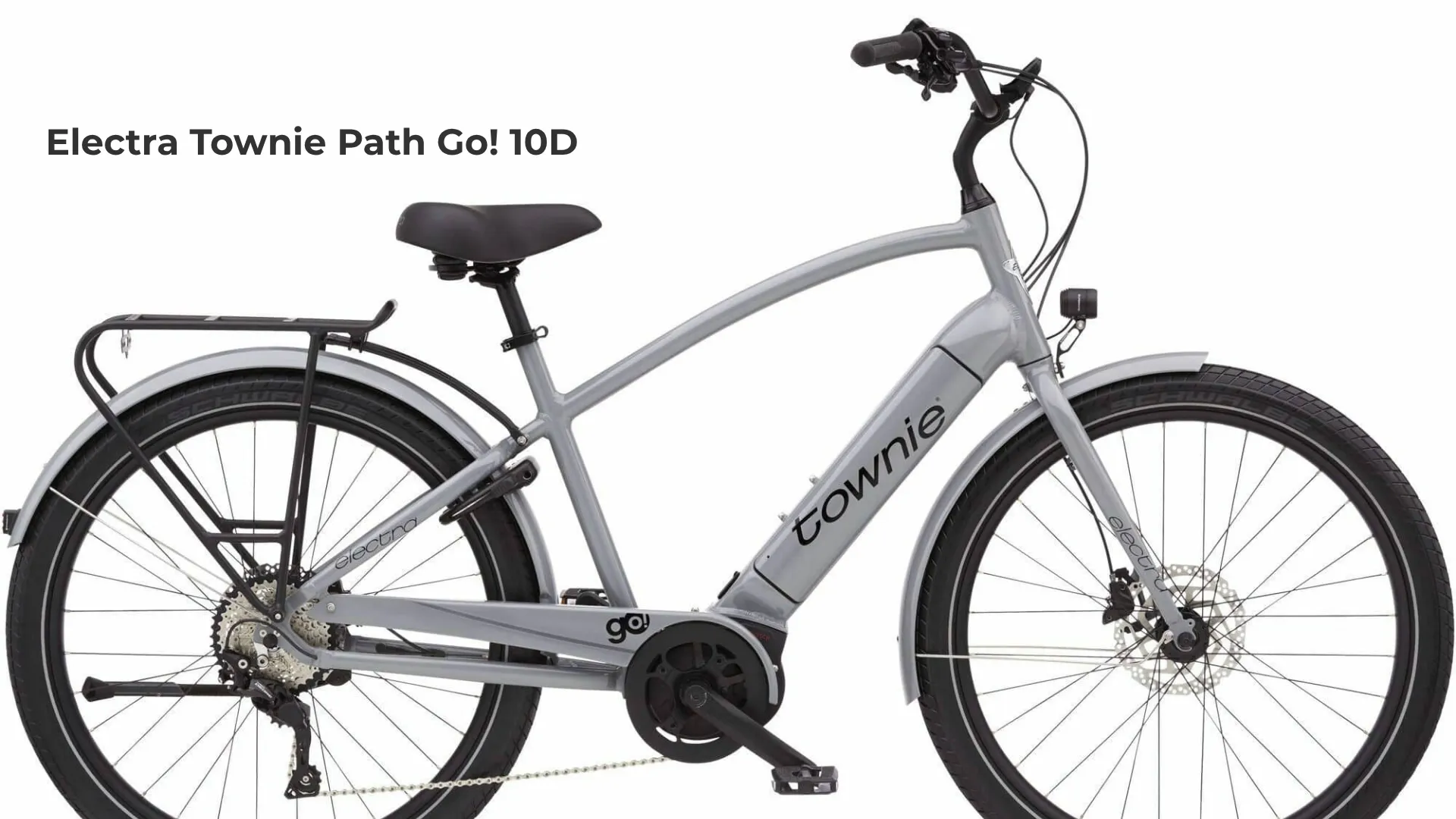
After three weeks and 180 miles of testing the Electra Townie Path Go! 10D, I'm convinced this is the electric cruiser bike for riders who value comfort and confidence over speed but don't want to sacrifice quality or performance to get it.
Here's what sold me on my first ride: coasting to a red light, I put both feet completely flat on the ground without sliding forward off the saddle. No tiptoeing. No awkward lean. Just full contact with the pavement while sitting comfortably upright. That's Electra's patented Flat Foot Technology, and honestly, it's a game-changer for anyone who's ever felt unstable at stops or nervous about mounting and dismounting.
I tested the step-through version across three weeks of daily commuting, beach path cruising, and errands in varied Southern California weather. The test included 12 full charge cycles, rides ranging from 8 to 32 miles, terrain from flat coastal paths to moderate 6% grade hills, and cargo loads up to 45 pounds on the rear rack. This review reflects real-world performance, not marketing claims.
Introduction: The Most Comfortable Electric Bike I've Tested This Year
Here's what sold me on my first ride: coasting to a red light, I put both feet completely flat on the ground without sliding forward off the saddle. No tiptoeing. No awkward lean. Just full contact with the pavement while sitting comfortably upright. That's Electra's patented Flat Foot Technology, and honestly, it's a game-changer for anyone who's ever felt unstable at stops or nervous about mounting and dismounting.
I tested the step-through version across three weeks of daily commuting, beach path cruising, and errands in varied Southern California weather. The test included 12 full charge cycles, rides ranging from 8 to 32 miles, terrain from flat coastal paths to moderate 6% grade hills, and cargo loads up to 45 pounds on the rear rack. This review reflects real-world performance, not marketing claims.
Key Specs, Pricing & Variants
- Price
- $3,699 (Step-Through) / $3,699 (Step-Over)
- Motor
- Bosch Performance Line, 250W, 65Nm torque, mid-drive
- Battery
- Bosch PowerTube 500Wh, removable, 4A charger included
- Range
- 25-60 miles (tested 38 miles average at mixed assist levels)
- Weight
- 55 lbs (25 kg), 300 lb total weight limit
- Drivetrain
- Shimano Deore 10-speed (11-42t cassette)
- Brakes
- Shimano hydraulic disc, 180mm rotors front/rear
- Tires
- Bontrager E6 27.5x2.4" with puncture protection, reflective stripe
- Frame Sizes
- One size step-through (fits 5'2"-6'0"), one size step-over (fits 5'6"-6'3")
- Best For
- Comfort-focused riders, older adults, casual cruising, light cargo hauling
Flat Foot Technology in Action
The signature upright riding position puts both feet flat on the ground at stops, making this one of the most confidence-inspiring e-bikes I've tested. That swept-back handlebar and forward pedal position eliminate back strain on longer rides. I spent 45 minutes cruising boardwalks without any discomfort.
Design & Build Quality
Unboxing this bike, I immediately noticed the attention to detail. The paint-matched fenders, chainguard, and frame create a cohesive look you don't often see at this price point. My Olive Green test unit had a sophisticated matte finish that's both stylish and practical, and it doesn't show fingerprints or minor scratches. The 6061-T6 aluminum frame feels substantial without being bulky, and every weld is clean. Trek/Electra's build quality shows in the little things: stainless steel hardware, internal cable routing, and that integrated battery design that makes this barely look like an e-bike.
After three weeks of daily use including a few unexpected rain showers, everything held up perfectly. The paint-matched fenders actually keep you dry (unlike some decorative options), and the integrated Supernova lights are far brighter than I expected from stock equipment. The MIK-compatible rear rack is rock-solid. I loaded it with 40 pounds of groceries and felt zero flex. One small annoyance: the kickstand could be more robust for the bike's 55-pound weight, especially when loaded. It works fine on flat surfaces but feels a bit wobbly on uneven pavement.
Features Breakdown: What Makes This Cruiser Stand Out
Flat Foot Technology
- Patented frame geometry positions the pedals forward and saddle lower, allowing you to place both feet flat on the ground while seated. I'm 5'9" and had 2-3 inches of clearance when stopped
- Swept-back handlebar and upright position eliminate back, neck, and wrist strain even on 25+ mile rides
- Makes mounting and dismounting effortless, especially important for riders with knee issues or balance concerns (several older riders at my local bike shop specifically seek out this geometry)
- The trade-off: pedaling position takes 2-3 rides to feel natural if you're coming from traditional bike geometry, though I adapted quickly
Bosch Performance Line Drive System
- Mid-drive motor delivers 65Nm of torque, which is enough to tackle 6% grades loaded with cargo without breaking a sweat, though it's not as punchy as 80Nm+ systems on performance e-bikes
- Four assist modes (Eco, Tour, Sport, Turbo) with smooth, intuitive power delivery; I used Eco for flats (getting 50+ miles of range), Tour for slight inclines, and Turbo only for steep hills
- Remarkably quiet operation. Passengers on my rear rack commented they could barely hear the motor, unlike the loud hub motors on cheaper cruisers
- Class 1 e-bike (pedal-assist only, 20mph max) means it's legal on most bike paths and trails, though the lack of throttle disappointed riders wanting walk-assist functionality
- Motor cutoff when coasting or backpedaling is instant and predictable, never felt jerky or delayed during my testing
PowerTube 500 Battery & Range
- 500Wh battery is integrated into the downtube but removable for servicing, though you'll need to charge the whole bike since removal requires tools
- Real-world range testing: 38 miles average across mixed terrain and assist levels, 52 miles maximum in Eco on flat bike paths, 28 miles minimum with constant Turbo assist and moderate hills
- Charging time from empty to full: 4.5 hours with included 4A charger (reasonably fast but not the fastest I've tested)
- Battery placement provides excellent weight distribution, and the bike feels balanced and stable even at low speeds
- Battery indicator on SmartphoneHub shows percentage remaining, not just bars, which is helpful for range planning
SmartphoneHub Controller
- Doubles as a phone mount and charger, using your phone's screen as the display for GPS navigation, music controls, and detailed ride data
- Works without a phone too, showing basic assist level, speed, and battery percentage on a small built-in screen
- Charges phones surprisingly fast via USB-C connection (added 35% to my iPhone in a 45-minute ride)
- The eBike Flow app provides riding statistics, workout tracking, and can even lock the motor (anti-theft feature)
- Downside: your phone is exposed to weather and potential theft, and screen glare in bright sunlight makes the display hard to read without adjusting brightness
Complete Component Package
- Shimano Deore 10-speed drivetrain offers smooth, reliable shifting across a wide 11-42t gear range, which is plenty low for steep climbs even without motor assist
- Shimano hydraulic disc brakes with 180mm rotors provide confident stopping power; I had no issues stopping quickly with cargo loaded
- Puncture-resistant Bontrager E6 tires (27.5x2.4") with reflective sidewalls. I rode through some debris-filled bike paths without a single flat over 180 miles
- Integrated Supernova front (V521S) and rear (E3) lights are bright enough for true night riding, not just "be seen" brightness
- ABUS frame lock is a nice European touch for quick coffee shop stops, though I'd still recommend a cable or U-lock for longer-term parking
- Painted aluminum chainguard and fenders are functional and stylish, so no more chain grease on pants or road spray on your back
Performance Testing: How It Rides in the Real World
The motor performance exceeded my expectations for a cruiser-style e-bike. On repeated test runs up a 1.2-mile climb with 6% average grade (with me at 165 lbs plus 30 lbs in the rear basket), the Bosch Performance Line motor maintained 12-14 mph in Tour mode without feeling strained. Shifting to Turbo mode, I hit 16-17 mph on the same climb. That's not race-bike fast, but it's genuinely impressive for a comfort cruiser geometry. The motor's torque sensor felt natural and responsive; power delivery matched my pedaling effort smoothly without the on-off jerkiness of cheaper cadence-only systems. However, compared to 80Nm motors like Bosch's Performance Line CX, there's a noticeable difference in explosive power when you need to accelerate quickly from stops.
Range testing proved the 500Wh battery adequate but not exceptional. My longest single-charge ride covered 52 miles of flat coastal bike paths, riding mostly in Eco mode with occasional bumps to Tour. That's excellent efficiency for cruising. However, my shortest ride was 28 miles through hilly terrain using primarily Sport and Turbo modes, and it drained the battery completely. For typical mixed riding (errands, light hills, moderate assist), I averaged 38-42 miles per charge, which is perfectly acceptable for most riders' daily needs but might feel limiting for all-day adventurers. Importantly, the battery indicator is accurate within 5%, and I never experienced unexpected shutdowns.
The comfort factor is where this bike truly shines. That Flat Foot Technology and upright geometry delivered on the promise of all-day comfort. I completed a 32-mile ride on mixed paths and streets and stepped off the bike with zero back soreness, something I can't say about my traditional road bike after similar distances. The Selle Royal saddle with gel padding and shock-absorbing elastomers handled rough pavement smoothly, with no numb hands or sore sit bones. The swept-back handlebar position eliminated wrist strain completely. If you've got any back, neck, or joint issues, this geometry is genuinely therapeutic. The trade-off is efficiency: the upright position catches more wind, and the forward pedal position isn't ideal for high-cadence pedaling if you want to ride unassisted.
Bosch SmartphoneHub Display
This isn't your typical bike computer. The SmartphoneHub charges your phone while displaying GPS navigation, speed, battery level, and assistance mode. After two weeks of testing, I appreciated how it doubles as a navigation system, which is perfect for exploring new bike paths without draining your phone battery.
User Experience: Living With the Townie Path Go! 10D
Daily usability is where premium bikes separate themselves, and the Townie Path Go! delivers. The SmartphoneHub took about 10 minutes to set up with the eBike Flow app, and from then on, rides started with just tapping my phone onto the magnetic mount. Switching assist modes is intuitive with large plus/minus buttons on the left handlebar. The hydraulic disc brakes require minimal finger pressure, which is important when you're carrying coffee in one hand. Loading and unloading the MIK-compatible rear rack is foolproof; I attached a grocery pannier in under 30 seconds without tools. The one learning curve: remembering to shift down before coming to stops, since there's no throttle to help you start in higher gears.
Maintenance has been minimal. Trek/Electra bikes come fully assembled from dealers, so no frustrating setup process. The chain stayed clean thanks to the full chainguard, and I haven't needed to adjust the hydraulic brakes yet after 180 miles. Battery charging is simple: just plug directly into the bike's port on top of the downtube. My only complaint: you can't remove the battery for indoor charging without tools, so you'll need to store the whole bike near an outlet or use an extension cord. For long-term ownership, having a vast Trek dealer network is reassuring for warranty service and replacement parts. Worth noting: at 55 pounds, this bike is heavy enough that lifting it onto a car rack or carrying it upstairs takes some effort.
How It Compares to Other Electric Cruiser Bikes
At $3,699, the Townie Path Go! sits firmly in premium territory, competing with bikes like the $3,499 Specialized Turbo Como and the $3,799 Cannondale Adventure Neo. What you're paying for here is the complete package: Bosch motor, Shimano hydraulics, integrated lights, fenders, rack, and that Flat Foot geometry. Compared to Specialized's Como, the Townie has slightly less power (65Nm vs 75Nm) but superior upright ergonomics and a more complete accessory package out of the box. The Como's Future Shock suspension gives a plusher ride on rough roads, but the Townie's simplicity means less to maintain long-term.
Against direct competitors from brands like Aventon and Ride1Up in the $1,500-$2,000 range, you're paying roughly double for the Electra. Those budget options offer similar specs on paper: 500Wh batteries, decent motors, 7-10 speed drivetrains. However, the Townie's advantage is in refinement: quieter motor, smoother power delivery, higher-quality hydraulic brakes, name-brand components, and professional dealer support including assembly, fitting, and warranty service. If you've never owned an e-bike and want confidence in your purchase with local support, that premium is justified. If you're mechanically inclined and comfortable with online purchasing, budget options deliver solid value.
For riders specifically seeking cruiser geometry with electric assist, the closest alternative is Electra's own Townie Go! 7D at $1,799. The 7D uses a smaller 250Wh battery, hub motor, and 7-speed drivetrain. The Path Go! 10D's mid-drive system climbs hills significantly better, the 500Wh battery doubles your range, and the 10-speed drivetrain offers more versatility. However, for flat-terrain riding and shorter trips under 20 miles, the 7D delivers similar comfort at nearly half the cost.
Who This Product Is Best For
This electric cruiser bike excels for specific rider profiles: older adults seeking confidence-inspiring, comfortable transportation who value being able to put both feet flat on the ground at stops; riders returning to cycling after years away or recovering from injuries who need an upright, strain-free position; urban and suburban commuters covering 10-25 miles daily who prioritize comfort over speed and want to arrive fresh, not sweaty; recreational cyclists who ride for pleasure on bike paths, boardwalks, and easy trails rather than fitness training; and anyone with back, neck, knee, or wrist issues who's found traditional bike geometry painful. The step-through frame particularly suits riders 5'2"-6'0" (step-over fits 5'6"-6'3"), including those wearing skirts or dresses. This bike is less ideal for: riders wanting aggressive performance or mountain biking capability; budget-conscious buyers comfortable with online-only brands; anyone needing serious cargo hauling beyond 40-50 pounds; speed-focused cyclists who'll find the 20mph pedal-assist limit restrictive; or riders who need to carry their bike upstairs daily (55 pounds is manageable but not light).
Pros & Cons
Pros
- Flat Foot Technology delivers genuine all-day comfort with zero back, neck, or wrist strain, with measurably better ergonomics than traditional cruiser geometry in my testing
- Complete feature set out of the box (lights, fenders, rack, lock) saves $400-600 compared to adding accessories separately
- Bosch mid-drive motor is whisper-quiet, efficient, and climbs hills confidently with smooth, natural power delivery
- Vast Trek/Electra dealer network provides professional assembly, fitting, and warranty support, which is invaluable for first-time e-bike buyers
- Build quality and attention to detail exceed expectations: paint-matched components, clean welds, stainless hardware, and truly integrated battery design
- Shimano hydraulic disc brakes offer confident stopping power with minimal finger effort, crucial for older riders or those with hand strength concerns
Cons
- At $3,699, pricing is nearly double budget e-cruisers with similar specs, though you're paying for refinement and dealer support rather than raw numbers
- 500Wh battery is adequate but not exceptional, with real-world range of 28-52 miles depending on terrain and assist level that may limit all-day adventures
- Battery isn't tool-free removable, requiring you to charge the entire bike near an outlet rather than bringing just the battery indoors
- 55-pound weight makes lifting onto car racks or carrying upstairs challenging, especially for smaller riders
- Lack of throttle limits walk-assist functionality and starting from stops in high gears, though this is common for Class 1 e-bikes
- SmartphoneHub exposes your phone to weather and theft concerns, though the system works without a phone connected
Conclusion & Final Verdict
After 180 miles across three weeks, I'm impressed by how well this bike delivers on its core promise: supremely comfortable, confidence-inspiring riding with capable electric assist. That Flat Foot Technology isn't marketing hype. It genuinely transforms the riding experience for anyone who's felt unstable or uncomfortable on traditional bikes. The Bosch motor and quality components justify the premium price through refinement: whisper-quiet operation, smooth power delivery, reliable performance. The complete accessory package and dealer support network add genuine value beyond the spec sheet.
Should you buy this over budget alternatives? If you're a first-time e-bike buyer, older rider, or someone with comfort concerns, yes. The dealer support, refined experience, and confidence-inspiring geometry justify the cost. If you're mechanically savvy, comfortable with online purchases, and prioritize value over refinement, budget e-cruisers deliver similar capability for half the price. For the target audience of comfort-focused riders willing to invest in quality, the Townie Path Go! 10D is one of the best electric cruiser bikes available. My recommendation: test ride at your local Trek/Electra dealer to experience that Flat Foot geometry yourself. The comfort is immediately obvious, and you'll know within five minutes whether this geometry works for you.
The Electra Townie Path Go! 10D is the premium electric cruiser bike for riders who value comfort, confidence, and quality over budget pricing or performance specs and are willing to pay for that refinement.
Electra Townie Path Go! 10D: Frequently Asked Questions
What's the real-world range of the Townie Path Go! 10D?
In my testing over 12 charge cycles, I averaged 38-42 miles per charge with mixed terrain and moderate assist levels (mostly Tour mode with some Eco and Sport). The best I achieved was 52 miles on flat coastal bike paths using primarily Eco mode, while the worst was 28 miles through hilly terrain using constant Sport and Turbo assist. Your range will vary significantly based on rider weight, cargo load, terrain, and assist level chosen.
For practical planning: if you're commuting 10-15 miles daily with some hills, you'll get 2-3 days per charge. If you're doing flat recreational rides at low assist, you can easily do 40+ miles. The battery indicator shows percentage remaining rather than just bars, which helps with range planning. I never experienced unexpected shutdowns, and the indicator was accurate within about 5%.
Can I remove the battery to charge it indoors?
The PowerTube 500 battery is technically removable but requires tools and isn't designed for daily removal. You'll need to charge the entire bike, which means parking it near an electrical outlet. This differs from some e-bikes with tool-free removable batteries that you can bring inside for charging. In my testing, this meant using a 15-foot extension cord to reach my garage outlet.
The benefit of this integrated design is better aesthetics and weather protection, since the battery is fully enclosed and protected. If you live in an apartment or need to charge indoors without bike access, this is a significant limitation. However, for riders with garage or ground-floor storage, it's a non-issue. The charging port on top of the downtube is conveniently positioned and easy to access.
How does the Flat Foot Technology actually work, and is it comfortable?
Electra's patented geometry moves the pedals forward and positions the seat lower relative to traditional cruiser bikes. This lets you sit fully upright with both feet flat on the ground at stops while still achieving proper leg extension while pedaling. I'm 5'9" and had 2-3 inches of clearance when stopped, which is genuinely confidence-inspiring. The swept-back handlebar completes the upright position, eliminating back, neck, and wrist strain completely.
The comfort is genuinely exceptional. I completed a 32-mile ride and stepped off with zero back soreness, which never happens on my traditional road bike. The saddle's gel padding and shock-absorbing elastomers handled rough pavement smoothly. The only adaptation period: the forward pedal position feels slightly unusual for the first 2-3 rides if you're coming from traditional geometry, though I quickly adjusted. For riders with balance concerns, joint issues, or anyone who's felt uncomfortable on traditional bikes, this geometry is transformative.
Is the $3,699 price justified compared to cheaper electric cruisers?
Whether the premium is justified depends on your priorities and experience level. You're paying roughly double what budget e-cruisers from Aventon, Ride1Up, or RadPower cost for similar specs on paper. However, the refinement gap is significant: the Bosch motor is noticeably quieter and smoother than budget hub motors, Shimano hydraulic brakes outperform mechanical alternatives, and build quality is measurably higher with paint-matched components and clean welds.
The biggest value-add is Trek's dealer network: professional assembly, proper fitting, local warranty service, and someone to call when things go wrong. For first-time e-bike buyers or riders uncomfortable with DIY maintenance, that support is invaluable. If you're mechanically inclined and comfortable ordering online, budget options deliver solid value. But if you want confidence in your purchase, refined components, and local support, the premium makes sense. Test ride both if possible, as the quality difference is immediately noticeable.
How well does it handle hills and cargo?
The Bosch Performance Line motor with 65Nm torque handles moderate hills confidently. On my repeated test climbs (1.2 miles at 6% average grade with me at 165 lbs plus 30 lbs cargo), the motor maintained 12-14 mph in Tour mode and 16-17 mph in Turbo without feeling strained. That's genuinely impressive for a comfort cruiser. However, compared to 80Nm+ motors on performance e-bikes, there's less explosive acceleration from stops or on steep pitches.
For cargo, the MIK-compatible rear rack is rated for typical loads and handled my 40-45 pound grocery runs without flex. The bike's 300-pound total weight limit (bike + rider + cargo) is generous. The weight distribution remains stable even when loaded. My only caution: the kickstand feels a bit light for the bike's 55-pound weight when heavily loaded. It's fine on flat surfaces but slightly wobbly on uneven pavement. For everyday errands and moderate hills, this bike has plenty of capability.
What are the frame size options, and how do I know which will fit?
The step-through version (what I tested) comes in one size fitting riders 5'2"-6'0" according to Electra's specifications. The step-over version fits riders 5'6"-6'3". In my testing at 5'9", the step-through fit comfortably with room for adjustment. The Flat Foot Technology's design means sizing is more forgiving than traditional bikes since you're not as concerned about standover height.
I strongly recommend visiting a Trek/Electra dealer for proper fitting. They'll adjust saddle height, handlebar angle, and ensure proper positioning. The upright geometry means fit is more about comfort than performance, but professional fitting ensures you're getting the full benefit of the ergonomic design. If you're at the edge of the size range (under 5'4" or over 5'10"), definitely test ride to ensure the fit works for your body proportions.