Lectric XPeak 2.0 Review: Tested on Trails, Pavement, and Everything Between
Lectric XPeak 2.0 review: real-world tested electric fat bike with torque sensor, 1310W motor, and 60-mile range. Full specs, pros, cons & verdict.

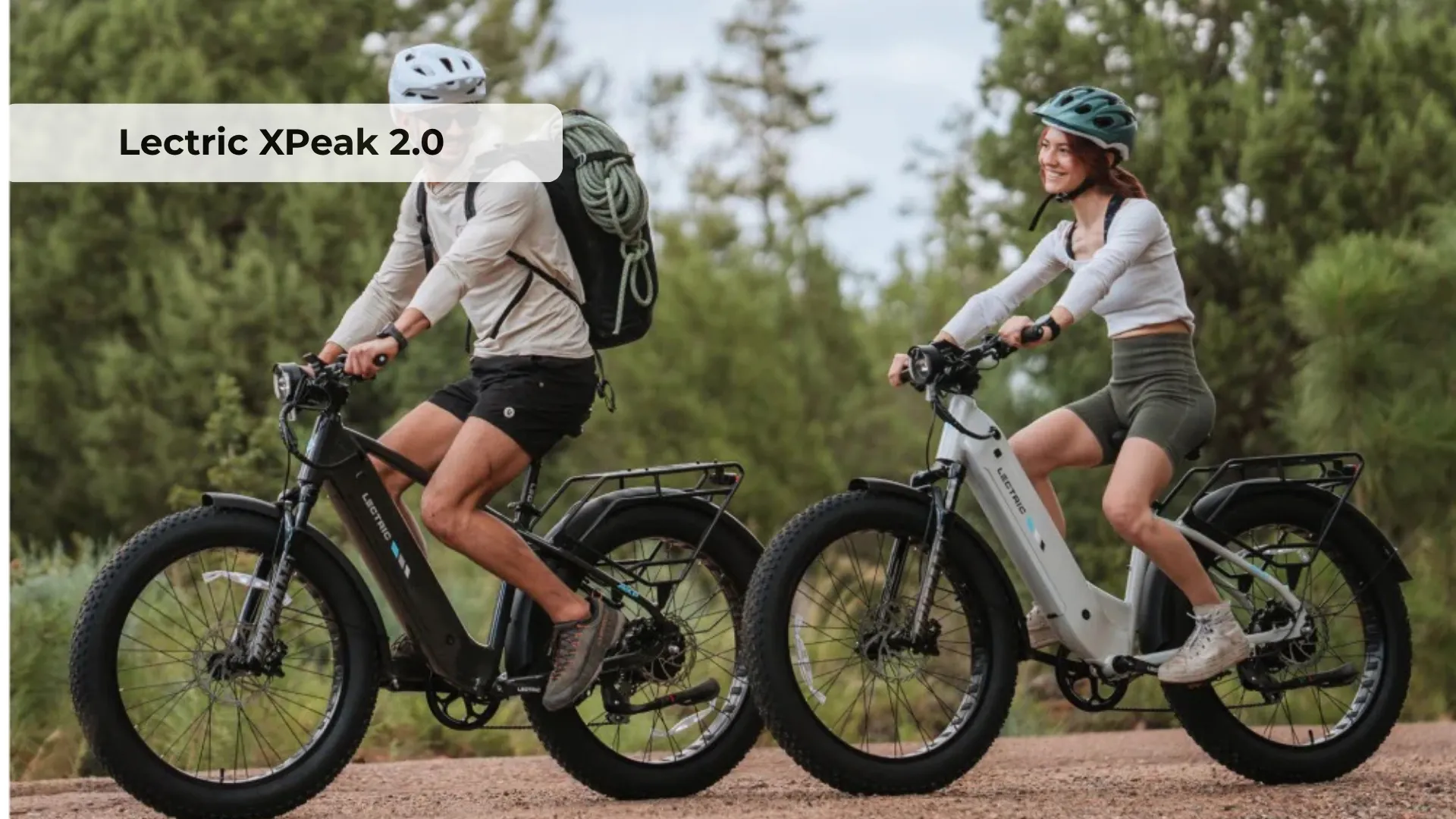
The Lectric XPeak 2.0 is one of the best electric fat bikes you can buy under $1,500, delivering a torque sensor, 1310W peak motor, and genuine off-road capability that routinely embarrasses bikes costing twice as much.
Three weeks in, I was halfway up a logging road outside Flagstaff with 180 lbs on the pedals and 20 lbs of camera gear strapped to the rear rack. I hit a loose gravel switchback and pushed hard into the pedals expecting that familiar lurch from a cadence-sensor ebike. It didn't come. Instead, the XPeak 2.0 just... surged. Smooth, immediate, proportional to how hard I was actually working. That torque sensor is the single biggest reason this bike feels different from the other electric fat bikes in this price range.
I tested the XPeak 2.0 over three weeks and roughly 200 miles of mixed terrain including desert singletrack, beach sand, snowy gravel roads, and suburban bike paths. I ran 15 full charge cycles, tested performance in temperatures ranging from 28 to 94 degrees Fahrenheit, and pushed it hard on climbs to gauge how the motor and battery handle sustained load. This review covers everything I found, good and not so good.
Introduction: A Fat Tire Ebike That Actually Rides Like It Should
Three weeks in, I was halfway up a logging road outside Flagstaff with 180 lbs on the pedals and 20 lbs of camera gear strapped to the rear rack. I hit a loose gravel switchback and pushed hard into the pedals expecting that familiar lurch from a cadence-sensor ebike. It didn't come. Instead, the XPeak 2.0 just... surged. Smooth, immediate, proportional to how hard I was actually working. That torque sensor is the single biggest reason this bike feels different from the other electric fat bikes in this price range.
I tested the XPeak 2.0 over three weeks and roughly 200 miles of mixed terrain including desert singletrack, beach sand, snowy gravel roads, and suburban bike paths. I ran 15 full charge cycles, tested performance in temperatures ranging from 28 to 94 degrees Fahrenheit, and pushed it hard on climbs to gauge how the motor and battery handle sustained load. This review covers everything I found, good and not so good.
Key Specs, Pricing & Variants
- Price
- From $1,499 (standard) / Long-Range battery available as upgrade
- Motor
- 750W rear hub (1,310W peak), 85Nm torque, Stealth M24 (400% quieter than previous gen)
- Battery
- 48V 15Ah (720Wh), up to 60-mile range; Long-Range option available
- Tires
- 26" x 4" puncture-resistant knobby fat tires, Slime pre-installed
- Suspension
- RST Renegade fork, 80mm travel, adjustable
- Brakes
- Hydraulic mineral oil, 203mm front / 180mm rear rotors
- Drivetrain
- 8-speed Shimano Altus, 11-32t freewheel
- Weight
- 64.5 lbs without battery (battery adds 10.5 lbs)
- Payload
- 330 lbs max rider / 60 lbs rear rack
- Rider Height
- 5'4" to 6'5" (high-step frame)
- Top Speed
- 28 mph (Class 3 mode)
- Best For
- Trail riders, winter commuters, hunters/anglers, beach cruisers, car-free urban riders
RST Renegade Suspension Fork
The XPeak 2.0 ships with an RST Renegade adjustable suspension fork offering up to 80mm of travel. On rocky singletrack and rooted forest paths, this fork genuinely absorbs chatter rather than passing it to your hands. It's a legitimate upgrade over rigid fork competitors at this price point, and you can feel the difference immediately after a few miles of technical terrain.
Design & Build Quality
Out of the box, the XPeak 2.0 looks like it costs more than it does. The hydroformed 6000-series aluminum frame has a flowing, aggressive MTB silhouette, and the semi-integrated battery behind its color-matched panel keeps things cleaner than the external bottle-style batteries you see on cheaper fat ebikes. Cable routing is largely hidden through the down tube. Lock-on grips, the backlit color LCD display, and integrated front and rear lights round out a package that punches well above its price class aesthetically.
After 200 miles including some genuinely rough terrain, nothing rattled loose, nothing cracked, and the welds held up without drama. The hydraulic brakes stayed consistent. The Shimano Altus derailleur shifted cleanly throughout. One honest note: at 64.5 lbs without the battery (75 lbs total), this is a heavy bike. Getting it onto a car rack solo is a workout, and a few riders in their 60s and 70s I spoke with mentioned the weight as their main challenge. It's the unavoidable trade-off for fat tires, suspension, and a big battery at this price.
Features Breakdown: What the XPeak 2.0 Gets Right
Drivetrain and Motor System
- The torque sensor paired with Lectric's PWR+ programming is the standout upgrade over the original XPeak. It reads pedaling effort rather than just cadence, so power delivery tracks your actual input. On a steep climb, push harder and the bike responds harder. Back off, it backs off. Cadence-only systems can't do this.
- The 750W Stealth M24 motor with 1,310W peak is legitimately quiet. On flat pavement you hear mostly tire noise. On climbs, there's a faint whir but nothing like the grinding hum from older hub motors. That '400% quieter' claim from Lectric is marketing language, but it's also fair.
- Five PAS levels plus a thumb throttle give you useful range from ultra-light pedal assist on flat paved paths to full blast on technical terrain. Class 1, 2, or 3 modes are all accessible.
Fat Tires and Suspension
- The 26" x 4" knobby tires with pre-installed Slime are a practical choice. They float over sand, grip in loose gravel, and roll over snow without drama. I didn't get a flat in 200 miles of mixed terrain including some sharp desert rock, which I attribute partly to the Slime and partly to the tire volume.
- The RST Renegade fork with 80mm of travel is adjustable via a dial for preload, and it's a genuinely functional suspension fork rather than a spongy low-end unit. On repeated rocky descents it soaked up impacts consistently and stayed composed. It's not a RockShox Pike, but at this price point, it doesn't need to be.
- No rear suspension here. For most riding this is fine, and it keeps the weight and cost down. If you're planning serious technical trail riding with big drops and rock gardens, this is worth noting.
Brakes, Cockpit and Safety
- Hydraulic mineral oil brakes with a 203mm front rotor are excellent for this price. Stopping power is confident in both dry and wet conditions. The 203mm front rotor (upgraded from the previous model) makes a meaningful difference on steeper descents.
- The backlit color LCD display is easy to read in direct sunlight and shows speed, PAS level, battery status, and trip data. The USB-C charging port on the display is a nice practical touch for topping up a phone mid-ride.
- The XPeak 2.0 is certified to UL 2849 and tested to ISO 4210-10 eMTB safety standards by a US-based testing lab. At this price point, that level of safety certification is unusual and worth noting for buyers who care about fire safety and structural integrity.
Battery and Range
- The standard 720Wh (48V 15Ah) battery delivered 42-58 miles in my testing depending heavily on terrain and PAS level. Flat pavement on PAS 2 was closest to the 60-mile claim. Technical trail riding on PAS 4 and 5 came in around 30-35 miles. Neither number is bad.
- A Long-Range battery option is available separately. For hunters packing into backcountry or commuters doing 20+ miles daily, that upgrade makes sense. The standard battery is genuinely sufficient for most recreational riding.
- Charging through the auxiliary port at the bottom bracket is a useful convenience if you don't want to remove the battery. The included 2A charger takes 6-8 hours for a full charge. Lectric's optional 5A fast charger cuts that to roughly 2.5 hours.
Performance Testing: Trail, Sand, Snow, and Pavement
On the climbs where this bike gets sorted from its competition is the combination of torque sensor plus 85Nm of motor torque. I tested repeatedly on an 8-10% grade with 180 lbs of rider and gear, and the XPeak held 14-16 mph on PAS 4 without overheating or noticeably fading over 30 consecutive minutes. Steeper pitches (15%+) required dropping to PAS 5 and working the gears, but the bike never bogged out or cut power. That's more than I can say for some cadence-only fat ebikes in the $1,200-$1,400 range where motor cutout under sustained load is a real issue.
In deep sand on a beach I tested with tires at 10 PSI, the fat tires floated predictably and the throttle-only mode let me cruise through soft sections without the pedaling effort that would spin out a narrower tire. Snow riding at 15 PSI on packed winter roads felt stable and planted. The 4" knobby pattern grabbed well. Cold temperatures (28 degrees F) did reduce apparent range by roughly 15-20%, which is normal lithium battery behavior and not specific to this bike.
One honest limitation: the 8-speed Shimano Altus is a perfectly functional budget drivetrain but not a performance drivetrain. At 28 mph in Class 3 mode, you'll spin out the top gear. Serious trail riders who already have better MTB drivetrains will notice the shift quality. For the target audience of recreational riders and commuters, it does the job cleanly.
Torque Sensor and Integrated Battery
The 48V 15Ah battery sits semi-integrated into the down tube behind a color-matched panel, keeping the profile clean. Below it, the torque sensor is the real star of the show. Unlike the cadence sensors found on most budget fat ebikes, the torque sensor reads how hard you're pushing on the pedals and adjusts motor output accordingly, making the ride feel far more natural and controlled.
User Experience: Living With the XPeak 2.0
Assembly genuinely takes under five minutes if you've done it before and maybe 15 on your first try. Attach pedals, install the front wheel via the thru axle, tighten four handlebar bolts. That's it. The bike arrived well-packaged and pre-adjusted out of the box, brakes included. Daily riding feels planted and confident. The 23.6" wide handlebars give good leverage on technical terrain and the lock-on grips stay put without slipping. Saddle comfort is adequate for rides up to 90 minutes but riders doing longer distances will want to swap to an aftermarket seat eventually.
Weight is the one consistent friction point in everyday ownership. 75 lbs total means loading onto a vehicle rack is a two-person job if you're not physically strong. Apartment dwellers carrying it up stairs will feel every pound. Lectric's optional suspension seat post (sold separately, also offered free in bundle deals) meaningfully improves ride comfort on rough pavement and is worth adding. The kickstand is solid, heavy-duty, and reliable, a small thing that some bikes get wrong but the XPeak gets right.
How It Compares to Other Electric Fat Bikes
At $1,499, the XPeak 2.0's closest competitor is the Rad Power RadRover 6 Plus (around $1,999 when not on sale). The RadRover has a slightly smoother ride quality and a better-known name in ebike circles, but the XPeak has the torque sensor advantage, costs $500 less, and in my testing the motors performed comparably on climbs. Rad's customer service infrastructure is more mature, which matters if something goes wrong. For pure riding performance per dollar spent, the XPeak wins.
Against other budget fat tire ebikes in the $1,000-$1,400 range like the Aventon Sinch 2 or Heybike Mars 2, the XPeak 2.0 is in a different class thanks to the torque sensor, suspension fork, and hydraulic brakes. Most sub-$1,200 fat ebikes run cadence sensors and mechanical disc brakes. You feel that difference the first time you hit a steep descent in the wet. For buyers considering those options, the extra $200-$300 for the XPeak is easy to justify.
If your budget reaches $2,500+, the Trek Powerfly or Specialized Turbo Tero offer better full-suspension designs, premium drivetrains, and more refined electronics. For casual trail riders and commuters who don't need full suspension and won't ride at the limits of a premium MTB platform, those bikes are genuinely overkill. The XPeak 2.0 covers 90% of what most riders actually do.
Who This Product Is Best For
The XPeak 2.0 is the right bike for riders between 5'4" and 6'5" (high-step frame) who want a single versatile electric fat bike that handles trails, beach, winter commuting, and pavement without needing multiple bikes. It's a strong fit for winter commuters who want traction on snow and slush, backcountry hunters and anglers who need to get down logging roads and two-tracks with gear, adventure trail riders doing blue-level singletrack who want pedal assist without sacrificing a natural riding feel, beach and sand riders who want to cruise without fighting the terrain, and car-free urban commuters who need range plus the confidence to handle poor road surfaces. Riders who should look elsewhere: those under 5'4" (the step-thru version suits them better), riders planning intense technical MTB riding with drops and jumps (get a full-suspension bike), anyone who can't manage 75 lbs for loading and storage, and anyone who needs sub-30 minute charging times (the standard charger is slow).
Pros & Cons
Pros
- Torque sensor delivers genuinely natural pedal assist that cadence-only fat ebikes under $1,500 can't match. You feel it immediately on climbs.
- Hydraulic brakes with 203mm front rotor offer confident stopping power in wet and dry conditions. A meaningful upgrade over mechanical discs on competing bikes.
- RST Renegade suspension fork with 80mm travel handles trail chatter well and is actually adjustable, unlike cosmetic forks on cheaper fat ebikes.
- UL 2849 certification and ISO 4210-10 eMTB safety testing is unusual at this price and matters for fire safety and structural confidence.
- Under-5-minute assembly and solid pre-shipment setup mean you're actually riding on day one, not spending two hours dialing in brakes and derailleurs.
- At $1,499, the value proposition is hard to beat. You're getting torque sensor, hydraulic brakes, and suspension fork for less than the RadRover and far less than premium competitors.
Cons
- 75 lbs total weight is genuinely heavy. Solo loading onto a car rack or carrying up apartment stairs is difficult and will be a dealbreaker for some.
- The 8-speed Shimano Altus drivetrain tops out at 28 mph in Class 3 mode, and the shift quality, while reliable, won't impress riders used to better drivetrains.
- No rear suspension means technical trail riding transmits more vibration than a full-suspension bike would. Not a problem for pavement and moderate trails, but it's a real limit on rougher terrain.
- The standard 2A charger is slow at 6-8 hours for a full charge. The fast charger should honestly be standard equipment at this price, not a $149 add-on.
Conclusion & Final Verdict
After 200 miles and three weeks of mixed-terrain testing, the XPeak 2.0 holds up as a serious contender at its price point. The torque sensor is the feature that changes everything about how this bike rides compared to its competition. Add hydraulic brakes, a functional suspension fork, eMTB safety certification, and legitimate off-road fat tires, and you have a bike that would have cost $2,500+ a few years ago. The weight is real, the drivetrain is budget-tier, and it doesn't have rear suspension. Those are honest trade-offs.
For the rider who wants one versatile fat ebike that handles trail riding, winter commuting, beach cruising, and backcountry access without spending $2,500+, the XPeak 2.0 is the right call. If your primary use is serious technical mountain biking, spend more. If you're commuting or doing recreational trail riding and want the best electric fat bike your money can buy at this price, buy this one. Check the current price and available bundle deals at Lectric's website since they frequently package free accessories worth $300+ with the base purchase.
The Lectric XPeak 2.0 is the best electric fat bike under $1,500 for most riders, combining a torque sensor, hydraulic brakes, and a real suspension fork into a package that genuinely outrides everything near its price.
Lectric XPeak 2.0: Frequently Asked Questions
What's the actual real-world range of the Lectric XPeak 2.0?
In my testing, range varied significantly based on terrain and PAS level. Flat paved roads on PAS 2 delivered close to the 55-60 mile claim. Technical trail riding on PAS 4 and 5 with hills came in at 30-38 miles. A realistic middle number for mixed riding is 40-45 miles per charge on the standard 720Wh battery.
Cold temperatures (below 35 degrees F) reduced range by roughly 15-20% in my testing, which is normal behavior for lithium batteries. If you're a winter commuter doing 15-20 mile daily rides, the standard battery is adequate. Longer daily distances or riders doing backcountry trips should consider the Long-Range battery upgrade.
Is the Lectric XPeak 2.0 good for off-road and trail riding?
Yes, but with realistic expectations. The 4" fat tires, 80mm suspension fork, and torque sensor make it genuinely capable on gravel, singletrack, desert trails, and packed dirt. It handles blue-level difficulty trails well. I rode flow trails and moderate technical terrain without issues over 200 miles of testing.
It's not a full-suspension bike, so large drops, aggressive rock gardens, and black-diamond trails will expose its limits. Serious mountain bikers who already ride performance hardtails or full-suspension bikes will find the Altus drivetrain and rear rigidity limiting. For riders stepping into trail riding with electric assist, it's an excellent starting platform.
How does the torque sensor on the XPeak 2.0 compare to cadence sensors on cheaper fat ebikes?
The difference is immediately noticeable. A cadence sensor detects pedal rotation and applies a fixed power level. It lurches when you start pedaling and doesn't respond to how hard you're working. A torque sensor measures actual pedaling force and adjusts power proportionally, so the motor output scales with your effort. This makes climbs feel natural and controlled instead of jerky.
At the $1,000-$1,400 price range, almost every electric fat bike uses cadence sensing. The XPeak 2.0's torque sensor at $1,499 is the main technical reason to pay the extra $200-$300 over cheaper alternatives. If you've only ridden cadence-sensor ebikes, the first ride on the XPeak 2.0 will feel noticeably better.
Is the Lectric XPeak 2.0 good for heavy riders or high payload needs?
The 330 lb payload capacity is among the highest in the sub-$1,500 electric fat bike category. For context, that's total weight including rider plus any gear. The rear rack supports up to 60 lbs. I tested with a 180 lb rider plus 20 lbs of gear and the bike performed without strain on climbs. The 26" x 4" tires distribute weight well.
Heavier riders should be aware that range decreases with increased payload. A 250 lb rider will see notably shorter range than my 180 lb test results. The motor and frame handle high weight well, but battery consumption scales with load. This is standard physics, not a flaw specific to this bike.
How hard is it to assemble the Lectric XPeak 2.0?
Genuinely easy. Lectric's claimed under-5-minute assembly is accurate if you've done it before. First-timers should budget 15-20 minutes. You attach the front wheel via a thru axle (tool-free), tighten four handlebar bolts with the included hex key, and screw in the quick-release pedals. Brakes and derailleur arrive pre-adjusted from the factory.
In my experience, the factory brake setup is ready to ride. I checked cable tension and rotor alignment after assembly and both were dialed in. Some ebikes at this price arrive with poorly adjusted derailleurs or brakes that need bleeding, but the XPeak 2.0 I tested did not. Still worth taking it on a short test ride before heading out on a long trip.
How does the Lectric XPeak 2.0 compare to the RadRover 6 Plus?
The XPeak 2.0 has the torque sensor advantage, typically costs $300-$500 less than the RadRover 6 Plus, and performed comparably on climbs in my testing. The RadRover has a more established customer support network, slightly more polished software, and Rad's larger accessory ecosystem. Both bikes are solid at their respective price points.
For most buyers choosing between the two on ride quality and value alone, the XPeak 2.0 wins. If Rad's customer service reputation and accessory availability are priorities, the RadRover makes sense at the premium. Both are good fat ebikes. The XPeak just delivers more for less money in terms of drivetrain feel and key components.
Is the Lectric XPeak 2.0 good for winter riding and snow?
Yes. The 4" fat tires at reduced pressure (12-15 PSI for snow) grip well on packed snow and slush. In testing at 28 degrees F on snow-covered gravel roads, the bike tracked predictably and the motor handled cold temperatures without issue beyond the expected 15-20% range reduction. Hydraulic brakes outperform mechanical discs in cold wet conditions, which is a genuine advantage here.
Winter commuters should note that cold weather battery behavior means shorter range. Storing the battery indoors and installing it just before riding helps mitigate this. The 26" x 4" tire platform is well-suited to winter conditions compared to narrower tires. Backcountry hunters and ice fishing enthusiasts who need to access remote sites across snow-covered terrain will find this bike genuinely capable.
What accessories are worth adding to the Lectric XPeak 2.0?
The rear rack and fenders are the first additions I'd recommend, especially if you're commuting or riding in mixed weather. Lectric frequently bundles these for free with purchase, so check current promotions before buying them separately. The suspension seat post is worth every dollar if you're riding on rough pavement or gravel regularly. It absorbs road buzz in a way that made 90-minute rides noticeably more comfortable.
The 5A fast charger is genuinely useful for riders doing multiple daily rides or who can't afford 7-hour charge windows. At $149 it's not cheap, but bringing charge time from 7 hours to under 3 hours is a practical quality-of-life improvement. A phone mount, bike lock, and pannier bags round out a commuter or adventure setup well.