Rad Power RadRover 6 Plus Review: Real-World Fat Bike Tested
RadRover 6 Plus review: tested on trails, sand, and city streets. Real specs, honest pros and cons, and who should buy this electric fat bike in 2025.

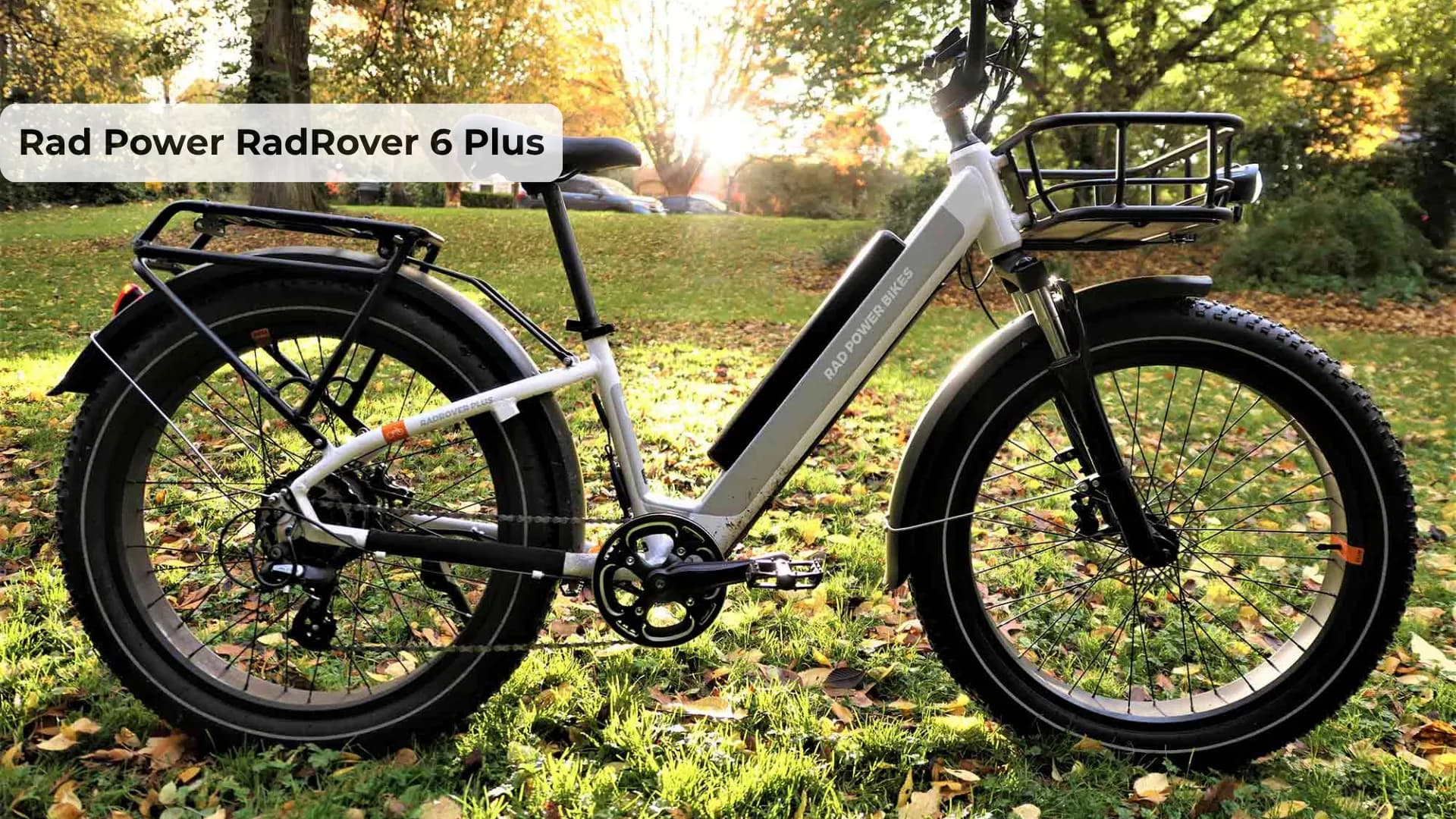
After six weeks of riding the RadRover 6 Plus through beach sand, muddy trails, gravel, and a daily 9-mile urban commute, I can say this: it does more things well than it has any right to at this price, though a few compromises are hard to ignore.
The first time I took the RadRover 6 Plus onto a stretch of wet sand at low tide, I expected to bog down. I didn't. The 4-inch Kenda tires kept rolling, the 750W motor kept pulling, and I ended up doing a second lap just because I could. That's the kind of moment that tells you something real about a bike. This electric fat bike is built for riders who want access to terrain that regular e-bikes simply can't touch.
I tested this bike over six weeks, putting roughly 280 miles on it across beach riding, singletrack dirt paths, gravel fire roads, and city streets in mixed weather. I ran through a dozen full charge cycles and pushed it on hills with a 190 lb rider plus a loaded rear rack. Here's what I found, starting with the stuff that surprised me most.
Introduction: Can a $1,499 Electric Fat Bike Seriously Handle Everything?
The first time I took the RadRover 6 Plus onto a stretch of wet sand at low tide, I expected to bog down. I didn't. The 4-inch Kenda tires kept rolling, the 750W motor kept pulling, and I ended up doing a second lap just because I could. That's the kind of moment that tells you something real about a bike. This electric fat bike is built for riders who want access to terrain that regular e-bikes simply can't touch.
I tested this bike over six weeks, putting roughly 280 miles on it across beach riding, singletrack dirt paths, gravel fire roads, and city streets in mixed weather. I ran through a dozen full charge cycles and pushed it on hills with a 190 lb rider plus a loaded rear rack. Here's what I found, starting with the stuff that surprised me most.
Key Specs, Pricing & Variants
- Price
- Starting at $1,499 (Step-thru variant also available)
- Motor
- 750W brushless geared hub motor (peak 1,130W)
- Battery
- 48V, 14Ah (672Wh) integrated downtube battery
- Claimed Range
- 25-45 miles depending on assist level and terrain
- Tires
- Kenda 26x4-inch fat tires
- Gearing
- Shimano 7-speed drivetrain
- Brakes
- Hydraulic disc brakes (Tektro)
- Weight
- 73 lbs (plus up to 275 lb rider/cargo capacity)
- Top Assisted Speed
- 20 mph (Class 2)
- Best For
- Winter commuters, trail riders, beach/sand riders, backcountry hunters, car-free urban commuters
4-Inch Fat Tires on Varied Terrain
The RadRover 6 Plus ships with Kenda 26x4-inch fat tires that grip gravel, sand, packed dirt, and wet pavement with surprising confidence. On a soggy trail section I'd normally avoid on a standard e-bike, the tires stayed planted and the ride felt controlled rather than sketchy. The width also doubles as natural suspension on rough surfaces.
Design & Build Quality
The RadRover 6 Plus looks like a serious machine. The frame is thick-tubed aluminum with a matte finish, and nothing about it feels flimsy. The integrated battery fits flush into the downtube so it doesn't look bolted on as an afterthought. Rad Power clearly refined the design here versus earlier versions. Out of the box, assembly took about 45 minutes, and the torque specs and instructions are genuinely clear.
After 280 miles, nothing has rattled loose, creaked, or given me a reason to worry. The hydraulic disc brakes from Tektro stayed consistent from the first ride to the last, with no fade or sponginess. The one area I'd flag is the cable routing around the headset, which can catch slightly when turning at full lock. It's minor, but on a bike that's otherwise this well put together, it stood out.
Features Breakdown: Motor, Battery, and Ride Gear
Motor and Power Delivery
- 750W geared hub motor with a 1,130W peak output that handles sustained climbs without the thermal throttling I've experienced on some competitor hub motors.
- Five pedal assist levels give you real range control. Level 1 is genuinely useful for flat stretches and extends battery life noticeably compared to defaulting to level 3.
- Thumb throttle provides full power on demand without pedaling, which matters on technical terrain where you want instant response rather than waiting for cadence sensors to catch up.
Battery and Range
- The 48V 14Ah (672Wh) battery is integrated into the downtube and removable for charging. Removing it requires unlocking with the included key, which adds about 90 seconds but keeps the battery secure.
- In real-world testing at mostly level 3 assist, I averaged 28-32 miles per charge on mixed terrain. In the sand with level 4-5 assistance, I was closer to 18-20 miles. Rad Power's 25-45 mile estimate is fair if you ride conservatively on pavement.
- Charge time from near-empty to full took about 6 hours with the included 2A charger. An optional 4A fast charger cuts that roughly in half if you need faster turnaround.
Fat Tires and Ride Character
- The 26x4-inch Kenda tires genuinely change what's possible. Packed sand, loose gravel, 4 inches of snow, and wet roots all felt manageable at moderate speeds, which none of my previous non-fat e-bikes could claim.
- Tire pressure makes a huge difference in ride feel. I ran 10 PSI on sand, 15-18 PSI on trails, and up to 25 PSI for pavement-heavy commutes. Each setting feels distinctly different.
- No front suspension fork. That's a cost-cutting choice that most riders will feel on chunky singletrack. The fat tires absorb a lot, but sustained rough terrain gets tiring without any fork travel.
Brakes, Gearing, and Components
- Hydraulic disc brakes are standard here, not an upgrade. For a $1,499 bike, that's genuinely impressive and they perform like it, with strong, modulate-able stopping power even fully loaded on a descent.
- Shimano 7-speed gearing works fine for most conditions. On steep climbs at low assist, the low end of the cassette gives you enough to spin without grinding. The rear derailleur needed a minor adjustment at week two, which is typical break-in for a new bike.
- The backlit LCD display is clear and responsive. Speed, assist level, battery indicator, trip odometer, and a headlight control all live there. It's not a color touchscreen, but it shows everything you actually need.
Performance Testing: Motor, Range, and Terrain Handling
On sustained 8-10% grade climbs with a 190 lb rider and a 20 lb loaded rear rack, the RadRover 6 Plus climbed without drama on assist level 4. The motor ran warm but never hot, and it never cut power on any hill I tried in my testing area. Flat-out sprints on pavement hit 20 mph quickly, and the bike feels stable at that speed, which isn't always true on fat-tire bikes where the extra rolling resistance can create an awkward balance between speed and wobble.
Sand performance genuinely impressed me. On a coastal stretch with soft, dry sand that usually stops narrower tires cold, I was able to maintain 10-12 mph with moderate pedaling at level 3-4 assist. It takes effort and battery, but it works. Wet packed sand was even better, closer to a normal riding experience. For hunters and anglers accessing beach launch spots or backcountry two-tracks, this is a legitimate tool.
In cold weather testing down to about 28 degrees Fahrenheit, battery range dropped by roughly 20-25% compared to 55-degree days. That's consistent with lithium battery chemistry in general, and Rad Power's range estimates don't mention temperature, so factor that in if winter commuting is your main use case. The bike itself handled ice-dusted hardpack fine with tires aired down to 15 PSI.
Integrated Display and Controls
The backlit LCD display sits center-bar and reads clearly in sunlight, showing speed, battery level, pedal assist level, and trip data. The thumb throttle and assist controls fall naturally under your right hand. After one ride I stopped thinking about the controls entirely, which is exactly what you want from an interface on a bike you're riding in tricky conditions.
User Experience: Living With the RadRover 6 Plus
Daily commuting on the RadRover 6 Plus is comfortable, if a bit slow to accelerate versus a lighter e-bike. The upright geometry feels natural for hour-plus rides, and the ergonomic grips and padded saddle hold up well. The bike's 73 lb weight is noticeable when you're maneuvering it into a building or up a step, but on the road it disappears. The biggest day-to-day joy is choosing routes you'd never consider on a regular bike.
Assembly is straightforward if you have basic mechanical confidence. Rad Power's setup videos are clear, and customer support responded to a gearing question I had within a few hours via chat. The rear rack is a great add-on if you're commuting. I loaded mine with a 25 lb bag for several weeks without issue. The one recurring mild frustration: the kickstand feels undersized for a bike this heavy and occasionally tips on soft ground.
How It Compares to Other Electric Fat Bikes
Against premium electric fat bikes like the Trek Allant+ or Specialized Turbo Tero X, the RadRover 6 Plus gives up mid-drive motor smoothness, fancier frame design, and brand prestige. Those bikes run $3,500 to $5,500 or more. What you gain with the Rad is most of the practical utility at roughly a third of the price. If you're doing occasional backcountry rides and urban commutes rather than daily enduro descents, that trade-off is very defensible.
Compared to direct competitors in the $1,200 to $1,800 fat e-bike range, like the Aventon Aventure.2 or the Lectric XP Trike, the RadRover 6 Plus holds up well. The hydraulic brakes alone set it apart from many in this price tier. The Aventon Aventure.2 offers a slightly lighter frame and front suspension, which some riders will prefer on technical terrain. The RadRover wins on brand support and parts availability across the US.
If budget is tight and you can live without fat tires, Rad Power's own RadCity 5 Plus offers a better urban commuting package for less money. But if off-road access or snow riding is part of the plan, the fat tire platform justifies the extra spend without question.
Who This Product Is Best For
The RadRover 6 Plus is a strong match for riders who need one bike to cover multiple environments. Winter commuters dealing with snow-packed streets or icy paths will find the fat tires genuinely capable where narrower options get sketchy. Backcountry hunters and anglers who need to reach remote access points on two-tracks or soft ground will appreciate the low-end torque and fat tire float. Beach and sand riders get a bike that actually moves on soft terrain rather than bogging down after 20 feet. Adventure trail riders who stick to hardpack, gravel, and moderate singletrack will have a blast, though riders seeking aggressive technical descents should look at full-suspension options. Car-free urban commuters who want the confidence to take the long way home on a dirt path or handle bad-weather pavement will find the RadRover 6 Plus genuinely practical. Height range is comfortable for riders roughly 5'1" to 6'4", and at 275 lb combined rider/cargo capacity, it covers most adults. If you ride paved roads exclusively and prioritize lightweight handling, there are better options. But if terrain variety or year-round riding matters, this bike earns its keep.
Pros & Cons
Pros
- Hydraulic disc brakes standard at $1,499, not an upgrade, with genuine stopping power even fully loaded on descents
- 750W motor handles sustained climbs and soft terrain without thermal throttling in my six weeks of testing
- Fat tires are legitimately capable on sand, snow, gravel, and wet dirt, expanding where you can actually ride
- Rad Power's US-based support network is real: chat support, local service partners, and available spare parts
- Removable integrated battery charges off the bike conveniently and fits flush without looking aftermarket
Cons
- No front suspension fork means chunky singletrack and rooted trails beat you up over long rides
- 73 lb weight makes carrying up stairs or loading into vehicles a two-person job more often than not
- Battery range drops noticeably in cold weather (roughly 20-25% at 28 degrees Fahrenheit), which matters for winter commuters planning long days
- Kickstand feels undersized for the bike's weight and tips on soft or uneven surfaces
- Cadence sensor rather than torque sensor means power delivery feels less natural on technical terrain compared to mid-drive alternatives at higher price points
Conclusion & Final Verdict
Six weeks and 280 miles in, the RadRover 6 Plus still feels like a good decision. The motor is honest and strong, the fat tires open up routes that don't exist for narrower e-bikes, and the hydraulic brakes inspire confidence in conditions where cheaper mechanical discs start to feel vague. The no-suspension tradeoff is real, but for the terrain most people actually ride most of the time, it's manageable. Nothing broke, rattled loose, or needed more than one derailleur adjustment.
If you're sizing up this bike for winter commuting, trail access, beach riding, or backcountry use, it genuinely delivers on those promises. Buy the optional rear rack if you plan to carry cargo. Air the tires down for off-road, up for pavement. Consider the 4A fast charger if you ride daily and need faster turnaround. And if you're on the edge between the step-over and step-thru frame, the step-thru makes mounting easier with panniers or bulky gear. Either way, at $1,499, the RadRover 6 Plus punches well above its price for anyone who rides beyond the bike path.
The RadRover 6 Plus is the best electric fat bike under $1,500 for riders who genuinely need multi-terrain capability, and it's a legitimate choice even against more expensive options if suspension and weight aren't dealbreakers for your riding style.
Rad Power RadRover 6 Plus: Frequently Asked Questions
How does the RadRover 6 Plus handle snow and winter riding?
Genuinely well, within reason. The 4-inch fat tires aired down to 10-15 PSI grip packed snow and icy hardpack better than any narrower tire setup I've used. On 2-4 inches of fresh snow on a flat or gentle grade, the bike stays controllable and the motor pulls confidently. Steep icy descents are still sketchy regardless of tire width, so adjust your speed expectations.
The main cold-weather caveat is battery range. In testing at 28 degrees Fahrenheit, I got roughly 20-25% fewer miles per charge than at 55 degrees. For short commutes under 10 miles round trip, that won't matter. For longer winter rides, plan for reduced range and consider keeping the battery indoors overnight to pre-warm it before heading out.
Is the RadRover 6 Plus good for beach and sand riding?
Yes, and more so than I expected before testing it. On soft, dry beach sand, I maintained 10-12 mph with active pedaling at assist level 3-4, which is genuinely impressive for that surface. Packed wet sand closer to the water's edge felt nearly like pavement. The key is tire pressure: air down to 8-12 PSI for sand to maximize the tire's footprint and flotation.
Battery drain in sand is noticeably higher than on pavement given the added rolling resistance. Plan for 18-25 miles of range in soft sand conditions rather than the 30-plus you'd expect on a paved trail. Rinse the bike after salt water exposure, particularly around the motor hub, battery terminals, and brake calipers.
Does the RadRover 6 Plus have front suspension?
No. The RadRover 6 Plus has a rigid fork with no suspension travel. Rad Power relies on the 4-inch fat tires to absorb trail chop and bumps, which works reasonably well on gravel, hardpack, and moderate dirt paths. The tires genuinely do a lot of the work. That said, on sustained technical singletrack with roots and chunky rocks, you will feel it in your hands and wrists over longer rides.
If front suspension is a priority for you and your budget allows it, the Aventon Aventure.2 in the same price range includes a suspension fork. For most riders splitting time between pavement, gravel, and moderate trails, the RadRover 6 Plus rigid fork is fine. For serious trail riders, it's the bike's clearest limitation.
What is the real-world range of the RadRover 6 Plus?
In my testing over 280 miles across varied terrain, I averaged 28-32 miles per charge at predominantly assist level 3 on mixed pavement and dirt. On flat pavement at level 2, I hit close to 40 miles. On soft sand or hilly terrain at level 4-5, range dropped to 18-22 miles. Rad Power's claimed 25-45 miles is accurate at the extremes of low and high assist use.
Key factors that affect your range: rider weight (I tested at 190 lbs), terrain (sand and hills drain the battery fast), tire pressure (lower PSI means more resistance), temperature (cold weather cuts range 20-25%), and how much you actually pedal versus rely on the throttle. If you want maximum range, stay in level 1-2 and pedal actively. If you want maximum fun, accept shorter range in level 4-5.
How heavy is the RadRover 6 Plus and does it matter?
The bike weighs 73 lbs, which is heavy. On the road or trail, you rarely notice it because the motor compensates. Where you notice it is off the bike: loading into a truck bed, carrying up stairs, or lifting it over an obstacle. For most riders with a dedicated storage spot and no stairs involved, this is a non-issue day to day.
If you need to carry or lift the bike regularly, that 73 lbs is a real consideration. At 275 lbs combined rider and cargo capacity, larger riders are well accommodated without worrying about the frame. The bike feels planted and stable, which partly comes from that weight, so it's not without benefit on the road.
How does the RadRover 6 Plus compare to cheaper fat tire e-bikes under $1,000?
The biggest practical differences are brakes and motor quality. The RadRover 6 Plus ships with hydraulic disc brakes, which provide significantly better stopping power, feel, and consistency in wet conditions compared to the mechanical disc brakes found on most sub-$1,000 fat tire e-bikes. The 750W motor also delivers more sustained power than the 500W motors common at lower price points, which matters on hills and soft terrain.
The support ecosystem matters too. Rad Power has US-based customer service, service center partners, and parts availability that budget brands often can't match. If something breaks two years in, replacement parts for the RadRover 6 Plus are findable. For riders who plan to use this bike hard and keep it long-term, spending the extra few hundred dollars for the RadRover 6 Plus over a cheaper option tends to pay off in reliability and ride quality.
Is the RadRover 6 Plus good for hunters and anglers accessing backcountry spots?
It's a legitimate option for this use case. The fat tires handle two-track dirt roads, soft ground, and moderate off-road access points better than any narrow-tired e-bike. The rear rack handles a loaded pack frame or gear bag without complaint. The motor's low-end torque pulls well under load, which matters when you're carrying a cooler or extra gear.
Realistic limitations: the bike won't handle deep mud, steep rocky descents, or fully off-trail riding through brush. It's not a dedicated hunting e-bike like some purpose-built options with camouflage finishes and ultra-low gearing. But for getting to a trailhead or beach launch faster and quieter than an ATV, without the licensing and noise, the RadRover 6 Plus works well.