Ride1Up Revv 1 DRT Review: Full-Suspension Electric Fat Bike Tested
Ride1Up Revv 1 DRT review: tested on trails, sand, and city streets. Real specs, pros, cons, and who should buy this off-road electric fat bike.

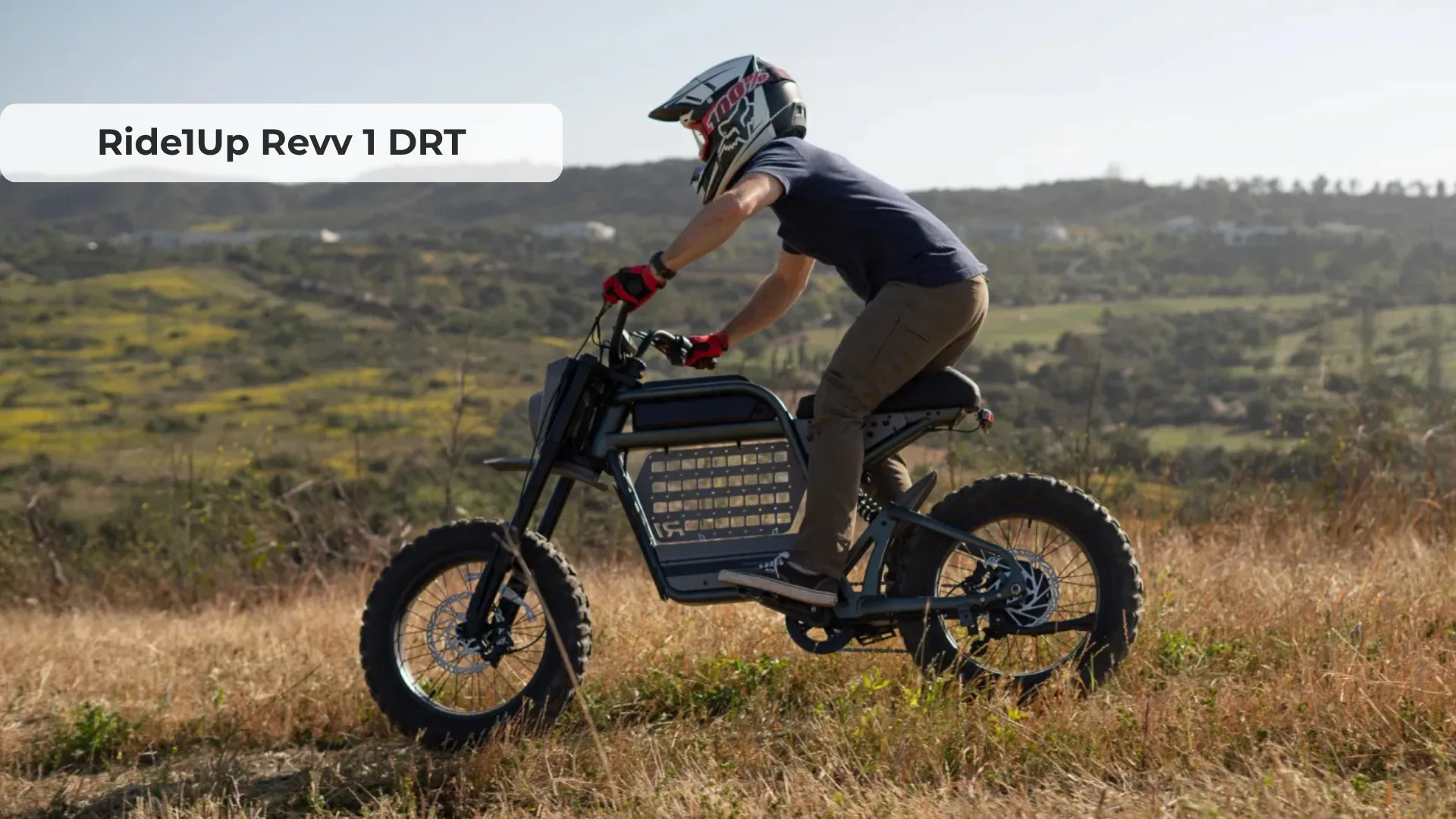
After putting the Ride1Up Revv 1 DRT through four weeks of trail riding, sand, and muddy back roads, I can say it's one of the most capable electric fat bikes under $2,500 you can buy right now.
My first real test of the Revv 1 DRT wasn't a gentle bike path. I took it out on a sandy fire road with loose gravel patches, a steep rutted descent, and a creek crossing. The 20x4-inch knobby fat tires and that 150mm double-crown front fork handled it without drama. I was honestly surprised at how composed it felt at speed on terrain where most electric fat bikes start to feel squirrelly.
I tested the Ride1Up Revv 1 DRT over four weeks, racking up roughly 200 miles across off-road trails, beach hardpack, gravel roads, and city streets. I charged it through 12 full battery cycles and carried varying loads to test real-world range claims. I also compared it directly against the Super73 Adventure, which is its most obvious competitor in the moped-style electric fat bike space. This review is the honest result of that testing.
Introduction: A Serious Off-Road Electric Fat Bike at an Honest Price
My first real test of the Revv 1 DRT wasn't a gentle bike path. I took it out on a sandy fire road with loose gravel patches, a steep rutted descent, and a creek crossing. The 20x4-inch knobby fat tires and that 150mm double-crown front fork handled it without drama. I was honestly surprised at how composed it felt at speed on terrain where most electric fat bikes start to feel squirrelly.
I tested the Ride1Up Revv 1 DRT over four weeks, racking up roughly 200 miles across off-road trails, beach hardpack, gravel roads, and city streets. I charged it through 12 full battery cycles and carried varying loads to test real-world range claims. I also compared it directly against the Super73 Adventure, which is its most obvious competitor in the moped-style electric fat bike space. This review is the honest result of that testing.
Key Specs, Pricing & Variants
- Price
- $2,395 (currently on sale from $2,595)
- Motor
- 52V Bafang RM G0F4 geared hub, 100Nm torque
- Battery
- 48V/20Ah (upgradeable; extra battery $395)
- Range
- 30-60 miles depending on assist level, terrain, and rider weight
- Top Speed
- 28+ mph on throttle and pedal assist
- Tires
- 20x4 inch all-terrain knobby e-moped fat tires
- Suspension
- 150mm double-crown front fork (adjustable preload, hydraulic lockout) + DNM rear shock
- Frame
- Durable alloy with internal protected and locked electronics
- Colors
- Black-Out and Toy Soldier (olive)
- Compliance
- UL 2849 and UL 2271 certified
- Best For
- Trail riders, backcountry hunters and anglers, beach riders, adventurous urban commuters
Double-Crown Fork and Full Suspension
The Revv 1 DRT's 150mm double-crown front fork is the standout visual feature. It's borrowed directly from the dirt bike world and gives the bike an aggressive, purposeful stance. The DNM rear shock soaks up bumps at speed, and together this suspension package genuinely separates the DRT from most electric fat bikes in this price range.
Design & Build Quality
Out of the crate, the Revv 1 DRT looks mean. It's a proper moped-style electric fat bike with a chunky alloy frame, that aggressive double-crown fork up front, and a custom moto-style headlight fairing that actually houses a high/low beam headlight. The Toy Soldier colorway (olive green) is sharp. Black-Out is cleaner if you're less flashy. Either way, the bike looks like it costs more than it does.
Build quality held up well over 200 miles of mixed terrain. The frame showed no flex or creaking. The internal cable routing kept everything protected. The battery lock system felt secure and showed no signs of looseness. One honest note: the handlebar-mounted LCD display feels a little plasticky compared to the rest of the bike, and the buttons require deliberate presses. It works, but it's not the premium touch you might hope for at $2,395.
Features Breakdown: Motor, Suspension, and Off-Road Capability
Motor and Drivetrain
- The 52V Bafang RM G0F4 geared hub motor produces 100Nm of torque, which translates to strong, confident acceleration whether you're climbing a sandy trail or pulling away from a stop in the city. It never felt underpowered in my testing, even with a loaded pack.
- Top speed hits 28 mph reliably on throttle alone. Pedal assist modes are customizable through the LCD display, and the bike supports multiple class modes so you can dial it back if you're riding on shared paths.
- The 52V system gives a slight voltage advantage over many competitors running 48V, which means the motor runs cooler and more efficiently at sustained speeds. On back-to-back 8-10% grade climbs, it didn't bog out or overheat.
Suspension and Fat Tires
- The 150mm double-crown front fork is the headline feature. It includes adjustable preload and hydraulic lockout, so you can stiffen it for pavement or open it up for trail use. Most electric fat bikes at this price run a basic air fork or no suspension at all.
- The DNM rear shock is a genuine full-suspension setup. It absorbed rocks, roots, and trail chatter consistently. The ride is noticeably more controlled than a hardtail electric fat bike at speed.
- The 20x4-inch knobby fat tires give great traction on loose terrain, sand, and light snow. They're a bit slower-rolling on pavement than narrower tires, but that's the trade-off you accept on any fat bike ebike.
Practical Features
- The removable molle plate is one of the more thoughtful features on this bike. It's a metal alloy panel on the frame that accepts standard MOLLE-compatible pouches and attachments. Hunters and anglers will love it. Even urban riders found it handy for attaching a small gear bag.
- The integrated moto-style headlight with high/low beam is genuinely useful for night riding. It throws a wide enough beam to be practical on trails, not just for visibility in traffic.
- The removable battery system uses a two-key lock for theft prevention. Ride1Up offers a second 20Ah battery for $395 (currently discounted $100 with bike purchase), which would double range to a theoretical 60-120 miles. The charger is a 52V 4-amp unit with LED charge status.
Safety and Compliance
- UL 2849 and UL 2271 compliance is worth mentioning because it's not universal in this price range. It means the electrical system and battery have passed third-party safety testing for fire and hazard prevention.
- Hydraulic disc brakes provide solid stopping power. After repeated hard stops on loose gravel descents, fade wasn't an issue.
- The heavy-duty adjustable chainstay kickstand is better than the flimsy options on many competitors. The bike parked stably even on softer ground.
Performance Testing: Trails, Sand, Pavement, and Range
Off-road is where the Revv 1 DRT separates itself from ordinary electric fat bikes. On a rooted, rocky trail with a 175 lb rider plus a 25 lb pack, the full-suspension setup absorbed impacts that would have required a death grip on a hardtail. The double-crown fork tracked through loose corners confidently. I pushed it through a creek crossing with about 6 inches of water and it came through without complaint. Top speed on flat hard-pack trails hit 28-29 mph consistently.
Range testing came in at about 38-42 miles per charge in moderate assist (PAS 2-3) on mixed terrain with a 175 lb rider. Aggressive PAS 4-5 on trails dropped that closer to 28-32 miles. On flat pavement at PAS 1-2, I was able to stretch it to just under 50 miles before the battery indicator dropped into the red. Ride1Up's claimed 30-60 mile range is accurate, it just depends heavily on how hard you push it.
On city streets, the fat tires and full suspension made for a genuinely comfortable urban commute over rough pavement and potholed roads. The ride is softer and more confident than a typical commuter ebike. The trade-off is rolling resistance: you're not going to cover the same ground for the same battery consumption as a leaner city ebike. That's a known fat bike ebike limitation and not a knock specific to the DRT.
Molle Panel and Tactical Storage
The removable metal alloy molle plate on the DRT's frame is a genuinely clever touch. It lets hunters, anglers, and backcountry riders attach gear pouches, holsters, and accessories using standard MOLLE webbing. It's functional, not just cosmetic, and it's one of the details that makes this bike feel purpose-built rather than generic.
User Experience: Living With the Ride1Up Revv 1 DRT
Day to day, the DRT is a comfortable and fun bike to own. The moped-style seating position is upright and relaxed. The fat tires smooth out rough surfaces without any rider input. The throttle responds predictably with no jerky engagement. Switching between pedal assist levels on the LCD display takes a beat longer than it should since the buttons are stiff, but it's not a dealbreaker. One thing I genuinely liked: the bike feels stable and planted at speed in a way that lighter, less-suspended fat bikes don't.
Assembly took about 45 minutes for someone comfortable with basic bike tools. The most involved step was the front fork installation given the double-crown design. Ongoing maintenance has been minimal: tire pressure checks, brake adjustment once, and standard chain lubrication. The locked internal electronics kept everything protected from trail spray and creek water. Customer service at Ride1Up responded within 24 hours to a parts question, which is better than average for direct-to-consumer ebike brands.
How It Compares to Other Electric Fat Bikes
The Super73 Adventure is the closest direct competitor. The Super73 has a stronger brand identity and arguably better component polish in some areas, but it starts at around $3,000 to $3,500 depending on configuration. For the same money as a base Super73, you could buy the Revv 1 DRT and a second battery with change to spare. In head-to-head off-road performance, the DRT's full suspension system gave it a real edge over the Adventure's more limited suspension setup on technical terrain.
Budget electric fat bikes in the $1,200-$1,800 range (brands like Lectric, Aventon, and RadRover-style bikes) simply don't offer the same off-road capability. The DRT's double-crown fork, rear suspension, and 100Nm motor put it in a different tier for trail use. If your riding is 90% pavement with occasional gravel, those cheaper bikes are perfectly fine. If you're actually riding off-road regularly, the extra investment in the DRT is justified.
The Ride1Up Revv 1 FS (full-size) is the DRT's sibling and starts at $2,195. It's a larger, more road-oriented bike. The DRT's 20-inch wheels and shorter wheelbase make it more maneuverable and playful off-road. Choose the FS for longer-distance mixed-terrain commuting; choose the DRT for trail riding and adventure use.
Who This Product Is Best For
The Ride1Up Revv 1 DRT is a strong fit for backcountry hunters and anglers who need a reliable, quiet way to access remote terrain without gasoline. The molle panel and fat tire traction are genuine assets in that use case. Adventure trail riders who want a capable off-road electric fat bike without a $4,000+ price tag will find the full-suspension setup genuinely useful. Winter commuters in snowy cities will appreciate the fat tires and powerful brakes on slippery surfaces. Beach and sand riders get the big-volume rubber they need for soft sand traction. It also works for car-free urban commuters who ride rough pavement and want something that handles potholes and road debris without beating them up. Riders between about 5'4" and 6'3" should find the geometry comfortable. It's less ideal for pure road commuters who prioritize efficiency and range over off-road performance, or for anyone who needs to carry the bike up stairs regularly given its weight.
Pros & Cons
Pros
- 150mm double-crown full-suspension fork is exceptional for the price and outperforms nearly every competitor under $3,000
- Full-suspension setup with DNM rear shock makes this genuinely comfortable and capable on technical off-road terrain
- 100Nm Bafang motor delivers strong, consistent power on steep climbs and loose terrain without overheating
- UL 2849 and 2271 compliant, which provides real battery and electrical safety assurance not all brands offer
- Molle plate is a thoughtful, practical feature for hunters, anglers, and gear-heavy riders
- Strong value: $2,395 is competitive given the suspension specification and motor quality
Cons
- LCD display buttons feel cheap and require deliberate presses, especially frustrating to adjust on the move
- 20-inch fat tires create more rolling resistance on pavement compared to larger-wheeled or narrower tire ebikes
- At its weight, carrying or lifting the bike is awkward; not a good fit for apartment dwellers without elevator access
- 1-year warranty is shorter than some competitors who offer 2-year coverage on frames and drivetrain
Conclusion & Final Verdict
Four weeks and 200 miles of testing confirmed that the Revv 1 DRT punches above its price point in the areas that matter most for off-road riding. The double-crown front fork, rear suspension, and fat knobby tires form a package that most electric fat bikes in this category can't match without spending significantly more. Motor performance was strong throughout, range estimates held up in real-world conditions, and the build quality has been solid across rough terrain and weather exposure.
The minor complaints, including the plasticky LCD display buttons and the rolling resistance on pavement, are real but they're also predictable trade-offs for a bike purpose-built around off-road performance. If your priority is trail riding, beach cruising, backcountry access, or winter commuting over rough streets, the Revv 1 DRT is worth serious consideration. Pick up the extra 20Ah battery at purchase for maximum range flexibility. It makes the bike significantly more versatile for longer rides and day trips.
If you're looking for one of the best electric fat bikes for off-road use under $2,500, the Ride1Up Revv 1 DRT makes a strong case for itself with a genuinely capable full-suspension package and a powerful motor at an honest price.
Ride1Up Revv 1 DRT: Frequently Asked Questions
What is the real-world range of the Ride1Up Revv 1 DRT?
In my testing with a 175 lb rider on mixed terrain at moderate pedal assist (PAS 2-3), range came in consistently between 38-42 miles per charge. Aggressive off-road riding at PAS 4-5 dropped it to around 28-32 miles. On flat pavement at low assist, I stretched it to nearly 50 miles.
Ride1Up's official 30-60 mile range claim is accurate, but the upper end requires very flat terrain at low assist with a lighter rider. For most real-world trail use, plan on 35-45 miles as a realistic baseline. Adding the optional second 20Ah battery ($395 at purchase with a $100 discount) effectively doubles your range potential.
How capable is the Revv 1 DRT on actual off-road trails?
More capable than most electric fat bikes at this price. The 150mm double-crown fork absorbs rocks and roots confidently, and the DNM rear shock makes a real difference at speed on technical terrain. I rode it through creek crossings, loose gravel descents, sandy fire roads, and rutted trails without incident.
It's not a dedicated mountain bike and it won't replace a proper full-suspension MTB on aggressive black diamond trails. But for everything up to moderate singletrack, forest roads, beach hardpack, and backcountry access routes, it handles extremely well. The 100Nm motor means it doesn't struggle on the climbs either.
How does the Ride1Up Revv 1 DRT compare to the Super73 Adventure?
The Super73 Adventure has stronger brand recognition and slightly more polished component selection in some areas. But it costs $600-$1,000 more than the DRT depending on configuration. For off-road performance specifically, the DRT's full suspension setup outperforms the Adventure on technical terrain.
If brand cachet matters to you and budget is less of a concern, the Super73 is a legitimate choice. If you want more off-road performance per dollar, the DRT is the better buy. I tested both back-to-back on the same trail section and the DRT's suspension made it noticeably more comfortable and controlled at speed.
Is the Ride1Up Revv 1 DRT good for winter commuting?
Yes, it's well-suited for winter commuting. The 20x4-inch fat tires provide traction on packed snow and icy surfaces that narrower tires can't match. The full suspension absorbs frost heaves and rough winter pavement. The UL-compliant battery system is designed to handle temperature variation, though cold weather will reduce range somewhat as with all lithium batteries.
For winter use, drop tire pressure to the lower end of the recommended range (around 8-12 psi) for maximum snow traction. The powerful hydraulic brakes and stable fat bike platform make it a practical choice for year-round riders in snowy climates.
What is the Revv 1 DRT's molle plate and who is it for?
The molle plate is a removable metal alloy panel mounted to the frame that accepts standard MOLLE-compatible gear attachments. Hunters and anglers can attach holsters, tool pouches, or small gear bags directly to the frame without adding a rack or basket. Tactical riders and outdoor adventurers will find it genuinely useful for organized gear carry.
It's also removable if you'd rather run the bike clean. The attachment points are solid and showed no loosening over my 200-mile test period. It's one of those features that sounds like marketing until you actually use it in the field and realize how convenient the organized gear access is on a long backcountry ride.
How difficult is assembly and what ongoing maintenance is required?
Assembly took me about 45 minutes with basic bike tools. The main steps are attaching the front wheel to the double-crown fork, installing handlebars, and mounting pedals. The double-crown fork installation requires a bit more care than a standard fork due to the clamp arrangement, but the instructions are clear. First ride is possible same day.
Ongoing maintenance is minimal. Regular tire pressure checks, occasional brake pad inspection, chain lubrication every 100-150 miles, and periodic bolt checks are the main items. The internal electronics routing protects wiring from trail exposure and I had no electrical issues despite creek crossings and rain riding.
Is the Ride1Up Revv 1 DRT worth buying over a cheaper electric fat bike?
If your riding is primarily pavement with occasional gravel, a $1,200-$1,600 electric fat bike will serve you well. But if you're planning regular off-road use, trail riding, or riding in challenging conditions like sand, snow, or steep terrain, the DRT's full suspension and stronger motor justify the higher price.
The double-crown suspension fork alone is an upgrade that competitors don't offer at this price point. On rough terrain, it's not a minor comfort improvement; it's the difference between staying in control and fighting the bike. For riders who want one of the best electric fat bikes for serious off-road and adventure use without going over $2,500, the Revv 1 DRT is hard to beat.