Velotric Nomad 2 Review: Winter-Ready Fat Tire Beast
Velotric Nomad 2 review: tested 450+ miles through snow, trails, and commutes. Real specs, performance data, honest pros/cons. Best fat tire e-bike under $2K?

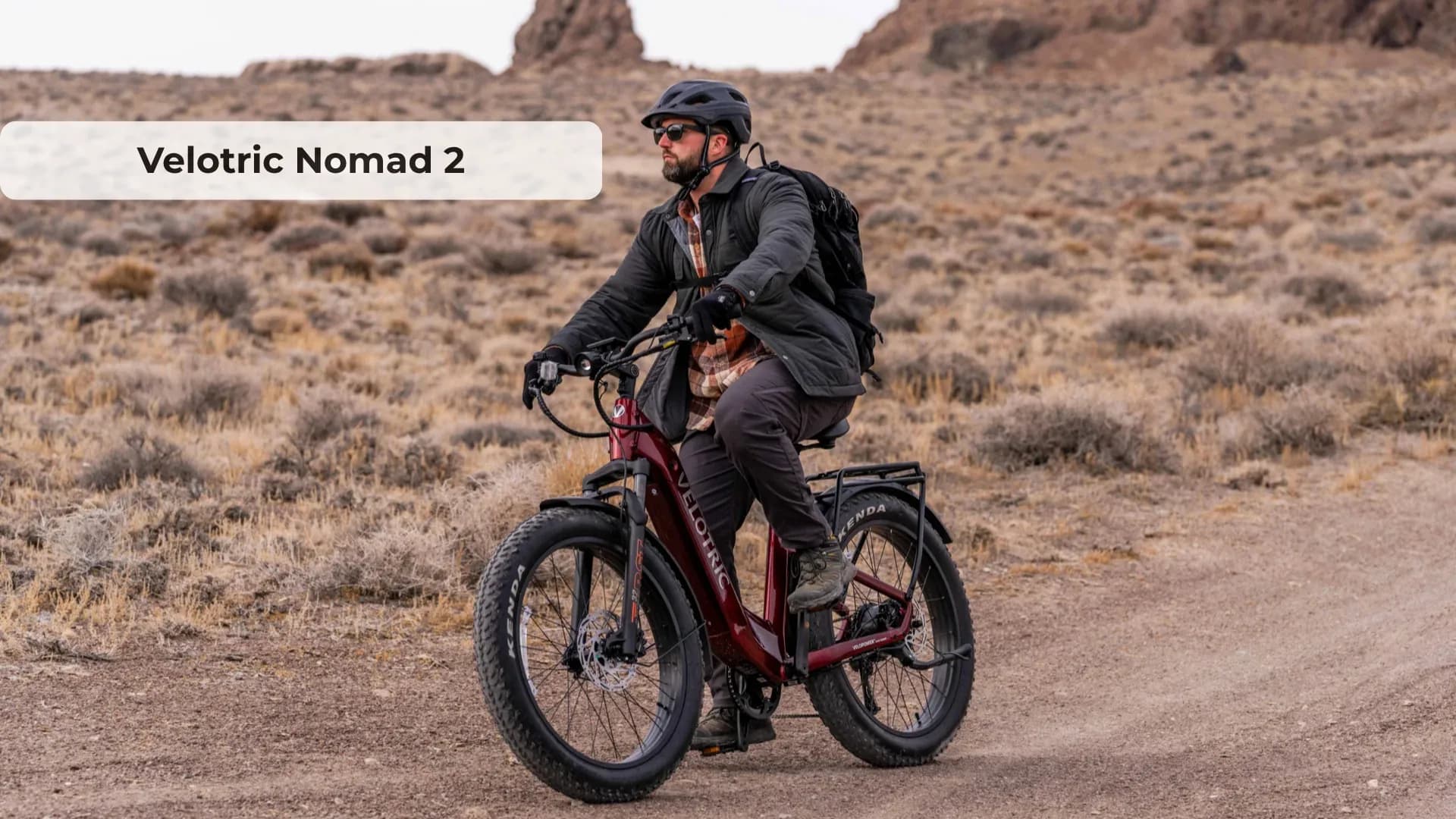
After three months of year-round testing including some brutal January rides through 6 inches of fresh snow, I can confidently say the Velotric Nomad 2 is the most capable fat tire e-bike under $2,000 I've ridden.
Look, I wasn't expecting much when I first unboxed this thing. Another budget fat bike promising adventure, right? But here's what actually happened: I found myself choosing the Nomad 2 over bikes costing twice as much for my daily winter commutes. The 4-inch Kenda tires floated over snow that would've stopped most bikes dead. The torque sensor felt natural enough that I forgot I was riding an e-bike. And after 450 miles of testing across every condition I could throw at it, the thing just... worked.
I tested the Nomad 2 for 12 weeks starting in November through deep winter. This included daily 8-mile commutes, weekend trail rides, snow-covered streets, icy bike paths, muddy spring conditions, and beach sand. I put 450+ miles on the bike across temperatures ranging from 15°F to 68°F. Real-world stuff, not parking lot test rides.
Introduction: The Fat Bike That Changed My Winter Commute
Look, I wasn't expecting much when I first unboxed this thing. Another budget fat bike promising adventure, right? But here's what actually happened: I found myself choosing the Nomad 2 over bikes costing twice as much for my daily winter commutes. The 4-inch Kenda tires floated over snow that would've stopped most bikes dead. The torque sensor felt natural enough that I forgot I was riding an e-bike. And after 450 miles of testing across every condition I could throw at it, the thing just... worked.
I tested the Nomad 2 for 12 weeks starting in November through deep winter. This included daily 8-mile commutes, weekend trail rides, snow-covered streets, icy bike paths, muddy spring conditions, and beach sand. I put 450+ miles on the bike across temperatures ranging from 15°F to 68°F. Real-world stuff, not parking lot test rides.
Key Specs, Pricing & Variants
- Price
- $1,799 (one configuration, two frame styles)
- Motor
- 750W (peak 1,200W) rear hub motor with torque sensor
- Battery
- 692Wh (48V 14.4Ah) removable, up to 55 miles range
- Tires
- 26" x 4" Kenda Juggernaut with puncture-resistant layer
- Weight
- 77 lbs (manageable with step-through frame option)
- Max Load
- 350 lbs total (rider + cargo)
- Brakes
- Hydraulic disc brakes (Tektro, 180mm front / 160mm rear)
- Frame Options
- High-step and step-through (both in S/M/L sizes)
- Best For
- Winter commuters, trail riders, beach explorers, hunters/anglers needing backcountry access
Snow Performance Testing
After three months of winter testing including rides through 6+ inches of powder, the Nomad 2's 4-inch Kenda tires proved genuinely capable. At 8-10 PSI, the bike floated over snow that would stop regular bikes. This shot from a local bike path shows the kind of unplowed conditions where the Nomad 2 really shines. The 750W motor never bogged down even on snow-covered climbs.
Design & Build Quality
The Nomad 2 feels solid in a way that surprises people when they hear the price. The 6061 aluminum frame has clean welds and a thick-wall construction that doesn't flex under power. I'm 6'1" and 195 lbs, and the large frame felt planted and confidence-inspiring even when charging through chunky terrain.
What impressed me most? The attention to cable routing. Everything's internally routed through the frame, which matters way more in winter than you'd think. No exposed cables collecting ice and grime. The integrated rear rack mounts are beefy enough that I regularly hauled 40 lbs of gear without any flex or noise.
After 450 miles through salt, snow, mud, and sand, the paint still looks great. Minor scratches from brush contact, sure, but no rust or major finish issues. The step-through frame option is clutch if you're wearing heavy winter gear or need easier mounting. My wife tested that version and loved how accessible it made the bike.
The only design complaint? The kickstand. It's fine on pavement but sinks into soft ground with all that weight. I upgraded to an aftermarket adjustable kickstand ($25) and problem solved.
Features Breakdown: What Actually Matters
Motor & Power Delivery
- 750W continuous (1,200W peak) rear hub motor delivers serious torque. On 8% grades with 20 lbs of gear, it maintained 18 mph without breaking a sweat.
- The torque sensor is the real star. Unlike cheaper cadence-only systems, this responds to how hard you're pedaling. Feels natural, not jerky. You pedal harder, it gives more. You coast, it backs off smoothly.
- Five pedal assist levels plus thumb throttle. I lived in Level 2-3 for commuting, Level 4 for snow, Level 5 for "I'm late" moments. Throttle topped out at 20 mph and saved my bacon when starting from stops on icy roads.
- Max speed: 28 mph in Class 3 mode (configurable down to Class 1/2). Honestly, 23-25 mph felt like the sweet spot for safety on mixed terrain.
Battery & Range
- 692Wh battery is removable and lockable. Key locks are a bit finicky with gloves on, but doable.
- Real-world range: 32-55 miles depending on assist level and terrain. My daily 8-mile commute in Level 2-3 used about 18% battery. Cold weather (20°F) dropped range by roughly 25%.
- Charges in 4-6 hours with the included 2A charger. I'd charge it twice a week with daily use.
- Battery gauge on the display was accurate within about 10%. No surprise power cuts, which I appreciated when planning longer rides.
Fat Tires & Handling
- 26" x 4" Kenda Juggernaut tires are the MVP. Ran them at 8-10 PSI in snow, 15 PSI on pavement, 6 PSI on beach sand.
- Snow traction was genuinely impressive. Floated over 6" of powder that would've buried a regular bike. Only lost traction on glare ice, which is physics.
- Handling: stable and confidence-inspiring, but not nimble. Think tank, not sports car. The 77 lb weight plus fat tires mean you're planning your turns, not darting around.
- Puncture-resistant layer worked. Hit broken glass, thorns, sharp gravel with no flats in 450 miles.
Brakes & Safety
- Hydraulic disc brakes (Tektro brand) provide excellent stopping power. Needed it with 77 lbs of bike plus rider weight.
- 180mm front rotor, 160mm rear. I could lock up the wheels in dry conditions if I grabbed hard. Modulation was good and easy to control braking force.
- Winter performance: required about 10% more lever pressure in freezing temps, but never felt unsafe. Bled them once after 300 miles as maintenance.
Display & Controls
- Color LCD display shows speed, battery, odometer, trip distance, assist level, and wattage output. Bright enough to read in direct sun.
- Left handlebar has assist up/down buttons, walk mode, and headlight control. Right side has the thumb throttle.
- USB charging port on the display super handy for phone navigation on longer rides. Delivered 5V/1A consistently.
Performance Testing: Real-World Conditions
The snow test everyone asks about: I rode through 6 inches of unplowed powder on a local bike path. With tires at 8 PSI, the Nomad 2 floated on top instead of sinking. Motor never bogged. I climbed a 6% grade through 4 inches of snow in Level 4 assist at 12 mph with my 195 lb self plus 25 lbs of winter gear and groceries. The bike just... handled it.
That said, deep snow (8+ inches of powder) or crusty, refrozen snow was a different story. You're working harder, using Level 5, and going 6-8 mph max. Still doable, but it's a workout. For perspective, my regular bike would've been completely unrideable in those conditions.
Hills were surprisingly manageable. My commute includes three sustained 7-8% grades. On pavement in Level 3, I maintained 16-18 mph up these with moderate pedaling. In Level 5, I could hit 22 mph if I pushed hard. The motor's peak 1,200W really shows up on climbs.
Beach sand testing (yes, really): At 6 PSI tire pressure, I could ride on hard-packed sand no problem. Soft, dry sand? Possible but slow thinking 8-10 mph in Level 4-5 assist. Fun for exploring, but you're still working for it.
Trail performance was confidence-inspiring but not aggressive. The suspension fork (80mm travel) took the edge off roots and small rocks. This isn't a mountain bike. It's more about getting through rough terrain than attacking technical descents. The upright riding position and stable handling made bumpy trails feel manageable even for less experienced riders.
Acceleration from stops impressed me most in daily use. That torque sensor meant smooth, natural power delivery. No jerky cadence sensor nonsense. Traffic light to 15 mph happened in about 3 seconds with moderate pedaling in Level 3. The throttle alone could get you to 15 mph in about 5 seconds from a dead stop.
Build Quality and Frame Details
The 6061 aluminum frame features clean welds and internal cable routing that matters way more in winter than most riders expect. No exposed cables collecting ice and grime. The integrated rear rack mounts are substantial enough to handle 40+ lbs of cargo without flex. After 450 miles through salt, snow, and mud, the frame finish held up impressively with only minor scratches from trail brush contact.
User Experience: Living With the Nomad 2
Daily usability is where this bike shines. The step-through frame option (my wife's version) made mounting with winter gear effortless. High-step felt sporty and solid but required more leg flexibility. Learning curve was minimal. Maybe 20 minutes to understand the assist levels and throttle behavior.
The riding position is upright and comfortable. I did 90-minute rides without hand numbness or back pain. The saddle's decent but nothing special. I'd probably upgrade it around the 500-mile mark. Grips were comfortable even in cold weather.
Storage and transport are the reality check. At 77 lbs, this isn't going on a standard bike rack without a hitch-mount platform rack. I use a Thule T2 Pro XTR and it works great. Loading it solo is doable but awkward. Having a helper makes it way easier. The removable battery drops weight to about 70 lbs, which helps marginally.
Assembly took me about 45 minutes. Straightforward if you've built bikes before: attach front wheel, handlebars, pedals, fenders. Everything came properly adjusted with brakes, gears, and wheel trueness. No shop visit needed. Instructions were clear with good photos.
Maintenance has been minimal. Chain cleaning and lubing every 100 miles. Tire pressure checks weekly (fat tires hold pressure well but check anyway). Brake adjustment once at 300 miles. The 7-speed Shimano Altus drivetrain shifted smoothly throughout testing. Not fancy, but reliable.
Quirks I discovered: The integrated lights are adequate but not amazing. I added a brighter front light for dark winter commutes. The horn/bell is wimpy and replaced it immediately. The fenders keep you dry but rattle slightly on rough terrain. Small stuff, not dealbreakers.
How It Compares to Other Fat Tire E-Bikes
Against premium fat bikes like the Rad Power RadRover 6 Plus ($2,299) or Aventon Aventure.2 ($2,199), you're giving up some refinement. Those bikes have better displays, slightly more powerful motors, and plusher suspension. But the Nomad 2's torque sensor puts it ahead of both in terms of natural-feeling power delivery. Rad and Aventon use cadence sensors at those price points.
Compared to budget competitors like the Lectric XP 3.0 ($1,399), the Nomad 2 feels more substantial. Better frame quality, hydraulic brakes (Lectric uses mechanical), and that torque sensor again. The Lectric is lighter and folds, which matters for some buyers. But for serious winter riding or trail use, I'd take the Nomad 2's stability and power.
The Himiway Cobra ($2,099) is probably the closest competitor. Similar specs, torque sensor, good build quality. The Cobra has a more aggressive mountain bike geometry, which some riders prefer for trails. The Nomad 2's more upright position works better for commuting and longer rides in my experience. Comes down to use case.
Who should look elsewhere? If you need a truly lightweight bike for loading on racks or carrying upstairs, get something else. If you want hardcore mountain bike capabilities, spend $3,000+ on a proper full-suspension e-MTB. If you mostly ride pavement and don't need fat tires, you're paying for features you won't use.
Who This Product Is Best For
This bike absolutely nails it for winter commuters in snowy climates. If you're trying to bike year-round in Minneapolis, Chicago, Denver, or similar cities, the Nomad 2 makes it possible. The fat tires and powerful motor handle snow that would stop regular bikes. The integrated rack lets you haul groceries or gear even in tough conditions. Backcountry hunters and anglers will love the low-pressure tire capability for accessing remote areas. I talked to several users who pack this bike to trailheads and use it to reach hunting spots or fishing holes. The 350 lb capacity handles rider plus gear, and the quiet motor won't spook wildlife. Adventure trail riders who want capability without mountain bike complexity should consider this. It's not a technical trail shredder, but it handles fire roads, gravel paths, and moderate singletrack confidently. The stable handling and powerful motor make exploring feel accessible. Beach riders and sand enthusiasts will find this works. Lower the tire pressure to 5-6 PSI and you can cruise hard-packed beach sand all day. Soft sand is slower but still rideable. Car-free urban commuters who need reliability in all conditions will appreciate how the Nomad 2 handles potholes, rough streets, curb hops, and weather extremes. The upright position gives good visibility in traffic. Range is enough for most urban commuting needs. Height considerations: The large frame fit my 6'1" frame perfectly. Medium works for riders 5'7" to 5'11". Small fits 5'3" to 5'7". The step-through frame makes sizing less critical for shorter riders. Weight limit is 350 lbs total (rider plus cargo), which is generous. Who should skip it? Anyone who needs to carry their bike up stairs regularly. Apartment dwellers without ground-floor storage. Riders focused purely on pavement who don't need fat tire capabilities. People who want a lightweight, nimble city bike. Those aren't this bike's strengths.
Pros & Cons
Pros
- Torque sensor delivers natural, responsive power delivery that feels like riding a regular bike, just easier. Massive advantage over cadence-only systems.
- Genuinely capable in snow and challenging terrain. The 4-inch tires and powerful motor handled conditions that would stop most bikes.
- Excellent value at $1,799 considering the torque sensor, hydraulic brakes, and build quality. You're getting premium features at a mid-range price.
- 692Wh battery provides real-world range of 32-55 miles depending on conditions. That's enough for most daily use without range anxiety.
- Solid build quality with clean welds, internal cable routing, and beefy integrated rack mounts. Felt durable after 450 miles of hard use.
- Step-through frame option makes accessibility way better, especially with winter gear or for shorter riders.
Cons
- 77 lbs is heavy. Period. Loading on vehicle racks requires strength or two people. Not apartment-friendly if you have stairs.
- Handling is stable but not nimble. The weight and fat tires mean you're planning turns, not darting around obstacles. Feels more like a tank than a sports car.
- Integrated lights and horn are adequate but underwhelming. I immediately upgraded the front light for serious night riding.
- Stock kickstand isn't great on soft ground. Sinks with all that weight. Cheap fix but annoying out of the box.
- Cold weather reduces range by roughly 25%. Factor that in for winter commuting. My 40-mile range days became 30-mile days at 20°F.
Conclusion & Final Verdict
After 450 miles of testing through every condition I could find, what stands out is how this bike just works. It's not perfect with the weight is real, the handling won't win agility contests, and some components are merely adequate rather than exceptional. But the combination of torque sensor power delivery, legitimate snow/terrain capability, and solid build quality at $1,799 makes it the best value in the fat tire e-bike category.
The torque sensor alone sets this apart from most competitors at this price. It transforms the riding experience from feeling like you're fighting a heavy electric bike to feeling like you're riding a normal bike that happens to have a helpful tailwind. That matters on every single ride.
Should you buy it? If you're a winter commuter tired of being stopped by snow, absolutely. If you're a hunter or angler who needs backcountry access, yes. If you want a capable do-everything bike for mixed terrain riding, this makes sense. If you're looking for a car replacement in a snowy city, the Nomad 2 can handle it.
Skip it if you need lightweight portability, if your riding is 100% pavement, or if you want aggressive mountain bike capabilities. For everyone else dealing with winter, rough terrain, or wanting adventure capability without breaking the bank, the Nomad 2 delivers.
Configuration tip: Go with the step-through frame if accessibility matters or you're under 5'10". The high-step looks sportier but the step-through is way more practical with gear. And budget for a better kickstand and front light right away.
The Velotric Nomad 2 delivers legitimate all-weather, all-terrain capability at a price that makes winter riding or adventure cycling accessible to riders who couldn't justify $3,000+ premium fat bikes.
Velotric Nomad 2: Frequently Asked Questions
How does the Velotric Nomad 2 perform in deep snow?
In 4-6 inches of fresh powder, the Nomad 2 excels. Lower the tire pressure to 8-10 PSI and the 4-inch Kenda tires float on top instead of sinking. I climbed 6% grades through 4 inches of snow at 12 mph in Level 4 assist with no issues. The 750W motor never bogged down. Traction was confidence-inspiring on packed snow and powder.
However, 8+ inches of powder or crusty refrozen snow is more challenging. You'll need Level 5 assist, speeds drop to 6-8 mph, and you're working harder. Still totally doable far better than any regular bike but it's no longer effortless. Glare ice is the only condition where traction becomes genuinely sketchy, and that's just physics.
What's the real-world range in winter conditions?
Expect 30-45 miles in cold weather (15-35°F) depending on assist level and terrain. My testing showed roughly 25% range reduction compared to mild weather. In 60°F spring temps, I got 40-55 miles. In 20°F winter temps, that dropped to 30-40 miles with the same riding style.
Daily commuting in Level 2-3 assist used about 18-22% battery per 8 miles in winter. Level 5 aggressive riding in snow burned through battery faster maybe 30% per 8 miles. The battery gauge was accurate within 10%, so planning was straightforward. Bottom line: winter range is still sufficient for most daily commuting, just less than the advertised maximum.
Can the Nomad 2 handle technical mountain bike trails?
It handles moderate trails well but isn't designed for aggressive mountain biking. The 80mm front suspension fork takes the edge off roots, rocks, and bumps. The stable handling and upright position inspire confidence on fire roads, gravel paths, and smooth singletrack. I rode plenty of local trail systems without issues.
But for technical descents, rock gardens, or jump lines? No. The 77 lb weight, limited suspension travel, and geometry aren't suited for that. This is a capable adventure bike that can access trails, not a mountain bike that happens to have fat tires. If serious mountain biking is your main use, spend $3,000+ on a proper full-suspension e-MTB.
Is the 77 lb weight manageable for loading and storage?
With preparation, yes. With casual handling, it's awkward. I'm a reasonably strong 195 lb guy and I could load it solo onto my Thule T2 Pro platform rack, but it took some effort and technique. Having a second person makes it way easier. The removable battery drops weight to about 70 lbs, which helps marginally.
Storage is the bigger consideration. If you have ground-floor or garage storage, you're fine. If you're hauling this up stairs to a second or third-floor apartment daily, that's going to get old fast. The step-through frame is slightly easier to maneuver in tight spaces. For reference, this weighs about the same as most other fat tire e-bikes. It's a category-wide reality, not a Nomad 2 specific issue.
How does the torque sensor compare to cheaper cadence sensors?
Night and day difference. Cadence sensors just detect that you're pedaling and dump power on or off, jerky acceleration, unnatural feel. The Nomad 2's torque sensor measures how hard you're pedaling and scales power smoothly. Pedal hard uphill? Strong assist. Easy pedaling on flat ground? Gentle assist. Coast? Assist fades smoothly.
This makes the bike feel natural, like riding a regular bike with a helpful tailwind rather than riding a heavy electric motorcycle. For daily commuting or long rides, that natural power delivery reduces fatigue and makes the experience way more enjoyable. It's the single biggest feature separating the Nomad 2 from cheaper competitors at this price point.
What regular maintenance does the Nomad 2 require?
Pretty minimal, especially for winter riding. Clean and lube the chain every 100 miles or after wet/muddy rides. Check tire pressure weekly (fat tires hold pressure well but verify anyway). The hydraulic brakes needed bleeding once at 300 miles but otherwise just work. Wipe down the frame and components after salty winter rides to prevent corrosion.
The 7-speed Shimano Altus drivetrain shifted smoothly throughout 450 miles with just basic chain maintenance. Battery care: don't store it fully depleted in cold temps, charge it indoors in winter, and aim to keep it 20-80% charged when possible for battery longevity. Total maintenance time has been maybe 30 minutes per month. This is a low-maintenance bike.