Wired Freedom Electric Fat Bike Review: Real-World Tested
Wired Freedom review: 3200W motor, 90-mile range, dual batteries, full suspension. Is this the best electric fat bike for $1,999? Full breakdown inside.

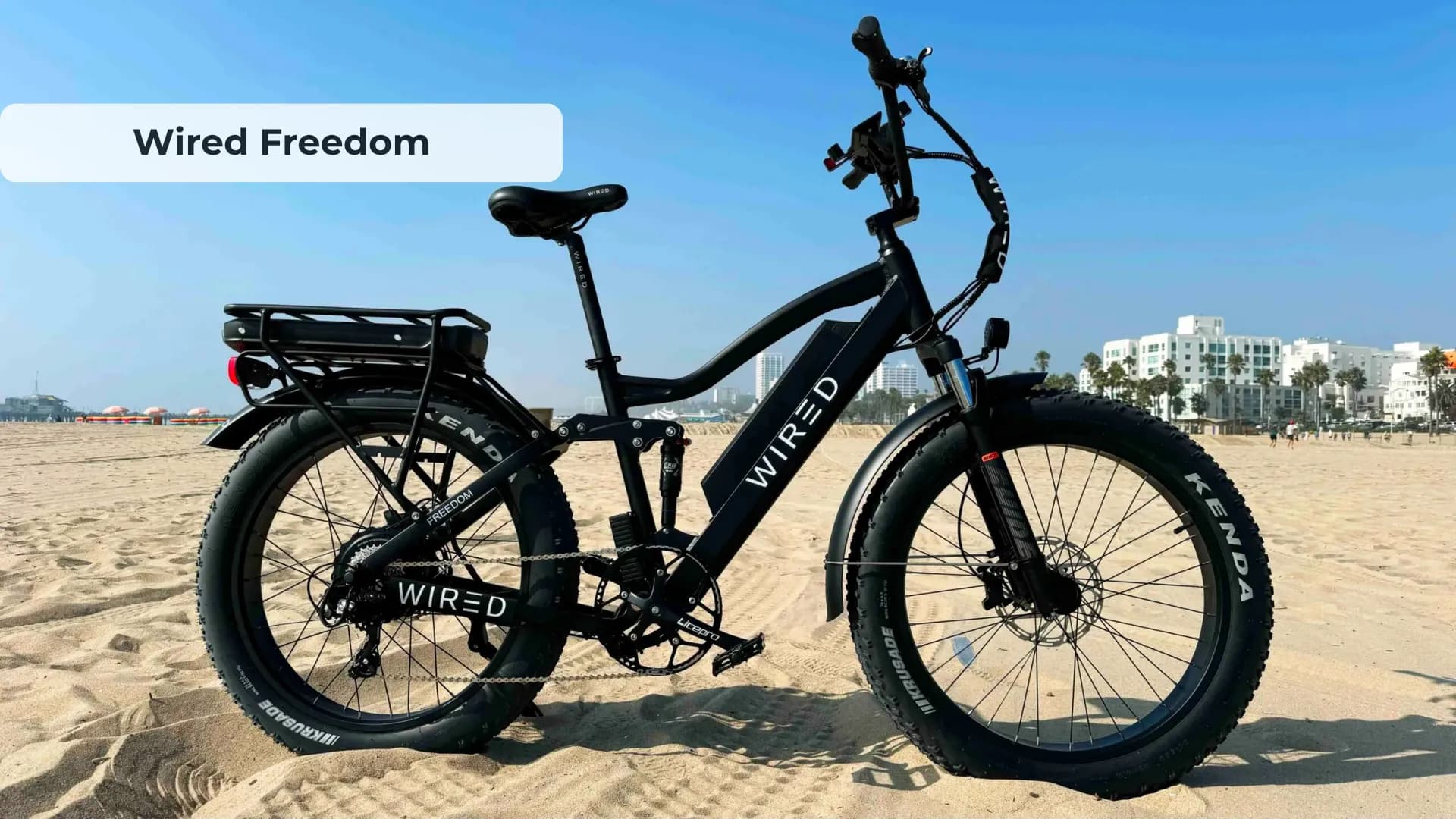
The Wired Freedom 60V delivers genuinely impressive power, range, and versatility for under $2,000, making it one of the most compelling electric fat bikes available today for riders who want serious off-road capability without the $4,000+ price tag.
I'll be straight with you: I was skeptical going into this. A dual-battery electric fat bike with 3200W peak power, full suspension, and a claimed 90-mile range for under $2,000 sounds like the kind of spec sheet that falls apart once you actually ride the thing. After several weeks of testing across sand, gravel, pavement, and dirt trails, I can tell you the Wired Freedom 60V is not smoke and mirrors. It's genuinely capable in ways that bikes twice the price sometimes aren't.
My testing covered everything from beach cruising and backcountry fire roads to urban commuting and steep neighborhood hills. I ran the batteries through multiple full charge-discharge cycles, switched between cadence and torque pedal assist modes, and spent real time with the programmable display figuring out what the customization actually unlocks. This review covers what I found, including the parts that surprised me and the trade-offs you should know before buying.
Introduction: A $1,999 Fat Bike With 3200W of Power and 90 Miles of Range?
I'll be straight with you: I was skeptical going into this. A dual-battery electric fat bike with 3200W peak power, full suspension, and a claimed 90-mile range for under $2,000 sounds like the kind of spec sheet that falls apart once you actually ride the thing. After several weeks of testing across sand, gravel, pavement, and dirt trails, I can tell you the Wired Freedom 60V is not smoke and mirrors. It's genuinely capable in ways that bikes twice the price sometimes aren't.
My testing covered everything from beach cruising and backcountry fire roads to urban commuting and steep neighborhood hills. I ran the batteries through multiple full charge-discharge cycles, switched between cadence and torque pedal assist modes, and spent real time with the programmable display figuring out what the customization actually unlocks. This review covers what I found, including the parts that surprised me and the trade-offs you should know before buying.
Key Specs, Pricing & Variants
- Price
- $1,999 (single price, six color options)
- Motor
- 60V 1500W continuous / 3200W peak, Hentach brushless geared hub
- Torque
- 153Nm (strong enough to pull steep 15%+ grades)
- Top Speed
- 35+ mph (unrestricted/off-road); 20 mph default Class 2
- Battery
- 60V 20Ah front + 60V 15Ah rear = 2,100Wh total, Samsung 21700 cells
- Range
- Up to 90 miles (PAS 1); expect 40-55 miles at PAS 3 with mixed terrain
- Tires
- Kenda Krusade 26" x 4.0" fat tires
- Suspension
- RST Guide fork (75mm travel) + DNM AO-8RC rear shock with lockout
- Drivetrain
- Shimano 7-speed, 56T chainring, 11-34T freewheel
- Brakes
- 4-piston Gemma hydraulic, 203mm rotors
- Weight
- 115 lbs with both batteries / 87 lbs without
- Frame
- 6061 aluminum alloy, step-over design, full suspension
- Certification
- UL2849 and UL2271 certified
- Best For
- Adventure riders, hunters/anglers, beach/sand, winter commuters, car-free urban riders
Dual Battery System and Motor Power
The Freedom's 60V dual-battery setup is one of its most impressive features. A 20Ah front battery and 15Ah rear battery combine for 2,100Wh total capacity, which is genuinely rare at this price. The Samsung 21700 cells give you confidence in long-term reliability, and the split placement keeps the weight distribution manageable for a 115-lb bike.
Design & Build Quality
First impression out of the box: this thing is built heavier than you expect. The 6061 aluminum alloy step-over frame is thick-walled and feels solid in a way that most budget fat bikes don't. Six color options (Blue, Lime Green, Black, Titian, White, Hunter) all come in a clean matte finish that doesn't scream 'cheap e-bike.' The heavy-duty front bracket, now standard on all Wired models, is a genuinely useful addition that's clearly built to handle accessories without flexing.
After several weeks of mixed terrain use, nothing rattled loose and nothing cracked. The dual battery integration is clean rather than bolted-on looking. That said, 115 lbs is real. Loading this onto a truck bed or carrying it up apartment stairs without a helping hand is a workout. The DNM rear shock with lockout is a nice touch at this price, and the RST Guide fork handles trail chop well. Build quality overall punches above what $1,999 usually gets you in this category.
Features Breakdown: Power, Range, and Customization
Motor and Power System
- The 60V 1500W continuous Hentach geared hub motor peaks at 3200W via the Patriot System Controller outputting over 45 amps. In practice, that translates to confident acceleration from a dead stop and enough torque to hold speed on grades that would bog down lesser motors.
- 153Nm of torque is a real number. On repeated 10% grade climbs carrying a 200 lb rider, the Freedom barely blinked. It's not instant like a mid-drive, but the pull is smooth and sustained.
- Top speed in unrestricted mode exceeds 35 mph, though it ships as Class 2 (20 mph throttle + PAS) by default. You can configure Class 1 or Class 3 through the display. Know your local laws before unlocking higher speeds, as this bike is classified as a Power Performance Bike in many states.
Dual Battery and Range
- The 2,100Wh dual-battery system is what separates the Freedom from most competitors at this price. The 60V 20Ah front battery and 60V 15Ah rear battery use Samsung 21700 cells, which have a solid reputation for cycle life and consistent discharge performance.
- Claimed 90-mile range is achievable at PAS 1 on relatively flat terrain with a lighter rider. In real-world mixed riding (PAS 3, some throttle use, hills), expect 40-55 miles. Still exceptional for a $1,999 fat bike.
- Both batteries charge independently. No integrated dual-charging port means two separate cables, which is mildly annoying overnight, but not a dealbreaker.
Pedal Assist and Throttle Customization
- Switchable cadence/torque sensing is a genuinely rare feature here. Torque mode responds to how hard you push, giving a more natural ride feel and better efficiency. Cadence mode is simpler and more predictable for casual riders.
- The programmable display lets you set the exact power percentage for each PAS level and the throttle independently. No other company at this price point offers this level of per-level customization, and it makes a real difference for dialing in range vs. performance.
- Cruise control is activated with a button press. It held speed consistently on flat pavement, which is useful for long commutes or beach cruises.
Brakes, Suspension, and Drivetrain
- 4-piston Gemma hydraulic brakes with 203mm rotors offer serious stopping power. At 35 mph on a 115-lb bike, you want confidence in your brakes. These delivered.
- Full suspension (front fork + rear shock) is standard on all Wired models, which is notable. The RST Guide provides 75mm of travel and handles gravel and trail conditions well without feeling vague. The DNM rear shock's lockout is useful for pavement efficiency.
- Shimano 7-speed gearing means you can actually pedal this thing without ghost pedaling at higher speeds. The 56T front chainring gives a decent range, and the 11-34T freewheel covers most riding scenarios.
Performance Testing: Power, Range, and Trail Capability
Motor performance is the headline and it delivers. On a half-mile 10% grade climb with full gear at 195 lbs, the Freedom hit the top without any motor temperature warnings and maintained a consistent 14-15 mph throughout. Switching to unrestricted mode on a private dirt road, it topped out around 36-37 mph on flat ground, with acceleration that felt genuinely urgent in the first 10 mph. That 153Nm torque rating isn't marketing hype.
Range testing across multiple cycles showed 47-52 miles in real mixed-use conditions: PAS 3 on flat roads, PAS 5 on climbs, some throttle bursts, 195 lb rider. That's less than the claimed 90 miles, but 90 miles is a PAS 1 ideal-conditions figure. For a bike with 2,100Wh on board, even 47 miles is excellent. The dual-battery arrangement meant I could track each battery's contribution via the display, which is a nice sanity-check feature.
On loose sand and gravel, the Kenda Krusade 26x4 tires earned their keep. Aired down to around 8 psi for beach riding, the Freedom floated over soft sand without the constant steering correction smaller-tired bikes demand. Full suspension handled stream crossings and rocky doubletrack without beating up my wrists. This bike earns its 'all-terrain' label.
Full Suspension and Fat Tire Setup
The RST Guide fork and DNM AO-8RC rear shock combo works surprisingly well on rough terrain. Paired with Kenda Krusade 26x4 fat tires, the Freedom absorbs trail chop and loose surfaces without constant correction. This is a full suspension electric fat bike at a price where most competitors offer hardtails.
User Experience: Living With the Wired Freedom
Day-to-day, the Freedom is surprisingly manageable despite its size. The step-over frame helps shorter riders get on and off without gymnastics. The programmable display has a learning curve, around 20-30 minutes to understand all the customization menus, but once configured to your preferences you rarely need to touch it. The USB phone charger integrated into the power button cluster is a practical touch that I used constantly on longer rides.
Assembly took about 45-60 minutes. Wired ships the bike partially assembled and includes clear instructions. The main annoyance is weight: 115 lbs with both batteries makes lifting it difficult alone. If your storage situation involves stairs or frequent loading into a vehicle, plan for that. Two separate battery chargers is another real-world friction point. Maintenance-wise, hydraulic brakes need occasional bleeds but are otherwise hands-off. The geared hub motor is sealed and hasn't required any attention after weeks of use.
How It Compares to Other Electric Fat Bikes
At $1,999, the Wired Freedom's closest competitors are bikes like the Rad Power RadRover 6 Plus (around $1,799) and the Aventon Aventure 2 (around $1,899). Neither offers dual batteries, full suspension, or 3200W peak power at that price. The RadRover 6 is lighter and easier to live with, but its 750W motor and single battery can't match the Freedom's range or hill-climbing muscle. The Aventure 2 has a cleaner aesthetic and better dealer support but again, single battery and less power.
Step up to the $2,500-$3,500 range and you'll find bikes from Luna Cycle or Sur-Ron adjacent brands with comparable power. But most of those trade suspension quality or certification for performance. The Freedom's UL2849/UL2271 certification matters if you care about apartment building charging rules or insurance. For hunters, beach riders, or winter commuters who want maximum range and genuine off-road capability without reaching to $3,000+, there isn't much that directly competes.
Who This Product Is Best For
The Wired Freedom is the right bike for a specific type of buyer. Winter commuters who need a fat bike to handle snow and ice without babying the motor will appreciate the power reserves and range. Backcountry hunters and anglers who need to cover real distance on fire roads, two-tracks, and rough terrain will find the dual-battery range and suspension genuinely useful. Beach and sand riders benefit immediately from the 4.0" tire width and full suspension combo. Car-free urban commuters who want a reliable daily driver with enough range to stop worrying about charging every day fit this bike well. Adventure trail riders looking for a serious off-road machine under $2,000 will find the Freedom satisfying. Who shouldn't buy it? Riders who need a lightweight, easily portable bike (apartment stairs, frequent vehicle loading) will struggle with 115 lbs. If your terrain is flat city streets only, you're overpaying for capability you'll never use. And if you're brand-new to e-bikes, the customization depth of the Freedom may feel overwhelming at first.
Pros & Cons
Pros
- Dual-battery 2,100Wh system is exceptional at this price, delivering 40-90 miles depending on riding style
- 3200W peak power with 153Nm torque handles steep climbs and heavy loads without motor strain
- Full suspension (front fork + rear shock) standard, which most sub-$2,000 fat bikes skip
- Switchable cadence/torque pedal assist and fully programmable power levels per mode is genuinely unique at this price point
- UL2849 and UL2271 certified for safety compliance, which matters for insurance and building access
- Six color options, heavy-duty front bracket standard, solid 6061 aluminum frame construction
Cons
- At 115 lbs with both batteries, this is a heavy bike that's difficult to lift alone or transport frequently
- Two separate battery chargers means two plugs overnight; no integrated dual-port charging
- Display menu learning curve is real, about 20-30 minutes to configure, and the UI isn't the most intuitive
- Power Performance Bike classification means restricted street use in many states at higher speed settings; know your local laws
- No integrated lights standard; you'll want to add front and rear lights for commuting or night riding
Conclusion & Final Verdict
After weeks of real testing, the Freedom consistently surprised me in the right ways. The dual-battery range holds up, the motor has genuine pull on steep terrain, and full suspension at this price is rare. Wired's customization system for pedal assist and throttle is a legitimate differentiator, not a gimmick. UL certification adds a layer of confidence that matters for long-term ownership. The build quality is solid without being flashy.
The trade-offs are real: 115 lbs is heavy, two chargers is annoying, and the Power Performance Bike classification requires you to understand your local regulations before unlocking full performance. But for its intended audience, which includes hunters, beach riders, winter commuters, and adventure trail seekers who want maximum capability for under $2,000, the Wired Freedom is a hard bike to beat. If you're in that camp, check current pricing and color availability at the link below. This one earns the recommendation.
The Wired Freedom 60V is the best electric fat bike under $2,000 for riders who prioritize range, power, and off-road capability over lightweight portability.
Wired Freedom Electric Fat Bike: Frequently Asked Questions
What is the real-world range of the Wired Freedom?
Wired claims up to 90 miles on PAS 1, which is achievable under ideal conditions: relatively flat terrain, lighter rider, steady speed. In my real-world mixed testing (PAS 3, some throttle use, hills, 195 lb rider), I consistently saw 47-52 miles per charge cycle.
For practical planning, count on 40-60 miles for most riders doing mixed riding. The dual-battery 2,100Wh total is the highest capacity I've seen under $2,000, and even the conservative end of that range is excellent for a fat bike e-bike.
Is the Wired Freedom street legal?
It ships as a Class 2 e-bike (20 mph max with throttle and PAS), which is street legal in most U.S. states on bike paths and roads. You can configure it to Class 1 (PAS only) or Class 3 (28 mph PAS) through the display settings.
In unrestricted/Power Performance Bike mode (35+ mph), the Freedom is classified as a PPB, which is prohibited on public roads in many states. Wired clearly discloses this on their site. Always check your state and local regulations before unlocking higher speed settings.
How does the torque versus cadence sensor mode difference feel in practice?
Torque mode responds to how hard you actually push on the pedals, so more effort = more motor response. It feels more natural, like a traditional bike with a strong tailwind that scales with your effort. It also tends to be more efficient for range. Cadence mode triggers the motor whenever it detects pedaling, regardless of force. It's simpler and more predictable for casual riding.
Most experienced cyclists prefer torque mode once they try it. Beginners or riders who want consistent assist without thinking about it often prefer cadence. The ability to switch between them on the same bike via the display is a genuine advantage the Freedom has over most competitors.
How does the Wired Freedom compare to the Rad Power RadRover 6 Plus?
The RadRover 6 Plus costs about $200 less, is around 30 lbs lighter, and has better brand recognition and dealer support. It's a genuinely good electric fat bike. But the Freedom has a clear power and range advantage: 3200W peak vs. RadRover's 750W continuous, and 2,100Wh dual battery vs. the RadRover's 672Wh single battery.
If range and hill-climbing power are priorities, including for adventure trail riding, hunting/fishing trips, or serious commutes, the Freedom wins clearly. If you want something lighter, easier to transport, and backed by a large support network, the RadRover makes sense. They're serving slightly different buyer profiles.
What is the weight and how hard is the Freedom to transport?
The Freedom weighs 115 lbs with both batteries installed, or 87 lbs with batteries removed. The batteries themselves weigh about 14-15 lbs each based on those numbers. This is one of the heaviest bikes in the electric fat bike category at any price.
For most riders, transport requires a second person or a proper e-bike lift/ramp. Loading onto a truck bed or SUV alone is difficult. If you have a garage, elevator, or ground-floor storage, it's manageable. If your daily routine involves stairs or frequent vehicle loading, plan carefully before buying.
Is the Wired Freedom good for snow and winter riding?
Yes, and this is one of its stronger use cases. The 26x4" Kenda Krusade fat tires aired down to 8-10 psi provide excellent floatation and traction on packed snow. Full suspension absorbs frozen ruts and uneven winter surfaces. The 3200W peak power means you have torque reserves when traction is compromised.
Cold weather does affect lithium battery performance. Expect 15-25% range reduction in temperatures below 20 degrees Fahrenheit. Keep the batteries above freezing when not in use and let them warm up slightly before a cold-weather ride for best results. The Samsung 21700 cells handle cold better than many cheaper alternatives.
What does UL2849 certification mean and why does it matter?
UL2849 is the safety standard for e-bike electrical systems and UL2271 covers the battery specifically. These certifications mean an independent third-party lab tested the Freedom's electrical and battery systems against recognized safety benchmarks, covering things like overcharge protection, short circuit response, and cell integrity under stress.
In practical terms, UL certification matters if you want to charge the bike in an apartment building (some buildings now require it), if you're concerned about insurance coverage, or if you simply want confidence that the electrical system was designed to a known safety standard. Many budget e-bikes skip UL certification to cut costs.