Aventon Sinch 2.5 Review: Real-World Tested Folding E-Bike
Aventon Sinch 2.5 review: tested for 3 weeks in NYC. Fat tire folding e-bike with 750W motor, 55-mile range. Specs, pros, cons, and who should buy.

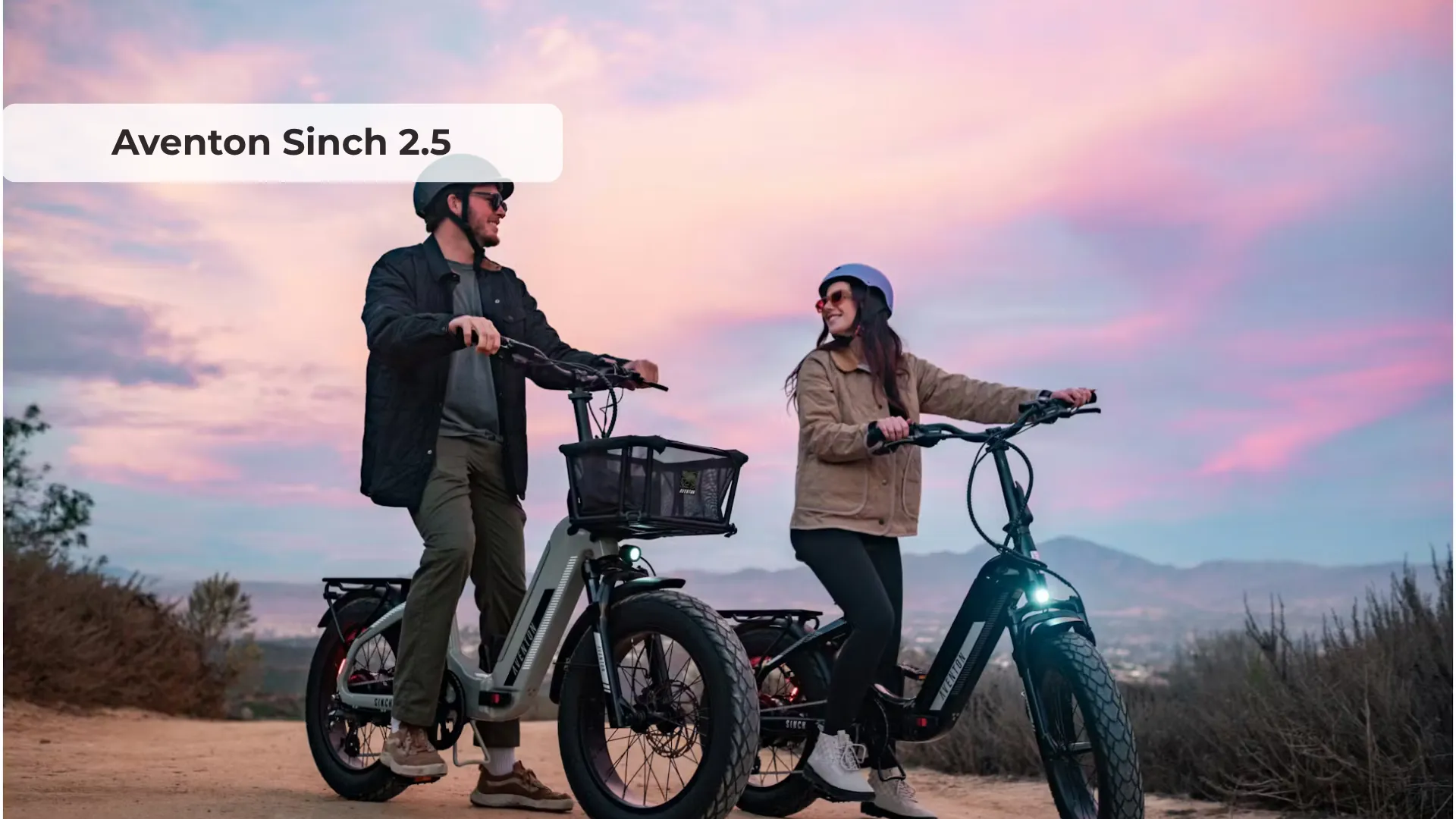
After three weeks of daily riding in New York City, the Aventon Sinch 2.5 proves you don't have to sacrifice performance for portability in a folding electric bike.
I'll be honest. I didn't expect much from a folding e-bike with fat tires. The combination sounded like a compromise machine that wouldn't excel at anything. Then I hit the throttle on a steep Brooklyn hill with 30 pounds of groceries in the rear rack, and the Sinch 2.5 powered up it like it was flat ground. That moment changed my entire perspective on what a compact e-bike can do.
I tested the Sinch 2.5 for three weeks across every scenario I could think of. Daily commutes through Midtown Manhattan traffic. Weekend grocery runs with fully loaded panniers. Subway transfers where I needed to fold it quickly. Even a rainy 15-mile ride to test the weather resistance. This isn't your typical lightweight folding bike. It's a 750-watt powerhouse that happens to fold in half.
Introduction: The Folding E-Bike That Doesn't Compromise on Power
I'll be honest. I didn't expect much from a folding e-bike with fat tires. The combination sounded like a compromise machine that wouldn't excel at anything. Then I hit the throttle on a steep Brooklyn hill with 30 pounds of groceries in the rear rack, and the Sinch 2.5 powered up it like it was flat ground. That moment changed my entire perspective on what a compact e-bike can do.
I tested the Sinch 2.5 for three weeks across every scenario I could think of. Daily commutes through Midtown Manhattan traffic. Weekend grocery runs with fully loaded panniers. Subway transfers where I needed to fold it quickly. Even a rainy 15-mile ride to test the weather resistance. This isn't your typical lightweight folding bike. It's a 750-watt powerhouse that happens to fold in half.
Key Specs, Pricing & Variants
- Price
- $1,699 (one configuration, multiple color options)
- Motor
- 750W rear hub motor (1,130W peak), Class 3 capable
- Battery
- 672Wh Samsung cells, removable, 3-5 hour charge time
- Range
- 40-55 miles tested (varies significantly with pedal assist level)
- Weight & Capacity
- 73 lbs bike weight, 300 lb rider weight limit
- Tires
- 20" x 4" Kenda fat tires, puncture resistant
- Gearing
- 7-speed Shimano Tourney drivetrain
- Folded Size
- Approximately 36" x 28" x 18" (still substantial due to fat tires)
- Best For
- Urban riders who need power and portability, apartment dwellers, RV travelers
Folded Compact for Storage
The Sinch 2.5 folds down surprisingly small for a fat tire bike. I've been storing it in my 650-square-foot Brooklyn apartment without issue. Takes about 20 seconds to fold completely, and the integrated magnet keeps the frame halves together when folded. At 73 pounds, it's heavy to carry upstairs, but once folded it fits easily in a closet or against a wall. The fat tires do add width when folded compared to standard folding bikes, but the vertical clearance is impressive.
Design & Build Quality
The Sinch 2.5 looks chunky, and that's intentional. The 6061 aluminum frame feels overbuilt in the best way possible. The folding mechanism is a single lever in the middle of the frame, nothing complicated. It's not the prettiest folding bike I've seen, but it's clearly designed for durability over aesthetics. The welds are clean, the cable routing is tidy, and everything feels solid when you grab it.
After three weeks and probably 200 miles of riding, nothing has rattled loose or felt questionable. The fold hinge shows no signs of wear. The paint on my test unit (the Sand colorway) has held up well despite being locked outside multiple times. My only real gripe is the kickstand, which feels flimsy compared to the rest of the bike. It works, but I wish it had the same beefy construction as everything else.
Features Breakdown: What Makes the Sinch 2.5 Stand Out
Motor & Power Delivery
- The 750W rear hub motor (1,130W peak) delivers serious torque. I'm 195 pounds and it pulls me up 8% grades without pedaling. In PAS 5, acceleration from a stop feels almost motorcycle-like.
- Five pedal assist levels plus a thumb throttle give you total control. I use PAS 1-2 for casual riding and PAS 4-5 for hills or when I'm running late. The throttle is responsive without being jerky.
- Class 3 capability means 28 mph top speed with pedaling. The throttle alone gets you to 20 mph. I've hit 28 mph on flat ground in PAS 5, though that drains the battery noticeably faster.
Battery & Range Performance
- The 672Wh battery is removable, which is crucial for apartment charging. I bring mine inside every night. It charges in about 3-4 hours from empty using the included charger.
- Real-world range varies wildly based on assist level. In PAS 1-2, I've gotten 50+ miles. In PAS 5 with lots of throttle use, more like 35-40 miles. Aventon's 55-mile claim is realistic if you're conservative with power.
- The battery locks securely to the frame and hasn't shown any wobble or movement even on rough roads. The key mechanism is simple and works reliably.
Folding Mechanism & Portability
- Folding takes about 20 seconds once you get the hang of it. One lever releases the frame, fold it in half, and a magnet holds it together. The handlebar stem also folds down for a more compact package.
- At 73 pounds, this isn't a bike you'll want to carry far. I can lift it up one flight of stairs when necessary, but it's a workout. The fat tires add width when folded, so it's bigger than standard folders.
- The real benefit is storage, not carrying. It fits in my apartment closet, in a car trunk, or against a wall at the office. It's not small enough for easy subway carrying unless you're prepared for some awkward moments.
Display & Controls
- The color LCD display is bright and easy to read in direct sunlight. Shows speed, battery level, trip distance, assist level, and more. The interface is intuitive after a day or two.
- All controls are handlebar-mounted and within easy thumb reach. Mode button, power button, and light control on the left. Throttle on the right. Everything feels quality, not cheap plastic.
- The headlight is surprisingly bright for a stock e-bike light. I've ridden at night multiple times and felt comfortable. The taillight is adequate but nothing special.
Comfort & Ride Quality
- The fat tires do most of the suspension work. There's no front fork suspension, but you don't really miss it. The tires absorb bumps and rough pavement remarkably well at lower pressures.
- The saddle is decent but I'll probably upgrade it eventually. It's comfortable for 30-minute rides but gets a bit firm on longer trips. The seat post has good range for different rider heights.
- Handlebar position is upright and comfortable for cruising. The grips are soft and well-shaped. Overall riding position is relaxed, not aggressive, which suits the bike's purpose perfectly.
Performance Testing: Hills, Range, and Real-World Use
Let's talk about hills because that's where the Sinch 2.5 really shines. I live in Brooklyn where hills are unavoidable, and I've tested this bike on everything from moderate 5% grades to brutal 10%+ climbs. On a 9% grade near Prospect Park, I rode up in PAS 3 while barely pedaling, maintaining 12-15 mph the entire climb. In PAS 5 or using the throttle, it'll pull you up basically anything without breaking a sweat. I weigh 195 pounds, and I've carried another 25-30 pounds of cargo on some climbs without noticing a significant power drop. The motor gets warm but never hot enough to be concerning.
Range testing revealed exactly what you'd expect. Conservative riding in PAS 1-2 with moderate pedaling netted me 52 miles before the battery showed one bar remaining. That was mostly flat terrain with some gentle hills. A more aggressive test using PAS 4-5 heavily and frequent throttle use gave me 38 miles before I needed to charge. Hills destroy the range. A particularly hilly 15-mile ride used nearly 50% battery. If you're commuting in a flat city and willing to pedal a bit, 40-50 miles per charge is realistic. If you live somewhere hilly or love using throttle, plan for 30-40 miles.
Speed-wise, this thing moves. I've hit the 28 mph limit multiple times on flat bike paths in PAS 5. It gets there quickly too. From a stop, you can be at 20 mph in maybe 4-5 seconds with aggressive pedaling and high assist. The throttle alone maxes out at 20 mph as required by law. One surprise is how stable it feels at speed despite being a folding bike. The fat tires and low center of gravity keep it planted even when you're flying down bike lanes.
Fat Tires Handle Everything
Those 4-inch fat tires aren't just for show. I've ridden over cracked pavement, potholes, gravel paths, and even some light dirt trails without any issues. The tires absorb impacts that would rattle your teeth on a standard e-bike. Air pressure matters here though. I keep them at 20 PSI for city riding, which gives a cushy ride without feeling sluggish. Bump it up to 25-30 PSI and you get better efficiency on smooth pavement.
User Experience: Living With the Aventon Sinch 2.5
Daily use has been mostly friction-free. My routine involves unfolding it in my apartment (5 seconds), riding 4.5 miles to work through Manhattan, and folding it to store in my office (20 seconds). The fold mechanism hasn't loosened up or developed any play after three weeks of daily folding. The biggest adjustment is the weight. At 73 pounds, stairs are a challenge. I live on the second floor and carrying it up once a day is doable but not fun. If you're on the third floor or higher, seriously consider if you can manage it.
Assembly out of the box took me about 30 minutes. You basically attach the handlebars, pedals, and front wheel. Nothing complicated if you've built a bike before. Maintenance has been minimal so far. I checked the tire pressure twice and tightened the kickstand bolt once. The chain came properly lubed and hasn't needed attention yet. The disc brakes are well-adjusted from the factory and have plenty of stopping power even at 28 mph. I haven't noticed any brake fade during long descents.
How It Compares to Other Folding E-Bikes
Premium folding e-bikes like the Tern Vektron or Brompton Electric cost $3,000-4,500 and offer lighter weight, more compact folds, and premium components. You're paying double or triple the Sinch's price for refinement and portability. Those bikes fold smaller and weigh 45-55 pounds, making them genuinely subway-portable. But they don't match the Sinch's power or range, and they typically have smaller 16-inch or 20-inch standard wheels that don't handle rough surfaces as well.
Direct competitors like the Lectric XP 3.0 ($999) or Rad Power RadExpand 5 ($1,499) are priced lower but spec'd differently. The Lectric is cheaper and lighter but has a smaller 500W motor and 48V system that can't match the Sinch's hill climbing. The RadExpand has similar power but I found the ride quality harsher and the fold mechanism less refined when I tested it last year. The Sinch sits in a sweet spot of power, quality, and price that's hard to beat if you want a fat tire folder that can really perform.
For non-folding e-bikes in this price range, you can get more bike. Aventon's own Level 2 or Pace 500.3 offer similar power, bigger batteries, and better components for the same money. But they don't fold. If you need the folding capability for storage or transport, you're making the right trade-off with the Sinch. If you don't need folding, a standard frame will give you more performance per dollar.
Who This Product Is Best For
The Aventon Sinch 2.5 is perfect for urban apartment dwellers who need power and portability but can't have a full-size e-bike. If you live in a walk-up apartment, have limited storage space, or need to combine biking with public transit occasionally, this bike makes sense. It's ideal for riders between 5'2" and 6'2" based on the adjustable seat height. The 300-pound weight limit accommodates most riders plus cargo. RV and van life travelers will love this bike because it folds small enough to fit in a vehicle while still having the power and range for real riding. It's also great for older riders or casual cyclists who want electric assist without breaking the bank, as long as you're okay with the 73-pound weight. Who should look elsewhere? Anyone who lives above the second floor without an elevator might struggle with the weight. If you need a truly compact folder for subway carrying or flying, get a lighter bike with smaller standard wheels. If you don't need folding at all, buy a standard frame e-bike and get more performance for your money.
Pros & Cons
Pros
- Powerful 750W motor handles steep hills effortlessly, even with cargo and heavy riders
- 40-55 mile real-world range depending on assist level and terrain, which beats most folders
- Fat tires provide excellent stability, traction, and comfort on rough urban surfaces
- Solid build quality with clean welds, reliable components, and a fold mechanism that feels durable
- Removable battery makes apartment charging practical and allows for spare battery option
- Excellent value at $1,699 compared to premium folders that cost 2-3x as much
Cons
- 73 pounds is genuinely heavy, making stairs and frequent carrying impractical for many users
- Folded size is larger than standard folders due to fat tires, limiting true portability
- Kickstand feels flimsy and undersized compared to the rest of the bike's construction
- No suspension fork means you're relying entirely on tire pressure for shock absorption
- Stock saddle is mediocre and will likely need upgrading for riders doing 45+ minute trips
Conclusion & Final Verdict
After three weeks of testing, the Sinch 2.5 has earned a permanent spot in my apartment. It delivers legitimate performance that matches or exceeds non-folding e-bikes in its price range, while still folding small enough to store in tight urban spaces. The hill climbing ability, range, and build quality are all impressive. The weight is the main trade-off, but if you're not carrying it far regularly, it's manageable. The fat tires handle New York's terrible roads better than any other bike I've tested.
I'd recommend this bike without hesitation to apartment dwellers, RV travelers, and anyone who needs a powerful e-bike that can fold for storage or occasional transport. If you're combining biking with driving or want something that fits in a closet but still crushes hills, this is it. Skip it if you live above the second floor without elevator access, or if you need something light enough for regular subway carrying. For most urban riders with storage constraints and a $1,500-2,000 budget, the Sinch 2.5 hits the sweet spot perfectly.
The Aventon Sinch 2.5 is the best folding e-bike under $2,000 for riders who prioritize power and performance over ultra-compact portability.
Aventon Sinch 2.5: Frequently Asked Questions
How long does it actually take to fold and unfold the Sinch 2.5?
Unfolding takes about 5 seconds once you're familiar with it. You release the magnet holding the frame together, swing it open, and lock the center hinge. Folding takes 15-20 seconds because you need to fold down the handlebars, release the hinge lever, fold the frame in half, and engage the magnet. After a few days of practice, you can do both without thinking about it.
The process is simple enough that I do it daily without frustration. It's faster than most folding bikes I've tested because there's only one main hinge point. Just don't expect Brompton-level origami speed. The Sinch prioritizes a solid ride over ultra-quick folding, which I think is the right choice for a bike with this much power.
Can the Sinch 2.5 handle a 250-pound rider?
Yes, easily. The official weight limit is 300 pounds, and I've had friends around 250 pounds test ride it without any issues. The motor has plenty of power for heavier riders. The frame feels stiff and stable even with larger riders. You might see slightly reduced range compared to lighter riders, maybe 10-15% less, but the bike performs well regardless.
The main consideration for heavier riders is that 73 pounds plus 250 pounds means you're asking a lot from the brakes on descents. The mechanical disc brakes handle it fine in my testing, but you'll want to check brake pad wear more frequently if you're a larger rider doing lots of hilly riding.
Is the Sinch 2.5 worth it compared to the cheaper Lectric XP 3.0?
The Sinch costs $700 more than the Lectric XP 3.0, and you get meaningful upgrades for that money. The 750W motor versus Lectric's 500W makes a real difference on hills. The battery is larger (672Wh vs 500Wh), giving you 10-15 more miles of range in real-world use. The build quality feels more refined, and the components are slightly better across the board.
If you live somewhere flat and have a tight budget, save the money and get the Lectric. If you have hills in your area, do longer rides regularly, or want a bike that feels more premium, the Sinch is worth the extra cost. I tested the XP 3.0 last year and it's a solid bike, but the Sinch feels like a step up in every category that matters for performance.
What's the actual range on hills versus flat terrain?
On flat terrain in PAS 2-3 with moderate pedaling, I've gotten 50-55 miles per charge. That's real miles in New York City traffic with stop-and-go riding. Switch to hilly terrain and that drops dramatically. A 15-mile hilly ride in Brooklyn used about 50% of the battery in PAS 3-4. If you're doing serious climbing in PAS 5, expect maybe 30-35 miles total range.
The range estimator on the display is optimistic. It assumes you're on flat ground with low assist. For realistic planning, I'd budget 40 miles for flat city riding with some pedaling, or 30 miles if you live somewhere hilly and use higher assist levels. The removable battery means you can buy a spare for longer adventures.
Can you ride the Sinch 2.5 with the battery removed?
Yes, but you won't enjoy it. Without the battery, you're pedaling a 70-pound bike with no electric assist. The motor adds significant drag when unpowered. I tried this once when my battery died mid-ride, and it was genuinely difficult to pedal even on flat ground. The 7-speed gearing isn't low enough to make pedaling this heavy bike comfortable without power.
If your battery dies, you can limp home, but plan on going very slowly and avoiding any hills. The bike is absolutely not designed for human-powered riding. Always charge before rides and consider carrying the charger if you're pushing the range limits.
How does the Sinch 2.5 perform in rain or wet conditions?
I've ridden through moderate rain twice and light drizzle several times. The bike handles it fine. All the electrical connections appear well-sealed. The display is clearly water-resistant as it had no issues during wet rides. The disc brakes maintain good stopping power in the rain, though they squeal a bit when wet initially.
The fat tires give you more traction on wet pavement than standard tires would. I haven't had any slipping issues even on painted crosswalks and metal subway grates. That said, Aventon doesn't provide a specific IP rating for water resistance, so I wouldn't deliberately ride through deep puddles or leave it outside during heavy storms. Bring it inside when possible, and it should handle typical riding conditions without problems.
Does the folding mechanism feel solid or does it develop play over time?
After three weeks and probably 50+ fold/unfold cycles, the hinge mechanism still feels tight and solid with zero play or wobbling. When you're riding, there's absolutely no flex or movement at the fold point, even when standing and pedaling hard up hills. The locking mechanism is simple and robust, just a lever that engages steel pins into the frame.
I can't speak to long-term durability after a year of use, but the engineering looks sound and the tolerances are tight. The hinge is clearly overbuilt for the application, which I appreciate. Some folding bikes develop creaks or movement after a few months, but the Sinch's frame design inspires confidence that it'll stay solid for the long haul.
What's the best tire pressure for comfort versus efficiency?
I've experimented extensively with tire pressure on the 4-inch fat tires. For maximum comfort and traction on rough city streets, 18-20 PSI works beautifully. The tires absorb bumps incredibly well at this pressure, and you get excellent grip in corners and on loose surfaces. The downside is slightly higher rolling resistance and a bit of a sluggish feel.
For better efficiency and speed on smooth pavement, pump them up to 25-30 PSI. You'll notice faster acceleration, higher top speeds, and better range, but you'll feel more bumps and vibrations. I keep mine at 20 PSI for daily city riding as the comfort outweighs the small efficiency loss. If I'm doing a longer ride on bike paths, I'll pump to 25 PSI for a good balance.