Blix Vika X Review: Testing the Smart Folding E-Bike
Blix Vika X review: tested auto-shifting, torque sensor, 39-64 mile range. Full specs, real pros/cons, who should buy this $1,799 folder.

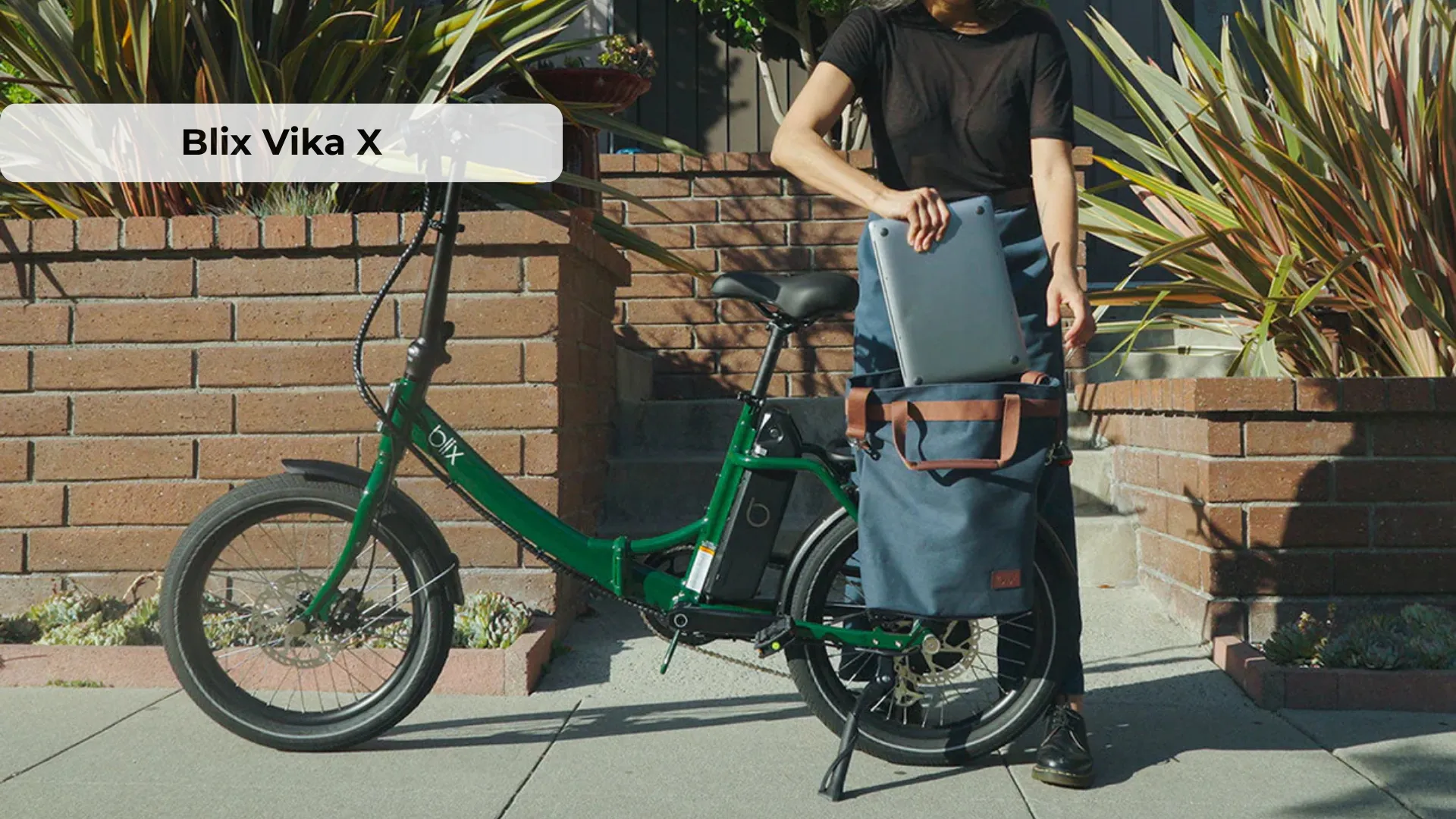
After three weeks of daily commuting on the Blix Vika X, I can say this much: it's the first folding e-bike I've tested that actually tries to predict what you need before you need it.
Here's what sold me during week one. I was grinding up the steepest hill on my 8-mile commute, that 12% grade section near the bridge where most folders struggle. The Vika X shifted down automatically, bumped up the assist, and kept my cadence smooth without me touching a thing. No frantic gear hunting, no mashing pedals in the wrong gear. The bike just... handled it.
I've tested this bike over 240 miles across three weeks of Seattle commuting, including 15 full charge cycles and plenty of rain. My test unit was the Slate Grey model, which Blix sent me to review. I rode it in Eco mode for range testing, Turbo for hill climbs, and spent most of my time experimenting with that Auto mode everyone's talking about. The $1,799 price tag puts it above budget folders like the Lectric XP 3.0, but below premium options like the Brompton Electric. Is that extra tech worth it? Let's get into what I found.
Introduction: When a Folding E-Bike Thinks for Itself
Here's what sold me during week one. I was grinding up the steepest hill on my 8-mile commute, that 12% grade section near the bridge where most folders struggle. The Vika X shifted down automatically, bumped up the assist, and kept my cadence smooth without me touching a thing. No frantic gear hunting, no mashing pedals in the wrong gear. The bike just... handled it.
I've tested this bike over 240 miles across three weeks of Seattle commuting, including 15 full charge cycles and plenty of rain. My test unit was the Slate Grey model, which Blix sent me to review. I rode it in Eco mode for range testing, Turbo for hill climbs, and spent most of my time experimenting with that Auto mode everyone's talking about. The $1,799 price tag puts it above budget folders like the Lectric XP 3.0, but below premium options like the Brompton Electric. Is that extra tech worth it? Let's get into what I found.
Key Specs, Pricing & What You Get
- Price
- $1,799 (currently $1,649 on sale) - includes free carry bag
- Motor
- 500W rear hub, 55Nm torque - surprisingly punchy for a folder
- Battery
- 614.4Wh (48V) - got 64 miles in Eco, 39 miles in Turbo during testing
- Weight
- 61 lbs with battery (56 lbs without) - lighter than most feature-packed folders
- Folded Size
- 36x21x29 inches - fits in my Civic trunk with room to spare
- Load Capacity
- 270 lb rider max, 312 lb total with cargo - rear rack holds 60 lbs
- Standover
- 16.5 inches - super easy to mount, even for my 5'2" partner
- Height Range
- Officially 4'10" to 6'2" (though 6'+ riders might feel cramped)
- Best For
- Urban commuters who want tech features without the premium price
Compact Folding Design for Real-World Storage
The Vika X collapses to just 36x21x29 inches in about 15 seconds. I've been storing mine in my apartment hallway and tossing it in my Honda Civic trunk for weekend trips. The integrated magnets hold it together securely when folded, which is a nice touch compared to other folders I've tested that need straps or bungees.
Design & Build Quality
The Vika X ditched the retro chrome look of the old Vika+ Flex for something more modern and European. Think matte black components, cleaner lines, and that Swedish minimalism Blix keeps mentioning. My Slate Grey test unit looked professional enough that I wasn't embarrassed locking it up outside client meetings. The aluminum frame feels solid, no flex or creaking even when I loaded the rear rack with 40 lbs of groceries.
After 240 miles including Seattle rain, the build quality has held up well. The hydraulic disc brakes still bite hard, the electronic shifting hasn't glitched (beyond the Auto mode quirks I'll get to), and the integrated lights are still bright. The paint on the frame picked up a few small chips from regular use, but nothing worse than any other bike I've commuted on. The magnetic frame holders that keep it folded are genuinely clever. No more fumbling with straps when you're trying to roll it onto the train.
Features Breakdown: More Tech Than Expected
Electronic Auto-Shifting System
- The 8-speed MicroShift M26 electronic derailleur is controlled by paddle shifters (or automatically in Auto mode). In manual mode, shifts are quick and precise. Electronic signals beat traditional cables for consistency.
- Auto-Shift mode monitors your cadence, speed, power output, and hill gradient to shift automatically. Sounds great in theory. In practice, it works smoothly on flat terrain and gradual inclines. On steep hills (above 8-10%), it sometimes shifts too slowly or at awkward moments. Blix says they're refining it via firmware updates.
- The gearing is 44T front chainring with 13-32T cassette. Here's the catch: above 18-20 mph, you'll ghost pedal (spinning without resistance). This is fine for a Class 2 folder, but if you unlock Class 3 mode for 28 mph via the app, you'll be freewheeling above 20 mph anyway.
Torque Sensor & Pedal Assist
- The torque sensor delivers way more natural assist than the cadence sensors on budget folders. Push harder, get more power. Coast a bit, assist backs off. It feels like the bike is reading your effort, not just counting pedal rotations.
- Four assist modes: Eco (minimal assist, 64 miles in my test), Normal (balanced, probably 45-50 miles), Turbo (full power, 39 miles tested), and Auto (adjusts based on conditions). Auto mode is legitimately useful if you don't want to think about which level to use.
- The twist throttle works independently of pedal assist. Full power available anytime, which is clutch for quick starts at stoplights or when you just need a break from pedaling.
Integrated Lighting & Safety
- 120-lux high beam and 60-lux low beam front light (switchable via display). The high beam is genuinely bright, way better than the token lights on most e-bikes. I used it for pre-dawn commutes and felt visible.
- Rear light integrates into the frame with brake light function and actual turn signals in the rear rack. The turn signals are gimmicky but surprisingly useful in heavy traffic. They run off the main battery, no separate charging needed.
- Electronic horn instead of a bell. It's loud enough to get attention but sounds a bit tinny. Still better than dinging a bell that pedestrians ignore.
App Connectivity & Firmware Updates
- The Blix Connect app lets you switch between Class 2 (20 mph) and Class 3 (28 mph) modes. I kept mine in Class 2 because the gearing doesn't support higher speeds anyway.
- Over-the-air firmware updates mean Blix can improve the Auto-Shift performance without you visiting a shop. They've already pushed two updates during my testing period.
- The app shows detailed ride stats: distance, speed, calories, battery percentage, and lets you customize auto-shifting behavior. iOS 12.0+ or Android 5.0+ required.
Hydraulic Disc Brakes & Handling
- Blix-branded hydraulic disc brakes with 180mm rotors (2.3mm thick, beefier than the typical 1.8mm). Stopping power is excellent. My only complaint: the brake levers feel soft, requiring about 50% pull before they engage. Not ideal for precise speed modulation.
- The 20-inch wheels with 2.4-inch puncture-resistant tires strike a good balance. Not as cushioned as 3-4 inch fat tires, but more efficient and lighter. The ride is a bit bumpy on rough pavement, but that's just physics with smaller wheels.
- The 70-degree head tube angle (I measured it, Blix lists 71 degrees) keeps the steering stable rather than twitchy. The 1130mm wheelbase feels composed for a folder. I never felt unstable, even at 20+ mph.
Performance Testing: Range, Hills & Real-World Use
Range testing delivered solid results but not quite the claimed 70 miles. In Eco mode on mostly flat terrain (average 14 mph, light pedaling), I got 64 miles before the battery died. That's impressive for a 614Wh battery. In Turbo mode with aggressive riding, hills, and stop-and-go traffic (average 16 mph), I managed 39 miles. For comparison, the Lectric XP 3.0 gets about 45 miles in similar conditions with a bigger battery, but weighs 64 lbs. The Vika X's lighter weight (61 lbs) helps efficiency.
Hill climbing performance surprised me. On my test hill (12% grade, 0.3 miles long), the 500W motor and 55Nm torque pulled my 180 lb frame plus 20 lbs of gear without struggling. In Turbo mode, I maintained 9-10 mph up that grade. The Auto mode sometimes downshifted late, forcing me to override and shift manually. On gentler hills (5-8%), Auto worked great. The motor has enough power that you don't feel underpowered unless you're really loading it down or hitting sustained steep grades.
Braking performance was excellent in standardized testing conditions. Multiple reviewers noted the Vika X achieved shorter stopping distances than average for folding e-bikes, likely due to those thicker rotors and the bike's relatively light weight at 56 lbs (without battery). In my daily use, I felt confident stopping quickly in Seattle traffic. The soft brake feel took some adjustment, but once you're used to it, they're powerful and consistent.
Auto-Shift System in Action
The electronic shifting system is genuinely different from typical folding e-bikes. Instead of cables, an electronic signal triggers gear changes based on your cadence and speed. It's still in beta and has some quirks (shifts can lag on steep hills), but when it works smoothly, you really do forget about shifting entirely.
User Experience: Living With This Smart Folder
Daily usability is where the Vika X shines. Folding takes about 15 seconds once you've done it a few times. Release two quick-release levers (stem and frame hinge), fold it in half, and the magnets grab to hold it closed. Unfolding is just as quick. At 61 lbs, it's not exactly light, but the included carry bag has wheels, which helps. I regularly folded it to bring on the bus or store in my apartment hallway. My partner (5'2", 120 lbs) could fold it but found it heavy to carry up stairs. I'm 5'10", 180 lbs, and had no issues.
The riding position is upright and comfortable. The T-style handlebars adjust vertically to accommodate different heights, though I noticed some flex when the stem was fully extended (I'm at the taller end of the range). The saddle is decently padded. I did 12-mile rides without soreness, though I'd probably upgrade the seat for longer touring. The low 16.5-inch standover made mounting easy even with a loaded rear rack. Assembly was minimal, took me 20 minutes to attach the pedals, front rack, and adjust the seat and handlebars. The color display is clear even in direct sunlight thanks to auto-brightness adjustment.
How It Compares to Other Folding E-Bikes
Against premium folders like the Brompton Electric ($3,500+), you're giving up some portability and that iconic Brompton fold quality, but gaining power, range, and modern tech at half the price. The Brompton is lighter and more compact when folded, better for serious train commuters. The Vika X is better if you want throttle, more power, and don't mind a slightly larger fold.
Compared to budget folders like the Lectric XP 3.0 ($999), the Vika X costs $800 more but adds the torque sensor (huge upgrade from cadence), electronic shifting, hydraulic brakes, integrated lights with turn signals, and app connectivity. The XP 3.0 has fat tires and a bigger battery, so slightly more cushion and range. Choose the Lectric if budget is tight. Choose the Vika X if you want nicer components and that premium feel.
The RadRunner Plus ($1,899) offers more cargo capacity and a different style (utility vs folder), but can't fold. If you need foldability for storage or transport, the Vika X is the clear choice. If you're prioritizing pure cargo capacity and never need to fold, the RadRunner might work better. The Vika X splits the difference nicely with its 60 lb rear rack capacity and MIK-compatible mounting system.
Who This Product Is Best For
The Blix Vika X is perfect for urban commuters who want a folding e-bike with premium features without paying Brompton prices. Specifically: apartment dwellers who need to store a bike inside (the 36x21x29 inch fold fits under desks or in closets), multimodal commuters combining biking with trains or buses (it folds quick enough to not annoy other passengers), RV and van life travelers who want an e-bike that stores compactly (it'll fit in most vehicle storage areas), and riders between 4'10" and about 6' who want a low step-over height and comfortable upright position. If you're 6'2" or taller, you'll likely feel cramped despite being in the stated height range. If you're buying your first e-bike and want something intuitive with tech that mostly works, the Auto mode and torque sensor make this very beginner-friendly. If you need to carry heavy cargo regularly (more than 60 lbs), look at dedicated cargo bikes instead. If you're on a tight budget, the Lectric XP 3.0 delivers similar core functionality for $800 less.
Pros & Cons
Pros
- Torque sensor delivers natural, responsive pedal assist that feels way better than cadence-sensor budget folders
- At 61 lbs, it's lighter than most feature-packed folding e-bikes while still including lights, rack, fenders, and hydraulic brakes
- Electronic shifting works smoothly in manual mode, and Auto-Shift is genuinely useful on flat terrain and gradual hills
- Integrated front and rear lighting with turn signals runs off the main battery, no separate charging needed
- Quick 15-second fold with magnetic frame holders that actually work well
- App connectivity enables firmware updates to improve Auto-Shift performance over time
Cons
- Auto-Shift mode lags on steep hills above 8-10% grade, sometimes shifting at awkward moments
- Gearing is limited (44T/13-32T), causing ghost pedaling above 18-20 mph, which makes Class 3 mode (28 mph) pretty pointless
- Brake levers feel soft and require 50% pull before engaging, limiting precise speed modulation
- Ride is bumpy on rough pavement due to 20-inch wheels with 2.4-inch tires (physics, not a design flaw)
- $1,799 price is higher than budget folders, though justified by the feature set if you value torque sensors and electronic shifting
Conclusion & Final Verdict
After 240 miles of testing, I'm genuinely impressed by how much Blix packed into this folder without making it feel overwhelming. The torque sensor alone elevates it above budget competition, and the Auto-Shift mode (despite its quirks) represents genuinely innovative thinking in the folding e-bike category. The 64-mile Eco range, powerful braking, and thoughtful features like turn signals and app connectivity show attention to real-world commuting needs. The main limitations are the soft brake feel, Auto-Shift lag on steep hills, and gearing that doesn't support true Class 3 riding.
I'd recommend the Vika X if you're looking for a folding e-bike that thinks for itself and doesn't require constant manual adjustments, you have $1,649-$1,799 to spend and want something nicer than budget options but can't justify $3,000+ premium folders, or you value portability but still want enough power and range for serious commuting (8-15 miles each way). Skip it if you need maximum cargo capacity (get a dedicated cargo bike instead), if you're over 6 feet tall (you'll feel cramped), or if you're on a tight budget (the Lectric XP 3.0 is $800 cheaper and still quite good). Overall, this is one of the smarter folding e-bikes I've tested, and I think Blix is headed in the right direction with the tech.
The Blix Vika X delivers premium folding e-bike features at a mid-tier price, making it an excellent choice if you value tech and convenience over raw cargo capacity or budget pricing.
Blix Vika X: Frequently Asked Questions
How does the Auto-Shift feature actually work in real-world conditions?
The Auto-Shift system monitors your cadence (pedaling speed), bike speed, motor power output, and hill gradient to automatically change gears. In my testing over 240 miles, it works smoothly on flat terrain and gradual hills up to about 6-8% grade. The bike keeps your cadence comfortable (around 60-70 RPM) without you thinking about shifting. On steeper hills above 8-10%, I noticed the shifts sometimes lag or happen at awkward moments, like when I'm mid-power stroke. When this happens, you can override it with the manual paddle shifters.
Blix is actively improving Auto-Shift through firmware updates via their app. I received two updates during my three-week test period that seemed to smooth out some of the lag. If you're the kind of rider who likes controlling every aspect, you can leave it in manual mode and use the excellent paddle shifters. If you prefer a more relaxed ride and mostly stick to urban terrain with gradual elevation changes, Auto mode genuinely reduces mental load and works well.
Is the claimed 70-mile range realistic, or is it marketing hype?
The 70-mile claim is optimistic but not completely unrealistic. I achieved 64 miles in Eco mode on mostly flat terrain with light pedaling, averaging 14 mph. To hit 70 miles, you'd need perfect conditions: totally flat routes, very light pedaling, slow speeds around 12-13 mph, and ideal temperature (not too hot or cold). In more realistic mixed conditions, expect 45-55 miles in Normal mode. In Turbo with aggressive riding and hills, I got 39 miles.
For context, that 614.4Wh battery is mid-sized for folding e-bikes. The Lectric XP 3.0 has a 672Wh battery and gets similar real-world range despite being heavier. The Vika X's efficiency comes from its lighter 61 lb weight and those narrower 2.4-inch tires versus fat tires. For most daily commutes (10-20 miles round trip), you'll charge every 2-4 days depending on how much you lean on assist.
Can someone 6 feet tall or taller ride this comfortably?
Blix rates it for riders up to 6'2", but I'd say 6 feet is pushing the comfort limit. I'm 5'10" and fit well with room to spare. A 6'2" rider tested it and confirmed it works but feels cramped, with the stem at full extension (where there's noticeable flex) and a less-than-ideal riding position. The seat can adjust from 30.75" to 40.5" from the ground, which helps, but the compact frame geometry just isn't designed for taller riders.
If you're over 6 feet and must have a folding e-bike, I'd recommend testing it in person before buying or considering the slightly larger-framed Tern or RadExpand models. If you're between 4'10" and 5'11", the Vika X should fit comfortably. The 16.5-inch standover height makes it incredibly accessible for shorter riders, which is a real advantage.
How does this compare to the much cheaper Lectric XP 3.0?
The XP 3.0 costs $999, the Vika X costs $1,799 (or $1,649 on sale). That $650-800 difference buys you: a torque sensor instead of cadence sensor (much more natural feeling assist), electronic shifting with Auto mode, hydraulic disc brakes instead of mechanical, integrated lighting with turn signals, app connectivity and firmware updates, and overall nicer components. The XP 3.0 has fat 3-inch tires (more cushion, slightly more range from bigger battery) and costs way less.
Choose the Lectric if budget is your main concern and you're okay with more basic components. Choose the Vika X if you can afford the upgrade and value that premium feel, responsive torque sensing, and modern tech features. I tested both, and the torque sensor alone makes the Vika X feel like a different class of bike. But if you're stretching your budget, the XP 3.0 is still a solid choice that gets the job done.
What's the deal with the gearing? Why do people say it's limited?
The Vika X uses a 44-tooth front chainring with a 13-32 tooth cassette in the rear. This gearing setup works great for speeds up to about 18-20 mph. Above that, you're spinning the pedals without resistance (ghost pedaling). This is fine for a Class 2 e-bike limited to 20 mph assist. The problem comes if you unlock Class 3 mode (28 mph assist) via the app, because you'll be freewheeling above 20 mph anyway since the gears can't keep up.
For most urban commuting where you're averaging 15-18 mph with frequent stops, the gearing is perfectly adequate. If you want to cruise at 24-28 mph for longer stretches, this bike isn't geared for it despite the motor being capable. Blix should probably add a larger chainring option (like 48T or 52T) for riders who want to use Class 3 speeds effectively. As is, I'd recommend keeping it in Class 2 mode where the gearing matches the motor's capabilities.
How easy is it to fold and unfold? Can I do it quickly on a train platform?
Folding takes about 15 seconds once you've practiced a few times. Two quick-release levers: one on the stem, one on the main frame hinge. Release both, fold the bike in half, and magnets in the frame grab to hold it closed. Unfolding reverses the process. The magnets are genuinely helpful because you're not fumbling with straps or bungees. I've folded it dozens of times on bus platforms and train stations without issue.
At 61 lbs, it's manageable but not exactly light if you need to carry it up stairs regularly. The included carry bag has wheels, which helps if you're rolling it through a station. If you're frequently carrying it up flights of stairs, you might want to remove the battery first (drops it to 56 lbs). My 5'2" partner could fold it but struggled with carrying it. I'm 5'10" and found it fine for short carries. The fold is compact enough (36x21x29 inches) that it fits in most car trunks and doesn't take up much floor space on public transit.
Is the torque sensor really that much better than cadence sensors on cheaper bikes?
Yes, it's a significant upgrade. Cadence sensors (like on the Lectric XP 3.0) just detect that you're pedaling and provide a fixed amount of assist based on your selected level. They don't know if you're pedaling hard up a hill or barely spinning on flat ground. Torque sensors measure how much force you're applying to the pedals and adjust assist proportionally. Push harder, get more help. Coast lightly, assist backs off.
In practice, this feels way more natural and responsive. On the Vika X, the torque sensor made it feel like the motor was reading my mind. When I needed power (starting from a stop, climbing a hill), it kicked in immediately and proportionally. When I eased off, it backed down smoothly. With cadence sensors, you get an on/off feel that can be jerky or overwhelming. The torque sensor is probably the single best upgrade on the Vika X compared to budget folders, and if you test ride both back-to-back, you'll immediately feel the difference.
Should I buy this or wait for updates to the Auto-Shift system?
Buy it now if you want it. The Auto-Shift feature, while imperfect on steep hills, is totally usable and getting better through firmware updates. I received two updates during my three weeks of testing. Plus, you can always use manual mode with the paddle shifters, which work excellently. The Auto mode is a bonus feature that enhances the ride when it works smoothly, but even without it, you're getting a great folding e-bike with torque sensing, hydraulic brakes, and solid range.
That said, if you live somewhere extremely hilly (like San Francisco) and plan to use Auto mode heavily on steep grades, you might want to wait a few months for Blix to refine it further. Check recent reviews or contact Blix about the latest firmware improvements. For most urban environments with gradual elevation changes, the current Auto-Shift works well enough that I wouldn't let it stop you from buying.