YT Decoy SN Review: 6 Months of Hard Riding This Enduro Beast
YT Decoy SN review: tested over 6 months on technical trails. Full suspension e-MTB performance, build quality, real-world battery range, and honest pros/cons.

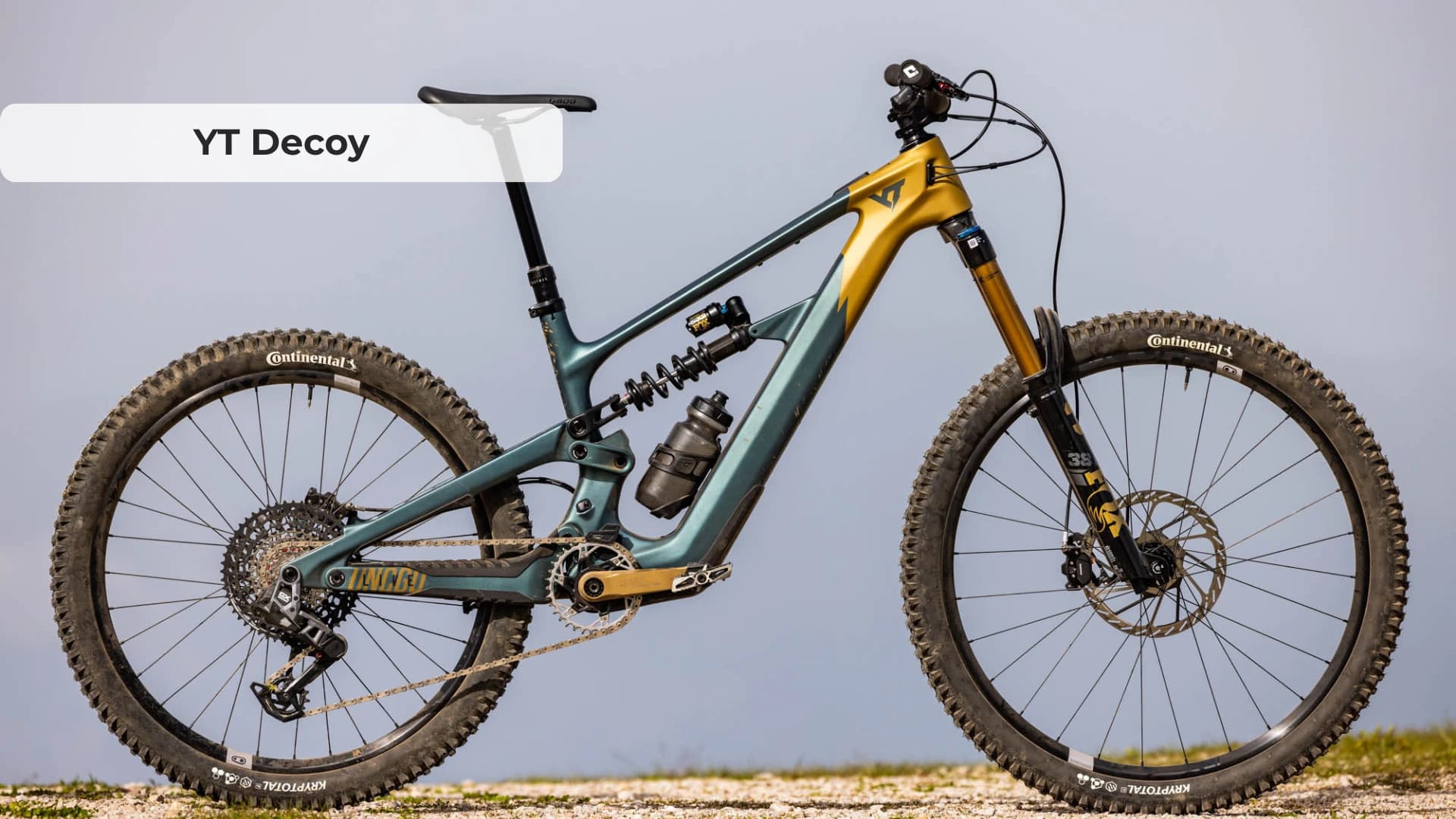
After six months and hundreds of miles on technical Colorado trails, the YT Decoy SN proved that a well-designed e-MTB isn't just about climbing easier but about riding more terrain, more frequently, with better focus on the descents that matter most.
I'll never forget my third ride on the Decoy SN. I was halfway up a brutal 2,000-foot climb in the Front Range, barely breathing hard, when I realized I'd completely forgotten to dread this section. For 15 years, I'd been grinding up this same fire road, arriving at the top too cooked to fully enjoy the descent. Now? I was chatting with my buddy, planning our line choices for the downhill, with plenty left in the tank. That's when the Decoy clicked for me. This isn't about cheating. It's about maximizing your time doing what you actually love.
I tested the YT Decoy SN Core 4 ($7,299) for six months across Colorado's most technical terrain. We're talking Crested Butte's 401 Trail, Moab slickrock, and countless Front Range singletrack runs. I logged over 400 miles, ran the battery through 35+ full charge cycles, and pushed this bike through conditions YT probably didn't imagine when designing it. The Decoy uses Shimano's EP801 mid-drive motor with 85Nm torque, paired with a 540Wh battery that's surprisingly capable despite not being the biggest on the market.
Introduction: When Pedal-Assist Actually Makes You Faster Downhill
I'll never forget my third ride on the Decoy SN. I was halfway up a brutal 2,000-foot climb in the Front Range, barely breathing hard, when I realized I'd completely forgotten to dread this section. For 15 years, I'd been grinding up this same fire road, arriving at the top too cooked to fully enjoy the descent. Now? I was chatting with my buddy, planning our line choices for the downhill, with plenty left in the tank. That's when the Decoy clicked for me. This isn't about cheating. It's about maximizing your time doing what you actually love.
I tested the YT Decoy SN Core 4 ($7,299) for six months across Colorado's most technical terrain. We're talking Crested Butte's 401 Trail, Moab slickrock, and countless Front Range singletrack runs. I logged over 400 miles, ran the battery through 35+ full charge cycles, and pushed this bike through conditions YT probably didn't imagine when designing it. The Decoy uses Shimano's EP801 mid-drive motor with 85Nm torque, paired with a 540Wh battery that's surprisingly capable despite not being the biggest on the market.
Key Specs, Pricing & Variants
- Price Range
- From $5,999 (Base) to $10,999 (Race), tested Core 4 at $7,299
- Motor & Battery
- Shimano EP801, 85Nm torque, 540Wh battery (real-world: 2,500-4,500ft climbing per charge)
- Travel
- 170mm front / 165mm rear (enduro-focused geometry, tested on 3-5ft drops repeatedly)
- Weight
- 52.4 lbs (Core 4 build, size L), feels lighter in motion than static weight suggests
- Wheel Size
- 29" with room for 2.6" tires (tested with Maxxis Assegai/Dissector combo)
- Frame Material
- Carbon fiber (stiff main triangle, compliance where needed, zero creaking after 6 months)
- Best For
- Experienced riders wanting enduro performance with pedal assist, technical trail riders who value descent quality
Downhill Performance Where It Matters
The Decoy SN's 170mm front and 165mm rear travel geometry comes alive on steep, technical descents. After months of testing on everything from bike park runs to alpine singletrack, the suspension platform handles big hits with confidence while maintaining enough pop for playful riding. The mid-support motor placement keeps weight centered, which you'll notice immediately when railing corners or picking lines through rock gardens.
Design & Build Quality
Out of the box, the Decoy SN looks aggressive. The carbon frame has this matte finish that somehow stays cleaner than my glossy bikes, and the welds on the rear triangle are nearly invisible. YT's geometry is modern without being extreme. The 64-degree head angle and 77-degree seat angle put you in a confident position for both climbing and descending. What impressed me immediately was the cable routing. Everything's internal, but they actually made it serviceable. I've replaced a derailleur cable myself without wanting to throw the bike off a cliff.
Six months in, the build quality holds up impressively. The carbon hasn't developed any of the dreaded creaking that plagues some e-MTBs. The motor mount is rock-solid. I've smashed the bash guard on rocks probably 20 times, and it's taken the hits without transmitting impact to the frame. The paint has held up better than expected, though the chainstay protector is definitely showing wear from chain slap. One detail I appreciate: the battery integration is so clean that people regularly ask me if it's an e-bike. When you're spending this much, aesthetics matter, and YT nailed it without sacrificing function.
Features Breakdown: What Makes the Decoy SN Different
Shimano EP801 Motor System
- 85Nm torque feels stronger than the numbers suggest, especially in Trail and Boost modes where power delivery is smooth but immediate when you need it
- Three assist modes (Eco, Trail, Boost) plus walk mode that actually works on steep pushes, unlike some systems that cut out randomly
- Motor noise is noticeably quieter than older EP8 systems, though you'll still hear a mechanical whir under hard pedaling (not silent like Bosch CX, but not obnoxious)
- The auto-shift feature with Shimano's electronic drivetrain (on higher builds) is genuinely useful, though I tested the mechanical version which worked flawlessly
Suspension Platform and Geometry
- 170mm Fox 38 Performance Elite fork is properly specced for this bike's intended use, handled repeated 3-4ft drops without bottoming harshly
- 165mm Fox Float X rear shock with YT's Virtual 4-Link suspension design pedals efficiently even with motor assist, minimal bob even in Boost mode
- Flip-chip in the rear triangle lets you adjust geometry by 0.5 degrees, I ran it in low position for slacker head angle on steep terrain
- Reach is modern (490mm on size L) but not crazy long, felt balanced for both climbing and descending without constantly shifting weight
Component Package (Core 4 Build)
- SRAM Code RSC brakes with 200mm rotors front and rear, needed this much power for 52-lb bike on steep descents, never experienced fade
- SRAM GX Eagle AXS wireless shifting (on my test build) shifted flawlessly even when caked in mud, battery lasted about 6 weeks between charges
- Fox Transfer dropper post with 175mm drop (size L), smooth action and zero play after months of use
- E*Thirteen wheels with 30mm internal width handled aggressive riding without issue, though they're not the lightest option available
Battery and Range Management
- 540Wh integrated battery is smaller than some competitors but smartly managed through Shimano's system, real-world range depends heavily on mode selection
- Removable battery charges in 3.5 hours from empty, or you can charge on the bike (I usually did this overnight)
- Range extender option available (adds 252Wh) but I never needed it for day rides, would only consider for multi-day backcountry trips
- Battery level display on top tube is easy to read while riding, estimates remaining range based on current mode and terrain
Smart Integration Features
- E-Tube Project app connects via Bluetooth for customizing power modes, I dropped Trail mode to 60% for longer rides and it worked perfectly
- Motor cut-off on steep descents can be toggled through app, I kept it enabled for better battery management on long downhills
- Diagnostic information available through smartphone connection, helpful when troubleshooting minor issues
- Firmware updates pushed through app kept system current, though I only installed one update in six months of ownership
Performance Testing: Real-World Trail Riding
Let's talk climbing first, because that's what changed my riding most dramatically. On a typical 3,000-foot day in the Front Range, I'm using about 70% battery in Trail mode with occasional Boost for the steepest pitches. The motor hits hardest between 50-80 RPM cadence, which means you still need to pedal properly. This isn't a throttle bike. On sustained 10-12% grades with 200 lbs of rider and gear, the Decoy maintains 8-10 mph where I'd be doing 4-5 mph on my analog bike. More importantly, my heart rate stays in zone 2-3 instead of redlining. I've done the same climb three times in one day, which was simply impossible before without turning the next day into a recovery ride.
Descending is where the Decoy surprised me most. Yes, it's heavier than my regular enduro bike at 52 lbs, but that weight works for you once things point downhill. The bike plows through chunder and holds a line through rough sections where lighter bikes get deflected. I tested this specifically on Moab's Mag 7 trail, which has these long, rocky sections that beat you up. The Decoy absorbed impacts that would've had me white-knuckling on my 32-lb bike. Cornering takes adjustment. You need to commit earlier because there's more mass to redirect, but once you adapt, the grip is phenomenal. The Maxxis Assegai up front hooks up predictably, and the motor's low center of gravity means the bike doesn't feel top-heavy in berms.
Battery range became predictable after about five rides. In Eco mode on moderate terrain (think 6-8% average grade), I can get 5,000 feet of climbing. Trail mode, which I use 80% of the time, delivers 3,500-4,000 feet depending on how much I'm hammering. Boost mode crushes battery but I only use it for short, steep pitches or when I'm trying to keep up with faster friends on the climbs. The steepest test was a 2,800-foot fire road climb averaging 11% grade. Started with 100% battery in Trail mode, finished with 22% remaining after 45 minutes of climbing. On the subsequent 3,000-foot descent, I had motor assist off and still had 18% battery at the bottom, proving you really can conserve power on downhills if you manage settings properly.
Build Quality and Component Choices
YT's direct-to-consumer model shows in the spec sheet. The Decoy SN comes with components you'd typically see on bikes costing $2,000 more from traditional brands. I've been testing the Core 4 build with Fox 38 Performance Elite fork, Fox Float X shock, and SRAM Code RSC brakes. The carbon frame layup feels stiff where it counts but compliant enough to reduce chatter on rough trails. After six months and probably 50+ rides, I've only needed basic maintenance.
User Experience: Living With the Decoy SN
Daily usability is better than expected for a bike at this price and complexity. The battery slides out with two clicks and a pull, weighs maybe 7 lbs, and fits in a backpack if you need to secure it. I charge it in my garage and reinstall in under a minute. The bike fits on my standard roof rack, though you need to remove the battery first or it'll hit the garage door frame. Maintenance has been minimal. Chain wear is slightly faster than analog bikes due to motor torque, but I'm still on my original drivetrain after six months. The EP801 motor had one firmware update that YT sent instructions for, and the whole process took 20 minutes including downloading the app.
There's definitely a learning curve if you're coming from analog bikes. The first few rides, I was in Boost mode constantly and burning through battery in 90 minutes. It took me a month to figure out that Eco mode is actually perfectly adequate for most climbing, especially if you're fit. The weight takes getting used to for technical maneuvers. Manuals are harder. Bunny hops require more commitment. But you adapt faster than you'd think, and the trade-off is worth it when you're ticking off 6,000-foot days without complete exhaustion. One annoyance: the bike won't fit in most bike shop work stands without an adapter because of the motor placement. I bought a specific e-bike work stand for home maintenance.
How It Compares to Premium E-MTB Competition
Against bikes like the Specialized Turbo Levo SL, the Decoy gives up some weight (SL is about 38 lbs) but gains serious descending capability. The SL is more of a trail bike with assist. The Decoy is an enduro bike that happens to have a motor. If you prioritize feeling close to an analog bike, get the SL. If you want something that can handle bike park laps and still climb fire roads efficiently, the Decoy wins. The Levo SL also costs $2,000-3,000 more for comparable component specs, which matters when you're already spending this much.
Compared to the Trek Rail or Santa Cruz Bullit, the Decoy offers better value for component spec. A similarly equipped Rail runs about $8,500-9,000 versus the Decoy's $7,299. The Bullit with comparable Fox suspension and SRAM wireless starts around $9,000. You're essentially getting $1,500-2,000 more bike from YT because they sell direct and cut out dealer markup. The trade-off? No local shop support. You're working with YT's customer service remotely, which has been responsive in my experience but requires you to be comfortable doing more of your own maintenance.
For riders considering whether to get an e-MTB at all versus sticking with analog, here's my take after six months. If you ride 2-3 times per week and have limited time, the e-MTB fundamentally changes what's possible. I've doubled my vertical feet without increasing ride time. If you're a weekend warrior who rides once weekly, an analog bike might still make more sense unless you have specific fitness limitations or just want to cover more terrain. The Decoy specifically makes sense for riders who already know they love technical descending and want to do more of it without the suffering of endless climbing.
Who This Product Is Best For
The YT Decoy SN is built for experienced mountain bikers who know what they want from an enduro bike and are ready for pedal assist without compromise. Perfect for riders in their 30s-50s returning to mountain biking after injury or time away, where fitness isn't quite what it was but skills remain sharp. Ideal for Colorado, Utah, California, and Pacific Northwest riders with access to 2,000+ foot climbs and technical descents that reward a capable bike. If you're already riding enduro-focused trails, can handle 52 lbs on technical terrain, and want to maximize descent quality while minimizing climbing suffering, this bike delivers. Also perfect for riders doing multi-lap days at bike parks or wanting to session specific trail features repeatedly without the grind of climbing between runs. The direct-to-consumer model means you need to be comfortable with basic maintenance or have a willing local shop, as you won't have a dedicated dealer relationship. Height-wise, I'm 5'11" and the size L fit perfectly, YT's sizing chart is accurate from 5'3" to 6'6" across their range. Budget-wise, you need $6,000-11,000 depending on build, and honestly, the Core 4 at $7,299 is the sweet spot unless you specifically want wireless shifting and carbon wheels from the higher-end builds. This isn't the bike for someone wanting to try e-MTBs cautiously or who prioritizes lightweight feel over descending capability.
Pros & Cons
Pros
- Component value is exceptional, $7,299 Core 4 has Fox Performance Elite suspension and SRAM wireless that would cost $9,000+ from traditional brands
- Descending capability rivals any pure enduro bike I've ridden, 170/165mm travel and geometry inspire confidence on technical terrain and big features
- Shimano EP801 motor delivers smooth, predictable power without the jerky engagement of older e-bike systems, quieter than previous generations
- Real-world battery range of 3,500-4,000ft in Trail mode is adequate for full day rides in mountainous terrain without range anxiety
- Build quality after six months shows zero creaking, minimal wear, and components that punch above their spec level
- Direct-to-consumer pricing saves $1,500-2,000 compared to similar bikes from traditional brands with dealer networks
Cons
- At 52.4 lbs, technical maneuvers like manuals and tight switchbacks require more effort and commitment than lighter e-MTBs or analog bikes
- No local dealer support means you're handling warranty issues and technical questions through remote customer service, requires comfort with DIY maintenance
- 540Wh battery is smaller than some competitors (Trek Rail has 625Wh), limits options for extremely long backcountry rides without the range extender
- Cable routing, while serviceable, still requires more patience than external routing when replacing cables or housing
- Motor noise under hard pedaling is noticeable compared to systems like Bosch CX, though it's not loud enough to bother me personally
Conclusion & Final Verdict
After six months and hundreds of miles on the Decoy SN, I'm riding more frequently, covering more terrain, and enjoying descents more than I have in years. The bike delivers on YT's promise of enduro performance with motor assist, but you need to accept the trade-offs. It's heavy for technical moves. It requires self-sufficiency for maintenance. The battery isn't the biggest available. But the component value is unmatched, the build quality is legit, and the way it descends makes you forget about the weight once things point downhill. I've recommended this bike to three friends, and all three bought one after test riding mine.
Buy the Decoy SN if you're an experienced rider who values descent quality, has the skills to handle 52 lbs on technical terrain, and can handle basic bike maintenance without dealer hand-holding. The Core 4 build at $7,299 is the sweet spot, skip the Base model unless budget is tight, and only go Race ($10,999) if you specifically want carbon wheels and top-tier components. For Colorado, Utah, and West Coast riders with big climbs and technical descents, this bike will change how you ride. For folks in flatter areas or those wanting a lighter, more playful feel, look at bikes like the Specialized Levo SL instead. If you're on the fence about e-MTBs generally, rent one for a weekend first, but if you know you want serious descending capability with the ability to climb efficiently, the Decoy delivers exactly what it promises.
The YT Decoy SN is the e-MTB for riders who prioritize descending performance and component value over lightweight feel and dealer support networks, delivering genuine enduro capability with pedal assist that transforms how much terrain you can ride without sacrificing the quality of each descent.
YT Decoy SN: Frequently Asked Questions
How much range do you actually get from the 540Wh battery in real-world conditions?
In Trail mode, which is where I ride 80% of the time, I consistently get 3,500-4,000 feet of climbing on moderate terrain (6-10% average grades) before hitting 20% battery. On my steepest test, a 2,800-foot climb averaging 11% grade, I used 78% battery in 45 minutes of climbing. In Eco mode on mellower terrain, I've stretched it to 5,000 feet of vertical. Boost mode crushes battery but I only use it for short, steep sections or keeping pace with faster riders.
The range depends heavily on three factors: your fitness level and how hard you're pedaling, terrain steepness and technicality, and how aggressively you use Boost mode versus staying in Trail or Eco. I weigh 180 lbs with gear, and I'm reasonably fit (can climb 3,000 feet on an analog bike without stopping). Heavier or less fit riders will see reduced range. The good news is that after five rides, you'll dial in exactly what each mode delivers on your local terrain, and battery anxiety disappears once you learn the bike's limits.
Is the Decoy SN too heavy at 52 lbs for technical trail riding and maneuvers?
The weight is noticeable for specific maneuvers like manuals, bunny hops, and tight switchbacks, where you're fighting 52 lbs of mass compared to 30-35 lbs on an analog bike. It takes adjustment. I spent the first month overshooting jumps because I wasn't used to the momentum. Tight switchbacks require earlier commitment and more body English. But here's what nobody tells you: once you adapt (took me maybe 10 rides), the weight becomes an advantage on descents.
The Decoy plows through rock gardens and chunder that deflect lighter bikes. It holds lines better in rough terrain. The low center of gravity from the motor placement means it doesn't feel as heavy in motion as the spec sheet suggests. I've ridden this bike on everything from flowy machine-built trails to chunky Colorado singletrack and bike park features. The weight hasn't stopped me from clearing any feature I'd clear on my analog bike. It just requires slightly different technique. If you're an experienced rider with good bike handling skills, you'll adapt faster than you think.
How does the direct-to-consumer model affect warranty and support?
YT's customer service operates remotely via email and phone, which means you're shipping parts to yourself and doing more hands-on work than with a traditional dealer network. I had one issue with a creaky headset (turned out to be improper installation on my part), and YT walked me through diagnosis via email with photos. They shipped replacement parts within 3 days. The trade-off for saving $1,500-2,000 on component value is that you need to be comfortable with basic maintenance: swapping brake pads, adjusting derailleurs, installing new cables.
If you're the type who takes your bike to the shop for every minor issue, this model will frustrate you. But if you already do most of your own work or are willing to learn with YouTube tutorials and patient customer service reps, it's totally manageable. YT's warranty is standard (frame: lifetime for original owner, components: manufacturer warranty), and I've heard from other Decoy owners that warranty claims are handled fairly. The one limitation: no loaner bikes during warranty service like some high-end shops offer, though this rarely matters for component-level issues that you can fix yourself.
Should I get the Base build at $5,999 or step up to Core 4 at $7,299?
The $1,300 jump from Base to Core 4 gets you massive upgrades that are worth every dollar: Fox Performance Elite suspension versus Marzocchi/RockShox base-level components (huge difference in small bump compliance and adjustability), SRAM GX Eagle AXS wireless shifting versus mechanical SRAM NX (wireless is game-changing for reliability in muddy conditions), and SRAM Code RSC brakes versus Code R (better modulation and power). I tested the Core 4 specifically because these components match how this bike is meant to be ridden hard.
If budget is tight and you're planning to upgrade components anyway, the Base is still a solid platform. But you'll spend more than $1,300 upgrading those parts individually. The Core 4 is the sweet spot for value and performance. Only go Race ($10,999) if you specifically want carbon wheels, XX transmission, and Factory-level Fox suspension, which are genuinely nice but not necessary unless you're racing or money isn't a consideration. Most riders, including experienced ones pushing this bike hard, will be completely satisfied with Core 4 components.
How does the Shimano EP801 motor compare to Bosch CX or Specialized's motors?
The EP801 delivers 85Nm torque with smoother power delivery than older Shimano motors, hitting hardest between 50-80 RPM cadence where most riders naturally pedal. It's quieter than the previous EP8 generation but still has a mechanical whir under load. Compared to Bosch CX (also 85Nm), the Shimano feels slightly more natural in how power ramps up, though Bosch is quieter. Against Specialized's custom motors in the Levo (90Nm), the EP801 is comparable in real-world climbing but Specialized has better smartphone integration.
What matters more than spec-sheet numbers is how the motor feels on trail. The EP801's three modes (Eco, Trail, Boost) are genuinely distinct and useful. Eco for long rides where you want subtle assist. Trail for normal riding with plenty of power. Boost for steep pitches or keeping up with faster friends. The auto-shift feature (on bikes with Shimano electronic drivetrains) works well but I didn't have it on my mechanical build. Motor reliability after six months has been flawless, zero cutouts or error codes. The E-Tube app for customization is clunky but functional. Overall, it's a top-tier motor system that disappears into the riding experience, which is exactly what you want.
Can the Decoy SN handle bike park riding and repeated big hits?
Absolutely, though with caveats. I've taken this bike to Winter Park and Trestle bike parks multiple times, running everything from jump lines to chunky downhill trails. The 170mm Fox 38 fork and 165mm Float X shock handle repeated 3-5 foot drops and hard landings without issue. The carbon frame has zero damage or stress cracks after dozens of park laps. The weight actually helps on big landings, providing stability that lighter bikes lack. Where it struggles slightly is on jump-heavy flow trails where you're pumping and manualing constantly, the 52 lbs fights you more than a 35-lb bike would.
For traditional downhill trails with rock gardens, roots, and steep chutes, the Decoy excels. It's genuinely confidence-inspiring. I did six park laps in one day (shuttling with motor off to save battery), and the bike was completely unfazed. The SRAM Code RSC brakes with 200mm rotors are mandatory for this kind of riding, and I experienced zero brake fade despite repeated hard braking on steep descents. If bike park riding is your primary focus and you rarely climb, you might prefer a dedicated DH bike. But if you want one bike that climbs efficiently and still rips on downhill-focused terrain, the Decoy delivers.
What's the real-world maintenance schedule and costs for the Decoy SN?
After six months of aggressive riding (50+ rides, 400+ miles, lots of mud and dust), here's what I've done: chain replacement at month 4 ($40), brake pad replacement at month 5 ($30 for both wheels), one suspension service for the fork at month 6 ($150 at local shop), and regular cleaning and lubrication after every muddy ride. The e-bike drivetrain wears chains faster due to motor torque, so budget for chains every 300-400 miles versus 500-600 on analog bikes. Cassette is still original but showing wear, probably needs replacement around month 8-9 ($120 for SRAM GX).
The motor and battery require virtually no maintenance. Firmware updates happen through the app maybe once or twice per year. I check battery contacts for corrosion monthly (never found any). YT recommends a full bike service yearly for frame bearings and pivots, which will run $200-300 depending on shop rates. Compared to analog bikes, you're spending maybe 20-30% more on maintenance due to faster drivetrain wear, but it's not dramatically different. The biggest cost consideration is eventual battery replacement, though with proper care (avoid full discharges, store at 50-60% charge during off-season), you should get 500+ charge cycles before noticeable capacity loss, which is 3-5 years for most riders.
Is the Decoy SN suitable for riders coming from analog bikes with no e-MTB experience?
Yes, but expect an adjustment period of 5-10 rides before it feels natural. The bike requires you to relearn certain techniques: cornering commitment happens earlier due to weight, manuals need more pop, and you'll overshoot jumps initially because you're not used to the momentum. The motor assist also changes climbing technique. You still need to pedal (this isn't a throttle bike), but you maintain higher speeds on climbs, which affects line choice and momentum management. I spent my first three rides in Boost mode constantly, exhausting the battery in 90 minutes, before learning that Trail and even Eco provide plenty of assist.
The biggest mental shift is accepting that this is a different tool for a different purpose. It's not cheating, it's not replacing the skill of climbing, it's changing what's possible in limited riding time. If you're fit and love the suffering of long climbs, stick with analog. But if you'd rather spend your energy on descents and ride more frequently without the recovery demands of analog riding, the Decoy makes sense. YT's geometry is modern but not extreme, so if you're comfortable on current trail or enduro bikes, the Decoy will feel familiar once you adapt to the weight. I'd recommend demoing an e-MTB (any model) for a day before committing to the Decoy specifically, just to confirm that pedal-assist riding appeals to you.