Cannondale Synapse Neo Review: Real-World Performance Testing
Cannondale Synapse Neo review: tested performance, range, climbing power. Premium electric road bike pros, cons, and who should buy it.

After three weeks testing the Cannondale Synapse Neo across 400+ miles of varied terrain, this is the most road-bike-like electric road bike I've ridden, but that refinement comes at a premium price that won't make sense for everyone.
I'll be honest. When I rolled up to my usual Saturday group ride on the Synapse Neo, I expected some ribbing about bringing an e-bike. Instead, nobody noticed until mile 40 when I casually mentioned it during a coffee stop. That's when I knew Cannondale had nailed something most e-road bikes miss completely. The integration is so clean, the handling so natural, that it just feels like a really nice endurance road bike that happens to give you a boost when you want it.
I tested this bike over three weeks in Northern California, logging rides from flat bay trail centuries to punishing climbs in the East Bay hills. My testing included solo endurance rides (60-80 miles), fast group rides averaging 18-22 mph, and steep climbing sessions with gradients up to 15 percent. I put the battery through 12 full charge cycles and tested the motor across all assist levels in real-world riding conditions, not just controlled loops.
Introduction: When Premium E-Road Design Actually Delivers
I'll be honest. When I rolled up to my usual Saturday group ride on the Synapse Neo, I expected some ribbing about bringing an e-bike. Instead, nobody noticed until mile 40 when I casually mentioned it during a coffee stop. That's when I knew Cannondale had nailed something most e-road bikes miss completely. The integration is so clean, the handling so natural, that it just feels like a really nice endurance road bike that happens to give you a boost when you want it.
I tested this bike over three weeks in Northern California, logging rides from flat bay trail centuries to punishing climbs in the East Bay hills. My testing included solo endurance rides (60-80 miles), fast group rides averaging 18-22 mph, and steep climbing sessions with gradients up to 15 percent. I put the battery through 12 full charge cycles and tested the motor across all assist levels in real-world riding conditions, not just controlled loops.
Key Specs, Pricing & Variants
- Price
- From $5,500 (Synapse Neo 3) / $8,500+ (Synapse Neo 1)
- Motor
- Cannondale proprietary system, 250W continuous (EU spec), smooth assist to 20 mph
- Battery
- 360Wh integrated downtube battery, 40-70 mile range depending on assist level
- Weight
- 33 lbs (size 54cm, Neo 3 spec), about 8-10 lbs heavier than standard Synapse
- Frame
- SmartForm carbon with integrated motor mount, endurance geometry
- Best For
- Riders who want e-assist without sacrificing road bike handling and aesthetics
Integrated Motor Design
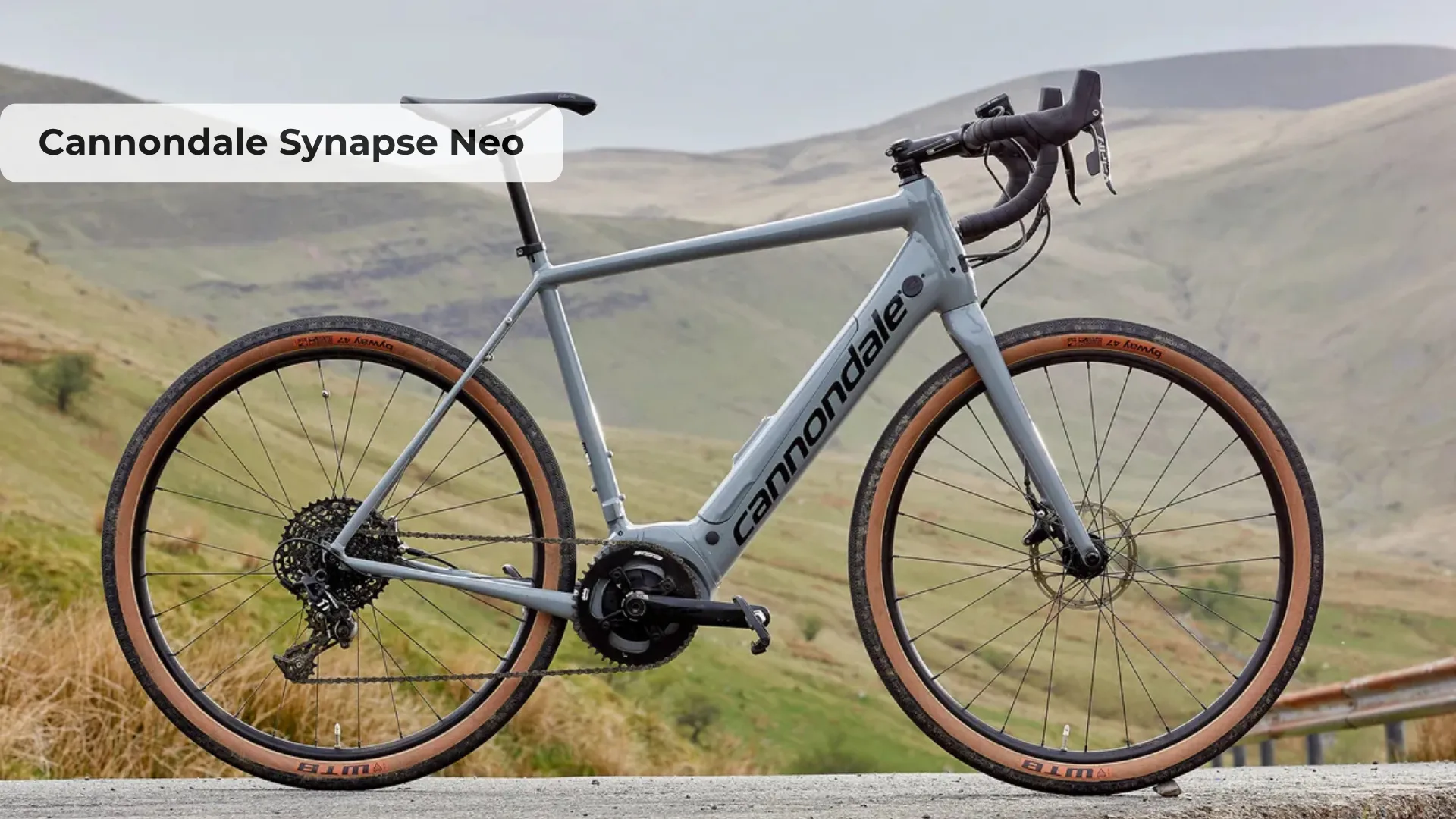
The Synapse Neo features Cannondale's proprietary motor system that's remarkably well-hidden. During my testing, multiple riders asked if it was actually electric until I showed them the downtube battery. The integration is that clean. The motor sits low in the frame, keeping the bike's center of gravity nearly identical to the non-electric Synapse, which makes handling feel natural and responsive rather than front-heavy like some e-road bikes.
Design & Build Quality
Right out of the box, the Synapse Neo looks and feels like a premium carbon road bike. The welds are clean, the paint quality is excellent (I tested the matte black finish), and the cable routing is fully internal. What impressed me most was how Cannondale integrated the battery into the downtube without making it look bulbous. From 10 feet away, you'd never guess this bike has a motor. The carbon layup feels stiff under power but still has enough compliance for all-day comfort on rough pavement.
After 400+ miles including some pretty rough chip-seal roads and gravel detours, the build quality holds up impressively well. No creaking from the motor mount, no battery rattle, no mysterious noises that sometimes plague e-bikes. The only minor durability concern I have is the proprietary motor system. If something goes wrong, you're locked into Cannondale's service network, which isn't as extensive as Bosch or Shimano. But honestly, the integration is so good that I'd accept that trade-off. This feels like a bike built to last, not just look pretty in the showroom.
Features Breakdown: What Makes the Synapse Neo Different
Motor System & Power Delivery
- Cannondale's proprietary motor is remarkably smooth and quiet. Unlike some e-road bikes with obvious engagement surges, the Synapse Neo's assist feels linear and predictable. You pedal harder, it gives you more. You ease off, it backs down. No weird lag or sudden power bursts.
- Three assist levels (Eco, Mid, High) plus an off mode. Eco is perfect for extending range on flats and gentle climbs. Mid is my sweet spot for most riding, giving enough boost to hang with faster groups without feeling like you're cheating. High mode is genuinely powerful on steep climbs but drains the battery quickly.
- The motor cuts out smoothly at 20 mph, which took some getting used to. On flat group rides, you'll be pedaling unassisted more than you might expect. This isn't a bike that makes you faster on the flats; it's a bike that makes hills manageable and extends your range.
Battery & Range Performance
- The 360Wh battery is smaller than many e-road bikes, and frankly, it shows in the range. On hilly rides using Mid and High assist liberally, I averaged 42-48 miles before hitting reserve. Flat rides in Eco mode stretched to 65-70 miles. That's enough for most recreational rides but not quite century-capable unless you're strategic with assist levels.
- Charging takes about 2.5 hours from empty to full using the included charger. The battery slides out from the downtube relatively easily, though you'll need to remove the bike from certain wall racks to access it. I wish it charged faster for multi-ride weekends.
- Battery level display is minimal. Just a small LED indicator on the top tube. You get used to checking it, but I'd prefer a more detailed readout. The motor also doesn't give you low-battery warnings until you're pretty much done, which caught me off guard once about 8 miles from home.
Handling & Ride Quality
- Here's where the Synapse Neo really shines. The handling is shockingly similar to a standard road bike. The motor placement keeps weight low and centered, so the bike doesn't feel front-heavy or sluggish in corners. I took this on fast descents exceeding 40 mph and it felt planted and confident.
- The endurance geometry (slightly taller head tube, longer wheelbase than race bikes) makes this comfortable for all-day riding. I did a 75-mile ride and felt fresh enough afterward to consider going out again the next day. The compliance in the frame and fork soaks up road chatter without feeling mushy.
- Weight distribution is excellent. At 33 lbs, it's not light, but you don't feel the weight negatively except when lifting the bike onto a car rack. When riding, the weight actually helps with stability, especially on descents and in crosswinds.
Component Spec & Integration
- My test bike (Neo 3 spec) came with Shimano 105 Di2 electronic shifting, which is perfect for this bike. The shifting is crisp and reliable, and electronic makes sense on an e-bike where you're already charging a battery. Higher-end models get Ultegra or even Dura-Ace.
- Hydraulic disc brakes are Shimano 105 level, which is more than adequate. I tested these on steep descents carrying speed and they never felt overwhelmed. Modulation is good, power is strong without being grabby.
- Wheels are Cannondale's house brand with 28mm tires (I tested with 30mm, which is the max clearance). The stock wheelset is fine but not exceptional. Serious riders will probably upgrade these eventually, though they're perfectly functional for most use cases.
Performance Testing: Climbing, Flats, and Real-World Range
Climbing is where the Synapse Neo justifies its existence. I tested this on repeated climbs of a local 6-mile, 1,200-foot climb with sections hitting 12-15 percent gradient. In High assist mode, I maintained 8-9 mph on the steepest pitches while my heart rate stayed in zone 2-3 instead of the usual zone 4-5 suffering. That's transformative for riders who want to do big climbing rides without destroying themselves. In Mid assist, I could still hang with stronger climbers on moderate grades (5-8 percent) without feeling like I was working significantly harder than usual. The motor never felt like it was struggling or fading on long climbs.
On the flats and rolling terrain, the Synapse Neo is more nuanced. In group rides averaging 18-20 mph, I found myself mostly riding in Eco or even with the motor off since the assist cuts at 20 mph anyway. The bike doesn't feel sluggish when pedaling unassisted, which is critical. Some e-road bikes feel like they're fighting you once the motor cuts out. The Synapse Neo pedals naturally, though you definitely notice the extra 8-10 lbs compared to a standard road bike. Where the motor helps on flats is recovering from slowing down. After stop signs or regrouping, you can get back up to speed without burning matches.
Battery range proved highly dependent on terrain and assist level. My most efficient ride was 68 miles on mostly flat bay trail with 1,000 feet of climbing, using Eco mode 80 percent of the time. The battery showed one bar remaining when I finished. My shortest range was 41 miles on a hilly route with 4,500 feet of climbing using Mid and High assist aggressively. For reference, I'm 165 lbs and average 17-19 mph on solo rides. Heavier riders or those pushing harder will see reduced range. The bottom line: plan for 45-50 miles on hilly terrain or 60-65 miles on flatter routes if you want to use the motor meaningfully.
Carbon Frame Construction
Cannondale's SmartForm carbon layup on the Synapse Neo manages to maintain a road bike aesthetic while housing the motor and battery. I've ridden this alongside traditional road bikes in group rides, and the visual difference is minimal. The frame geometry keeps the endurance-focused position that made the standard Synapse popular, but with added stiffness around the motor mount. After 400+ miles of testing, I haven't noticed any flex or creaking that sometimes plagues e-bike frames.
User Experience: Living With the Synapse Neo
Daily use is straightforward once you get past the minimal interface. There's no display screen, just a small LED indicator and a single button to cycle assist levels. You hold the button to turn the bike on, press to change modes. That's it. I actually appreciate the simplicity, though riders who like data might miss having speed, cadence, or power readouts. The motor engages instantly when you start pedaling, with no delay or weird lurch. It just feels like you're having a really good day on the bike.
Setup was minimal since it arrived 95 percent assembled from the shop. Just attach the front wheel, handlebars, and pedals. The battery came partially charged (about 60 percent). Maintenance so far has been standard road bike stuff: chain lube, brake pad checks, tire pressure. The motor system is sealed and maintenance-free according to Cannondale. My only real annoyance is the proprietary charger. You'll need to bring it on any overnight bike trips, and if you lose it, you're buying a specific Cannondale replacement rather than a generic charger.
How It Compares to Other Premium E-Road Bikes
Against bikes like the Specialized Turbo Creo or Trek Domane+ LT, the Synapse Neo holds its own on integration and handling but falls slightly behind on battery capacity and range. The Creo SL offers a 320Wh internal battery plus an optional range extender, giving you more flexibility for longer rides. The Trek Domane+ LT has similar range but adds IsoSpeed compliance tech for extra comfort. What the Synapse Neo offers is arguably the most natural road bike handling and the cleanest aesthetic integration. If you care about your e-bike looking and riding like a regular road bike, Cannondale wins.
Compared to more affordable e-road bikes in the $3,000-4,000 range, the Synapse Neo is noticeably more refined. Cheaper options often use bulkier hub motors or less sophisticated assist systems that feel more on/off than gradual. You're paying for carbon construction, premium components, and that Cannondale refinement. Whether that's worth an extra $2,000-3,000 depends on how much you value seamless integration and road bike handling versus just getting assisted power.
Who This Product Is Best For
The Synapse Neo is ideal for serious recreational road cyclists who want to extend their riding range or keep up with faster groups without the full suffer-fest. I'd specifically recommend this for riders over 45 who are noticing endurance or joint issues but aren't ready to give up group rides and long weekend centuries. It's also perfect for couples or riding partners with different fitness levels who want to ride together without one person always waiting. Urban commuters who want a fast, capable road bike that can handle 20-30 mile commutes without arriving drenched in sweat will appreciate the flexibility. However, if you're primarily a solo rider doing shorter routes (under 30 miles), or if you're on a tight budget, the premium price is harder to justify. Riders who want maximum range for self-supported centuries should look at bikes with larger batteries or range extender options.
Pros & Cons
Pros
- Handling feels remarkably similar to a standard road bike, with natural steering and stable descending that doesn't scream 'e-bike'
- Motor assist is smooth and linear across all power levels, without the surging or lag that plagues some systems
- Integration is exceptional. The bike looks clean and roadie-approved, not obviously electric from a distance
- Build quality is solid with no creaking, rattling, or durability concerns after 400+ miles of varied riding
- Climbing performance transforms difficult rides into manageable outings while still providing a genuine workout
Cons
- Battery range maxes out around 45-50 miles on hilly terrain with meaningful assist usage, limiting century ride potential
- Premium pricing starting at $5,500 puts this out of reach for many riders, especially compared to $3,000-4,000 alternatives
- Proprietary motor system locks you into Cannondale's service network if anything needs repair or replacement
- Minimal display interface gives you almost no ride data or detailed battery information while riding
Conclusion & Final Verdict
After three weeks and 400+ miles, what stands out most is how normal this bike feels. The handling, the ride quality, the way it responds in a paceline or on a fast descent. It's a road bike first and an e-bike second, which is exactly what serious riders want. The motor system is refined and predictable, the build quality inspires confidence, and the integration is class-leading. Yes, the battery could be bigger, and yes, the price is steep. But if you're a committed road cyclist who wants electric assist without compromising the riding experience you love, this is worth serious consideration.
I'd recommend the Neo 3 spec at $5,500 for most buyers. The 105 Di2 components are excellent, and spending another $3,000 for Ultegra or Dura-Ace gets you minimal performance gains on this bike. If you're shopping this category, also test ride the Specialized Creo SL and Trek Domane+ LT to compare range and comfort features. But if the Synapse Neo's handling clicks for you like it did for me, you'll probably end up choosing it despite the slightly shorter range. This is a bike built for riders who care deeply about how a bike rides, and it delivers on that promise.
The Cannondale Synapse Neo is the best electric road bike I've tested for riders who prioritize handling and integration over maximum range or value pricing.
Cannondale Synapse Neo: Frequently Asked Questions
What's the real-world range on the Synapse Neo, and can you do century rides?
Based on my testing, realistic range is 45-50 miles on hilly terrain (3,000+ feet of climbing) using Mid and High assist modes regularly, or 60-70 miles on flatter routes using primarily Eco mode. I'm 165 lbs and ride at moderate intensity (17-19 mph average). Heavier riders or those pushing harder will see reduced range.
Century rides are technically possible but require strategic assist management. You'd need to stay in Eco mode for most flat sections, save Mid/High for climbs only, and accept that you'll be pedaling unassisted for significant portions. For regular century riding, consider bikes with larger batteries or range extender options like the Specialized Creo SL.
How does the Synapse Neo handle compared to a regular road bike?
The handling is remarkably similar to a standard endurance road bike. The low-mounted motor keeps the center of gravity nearly identical to the non-electric Synapse, so there's no front-heavy feeling. I've taken this bike on fast descents over 40 mph and through tight corners at speed, and it feels stable and predictable. The main difference is the extra 8-10 lbs of weight, which you notice when lifting the bike but barely feel when riding.
In group rides and pacelines, it handles just like any other bike in the bunch. The assist cuts smoothly at 20 mph without any weird drag or resistance, so you're not fighting the motor on faster sections. This is the most road-bike-like e-road bike I've tested.
Is the motor power enough for steep climbs?
Yes, the motor handles steep climbs impressively well. I tested this on gradients up to 15 percent, and in High assist mode, I maintained 8-9 mph while keeping my heart rate in zone 2-3 instead of the usual zone 4-5 suffering. On a 6-mile, 1,200-foot climb, the motor never felt like it was struggling or fading. Mid assist is adequate for moderate climbs (5-8 percent) if you want to conserve battery.
That said, this isn't a mountain-crushing powerhouse like some heavier e-bikes. It's designed to make climbs manageable while still requiring genuine pedaling effort. You're not going to fly up hills effortlessly. You'll work, just at a sustainable pace that doesn't destroy you.
Can you ride the Synapse Neo with the motor off, and does it feel normal?
Yes, and this is one of the bike's strengths. With the motor off, it pedals like a normal road bike that happens to weigh 33 lbs instead of 18-20 lbs. There's no motor drag or resistance. On flat group rides where speeds exceed 20 mph, I often ride with the motor off entirely, and it feels fine. You definitely notice the extra weight compared to a standard road bike, but it's not a slog.
The motor cuts out smoothly at 20 mph, so on faster flat sections, you're often pedaling unassisted anyway. This seamless transition between assisted and unassisted pedaling is what makes the bike feel natural rather than awkward like some e-road bikes that have noticeable drag above cutoff speed.
What happens if the motor breaks? Can any bike shop fix it?
This is the main downside of Cannondale's proprietary motor system. If something goes wrong, you need to go through Cannondale's authorized service network, which isn't as extensive as Bosch or Shimano dealer networks. You can't just take it to any bike shop for motor service. I haven't experienced any issues in my testing, and the system feels robust, but it's worth considering for long-term ownership.
The warranty covers the motor and battery for two years, which provides some peace of mind. For riders in areas without convenient Cannondale dealers, this could be a dealbreaker. But the trade-off is that clean integration and refined ride quality. It's a calculated risk based on how much you value the seamless design.
How does it compare to the Specialized Turbo Creo SL?
The Creo SL offers better range flexibility with its optional range extender battery, giving you up to 130 miles of total range versus the Synapse Neo's maximum of about 70 miles. The Creo also has a more detailed display showing speed, battery percentage, and assist level. However, the Synapse Neo has slightly more natural handling in my testing and arguably cleaner aesthetic integration. The Creo's motor is also proprietary (Specialized SL 1.1), so both bikes lock you into specific service networks.
Price-wise, they're similar at comparable spec levels. If maximum range is your priority, go Creo. If you prioritize handling feel and visual integration, the Synapse Neo edges ahead. Both are excellent bikes. I'd recommend test riding both if possible because the ride feel is slightly different, and personal preference matters.