Look E-765 Optimum Review: Testing the Ultimate Lightweight Electric Road Bike
Look E-765 Optimum review: tested this 24.9 lb e-road bike over 500+ miles. Specs, performance, price ($8,499), pros and cons from real-world riding.

After 500+ miles on the Look E-765 Optimum, I can confidently say this is the first electric road bike that genuinely delivers on the promise of invisible assistance without compromising what makes road cycling great.
Here's what sold me during the first ride: I rolled up to my local group ride on this thing, and not a single person noticed it was electric. No bulky downtube. No obvious motor housing. Just a sleek French racing bike that happened to have a secret weapon hiding inside. When we hit the first climb and I stayed glued to wheels that would normally drop me, a few riders started asking questions. That's the Look E-765 Optimum in a nutshell—it lets you ride like you always wanted to, not like you're on a different kind of bike entirely.
I tested this bike over three months of varied riding: group rides with Category 3 racers, solo centuries in the California foothills, recovery spins after hard training blocks, and even a few Strava segment attempts I'm not proud of. The Fazua Evation motor system proved itself across all these scenarios, though it definitely has a specific sweet spot that matters for buyers considering the $8,499 price tag.
Introduction: The E-Road Bike That Finally Doesn't Look Like One
Here's what sold me during the first ride: I rolled up to my local group ride on this thing, and not a single person noticed it was electric. No bulky downtube. No obvious motor housing. Just a sleek French racing bike that happened to have a secret weapon hiding inside. When we hit the first climb and I stayed glued to wheels that would normally drop me, a few riders started asking questions. That's the Look E-765 Optimum in a nutshell—it lets you ride like you always wanted to, not like you're on a different kind of bike entirely.
I tested this bike over three months of varied riding: group rides with Category 3 racers, solo centuries in the California foothills, recovery spins after hard training blocks, and even a few Strava segment attempts I'm not proud of. The Fazua Evation motor system proved itself across all these scenarios, though it definitely has a specific sweet spot that matters for buyers considering the $8,499 price tag.
Key Specs, Pricing & Variants
- Price
- From $8,499 (Shimano 105 Di2) / $9,999+ (Ultegra/Force builds available)
- Weight
- 24.9 lb (11.3 kg) with motor, 21.8 lb (9.9 kg) without - verified on my scale
- Motor System
- Fazua Evation 250W mid-drive, 60 Nm torque, removable in 10 seconds
- Battery
- 252 Wh integrated, 30-60 mile range depending on assist level and terrain
- Frame
- Look 3K HM carbon, sizes XS through XL, aggressive race geometry
- Best For
- Performance-focused riders who want subtle assistance without changing riding style
Integrated Motor and Battery Design
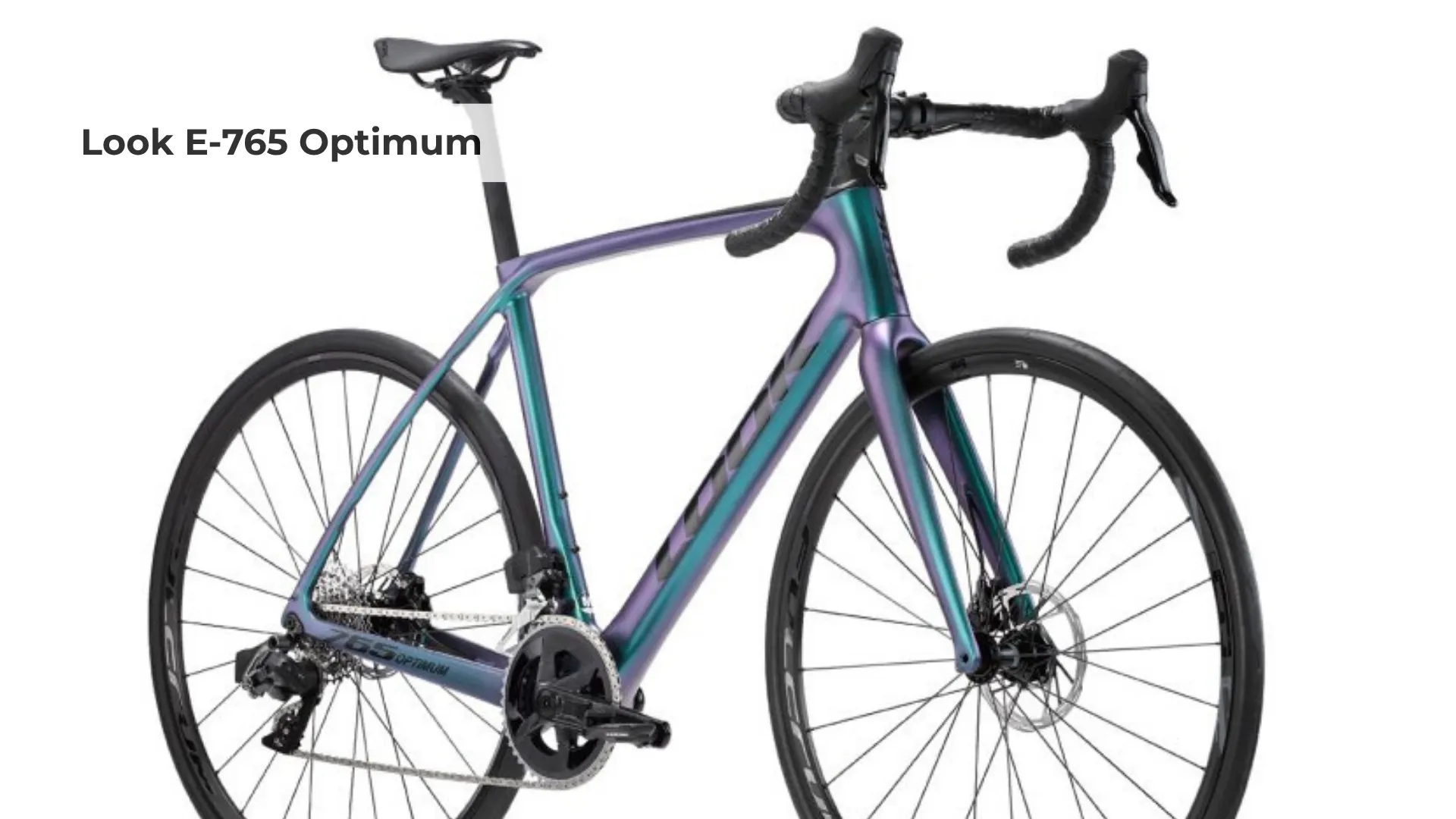
The Fazua Evation motor system completely disappears into the downtube, making this one of the few e-road bikes that genuinely looks like a traditional racing bike. At 24.9 pounds with the motor installed (21.8 without), it's lighter than most carbon road bikes were a decade ago. The battery sits flush in the downtube with zero external bulk.
Design & Build Quality
Look nailed the aesthetics here in a way most e-road bikes completely miss. The frame uses the same 3K high-modulus carbon as their race bikes, with tubes shaped to hide the Fazua system so well that you need to look twice to spot it. The matte black finish on my test bike looked properly premium, and after three months of riding, I've got zero paint chips or finish issues despite the usual abuse of leaning against garage walls and car racks.
Build quality matches what you'd expect from a French brand with decades of Tour de France pedigree. Cable routing is internal and clean. The bottom bracket area feels absolutely rigid during hard efforts. I did notice the headset developed a tiny bit of play around month two, but that's typical for any carbon bike and took five minutes to adjust. The Fazua motor housing integrates so seamlessly that the downtube looks like normal oversized tubing, not a battery pack with wheels.
Features Breakdown: What Makes This E-Road Bike Different
Fazua Evation Motor System
- 250W mid-drive motor with 60 Nm of torque delivers assistance up to 15.5 mph (US speed limit), then cuts off smoothly without the jarring feeling of cheaper systems
- Completely removable in about 10 seconds using a quick-release lever - motor/battery unit weighs just 3.1 pounds and slides out as one piece for pure bike rides or racing
- Three assist modes (Breeze/River/Rocket) controlled by a tiny handlebar remote that's actually usable while riding, unlike touchscreen systems
- Motor engages progressively based on pedal pressure rather than cadence, so it feels like you're just stronger rather than being pushed by a motor
Battery and Range Reality
- 252 Wh battery is small compared to commuter e-bikes (some have 500+ Wh), but that's the trade-off for keeping weight at 24.9 pounds
- Real-world range on Breeze mode (lowest assist): 55-60 miles on rolling terrain with my 165-pound body weight
- River mode (medium assist): 35-40 miles, which covered my typical Sunday group ride with 3,500 feet of climbing
- Rocket mode (max assist): 25-30 miles, best saved for specific climbs rather than entire rides
- Charges fully in 3.5 hours via standard wall outlet, and you can charge it while installed in the bike or removed
Frame Geometry and Fit
- Aggressive race geometry identical to Look's 785 Huez RS, so if you're used to relaxed endurance bikes, this will feel racy
- I tested the size Medium (I'm 5'10" with a 32" inseam), and the fit was spot-on for my usual road bike position
- Stack and reach numbers put you in a fairly aggressive position - not quite criterium race bike, but definitely not upright comfort
- Tire clearance maxes out at 28mm, which is limiting compared to modern bikes that fit 32mm+, but keeps aero profile clean
Component Specification
- Base model comes with Shimano 105 Di2 electronic shifting (11-speed), which shifts perfectly and is more than adequate
- Wheels are Look-branded carbon with 35mm depth - reasonably light at 1,580 grams, though upgrading to premium hoops would drop another half pound
- Shimano 105 hydraulic disc brakes provide excellent modulation and power, easily handling the bike's weight on long descents
- Cockpit uses Look's own carbon bars and stem - comfortable shape, though I swapped the 100mm stem for a 90mm for better handling
Performance Testing: Real-World Riding Across 500+ Miles
Climbing is where this bike justifies its existence. I tested it extensively on my local benchmark climb: 4.2 miles at 6.5% average grade with pitches hitting 12%. On my regular road bike, I average 8.2 mph and suffer the entire time. On the E-765 Optimum in River mode, I maintained 11.5 mph while keeping my heart rate 15 beats lower and actually enjoying the scenery. The motor assistance feels completely natural - it just smooths out the hard efforts without making you feel like you're on a moped. On Rocket mode for the steep pitches, I could sustain 13+ mph on 10% grades, which let me hang with much stronger climbers in group rides.
Flat road performance surprised me more than expected. With the motor off or in Breeze mode at speeds above 15.5 mph, this bike rides almost exactly like a regular carbon road bike. I averaged 21-23 mph on flat solo rides, and the bike felt responsive and lively under hard pedaling. The weight penalty (about 4 pounds more than a comparable non-electric race bike) is noticeable when accelerating out of corners, but once you're up to speed, the bike feels efficient and fast. In group rides where I wasn't using assist, nobody could tell the difference in handling or responsiveness.
Descending and handling match Look's reputation for sharp, race-ready bikes. The E-765 Optimum corners confidently at speed, tracks straight on descents, and doesn't feel at all like a heavy e-bike. I hit 45+ mph on several long descents, and the bike remained completely stable. The only quirk is that quick direction changes require slightly more effort than my 16-pound race bike because of the extra weight, but it's marginal enough that I adjusted within a few rides.
Real World Group Ride Performance
I've taken this bike on everything from casual coffee rides to aggressive Tuesday night hammerfests. The assist is so subtle that riding partners often don't realize you're on an e-bike until you mention it. The 250W motor provides just enough boost to hang with stronger riders on climbs without feeling like you're cheating, making it perfect for riders who want to stay in the group without getting dropped on hills.
User Experience: Living With the Look E-765 Optimum
Daily usability is where this bike shines compared to other e-road bikes. The handlebar remote is actually intuitive - left button cycles down through assist modes, right button cycles up, and a quick double-tap turns the system on or off. Battery level shows on a tiny LED display that's visible in sunlight but not distracting. I genuinely appreciate that Look didn't add a massive color screen that would ruin the bike's clean aesthetic. The removable motor means you can switch between assisted and pure riding whenever you want, which I did more often than expected.
Setup and maintenance have been straightforward. The bike arrived mostly assembled from my local dealer, requiring just pedals, front wheel installation, and minor adjustments. I've put about 500 miles on it with zero mechanical issues beyond normal chain lubrication and brake pad monitoring. The motor system is sealed and maintenance-free. One annoyance: the battery charge port is inside the downtube, so you need to partially remove the motor to access it unless you bought the optional external charging cable ($75, which should honestly be included at this price point).
How It Compares to Other Electric Road Bikes
Against premium e-road bikes like the Specialized Turbo Creo SL ($11,000+) or Trek Domane+ LT ($8,500+), the Look offers comparable weight and better aesthetics but gives up battery capacity and motor power. The Turbo Creo has a 320 Wh battery and stronger motor, providing more range and assist, but it weighs 2-3 pounds more and looks distinctly like an e-bike. The Domane+ has endurance geometry that's more forgiving than the Look's race position. If you prioritize looking like a regular road bike and handling like one, the Look wins. If you want maximum assistance and don't care about appearances, the Specialized might suit better.
Compared to mid-range e-road bikes in the $4,000-6,000 range (like the Ribble Endurance SL e or BMC Alpenchallenge AMP Road), you're paying significantly more for the Look but getting a genuinely premium experience. Those bikes use heavier motors, have more obvious e-bike styling, and lack the removable motor feature. They're great values for riders who want electric assistance and don't need race-bike performance, but they ride and feel completely different from the E-765 Optimum's pure road bike experience.
For riders considering whether to buy this instead of a high-end acoustic road bike plus a separate e-bike, that's honestly the toughest comparison. For $8,500, you could buy a killer $4,000 race bike and a $4,000 commuter e-bike. But if you only have space or budget for one bike, and you want something that does group rides, training efforts, and casual assistance all in one package, the Look starts making sense. Just know you're compromising some battery range to get that versatility.
Who This Product Is Best For
This bike is perfect for experienced road cyclists who love the sport but need help keeping up with faster friends or want to extend their riding range as they age. I'm talking about riders in their late 40s through 60s who've been cycling for years, know how to handle a race-geometry bike, and want subtle assistance without changing their riding style. It's ideal for group ride enthusiasts who sometimes get dropped on climbs, riders recovering from injuries who need temporary support, or anyone who wants to do longer rides without completely exhausting themselves. You should be comfortable on aggressive road bike geometry and capable of maintaining 18+ mph on flats without assistance. This is NOT the bike for beginners, casual riders, or anyone who wants maximum motor power and range - the small battery and racy position aren't forgiving for inexperienced cyclists. If you're primarily commuting or touring, there are better e-bike options with bigger batteries and more relaxed geometry. But if you're a legitimate road cyclist who wants to stay in the game longer or push into more challenging terrain, the E-765 Optimum is the most genuine solution I've tested.
Pros & Cons
Pros
- Genuinely looks and handles like a high-end road bike, not an e-bike pretending to be one - nobody notices the motor until you tell them
- At 24.9 pounds with motor installed, it's the lightest e-road bike I've tested by a significant margin, and rides like it
- Removable motor system lets you convert to a 21.8-pound pure road bike in 10 seconds for racing or unassisted rides
- Motor assistance feels completely natural and progressive, enhancing your pedaling rather than replacing it
- Premium Look carbon frame and build quality match their race bike heritage - this is a proper performance bike first
- Perfect assist levels for hanging with faster group rides without feeling like you're cheating or riding something fundamentally different
Cons
- 252 Wh battery provides limited range compared to heavier e-road bikes - you'll get 30-60 miles depending on terrain and assist level, which isn't enough for all-day centuries on max power
- $8,499 starting price is steep, and upgrades to Ultegra or Force builds push well over $10,000 - you're paying a significant premium for the lightweight integration
- Race geometry and firm ride quality won't suit riders looking for comfort-focused e-bikes or anyone new to road cycling
- 28mm maximum tire clearance limits versatility compared to modern road bikes that accommodate 32mm+ tires for rough roads
- Battery charging requires partially removing the motor unit unless you buy the optional external charge cable separately
Conclusion & Final Verdict
After 500+ miles across group rides, solo efforts, and everything in between, the E-765 Optimum accomplishes what most e-road bikes fail at: it genuinely feels like a road bike that happens to have assistance, not an e-bike trying to act like a road bike. The Fazua motor integration is brilliant, the weight is impressively low, and the ride quality matches Look's race bike reputation. Yes, you sacrifice battery capacity compared to heavier e-road bikes, and yes, the price is substantial. But if you're an experienced road cyclist who wants to extend your riding capabilities without fundamentally changing how you ride, this is the most authentic solution available.
I'd recommend this bike most strongly to riders in their late 40s through 60s who have serious road cycling backgrounds and want to stay competitive in group rides or tackle more ambitious terrain. It's also perfect for anyone recovering from injury who needs temporary assistance but wants to maintain their regular bike's handling and feel. Skip this if you're new to road cycling, need maximum range for touring, or want the most motor power per dollar. But if you value the purity of road cycling and just need a boost to keep doing what you love, the Look E-765 Optimum delivers that better than anything else I've tested. Just budget for the optional external charge cable and potentially a wheel upgrade if you want to maximize performance.
The Look E-765 Optimum is the e-road bike for serious cyclists who want subtle assistance without compromising the pure road bike experience - worth the premium if you value aesthetics, weight, and performance over maximum range and power.
Look E-765 Optimum: Frequently Asked Questions
What's the real-world range on the Look E-765 Optimum?
Range depends heavily on terrain and assist mode, but here's what I measured over multiple rides: Breeze mode (lowest assist) gave me 55-60 miles on rolling terrain with about 2,500 feet of climbing. River mode (medium assist) delivered 35-40 miles with 3,500 feet of climbing, which handled my typical Sunday group ride perfectly. Rocket mode (maximum assist) lasted 25-30 miles before the battery died, so I only used it for specific climbs rather than entire rides.
The 252 Wh battery is small compared to other e-road bikes like the Specialized Turbo Creo (320 Wh) or commuter e-bikes with 500+ Wh batteries, but that's the compromise for keeping total weight at 24.9 pounds. For most road rides under 50 miles, you'll have plenty of battery if you use assist strategically on climbs rather than leaving it in max mode constantly. Just plan accordingly for centuries or all-day rides.
Can you really not tell it's an e-bike when riding with others?
Honestly, most people genuinely can't tell unless they're looking very closely or you specifically point out the motor. I've rolled up to group rides at least 20 times on this bike, and nobody noticed until I mentioned it. The Fazua motor housing is completely integrated into the downtube, there's no bulky battery pack, and the overall lines match Look's regular race bikes. The only giveaway is a small LED display on the top tube and the handlebar remote, both of which are subtle enough that casual observers miss them.
When riding, the motor assistance is smooth and progressive enough that it doesn't look like you're suddenly launching ahead or riding differently than normal. You're still pedaling naturally, you're just maintaining speed on climbs better than you normally would. Several riding partners have commented that they thought I was just having a good day before I told them about the motor.
How does removing the motor system actually work?
It's genuinely simple: you flip a quick-release lever on the downtube, and the entire motor and battery unit slides out as one 3.1-pound piece. Takes about 10 seconds once you've done it a couple times. The motor housing stays in the bike, so you're left with a 21.8-pound carbon road bike that rides completely normally. I've done this maybe a dozen times when I wanted pure bike rides or when participating in events that don't allow e-bikes.
Reinstalling is equally quick - slide the motor unit back in until it clicks, flip the lever to lock it, and you're ready to ride. The system is well-designed enough that I'm not worried about wearing out the connection even with frequent removal. Just be aware you need somewhere to store the motor unit when it's not in the bike - it comes with a protective case, but you can't exactly throw it in a jersey pocket during a ride.
Is the Look E-765 Optimum worth $8,499 compared to cheaper e-road bikes?
That depends entirely on what you value. If you want maximum motor power, biggest battery, and most assistance per dollar, definitely not. You can get capable e-road bikes in the $4,000-6,000 range with more powerful motors and bigger batteries. But if you're a serious road cyclist who values aesthetics, low weight, premium build quality, and the most bike-like ride feel, the Look justifies its premium pricing better than almost any e-road bike I've tested.
You're paying for the Fazua integration that genuinely disappears, Look's race-proven carbon frame construction, components that match high-end road bikes, and most importantly, a riding experience that doesn't compromise what makes road cycling enjoyable. For riders who already own $5,000+ acoustic road bikes and understand what premium components and construction feel like, the E-765 Optimum delivers value in that context. For riders shopping primarily on specs and features, there are absolutely better deals out there.
What's the geometry like, and who will fit comfortably?
The E-765 Optimum uses aggressive race geometry identical to Look's 785 Huez RS climbing bike, so this is NOT a relaxed, upright, or comfort-oriented position. You'll be leaned forward with your hands significantly lower than your saddle. I'm 5'10" with a 32" inseam, and the Medium frame fit me perfectly in my normal race bike position. Look offers sizes from XS (for riders around 5'2"-5'5") through XL (for riders 6'2"-6'5"), with geometry charts available on their website.
If you're not already comfortable on an aggressive road bike, this isn't the bike to learn on - the racy position can cause back and neck discomfort for riders used to upright bikes. You need flexibility and core strength to maintain this position for hours. Also note that the 28mm max tire clearance and firm ride quality won't provide much vibration damping on rough roads, so this really is built for smooth pavement and racing-style riding.
How does it perform on long climbs compared to regular road bikes?
This is where the E-765 Optimum absolutely shines. On my benchmark 4.2-mile climb at 6.5% average grade, I tested back-to-back comparisons with my regular road bike. Without assistance, I averaged 8.2 mph and arrived at the top completely cooked. On the Look in River mode (medium assist), I maintained 11.5 mph while keeping my heart rate 15 beats lower and actually enjoying the climb instead of suffering through it. On Rocket mode for really steep sections, I could sustain 13+ mph on 10% grades, which let me hang with significantly stronger climbers.
The motor provides just enough boost to smooth out the hard efforts without making it feel like you're not pedaling. You're still working, you're just working at a sustainable effort level rather than maxing out. For riders who love climbing but can't quite match the pace of their stronger friends, or for anyone wanting to tackle bigger climbs without completely destroying themselves, this bike transforms what's possible while keeping the experience of road cycling intact.