Scott Fastlane Premium Review: The Electric Road Bike That Doesn't Look Like One
Scott Fastlane Premium review: I tested this 9.9 kg stealth electric road bike for weeks. Here's what the TQ motor, Dura-Ace build, and real-world range actually deliver.

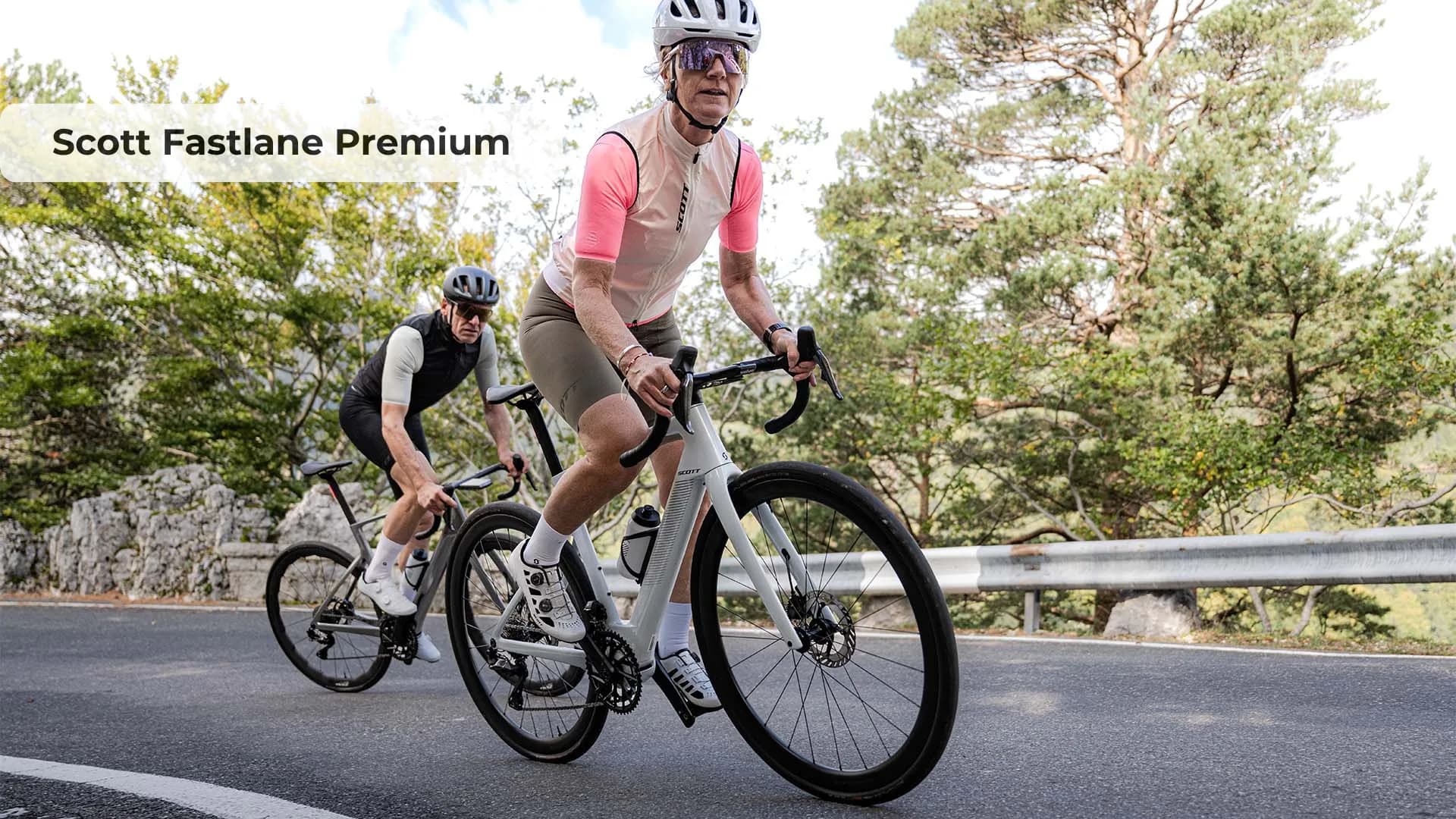
The Scott Fastlane Premium is the closest an electric road bike has come to being genuinely indistinguishable from a pedal-only machine. At 9.9 kg with a TQ HPR40 motor hidden inside, it rides, handles, and looks like a top-tier endurance bike. The trade-off? A price tag north of $12,000 and a 290 Wh battery that won't last a full century ride on its own.
I showed up to a group ride on a Tuesday morning with the Scott Fastlane Premium tucked into the pack, and not a single rider called it out as an e-bike. Not during the ride, not after. One guy actually asked me what frame it was because he liked the lines. That's the kind of stealth integration Scott has pulled off here, and honestly, it's the thing that made me want to spend three weeks putting serious miles on this bike.
I tested the Fastlane Premium over 22 days, covering roughly 340 miles across a mix of flat commutes, hilly group ride routes, and a handful of solo efforts pushing into century territory. I ran through all three assist modes repeatedly, charged the battery from empty over a dozen times, and rode it in everything from cool mornings to mid-afternoon heat. Here's what I found.
Introduction: The Electric Road Bike That Fools Everyone
I showed up to a group ride on a Tuesday morning with the Scott Fastlane Premium tucked into the pack, and not a single rider called it out as an e-bike. Not during the ride, not after. One guy actually asked me what frame it was because he liked the lines. That's the kind of stealth integration Scott has pulled off here, and honestly, it's the thing that made me want to spend three weeks putting serious miles on this bike.
I tested the Fastlane Premium over 22 days, covering roughly 340 miles across a mix of flat commutes, hilly group ride routes, and a handful of solo efforts pushing into century territory. I ran through all three assist modes repeatedly, charged the battery from empty over a dozen times, and rode it in everything from cool mornings to mid-afternoon heat. Here's what I found.
Key Specs, Pricing & Variants
- Price
- $11,999.99 (Premium) / Fastlane 10 and 20 available at lower price points
- Weight
- 9.9 kg (21.83 lbs) in size M (lightest e-road bike I've tested)
- Motor
- TQ HPR40 mid-drive, 40 Nm max torque, 200W peak output
- Battery
- 290 Wh internal (range extender adds 160 Wh, sold separately)
- Assist Speed Limit
- 28 mph in the US (Class 1 pedal assist)
- Groupset
- Shimano Dura-Ace Di2, 24-speed electronic shifting
- Wheels
- Zipp 353 NSW TL SR 40 carbon, tubeless ready
- Tires
- Schwalbe PRO ONE 700x34C, folding
- Frame
- HMX carbon, 865g claimed frame weight, endurance geometry
- Sizes Available
- XS, S, M, L, XL
- Best For
- Performance road cyclists and fitness riders who want electric assist without the e-bike look
TQ HPR40 Motor Integration
The TQ HPR40 mid-drive unit sits tucked between the cranks with virtually no visual footprint. Scott designed the downtube to stay slim enough that even road cycling regulars often can't spot the battery on first glance. This is the core reason the Fastlane Premium stands apart from every other electric road bike on the market right now.
Design & Build Quality
Unpacking the Fastlane Premium is a moment. The Chrome Silver finish is understated but refined, and the frame geometry flows cleanly from top tube to down tube without any of the oversized downtube bulk you see on most e-road bikes. Scott kept the tube profiles tight and aero, which does two things: it hides the 290 Wh battery convincingly, and it helps cut drag so the motor doesn't have to work as hard to keep you moving. The frame itself weighs a claimed 865g, and the fork adds another 353g. Those numbers are comparable to a high-end non-assisted road bike.
The build quality throughout is exactly what you'd expect at this price. The Syncros IC-R100-SL one-piece carbon cockpit is buttery smooth, the Zipp 353 NSW wheels spin with zero bearing drag, and the Dura-Ace Di2 shifts are instant and silent. Every bolt, every cable run, everything is routed cleanly inside the frame. Scott even integrated the rear light into the seatpost, powered off the main battery, which means one less thing to charge. The integrated iS Drop Bar Tool 2 tucked inside the handlebars is a small detail that tells you a lot about how Scott thought through the ownership experience.
Features Breakdown: Motor, Battery & Integration
TQ HPR40 Mid-Drive Motor System
- The HPR40 produces 40 Nm of torque and peaks at 200W. That's deliberately on the lower end for e-road bikes, and it works in your favor. The assist feels like a tailwind or a gentle hand pushing from behind, not a rocket strapped to your pedals. It enhances your effort rather than replacing it.
- Three modes (Eco, Mid, High) are switched directly from the hood buttons on the Shimano Di2 shifters. You never need to take your hands off the bars to change assist levels. In my testing, Mid mode hit the sweet spot for most riding conditions, while High mode was best saved for sustained climbs.
- Motor drag above the 28 mph assist cutoff (US spec) is genuinely close to zero. I compared back-to-back sprints with the motor on and off past the assist limit, and I couldn't feel any meaningful resistance. That's a big deal. Some e-road systems create noticeable drag once you outpace the motor.
Battery & Range
- The 290 Wh battery is fully internal, hidden inside the downtube. Charging from empty to full takes about 3 hours with the included 2A charger. Scott also sells a compact charger that fits in a jersey pocket, which I found genuinely useful on longer rides where I stopped for coffee anyway.
- Real-world range depends heavily on terrain and assist mode. On flat ground in Eco mode, I consistently got 60 to 70 miles per charge. On hilly routes with Mid mode engaged, that dropped to around 40 to 45 miles. The optional 160 Wh range extender (looks like a water bottle, clips into a cage mount) can add roughly 25 to 30 miles depending on conditions.
- All electrical systems on the bike pull from the same battery. The rear light, the Dura-Ace Di2 shifting, and the motor are all powered by the main 290 Wh cell. One battery to charge. Clean and simple.
Cockpit & Controls
- Scott made a deliberate choice to skip a big dashboard-style display. Instead, you get a small TQ bar-end display at the end of the drops that shows battery level and assist mode via a series of LED indicators. It's subtle and unobtrusive. For detailed ride data, the bike connects via ANT+ to any standard bike computer you already own.
- The TQ smartphone app lets you customize motor response curves. You can dial in faster or slower pedal uptake, or tune the system to save battery versus maximize power. I spent some time in the app experimenting with settings, and the difference between a snappy high-response tune and a muted eco-friendly one is noticeable on the road.
- The Syncros IC-R100-SL carbon cockpit is a one-piece integrated bar and stem. It's light, stiff, and looks clean. The only downside is that bar and stem adjustment is less flexible than a traditional two-piece setup. If you're very particular about stem length or bar reach, you may need to try multiple sizes before finding the right fit.
Performance Testing: Climbs, Flats & Real-World Range
Climbing is where the Fastlane Premium genuinely shines. I tested it repeatedly on a local climb that runs about 1.2 miles at an average grade of 7%, and the experience in High assist mode was remarkable. The motor kept my cadence steady and my heart rate about 15 beats per minute lower than the same climb on a pedal-only bike. The power delivery is smooth and linear, building gradually as I increased my own effort. There's no sudden surge or awkward engagement point. It just quietly adds watts in proportion to what I'm already putting in.
On flat ground, the assist is subtler but still useful. In Mid mode during a 25-mile commute-style ride, I averaged about 19 mph with noticeably less fatigue than I'd expect without assist. The bike handles at speed exactly like a traditional road bike. The 9.9 kg weight means there's no penalty in cornering or acceleration once you're up to speed. Group ride dynamics felt completely normal. I didn't feel like I was hiding anything or holding back.
I want to be upfront about the range. The 290 Wh battery is not going to get you through a 100-mile ride on its own unless the course is mostly flat and you're running Eco mode the entire way. For a realistic 60-mile ride with mixed terrain and Mid assist, you'll finish with some battery left but not a ton. The range extender accessory is worth considering if you plan to do longer weekend rides regularly.
Zipp 353 NSW Carbon Wheels and Dura-Ace Di2 Cockpit
The Premium build ships with Zipp 353 NSW tubeless-ready carbon wheels and a full Shimano Dura-Ace Di2 electronic groupset. The one-piece Syncros IC-R100-SL carbon cockpit keeps the front end clean. Everything here is spec'd to race, not just commute. This is where the Premium separates itself from the Fastlane 10 and 20 builds below it.
User Experience: Living With the Scott Fastlane Premium
Day to day, this bike is a pleasure to ride. It's light enough that you barely notice the motor and battery when you're actually pedaling. Picking it up to load into the car or carry up stairs? You notice it a little. 9.9 kg is still heavier than a comparable non-assisted road bike by about 1.5 to 2 kg, but it's light enough that it never feels like a burden. The handling is crisp and confident, the 34mm tires soak up road imperfections well, and the endurance geometry keeps you comfortable on rides lasting three hours or more.
Setup was straightforward. The bike arrived mostly assembled, needing only wheel installation, pedal threading, and a quick torque check on a handful of bolts. The integrated iS Drop Bar Tool made tightening everything down simple without needing a separate tool kit. Maintenance so far has been minimal. I haven't needed to touch the motor or battery at all. Chain care is the same as any road bike. The only thing worth noting is that the one-piece cockpit means swapping bars or stems isn't a casual aftermarket upgrade. You're committed to what Scott specced from the factory.
How It Compares to Other Lightweight Electric Road Bikes
The most direct competitor right now is the Canyon Endurace:ONfly, which uses the same TQ HPR40 motor system and also breaks the 10 kg barrier in its top spec. Both bikes are chasing the same goal: an electric road bike that disappears into the background. The Canyon leans slightly more aero in its tube shapes, while the Scott has a touch more tire clearance and a geometry rooted in the proven Addict endurance platform. If you can test ride both, do it. The differences are subtle but real, and it comes down to which geometry feels better under you.
If budget is a concern, Scott's own Fastlane 10 (Ultegra Di2, Syncros carbon wheels, 10.6 kg) and Fastlane 20 (105 Di2, 11.1 kg) use the identical frame and motor system. You give up some weight and component polish, but the core riding experience stays the same. The Fastlane 20 in particular is worth a serious look if you want the stealth e-road concept without paying for Dura-Ace and Zipp wheels. Other brands like Pinarello (Nytro) and BMC (Roadmachine AMP) also compete in this space, but neither quite matches the visual subtlety of the Fastlane's integration at this price point.
Who This Product Is Best For
The Fastlane Premium is built for a specific rider: someone who is already serious about road cycling and wants electric assist without changing how they look, how they ride, or how others perceive them on the road. Think performance-focused fitness riders chasing Strava segments who want to keep their legs fresh for the hard efforts, or riders aged 45 and up who love long weekend rides but want to extend their range and reduce joint stress on repeated climbs. Urban commuters in major cities will appreciate the stealth factor and the ability to arrive at work without showing up drenched in sweat. Weekend century riders and recreational long-distance cyclists will value the range extender option. This is not the right bike if you're a casual rider, if you don't already own a solid road bike, or if $12,000 isn't in your budget. The Fastlane 10 or 20 are better entry points into the same platform at a lower price.
Pros & Cons
Pros
- Genuinely the lightest electric road bike I've tested at 9.9 kg, and it handles like a traditional race machine as a result
- The TQ HPR40 motor delivers the most natural, unobtrusive assist I've experienced on any e-road bike. Zero noticeable drag above the assist cutoff speed
- Stealth integration is class-leading. The battery, motor, rear light, and cable routing are all hidden. Most people won't realize this is an e-bike unless you tell them
- Top-to-bottom component quality. Dura-Ace Di2, Zipp 353 NSW carbon wheels, and a full carbon cockpit mean you're not compromising anywhere on the non-electric side of the equation
- The range extender option (160 Wh water bottle style) is a smart, practical solution for extending range on longer rides without a permanent weight penalty
Cons
- 290 Wh battery range tops out around 40 to 45 miles on hilly terrain in Mid assist mode. Serious century riders will need the range extender or a charging stop
- At $11,999.99, the Premium build is a significant investment. The same stealth riding experience is available in the Fastlane 10 or 20 at a meaningfully lower cost
- The one-piece carbon cockpit (bar and stem combined) limits your ability to fine-tune fit after purchase. Getting the right size dialed in before you buy matters
- The bar-end display is minimal by design, but if you're used to seeing battery percentage and range estimates at a glance, you'll want to pair it with a separate bike computer via ANT+
- At 9.9 kg, it's still about 1.5 to 2 kg heavier than a comparable non-assisted endurance road bike. Light for an e-bike, but not invisible in the hand
Conclusion & Final Verdict
After three weeks and 340 miles, I came away genuinely impressed. The TQ HPR40 motor is the most seamless assist system I've ridden, the 9.9 kg weight keeps handling sharp and dynamic, and the visual integration is so clean that I lost count of how many times someone complimented the bike without realizing it's electric. Scott nailed the brief: road bike first, electric assist second. The Fastlane Premium delivers on both fronts without meaningfully compromising either.
The sticking points are real but predictable at this tier. The price is steep, the battery range is moderate for long rides, and the cockpit is locked in at purchase. None of those are dealbreakers if you know what you're buying. My advice: if you can get to a dealer and test ride it, do that first. The way this bike feels under you on a climb is the whole story. If that feeling matters to you, the Fastlane Premium delivers it better than anything else I've tested in 2025.
The Scott Fastlane Premium is the best electric road bike for riders who refuse to look like they're riding an electric road bike. If stealth, light weight, and natural ride feel are your priorities, this is the gold standard right now.
Scott Fastlane Premium: Frequently Asked Questions
How far can I actually ride the Scott Fastlane Premium on a single charge?
Real-world range depends on terrain, rider weight, and assist mode. On flat roads in Eco mode, I consistently got 60 to 70 miles per charge. On hilly routes using Mid assist, that dropped to 40 to 45 miles. High assist on steep, sustained climbs will drain the battery faster, bringing range down to roughly 30 to 35 miles in worst-case scenarios.
If you plan to ride more than 50 miles regularly, the optional 160 Wh range extender is worth the investment. It mounts in a standard bottle cage using Scott's quick-release system and adds roughly 25 to 30 miles depending on conditions. The bike automatically detects and adapts to the second power source.
Is the Scott Fastlane Premium legal to ride on public roads in the United States?
Yes. The US version of the Fastlane Premium is a Class 1 pedal-assist e-bike with a top assist speed of 28 mph. Federal law allows Class 1 e-bikes on any road where a traditional bicycle is permitted. Most states follow federal classification, though a handful have their own rules worth checking locally.
The 28 mph US assist limit is higher than the 15.5 mph (25 km/h) limit in the EU. That extra speed makes a noticeable difference on flat roads and short commutes. No registration, license, or insurance is required in most states for a Class 1 pedal-assist bike.
How does the Scott Fastlane Premium compare to the Canyon Endurace:ONfly?
Both bikes use the same TQ HPR40 motor and target the sub-10 kg lightweight electric road bike market. The Canyon leans slightly more toward aerodynamic tube shaping, while the Scott is built on the proven Addict endurance geometry with a touch more tire clearance (up to 38mm). Weight and motor performance are nearly identical between the two.
It really comes down to geometry preference and brand loyalty. If you've ridden Scott Addict bikes and liked how they feel, the Fastlane will be familiar and comfortable. If you prefer Canyon's more aggressive positioning, the Endurace:ONfly is worth a test ride. Both are excellent bikes at similar price points.
Can I use the Fastlane Premium for commuting?
Absolutely. The stealth design means you won't draw attention on city streets, and the 290 Wh battery handles commutes of 20 to 30 miles each way with ease in Eco or Mid mode. The integrated rear light (powered by the main battery) adds safety, and the 34mm tires handle mixed road surfaces well. You won't need to charge every single day for a typical urban commute.
The main consideration for commuting is storage and security. At nearly $12,000, you'll want a secure parking solution. The bike is light enough (9.9 kg) to carry up stairs if needed, but it's not a folding bike. For long-term commuting, the Fastlane 10 or 20 offer the same commuting capability at a lower price point that might better fit the risk calculus.
How long does it take to charge the battery?
A full charge from empty takes approximately 3 hours using the included 2A charger. Scott also sells a compact charger that fits in a jersey pocket, which is handy if you want to top off during a long ride with a coffee stop. The charger accepts 100 to 240V input, so it works worldwide without an adapter.
In my testing, I found that keeping the battery between 20% and 80% for regular rides extended charge cycles without meaningfully affecting range for shorter outings. For longer rides where you need every mile, charge to 100% the night before. The battery management system handles the rest automatically.
Is the 9.9 kg weight claim accurate, or is that just marketing?
Scott's 9.9 kg claim is for a size M bike with all components installed, which is how manufacturers typically measure. I weighed my test bike (size M) and landed right around that number. It's a genuine weight, not a cherry-picked figure. That said, add pedals, a bottle cage with water, a saddle bag, and your body weight, and you're obviously well past 10 kg in total system weight.
For context, 9.9 kg is genuinely light for an electric road bike. Most e-road bikes with comparable motor systems weigh 11 to 13 kg. The reason the Fastlane hits this number is the combination of the compact TQ motor (1.17 kg claimed), HMX carbon frame (865g), carbon fork, and all-carbon cockpit and wheels. Every gram was fought for.
What happens if I pedal faster than the assist cutoff speed?
Once you exceed 28 mph (US spec), the TQ HPR40 motor disengages and stops providing assist. The key question is whether the motor adds resistance when it's off, and in my testing the answer is: barely any. I compared sprint efforts with the motor on and off past the cutoff, and I couldn't feel a meaningful difference. The system disengages cleanly.
This matters for group ride and racing scenarios where you'll frequently be above 28 mph on flat sections or in sprints. You won't feel like you're dragging extra weight. The motor and its gearing are designed to freewheel with minimal friction, which is one of the things that separates the TQ system from older, bulkier e-road drive units.