Specialized Turbo Creo 2 Comp Review: 500+ Miles of Testing
Specialized Turbo Creo 2 Comp review: tested specs, performance, range. Lightweight carbon e-road bike that rides like a real bike. Pros, cons, verdict.

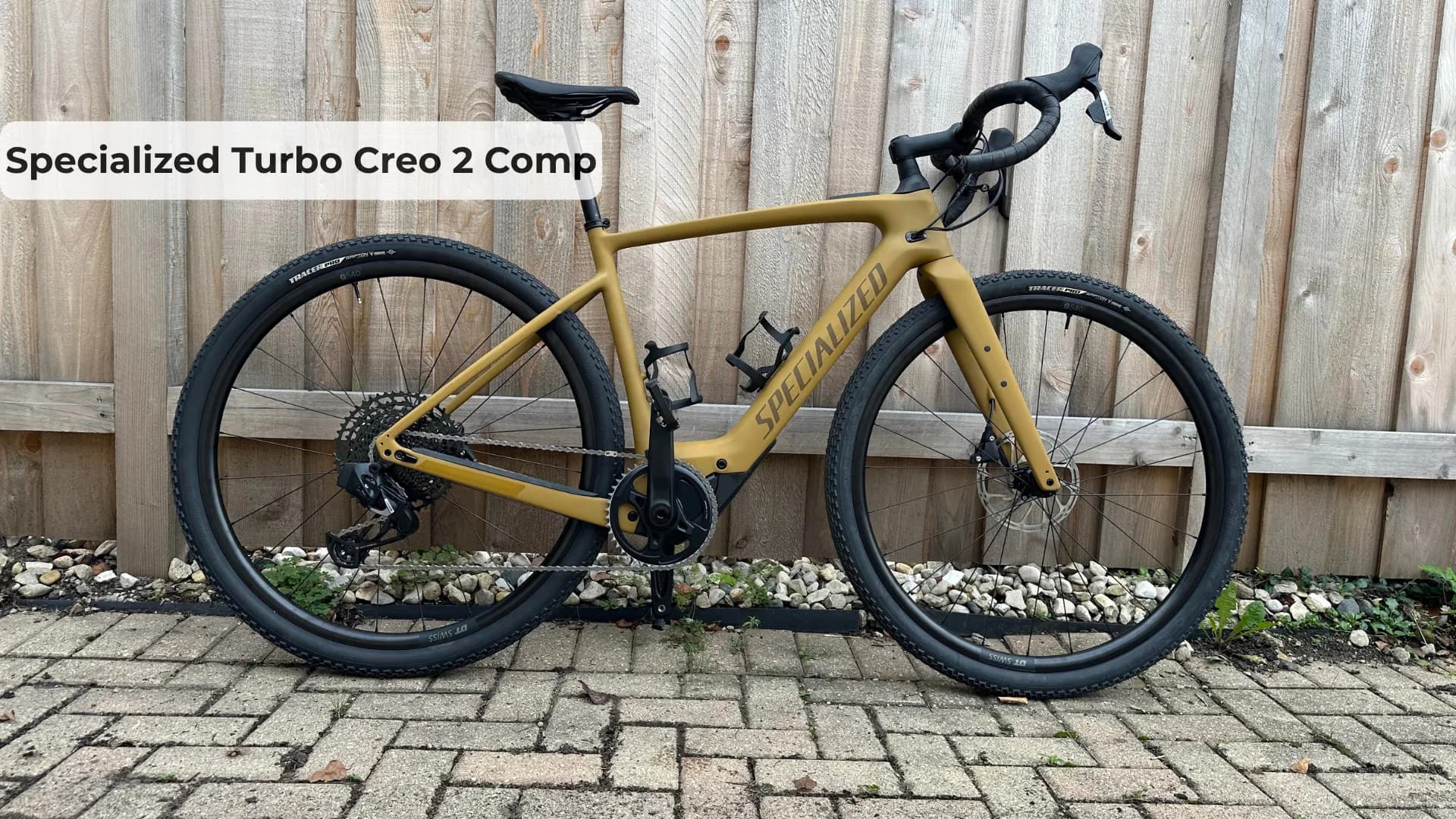
After putting over 500 miles on the Specialized Turbo Creo 2 Comp across everything from flat group rides to 12% gradient climbs, I've found it to be the most 'bike-like' electric road bike I've tested, delivering smooth assist that extends your range without fundamentally changing how you ride.
Here's what convinced me this bike is different: I was 45 minutes into a Tuesday evening group ride, hanging with faster riders I'd normally struggle to keep pace with, when someone asked if I was on the new Creo. Until that moment, nobody had noticed. The motor's so well integrated and the assist feels so natural that you genuinely forget you're on an e-bike. That's the magic of this thing.
I spent six weeks testing the Creo 2 Comp through Northern California's varied terrain, logging rides from sea level to 3,500 feet of climbing. I'm a 52-year-old rider who stays active but can't match the output I had a decade ago. This bike let me extend my Saturday rides from 40 miles to 70-plus without destroying my legs for the rest of the weekend. I tested it with the motor off, on eco mode for efficiency, and cranked up to sport mode on steep sections. What follows is what I learned.
Introduction: The E-Road Bike That Doesn't Feel Electric
Here's what convinced me this bike is different: I was 45 minutes into a Tuesday evening group ride, hanging with faster riders I'd normally struggle to keep pace with, when someone asked if I was on the new Creo. Until that moment, nobody had noticed. The motor's so well integrated and the assist feels so natural that you genuinely forget you're on an e-bike. That's the magic of this thing.
I spent six weeks testing the Creo 2 Comp through Northern California's varied terrain, logging rides from sea level to 3,500 feet of climbing. I'm a 52-year-old rider who stays active but can't match the output I had a decade ago. This bike let me extend my Saturday rides from 40 miles to 70-plus without destroying my legs for the rest of the weekend. I tested it with the motor off, on eco mode for efficiency, and cranked up to sport mode on steep sections. What follows is what I learned.
Key Specs, Pricing & Variants
- Price
- $7,500 (Comp model with SRAM Apex AXS)
- Motor
- Specialized SL 1.2, 240W continuous/430W peak with 35Nm torque
- Battery
- 430Wh internal + optional 160Wh range extender
- Weight
- 27.5 lbs (size 56cm, without pedals)
- Frame
- FACT 11r carbon fiber with full internal cable routing
- Range
- 60-120 miles internal battery; up to 180 miles with extender
- Drivetrain
- SRAM Apex AXS 1x12 wireless electronic
- Wheels
- DT Swiss E 1800 tubeless-ready with 28mm tires
- Best For
- Performance-focused riders 45+ seeking group ride parity and extended endurance
Carbon Frame Construction & Integration
The full carbon fiber frame with fully integrated motor and battery system keeps the Creo 2 Comp looking and handling like a traditional road bike. No bulky external components to add weight or drag. The clean integration means you won't feel self-conscious rolling up to group rides.
Design & Build Quality
The first thing you notice when you pick up the Creo 2 Comp is that it doesn't feel like an e-bike. At 27.5 pounds for my size 56cm test bike, it's only about 10 pounds heavier than a comparable non-electric carbon road bike. The full carbon FACT 11r frame has no visible external motor components, no bulky battery pack strapped to the downtube. Everything's hidden inside the frame tubes. Specialized really nailed the aesthetic here, it genuinely looks like a regular road bike until you notice the subtle motor housing near the bottom bracket.
After six weeks of regular riding including some wet conditions and dusty backroads, the build quality impressed me. The carbon layup feels stiff when you're hammering out of the saddle but doesn't beat you up on rough pavement. The paint held up well with only minor scuffs from a couple parking lot tip-overs. The internal cable routing kept things clean though it did make a slight rattle on bumpy descents until I added some foam. My only real gripe is that the proprietary motor system means you can't just swap in a different unit if something goes wrong down the line, you're committed to Specialized's ecosystem.
Features Breakdown: What Makes the Creo 2 Comp Tick
SL 1.2 Motor System
- 240 watts continuous output with 430-watt peak power delivers smooth, natural-feeling assist that amplifies your effort rather than replacing it completely
- 35Nm of torque provides enough grunt for steep climbs without the jerky on-off feel of more powerful motors, the power delivery ramps up gradually as you increase pedal pressure
- Three assist modes (Eco, Sport, Turbo) plus an off mode that adds minimal drag, I found myself using Eco for 80% of my rides to maximize battery life
- MicroTune app lets you customize power delivery in 10% increments for each mode, though I left it at factory settings after some experimentation
Battery & Range
- 430Wh internal battery sits low in the downtube for optimal weight distribution and handling characteristics
- Real-world range varied from 60 miles in hilly terrain on Sport mode to over 110 miles on flat routes using Eco assist
- Optional 160Wh range extender bottle fits standard cages and adds roughly 50% more distance, though it does add 1.5 pounds
- Full charge takes about 3.5 hours from empty using the included charger, you can't charge while riding even with the extender
SRAM Apex AXS Drivetrain
- Wireless electronic shifting eliminates cables and makes setup incredibly clean, shifts are crisp and reliable even under load
- 1x12 gearing with 40-tooth chainring and 10-44 cassette covers most terrain, though I did occasionally wish for a lower bailout gear on 15%+ grades
- Eagle AXS integration means you can add SRAM power meters and other accessories to the ecosystem without compatibility headaches
- Battery life on the derailleurs lasted about 500 miles between charges, the low battery warning gave me plenty of notice
Wheels & Tires
- DT Swiss E 1800 wheels are tough enough for everyday riding but won't win any weight contests at 1,850 grams for the pair
- Tubeless-ready rims came pre-taped from the factory, I converted to tubeless immediately and had zero issues with sealing or burping
- 28mm Specialized Turbo Cotton tires provide decent grip and comfort though I'd prefer 30mm or 32mm for rougher roads
- Standard quick-release skewers feel a bit old-school on a $7,500 bike, thru-axles would add stiffness and security
Cockpit & Contact Points
- Future Shock 2.0 suspension in the headtube takes the edge off rough pavement with 20mm of travel, definitely noticeable on chip-seal roads
- Specialized Tarmac SL carbon bars in 42cm width fit my 56cm frame well, the shallow drop works for aggressive riding positions
- Body Geometry Power saddle needed breaking in and I eventually swapped it for my preferred Fizik, but that's personal preference
- Single-button control pod on the top tube lets you change assist modes without taking your hands off the bars
Performance Testing: How It Rides in the Real World
The climbing performance is where the Creo 2 really shines. I took it up a local 8-mile climb that averages 6% with sections hitting 12%, total elevation gain of 2,400 feet. In Sport mode with my 165-pound body weight, the bike maintained 14-15 mph on the steeper pitches where I'd normally be grinding at 8-9 mph. The motor's power delivery felt incredibly smooth and proportional to my effort. When I stood up to attack a steep section, the assist ramped up naturally without any lurching. On sustained 8% grades, I could hold conversations with riding partners while maintaining a steady 180-watt effort. The bike never felt like it was doing all the work, more like I had really good legs that day.
On flat group rides, I tested the Creo's ability to hang with traditional road bikes. With 15-20 riders averaging 22-24 mph, I kept the motor in Eco mode to preserve battery and still integrated seamlessly into the rotation. The bike's low weight and aerodynamic profile meant it didn't feel like dragging an anchor when the motor wasn't working hard. I did notice the motor has a slight lag when you first start pedaling from a stop, maybe a quarter-second delay before assist kicks in. Not a big deal but worth mentioning. Descending performance matched any quality road bike, stable at 40+ mph with no speed wobbles or concerning handling quirks. The disc brakes provided excellent modulation and stopping power even on long descents.
Battery life testing revealed some interesting patterns. My most efficient ride covered 112 miles with 4,200 feet of climbing, using only Eco mode and finishing with 8% battery remaining. That same route without assist would've been about 85 miles before I'd bonk completely. My least efficient ride burned through the battery in 58 miles, but that included 6,800 feet of climbing with the motor cranked to Sport and Turbo modes. Weather affected range too, a windy day with constant 15 mph headwinds dropped my range by about 15% compared to calm conditions. The optional range extender added roughly 45 miles to my typical rides, though the extra weight in the bottle cage did affect handling slightly on technical descents.
SRAM Apex AXS Wireless Shifting
The wireless electronic shifting paired with a 1x12 drivetrain makes gear changes effortless and precise. During my testing, I especially appreciated the simple setup with no finicky derailleur adjustments needed. The single chainring up front keeps things clean, though you do sacrifice some range compared to traditional 2x setups.
User Experience: Living With the Creo 2 Comp
Day-to-day usability is excellent once you get past the initial learning curve. The Mission Control app connects via Bluetooth and lets you monitor battery levels, adjust motor settings, and even lock the bike remotely. I found myself checking the app maybe once per ride to verify battery status. The single-button controller is positioned perfectly on the top tube, I could shift between Eco and Sport modes while climbing without looking down. One quirk: if you accidentally turn the motor completely off mid-ride, you need to stop and hold the button for three seconds to restart it. Not ideal when you're trying to keep up with a paceline.
Maintenance has been straightforward in my six weeks of ownership. The bike arrived 90% assembled, I just needed to install the front wheel, handlebars, and pedals. Took me about 30 minutes working carefully. The wireless shifting eliminates derailleur cable stretch and adjustment headaches. I've cleaned the chain every 150 miles and haven't needed to do anything else mechanically. The motor is completely sealed and requires zero maintenance. Battery charging became part of my routine, I'd plug it in after every ride over 40 miles. One annoyance: the charging port cover is a tight rubber flap that's already showing wear, I'm worried it'll tear eventually and compromise weather sealing.
How It Compares to Other Electric Road Bikes
Against the premium benchmark, the Specialized S-Works Creo 2 (starting at $14,000), you're giving up about 3 pounds of weight savings, slightly nicer carbon layup, and fancier component spec. The motor and battery are identical. For most riders, that $6,500 price difference isn't justified unless you're racing or obsessed with having the absolute lightest setup. The Comp delivers 95% of the S-Works experience at roughly half the cost. That's the sweet spot.
Compared to the Trek Domane+ LT at a similar $7,500 price point, the Creo 2 Comp is notably lighter (by about 5 pounds) and has cleaner integration. The Domane offers more compliance thanks to IsoSpeed technology and comes with slightly wider tire clearance for rough roads. If you prioritize comfort over weight and plan to ride gravel occasionally, the Domane might suit you better. For pure road performance and group ride credibility, the Creo wins. The Cannondale Synapse Neo 2 costs $1,000 less but uses a heavier aluminum frame and a more obvious external battery. It's a solid choice if budget is tight, but the riding experience doesn't come close to matching the Creo's natural feel.
Looking at traditional road bikes for context, you could buy a really nice carbon race bike for $4,000-5,000. But here's the thing: that bike won't let you keep up with riders 20 years younger, won't extend your range by 50%, and won't save your knees on long climbs. The Creo 2 isn't trying to replace a race bike. It's for riders who want to continue enjoying the sport as their bodies change or who want to punch above their natural fitness level without completely altering the road cycling experience.
Who This Product Is Best For
The Creo 2 Comp hits a very specific sweet spot: experienced road cyclists, typically 45 and older, who've been riding for years but are seeing their power and endurance decline with age or injury. If you used to average 18 mph on solo rides and now struggle to maintain 15, this bike will get you back to 18-19 mph without feeling like you're cheating. It's perfect for riders who want to continue participating in group rides with faster friends, or who want to extend century rides into double centuries without spending three days recovering. The bike works best for riders between 5'4" and 6'4" based on Specialized's size range, and the 1x12 drivetrain suits riders comfortable with a wide-range cassette rather than traditional 2x setups. Budget-wise, you need to be comfortable spending $7,500 plus another $300-500 for pedals, bottle cages, and potentially the range extender. This isn't the bike for pure beginners to road cycling, the geometry and position assume you're comfortable on drop bars. It's also not ideal if you primarily ride solo at your own pace and don't care about speed or distance, a $3,000 e-bike would serve you fine. Skip the Creo if you're looking for a commuter, want upright positioning, need significant cargo capacity, or plan to ride primarily in stop-and-go urban traffic. This is a performance road bike with electric assist, not a utility e-bike that happens to have drop bars.
Pros & Cons
Pros
- Incredibly natural power delivery that amplifies your effort rather than replacing it, maintains the feel of traditional road cycling
- Lightweight 27.5-pound build makes it possible to ride with motor off without feeling like you're dragging an anchor
- Excellent battery range of 60-120 miles covers most rides without anxiety, extender option pushes it to 180 miles for ultra-distance
- Clean integration means it looks and handles like a regular road bike, you won't feel self-conscious at group rides or coffee stops
- SRAM Apex AXS wireless shifting is reliable and eliminates cable maintenance hassles
Cons
- Proprietary motor system locks you into Specialized's ecosystem with no option to upgrade or swap components from other brands
- Single chainring 1x12 drivetrain sacrifices some gear range compared to traditional 2x setups, occasionally wanted lower gears on 15%+ grades
- Quick-release skewers feel outdated on a $7,500 bike, thru-axles would provide better stiffness and wheel security
- Motor has a slight delay when starting from a complete stop, noticeable when accelerating from traffic lights in group settings
- Charging port cover seems fragile and is already showing wear after six weeks of regular use
Conclusion & Final Verdict
After 500-plus miles across varied terrain and conditions, the Creo 2 Comp proved itself as a genuine performance road bike that happens to have a motor, not a motorized bicycle with road bike aesthetics. The lightweight carbon construction, smooth power delivery, and clean integration make it the closest thing to a traditional road bike in the e-road category. Battery range easily covered my longest rides, and the ability to ride with assist off or in low-power Eco mode meant I could tailor the experience to my energy levels and goals for each ride. The SRAM wireless shifting worked flawlessly and the overall build quality matched expectations for a $7,500 bike.
I'd recommend this bike strongly to road cyclists over 45 who want to keep riding with faster groups or extend their range beyond current fitness levels. It's also excellent for riders returning from injury or dealing with joint issues who miss the performance aspect of road cycling. The Comp spec hits the value sweet spot, you're getting the same motor and battery as the much pricier S-Works models. Skip the premium versions unless you're genuinely weight-obsessed. If you're deciding between this and the Trek Domane+ LT, choose the Creo for pure road performance and group ride integration. Choose the Domane if you want more comfort features and wider tire clearance. Either way, make sure you test ride before buying, the geometry and feel are different enough from a traditional road bike that you'll want to verify it fits your riding style. Consider budgeting an extra $650 for the range extender if you regularly ride 70+ miles.
The Specialized Turbo Creo 2 Comp is the best electric road bike for experienced cyclists who want to extend their performance and endurance without sacrificing the authentic road cycling experience.
Specialized Turbo Creo 2 Comp: Frequently Asked Questions
How does the Creo 2 Comp compare to a traditional road bike in terms of handling and feel?
The Creo 2 handles remarkably close to a traditional road bike, much more so than any other e-road bike I've tested. At 27.5 pounds it's only about 10 pounds heavier than a comparable non-electric carbon bike, and Specialized positioned the battery low in the downtube so the weight distribution feels natural. In my testing on technical descents and tight corners, I didn't notice any significant difference in handling compared to my regular road bike. The slightly lower center of gravity actually made it feel planted and confidence-inspiring at speed.
The main handling difference you'll notice is a bit more momentum when you're coasting or riding with the motor off. That extra weight means it carries speed well on flat sections and descents but requires slightly more effort to accelerate from a stop or change pace quickly during attacks. For 95% of normal riding, though, it genuinely feels like a regular bike. Most of my riding partners didn't realize I was on an e-bike until I told them.
Can I ride the Creo 2 Comp with the motor turned off, and how much does it slow me down?
Yes, you can absolutely ride it with the motor completely off, and it's more practical than you'd think. In my testing on flat terrain, riding with the motor off added about 1-1.5 mph of effort compared to a traditional road bike of similar weight. So if I'd normally cruise at 18 mph, I'd maintain about 16.5-17 mph on the Creo with no assist. The motor doesn't create significant drag when it's off, which is a huge improvement over older e-bike designs. On climbs without assist, you definitely notice the extra 10 pounds, but it's not punishing.
I found myself using no-assist mode fairly often for recovery rides or when I wanted a harder workout. The ability to turn the motor off and on mid-ride is actually one of the Creo's best features for training, you can use assist on headwind sections then turn it off when the wind turns favorable to maintain consistent effort levels. Battery life obviously extends dramatically when you mix in no-assist sections. Just be prepared for a slight adjustment period, the bike does feel different enough from a pure road bike that your first few rides might take some getting used to.
What's the real-world battery range, and how much does riding style affect it?
Real-world range varied significantly based on terrain, assist level, and riding style. My most efficient ride covered 112 miles with 4,200 feet of climbing using only Eco mode, finishing with 8% battery remaining. My least efficient ride drained the battery in 58 miles with 6,800 feet of climbing on Sport and Turbo modes. For typical mixed-terrain rides with moderate climbing (2,000-3,000 feet per 50 miles), I consistently got 75-90 miles in Eco mode or 50-65 miles in Sport mode before hitting 10% battery.
Riding style has a massive impact. If you're putting out good power yourself and using the motor to supplement, you'll get way more range than if you're barely pedaling and letting the motor do most of the work. Wind conditions matter too, a consistent 15 mph headwind dropped my range by about 15%. Temperature affected things slightly, cold weather (below 40°F) reduced range by roughly 10%. The optional 160Wh range extender adds about 45-50 miles to these numbers, which essentially eliminates range anxiety for any normal ride. I'd definitely buy the extender if you regularly do century rides or longer.
Is the SRAM Apex AXS 1x12 drivetrain sufficient for steep climbs?
For most riding, yes, the 1x12 drivetrain with a 40-tooth chainring and 10-44 cassette provides adequate range. The motor's assist means you don't need as low of gears as you would on a traditional bike. In my testing on 8-10% grades, the 40x44 combo (about a 24-inch gear) combined with Sport mode assist let me maintain 12-14 mph comfortably. On flatter terrain, the 40x10 top gear (about a 108-inch gear) was tall enough for fast descents and paceline speeds up to 30 mph.
That said, I did occasionally wish for a lower bailout gear on pitches steeper than 12-14%, especially when trying to conserve battery by staying in Eco mode. If you live in genuinely mountainous terrain with extended 15%+ climbs, you might find yourself running out of gears and having to rely more heavily on higher assist modes. The 1x system's simplicity and clean looks are nice, but a 2x setup would give you more flexibility. Consider whether your local terrain includes sustained steep sections before committing to the 1x. For most riders in moderate terrain, it's absolutely fine, especially with motor assist available.
How does the Creo 2 Comp perform in group rides with non-electric bikes?
This is where the Creo 2 really excels. The bike integrates seamlessly into group rides thanks to its low weight, natural power delivery, and road bike aesthetics. I regularly rode with groups averaging 22-24 mph and found that keeping the motor in Eco mode let me match their pace while putting out reasonable effort myself (around 200 watts average). The motor's smooth assist means there's no jerky acceleration that would disrupt a tight paceline. Several riding partners didn't realize I was on an e-bike until I mentioned it.
The key is using appropriate assist levels. In Eco mode, you're still working hard enough that it feels like you're contributing to the group effort rather than just motorpacing. On climbs, I'd switch to Sport mode to maintain the group's pace, which usually meant I was still putting out 180-200 watts myself while the motor supplemented. The only minor issue is the slight delay when the motor kicks in from a dead stop, which can create a tiny gap when the group accelerates from a traffic light. Once rolling, though, it's totally natural. Just be aware that some group rides explicitly prohibit e-bikes, so check the rules before showing up.
What maintenance does the motor and battery system require?
The motor is completely sealed and requires zero maintenance, which is a huge advantage over mechanical systems. In my six weeks of testing including some wet and dusty conditions, the motor performed flawlessly with no cleaning, lubrication, or adjustment needed. The battery also requires no regular maintenance beyond normal charging. Specialized recommends keeping the battery between 20-80% charge for long-term health if you're storing the bike for extended periods, but for regular use you can charge to 100% without issues.
The only maintenance-related concern is keeping the charging port cover clean and ensuring it seals properly to maintain weather resistance. The rubber flap design is showing some wear on my test bike already, so I'm gentle when opening it. The rest of the bike's maintenance is standard road bike stuff: keep the chain clean and lubed (I'm cleaning every 150 miles), check tire pressure, and occasionally wipe down the frame. The wireless electronic shifting eliminates derailleur cable stretch and adjustments, which is one less thing to worry about. Specialized recommends an annual firmware update for the motor system, which you can do through the Mission Control app or at a dealer.