Folding E-Bike Mechanisms: What's Actually Happening When You Fold One
Confused about how folding electric bikes fold? Here's a plain-language breakdown of every mechanism, fold times, and what breaks first.


You've probably watched a folding e-bike video where someone collapses a 50-pound bike into a suitcase-sized lump in under 15 seconds, and thought, okay, but how? What's actually happening under that frame?
I've taken apart, folded, and unfolded more of these bikes than I'd like to admit (usually while trying to fit one into the trunk of a rental car in a parking garage with a five-minute limit). Here's the thing nobody tells you upfront: not all folding mechanisms are created equal, and the one your bike uses affects everything from how fast you can fold it to how long it'll last before something starts creaking.
Let's break down every major folding mechanism, in plain English, with an eye toward which ones you should actually trust.
Mid-Frame Fold: The One You've Probably Seen Most
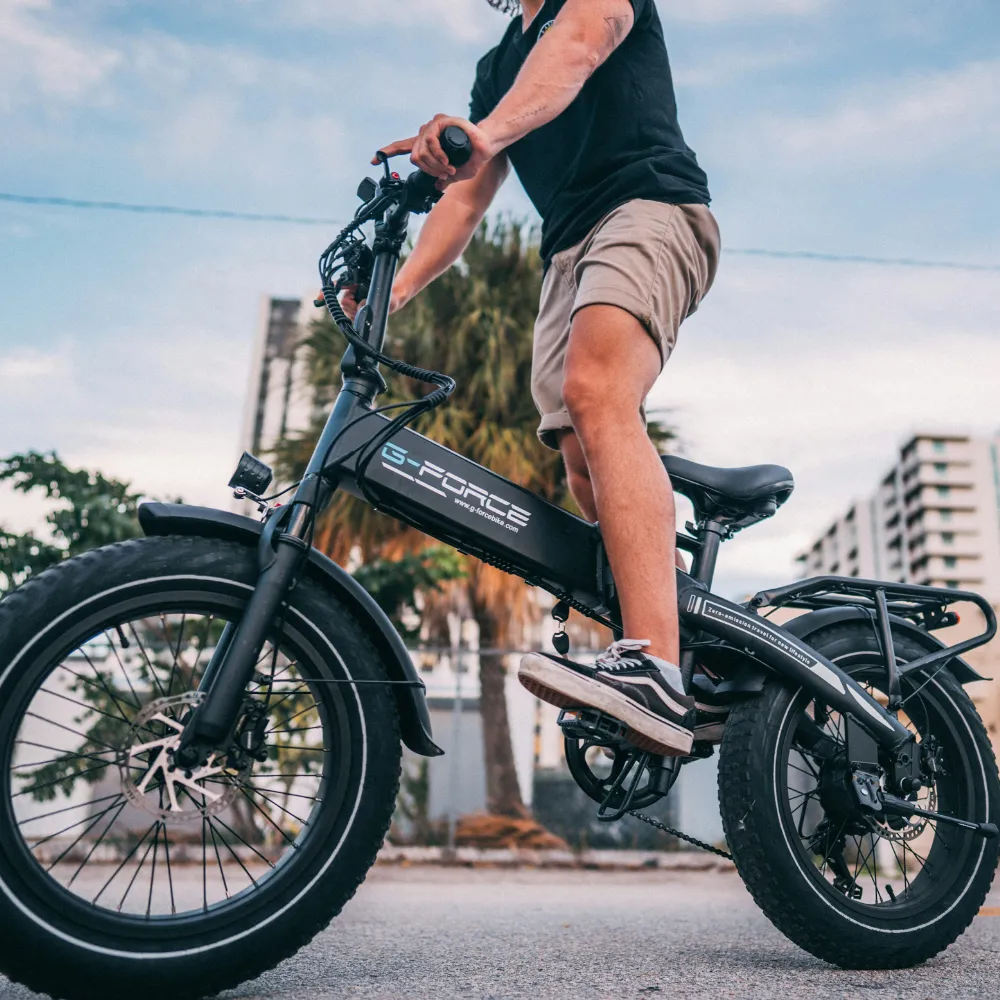
If you picture a folding bike in your head right now, there's a good chance you're picturing this one. The mid-frame fold uses a hinge built directly into the middle of the main frame tube, usually secured by a clamp lever that you flip open by hand.
Here's how it works. You release the clamp (sometimes it's a quick-release lever, sometimes a twist latch), and the front half of the bike swings down and back, folding underneath the rear half. The result is a bike that's roughly half its original length, with the wheels sitting side by side.
Brands like Lectric, Rad Power, and most budget-friendly folding e-bikes use this design because it's mechanically simple. Fewer moving parts means fewer things to engineer and fewer things to go wrong, which is a big reason it dominates the under-$1,000 folding e-bike category.
The tradeoff? Mid-frame folds tend to produce a bulkier folded shape than some alternatives. You're not getting a briefcase-sized package here. You're getting something that fits in a car trunk or an elevator, but probably not a backpack.
One thing I've noticed testing these bikes: the quality of the hinge clamp matters way more than people expect. A cheap clamp will start to feel loose within a few months of regular folding, and a loose hinge on an e-bike (which is heavier than a regular bike thanks to the motor and battery) can translate into a wobbly, unsettling ride if it's not tightened back down.
Triangle/Vertical Fold: The Brompton Approach
This is the fold that gets bike nerds genuinely excited, and it's worth understanding even if you never buy a Brompton.
Instead of one hinge in the middle of the frame, the triangle fold uses a more complex system involving the rear triangle, the main frame, and often the front fork, all folding in coordinated stages. When you're done, you get a compact, roughly cube-shaped package with the wheels tucked underneath the frame rather than sticking out to the sides.
The Brompton fold explained simply: you fold the rear wheel forward and under the frame first, then the front wheel folds back to meet it, then the handlebars fold down, and finally the seatpost drops to lock the whole thing together. It sounds complicated written out like that, but in practice, experienced Brompton owners can do the whole sequence in under 10 seconds.
Why does this matter? Because this style of fold produces the smallest, most train-and-office-friendly package of any mechanism on the market. If you're commuting into a city and need to tuck your bike under a desk or beside a train seat, this is the gold standard.
The catch, and there's always a catch, is complexity. More folding points means more precision manufacturing, more potential wear points, and generally a higher price tag. This is part of why many shoppers start with simpler mid-frame bikes, then move toward premium triangle-fold options once they've priced out the trade-offs.
Rear-Triangle Swing Fold
This one's less common but shows up on a handful of performance-oriented folding e-bikes, particularly ones trying to keep a more traditional riding geometry while still folding down reasonably small.
Instead of collapsing the main frame tube, a rear-triangle swing fold uses a pivot point where the rear triangle (the part holding your back wheel) attaches to the frame. Releasing this pivot lets the entire rear wheel assembly swing forward, tucking underneath or alongside the main frame.
The appeal here is that the front half of the bike, including the head tube and fork, stays fully intact and rigid. That tends to preserve better ride quality and steering precision compared to a mid-frame fold, since you're not relying on a hinge sitting right in the load path of the frame.
I'll be honest, this mechanism is a bit of a niche choice. It doesn't fold as small as a Brompton-style triangle fold, and it's mechanically more involved than a basic mid-frame hinge. But if you've ridden one, you'll notice the difference in how solid the bike feels mid-ride, especially over rough pavement. It's a fair tradeoff for someone who prioritizes ride feel over ultimate portability.

Handlebar and Pedal Folding Add-Ons
None of the mechanisms above tell the whole story on their own, because almost every folding electric bike, regardless of frame fold type, also includes secondary folding points at the handlebars and pedals.
Handlebar folds usually work one of two ways. Either the stem folds down via a hinge near the base (common on budget and mid-range bikes), or the handlebar itself rotates and locks flat against the stem (more common on premium models). Folding the handlebars down accomplishes two things: it lowers the overall folded height, and it protects the brake and shifter levers from getting knocked around in transit.
Folding pedals are a smaller detail that makes a bigger difference than you'd expect. A standard pedal sticks out several inches from the crank arm, which adds width to your folded package and gives you something to catch your ankle on or scratch up a car interior. Folding pedals collapse flat against themselves, shaving off that extra width entirely.
Not every bike includes both. Some budget models skip folding pedals to cut costs, figuring most buyers won't notice until they're trying to squeeze the bike into a tight closet. If portability is a priority for you, check for folding pedals specifically. It's a small spec line that gets overlooked constantly.
Fold Time Comparison by Mechanism Type
People searching for the fastest folding electric bike usually want a real number, not a vague "it's quick." So here's roughly what to expect, based on typical rider experience once they know what they're doing (first-timers, add 30 to 60 seconds while you figure out the levers):
| Mechanism | Typical Fold Time | Folded Footprint |
|---|---|---|
| Mid-frame fold | 15-25 seconds | Medium to large |
| Triangle/vertical fold (Brompton-style) | 8-15 seconds | Small |
| Rear-triangle swing fold | 20-30 seconds | Medium |
| With handlebar + pedal folds added | +10-15 seconds | Reduced width and height |
A few caveats worth mentioning. These numbers assume a well-maintained bike with clean, properly lubricated hinges. A neglected clamp mechanism can turn a 15-second fold into a two-minute wrestling match, which is honestly the number one complaint I hear from folding bike owners who bought based on marketing claims alone.
Also, "fastest folding electric bike" claims from manufacturers are often measured by someone who's done it a thousand times. Your real-world time, especially in the first few weeks of ownership, will run longer.
What Tends to Break First on Each Mechanism
This is the part most folding bike reviews skip entirely, probably because it requires actually owning these things long enough to watch them wear down. Here's what I've seen, and what shows up repeatedly in long-term owner forums.
Mid-frame fold: The clamp lever is the weak point. Over hundreds of fold cycles, the clamp tension can loosen, and cheaper models use plastic or thin-gauge metal components that eventually crack or bend. If you own one of these bikes, checking clamp tension every few weeks is a cheap habit that prevents a wobbly ride later.
Triangle/vertical fold: The multiple hinge points mean multiple potential failure spots, but they're usually built with more durable materials given the higher price point. The most common issue is the main frame hinge developing play (a slight wobble) after a few years of daily commuter use. Regular lubrication and occasional professional tightening keep this in check.
Rear-triangle swing fold: The pivot bearing is the part to watch. Since this pivot carries real structural load while riding (not just while folded), it sees more stress than a purely cosmetic hinge point. Grit and moisture getting into the pivot bearing is the usual culprit behind premature wear.
Handlebar folds: The folding stem mechanism, particularly on cheaper bikes, is prone to developing a slight looseness that shows up as handlebar wobble during aggressive riding. This is more of an annoyance than a safety issue in most cases, but it's worth tightening at the first sign of play.
Folding pedals: These see the most repetitive stress of any folding component simply because you're stepping on them thousands of times per ride. The folding hinge on cheap pedals is a common failure point within the first year or two of regular use.
None of this means folding e-bikes are fragile. It just means the folding mechanism is a maintenance item, the same way you'd think about brake pads or a chain. A little attention goes a long way. For more on hinge wear, warranty gaps, and other long-term trade-offs, see our foldable e-bike downsides guide.
How to Fold and Unfold Safely (Step-by-Step)
Whether you've got a mid-frame, triangle, or swing-fold bike, a few habits apply across the board. Here's a general sequence that works for most electric folding bikes on the market:
-
Power off the bike first. This sounds obvious, but plenty of people skip it. Folding a bike with the display still active can trigger error messages or, on some models, put strain on wiring that runs through the frame near the hinge point.
-
Remove or secure the battery if your bike allows it. More on this below, but if your battery is removable, taking it off before folding reduces stress on the frame and makes the folded bike noticeably lighter to carry.
-
Fold the pedals first. Getting these out of the way early prevents them from catching on your leg or clothing during the rest of the process.
-
Release the main frame hinge or clamp. Follow the manufacturer's specific direction, some fold forward, some fold backward. Forcing it the wrong way is the fastest route to a bent hinge.
-
Fold the handlebars or stem down last. This keeps your brake levers protected and gives you a clear hand grip on the frame while you're still maneuvering the main fold into place.
-
Engage the locking mechanism completely. Most bikes have a secondary latch that locks the fold in its final position. Don't just let it rest closed. An unlocked fold can pop open unexpectedly, which is a genuinely dangerous surprise if it happens while you're carrying the bike down stairs.
Unfolding is basically this sequence in reverse, but with one extra step that people often forget: double-check that the main frame clamp is fully closed and locked before you get on and ride. A half-latched clamp is, without question, the most common cause of folding bike accidents, and it's completely avoidable with a two-second check.

The Bottom Line
There's no universally "best" folding mechanism, just the right one for how you actually plan to use the bike. If you want the smallest possible folded package for train commuting or tight apartment storage, the triangle fold wins. If you want something simple, affordable, and easy to maintain, a well-built mid-frame fold will serve you fine for years. And if ride quality while pedaling matters more to you than folded size, the rear-triangle swing fold deserves a serious look.
Whatever mechanism you land on, the maintenance habits are the same: keep the hinges clean, check the clamp tension regularly, and never skip that final lock-check before you ride off. That's really the whole secret to a folding e-bike that keeps folding smoothly for years instead of turning into a squeaky, wobbly headache by year two.
Still shopping? Use our foldable electric bike buying guide to match mechanism type to your commute, or jump to our best electric folding bikes roundup for tested models. If you're still deciding whether a folder is even the right category, start with are foldable electric bikes worth it.
Frequently Asked Questions
Which fold is fastest?
The triangle/vertical fold, Brompton-style, is generally the fastest once you know the sequence, often under 15 seconds. Mid-frame folds are close behind and arguably easier to learn for a first-time folder.
Which fold is most durable?
There's no single answer here since durability depends heavily on build quality within each mechanism type, not just the mechanism itself. That said, well-built triangle folds and rear-triangle swing folds tend to hold up better over years of daily use than budget mid-frame clamps, simply because they're usually found on higher-priced bikes with better materials.
Can I fold an e-bike with the battery still attached?
On most models, yes, though it's not always the best idea. A permanently mounted battery adds weight to the folded package and, on some frame designs, sits close enough to the hinge point that repeated folding can stress the wiring over time. If your battery is removable, taking it off before folding is the safer habit, especially for daily commuters putting their bike through the fold-unfold cycle twice a day.