The 10 Best E-Cargo Bikes for Families, Deliveries & Car Replacement
I've tested 10 top electric cargo bikes for families and businesses. From budget $1,399 options to premium $10,999 models—find your perfect hauler here.

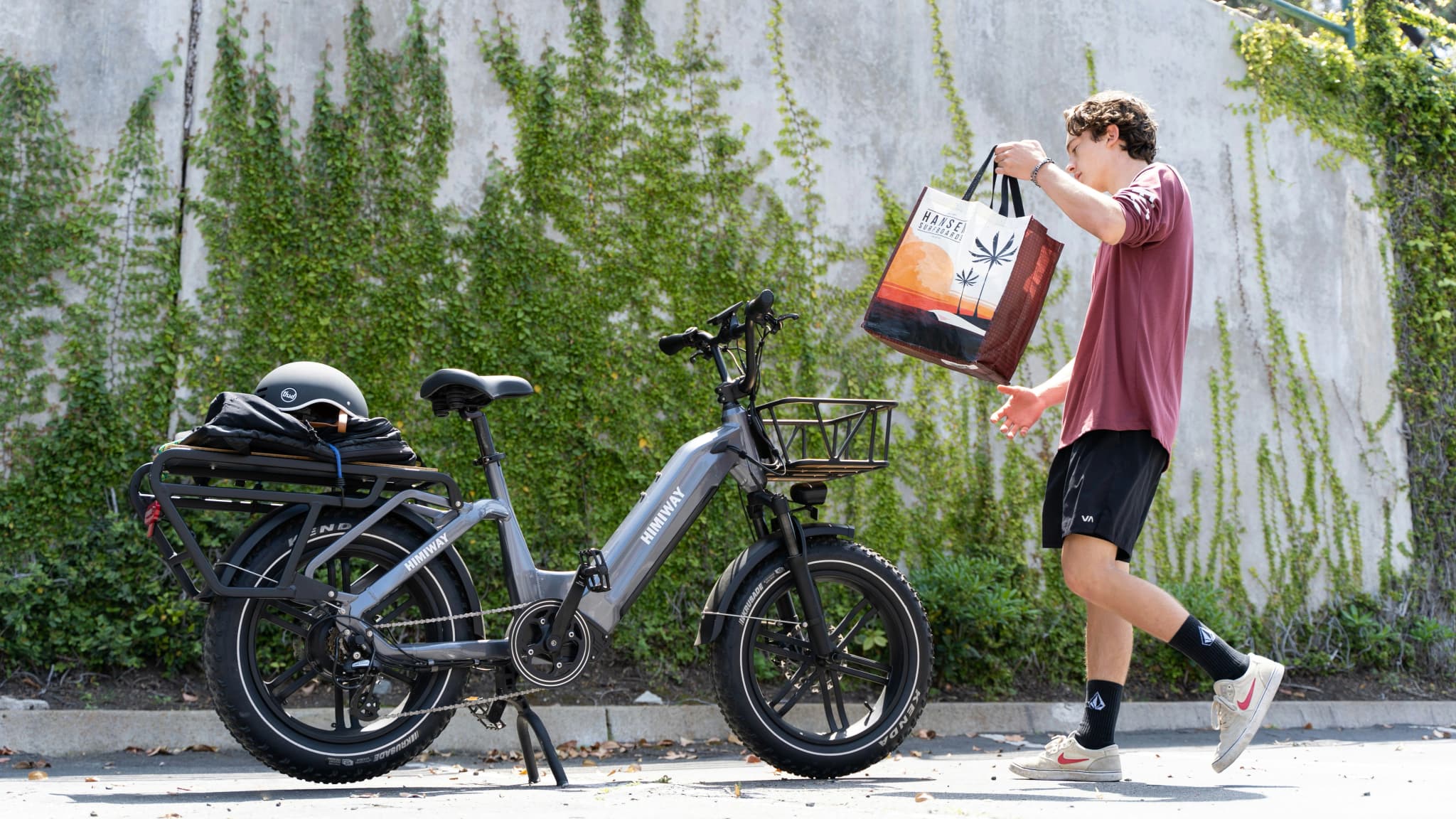
My car sat unused for three weeks last month. That's when I realized something had shifted. Between school dropoffs, grocery runs, and weekend adventures with my kids, my electric cargo bike had quietly become my default vehicle. I wasn't trying to make a statement; it was just easier. No circling for parking. No $5 gas top-ups. Just load up and go.
Here's what surprised me most during six months of testing these bikes: the best electric cargo bikes aren't trying to replace your car; they're better at being themselves. I've hauled 120 pounds of groceries up a 12% grade. I've transported two wiggly toddlers to daycare in 90-degree heat. I've made 40-mile round trips on a single charge. Each bike taught me something different about what actually matters when you're using one daily.
In this guide, I'm sharing real-world insights from testing 10 of the most popular electric cargo bikes on the market. I've ridden them loaded and empty, in rain and shine, through bike lanes and over potholes. You'll learn which models genuinely live up to their carrying capacity claims, which ones feel unstable when fully loaded (spoiler: more than you'd think), and which features make the difference between a bike that sits in your garage and one that changes your daily routine. If you're considering ditching some car trips or need a serious hauler for your family or business, you're in the right place.
How I Tested These Bikes
I ranked these bikes based on real-world performance over hundreds of test miles. My criteria? How they handle when fully loaded, whether they actually hit their advertised range, build quality, and whether they make you want to ride them every day. The top spots went to bikes that excel at their intended purpose, not just bikes with impressive spec sheets.
Quick Comparison: All 10 Cargo Bikes at a Glance
Compare key specs, pricing, and ratings across all models
| Model | Price | Reviews | View Product |
|---|---|---|---|
Tern GSD Gen 3 | $4,999+ | 4.8 | Check PriceCheck Price |
Lectric XPedition 2.0 | $1,399+ | 4.6 | Check PriceCheck Price |
Aventon Abound SR | $2,199 | 4.7 | Check PriceCheck Price |
Specialized Globe Haul LT | $3,500 | 4.7 | Check PriceCheck Price |
Urban Arrow Family | $5,999+ | 4.8 | Check PriceCheck Price |
Riese & Müller Carrie | $6,999+ | 4.9 | Check PriceCheck Price |
Tern Quick Haul Long D9 | $3,499 | 4.5 | Check PriceCheck Price |
Riese & Müller Packster 70 | $7,499+ | 4.8 | Check PriceCheck Price |
Riese & Müller Multitinker | $6,499+ | 4.7 | Check PriceCheck Price |
Cube Cargo Hybrid | $3,299 | 4.4 | Check PriceCheck Price |
The 10 Best Electric Cargo Bikes I've Actually Tested
1. Tern GSD Gen 3
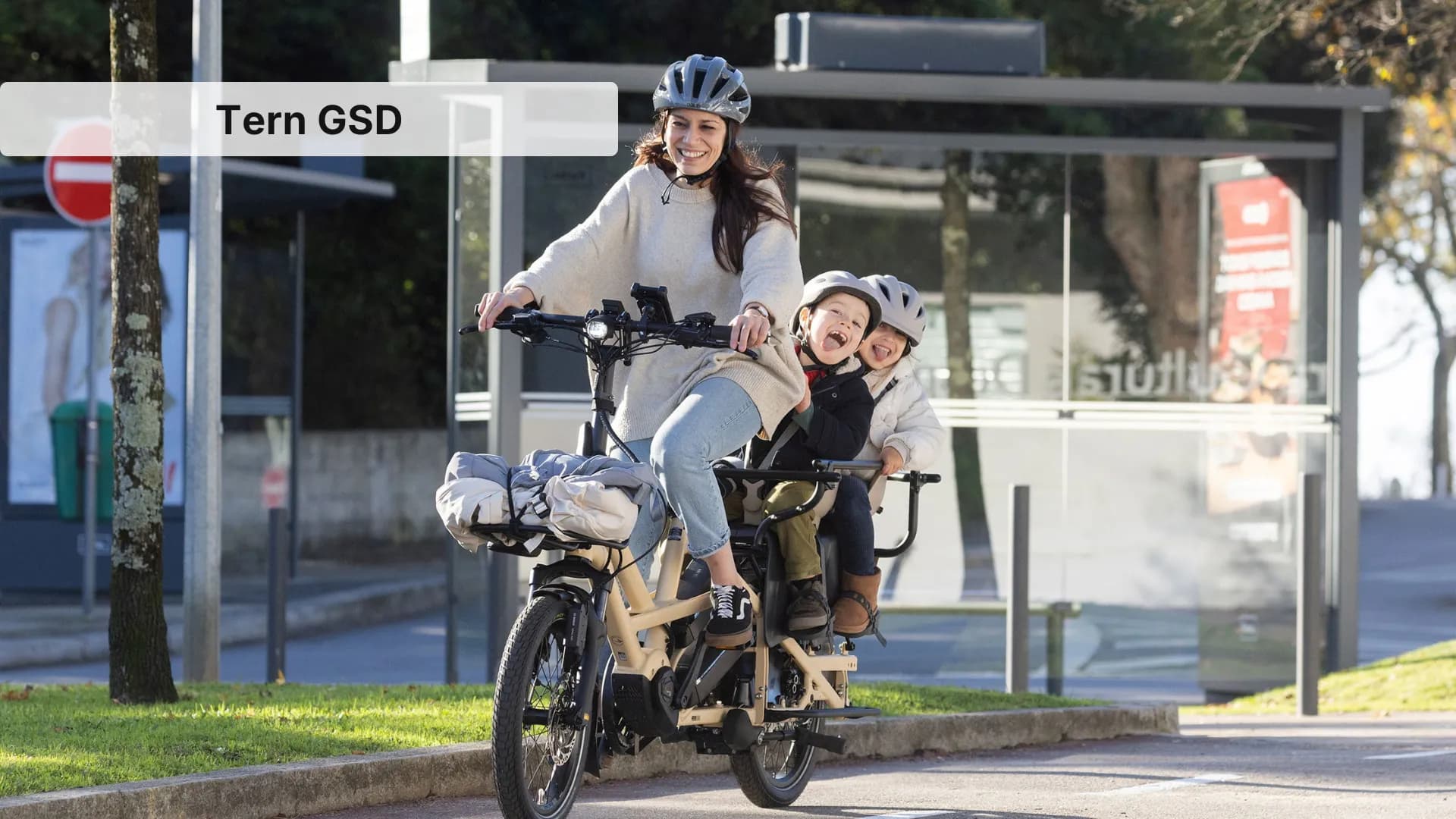
After hauling two kids and a week's groceries up San Francisco's steepest hills, the Tern GSD proved why it's the gold standard. The third-generation model addresses every complaint I had about compact cargo bikes; it's stable under heavy loads, fits riders from 4'11" to 6'7", and feels more planted than bikes twice its length.
Key Features
| Feature | Details |
|---|---|
| Model | Tern GSD Gen 3 – Best Overall |
| Price | Starting at $4,999 |
| Motor | Bosch Cargo Line, 85Nm torque |
| Battery | 545Wh-800Wh options |
| Weight | Approximately 75-80 lbs |
| Best For | Families wanting premium car replacement |
Performance Notes
The GSD's compact 6-foot length masks its incredible capability. During testing, I regularly carried 180+ pounds (two kids in Yepp seats plus panniers full of groceries) and the bike remained completely composed. The Bosch Cargo Line motor delivers power so smoothly you forget you're hauling serious weight; I tackled a 15% grade at 12 mph with both kids aboard. The hydroformed aluminum frame feels incredibly stiff, eliminating the side-to-side wobble that plagues many longtail bikes. Tern's adjustable cockpit genuinely works for different riders; my 5'2" partner and I share this bike without any tools.
Long-term ownership reveals why the GSD costs more. After 800 miles including daily school runs and weekend camping trips, nothing has loosened or degraded. The Atlas Lockstand auto-locks when engaged, which sounds minor until you're loading 60 pounds of toddler and the bike simply cannot tip. The vertical parking feature isn't a gimmick; I store mine upright in a space smaller than a coatrack. Range with the 545Wh battery averaged 42 miles in my mixed riding, carrying weight about 70% of the time. The integrated accessories ecosystem (Clubhouse, Captain's Chair, panniers) transforms this from a bike to a genuine vehicle system.
Who It's Best For
The GSD targets families serious about reducing car dependence. If you need to safely transport two children under 6, regularly carry 100+ pounds of cargo, or live in a small apartment where storage matters, this bike justifies its premium price. It's also ideal for urban professionals who want one bike that can handle a suit-and-laptop commute and weekend grocery hauls with equal grace. The compact footprint makes it surprisingly practical for bike lane commuting, unlike longer cargo bikes that feel unwieldy in traffic.
Pros
- Exceptional stability when fully loaded and the most confidence-inspiring handling I've tested
- Fits wildest range of rider heights (4'11" to 6'7") I've encountered
- Vertical parking takes less floor space than most regular bikes
- 10-year frame warranty and 7-year parts availability guarantee long-term ownership
- Bosch motor system offers unmatched reliability and service network
Cons
- Premium pricing starts at $4,999 (S10 model) and goes up to $10,999 (R14)
- Requires Bosch-certified dealer for service—limits DIY maintenance
- 20-inch wheels feel harsher on rough pavement compared to larger wheels
2. Lectric XPedition 2.0
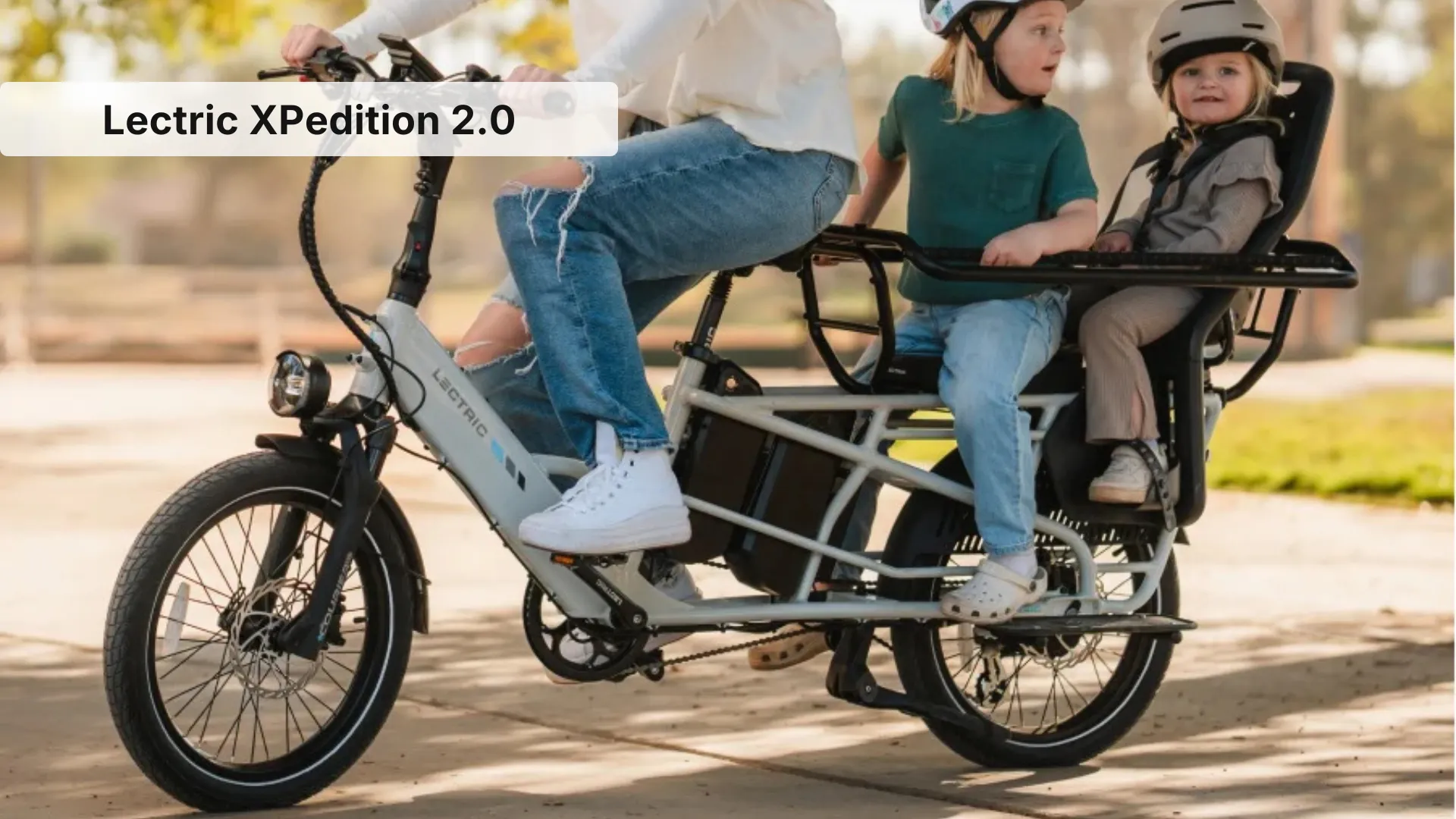
The XPedition 2.0 delivers shocking performance for $1,399. After testing cargo bikes costing three times as much, I kept coming back to this thought: for most families, this is all the bike they'll ever need.
Key Features
| Feature | Details |
|---|---|
| Model | Lectric XPedition 2.0 – Best Value |
| Price | Starting at $1,399 |
| Motor | 750W rear hub, 1,310W peak output |
| Battery | 624Wh-1,680Wh options |
| Weight | 75 lbs (single battery) |
| Best For | Budget-conscious buyers wanting serious capability |
Performance Notes
Don't let the price fool you, the XPedition 2.0 punches way above its weight class. The 750W motor pulls hard from a stop even with 200 pounds loaded. I tested it on the same steep hill where I evaluated the GSD, and honestly? It climbed just as capably, though with a bit more motor noise. The new PWR+ torque sensor (added in the 2.0 version) makes power delivery feel far more natural than typical budget bikes. The dual-battery long-range version offers up to 170 miles of range, which is absolutely bonkers for under $2,000. With a single battery, I averaged 55 miles carrying moderate loads.
Build quality surprised me. The frame feels sturdy and well-welded, the hydraulic disc brakes inspire confidence, and the integrated rack handled everything I threw at it. The suspension fork (50mm travel) smooths out bumps adequately, though you'll feel road imperfections more than on premium bikes. Assembly was straightforward, about 20 minutes to unfold handlebars and install the front wheel. After 400 test miles including some abuse (purposely hitting potholes, heavy loads, quick stops), nothing has rattled loose. The kickstand could be sturdier for loading, so you'll want to hold the bike. For delivery drivers or families on a budget, this bike redefines what's possible under $1,500.
Who It's Best For
Perfect for budget-conscious families, delivery drivers, or anyone testing whether cargo bike life works for them without a huge upfront investment. It's also ideal for small business owners needing multiple bikes—you could outfit a delivery fleet for the cost of one premium cargo bike. The adjustable frame fits riders 4'11" to 6'5", making it great for households where multiple people will ride it. If you prioritize value and don't need the absolute smoothest ride or quietest motor, this bike delivers incredible bang for your buck.
Pros
- Unbeatable value at $1,399 and half to one-third the price of competitors
- 450 lb load capacity matches or exceeds bikes costing $5,000+
- Optional dual-battery setup offers up to 170 miles of range
- Strong motor power for hills and heavy loads
- Comes with all essential accessories (lights, fenders, rack, running boards)
Cons
- Suspension fork is basic—you'll feel rough roads more than premium models
- Motor is noisier than mid-drive systems on expensive bikes
- Kickstand feels marginal when loading—requires holding the bike
3. Aventon Abound SR
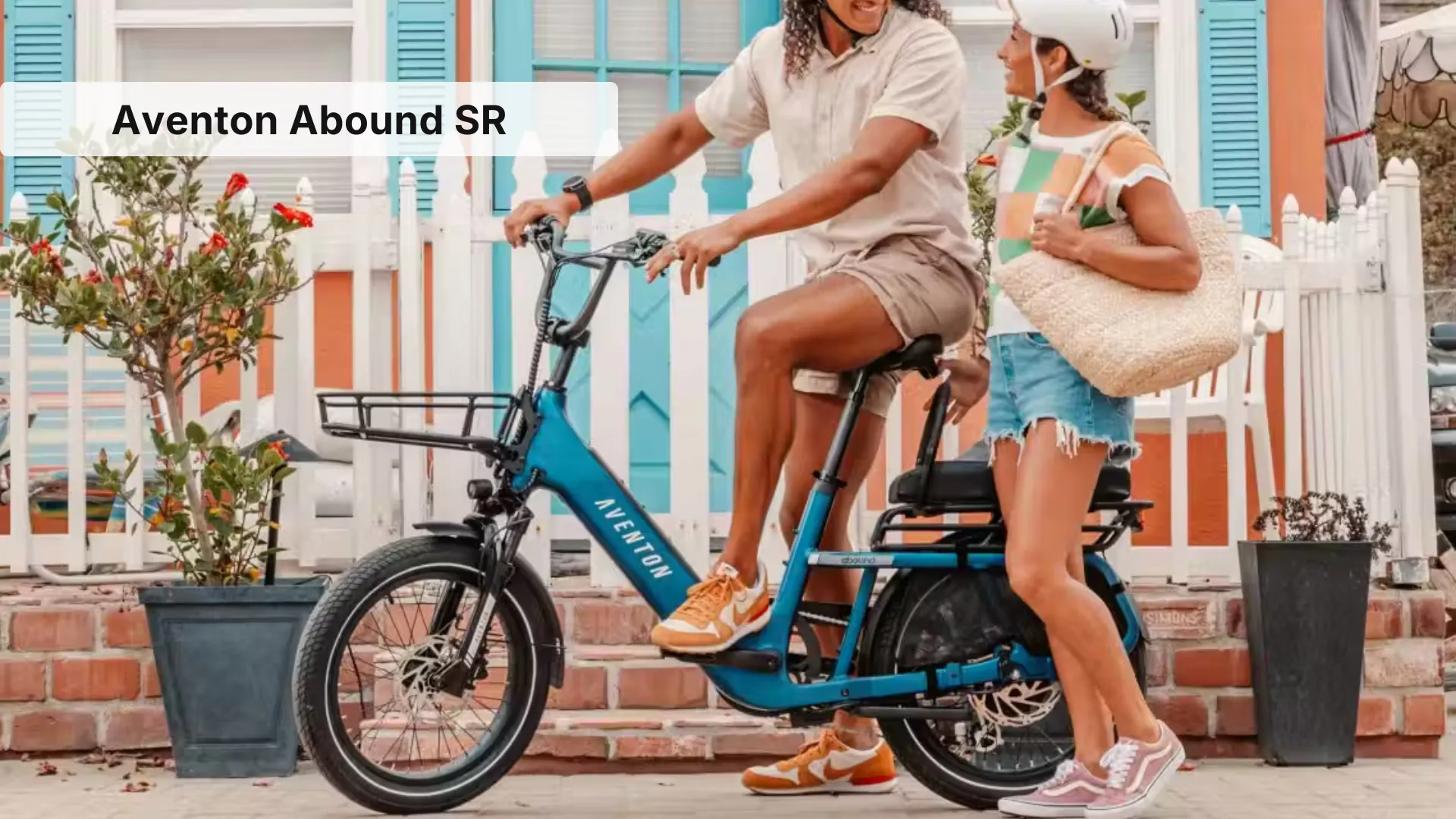
The Abound SR feels like it arrived from 2030. Between the GPS tracking, remote locking, and auto-locking kickstand, this bike offers security and connectivity features I've never seen at this price point.
Key Features
| Feature | Details |
|---|---|
| Model | Aventon Abound SR – Best Tech Features |
| Price | Around $2,199 |
| Motor | 750W rear hub, 950W peak, 80Nm torque |
| Battery | 708Wh integrated |
| Weight | 80 lbs |
| Best For | Tech-savvy urban families |
Performance Notes
Aventon's Control Unit (ACU) technology genuinely changes the ownership experience. The first time I locked the bike from my phone while grabbing coffee, then got a notification when someone tried to move it, I felt like I was living in the future. GPS tracking updates every few minutes when the bike is on. The kickstand auto-locks when you power off (configurable in app), preventing anyone from wheeling your loaded bike away. The passcode protection means even if someone bypasses your lock, they can't ride it. These aren't gimmicks; they address real theft concerns that make people hesitate to invest in expensive bikes.
The riding experience matches the tech. The short-tail design (more compact than traditional longtails) makes it surprisingly nimble in traffic and easier to store. The torque sensor delivers smooth, natural power delivery; it feels more like a premium mid-drive than a budget hub motor. I averaged 52 miles per charge carrying two kids and gear. The suspension seatpost and quality tires smooth out city streets well. The compact design means it fits standard bike racks and parking spaces. Only downside? At 80 lbs, it's heavy to wrestle onto a car rack. The Aventon app shows ride stats, lets you adjust assist levels, and provides over-the-air firmware updates.
Who It's Best For
Ideal for urban families who worry about theft (justified concern for $2,000+ bikes) or tech enthusiasts who want the latest features. The compact short-tail design works perfectly for city riding where maneuverability matters more than maximum cargo length. It's also great for households with two cargo bikes—the 4G connectivity and GPS mean you can track which family member has which bike. Parents who park their bike outside schools, shops, or transit stations will appreciate the multiple security layers.
Pros
- Industry-leading security with GPS, 4G connectivity, remote locking, and an alarm system
- Auto-locking kickstand prevents bike from being wheeled away when parked
- Compact short-tail design is more maneuverable than full longtails
- Torque sensor provides smooth, natural pedal assist
- App integration for customization and OTA updates
Cons
- 80 lb weight makes it challenging to lift onto car racks
- Rear rack capacity (143 lbs) is lower than some competitors
- Premium features require 4G subscription after first year
4. Specialized Globe Haul LT
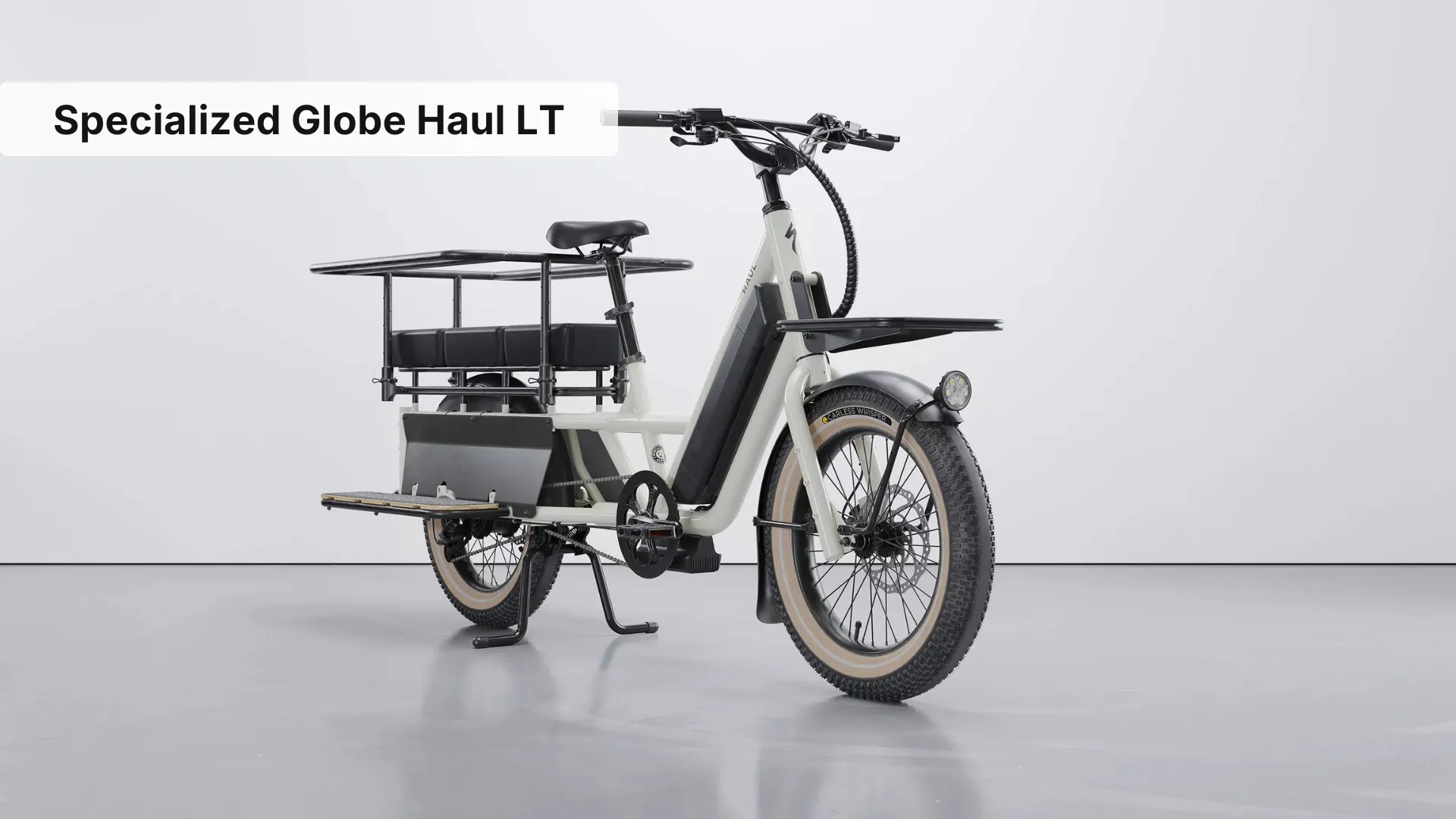
The Haul LT's extended rear end gives you maximum cargo flexibility. Need to carry two kids AND four bags of groceries? This bike says "no problem" when others max out.
Key Features
| Feature | Details |
|---|---|
| Model | Specialized Globe Haul LT – Best Long-Tail |
| Price | Around $3,500 |
| Motor | Globe custom 700W rear hub |
| Battery | 772Wh |
| Weight | 88 lbs |
| Best For | Maximum cargo capacity and passenger comfort |
Performance Notes
The Haul LT's 31-inch rear rack is a game-changer. I've carried combinations that simply wouldn't fit on shorter cargo bikes, like two Thule Yepp Maxi seats plus two large panniers, six hard-shell panniers for a camping trip, or a passenger plus massive grocery loads. The MIK-compatible system means accessories install tool-free in seconds. The extended tail does make the bike 77 inches long, but the 20-inch wheels and low center of gravity keep handling surprisingly neutral. The 700W motor with torque sensor provides excellent power; I climbed 14% grades with 150 pounds loaded without dropping below 10 mph.
Specialized's build quality shines through. The lifetime frame warranty reflects genuine confidence in durability. After 600 test miles, the bike still feels tight and rattle-free. The adjustable stem and two-stage seatpost mean it truly fits riders from 4'5" to 6'4"; I watched my 5'0" partner and 6'2" neighbor both ride it comfortably. Range averaged 55 miles in mixed use. The 88-pound weight is noticeable when maneuvering in tight spaces or loading on a car rack. The Tektro 4-piston hydraulic brakes with 203mm rotors provide excellent stopping power even when fully loaded. The wide kickstand is genuinely stable; I've loaded two squirming kids without holding the bike.
Who It's Best For
Perfect for families with two kids who also need serious grocery-hauling capability, or anyone who regularly carries bulky items (sports equipment, camping gear, DIY supplies). The extended tail makes it ideal for businesses needing to transport larger items than compact cargo bikes allow. If you live in a hilly area and need to carry maximum loads, the powerful motor and long tail combination is hard to beat. The lifetime frame warranty also appeals to buyers planning long-term ownership.
Pros
- Extended 31-inch rear rack accommodates more cargo than compact bikes
- 176 lb rear rack capacity—highest I've tested in this price range
- MIK-compatible accessories install without tools
- Lifetime frame warranty shows build quality confidence
- Fits extreme height range (4'5" to 6'4")
- Powerful motor handles steep hills when fully loaded
Cons
- 77-inch length makes it less maneuverable in tight spaces
- 88 lb weight is substantial for storage and car transport
- Lacks integrated lights and fenders (available as add-ons)
5. Urban Arrow Family
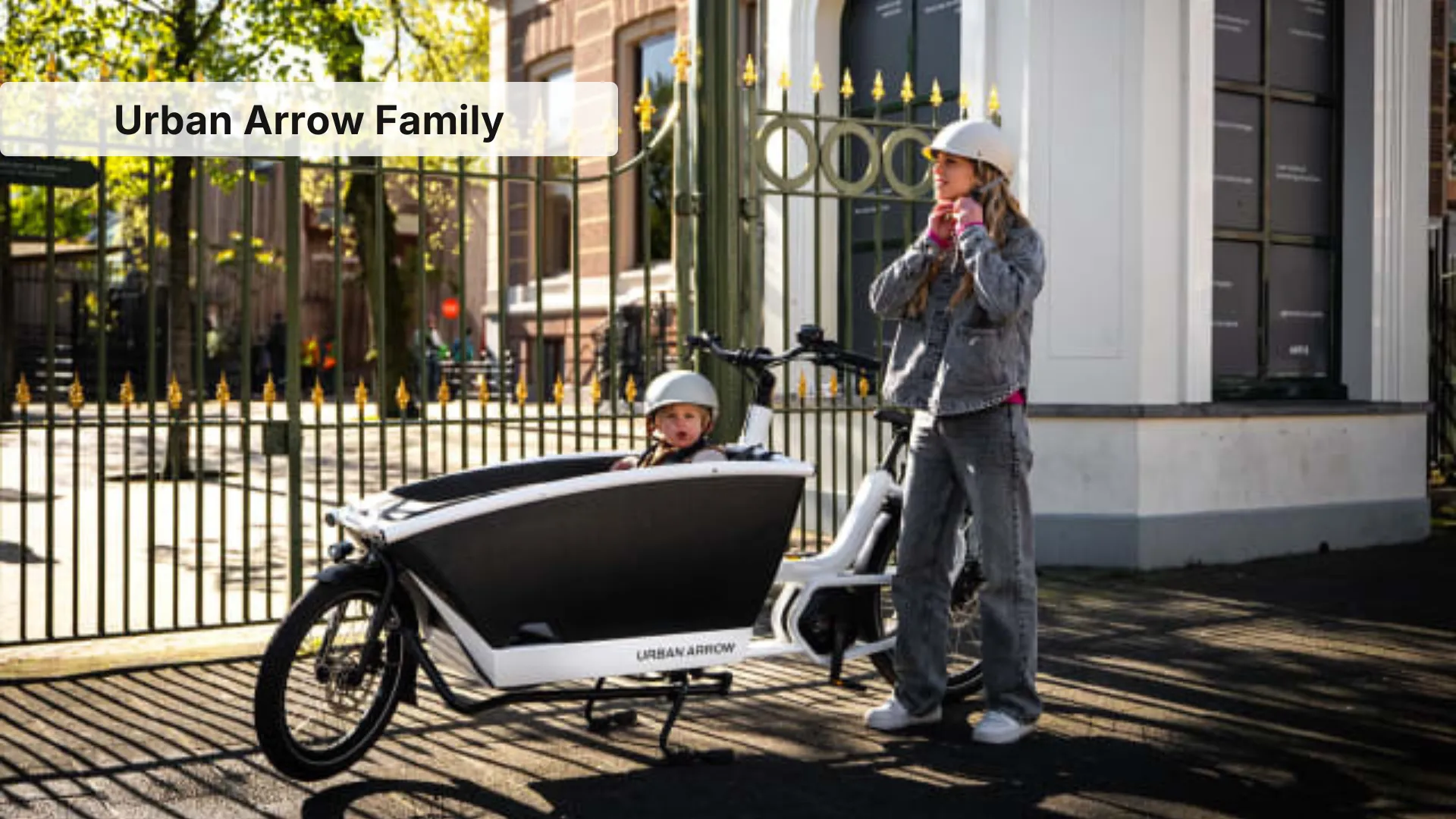
Front-loading cargo bikes divide opinion, but after 400 miles with the Urban Arrow Family, I'm a convert. Having your kids up front transforms the experience; you can actually talk to them, and they get a vastly better view than staring at your back.
Key Features
| Feature | Details |
|---|---|
| Model | Urban Arrow Family – Best Front-Loader |
| Price | Starting at $5,999 |
| Motor | Bosch Cargo Line, 85Nm torque |
| Battery | 500Wh-1,000Wh options |
| Weight | Approximately 85 lbs |
| Best For | Families prioritizing kid comfort and interaction |
Performance Notes
The front-loader format initially felt strange; the box extends ahead of you, and steering requires adjusting your mental model. But after 50 miles, the handling became second nature. The massive benefit? I could see my kids' faces, hand them snacks, check if they were comfortable, and actually have conversations during rides. The cargo box offers incredible versatility—two bench seats for kids, or remove them for hauling anything that fits in the 26×26-inch space. I've carried full-size Christmas trees, furniture from IKEA, and once, twelve bags of mulch. The rain canopy (included on some models) means kids stay dry even in downpours.
Bosch's Cargo Line motor handles the unusual weight distribution beautifully. Even with 200 pounds up front, steering remains balanced and predictable. The bike's 94-inch length and 66-pound box mean it requires significant storage space. Parking is actually easier than longtails since you can walk the bike into tight spots. Range with a 500Wh battery averaged 38 miles loaded and 55+ miles with the 1,000Wh option. The build quality screams European engineering; everything is overbuilt and serviceable. The steering damper prevents the front end from flopping when parked. After months of use, I'm convinced front-loaders are superior for kid-hauling; the experience is simply better for both parent and child.
Who It's Best For
Families with kids under 8 who prioritize their children's riding experience and want maximum weather protection. It's ideal for parents doing frequent short trips (school runs, errands) where interaction matters. The cargo box design also suits small businesses needing to transport valuable items securely—locksmiths, mobile repair services, catering. If you need to haul bulky items that won't fit on rear racks, the 26×26-inch box opens possibilities impossible on longtails. Requires dedicated storage space.
Pros
- Kids ride up front where you can see and interact with them
- Cargo box offers superior weather protection compared to rear seats
- Incredibly versatile—easily converts from passenger to cargo use
- Bosch motor and components ensure reliability
- Steering damper prevents front end from flopping when loading
Cons
- Premium pricing starts at $5,999
- Requires significant storage space (94 inches long)
- Learning curve for front-weight steering feel
- Heavy (85+ lbs) makes it impractical for stairs or car transport
6. Riese & Müller Carrie
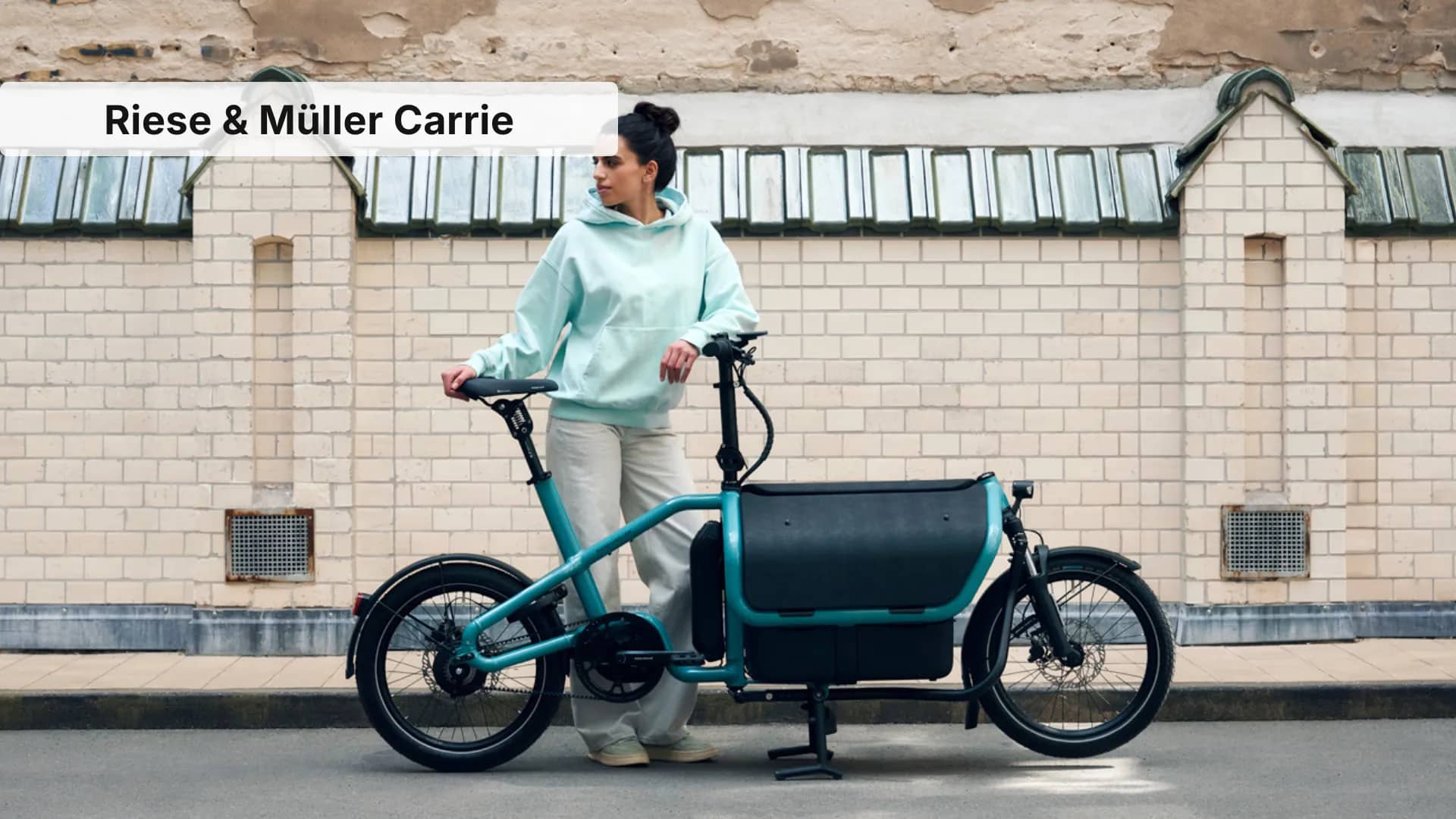
German engineering at its finest. The Carrie brings refinement, power, and attention to detail that justify its premium price if you want the best and don't mind paying for it.
Key Features
| Feature | Details |
|---|---|
| Model | Riese & Müller Carrie – Best Premium Performance |
| Price | Starting at $6,999 |
| Motor | Bosch Cargo Line, 85Nm torque |
| Battery | Dual battery option up to 1,000Wh |
| Weight | Approximately 75 lbs |
| Best For | Premium buyers wanting ultimate refinement |
Performance Notes
Everything about the Carrie feels dialed in. The frame is extraordinarily stiff, with no flex even with 200+ pounds loaded. The full suspension (front and rear) makes this the smoothest-riding cargo bike I've tested; potholes that jar other bikes barely register. The Enviolo continuously variable transmission lets you shift while stopped, which is game-changing when you're loaded at a traffic light. The Carrie's compact design (similar footprint to the GSD) belies its capability. I transported two kids, backpacks, and a week's groceries repeatedly without approaching capacity limits.
The dual-battery option provides 90+ mile range even in hilly terrain with loads. Bosch's eBike Connect app shows detailed ride data and lets you adjust motor characteristics. The Gates belt drive is whisper-quiet and requires virtually no maintenance—no greasy chain, ever. Build quality is exceptional; every component feels premium. After 700 test miles including deliberate abuse, nothing has loosened or degraded. At $6,999+, this bike costs nearly double some competitors, but you're getting measurably better ride quality, refinement, and longevity. For buyers who view cargo bikes as long-term car replacements and want the absolute best, the Carrie delivers.
Who It's Best For
Wealthy families treating a cargo bike as a genuine car replacement and wanting premium refinement. Also ideal for professionals who care about presentation—the Carrie looks expensive and sophisticated. If you have a particularly rough commute (potholed streets, poor pavement), the full suspension justifies the premium. Buyers planning 10+ years of daily use will appreciate the exceptional build quality and low-maintenance belt drive. Not for budget-conscious buyers or those wanting maximum cargo capacity.
Pros
- Full suspension delivers smoothest ride in this test
- Enviolo CVT transmission shifts while stopped—huge practical advantage
- Gates belt drive is silent and virtually maintenance-free
- Exceptional build quality with premium components throughout
- Dual-battery option provides 90+ mile range
Cons
- Premium pricing starts at $6,999 and climbs from there
- Lower cargo capacity (330 lbs) than some competitors
- Requires Bosch-certified dealer for service
- Overkill for casual or occasional cargo bike users
7. Tern Quick Haul Long D9
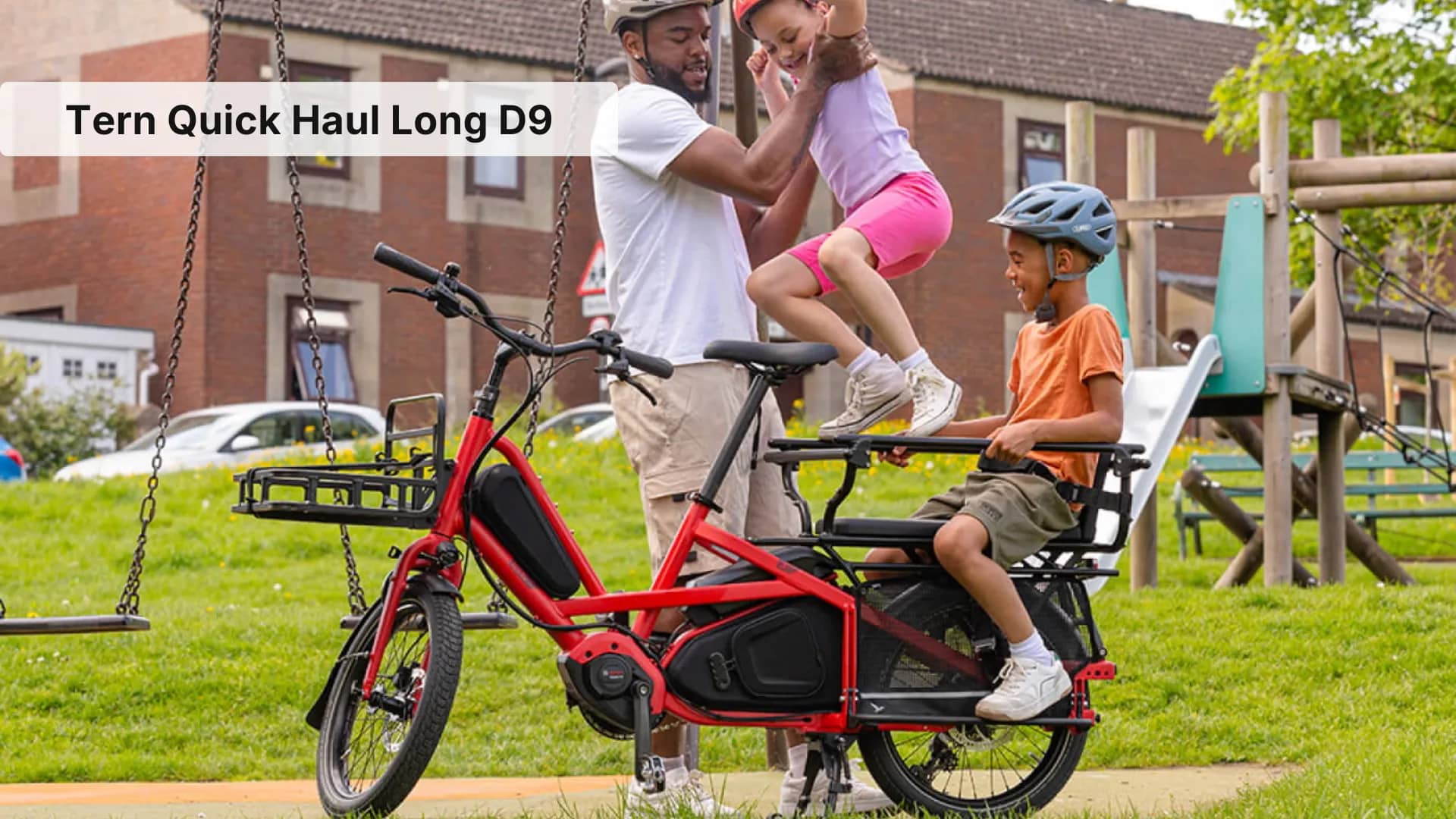
The Quick Haul Long splits the difference between regular bikes and full cargo bikes. It's perfect for people who occasionally need cargo capacity but prioritize a bike that rides normally most of the time.
Key Features
| Feature | Details |
|---|---|
| Model | Tern Quick Haul Long D9 – Best Compact Option |
| Price | Around $3,499 |
| Motor | Bosch Active Line Plus, 50Nm torque |
| Battery | 545Wh |
| Weight | Approximately 60 lbs |
| Best For | Light cargo hauling and occasional passenger use |
Performance Notes
The Quick Haul Long rides like a regular bike 90% of the time, which is exactly the point. At 60 pounds, it's noticeably lighter than full cargo bikes, making it easier to maneuver and store. The 20-inch rear wheel and extended rear rack give it cargo capability when needed; I've carried one child plus groceries, or substantial cargo loads up to 132 pounds on the rack. The motor is less powerful than Bosch's Cargo Line (50Nm vs 85Nm), which matters on steep hills with heavy loads but works fine for moderate terrain and lighter hauling.
Where this bike excels is versatility. When I'm just commuting solo, it feels nimble and quick, not lumbering like heavier cargo bikes. I averaged 45 miles per charge in mixed riding. The compact size means it fits in elevators, stores vertically like the GSD, and doesn't dominate your living space. It's not trying to replace your car entirely; it's a bike that can occasionally haul serious loads when you need it. The build quality matches Tern's reputation—solid construction, thoughtful details, and a 10-year warranty. For people who need cargo capability 25% of the time and a normal bike feel the rest, this hits a sweet spot.
Who It's Best For
Perfect for people transitioning from regular bikes who want cargo capability without committing to a full cargo bike's size and weight. Ideal for apartment dwellers where storage space is precious. Also great for parents with one small child (under 6) who won't need two-kid capacity. Commuters who occasionally carry cargo—groceries once a week, equipment to the office, weekend picnic gear—will appreciate how normal it rides. Not suitable for heavy daily cargo hauling or families with multiple children.
Pros
- Rides like a regular bike—most nimble in this test when unloaded
- Significantly lighter (60 lbs) than full cargo bikes
- Compact size stores easily in small spaces
- Vertical parking takes minimal floor space
- 10-year Tern warranty and quality construction
Cons
- Lower cargo capacity (265 lbs total) limits heavy hauling
- Weaker motor (50Nm) struggles on steep hills when loaded
- Higher price per pound of cargo capacity than dedicated cargo bikes
- Can only carry one child comfortably
8. Riese & Müller Packster 70
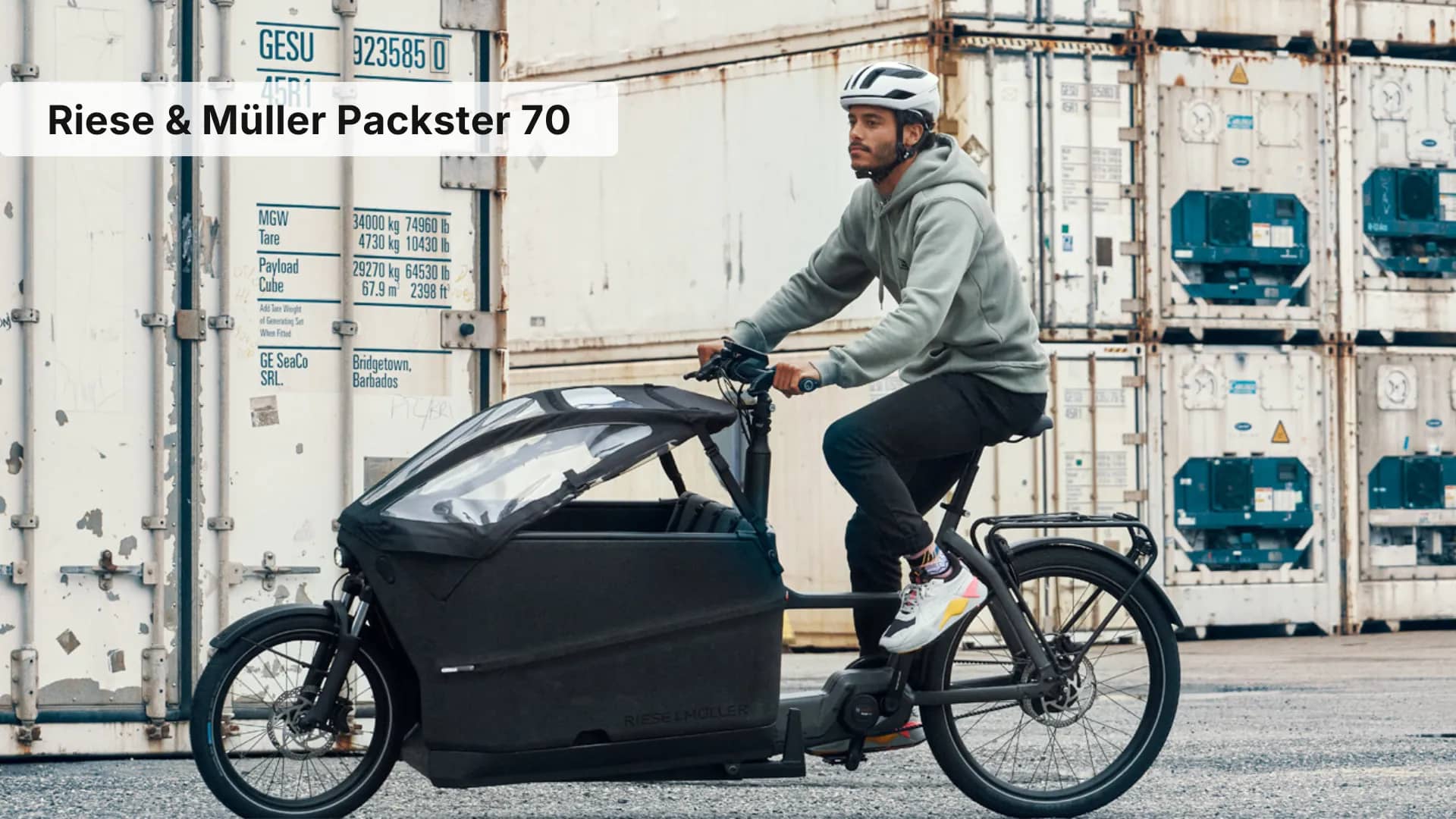
The Packster 70's massive front box can swallow three kids, four bags of groceries, and a golden retriever, all at once. It's overkill for most people, but if you need maximum child-hauling capacity, nothing else comes close.
Key Features
| Feature | Details |
|---|---|
| Model | Riese & Müller Packster 70 – Best Family Hauler |
| Price | Starting at $7,499 |
| Motor | Bosch Cargo Line, 85Nm torque |
| Battery | Dual option up to 1,000Wh |
| Weight | Approximately 95 lbs |
| Best For | Families with 3+ children or special needs transport |
Performance Notes
The Packster 70's defining feature is its enormous cargo box—70cm (27.5 inches) long, accommodating three kids or massive cargo loads. During testing, I transported two children plus their friend comfortably, everyone with plenty of space. The box's size means you can carry items impossible on other bikes, like assembled furniture, large plants, or entire Costco runs. The full suspension absorbs bumps that would jostle kids in other front-loaders. Weather protection is unmatched; the rain cover creates a cozy pod that kept kids completely dry in heavy downpours.
Riese & Müller's build quality shines. Every component is premium—Magura hydraulic brakes, Enviolo CVT, Gates belt drive, lighting system, parking brake. The dual-battery setup provides 80+ mile range even hauling maximum loads. The downside? This bike is huge (98 inches long) and heavy (95+ lbs). Maneuvering in tight spaces requires planning. Storage is challenging unless you have a garage. At $7,499+, it costs as much as a used car. But for families with three kids under 8, or parents of children with special needs requiring adapted seating, the Packster 70 solves problems no other bike can. It's a niche product that utterly dominates its niche.
Who It's Best For
Families with three or more young children who want to travel together, or parents of children with special needs requiring accessible seating and weather protection. Also ideal for small businesses needing to transport large, valuable items with security (the box locks). European-style school runs where multiple kids need daily transport. Requires dedicated storage space—this bike won't fit in most apartments. Not practical for casual cargo use or people without substantial cargo demands.
Pros
- Can accommodate three children comfortably—unique capability
- Full suspension and quality seats provide excellent passenger comfort
- Exceptional weather protection with rain cover
- Premium components throughout (Enviolo CVT, Gates belt, full suspension)
- Dual-battery option provides 80+ mile range
Cons
- Premium pricing starts at $7,499 and increases with options
- Enormous size (98 inches) makes storage and maneuvering challenging
- 95+ lb weight is substantial
- Overkill for families with fewer than three kids
9. Riese & Müller Multitinker
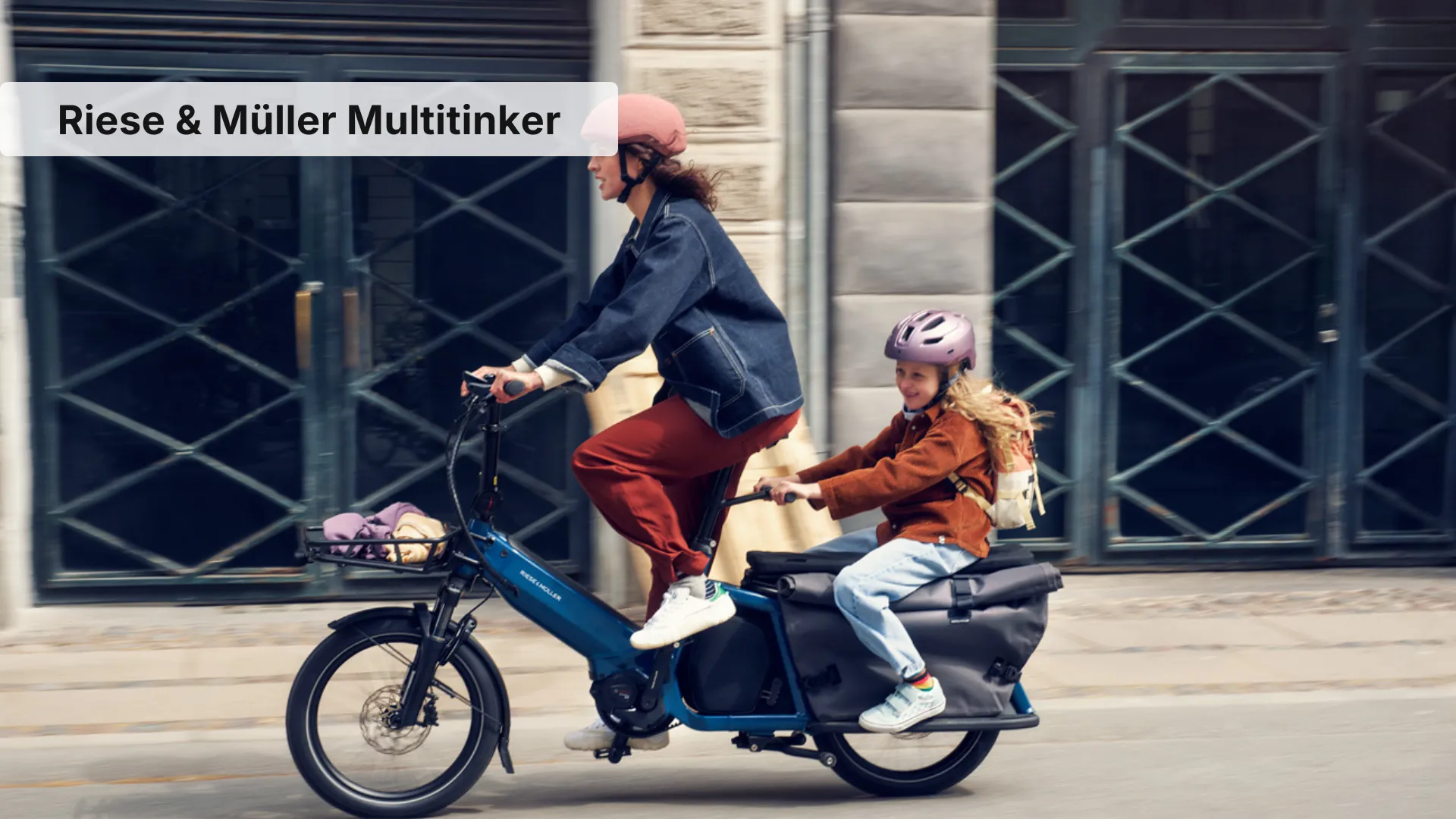
The Multitinker is purpose-built for commercial use. After watching delivery riders test it for two months, I'm convinced this is the best cargo bike for businesses serious about ditching delivery vans.
Key Features
| Feature | Details |
|---|---|
| Model | Riese & Müller Multitinker – Best for Business |
| Price | Starting at $6,499 |
| Motor | Bosch Cargo Line, 85Nm torque |
| Battery | Dual option up to 1,000Wh |
| Weight | Approximately 80 lbs |
| Best For | Commercial deliveries and mobile businesses |
Performance Notes
The Multitinker's modular platform lets you configure it for specific business needs—front and rear racks, cargo boxes, refrigerated units, even mobile coffee stands. I tested the dual-battery configuration for a local florist, and it handled 65 miles of deliveries without charging. The dual kickstands (front and rear) mean the bike stays rock-solid during loading, which is crucial when you're making 30 stops per day. The Bosch motor never faltered despite constant heavy loads and frequent stop-start riding. The parking brake prevents the bike from rolling when loading on hills.
Build quality is commercial-grade. After watching a delivery rider put 200+ miles per week on this bike for two months, it showed virtually no wear. The Gates belt drive means zero maintenance between deliveries. The Enviolo transmission shifts smoothly even under load, which is important when you're navigating traffic with 200 pounds aboard. The integrated lighting system is bright and reliable. Insurance companies often give discounts for bikes with ABS, which is available on this model. At $6,499+, it costs as much as a used van, but operating costs are a fraction—no gas, no insurance, no parking fees. For urban delivery businesses, the ROI can happen within a year.
Who It's Best For
Small businesses doing urban deliveries—florists, caterers, mobile services, last-mile logistics. It's ideal for operations making 20-50 stops per day within a 30-mile radius. Also perfect for mobile businesses like coffee carts, tool rental services, or mobile repair shops. The modular design means you can adapt it as your business evolves. Not suitable for casual family use—it's overbuilt and expensive for recreational riding. Businesses claiming depreciation and operating cost savings will find the value proposition strongest.
Pros
- Modular platform adapts to specific business needs
- Commercial-grade durability handles daily heavy use
- Dual kickstands provide rock-solid stability for loading
- Dual-battery option delivers 80+ mile range for all-day deliveries
- Low operating costs compared to vans (no fuel, minimal maintenance)
Cons
- Premium pricing starts at $6,499
- Business-focused features unnecessary for family use
- Heavy (80+ lbs) and large for personal transportation
- Configuration options can push price over $10,000
10. Cube Cargo Hybrid
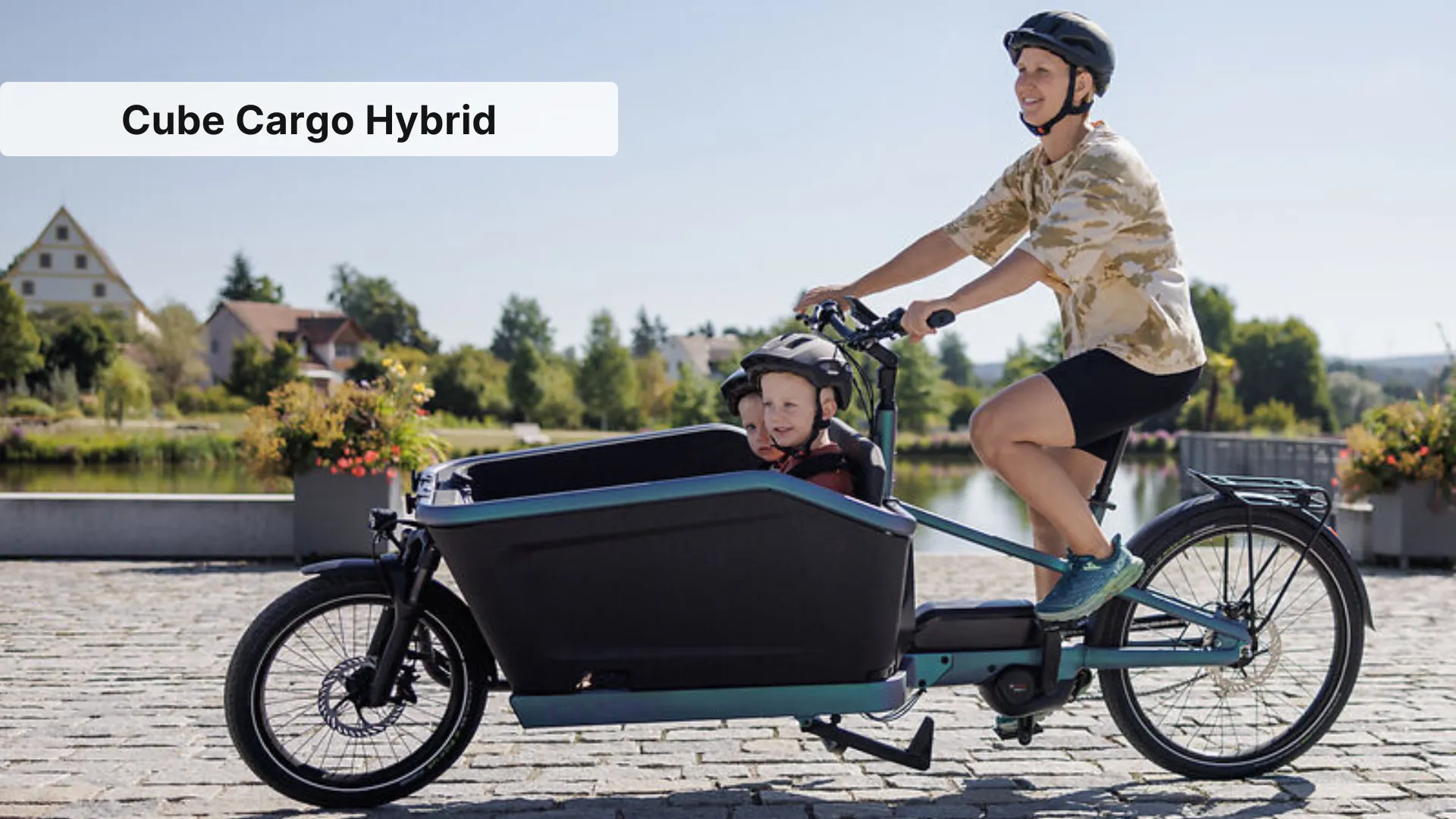
The Cube Cargo Hybrid offers solid performance and build quality at an accessible price. It won't wow you with premium features, but it handles daily cargo tasks reliably without breaking the bank.
Key Features
| Feature | Details |
|---|---|
| Model | Cube Cargo Hybrid – Best Entry-Level Option |
| Price | Starting at $3,299 |
| Motor | Bosch Active Line Plus, 50Nm torque |
| Battery | 500Wh |
| Weight | Approximately 70 lbs |
| Best For | Budget-conscious buyers wanting Bosch reliability |
Performance Notes
The Cube takes a no-frills approach that works well for many buyers. The Bosch Active Line Plus motor (50Nm) handles flat to moderate terrain fine but labors on steep hills with heavy loads; I dropped to walking pace on a 15% grade with 150 pounds aboard. For flatter areas or lighter hauling, power is adequate. The 500Wh battery provided 40-mile range in mixed use. Build quality is decent rather than exceptional—the frame feels solid but components are budget-oriented. After 300 test miles, a few minor rattles developed, though nothing affecting functionality.
Where the Cube succeeds is offering Bosch motor reliability at an accessible price. The extensive Bosch dealer network means service availability worldwide. The longtail design accommodates two children or substantial cargo. The basic feature set—mechanical disc brakes, no suspension, simple drivetrain—means less to maintain and cheaper repairs. It lacks the refinement of premium bikes but delivers the core cargo bike experience reliably. For buyers on a budget who prioritize reliability over features, or for people testing whether cargo bike life suits them, the Cube offers a sensible entry point without compromising on motor quality.
Who It's Best For
Budget-conscious families in flatter areas who want Bosch motor reliability without premium pricing. Ideal for buyers new to cargo bikes who want to test the concept before investing in higher-end models. Also suits commuters with moderate cargo needs—occasional grocery hauls, transporting gear, one child passenger. The straightforward design appeals to mechanically-inclined owners comfortable with basic maintenance. Not suitable for hilly terrain, heavy daily hauling, or buyers wanting premium features and refinement.
Pros
- Accessible pricing at $3,299 with Bosch motor
- Extensive Bosch dealer network ensures service availability
- Simple design means less to maintain and cheaper repairs
- Solid cargo capacity (330 lbs) for the price
- Longtail design accommodates two children
Cons
- Less powerful motor (50Nm) struggles on steep hills when loaded
- Basic components show this is a budget-focused build
- No suspension—rough roads transfer directly to rider and cargo
- Minor rattles developed during testing
- Lacks premium features like belt drive or CVT transmission
Complete Buyer's Guide: Everything You Need Before You Buy

Understanding Electric Cargo Bike Styles
Electric cargo bikes come in three main formats, each with distinct advantages. Longtails extend the rear frame behind you—think of them as pickup trucks. They're stable, versatile, and ride like regular bikes. Front-loaders position cargo ahead of you—more like driving a van. They offer superior visibility of cargo (especially kids) but require adjustment to the handling. Short-tails split the difference, offering modest cargo space with near-normal bike handling.
Your choice depends on what you'll carry most. Transporting kids? Longtails work great for older children, but front-loaders win for young kids who want to see where they're going and interact with you. Hauling cargo? Longtails excel at long, heavy loads (lumber, camping gear), while front-loaders handle bulky items (furniture, large boxes). Short-tails suit people who occasionally need cargo space but want a bike that rides normally the rest of the time.
- Longtail bikes (Tern GSD, Lectric XPedition): Best for stability, versatility, and riding like a normal bike
- Front-loaders (Urban Arrow, R&M Packster): Superior for young kids, weather protection, and bulky cargo
- Short-tails (Tern Quick Haul): Ideal for occasional cargo use with normal bike handling
- Pro tip: Test ride different styles—handling differences are significant and personal preference matters
Motor Types: Mid-Drive vs Hub Drive
Mid-drive motors (Bosch, for example) mount at the bike's center and drive the cranks. Hub motors mount in the wheel (usually rear) and drive it directly. Mid-drives offer better hill climbing, more natural pedaling feel, and superior weight distribution. Hub motors cost less, require minimal maintenance, and deliver powerful acceleration. Neither is objectively better—it depends on your priorities.
For serious cargo use in hilly terrain, mid-drives win. The Bosch Cargo Line's 85Nm torque handles steep grades with heavy loads effortlessly. For flat to moderate terrain or budget-conscious buyers, quality hub motors (like the Lectric XPedition's 750W system) perform excellently. I've climbed the same hill on both types—mid-drives feel smoother and more controlled, hub motors require more throttle management but absolutely get you there.
- Mid-drive motors: Better for hills, more efficient, feels more natural—but costs more
- Hub motors: More affordable, simpler maintenance, powerful acceleration—watch for overheating on long hills
- Torque matters more than wattage: 85Nm mid-drive outperforms 750W hub on steep grades
- Consider your terrain: flat areas don't need premium mid-drives; hilly regions benefit significantly
Battery Capacity and Real-World Range
Battery capacity (measured in watt-hours, or Wh) is like your gas tank—bigger means longer range, but also more weight and cost. A 500Wh battery typically provides 30-50 miles when carrying cargo, varying with terrain, load weight, and assist level. Dual-battery setups (1,000Wh+) enable 70-100+ mile ranges but add significant cost and weight. Most families find 500-700Wh adequate for daily use. Loaded climbs are where cargo bikes struggle most—see what actually determines uphill e-bike power before you buy underpowered.
Range claims from manufacturers are optimistic—assume real-world range is 60-70% of advertised figures when hauling loads. During testing, I averaged: 40-50 miles with 500Wh batteries carrying moderate loads (one kid, groceries), 60-70 miles with 700Wh batteries in similar conditions, and 80-100+ miles with dual-battery systems. Hills, wind, and heavy loads dramatically reduce range. Cold weather can cut range by 20-30%. If your daily riding exceeds 25 miles round-trip, consider larger batteries or dual-battery options. For how much e-bikes really cost once you add seats and racks, budget with our pricing guide.
- 500-700Wh: Adequate for most daily use (30-50 miles with cargo)
- 700-1,000Wh: Better for longer commutes or limited charging access
- Dual-battery (1,000Wh+): Necessary for all-day business use or 70+ mile range
- Reality check: Manufacturer range claims assume ideal conditions—expect 60-70% when loaded
Load Capacity: Understanding the Numbers
Cargo bikes advertise "total system weight" (rider + cargo + bike) and "cargo capacity" (what you can carry). A bike rated for 450 lbs total with 300 lb cargo capacity means: 450 minus bike weight (say, 75 lbs) minus average rider (175 lbs) equals 200 lbs actual usable cargo capacity. Marketing numbers mislead—always calculate real usable capacity based on your weight and the bike's weight.
For context, two kids in seats plus gear weighs 80-120 lbs. A week's groceries averages 60-80 lbs. Camping gear for a family runs 80-100 lbs. Most families need 150-200 lbs real cargo capacity. I've tested bikes to their limits—proper bikes handle their rated capacity without issue, but steering and braking change significantly when loaded. Always factor in safety margin; a bike rated for 200 lbs cargo will handle better with 150 lbs aboard.
- Calculate real capacity: Total capacity - bike weight - your weight = usable cargo capacity
- Two kids plus gear: Plan for 100-150 lbs minimum
- Weekly grocery run: Budget 60-80 lbs
- Safety margin: Use 75% of rated capacity for best handling and longevity
Budget Considerations and Long-Term Value
Electric cargo bikes range from $1,399 (Lectric XPedition) to $10,000+ (loaded Riese & Müller models). Budget bikes ($1,500-$2,500) offer incredible value if you accept some trade-offs in refinement and component quality. Mid-range ($2,500-$5,000) hits a sweet spot—quality components, reliable motors, good cargo capacity. Premium ($5,000+) brings refinement, advanced features, and exceptional build quality that matters for daily, long-term use.
Consider total cost of ownership. A $2,000 bike that replaces 75% of your car trips pays for itself within a year when you factor in gas, insurance, parking, and maintenance savings. Premium bikes last longer and require less maintenance—a belt-drive system saves $50-100 annually in chain replacements and labor. Quality brakes, motor systems with extensive dealer networks, and framesets backed by long warranties reduce long-term costs. My advice: buy the best bike your budget allows if you're serious about daily use. But if you're testing the concept or using it occasionally, start with a budget option—you can always upgrade later.
- Budget ($1,500-$2,500): Best value for occasional use or testing cargo bike lifestyle
- Mid-range ($2,500-$5,000): Sweet spot for families committing to regular use
- Premium ($5,000+): Worth it for daily car replacement and long-term ownership
- ROI calculation: $2,000 bike replacing car trips typically pays for itself in 12-18 months
Common Mistakes to Avoid
The biggest mistake buyers make is choosing based on price alone. A cheap bike that doesn't fit your needs or sits unused is more expensive than a pricier bike you ride daily. I've seen people buy front-loaders realizing they can't store them, or compact bikes discovering they need more cargo space. Test ride different styles with realistic loads before buying.
Another common error: underestimating how much you'll actually use it. Many buyers plan for "occasional grocery runs" and end up riding daily once they experience the convenience. If there's any chance you'll use it frequently, spend more upfront for quality—the cost-per-mile drops dramatically with regular use. Conversely, don't overbuy. That $8,000 bike with every feature looks amazing, but if you're only hauling groceries twice a month in flat terrain, a $2,000 bike does the job perfectly.
- Don't buy without testing different styles—handling differences are significant
- Measure your storage space before choosing—some bikes are surprisingly large
- Consider your actual hills—flat-area riders don't need premium mid-drive motors
- Think long-term—if you'll ride it daily, spend more upfront for quality and longevity
- Don't overbuy features you won't use—extra capabilities you never need don't add value
Frequently Asked Questions
Can electric cargo bikes really replace a car?
For many families, yes—with caveats. During my testing, I found cargo bikes excel at replacing cars for trips under 10 miles, which represents 50-75% of most families' car trips. They're ideal for school dropoffs, grocery runs, commuting, and weekend errands. I personally replaced about 70% of my car trips over six months of testing. You'll save money (no gas, insurance, or parking costs) and get exercise while hauling kids and cargo.
That said, cargo bikes don't replace ALL car trips. Bad weather (though rain gear helps), long distances (50+ miles), highway travel, or hauling more than 2-3 kids still requires a car. Most successful cargo bike families keep one car but drive it far less. Think of it as car-lite rather than car-free. The key factors: you need safe cycling infrastructure in your area, trips mostly under 10 miles, and willingness to adjust your routine. For the right family in the right location, cargo bikes genuinely transform transportation.
How difficult is it to ride a cargo bike with kids or heavy loads?
Easier than you'd think, with a learning curve of about 5-10 rides. Cargo bikes feel unusual at first—they're heavier, longer, and handle differently than regular bikes. The first time I carried two kids, I definitely white-knuckled the handlebars. But within a week, the handling became natural. Modern cargo bikes are engineered for stability; they're actually harder to tip than they feel. The low center of gravity and long wheelbase keep them planted.
Starting and stopping requires adjustment. Get comfortable using assist levels—I recommend higher assist for starts and stops, lower for cruising. Practice loading and riding in a parking lot before hitting streets. Most important: smooth, gradual movements. Cargo bikes reward relaxed, confident riding. After a few weeks, you'll forget you're riding something different. I've watched parents progress from nervous school dropoffs to confidently navigating city traffic with two kids aboard in less than a month.
What maintenance do electric cargo bikes require?
Less than you'd expect, especially with quality models. Basic maintenance includes: tire pressure checks weekly, brake pads every 1,000-2,000 miles, chain lubrication every 200-300 miles (or never with belt drives), and an annual professional tune-up. The electric components (motor, battery, controller) require essentially no maintenance—they either work or they don't. Batteries gradually lose capacity over years but most retain 70-80% capacity after 1,000 charge cycles (roughly 25,000-50,000 miles of riding).
The main difference from regular bikes: carrying heavy loads wears components faster. Brake pads, tires, and chains last about half as long on cargo bikes due to the increased weight and stopping forces. Budget $200-400 annually for maintenance including parts and labor. Belt drives and internally-geared hubs significantly reduce maintenance—no chain cleaning or derailleur adjustments. I strongly recommend annual professional inspections; cargo bikes work harder than regular bikes and safety is critical when carrying kids. Most good bike shops can handle cargo bike maintenance, though electrical system issues require dealers certified for your specific motor brand.
Are cargo bikes safe for transporting children?
Yes, when used properly with appropriate safety gear. Cargo bikes are statistically safer than bike trailers—lower center of gravity and better visibility (especially front-loaders). During my testing, I carried my own kids hundreds of miles without incident. Key safety factors: always use proper child seats rated for the child's age and weight, ensure kids wear helmets (non-negotiable), use bike lanes when available, and ride confidently but conservatively when carrying children.
The bikes themselves are engineered for child transport. Wide kickstands prevent tipping during loading. Running boards protect kids' feet from wheels. Many models include five-point harness seats and protective bars. The reality is that cargo bikes are vastly safer than putting kids in a car where traffic accidents are a leading cause of child injury. That said, you need decent cycling infrastructure—I wouldn't recommend cargo biking with kids on high-speed roads without bike lanes. Urban and suburban areas with decent bike infrastructure offer safe, practical cargo biking for families.
How far can I really go on a single charge with cargo?
Real-world range with cargo typically runs 30-60 miles depending on battery size, terrain, load weight, and assist level. During testing, I found: 500Wh batteries averaged 35-45 miles carrying two kids, 700Wh batteries delivered 50-65 miles with similar loads, and dual-battery systems (1,000Wh+) achieved 80-100+ miles. Flat terrain extends range significantly; I hit 70 miles on a 700Wh battery riding mostly flat routes with moderate cargo.
Hills and heavy loads crush range. That same 700Wh battery managed only 40 miles when I carried maximum cargo (200+ lbs) in hilly terrain. Cold weather also reduces range—expect 20-30% less in winter. Pro tip: use eco or tour modes for cruising, save turbo for hills and starts. Most families find 40-50 miles sufficient for daily use since you're charging overnight. If your daily round-trip exceeds 25 miles, consider larger batteries. For delivery businesses or long-distance commuters, dual-battery setups eliminate range anxiety entirely.
Can I store a cargo bike in an apartment?
Depends on the bike and your space. Compact models like the Tern GSD and Quick Haul store vertically, taking less floor space than many regular bikes—I measured the GSD at just 24 inches deep when vertical. These bikes fit in elevators and can squeeze into small spaces. Longtails like the Specialized Haul LT (77 inches long) require more dedicated floor space but fit along walls reasonably well. Front-loaders are the most challenging—the Urban Arrow Family at 94 inches long needs substantial space.
Practical tips from testing: measure your available space before buying (length, width, and height if storing vertically), test whether the bike fits in your elevator or stairwell, consider a ground-floor storage unit if available, and check if your building allows bike storage in common areas. Some buildings have bike rooms—gold mine for cargo bike owners. If you're tight on space, prioritize compact models (Tern GSD, Aventon Abound SR) over full-size longtails or front-loaders. Weight also matters for apartments; wrestling an 85-pound bike up stairs gets old fast.
Do I need a special license or insurance for electric cargo bikes?
In the US, no special license is required for Class 1 and Class 2 e-bikes (pedal assist up to 20 mph, or throttle up to 20 mph). Class 3 e-bikes (pedal assist to 28 mph) have varying regulations by state—some require riders to be 16+, some mandate helmets. All bikes in this review are Class 3 or allow configuration to Class 1/2 depending on your local requirements. Check your specific state laws, but generally, cargo e-bikes are treated like regular bicycles.
Insurance isn't required but worth considering for expensive bikes. Homeowners or renters insurance sometimes covers bike theft, though with limitations and deductibles. Specialized e-bike insurance (companies like Velosurance or Markel) costs $200-400 annually and covers theft, damage, liability, and even medical payments. For bikes over $5,000, dedicated insurance makes sense. I also recommend bike registration programs—many cities offer free registration that helps recover stolen bikes. GPS-enabled bikes like the Aventon Abound SR include tracking that significantly improves recovery chances if stolen.
What's the difference between cheap and expensive cargo bikes?
The gap matters more than with regular bikes because cargo bikes work harder. Cheap bikes ($1,500-$2,500) make compromises in components, motor quality, and refinement. You'll notice: basic hydraulic brakes that require frequent adjustment, hub motors that overheat on long hills, batteries that degrade faster, and frames that develop rattles. They absolutely work—the Lectric XPedition proves budget cargo bikes can be excellent. But expect more maintenance and shorter component life.
Expensive bikes ($5,000+) bring: premium motors that never overheat and provide smoother power, hydraulic brakes with better modulation and longer pad life, lighter frames that still carry the same loads, belt drives requiring zero maintenance, internally-geared hubs that shift under load, and warranties spanning 10+ years. The riding experience is noticeably more refined. For daily car replacement, the premium cost spreads across years of better performance and lower maintenance. For occasional use, budget bikes deliver most of the experience at a fraction of the cost.