Folding E-Bike Charging Safety: What Apartment Dwellers Need to Know
Live in an apartment with a folding e-bike? Here's how to charge and store it safely, from battery habits to what to check with your landlord.

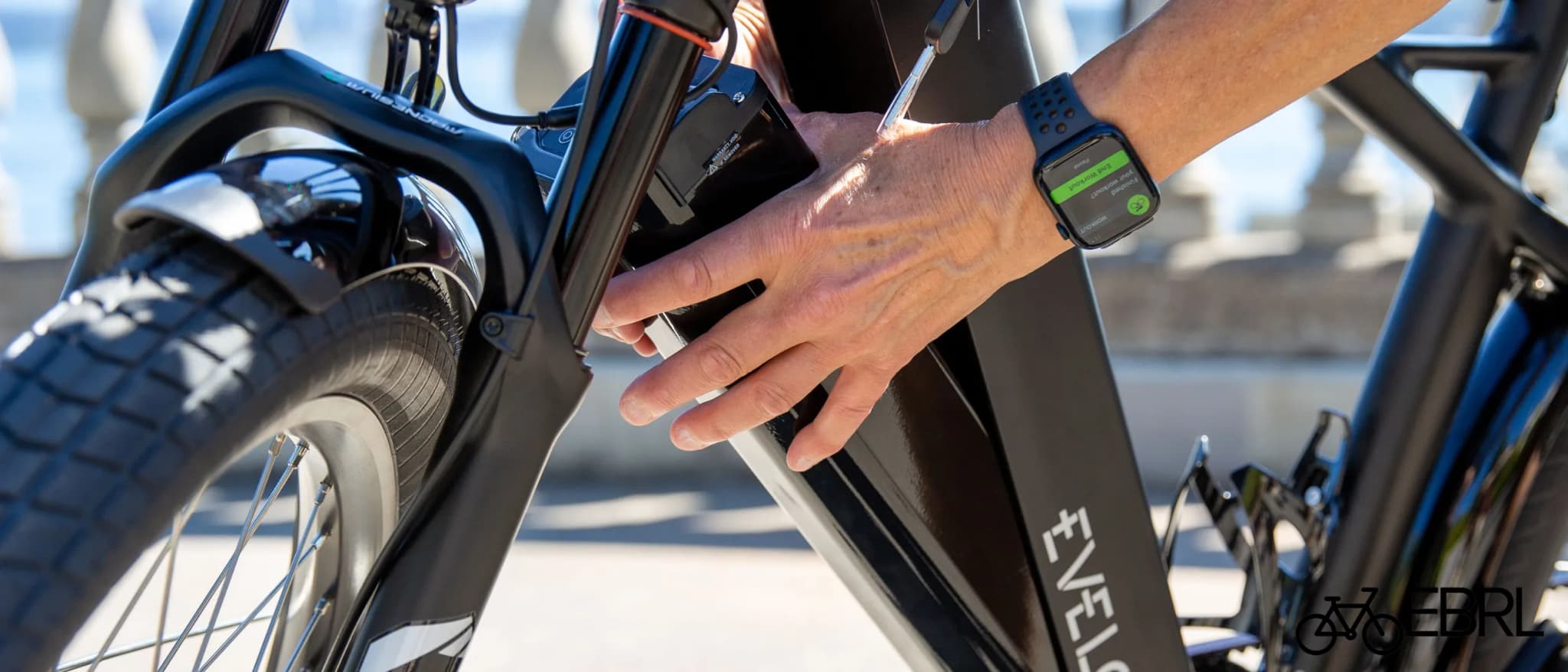
If you bought a folding e-bike because you live in a 650-square-foot apartment with no garage, no shed, and definitely no room for a bulky cargo bike, you're not alone. That's basically the whole point of a folding e-bike. It collapses down small enough to tuck behind a couch, slide under a bed frame, or stand in a hallway closet.
But here's the thing nobody mentions in the marketing photos: the same small-space living that makes a folding e-bike so appealing is also what makes charging it safely a bigger deal than most people realize. You're not charging in a detached garage forty feet from where you sleep. You're charging it a few feet from your couch, your kitchen, sometimes your bed.
That's not meant to scare you off e-bikes. Lithium-ion batteries power your phone, your laptop, and probably your kid's toothbrush without incident every single day. But when something does go wrong with an e-bike battery, it tends to go wrong fast and hot, and the fires that result are genuinely different from a typical house fire. Fire departments in cities like New York have been vocal about this because they're the ones responding to it.
So let's go through this properly. Not to alarm you, but to give you the specific, practical habits that make charging and storing a folding e-bike indoors something you don't have to think twice about. For the actual odds behind those headlines, see how likely an e-bike battery fire really is.
Why apartment charging carries higher stakes
A single-family home with a detached garage has built-in buffer space. If a battery fails there, you've got walls, distance, and often a concrete floor between the incident and the people living in the house.
An apartment doesn't offer that same buffer. Charging setups are frequently in a living room, a hallway, or right next to an entryway, because that's where the outlet is and where the bike naturally lands after a ride. Add in shared walls, a single stairwell as the main exit, and neighbors on either side, and you can see why fire officials pay extra attention to multi-unit housing.
Lithium-ion battery fires are also just different in behavior compared to, say, a grease fire or an electrical fire from old wiring. When a battery cell fails, it can go into what's called thermal runaway, where one cell overheating triggers the next, and the next. This produces intense heat very quickly, along with toxic gases, and it's genuinely hard to put out with a standard fire extinguisher. Water actually works reasonably well by cooling the battery pack, but the sheer speed of it is what catches people off guard. Reports describe these fires going from a small hiss or pop to a fully involved blaze in under a minute in some cases. Our battery fire data guide explains what that process looks like and why certification matters.
None of this means folding e-bikes are inherently dangerous. Most incidents trace back to a small handful of preventable causes: damaged batteries, counterfeit or mismatched chargers, and batteries that have been modified or repaired with off-brand cells. If you buy a reputable folding e-bike, use the charger it came with, and follow a few sensible habits, your risk drops dramatically. The goal of this guide is to make those habits second nature.
Where to place a folding e-bike while charging
Location matters more than people expect. Where you charge is honestly one of the biggest risk factors you actually control.
Keep it away from your only exit. If your apartment has one door in and one door out, that is not where you want your bike charging. Picture the worst-case scenario: something goes wrong with the battery while you're asleep, and the smoke or flames are blocking the one path out. Charge somewhere that doesn't sit between you and the door.
Don't charge next to where you sleep. It sounds obvious once you say it out loud, but plenty of small apartments have the bed and the only usable outlet in the same room. If that's your situation, consider a power strip with a longer cord so you can charge the bike in the main living space instead, ideally somewhere with a smoke detector nearby.
Skip the flammable pile. This one trips people up because folding e-bikes often live in entryways stacked next to coats, shoe piles, cardboard boxes from your last Amazon order, or a stack of firewood if you've got a fireplace. Give the bike its own clear patch of floor, away from anything that would catch quickly.
Charge on a hard, non-flammable surface. Tile, concrete, or a hard-surface mat beats carpet or a wood floor. Some folding e-bike owners keep a simple fireproof charging mat or a metal tray under the bike specifically for this reason. It's a cheap add and it genuinely helps contain heat if something does go wrong.
Stay within sight, or close to it, while charging. You don't need to sit and stare at your bike for four hours. But charging it while you're out at work all day, or overnight while everyone's asleep, removes your ability to catch an early warning sign, like an unusual smell or a battery that's hot to the touch. More on that in a minute.
Charging habits that reduce risk
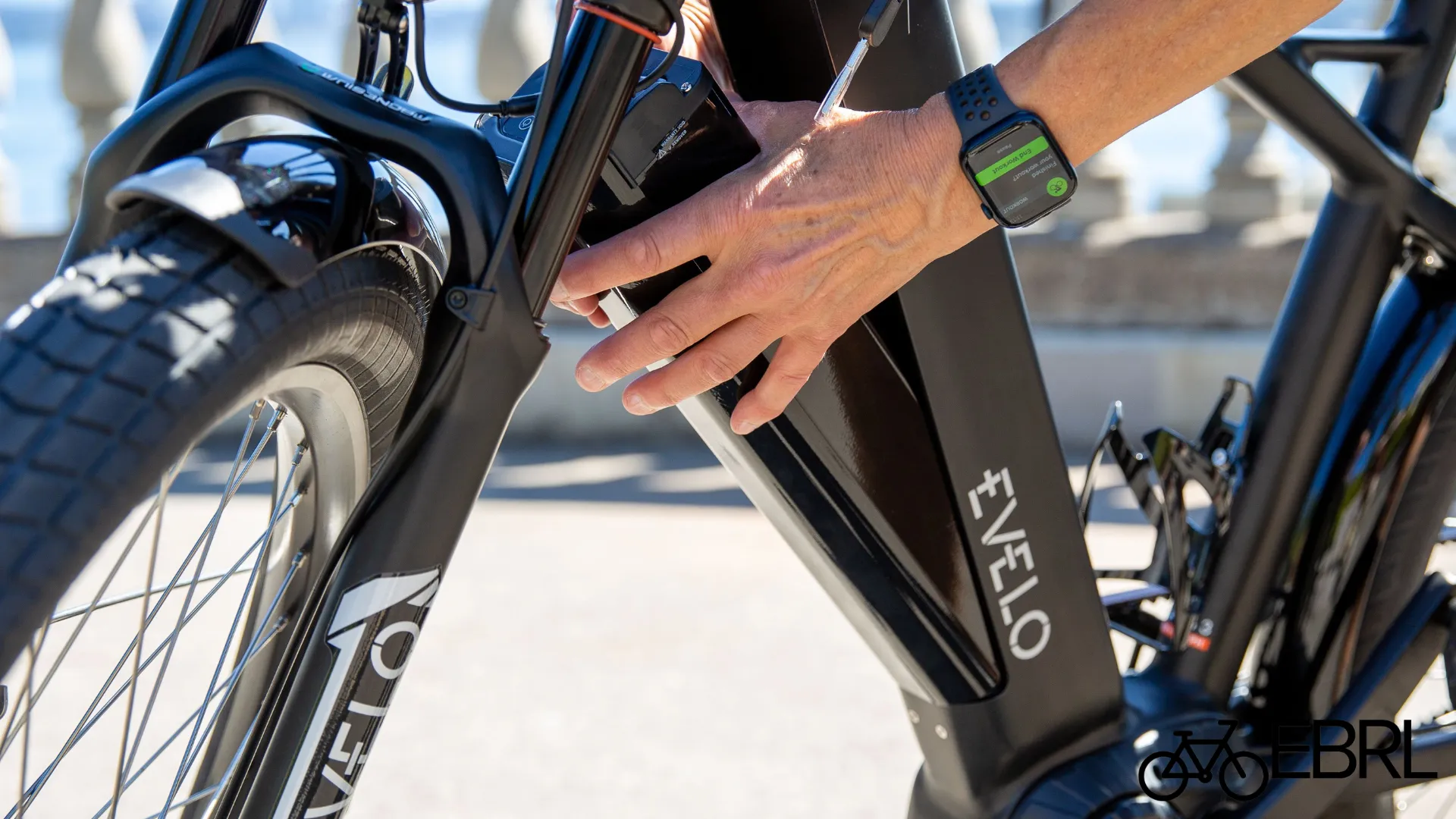
This is where most of the actual risk reduction happens, and it's also the easiest part to get right because it just comes down to habit.
Avoid charging overnight. I know, I know, it's the most convenient time. You get home, plug it in, go to bed, wake up to a full battery. But overnight charging means the battery sits unattended and unmonitored for six, seven, eight hours, often well past the point it reached full charge. Try charging when you're home and awake instead, even if that means charging for an hour after a ride rather than topping off while you sleep.
Don't leave it charging at 100% for hours on end. Most lithium-ion batteries actually last longer, and run cooler, when they're not held at a full charge for extended periods. A lot of newer e-bike batteries and apps let you set a charge limit around 80 to 90 percent, which is genuinely better for both safety and long-term battery health. Check your bike's app or manual to see if that's an option.
Only use the charger that came with the bike. This one gets overlooked constantly. A mismatched charger, especially a cheap aftermarket one bought because the original got lost, is one of the most common causes of battery fires. The voltage and current specs need to match exactly. If you lose your original charger, buy a replacement directly from the manufacturer, not a generic one off a marketplace listing with suspiciously good reviews. For the basics of home charging time and cost, see how to charge an e-bike at home.
Never charge a damaged battery. If your battery pack has been dropped, gotten wet in a way it shouldn't have, or shows any dents, cracks, or swelling, don't plug it in. Damaged battery casings are a leading indicator of internal cell damage, and charging a compromised battery is asking for trouble. Contact the manufacturer about a replacement instead. Whether a damaged pack can be repaired is almost always "replace it."
Unplug once it's done. Most modern chargers cut off automatically, but not all of them do it cleanly, and older or cheaper units can keep trickle-charging longer than they should. Get in the habit of unplugging soon after it hits full, the same way you'd unplug an iron or a space heater.
Watch the temperature, both the battery's and the room's. Charging in extreme heat or cold isn't great for lithium-ion cells. If your apartment gets uncomfortably hot in summer, try to charge during cooler parts of the day rather than during a heat wave afternoon.
Storage tips for folded bikes in small spaces
Charging safety gets most of the attention, but where and how you store the bike between rides matters too, especially once it's folded down and tucked somewhere out of the way.
Store it somewhere with airflow. Cramming a folded e-bike into a sealed closet with no ventilation isn't ideal, particularly right after a charge when the battery may still be releasing a bit of residual heat. A hallway, an open corner of a room, or a closet with the door left cracked works better than a fully sealed cabinet.
Keep it clear of the exit path, even when it's not charging. A folded bike leaning against your front door is a tripping hazard on a normal day and a genuine problem in an emergency. Pick a spot that doesn't block your way out, full stop.
Protect the battery from extreme temperatures. If you've got a balcony storage situation going on, know that leaving a battery in direct summer sun or freezing winter cold for extended periods isn't great for it. Indoor storage, out of direct sunlight, is the better call.
Consider a storage cover or bag. Not for looks, though it helps there too, but a cover keeps dust and moisture off the connectors and battery terminals, which matters more in humid apartments or ones near a bathroom or kitchen where steam tends to drift.
If you're storing it for weeks without use, don't leave it at full charge. A battery sitting fully charged and unused for a long stretch degrades faster than one stored around 40 to 60 percent. If you're heading out of town or just not riding for a while, top it off partway, unplug, and check on it every couple of weeks.
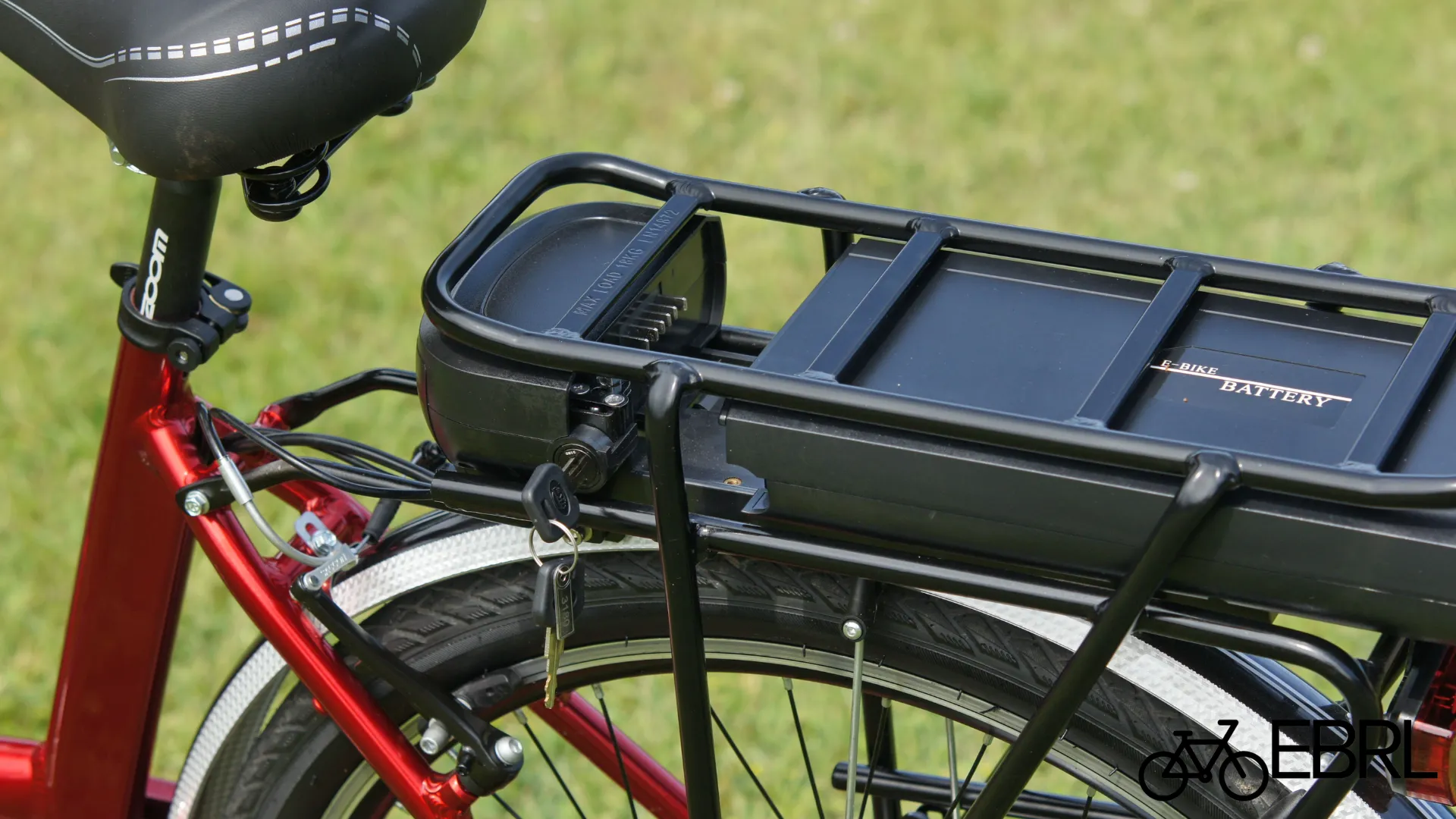
What to do if you smell or see something off with your battery
This is the section I'd actually bookmark. Knowing the warning signs and having a plan matters more than any single charging habit.
Warning signs to take seriously:
- A sweet, acrid, or chemical smell coming from the battery or charger
- A battery pack that feels unusually hot, well beyond warm
- Any hissing, popping, or crackling sound
- Visible swelling, bulging, or a battery casing that looks warped
- Smoke, even a small wisp of it
- A charger that sparks, smells like burning plastic, or feels hot at the outlet
If you notice any of these while the bike is charging or in use:
Unplug it immediately if you can safely reach the outlet without touching the battery itself. If it's already smoking or you smell something strong and acrid, don't try to move it or handle it. Get out of the room, close the door behind you if you can, and call 911. This isn't a "wait and see" situation. A battery already showing signs of thermal runaway can go from a bad smell to an active fire within minutes.
Do not throw water on a battery that's actively smoking or on fire unless the fire department has told you it's the right call for your specific situation, and do not use a standard fire extinguisher expecting it to fully resolve a lithium battery fire. Get people out, get the door closed, and let professionals handle the rest.
For a swollen or damaged battery that isn't actively smoking: stop using it immediately, don't charge it again, and contact the manufacturer about a proper disposal or recycling process. Most e-bike brands and local municipalities have specific programs for lithium battery disposal, since these can't just go in the regular trash.
Building and landlord rules to check before you buy
Here's something worth doing before you drop money on a folding e-bike, not after: check what your lease and your building actually allow.
E-bike and battery restrictions in apartment buildings have become a lot more common, particularly in cities that have dealt with a rise in battery-related fires. Some landlords now include specific clauses about lithium battery storage or charging, and some buildings have banned charging e-bikes in units altogether, especially after incidents in the news.
A few things worth checking with your landlord or building management:
- Whether your lease has any language about e-bikes, lithium batteries, or "mobility devices"
- Whether there's a designated charging area in the building, separate from individual units
- Whether your renter's insurance policy covers damage from a battery-related fire, and whether it excludes e-bike batteries specifically
- Local fire code requirements, since some cities have started passing their own rules around indoor e-bike charging in multi-unit housing
If your building doesn't allow indoor charging, or you'd feel better not doing it, look into whether there's a secure storage or charging room in the building, a nearby bike shop that offers charging services, or a certified charging station in your area. It's an extra step, but it beats a violation of your lease or an uncomfortable conversation with your landlord after the fact.
The bottom line
A folding e-bike is genuinely one of the best options for small-space living, and the fire risk, while real, is manageable with a handful of consistent habits. Charge it away from your exit and away from where you sleep, use the charger that came with it, don't leave it topped off and unattended overnight, and know the warning signs of a battery in trouble. Add in a quick check of your lease before you buy, and you've covered the parts that actually matter.
None of this should scare you away from getting one. It should just make you the kind of owner who charges smart without thinking twice about it.
If you're still deciding whether a folding e-bike fits your lifestyle, our breakdown of the downsides of folding e-bikes covers the trade-offs honestly. For general charging basics that apply beyond apartment living, see our guide on how to charge an electric bike at home. And if you're just starting to shop, our complete folding e-bike buying guide is a good place to begin.
Frequently Asked Questions
Is it safe to charge an e-bike overnight?
It's not the safest habit, even if it's the most convenient one. Charging overnight means the battery sits unmonitored for hours, often well past full charge, with nobody around to catch early warning signs like heat or smell. If you can, charge while you're home and awake, and unplug once it reaches full.
Can landlords ban e-bikes from apartments?
Yes, in most cases landlords can restrict or ban e-bikes and lithium battery charging in units, particularly through lease language or building policy. Some cities have also started introducing local fire code rules around this. Check your lease and ask your building management directly before you buy.
Should I remove the battery when storing a folded e-bike?
It's not strictly necessary if the battery is in good condition and you're storing it in a ventilated, temperature-stable spot. That said, removing the battery for long-term storage, say more than a few weeks of no use, and keeping it partially charged in a cool, dry place is generally the better move for battery longevity and peace of mind.